
A Homeowner’s Guide to Types of Cladding in the UK

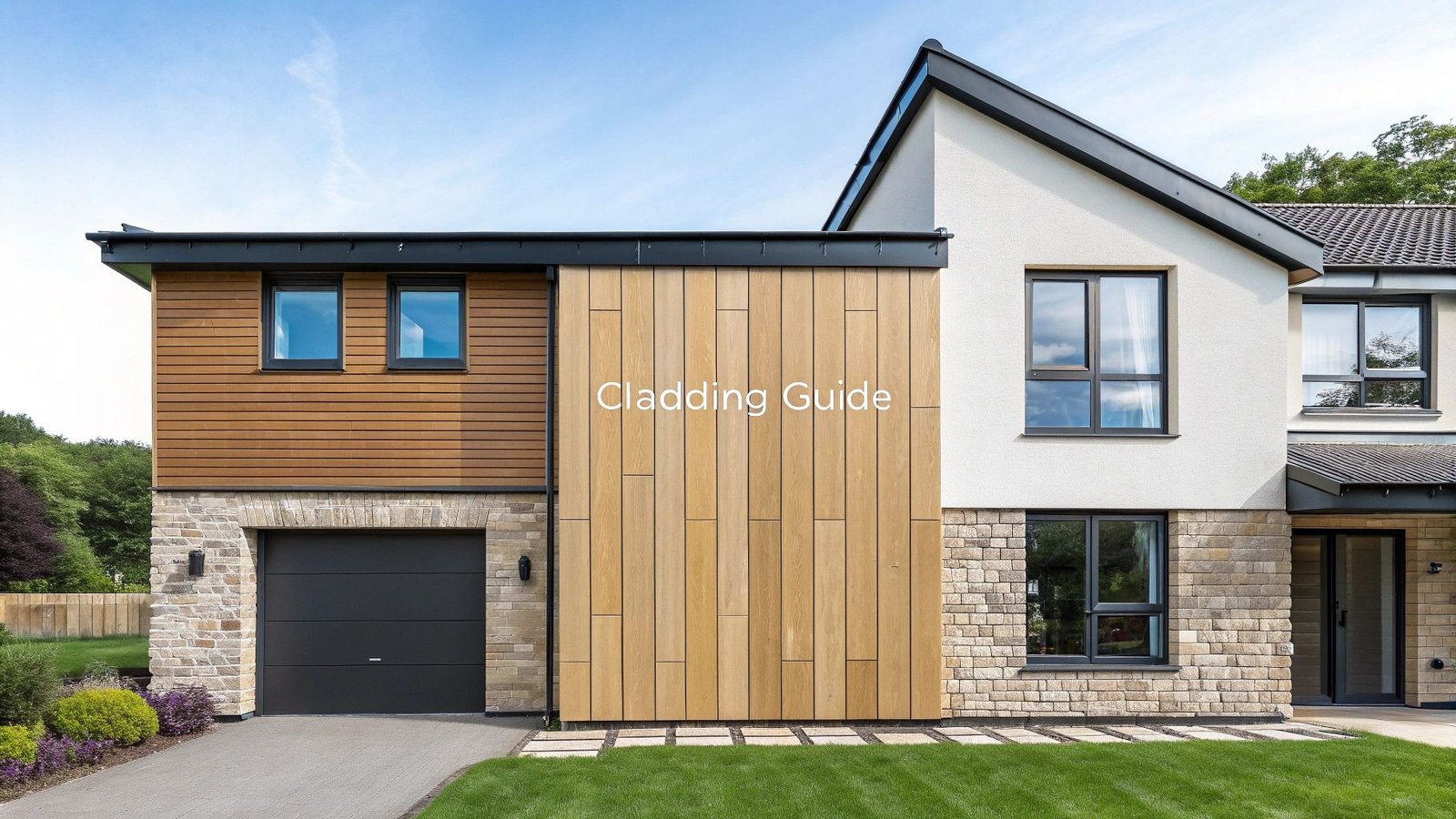
When you’re deciding on the types of cladding for your home, you’re doing more than just picking a finish. You’re choosing its protective outer layer and, just as importantly, defining its entire character. The options are vast, from the natural warmth of timber and classic appeal of brick to modern choices like metal and composite.
Each one strikes a different balance between looks, durability, and the level of upkeep you’re prepared for.
What Is Cladding and Why Does It Matter?
Think of cladding as a high-performance jacket for your building. It’s the very first layer you see, fixed to the exterior walls to act as the primary line of defence against the UK’s famously unpredictable weather. It’s much more than a decorative touch; this external skin is crucial for protecting the building’s main structure from rain, wind, and swings in temperature.
But its job doesn’t stop there. Cladding is also one of the biggest architectural statements you can make, powerfully shaping a property’s style and kerb appeal. The right material can make a home feel warm and traditional, or sharp and strikingly modern.
The Dual Role of Cladding
To really get to grips with cladding, you need to see it as a system with two main jobs that have to work together perfectly. It needs to perform on a technical level while also delivering on a specific look. Nailing that balance is the secret to a great result.
- Protection and Performance: First and foremost, cladding is there to shield the building. A properly installed system creates a barrier against water, stopping it from getting in and causing damp, rot, and serious structural damage. It also adds to the building’s thermal performance, helping to keep it warmer in winter and cooler in summer, which can make a real difference to your energy bills.
- Aesthetics and Identity: The visual impact of cladding is impossible to ignore. It sets the colour, texture, and overall personality of your home. Whether you go for the organic grain of timber, the sleek lines of aluminium, or the timeless solidity of stone, your choice tells a story.
Cladding is where function meets form. It’s the practical shield that keeps your home safe and efficient, but it’s also the canvas that expresses your personal design vision to the world.
Choosing the right type of cladding means carefully weighing up these two sides of the coin. The best material for your project won’t just look the part—it will also provide the right level of durability, maintenance, and thermal efficiency for your home and its location. With that foundation in place, we can start to explore the diverse material families out there, from natural timber and stone to engineered metal and composites.
The Natural Appeal of Timber Cladding Options
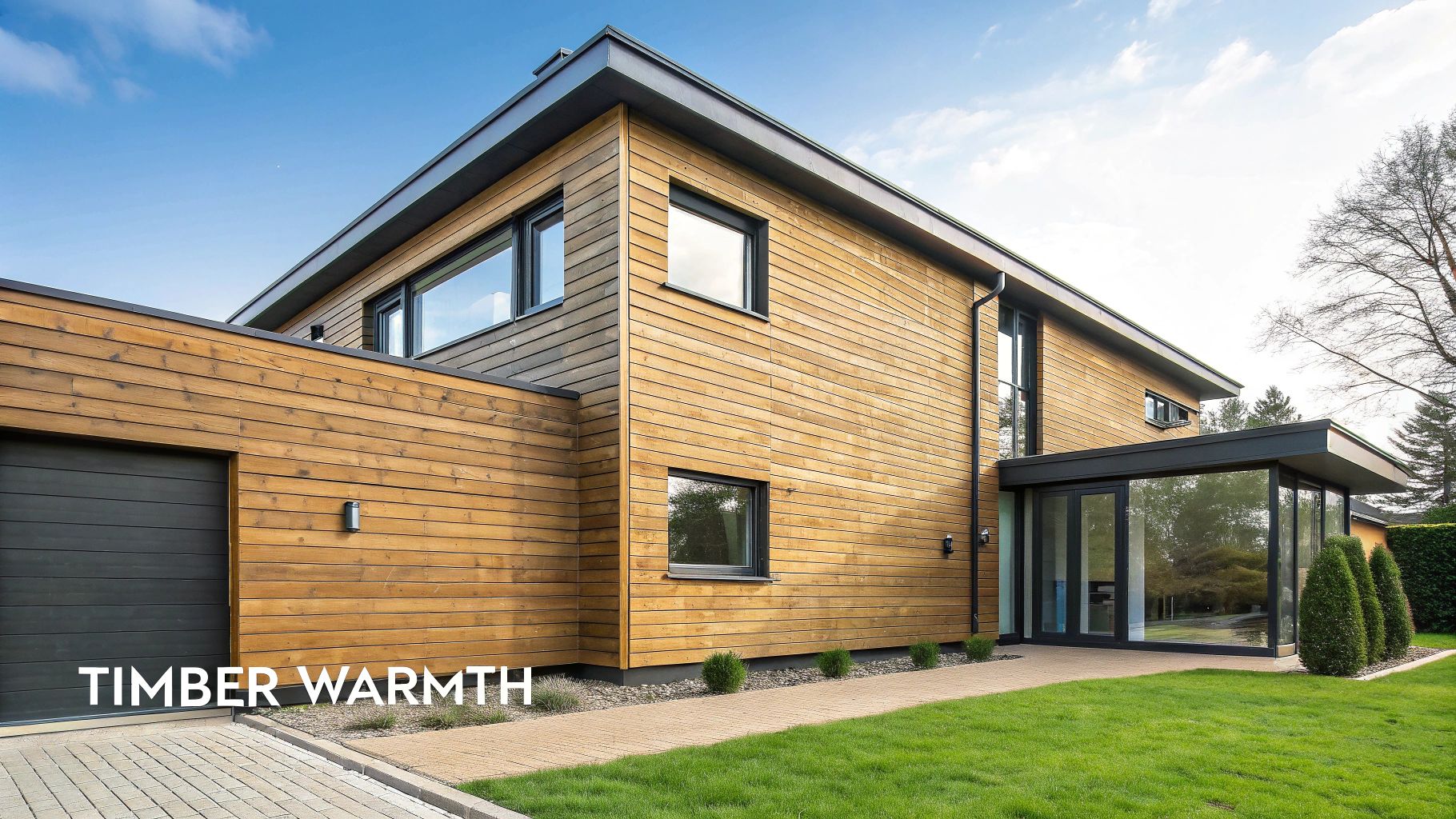
There’s something about timber cladding that just feels right. It offers a timeless, organic connection to nature that very few other materials can come close to. With its natural warmth and an incredible variety of textures, timber brings a unique character to any building, creating a facade that’s both classic and full of life. It’s no wonder that for so many architects and homeowners in the UK, wood is the first choice for adding visual depth and a touch of rustic elegance.
Part of timber’s enduring appeal lies in its versatility and the beautiful way it ages. Unlike manufactured materials that can look tired or dated after a few years, timber evolves. It develops a distinguished patina that tells the story of its life in the sun and rain. This natural weathering process is part of its charm, helping a building to settle gracefully into its surroundings.
Popular Timber Species in the UK
Choosing the right wood is absolutely crucial. Each species has its own distinct personality, durability, and way of weathering over time. It’s a bit like picking the right fabric for a coat; some are rugged and built to withstand the elements, while others are prized for their refined, elegant appearance.
Here are a few popular choices we see time and again for timber cladding:
- Cedar: A fantastic option, loved for its rich, warm reddish-brown tones and brilliant stability. Cedar has natural oils that make it resistant to rot and insects, so it’s a durable, low-maintenance choice that weathers to a beautiful silvery-grey.
- Larch: Specifically Siberian Larch, this is a tough and resinous softwood that’s incredibly dense and hard-wearing. Its golden-honey colour creates a bright, clean look that also gradually silvers, making it a robust and often more cost-effective choice.
- Oak: A true symbol of strength and tradition in British construction. Oak is a premium hardwood known for its classic grain and immense durability. It does need more careful handling to prevent movement, but its longevity is legendary, offering a stately finish that’s built to last.
While many people love the natural silvering of timber, you aren’t locked into it. Applying a good quality UV-protective oil or stain will maintain the wood’s original vibrant colour, giving you complete control over how it looks in the long run. This flexibility lets you choose between a dynamic, evolving facade or one that stays consistent for years to come.
The Art and Science of Yakisugi
Beyond the usual timber options, there’s a remarkable technique that transforms wood into something highly resilient and visually stunning. It’s called Yakisugi, an ancient Japanese method of charring the surface of the wood. This process, also known as shou sugi ban, isn’t just about looks; it’s a sophisticated, natural way of preserving the timber.
By carefully charring the surface, the cellular structure of the wood is fundamentally changed. This creates a carbon layer that acts as a natural shield, making the timber exceptionally resistant to moisture, pests, and even fire.
The result is a cladding material with a deep, dramatic finish, ranging from a sleek, uniform black to a heavily textured, almost alligator-skin effect. Every single board is unique, adding an incredible layer of texture and sophistication to a building’s exterior. You can dive deeper with this detailed guide to charred timber cladding to see just how this technique works and the incredible results it produces.
This ancient practice delivers a powerful combination of benefits. It doesn’t just create a breathtakingly beautiful facade; it also massively enhances the wood’s natural durability without needing any chemical treatments. This makes Yakisugi one of the most compelling types of cladding for anyone looking for a material that perfectly balances striking aesthetics with long-lasting, sustainable performance.
Achieving a Modern Look with Metal Cladding
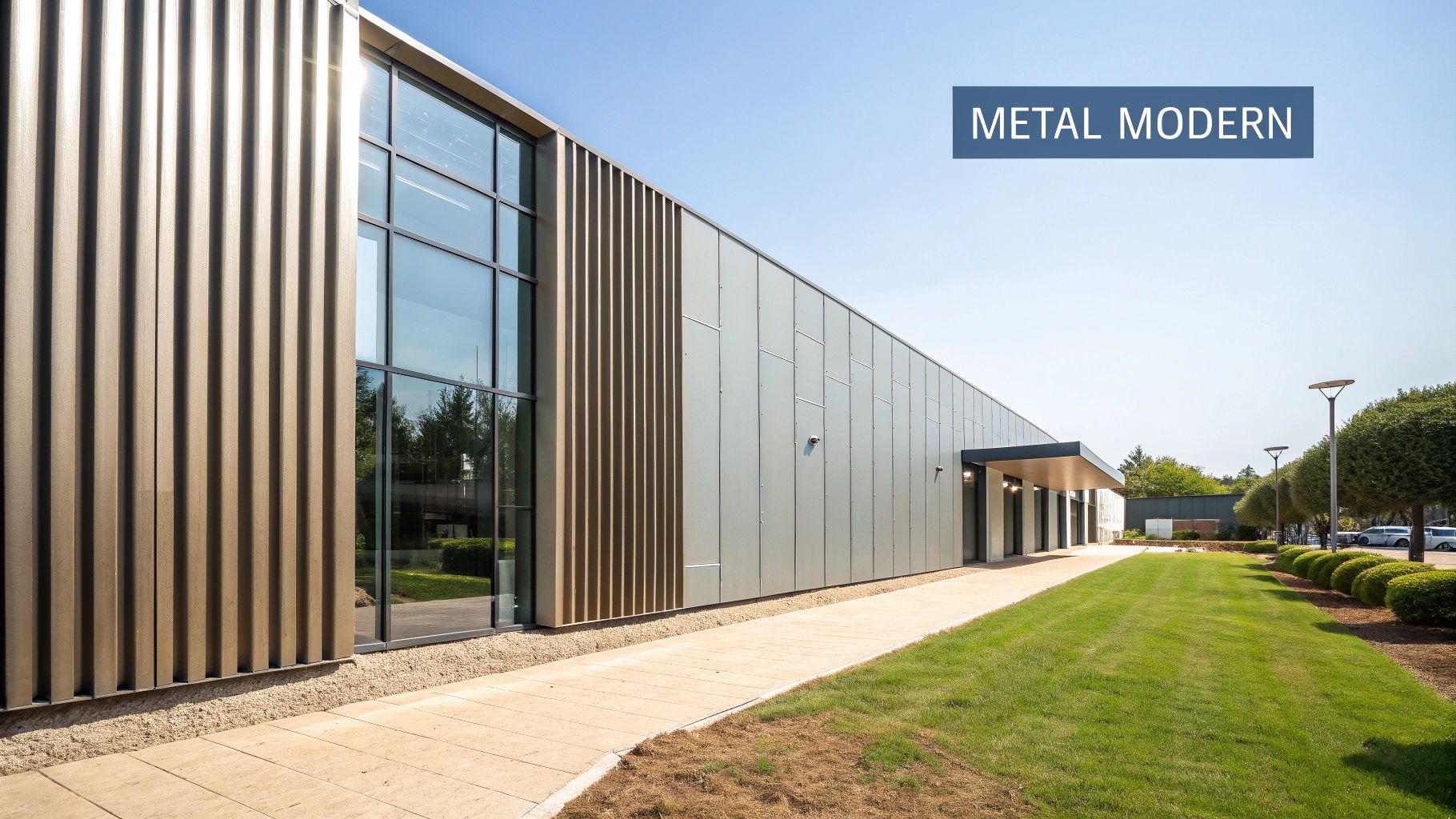
If you’re after a clean, contemporary, and seriously tough facade, metal cladding is hard to beat. It provides the sharp lines and sleek finish that define modern architecture, making it the go-to choice for projects that need to make a bold statement. Whether it’s a minimalist home or a striking commercial building, metal delivers a precise, engineered aesthetic.
But it’s not just about looks. Metal cladding systems are known for their phenomenal longevity and ability to stand up to harsh weather. They act as a robust shield that demands very little maintenance over its lifespan, making it one of the most compelling types of cladding on the market.
Exploring Popular Metal Options
The world of metal cladding is surprisingly varied. Each material brings its own character, cost, and performance to the table, and knowing the difference is key to picking the right one for your project.
- Aluminium: A real crowd-pleaser. It’s lightweight, won’t corrode, and is incredibly versatile. You can get it finished in a massive range of colours and textures, which gives you huge design freedom.
- Steel: Valued for its raw strength and cost-effectiveness, steel cladding (usually galvanised or coated) offers a tough, resilient exterior. You’ll see it a lot in industrial and agricultural settings, but it’s making its way into residential design too.
- Zinc: A premium material, zinc is prized for the beautiful blue-grey patina it develops as it ages. It lasts for an exceptionally long time and is even self-healing—small scratches will naturally fade over time.
- Copper: Like zinc, copper is a living material that evolves. It starts with a bright metallic shine before settling into its iconic, rich green patina. The longevity is second to none, creating a truly unique, high-end look.
The Smart Engineering of Rainscreen Systems
In the UK, one of the most effective ways to use metal cladding is within a rainscreen system. Think of it as a breathable, protective shell for your building. The metal panels form the outer layer, but instead of being fixed flush against the wall, they’re mounted onto a subframe. This creates a ventilated cavity between the cladding and the building’s structural wall.
This clever bit of engineering has several benefits. The outer metal skin takes the brunt of any driving rain, while the air gap behind it allows any moisture that gets through to drain away harmlessly. This constant ventilation stops damp from building up, protecting the building’s core structure from damp and rot.
A rainscreen system is like a high-tech waterproof jacket that also breathes. It keeps the rain out but allows the building’s structure to stay dry and healthy, which boosts both energy efficiency and long-term durability.
This approach is also fantastic for improving a building’s thermal performance. You can pack extra insulation into the cavity, and the whole system helps to regulate temperature—reducing heating bills in the winter and keeping things cooler in the summer.
Fire Safety and Regulatory Compliance
Fire safety is, quite rightly, a huge consideration for cladding in the UK, especially on high-rise buildings. Metals like aluminium and steel generally offer excellent fire resistance. The rainscreen approach has gained a lot of traction because it performs so well in terms of fire safety, durability, and aesthetics.
Following new regulations, the UK government now mandates that cladding on residential buildings over 18 metres high must be non-combustible. This usually means achieving a rating of A1 or A2-s1,d0 to meet strict safety standards. You can explore the latest trends and regulatory drivers for rainscreen systems on sotech-optima.co.uk.
This intense focus on safety, combined with its low-maintenance appeal and striking modern look, ensures metal cladding remains a top contender for architects and homeowners alike.
Engineered Solutions with Composite and UPVC Cladding
What if you could get the beautiful look of natural materials without all the upkeep? That’s exactly where engineered options like composite and UPVC cladding come in, offering a practical, ‘fit-and-forget’ alternative. These modern materials are cleverly designed to give you the best of both worlds: great looks and incredible durability.
For a lot of homeowners and developers, the constant maintenance that comes with materials like timber is a real headache. Engineered cladding takes that problem off the table. It’s specifically made to stand up to the common issues that plague traditional materials, giving you a stable, long-lasting facade that looks sharp year after year.
The Power of Composite Cladding
Composite cladding is a clever mix of recycled wood fibres and recycled plastics. This blend creates a material that has the warm, textured look of real wood but with the tough, weather-resistant qualities of plastic. It’s a hugely popular choice among the various types of cladding for anyone after a sustainable and low-maintenance finish.
One of its biggest selling points is its incredible resistance to the elements. Unlike natural timber, composite boards simply won’t rot, warp, or splinter. They’re also completely immune to insect attacks, which gets rid of a major worry that comes with wood exteriors.
Composite cladding strikes a fantastic balance between eco-conscious design and practical performance. It uses recycled materials to create a durable facade that looks like natural wood but doesn’t demand the same intensive maintenance or treatment.
Better yet, the colour runs all the way through the board. This means if it ever gets scratched, the mark is far less obvious than it would be on a painted surface. Most composite cladding just needs an occasional wash down to keep it looking fresh, freeing you from that yearly cycle of sanding, staining, and painting.
Understanding UPVC Cladding
UPVC (Unplasticised Polyvinyl Chloride) is another highly practical and cost-effective cladding solution. It’s a lightweight plastic material that gives a clean, uniform finish and is incredibly straightforward to install. You’ll often see it on projects where the budget and low maintenance are the main priorities, as it offers a reliable, weatherproof shield for a building’s exterior.
Just like composite, UPVC is extremely resistant to rot and pests. It doesn’t soak up moisture, so it’s a brilliant performer in the damp UK climate. Modern UPVC cladding now also comes with UV protection, which stops the colour from fading too much over time from sun exposure.
Making the Right Choice
While both composite and UPVC offer huge practical benefits, it’s important to think about the trade-offs. The finish, while often a convincing copy of wood or other materials, might not have the same unique, natural character as the real thing.
When figuring out if these materials are right for your project, weigh up the following:
- Maintenance: Both are clear winners if you’re looking for low upkeep.
- Durability: They offer excellent protection against rot, moisture, and insects.
- Cost: UPVC is generally one of the most budget-friendly options out there, while composite is competitively priced against mid-range timbers.
- Appearance: A huge range of colours and finishes are available, though some people may find them less authentic than natural materials.
At the end of the day, composite and UPVC cladding are fantastic engineered solutions for anyone who values practicality, longevity, and predictable performance.
The Enduring Elegance of Stone and Brick Finishes
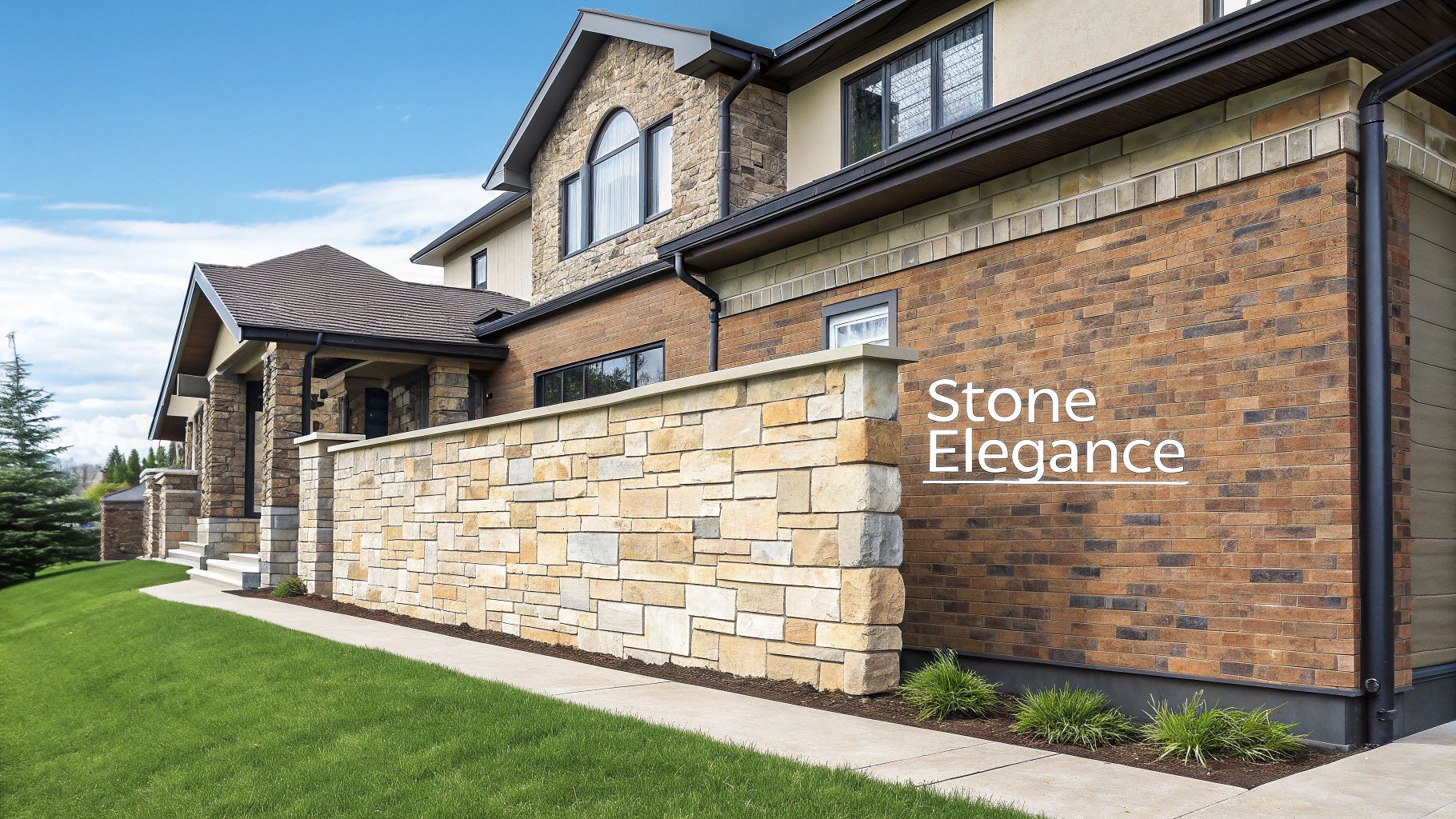
When you want a building to feel permanent, to have real gravitas, nothing delivers quite like stone and brick. For centuries, these materials have been the gold standard for quality construction, giving homes a character and prestige that simply doesn’t fade with time. It’s a rugged, timeless look that connects a building to its landscape, suggesting strength and longevity.
Getting that classic look on a modern home is more achievable than you might think. While you can still build with traditional, full-depth masonry, innovative veneer systems now give you the same authentic appearance without the immense structural weight. This opens up a world of possibilities for new builds and renovations alike.
Natural Stone vs Engineered Veneers
When you start looking into these cladding types, you’ll find they fall into two main camps. Both give you that distinguished finish, but they come with very different practical considerations.
- Natural Stone: This is the real deal. Materials like slate, limestone, and granite offer an authenticity that’s impossible to replicate perfectly. Every single piece has its own unique colour variations and textures, creating a facade that is truly one of a kind. The trade-off? Natural stone is heavy, often demanding specialised installation skills and extra structural support.
- Engineered Stone Veneers: These are a clever modern alternative. They’re made from a mix of cement, aggregates, and pigments, all cast in moulds taken from genuine stone. The result is a lightweight, cost-effective product that mimics the look of natural materials incredibly well, but without the hefty weight or price tag.
You’ll find a similar solution for brickwork with brick slips. These are essentially thin slices of real brick that are applied to a backing surface. This technique delivers the classic visual of a full brick wall but is far quicker to install and puts much less strain on the building’s frame.
Weighing the Pros and Cons
The choice between natural and engineered options usually boils down to a balance of budget, aesthetic goals, and what your building’s structure can handle. Stone and brick are legendary for their durability; they stand up to fire, pests, and the worst of the British weather, promising a lifespan measured in decades, not just years.
One of the standout benefits of these dense materials is their thermal mass. You can think of your walls as a kind of thermal battery. They soak up heat slowly on a warm day and then release it gradually as things cool down at night. This natural temperature regulation helps keep your home comfortable all year round and can even trim your heating and cooling bills.
A stone or brick facade is more than just a protective layer; it’s a long-term investment in your property’s character, value, and energy efficiency. Its unmatched durability ensures it will stand the test of time with minimal maintenance.
However, it’s worth noting that the installation for both stone and brick is more involved and labour-intensive than for many other cladding systems. This usually means a higher upfront cost. Natural stone sits at the premium end of the scale, often starting from £50 per square metre and up, factoring in both materials and the skilled labour needed. For anyone looking to create a facade that speaks of quality and heritage, it’s an investment that pays off for a lifetime.
How to Choose the Right Cladding for Your UK Home
Choosing the right cladding for your home goes far beyond simply picking a colour you like. It’s a careful balancing act between your architectural dreams and the practical realities of your budget, the local climate, and—perhaps most importantly—the UK’s stringent building regulations. Get this right, and you’ll have a home that not only looks incredible but is also safe, compliant, and built to stand the test of time.
To make a choice you’ll be happy with for years to come, you need a solid framework. Think of it as a simple checklist to guide you through the options, making sure you don’t miss anything critical along the way.
Defining Your Project Priorities
First things first: what are you trying to achieve? Is a specific look the driving force, or is your main goal a low-maintenance finish that will perform well for decades? Answering these fundamental questions will immediately help you cut through the noise and narrow down the huge range of cladding materials on the market.
Think about these four key pillars:
- Your Budget: The costs can swing wildly from one material to another. uPVC and certain timbers are often at the more affordable end of the scale, while premium choices like natural stone, zinc, or charred timber (Yakisugi) require a much larger initial investment. Always remember to factor in both the material and installation costs to get the full picture. For a more detailed look at the numbers, you might find our guide on the cost of cladding a house useful.
- Architectural Style: Your cladding should feel like a natural extension of your home’s design. Sleek metal panels are a fantastic fit for contemporary, minimalist builds, while traditional timber or classic brick slips are much more at home on rustic or period-style properties.
- Maintenance Level: Be honest with yourself about how much upkeep you’re prepared to do. Materials like composite and uPVC are pretty much ‘fit-and-forget,’ just needing a clean now and then. On the other hand, some natural timbers need regular staining or oiling to keep them looking their best and protect them from the elements.
- Local Climate Conditions: Where you live in the UK really matters. If your home is near the coast and exposed to salty air, or in a part of the country with relentless rain, you’ll need something incredibly durable and weather-resistant, like fibre cement or a properly treated metal.
Navigating UK Building Regulations and Fire Safety
In the UK, fire safety is absolutely non-negotiable when it comes to cladding, especially after the major regulatory overhaul that followed the Grenfell tragedy. Building Regulations now impose very strict standards on the materials used for external walls. For residential buildings over 18 metres high, the rules are crystal clear: you must use non-combustible materials (those with an A1 or A2 rating).
Getting to grips with these regulations is essential for ensuring your project is both compliant and safe. This renewed focus on safety has had a huge impact on the UK facade market, which is now valued at around USD 10.5 billion. Driven by this safety-led demand, the sector is set for significant growth.
Cladding Material Comparison Guide
To help you weigh up the pros and cons, this table provides a side-by-side comparison of the most common cladding materials, looking at the key factors that matter for UK properties.
| Material Type | Average Cost (per m²) | Durability | Maintenance Level | Fire Rating (Typical) | Best For |
|---|---|---|---|---|---|
| Timber | £30 – £150 | Moderate to High | Low to High | D | Natural aesthetics, traditional and modern styles |
| uPVC | £25 – £70 | Moderate | Very Low | D or C | Low-budget projects, minimal maintenance needs |
| Metal (Aluminium, Steel) | £75 – £200 | Very High | Low | A1 or A2 | Modern designs, commercial buildings, high durability |
| Stone (Natural/Veneer) | £100 – £300+ | Very High | Low | A1 | Premium projects, achieving a timeless, robust look |
| Fibre Cement | £50 – £120 | High | Low | A2 | Versatility, mimicking wood or stone with low upkeep |
| Composite | £60 – £140 | High | Very Low | C or D | Wood-like appearance without the high maintenance |
| Charred Timber (Yakisugi) | £80 – £200 | Very High | Very Low | C | Striking aesthetics, enhanced weather and pest resistance |
This comparison makes it clear that there’s always a trade-off. Timber might have a lower upfront cost, but something like fibre cement offers fantastic durability with far less maintenance required over its lifespan.
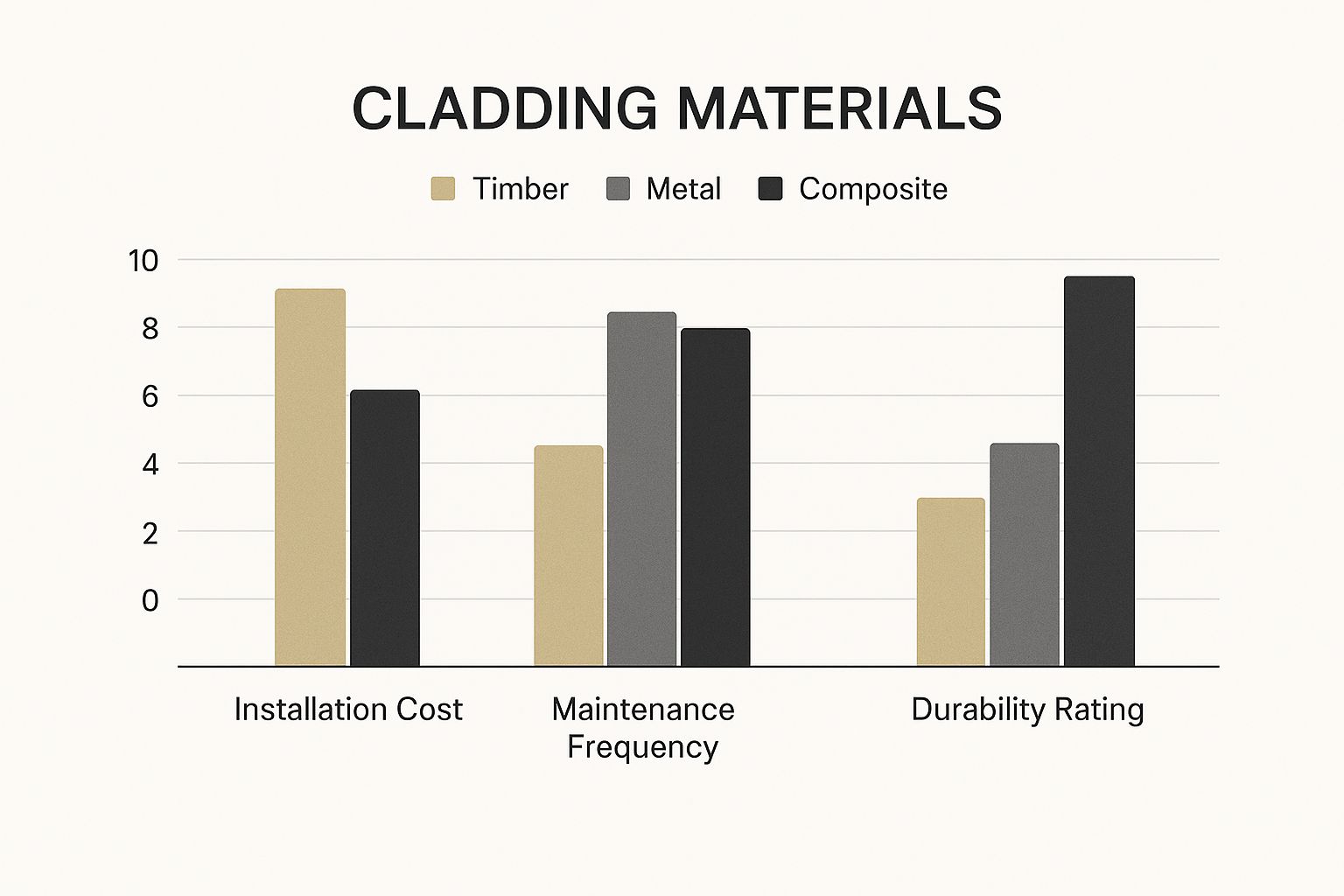
Choosing the right cladding is ultimately an informed compromise. It’s about finding that sweet spot where a material aligns perfectly with your aesthetic goals, your practical needs, and the non-negotiable demands of safety and compliance.
By methodically working through these factors—budget, style, maintenance, and regulations—you can turn what feels like an overwhelming decision into a structured, confident choice. You’ll be empowered to invest in a facade that isn’t just beautiful, but also perfectly functional and secure.
Your Cladding Questions Answered
Picking the right cladding brings up a lot of questions. It’s not just about looks; you’ve got to think about safety, costs, and the rules. Let’s tackle some of the most common queries I hear, so you can feel confident moving forward with your project.
Getting these details right from the start is absolutely vital, especially with the UK’s strict building regulations. The right information ensures your project isn’t just stunning but safe and fully compliant.
What Makes Cladding Unsafe?
The biggest worry with cladding, and the one that hits the headlines, is fire. Unsafe cladding is made from materials that can fuel a fire and help it spread. The most infamous example is Aluminium Composite Material (ACM) which has a flammable polyethylene core.
When a fire starts, these materials can act like a ladder, allowing flames to race up the outside of a building and completely bypass the fire-stopping measures inside. It’s precisely this risk that has led to much stricter UK regulations, particularly for taller buildings where people live.
Understanding UK Fire Safety Ratings
To bring some clarity to safety, materials are tested and given a Euroclass fire rating. It’s a system that architects and builders rely on to choose compliant products.
Here’s how it breaks down:
- Class A1: Completely non-combustible. Think stone, brick, and metals like aluminium or steel. They simply won’t burn.
- Class A2: Limited combustibility. These make a very small contribution to a fire and are also considered safe for high-rise buildings.
- Class B: A very limited contribution to fire. You’ll often find specially treated timber and some fibre cement boards in this category.
- Class C-F: These ratings show an increasing level of combustibility. Untreated timber, for instance, often lands around Class D.
The most important thing to remember is this: for any residential building in the UK over 18 metres high, only Class A1 or A2 materials are allowed. This is a non-negotiable rule designed to protect residents.
How Can I Check a Property’s Cladding?
If you’re worried about the cladding on a property you own or are looking to buy, the building’s owner or managing agent is your first port of call. They should have all the details on the external wall system. For flats, you’ll likely need an EWS1 (External Wall System) form for a mortgage, which is a professional assessment of the wall’s fire safety.
Since the Grenfell Tower tragedy, there’s been a massive effort to identify and replace unsafe cladding. Of the 5,176 residential buildings found to have unsafe materials, 34% have now had the work completed, showing a real push to improve building safety across the country. You can find more information about UK building safety remediation efforts on GOV.UK.
Do I Need Planning Permission?
In many cases, adding cladding falls under ‘permitted development’ rights, meaning you might not need full planning permission. But don’t just assume this is the case. If your home is in a conservation area, a National Park, or is a listed building, you will almost certainly need permission. My advice? Always check with your local planning authority before a single plank goes up. It saves a lot of headaches later.
What Is the Average Cost to Re-Clad a House?
This is a classic “how long is a piece of string?” question. The cost can swing wildly based on your home’s size and, of course, the material you choose. A budget-friendly option like uPVC might set you back £25-£70 per m². On the other end of the scale, premium materials like natural stone or charred Yakisugi can easily go beyond £150 per m². And remember, labour is a big chunk of the final bill. We dive into the specifics in our guide on the installation of cladding.
For a finish that’s both uniquely beautiful and incredibly tough, it’s hard to beat the natural resilience of charred timber. At TimberSol, we’re specialists in Yakisugi cladding, offering exceptional weather resistance and a stunning aesthetic you won’t find anywhere else. Explore our range of high-quality charred timber products.
