
A Homeowner’s Guide to Outdoor Wood Cladding

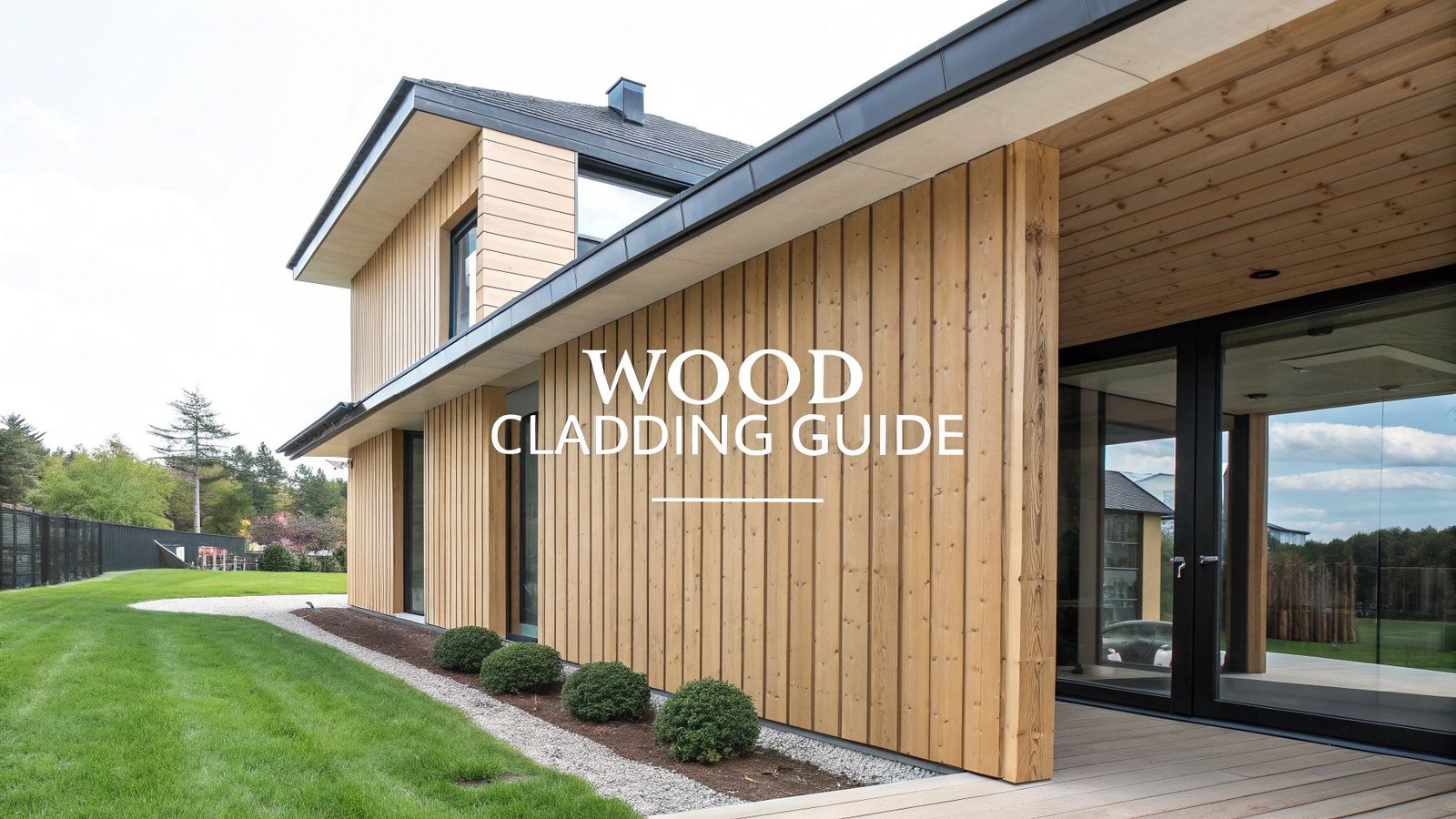
When you see timber planks fixed to the outside of a building, that’s outdoor wood cladding. It’s essentially a protective and decorative outer layer – a ‘building skin’ that shields your home from the elements while lending a natural, timeless look that can completely transform its appearance.
What Exactly Is Outdoor Wood Cladding?
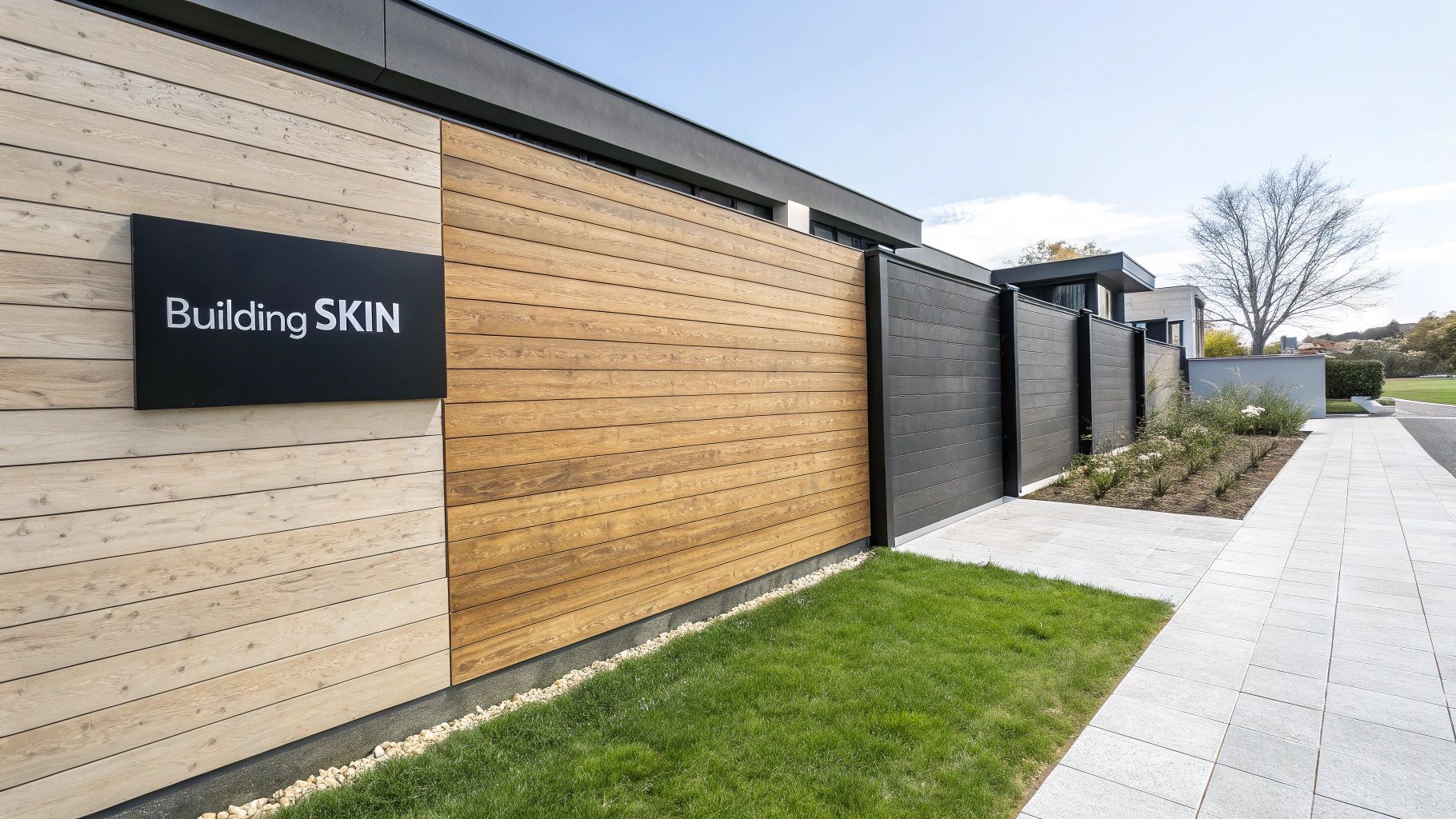
Think of outdoor wood cladding as your home’s stylish, hard-wearing coat. It’s the first line of defence against the UK’s often unpredictable weather, standing up to everything from driving rain and biting winds to harsh summer sun. But its job is about more than just looking good.
This outer layer creates a crucial barrier that not only guards the structural walls but also plays a part in the building’s overall performance. It’s a go-to choice for homeowners and architects who want natural beauty, solid performance, and sustainability all rolled into one.
More Than Just a Pretty Facade
While the visual impact is a huge draw, the practical benefits are just as convincing. Modern cladding systems are designed to improve a home’s thermal efficiency, helping to keep it warmer in winter and cooler in summer. This extra layer of insulation can lead to real savings on your energy bills over time.
Wood cladding is one of those rare architectural elements that truly merges form and function. It provides essential protection while connecting a structure to its natural surroundings, offering a warmth and character that synthetic materials struggle to replicate.
The sheer versatility of timber also means there’s a huge range of styles to choose from. Whether you’re after a rustic, traditional feel or a clean, contemporary finish, there’s a type of wood and a profile that will bring your vision to life.
A Growing Trend in UK Architecture
The popularity of outdoor wood cladding is on the rise right across the United Kingdom, and for good reason. Market analysis suggests the UK timber cladding market is set to grow at a compound annual rate of over 4% between 2025 and 2030.
This steady demand is driven by a strong housing market and a growing desire for sustainable, high-performance building materials in both new builds and renovations. With government investment in housing development hitting £9.6 billion in 2021/22, timber’s role in modern construction is only going to get bigger. You can find more insights about the UK cladding market on Mordor Intelligence.
So, Why Choose Timber for Your Home’s Exterior?
Picking the right material to wrap your home in is a huge decision, but timber cladding seems to always come out on top, and for reasons that go well beyond its good looks. It’s one of those rare choices that perfectly marries aesthetic charm with real-world, long-term benefits, making it a sound and sustainable investment for any property.
Think of timber as more than just a decorative skin; it becomes an active part of your home’s structure. One of its biggest strengths is its natural ability to insulate. Wood’s cellular structure is brilliant at trapping air, which makes it a terrible conductor of heat. What does that mean for you? It helps keep your home snug and warm in the winter and refreshingly cool in the summer, meaning you’re not reaching for the thermostat quite as often.
This built-in thermal performance can genuinely translate into lower energy bills. By adding a layer of outdoor wood cladding, you’re essentially wrapping your home in a natural, energy-saving blanket.
An Eco-Conscious and Sustainable Choice
At a time when we’re all thinking more about our environmental impact, timber really shines. As long as it comes from responsibly managed forests, it’s a truly renewable resource. Trees pull carbon dioxide from the atmosphere as they grow, and that carbon stays locked away in the wood for the entire life of your cladding.
To be sure you’re making the right call, always look for timber that’s certified by organisations like the FSC (Forest Stewardship Council) or PEFC (Programme for the Endorsement of Forest Certification). These certifications are your guarantee that the wood comes from forests managed in a way that looks after the social, economic, and ecological needs of today and tomorrow.
Choosing certified timber isn’t just a tick in the ‘eco-friendly’ box; it’s an investment in the health of our planet’s forests. It means we can keep enjoying the beauty of natural wood for generations without contributing to deforestation.
And when you compare it to the energy-hungry manufacturing of materials like concrete or steel, timber’s carbon footprint is incredibly low. It really is one of the most environmentally sound building materials you can choose for your home’s exterior.
Unmatched Design Versatility
Honestly, very few materials can compete with the sheer design flexibility of timber. Its natural warmth and character can be moulded to fit almost any architectural style, from a cosy, rustic cottage to a sleek, modern new build. The aesthetic possibilities are virtually limitless.
You have so much control over the final look:
- Wood Species: Every type of wood tells a different story. Think of the rich, reddish tones of Cedar versus the pale, subtle hues of Larch – each brings its own unique colour and grain pattern to the table.
- Board Orientation: Laying the planks horizontally gives you that classic, grounded feel. Flip them vertically, and suddenly the building seems taller, sharper, and more contemporary.
- Finishes and Treatments: You can let the wood age gracefully, weathering over time to a beautiful silvery-grey. Or, you could apply oils to keep its original colour vibrant. Then there are advanced techniques like Yakisugi, which creates a stunning, charred finish that’s also incredibly durable.
This incredible adaptability means outdoor wood cladding isn’t just a building material—it’s a powerful design tool that gives your home a unique character, a sense of texture, and lasting value.
Choosing the Right Timber for Your Cladding
Picking the right timber for your outdoor cladding is a bit like choosing the right coat for the British weather; it needs to look good, but more importantly, it has to perform. The material you select will define the character of your home for years to come, influencing everything from its aesthetic appeal to how much time you’ll spend on upkeep.
It’s tempting to choose based on colour alone, but the real secret to long-lasting cladding lies in the wood’s inherent properties. You need to think about its natural durability, how well it stands up to rot and insects, and the way it will age over time. Let’s walk through some of the best choices for UK homes.
This infographic gives you a great at-a-glance comparison of popular timber choices, showing their unique visual styles.
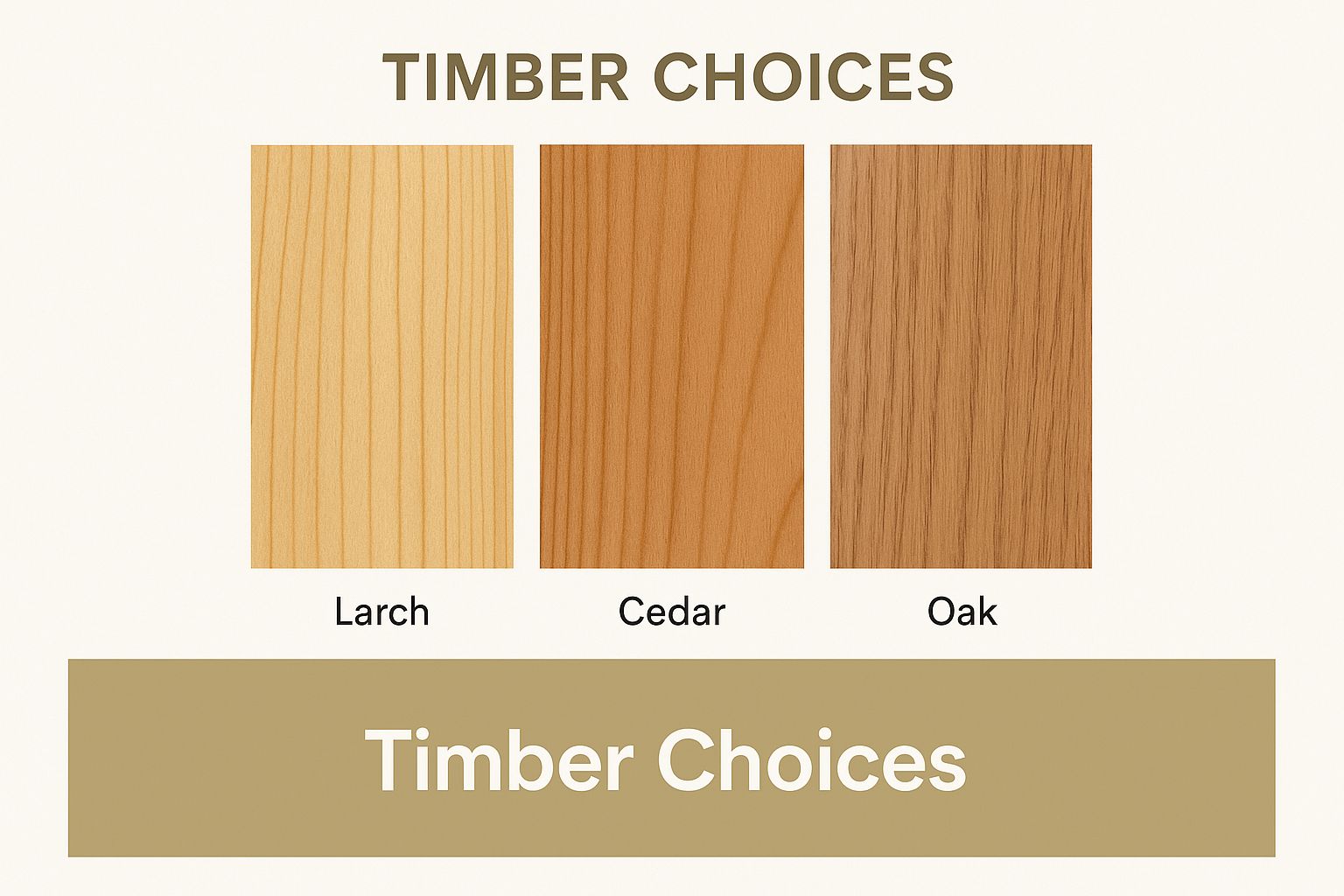
From the rich, warm tones of Cedar to the pale, modern look of Larch, you can see how each species brings a completely different feel to a building’s exterior.
Popular Timber Species for Cladding
Every type of wood has its own set of strengths. Some are naturally oily, which helps them shrug off moisture and deter pests, while others are prized for their sheer toughness and ability to withstand knocks and bumps.
Here are a few of the top contenders:
- Larch (Siberian and British): A brilliant all-rounder, Larch is a resinous softwood that’s both durable and cost-effective. It has an impressive natural resistance to decay, meaning you can often install it untreated and let it weather to a beautiful silvery-grey.
- Cedar (Western Red): Famous for its stunning reddish-brown colour and lightweight feel, Cedar is a premium option for good reason. It’s packed with natural oils that make it incredibly resistant to moisture and insects, giving it a very long life with minimal fuss.
- Oak (European): As a dense, strong hardwood, Oak brings exceptional durability and a classic, timeless feel to any project. Its high tannin content gives it fantastic protection against rot and pests, making it a long-term investment.
To help you weigh up the options, this table breaks down the key differences between these popular timbers.
Comparing Popular Outdoor Cladding Timbers
| Wood Type | Typical Lifespan (Years) | Maintenance Level | Estimated Cost | Key Feature |
|---|---|---|---|---|
| Siberian Larch | 20-40 | Low | ££ | Excellent value and natural durability. |
| Western Red Cedar | 40-60 | Very Low | ££££ | Lightweight with superior moisture resistance. |
| European Oak | 30-50 | Medium | ££££ | Extremely strong with a classic grain. |
| Charred Timber (Yakisugi) | 50-80+ | Very Low | £££ | Unique aesthetic and enhanced fire resistance. |
| Thermally Modified Pine | 20-30 | Low | ££ | High stability and rot resistance. |
Ultimately, the best choice comes down to your priorities. If budget is key, Larch is hard to beat. For a truly low-maintenance finish that will last a lifetime, Cedar or Yakisugi are fantastic investments.
Getting to grips with these differences is crucial. For a more detailed look at what makes certain woods better for outdoor projects, feel free to explore our guide on the best wood for outdoor use.
The Rise of Thermally Modified Timber
Beyond the classic choices, thermally modified timber has really made a name for itself in the world of cladding. The process involves heating wood in a special kiln, without oxygen, to temperatures over 180°C.
This high-heat treatment fundamentally changes the wood’s structure on a cellular level. It becomes much more dimensionally stable, so it’s far less likely to warp, twist, or swell when the humidity changes. It also cooks out the sugars and resins that fungi love to feed on, making it incredibly resistant to rot.
Think of thermally modified timber as being like slow-roasting a joint of meat. The process takes a good, natural ingredient and uses heat to make it more stable, tender, and robust, enhancing all its best qualities for a superior result.
Yakisugi Charred Timber: Where Art Meets Durability
For those looking for something truly special, Yakisugi is an incredible option. It’s an ancient Japanese technique of preserving wood by charring the surface with a controlled flame. You might also see it called “shou sugi ban”—it’s the same beautiful and practical method.
The process is hands-on: the timber is carefully burned, cooled down, brushed to remove loose soot, and then sealed with a natural oil. What you’re left with is a stunning, deep black cladding that isn’t just for show. The carbon layer created by the fire forms a tough, protective shield.
This charred surface makes the wood highly resistant to:
- Weather and UV Rays: The char acts as a natural barrier against sun and rain.
- Fire: Counter-intuitively, the burnt layer is harder to ignite than untreated wood.
- Pests: The process removes the wood’s appeal to termites and other insects.
Yakisugi cladding creates a dramatic and sophisticated look that can range from a sleek, uniform black to a more textured, “alligator skin” finish, depending on the wood and how intensely it’s charred. It’s a perfect example of how a traditional craft can turn a simple piece of timber into a high-performance, low-maintenance building material.
Planning Your Cladding Design and Installation
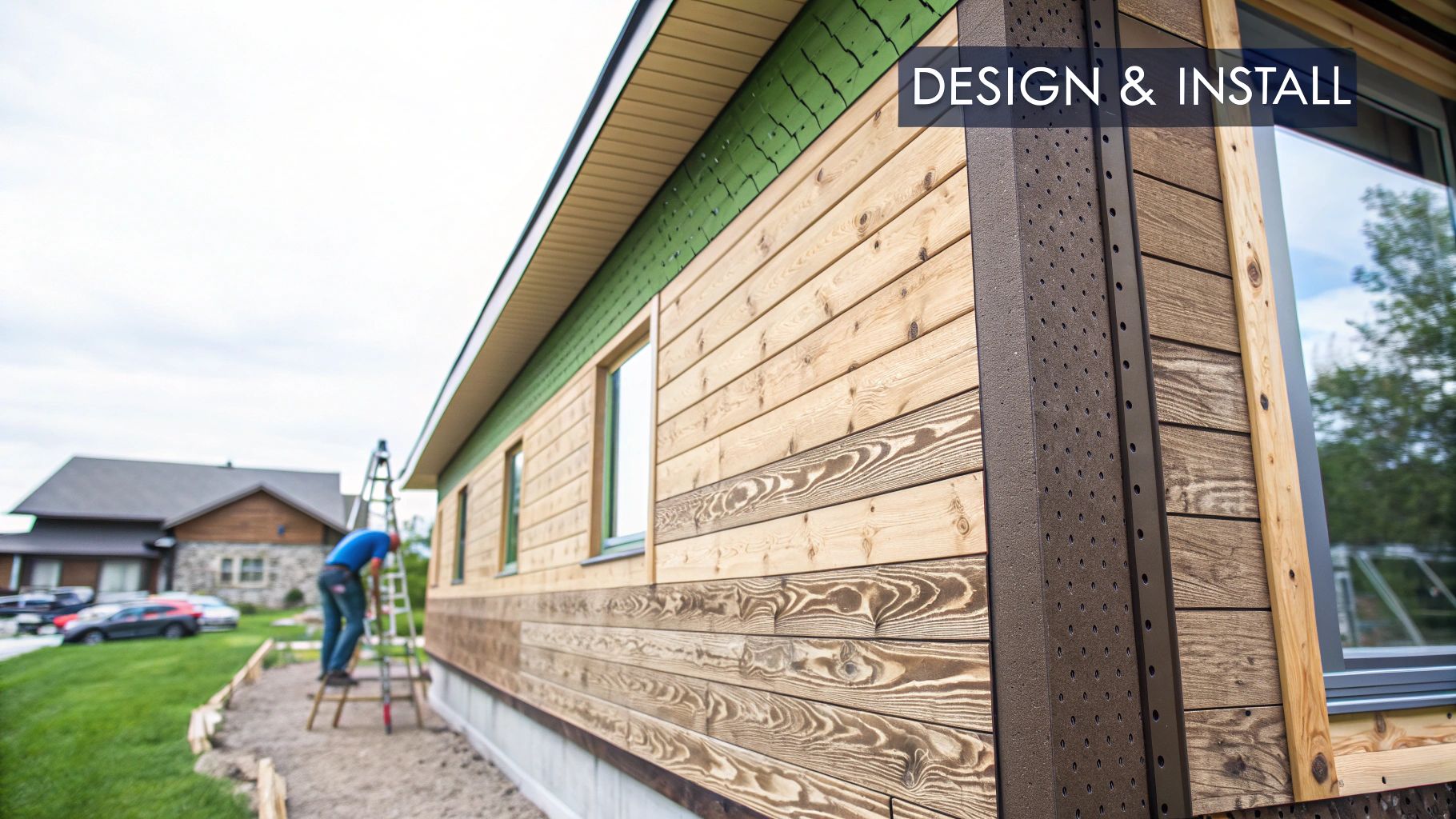
Choosing the perfect timber is a huge step, but it’s the design and installation details that truly bring your vision to life. A well-thought-out plan doesn’t just guarantee a stunning finish; it ensures your outdoor wood cladding performs flawlessly for decades, protecting your home just as it’s meant to.
Getting these details right is absolutely critical for a long-lasting, weatherproof result. Every single choice, from the profile of the boards to the type of screws you use, plays a vital part in the system’s overall durability and final look.
Choosing Your Cladding Profile
The “profile” simply refers to the shape of the edge on each cladding board. This shape dictates how the individual pieces lock together, and it’s about far more than just aesthetics—it’s fundamental to how the cladding sheds water and handles natural movement.
Here are a few of the most common profiles you’ll come across:
- Tongue-and-Groove: This profile has a projecting ridge (the tongue) on one edge and a matching slot (the groove) on the other. It creates a really tight, interlocking fit for excellent weather protection and a clean, seamless appearance.
- Shiplap: With shiplap, the boards simply overlap each other using an L-shaped recess. This creates a distinct shadow line and allows for slight movement while still stopping rain from getting behind the boards.
- Feather Edge: This is a more traditional approach where boards are tapered in thickness, allowing them to be overlapped like tiles. It gives a more rustic finish and is a time-tested method for weatherproofing.
The profile you choose will ultimately define the texture and character of your building’s exterior.
The Importance of a Ventilated Rainscreen
Here in the UK, with our damp climate, fixing cladding directly onto a wall is just asking for moisture problems down the line. The professional solution is what’s known as a ventilated rainscreen system. Think of it as creating a dedicated “breathing space” between your cladding and your home’s main structure.
A rainscreen gap is the unsung hero of a durable cladding system. It lets air circulate freely behind the timber, drying out any moisture that gets past the outer layer. This prevents water from becoming trapped, which would otherwise lead to rot and decay.
This gap, usually created by fixing the cladding onto vertical battens, is essential for the long-term health of both the timber and the building itself.
Horizontal vs Vertical Installation
Should the boards run side-to-side or up-and-down? This decision can dramatically alter your home’s perceived proportions, making it a powerful design tool that goes well beyond simple preference.
- Horizontal Cladding: This is the more traditional orientation. It tends to make a building feel wider and more grounded, creating a classic, welcoming look.
- Vertical Cladding: This orientation draws the eye upwards, giving a sense of height and a sharper, more contemporary aesthetic. It can also be slightly better at shedding rainwater quickly.
For a deeper dive into the practical steps, our complete guide offers detailed advice on the installation of cladding.
Getting the Fixings Right
It’s the small details that often matter most, and the screws or nails you use are no exception. Using the wrong fixings can lead to ugly rust stains streaking down your beautiful new wood, a problem known as tannin stain.
To avoid this headache, you must always use high-quality, corrosion-resistant fixings. Stainless steel screws are the gold standard for outdoor wood cladding because they won’t react with the natural tannins in the wood or corrode over time. It’s a small upfront investment that protects the look of your cladding for its entire lifespan.
The UK market has seen huge technical progress in cladding systems, with rainscreen designs becoming especially popular to manage driving rain. Market forecasts predict steady growth of around 4% annually for these systems through 2027.
How to Maintain Your Outdoor Wood Cladding
Looking after your investment in wood cladding is far simpler than most people think. A quality timber that’s been installed correctly doesn’t need constant fussing. Really, it all boils down to one big decision: do you want to keep the wood’s original colour, or are you happy to let it age gracefully?
That single choice will determine your entire maintenance plan. There’s no right or wrong answer here—it’s purely about the look you’re going for. Let’s break down both paths so you can decide what works for you.
Path 1: The Let It Weather Approach
Honestly, the easiest route is to just do nothing. Let nature take its course. Over time, the sun and rain will work their magic, and the timber will slowly transform, developing a beautiful, silvery-grey patina. This weathered aesthetic is hugely popular in modern design, celebrated for its subtle, organic feel.
This approach is wonderfully low-maintenance. Hardwearing timbers like Cedar, Larch, and especially Yakisugi (charred timber) are often chosen precisely because they can last for decades without any protective coatings. Their natural resilience is all they need.
With this hands-off strategy, your main job is just to keep an eye on things and give it a gentle clean now and then.
Path 2: Preserving the Original Colour
If you fell in love with the deep, warm tones of your cladding the day it was installed, you’ll probably want to keep them. To hold onto that original colour, you’ll need to apply a protective finish that shields the wood from the UV rays that cause it to go grey.
The best products for the job are penetrating oils or stains that contain UV inhibitors. These soak right into the wood grain instead of sitting on the surface, which means they won’t peel or flake off down the line. How often you’ll need to reapply depends on your local climate and how much direct sunlight the walls get, but a good rule of thumb is every 3-5 years. For some great environmentally-friendly options, take a look at our article on non-toxic wood preservatives.
A good maintenance routine isn’t about fighting against the wood’s nature; it’s about working with it. Whether you choose to oil the timber or let it silver, the goal is always to support its long-term health and durability.
Routine Cleaning and Inspection Tips
No matter which path you take, a little bit of regular attention will keep your outdoor wood cladding looking fantastic. A gentle annual clean is usually all it takes.
- Gentle Washing: Grab a soft-bristled brush and a bucket of mild, soapy water. Give the cladding a light scrub to remove any surface dirt, dust, or signs of mildew. Steer clear of pressure washers—they’re far too aggressive and can easily damage the wood fibres.
- Regular Inspections: A couple of times a year, maybe in spring and autumn, take a slow walk around your home and give the cladding a proper once-over. Look for any loose fixings, cracked boards, or areas where moisture might be getting trapped.
- Clear Debris: Make sure climbing plants, fallen leaves, or soil aren’t piled up against the wood. This is a classic way to trap moisture, which can lead to rot over time.
Spotting small issues early is the secret to preventing bigger, more expensive problems later on. A simple check like this ensures your cladding remains a beautiful, durable feature for years to come.
Answering Your Key Questions on Outdoor Wood Cladding
Thinking about adding wood cladding to your home is a big step, so it’s only natural to have a few questions rattling around. Getting straight answers is the best way to feel confident you’re making the right call for your home, your budget, and the look you’re going for.
Let’s cut through the noise and tackle some of the most common practicalities, from the initial investment to fire safety rules.
What’s the Ballpark Cost for Outdoor Wood Cladding in the UK?
The price of wood cladding varies quite a bit, a bit like choosing a new car—the model and the extras all add up. The final figure really comes down to the type of timber, the profile you pick, and any special finishes you want.
- Budget-Friendly Options: Softwoods like Pine are usually your most affordable entry point. The trade-off is that they typically need more treatment and regular upkeep to keep them in good shape.
- Mid-Range Choices: Timbers like Larch and Cedar often hit that sweet spot. They offer a great balance of natural durability, stunning looks, and a more moderate price tag.
- Premium Selections: At the top end, you’ll find hardwoods like Oak and specialised products such as thermally modified timber and Yakisugi charred timber. Their higher cost reflects their incredible lifespan and the detailed processes needed to create them.
Don’t forget to factor in the installation costs when you’re budgeting. Sometimes, the labour can cost just as much as the materials themselves.
How Long Can I Expect Timber Cladding to Last?
The lifespan of your cladding really hinges on three things: the wood you choose, how well it’s installed, and the care you give it over the years. Get these right, and it could genuinely protect your home for a lifetime.
Woods that are naturally tough, like Western Red Cedar, can easily last 40-60 years or more, even if you never treat them. Hardwoods and charred timber often go well beyond this, potentially lasting over 80 years. But the single biggest factor? A proper installation that includes a ventilated rainscreen gap. This is absolutely non-negotiable if you want to prevent moisture damage and get the longest life out of your timber.
Is Wood Cladding a Genuinely Sustainable Choice?
It certainly is. When it comes from the right places, wood is one of the most eco-friendly building materials out there. It’s a natural, renewable resource that literally stores the carbon it pulled from the atmosphere while the tree was growing.
To be sure your cladding is a truly sustainable choice, always look for certifications like FSC (Forest Stewardship Council) or PEFC (Programme for the Endorsement of Forest Certification). These labels are your proof that the timber comes from forests managed to the highest environmental and social standards.
On top of that, the carbon footprint from processing and shipping wood is miles lower than what’s involved in manufacturing alternatives like steel, concrete, or plastic cladding.
What Do I Need to Know About Fire Safety Regulations?
Fire safety is, of course, a massive consideration. The regulations for external cladding have become much stricter in recent years, and rightly so, especially for taller buildings. For most single-family homes here in the UK, timber cladding is perfectly fine, but you must comply with building regulations.
Applying a fire-retardant treatment can dramatically improve wood’s performance in a fire. It’s also worth noting that some materials, like dense hardwoods and Yakisugi, have a natural resistance to fire. The char layer on Yakisugi, also known as shou sugi ban, acts as a natural insulator, slowing down the ignition of the wood underneath. Your best bet is always to chat with your builder or a building control officer to make sure your project ticks all the necessary safety boxes.
At TimberSol, we’re passionate about creating beautiful, long-lasting, and sustainable charred timber products using the traditional Yakisugi method. Explore our range of high-performance cladding to find the perfect finish for your project at https://timbersol-backup.elnoirstudio.com.
