
Hardwood vs Softwood Difference: The UK’s Essential Guide

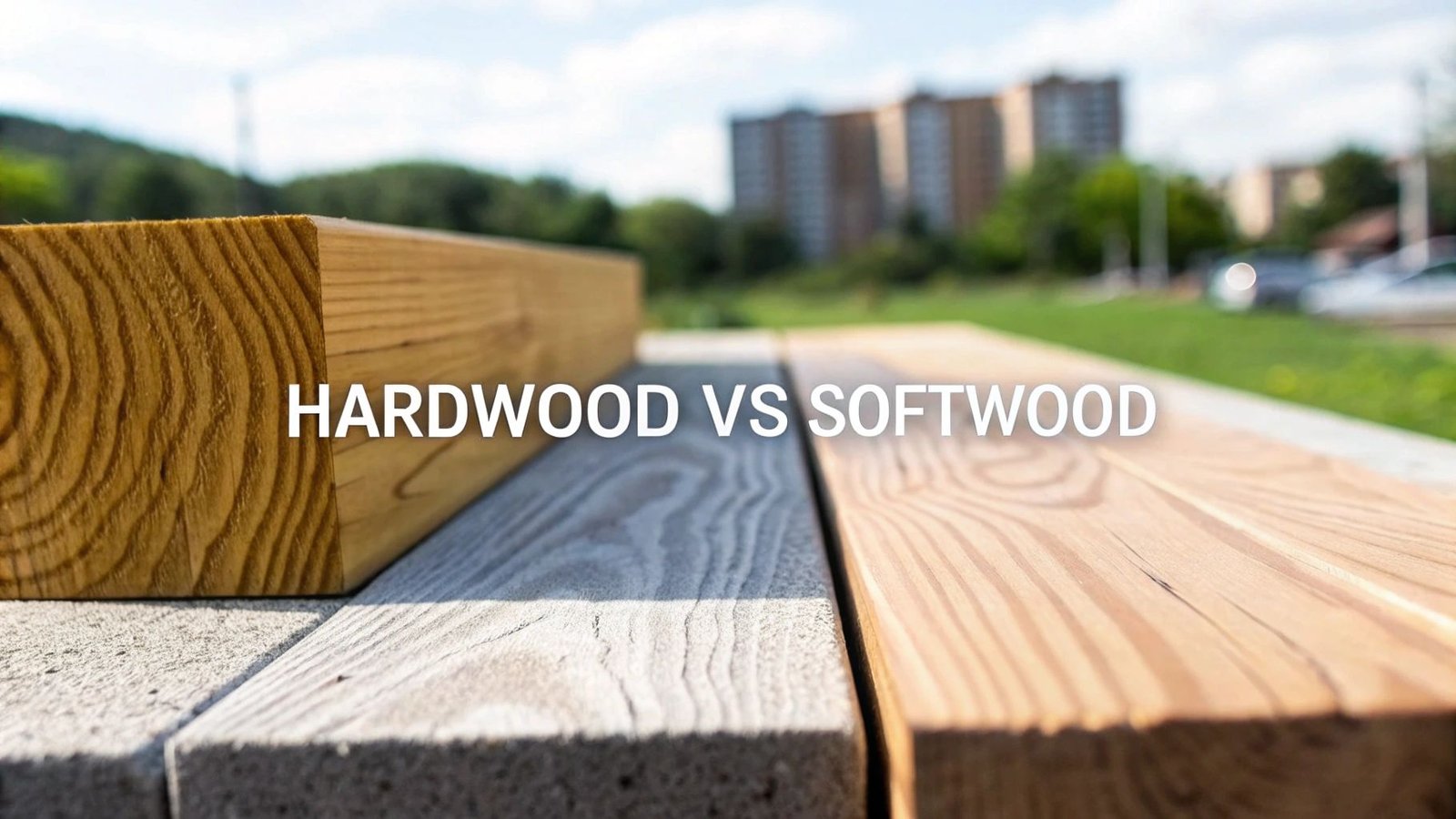
Softwood and Hardwood are classifications based on tree biology: hardwood comes from deciduous angiosperms, while softwood comes from coniferous gymnosperms. These biological differences influence properties such as density, grain structure, durability, and suitability for construction, furniture, and finishing techniques.
It’s a common misconception that the difference between softwood and hardwood relates to strength or hardness. In reality, the distinction is botanical. Hardwoods come from deciduous trees—those that shed their leaves annually—while softwoods come from evergreen conifers. This is an important distinction, as some hardwoods, such as Balsa, are very soft, while certain softwoods, like Yew, can be comparatively hard.
The article explores the differences between hardwood and softwood, covering their botanical classification, physical properties, cost, availability, and practical uses in construction, furniture, and Yakisugi finishing. It also explains how to choose the right type of timber for different projects.
Demystifying The Botanical Divide
When choosing timber, it’s easy to assume that the terms “hardwood” and “softwood” refer to durability. In reality, the distinction is based on how trees reproduce. Understanding this botanical difference is the first step in selecting the right wood for your project.
Hardwoods are classified as angiosperms, meaning they are flowering plants. Their seeds are enclosed within a fruit or nut—for example, an acorn from an oak tree.
Softwoods, in contrast, are gymnosperms. These trees, such as pines and firs, do not produce flowers. Instead, they release exposed seeds from cones and rely on wind for pollination. This fundamental biological difference leads to distinct cellular structures, which ultimately influence their physical properties.
The core takeaway is simple: “hardwood” and “softwood” are botanical classifications, not direct indicators of strength. The actual density and durability of wood depend on the specific species rather than the category itself.
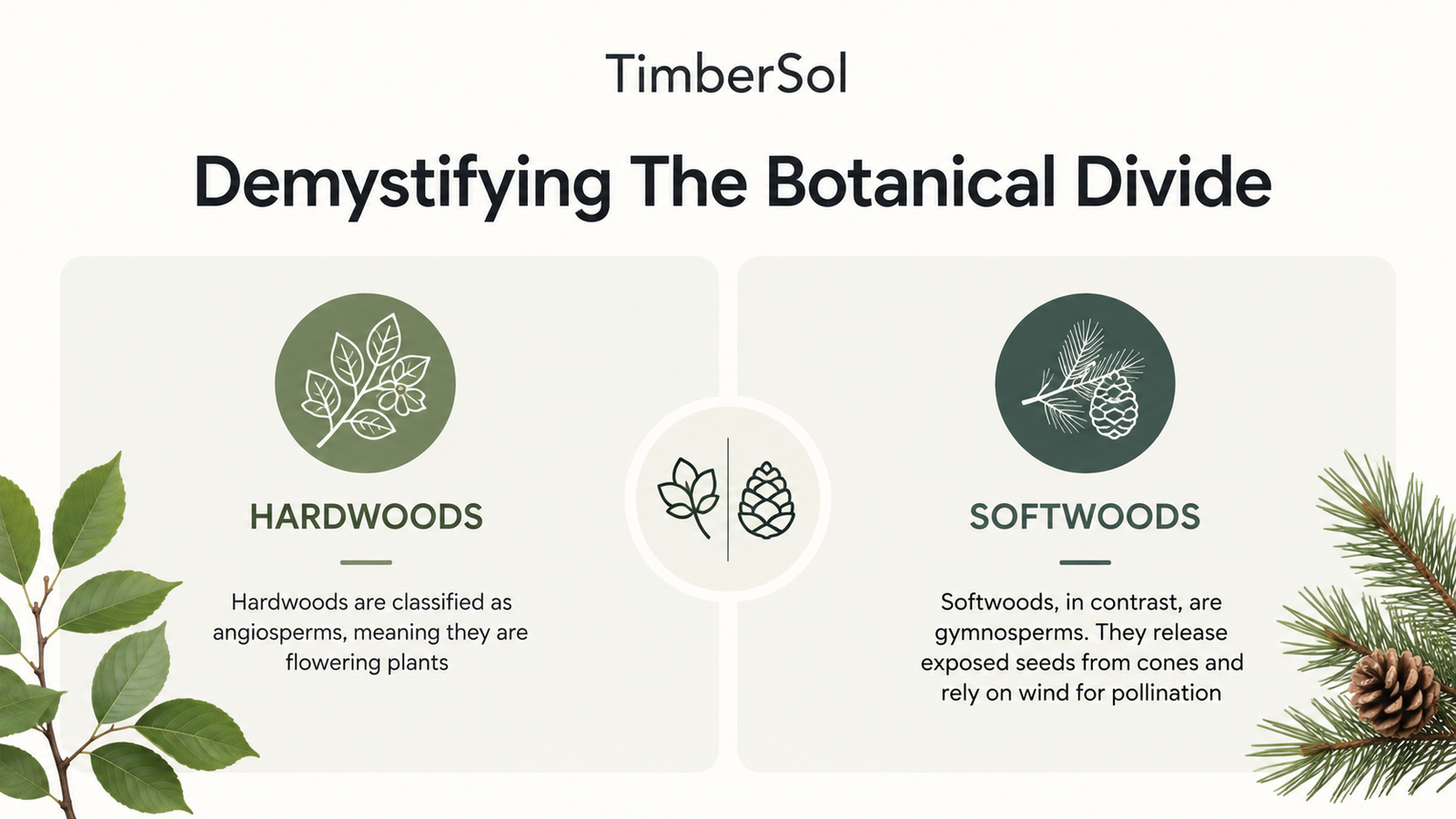
To make this clearer, the table below outlines the key botanical differences.
Hardwood vs Softwood At a Glance
| Characteristic | Hardwood | Softwood |
|---|---|---|
| Tree Type | Deciduous (loses leaves annually) | Coniferous (evergreen with needles) |
| Botanical Class | Angiosperm (flowering plants) | Gymnosperm (non-flowering plants) |
| Seed Type | Enclosed within a fruit or nut | Exposed, often found in cones |
| Common Examples | Oak, Maple, Beech, Balsa | Pine, Fir, Cedar, Yew |
Ultimately, understanding this distinction helps explain why different types of wood behave as they do—from their grain structure to their suitability for specific applications.
Understanding the UK’s Timber Landscape
Understanding the botanical difference between softwood and hardwood is a useful starting point, but what really matters is how this distinction applies in the UK. The local timber market has been shaped by a combination of history, climate, and economic factors, all of which influence what materials are readily available for different projects.
Although the UK has 32 native tree species, with 29 classified as broadleaves (hardwoods), the composition of commercial forests tells a different story. Much of this is the result of post-war rebuilding, when fast-growing conifer species were planted extensively to rapidly restore the country’s timber supply.
Softwoods: The Commercial Powerhouse
Today, softwoods form the backbone of the UK timber industry. Their fast growth and suitability for construction make them the most economical option for large-scale forestry, directly influencing both the cost and availability of timber for developers and homeowners alike.
The dominance of softwoods in the UK market is significant. Although conifers make up around half of the country’s woodland area, they account for over 92% of all timber harvested. This highlights their central role in commercial forestry.
Production is also under pressure to meet high demand. The UK consumes more than 50 million tonnes of timber each year, with softwoods making up the majority used in construction and paper manufacturing. Despite an active domestic forestry sector, the UK still relies heavily on imports, with less than 10% of timber being homegrown.You can explore the broader implications in our article on the sustainability of timber.
Hardwoods: A Niche and Valued Resource
In contrast, native hardwoods such as oak and beech occupy a smaller, more specialised role within the UK timber market. Their slower growth rate makes them a long-term investment for forestry, and they are typically reserved for higher-value applications.
These woods are commonly used in fine furniture, bespoke cabinetry, and premium flooring—areas where their natural appearance and durability are particularly valued. While they are not used on the same large scale as softwoods, hardwoods remain a sought-after resource for projects that prioritise quality and longevity.
Comparing Practical Wood Properties and Performance
While botanical classification provides the foundation, the real differences between softwood and hardwood become clear in their physical properties. Factors such as strength, durability, appearance, and workability ultimately determine how timber performs in practical applications. Understanding these characteristics is essential when selecting the right material for a project.
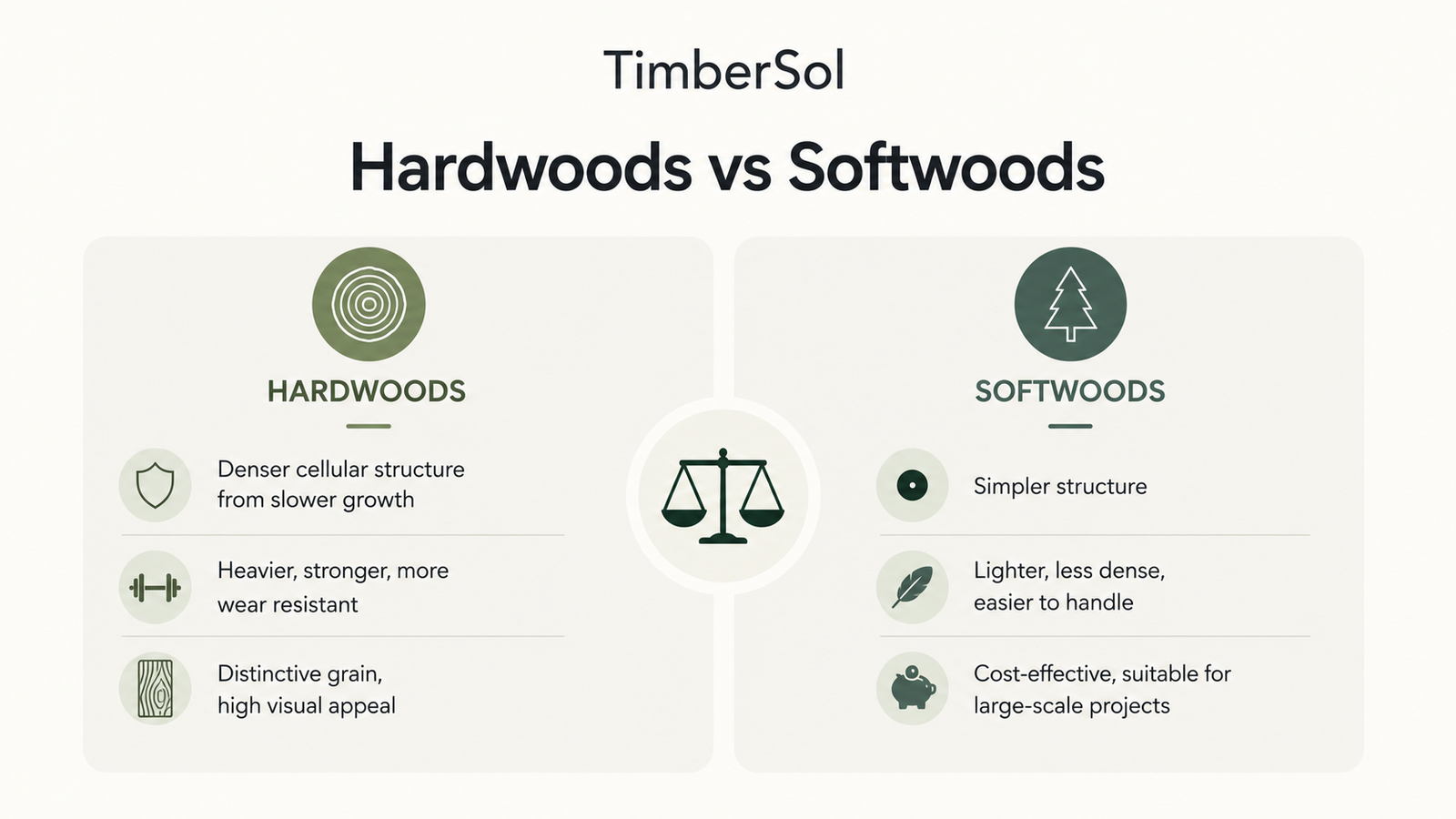
Hardwoods generally have a more complex and dense cellular structure, largely due to their slower growth rate. This typically results in timber that is heavier, stronger, and more resistant to wear over time. Their intricate grain patterns also give them a distinctive visual appeal, making them well suited to applications where both performance and aesthetics are important.
Softwoods, by comparison, have a simpler structure. This produces a lighter and less dense material that is easier to handle and work with. Their faster growth rate and more uniform grain make them a practical and cost-effective choice for large-scale projects where efficiency and budget considerations are key.
Density and Durability
The most noticeable difference between softwood and hardwood is density. Hardwoods such as Oak are known for their exceptional hardness, making them highly resistant to dents, scratches, and general wear. This is why they are commonly used in high-traffic areas.
Softwoods like Pine are less dense. While they are still strong enough for most structural applications, they are more prone to dents and surface damage from everyday use. This makes them less suitable for surfaces such as flooring or worktops, where long-term durability is a priority.
The reason for this difference lies in growth rate. Hardwoods grow slowly—often over many decades—which results in tightly packed fibres and a dense, robust material. This natural density is what makes hardwoods ideal for applications that require longevity, including fine furniture, bespoke cabinetry, and hard-wearing flooring.
Workability and Finish
How easily timber can be cut, shaped, and finished is another key consideration. In general, softwoods are easier to work with. Their lower density allows them to be sawn and nailed with less effort, making them a popular choice for general construction and DIY projects.
Hardwoods, by contrast, require more effort and precision. Their higher density can make cutting and machining more demanding, often requiring sharp, high-quality tools to achieve clean results. However, this density also offers an advantage: their fine, closed grain can be sanded to a very smooth finish and hold crisp, intricate details beautifully. For a deeper understanding, you can explore our guide on the properties of hardwood.
When it comes to applying a finish, the differences are just as noticeable:
- Softwoods tend to absorb stains and paints very easily. However, their more open grain can sometimes result in a blotchy or uneven appearance if the surface is not properly sealed beforehand.
- Hardwoods take stains very well, often enhancing their natural grain patterns. They can also be oiled or polished to achieve a high-quality finish, making them a premium finish that’s hard to beat.
Cost and Availability: The Deciding Factors
Beyond grain and density, practical factors such as cost and availability often play a decisive role when choosing between hardwood and softwood. In the UK, timber pricing reflects the entire lifecycle of the material—from growth rate to processing requirements.
Hardwoods typically come with a higher price, and for good reason. Many species take decades, sometimes over a century, to reach maturity, making them a long-term forestry investment. After harvesting, the timber often requires specialised kiln-drying to achieve stability, a process that is both time-consuming and costly. These factors position hardwood as a premium material, best suited to projects where longevity and visual quality are essential.
Why Softwood Is So Widespread
Softwoods are widely used largely because of their fast growth cycle. Compared to hardwoods, they can be harvested and replanted in a much shorter time, creating a consistent and cost-effective supply. This efficiency has established softwood as the foundation of the UK’s commercial timber industry.
The economic impact is substantial. Forestry and primary wood processing in the UK contribute £2.42 billion in Gross Value Added, with the softwood sector driving key industries such as construction and packaging. The UK’s reliance on softwood is also evident in import data, with millions of cubic metres of sawn timber and wood panels—predominantly softwood—arriving each year.
In contrast, the smaller, often artisan-led hardwood sector serves a more specialised market that values British provenance and long-term durability. For a deeper dive into these figures, the official 2024 Forestry Statistics is an excellent resource.
In the end, your budget will guide your decision. Softwood offers a versatile and accessible solution for large-scale applications such as structural framing. Hardwood, on the other hand, is a more considered investment, best suited to feature elements like fine furniture or flooring where long-term durability are key.
Best Uses for Hardwoods and Softwoods
Understanding the technical differences between hardwoods and softwoods is important, but knowing where each type performs best in real-world applications is what truly matters. Each has a distinct role, from structural construction to high-end finishes and furniture.
Hardwoods are typically chosen for applications where appearance and long-term durability are essential. Their dense structure and distinctive grain patterns make them well suited to high-traffic areas and items designed to last for decades. Examples include solid oak flooring that can withstand years of use, or handcrafted furniture such as mahogany tables that passed down through generations.
Softwoods, by contrast, are the primary material used in construction. They offer a strong balance of affordability, ease of use, and a high strength-to-weight ratio. This makes them ideal for structural purposes, forming the internal framework of buildings and providing reliable support without significantly increasing costs.
Prime Applications for Hardwoods
Hardwoods are the preferred choice when aesthetics and resilience are the main priorities. Their natural resistance to everyday wear makes them a long-term investment in quality.
Common uses include:
- High-end furniture: Woods such as walnut and cherry are valued for their distinctive grain and ability to hold fine details, making them ideal for premium, long-lasting pieces.
- Durable flooring: Oak, maple, and ash are widely used for flooring due to their hardness and resistance to dents and scratches.
- Bespoke cabinetry: The strength and stability of hardwoods make them well suited for custom kitchen cabinets and detailed joinery designed to perform flawlessly for decades.
Where Softwoods Truly Shine
Softwoods provide practical and cost-effective solutions, particularly for large-scale projects where speed and ease of installation are key factors.
Their most common applications are:
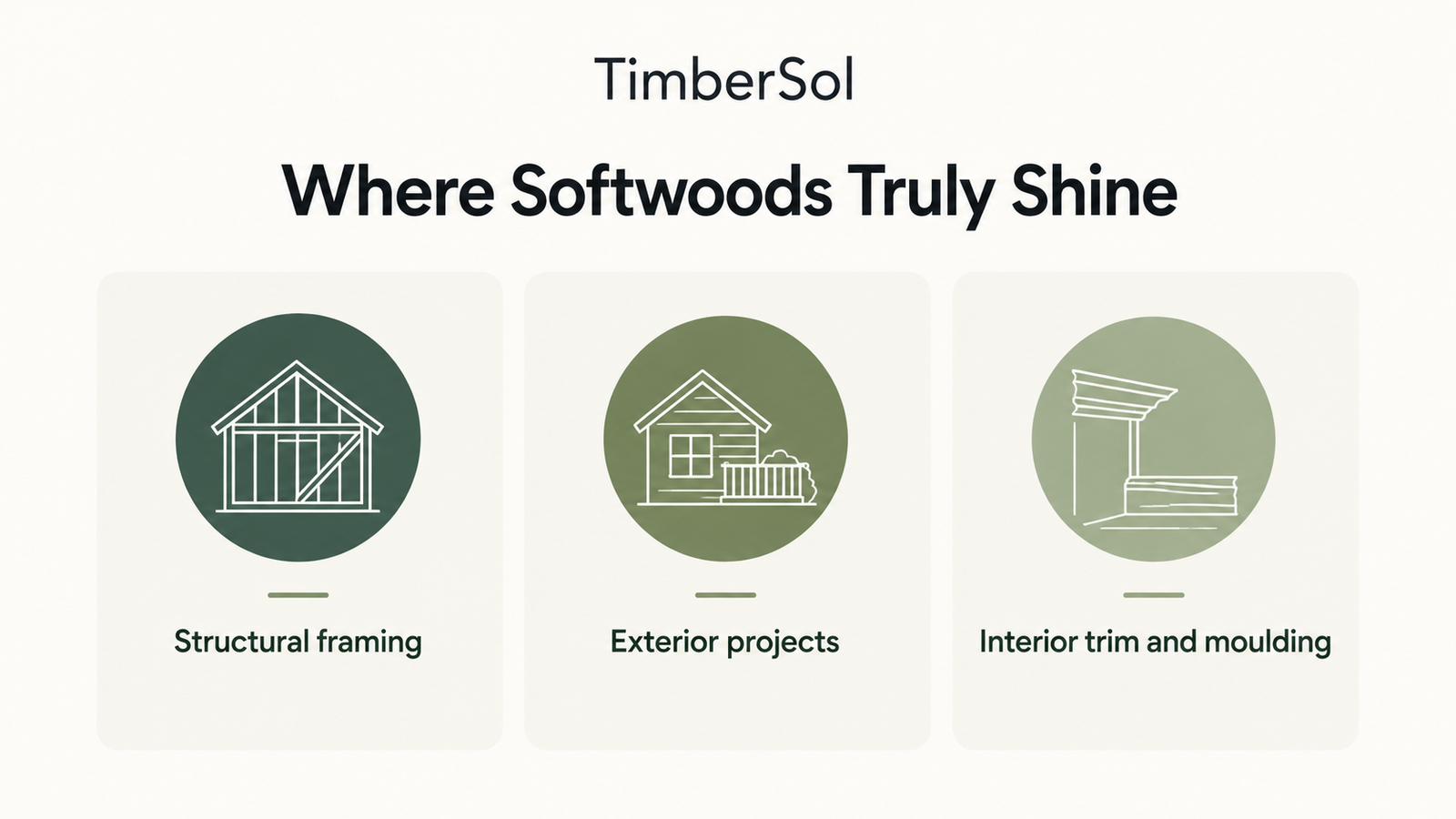
- Structural framing: Timber species such as pine, fir, and spruce are widely used for wall studs, floor joists, and roof trusses, forming the structural framework of residential construction.
- Exterior projects: When properly treated to resist rot and insect damage, softwoods such as douglas fir wood cladding are well suited for fencing, garden decking, and cladding, offering a reliable balance between durability and affordability.
- Interior trim and moulding: Pine is commonly used for skirting boards, architraves, and window sills, especially in applications where the final finish is going to be painted.
Choosing the Right Wood for Yakisugi Finishes
When it comes to the traditional Japanese technique of Yakisugi (also known as shou sugi ban), the difference between softwood and hardwood becomes especially important. While hardwoods are often associated with durability, they are generally not suitable for this specific charring process.
The dense and complex cell structure of most hardwoods resists an even burn. As a result, attempting to char them often leads to a patchy, inconsistent finish, rather than forming the uniform, protective carbon layer that Yakisugi is known for.
Why Softwoods Are the Superior Choice for Charring
It all comes down to their unique cellular structure and higher resin content, which make them ideal for achieving a controlled, deep, and uniform char. This is the process that forms the stable and visually striking carbon layer.
Species such as Cedar, Larch, and Pine have the ideal properties for a successful Yakisugi finish. Their more open grain structure and natural resins support the charring process, helping to create the distinctive cracked “alligator skin” texture that is so highly valued.
This controlled burn isn’t just about appearance—it creates a natural barrier that is highly resistant to insects, rot, and even fire. It’s a clear example of how a wood’s inherent properties can be enhanced through a traditional technique.
The resulting charred surface is both visually striking and highly functional, particularly in advanced modified timber solutions such as charred accoya cladding. The timber becomes naturally preserved, often removing the need for additional chemical treatments. If you’re exploring sustainable wood protection, our guide on non-toxic wood preservatives offers further alternatives.
For anyone planning a charred timber project, the choice is straightforward. Selecting the right softwood is essential to achieving the authentic beauty, durability, and performance that define the Yakisugi technique.
Still Have Questions About Hardwood and Softwood?
Let’s clear up a few common points that often come up. These final insights will help you confidently choose the right timber for your project.
Is Pressure-Treated Timber a Hardwood or Softwood?
In most cases, pressure-treated timber is softwood. Species such as pine or fir have a naturally porous structure that allows chemical preservatives to be forced deep into the grain. This is what enables these otherwise less durable woods to gain long-lasting resistance to rot and insect damage when used outdoors.
Is Softwood a Good Choice for Making Furniture?
Absolutely. Softwoods such as pine are a popular choice for furniture, particularly for rustic, farmhouse-style, or painted pieces. While they are not as resistant to dents and impacts as hardwoods like oak, their affordability and ease of workability make them a practical and widely used option.
Which is More Sustainable: Hardwood or Softwood?
Sustainability depends more on forestry practices than the wood type itself. Softwoods generally grow faster and are often sourced from managed plantations, making them a highly renewable resource.
On the other hand, hardwoods can be equally sustainable when sourced responsibly. The key factor is certification—look for standards such as FSC or PEFC, which confirm that the timber has been produced using environmentally responsible practices.
For bespoke charred timber solutions that combine durability with striking aesthetics, explore the range of charred cladding, including charred douglas fir cladding, available at TimberSol. Learn more at https://timbersol-backup.elnoirstudio.com.
