
Cost of Cladding a House: UK Guide to Prices

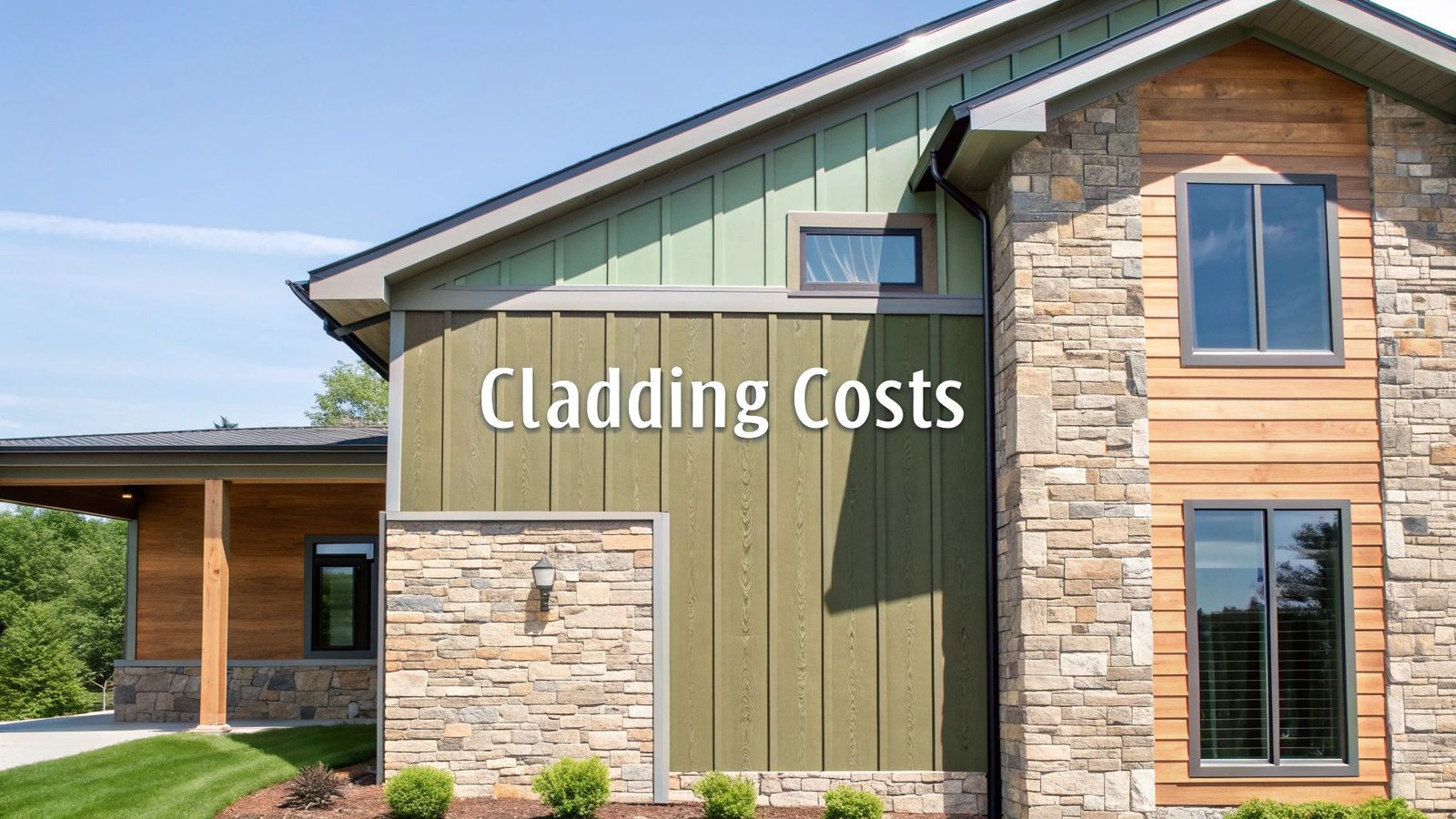
Trying to nail down the cost of cladding a house in the UK can feel a bit like asking “how long is a piece of string?” For an average home, you’re generally looking at a budget somewhere between £4,000 and £20,000. Where your project falls in that range really boils down to the materials you fall in love with, the size of your house, and how tricky the installation will be.
Your Quick Guide to House Cladding Costs
Before we get into the nitty-gritty of different materials, let’s break down where your money actually goes. Think of it like a recipe for your home’s exterior – the final cost isn’t just the ingredients, but the skill and equipment needed to put it all together.
Your total project quote will be a mix of these three core elements:
- Material Costs: This is the big one and where you have the most control. You could go for budget-friendly uPVC or fibre cement, something in the mid-range like timber, or splash out on premium natural stone. Each comes with its own price tag per square metre.
- Labour and Installation: Getting it fitted properly is crucial for a finish that looks great and protects your home from the British weather. Labour rates can differ quite a bit depending on where you are in the UK, the installer’s experience, and whether your house has lots of awkward corners or high gables.
- Additional Services: It’s easy to forget the extras. You’ll likely need scaffolding for anything above the ground floor, a skip to get rid of the rubbish, and potentially a bit extra for removing any old, tired cladding that’s already on the walls.
To give you a clearer picture, here’s a quick overview of what to expect.
Estimated UK House Cladding Costs at a Glance
This table breaks down the typical costs you’ll encounter when planning a cladding project for a standard UK house.
| Cost Component | Average Price Range |
|---|---|
| Material Costs (per m²) | £40 – £150 |
| Labour Costs (per day) | £150 – £300 |
| Scaffolding Hire (per week) | £500 – £800 |
| Skip Hire (8-yard) | £200 – £300 |
| Old Cladding Removal | £500 – £1,500 |
As you can see, labour is a significant chunk of the budget, with daily rates for a skilled fitter often falling between £150 to £300. The materials themselves can range wildly, from around £40 per square metre on the low end to £150 or more for high-end options. Getting a handle on these numbers early on is the key to creating a realistic budget.
If you’re leaning towards a premium finish, it’s worth exploring natural thin stone veneer pricing and volume discounts to see how different styles stack up. For those who love a timeless, natural look, our guide on timber external cladding is a great place to understand its unique appeal and costs. Once you grasp these core components, you’re in a much better position to plan your project without any nasty surprises.
Comparing Your Cladding Material Options
When it comes to the cost of cladding a house, your choice of material is by far the biggest decision you’ll make. It’s what dictates not just the upfront bill, but the long-term performance and the entire look of your home. Each option strikes a different balance between initial outlay, durability, and visual appeal.
From the practical, budget-conscious choice of uPVC to the timeless, rugged appeal of natural stone, you’re not just buying a product; you’re investing in your property’s future. It’s crucial to look beyond the price per square metre and consider how much maintenance you’re prepared for, what aesthetic you’re aiming for, and what truly suits the character of your house.
This chart gives you a quick visual breakdown of where the money goes in a typical cladding project, splitting the costs between materials and labour.
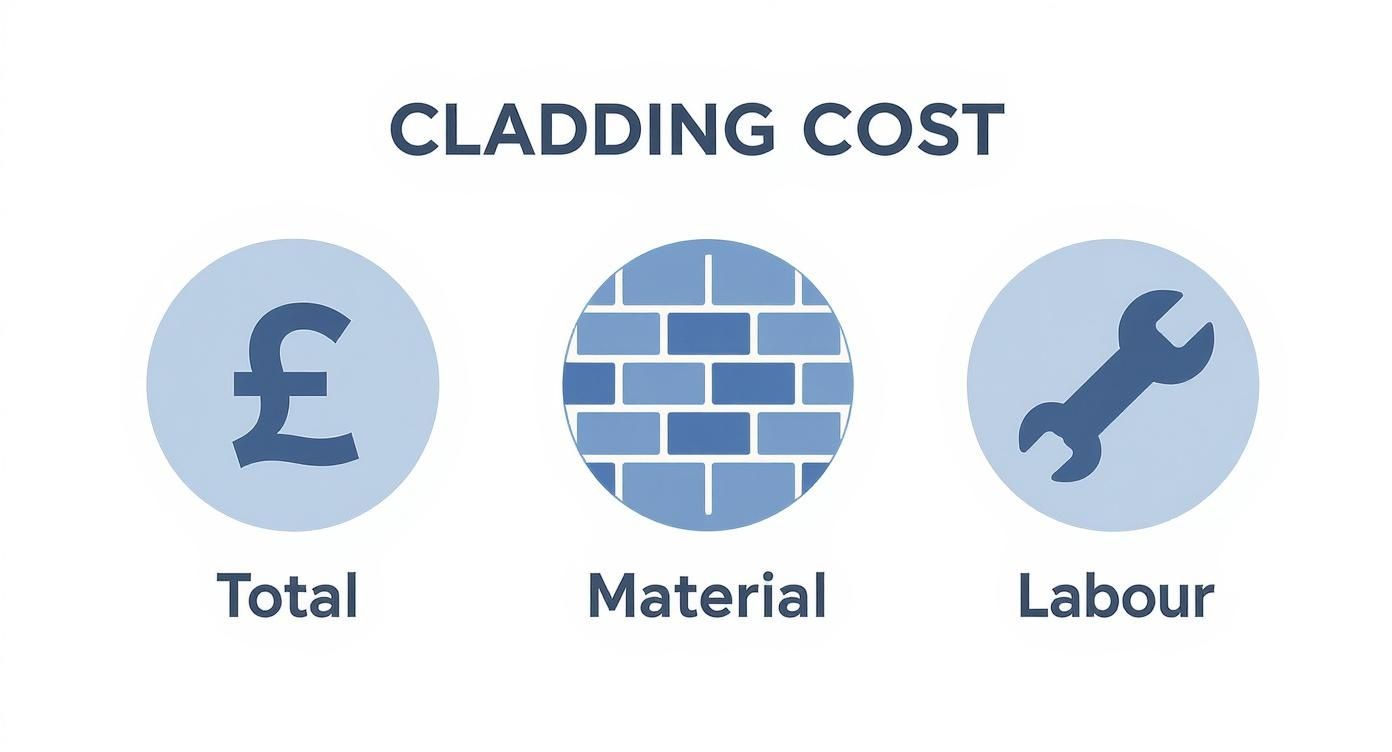
As you can see, materials and labour often take up roughly equal slices of the pie. This really drives home the point that while the material price is key, the complexity of fitting it is just as important to your final budget.
To give you a clearer picture, let’s take a closer look at some popular materials, comparing their costs, longevity, and the upkeep they demand.
Comparison of Popular Cladding Materials
| Material | Average Cost (Supply & Install per m²) | Typical Lifespan | Maintenance Level |
|---|---|---|---|
| uPVC | £30 – £60 | 20-30 years | Very Low |
| Fibre Cement | £60 – £120 | 40-50 years | Low |
| Softwood Timber | £50 – £100 | 15-30 years | High |
| Hardwood Timber | £100 – £200 | 40-60 years | Medium |
| Stone | £120 – £250 | 100+ years | Very Low |
| Metal (Aluminium/Zinc) | £100 – £220 | 50-80 years | Very Low |
This table shows the trade-offs at a glance. Cheaper options like uPVC might need replacing sooner, while premium materials like stone can last a lifetime with minimal fuss.
Affordable and Practical Choices
If you’re focused on getting the job done well without breaking the bank, a couple of materials stand out for their excellent value. They offer a clean, modern finish that’s both protective and relatively light on the wallet.
- uPVC Cladding: This is often the most budget-friendly route. uPVC is lightweight, which makes it faster (and cheaper) to install, and it needs little more than a wash now and then. It also comes in plenty of colours and finishes, so it’s a versatile pick for all sorts of homes.
- Fibre Cement: A brilliant all-rounder, fibre cement gives you the look of timber without the constant maintenance. It’s incredibly tough, won’t rot, is fire-resistant, and you can paint it any colour you like. It sits in a great mid-range price bracket.
These options are massively popular for a reason – they provide a quick, effective facelift for a home’s exterior while keeping the total cost of cladding a house firmly under control.
Mid-Range and Natural Aesthetics
Got a bit more room in the budget and love a more natural, classic look? Then timber and its more modern variations are fantastic contenders. These materials bring a warmth and character that others can’t match, but they do tend to need a bit more care over the years.
Timber cladding is a traditional favourite, loved for its organic beauty. Softwoods like pine are more affordable, while hardwoods such as oak will cost more but offer greater durability. The main thing to remember with timber is the upkeep; it will need treating every few years to protect it from the British weather.
One particularly stunning and resilient timber option is Yakisugi, also known as shou sugi ban. This ancient Japanese technique involves charring the surface of the wood. This process naturally seals and preserves it, making the timber exceptionally resistant to rot, pests, and even fire.
Although the initial cost is higher than standard timber, its incredible longevity and low-maintenance profile make it a smart investment. To get a feel for the full spectrum of materials, you can explore the different types of cladding available today and see what might work for your home.
Premium and High-End Finishes
For those wanting to make a real statement with a luxurious, high-impact finish, stone and metal cladding sit at the top of the price scale. These materials offer unrivalled durability and a sophisticated aesthetic that sets a property apart.
Stone cladding gives a home a sense of permanence and grandeur that is hard to replicate. It works by applying a thin layer of real or engineered stone to the exterior, giving you the authentic look of a stone-built house without the massive cost or structural demands. High-quality stone cladding can start from around £50 per square metre for the material alone, putting it within reach for feature walls or even full facades. Of course, you’ll need to factor in installation, which can easily double the cost depending on the scale and complexity of the job.
Metal cladding, using materials like aluminium, zinc, or steel, delivers a sharp, contemporary look. It’s incredibly long-lasting and needs next to no maintenance, which is why you’ll see it used on so many modern, architectural homes.
Getting to Grips with Labour and Installation Quotes
Choosing the perfect cladding material is one thing, but getting it fitted flawlessly is what really makes the project. Labour is a big slice of the total cost of cladding a house, so understanding how installers work out their prices puts you in a much stronger position.
It’s not as daunting as it might sound. Think of it like hiring any other skilled tradesperson – you’re paying for their time, their expertise, and the careful work needed for a perfect finish. A good fitter doesn’t just make the cladding look great; they ensure it creates a tough, weather-tight shield for your home.
When a quote lands in your inbox, you’ll usually see the cost laid out in a couple of ways. Some tradespeople prefer a day rate, which typically falls between £150 and £300. Others will give you a fixed price for the whole job. A fixed price is great for budgeting, while a day rate can offer a bit more flexibility if the scope of the project shifts.
What Shapes the Labour Cost
So, what actually goes into that final figure? Several things influence how much you’ll end up paying for installation, which is why a one-size-fits-all price just doesn’t exist. It stands to reason that cladding a simple, single-storey bungalow is going to be cheaper than tackling a three-storey townhouse with lots of fiddly dormers and extensions.
Here are the main things that drive up the cost:
- The Shape of Your Home: A straightforward, boxy house is the easiest job. Add in complex architectural details, lots of windows, or angled walls, and you’re looking at more cuts, more precision, and more time on the job.
- Height and Access: As soon as work goes above the ground floor, you need scaffolding and extra safety gear. Cladding a gable end or the upper storeys of a house will always cost more than working at ground level.
- The Material Itself: Different cladding materials need different fitting techniques. Lightweight uPVC is relatively quick to install. On the other hand, heavy stone slips or certain specialist timber systems need more time and skill, which pushes the labour cost up.
An installer’s experience is a huge factor. A well-regarded specialist with a gallery of impressive projects might charge more than a general builder, but you’re often paying for peace of mind and a top-quality finish that lasts.
Regional Price Differences
It’s also worth remembering that labour costs change depending on where you are in the UK. You can expect to pay more for a fitter in London and the South East than in other parts of the country, simply because the cost of living and local demand are higher.
At the end of the day, a good, detailed quote should clearly explain the scope of work, a realistic timeline, and a full breakdown of the costs involved. For a closer look at what the job entails, our guide on the installation of cladding is a fantastic resource. Once you understand these moving parts, you can compare quotes with confidence and know you’re getting fair value for a job well done.
Uncovering the Hidden Project Costs
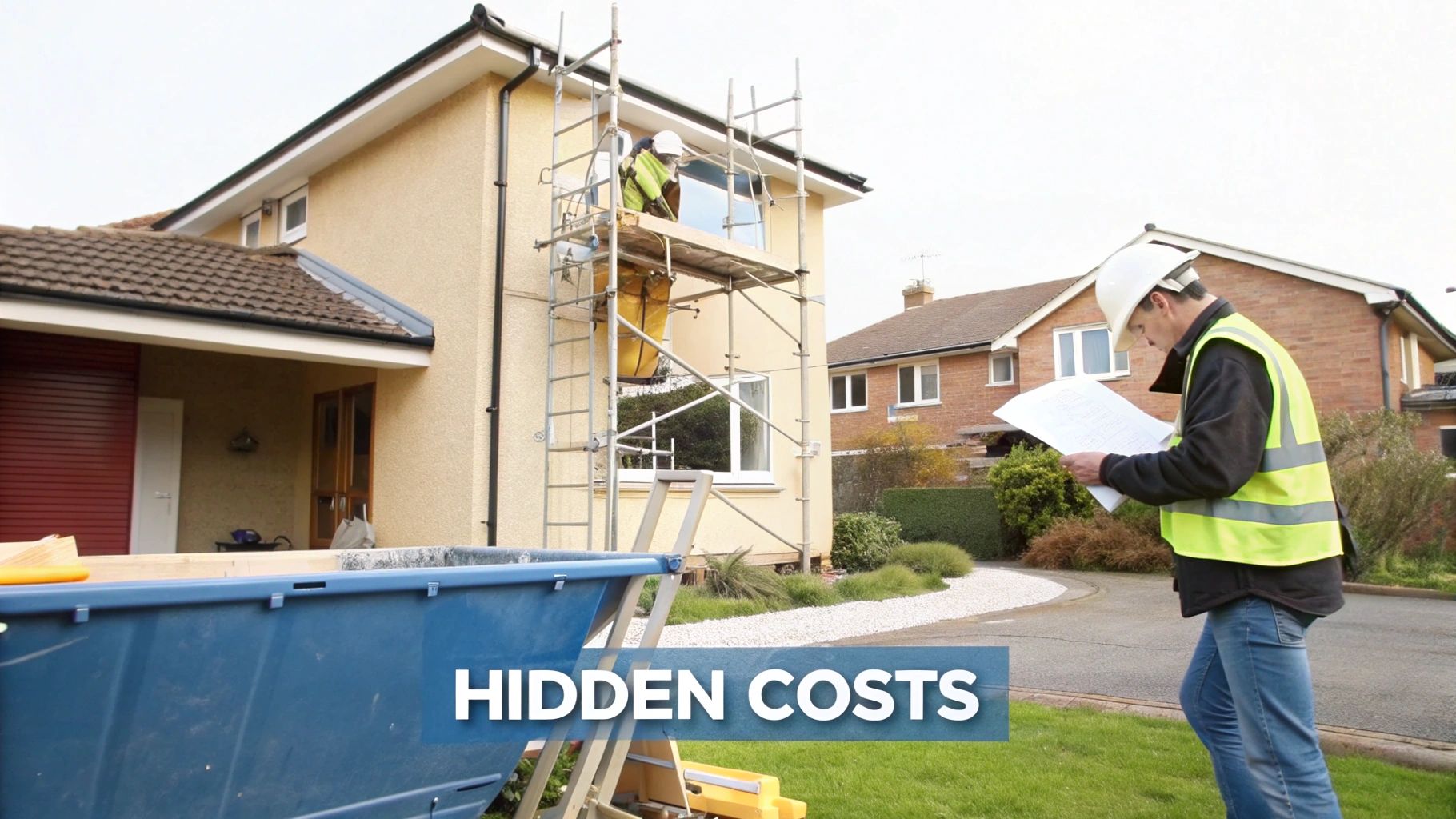
When you get a quote for new cladding, it’s easy to focus on the big-ticket items like materials and the installer’s day rate. But a smart budget is one that sees the whole picture, and that means accounting for the extra costs that often pop up along the way.
These aren’t ‘hidden’ fees in a sneaky sense. They’re just necessary parts of the job that don’t always get bundled into the main installation quote. Getting your head around them from the start is the best way to avoid any nasty surprises and keep your project running smoothly.
Common Additional Expenses
One of the most significant extra costs is scaffolding. For any house that isn’t a single-storey bungalow, it’s an absolute must-have for safety. For a standard semi-detached home, you should budget for around £500 to £800 per week. Naturally, the taller your house and the longer the job takes, the more this will be.
Then there’s the waste. All the old material, packaging, and offcuts have to go somewhere, which means hiring a skip. An 8-yard skip, which is a pretty common size for this kind of work, will typically set you back £200 to £300. It’s a small price to pay for keeping the site clean and safe.
Remember, you never truly know what’s underneath until the old cladding comes off. If the crew discovers rotten timber battens or crumbling brickwork, those issues have to be sorted before any new cladding can go on.
Preparing for the Unexpected
Beyond the usual suspects of scaffolding and skips, a few other costs might rear their heads depending on the specifics of your home. It’s always wise to build a little contingency fund into your budget to handle these things without breaking a sweat.
Here are a few other potential expenses to keep on your radar:
- Stripping Off Old Cladding: Don’t assume the removal of your existing exterior is included in the price. This can add another £500 to £1,500 to the bill, depending on what the material is and how difficult it is to get off.
- Structural Repairs: As we mentioned, any problems with the wall itself need to be fixed first. The cost here can vary wildly and often can’t be quoted until the wall is fully exposed.
- Hazardous Material Disposal: If your home is older, there’s a chance you could be dealing with asbestos. This requires specialist handling and disposal, so it’s worth looking into the costs of an asbestos skip bin hire.
- Guttering and Downpipes: It just makes sense. While you’ve got scaffolding up, it’s the perfect time to replace tired-looking or leaky gutters. This could add a few hundred pounds but saves you getting the scaffolding back up a year later.
Having a frank conversation with your installer about these potential extras from the get-go will help you build a much more realistic and robust budget.
Exploring Premium and Specialist Finishes
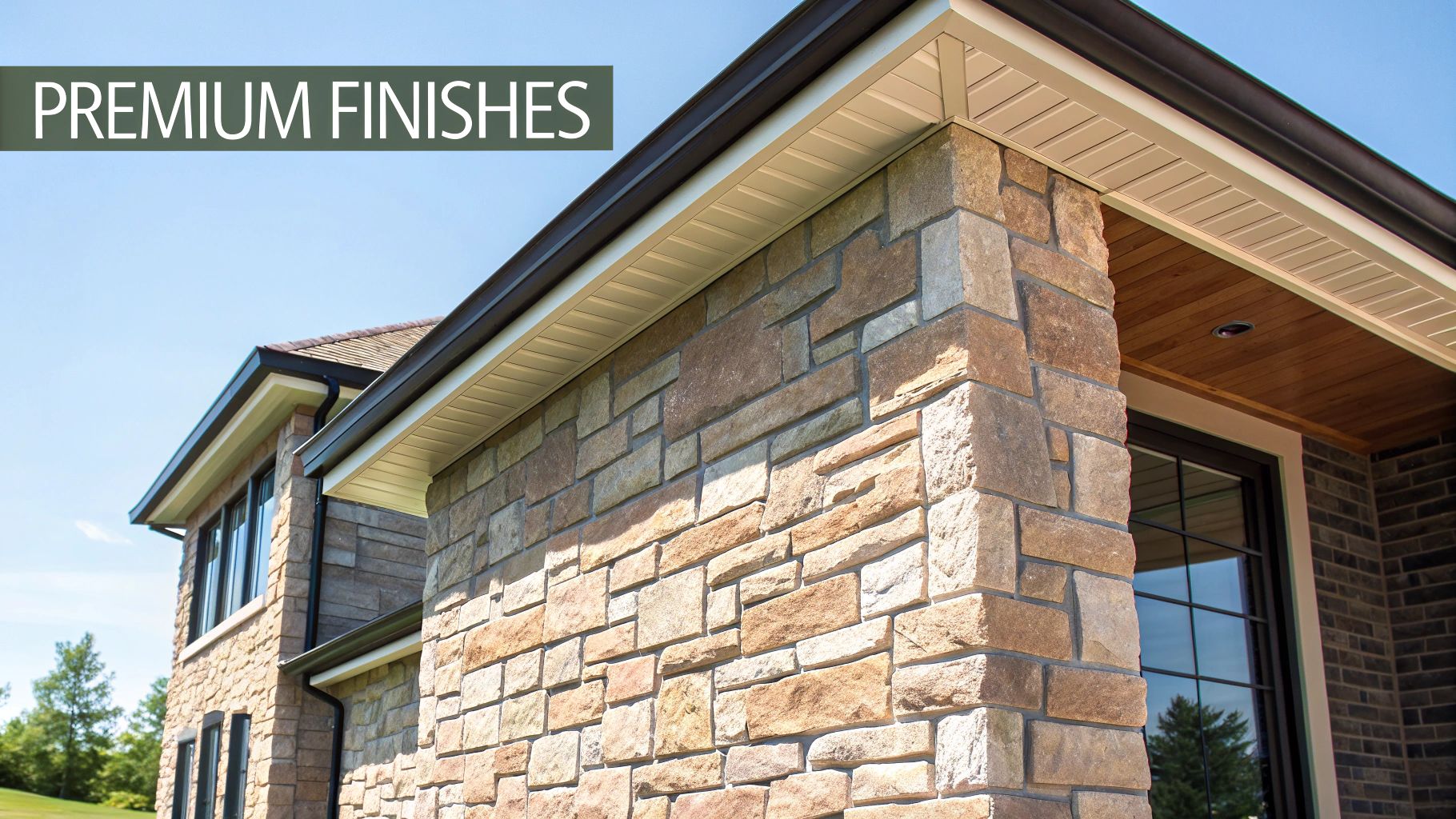
While everyday materials like uPVC and timber get the job done for most homeowners, some projects demand something truly special. If you’re aiming for a standout look or have to follow strict heritage rules, it’s time to explore the world of premium cladding.
Think of these high-end materials less as a simple outer layer and more like a bespoke suit for your home. They’re designed to make a statement and are a serious investment in architectural quality. Naturally, they sit at the very top end of the cost of cladding a house, where unique character and longevity are the main priorities.
Understanding High-End Material Costs
So, what makes premium cladding, well, premium? It all comes down to the quality of the materials and the craftsmanship involved. We’re talking about natural stone-faced panels, expertly reconstructed stone, and specialist architectural metals that offer a kind of durability and visual depth you just don’t get from standard products.
The price tag reflects more than just the raw material; it includes the complex process of quarrying, cutting, and finishing each piece to perfection.
Yes, the initial cost is steep, but the payoff comes in the long run. These materials are built to last a lifetime with very little upkeep, making them a wise choice for a ‘forever home’ or a landmark property.
Looking at the numbers, there’s a clear hierarchy. For example, reconstructed stone-faced panels typically land somewhere between £400 and £500 per square metre. If you step up to premium natural stone like Portland stone, you can expect to pay from £750 to £1,100 per square metre. For the ultimate in luxury, granite or marble could push that figure as high as £950 to £1,500 per square metre. You can see a detailed breakdown of these high-end cladding panel costs and find more insights from industry specialists.
These premium materials are not just about looks; they are chosen for their ability to withstand the harshest weather conditions for decades, ensuring the building’s facade remains pristine and protected.
When Specialist Finishes Are Required
Sometimes, the choice isn’t just about aesthetics—it’s a requirement. If your home is in a conservation area or is a listed building, planning regulations will often have the final say on what cladding you can use.
Local authorities will insist on materials that respect the historical character of the neighbourhood. In these cases, authentic finishes like natural stone or heritage-style reconstructed stone aren’t just a preference; they’re essential for getting planning permission. This ensures any new work blends in beautifully, making the higher cost a necessary part of staying compliant.
Common Questions About House Cladding Costs
As you get closer to kicking off your project, it’s completely normal for questions to start bubbling up. Budgeting for a job as big as new cladding has a lot of moving parts, so it’s smart to get your head around the details first.
Below, we’ve tackled some of the most common queries we hear from homeowners about the cost of cladding a house and the real value it adds. The aim here is to give you clear, straightforward answers to help you plan with confidence.
Does Cladding Add Value to My House?
In a word, yes. High-quality cladding is a brilliant way to boost your home’s kerb appeal, which is a massive factor for potential buyers. A smart, well-kept exterior makes a powerful first impression and can genuinely lift your property’s market value.
But it’s not just about looking good. Many modern cladding systems also improve your home’s insulation. This upgrade can lead to a better Energy Performance Certificate (EPC) rating, making your property more attractive to buyers and cheaper to run for you. A higher EPC rating is a strong selling point that can help justify a higher asking price.
While the exact return on your investment will depend on the material you choose and the local property market, new cladding is widely seen as a worthwhile home improvement. It often pays for itself through a mix of increased property value, a better-looking home, and long-term energy savings.
How Can I Reduce the Cost of My Cladding Project?
Keeping costs in check without cutting corners on quality is the name of the game for any home improvement. Thankfully, there are several practical ways to make your cladding budget go a lot further.
It all starts with the material you choose. Opting for a cost-effective but durable option like uPVC or fibre cement can make a huge difference to the final invoice. These materials give a clean, modern finish and perform brilliantly for a fraction of the price of more premium alternatives.
Here are a few more tips to help you manage the budget:
- Get Multiple Quotes: This one is non-negotiable. Always get at least three detailed, written quotes from different reputable installers. This lets you compare prices properly and ensures you’re getting a fair, competitive rate for the work.
- Do Some of the Prep Work Yourself: If you’re handy and comfortable with a bit of DIY, you can save on labour costs. Simple jobs like clearing the work area, trimming back overgrown bushes, or removing old, non-hazardous cladding can reduce the hours your installers need to be on-site.
- Schedule for the Off-Season: The busiest time for builders is spring and summer. If your timeline is flexible, scheduling your project for late autumn or early winter could land you a better rate from tradespeople who aren’t as busy.
Do I Need Planning Permission to Clad My House?
In many situations, adding or replacing cladding falls under ‘permitted development’ rights, which is great news—it means you won’t need to go through the formal planning permission process. This makes things much simpler and quicker.
However, that’s not a blanket rule, and assuming you’re in the clear can be a costly mistake. There are specific circumstances where you will almost certainly need to get approval from your local planning authority before a single plank goes up.
You should always check if you need permission if:
- Your home is a listed building.
- Your property is in a designated area, like a Conservation Area, a National Park, or an Area of Outstanding Natural Beauty (AONB).
- The material you want to use is completely different from the original finish of the house or just doesn’t fit in with the local character.
The golden rule is this: when in doubt, check. A quick phone call or a visit to your local council’s planning department website will give you a definitive answer and keep you out of any potential legal hot water.
How Long Does Cladding Installation Take?
The timeline for a cladding project can vary quite a bit, but for a standard semi-detached house in the UK, you can generally expect the installation to take between 5 and 10 days.
Several things will affect the final timeline. The overall size of your home, how complex its design is (think multiple extensions or dormer windows), and the specific type of material being installed all play a part.
A smaller, straightforward job with easy-to-install uPVC panels might be done and dusted in just 3-5 days. On the other hand, a larger detached home being clad with intricate stonework could easily take two weeks or more. Your chosen installer should give you a clear, realistic schedule as part of their formal quote, so you’ll know exactly what to expect.
At TimberSol, we believe in the timeless beauty and unmatched durability of natural wood. Our expertise lies in Yakisugi, the traditional Japanese art of charring timber to create stunning, long-lasting cladding that protects and beautifies any building. If you’re looking for a finish that combines unique style with incredible resilience, explore our range of charred timber solutions at https://timbersol-backup.elnoirstudio.com.
