
Your Guide to Designing a Timber Cladding Wall

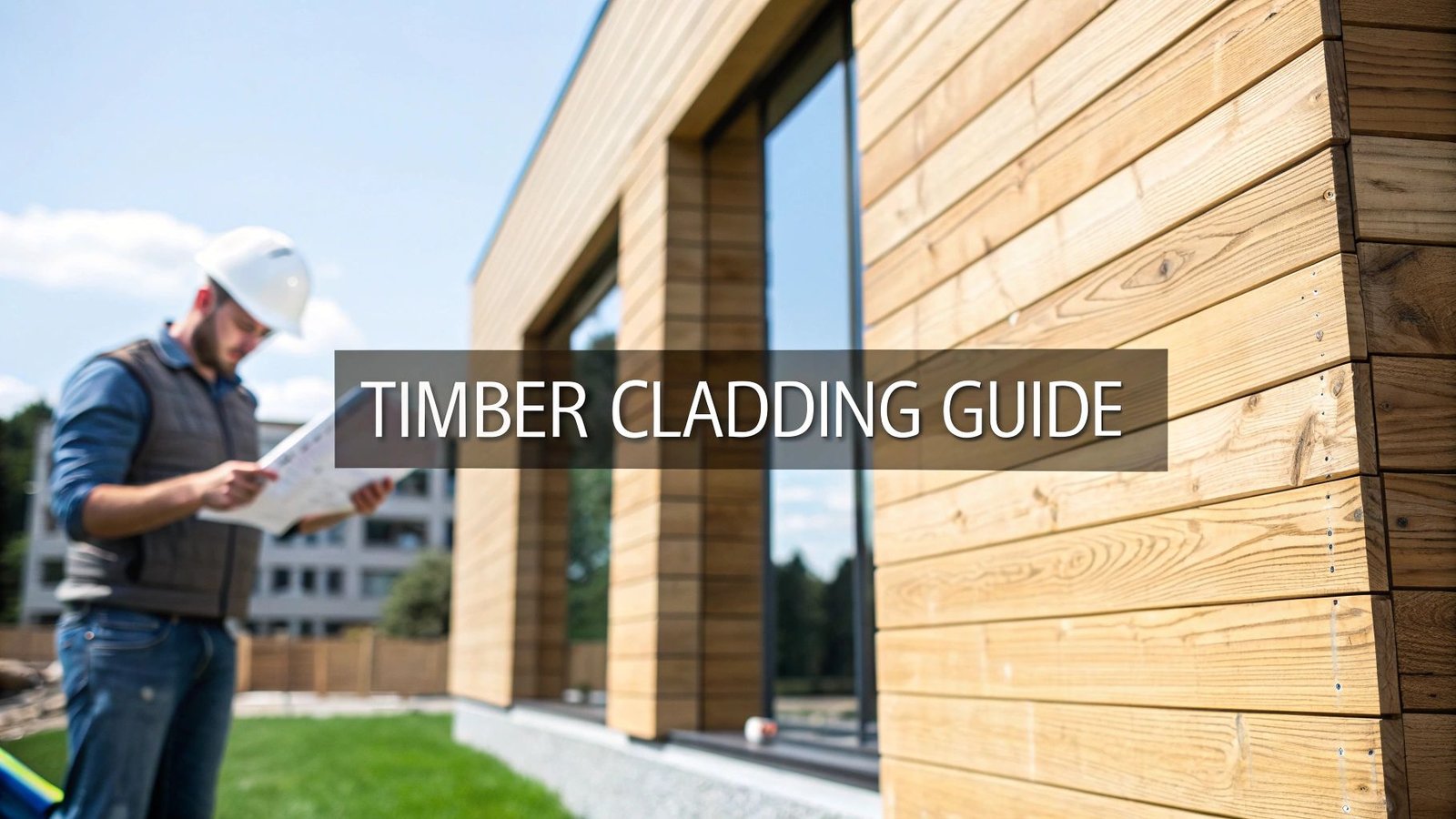
A timber cladding wall is a bit like giving your home a stylish, high-performance coat. It’s an outer layer of wooden boards fixed to the exterior of a building, shielding it from the elements while giving it a distinct architectural look.
What Is a Timber Cladding Wall Anyway?
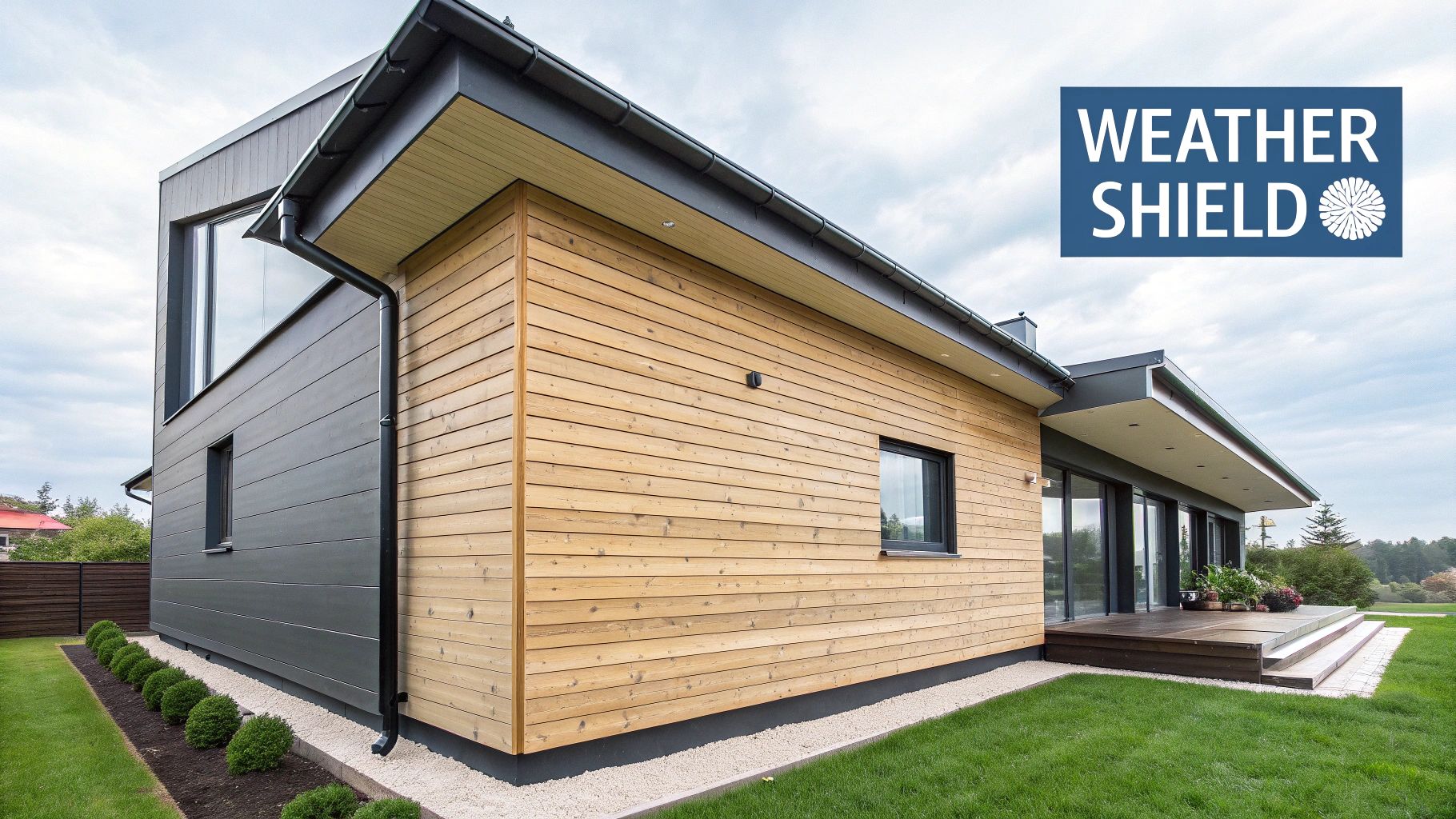
It’s easy to think of cladding as just a cosmetic touch, but it plays a crucial dual role. A timber cladding wall is your building’s first line of defence against whatever the weather throws at it, from driving rain to harsh winds. This outer "skin" is a vital part of the building envelope, protecting the main structure from moisture damage.
On top of that, it provides a bit of natural insulation. The small air gap between the cladding and the structural wall helps regulate the temperature inside, which can often mean lower energy bills all year round.
The Growing Appeal in the UK
Here in the UK, we've really seen a surge in the popularity of timber for building exteriors. I think it comes down to a growing appreciation for natural, sustainable materials that look fantastic and perform well. The great thing about a timber cladding wall is its versatility; it looks just as good on a rustic countryside cottage as it does on a sleek, modern city home.
The market definitely reflects this trend. The UK's timber cladding sector has grown significantly, thanks in large part to big investments in housing. In 2021/22, for instance, the government put about £9.6 billion into housing projects – a 10% increase on the previous year. This boom in construction has made timber a go-to choice for its protective qualities and undeniable aesthetic warmth.
More Than Just Wood
Of course, a timber cladding wall is just one of many options for a building's exterior. To get a feel for the bigger picture, it's worth taking a moment to understand different types of siding, which covers the whole family of exterior wall coverings. While you’ll find materials like metal and composites, wood has a timeless appeal thanks to its natural beauty and environmental credentials.
A well-designed timber wall is the perfect marriage of form and function. It not only protects the structural integrity of a building but also connects it visually to the natural environment, creating a structure that feels both secure and organic.
Ultimately, choosing to build a timber cladding wall is an investment in your property's long-term durability and its unique visual identity. You can dive deeper into the specifics of timber external cladding and see how it can be tailored to all sorts of different projects.
Why Choose Timber for Your Home's Exterior
When you're thinking about cladding your home, timber is far more than just a pretty face. While its natural beauty is undeniable, the real magic lies in its practical performance, making it a brilliant choice for properties across the UK.
One of its biggest selling points is its natural ability to insulate. Wood is a poor conductor of heat, which is a good thing for your house! It means a timber cladding wall helps to trap warmth inside during our chilly winters and keep the blazing sun at bay in the summer. This can make a real difference to your energy bills and keep your home comfortable all year round.
A Fusion of Style and Sustainability
Beyond the practicalities, timber gives you incredible freedom in design. You can achieve almost any look you can imagine. Fancy the warm, rustic feel of Larch for a countryside escape? Or perhaps the sleek, clean lines of Cedar for a contemporary urban home? There’s a species and a finish to bring any architectural vision to life.
And for those of us trying to make more environmentally conscious choices, timber is a real winner. When it's sourced from properly managed forests, wood is a renewable resource with a much smaller carbon footprint than materials like brick or concrete. In fact, a timber cladding wall actually stores carbon, helping to lower the overall environmental impact of your build.
This infographic breaks down timber's impressive energy efficiency, its positive effect on carbon levels, and the most popular wood choices for cladding here in the UK.
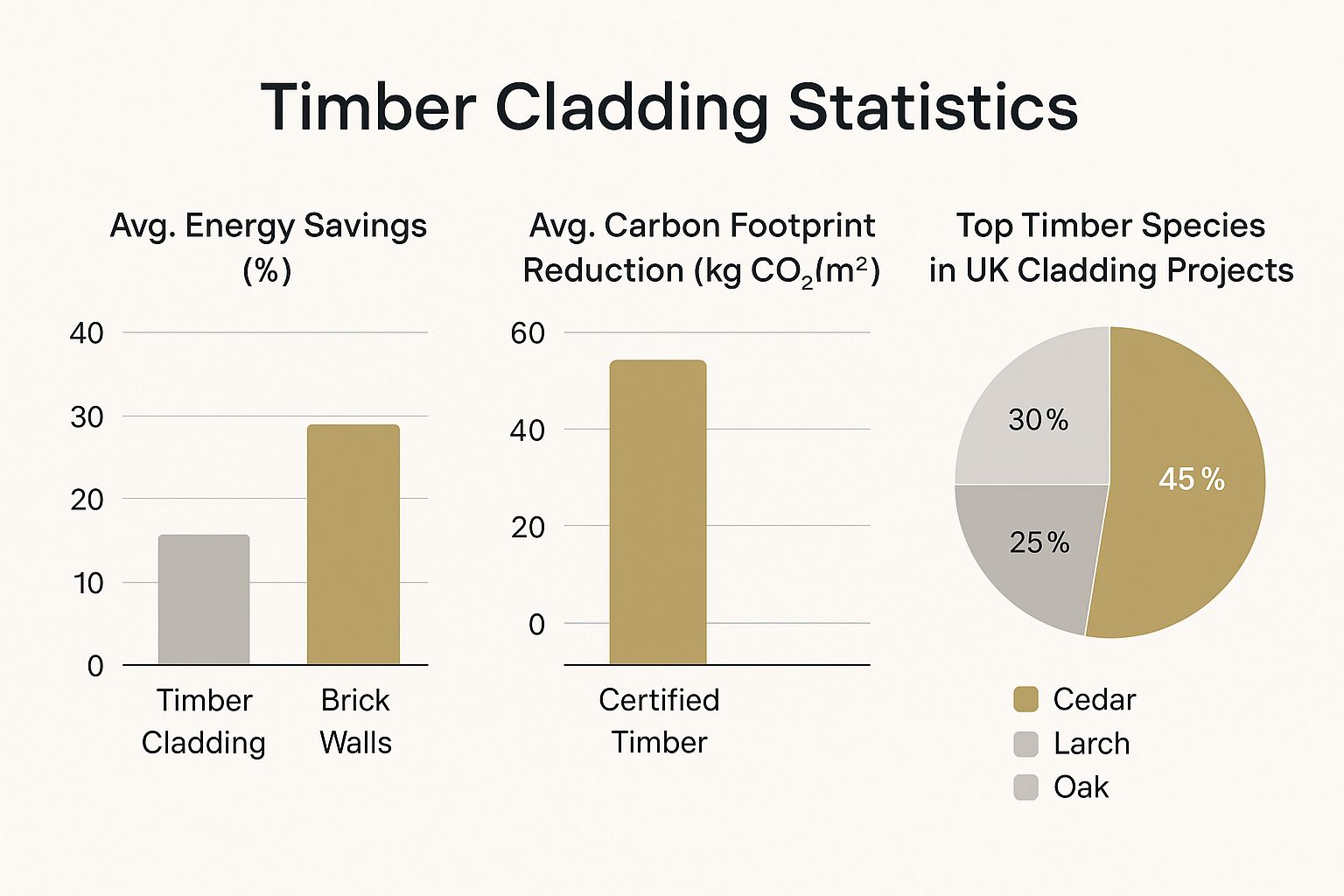
As you can see, choosing timber isn't just about saving on energy; it’s about embracing a more sustainable way to build. It’s no surprise that Cedar and Larch are leading the pack in popularity.
Dispelling Durability Myths
There's a common myth that timber just isn't as tough as brick or stone. That might have been true once, but modern wood treatments and finishing technologies have completely rewritten the rules.
Modern treated timber is engineered for longevity. It resists moisture, decay, and insects far more effectively than untreated wood, ensuring a cladding system that is not only beautiful but also a durable, long-lasting investment for your property.
With the right species and a professional installation, a timber facade can easily last for decades with very little fuss. Some timbers, like Western Red Cedar, are naturally resistant to rot and insects thanks to their own oils. Other woods can be pressure-treated or thermally modified to give them a similar level of resilience, ensuring your home’s exterior stays strong and stunning for years.
Choosing the Right Timber Species and Finish
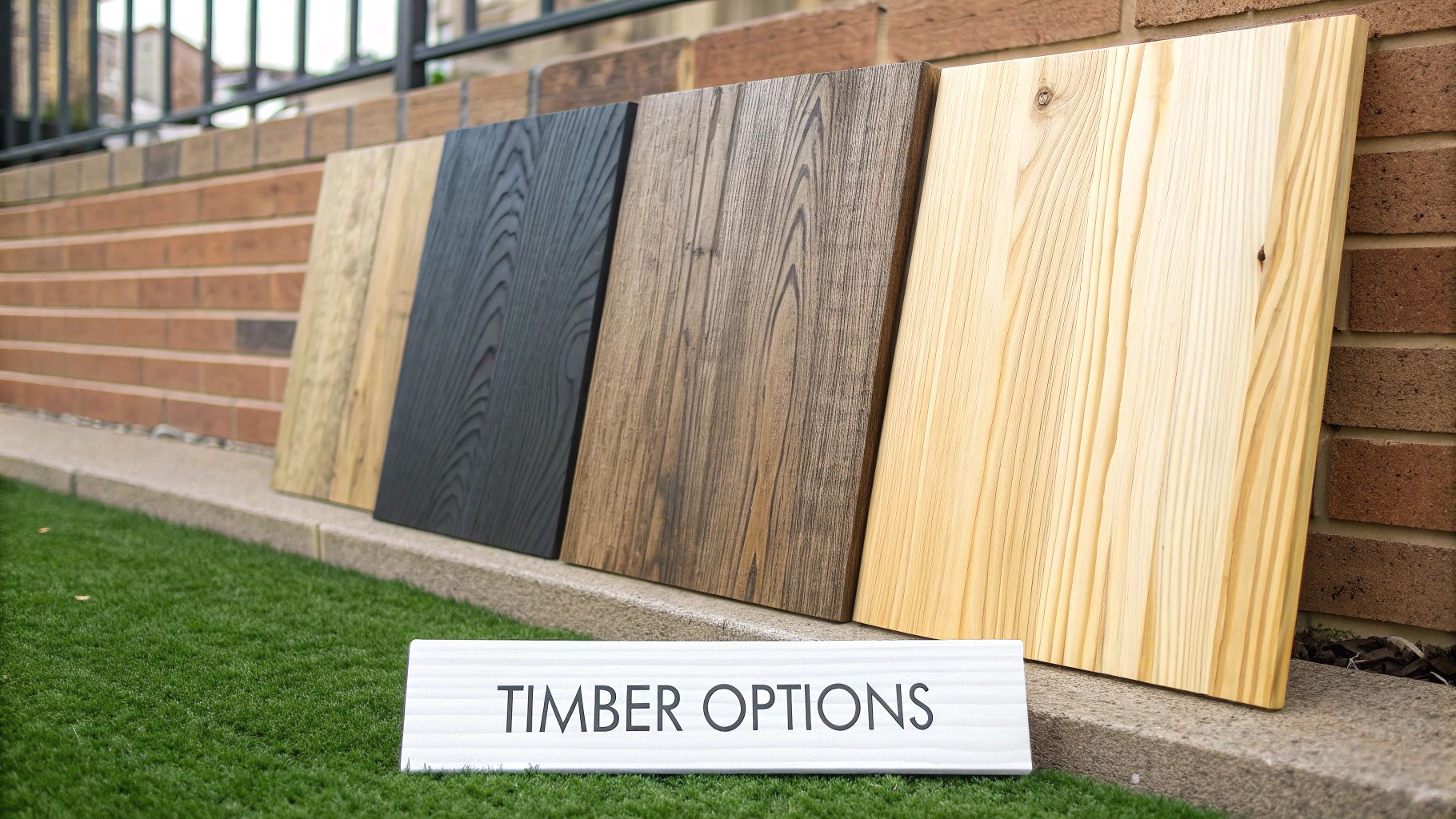
This is where the real fun begins. Selecting the perfect wood for your timber cladding is arguably the most important decision you'll make in the entire process. It’s what defines your home's character, its ability to stand up to the elements, and how much time you’ll spend maintaining it down the line.
Think of it like picking the fabric for a quality winter coat. The material dictates not just the look, but also how it performs and ages over the years. Your choice will ultimately balance three things: your budget, the final look you're after, and the realities of your local climate.
Softwoods, Hardwoods, and Modified Timbers
The world of timber cladding is generally split into three main families: softwoods, hardwoods, and the more modern modified timbers. Each group has its own personality and strengths.
-
Softwoods: Don't let the name fool you. Many softwoods are impressively tough and perfectly suited to the damp UK weather. Timbers like Western Red Cedar and Siberian Larch are packed with natural oils and resins, making them brilliant at resisting rot and insects. They also tend to be lighter on the wallet and easier to handle during installation.
-
Hardwoods: For sheer robustness, it's hard to beat a hardwood. Species like Oak bring incredible density to the table, creating a facade that can take a real beating from the elements. They often come with a higher price tag, but their longevity and premium feel make them a solid investment for a timeless look.
-
Modified Timbers: These are the new kids on the block. Woods like pine are put through a high-tech thermal treatment process using heat and steam. This fundamentally changes their cellular structure, making them far more stable and resistant to decay—often putting them on par with tropical hardwoods, but from much more sustainable European sources.
Expert Tip: Always look for a timber's durability class, a rating from Class 1 (very durable) to Class 5 (not durable). For any exterior project in the UK, you should be aiming for Class 3 or higher to ensure your cladding can handle our climate without giving up too early.
To help you visualise the options, here's a quick comparison of some popular choices.
Comparison of Popular Timber Cladding Species
| Timber Species | Typical Cost | Natural Durability | Maintenance Needs | Best For |
|---|---|---|---|---|
| Western Red Cedar | Medium-High | Very Good (Class 2) | Low | Stunning contemporary looks and minimal upkeep. |
| Siberian Larch | Medium | Good (Class 3) | Low to Medium | A cost-effective, durable choice that weathers beautifully. |
| Oak (European) | High | Very Good (Class 2) | Medium | Creating a premium, traditional, and incredibly long-lasting finish. |
| Thermally Modified Pine | Medium | Very Good (Class 1-2) | Low | Sustainable projects needing high stability and rot resistance. |
| Accoya | Very High | Excellent (Class 1) | Very Low | Ultimate performance and longevity in the most demanding environments. |
This table is just a starting point, but it shows how different timbers offer a different balance of properties. Your final decision will depend on which of these factors matters most to you.
Unique Finishes: Yakisugi and Beyond
Beyond the natural grain and colour, the finish adds another layer of personality and protection. You could use a clear oil to make the natural tones pop, add a stain to introduce a specific colour, or simply do nothing and let the wood weather naturally to a beautiful silvery-grey.
For a truly dramatic and long-lasting finish, look no further than Yakisugi. This traditional Japanese technique (also known as shou sugi ban) involves charring the surface of the wood with fire.
This creates a stunning, deep black, crocodile-skin texture. But it’s not just for show. The carbon layer formed during the process provides incredible protection against fire, pests, and moisture. It’s an ancient method that turns a timber cladding wall into a resilient piece of art.
Choosing the right wood means weighing up the initial cost against the look you want and how it will perform over time. For a deeper dive into one of the UK's favourite cladding materials, you can learn more about the unique properties of Cedar and see if it’s the right fit for your home.
Key Design and Installation Principles
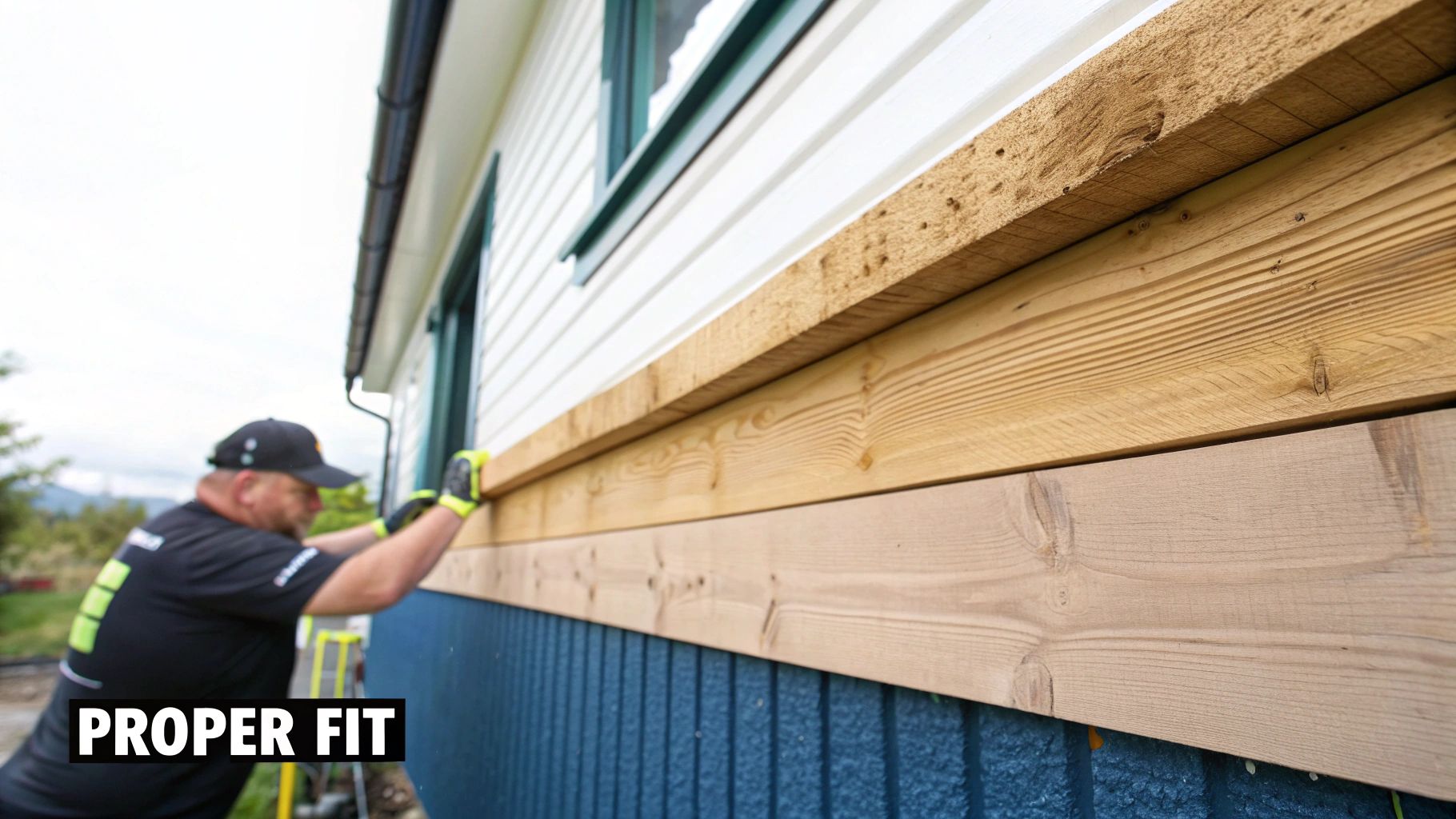
A truly stunning timber cladding wall isn't just a happy accident; it’s the result of thoughtful design and painstaking installation. Getting these foundations right is what separates a façade that simply looks good on day one from one that performs beautifully for decades to come.
The small details really are everything. From the shape of the boards to the type of screws you use, every single choice impacts how well the cladding stands up to the weather, how long it lasts, and, of course, how it looks. This is where professional experience really pays off.
Choosing Your Cladding Profile
The 'profile' is simply the shape of the individual timber boards and the way they connect. It’s a critical decision that defines both the look and the performance of your wall.
- Shiplap: This profile has an overlapping lip (a 'rabbet') that lets the boards slot together snugly. It creates a robust, weatherproof seal with distinctive shadow lines, looking just as good laid horizontally as it does vertically.
- Tongue-and-Groove: Here, a projecting ridge (the tongue) on one board fits neatly into a slot (the groove) on the next. The result is a smooth, continuous surface that's fantastic at keeping the weather out, making it a popular choice for sleek, modern homes.
- Feather-Edge: Often called weatherboarding, this classic profile uses tapered boards that overlap one another. It's a time-honoured method for shedding rainwater effectively and gives a building a traditional, rustic charm.
Picking the right profile is a balancing act between the look you want and what the building needs. A tongue-and-groove system might be perfect for a contemporary home in an exposed location, whereas feather-edge is right at home in the countryside.
Think of a successful cladding system as an ecosystem. It needs the right materials, a protective gap for airflow, and precise fixings to work as a whole. If you neglect one part, the entire wall can be compromised.
The Non-Negotiables of Installation
Once you've chosen your boards, a few technical details are absolutely essential for a timber façade that lasts. The most important one is the ventilation gap. You must leave a space of at least 25mm between the back of the timber and the building's main waterproof membrane.
This gap is like a chimney, letting air flow freely behind the cladding. It's this airflow that draws moisture away, preventing damp and rot from getting a foothold. It allows the timber to breathe and dry out naturally after a downpour.
Just as crucial are the fixings. Always, always use high-quality stainless steel or galvanised screws. If you opt for cheaper fixings, they will eventually corrode, leaving ugly rust streaks running down your beautiful timber and weakening the structure.
To get these details right, understanding architectural detail drawings is key. They provide the blueprint for ensuring things like the ventilation gap and corner trims are built precisely as they should be.
Despite its many advantages, timber cladding's use in UK construction is still a mixed picture. In 2019, only about 9% of new homes in England were timber-framed, a stark contrast to over 90% in Scotland. The UK government is trying to change this, with a goal to expand woodland cover to 16.5% by 2050 to bolster a domestic timber supply. This growing support suggests a big opportunity for materials like timber cladding to become a much more common sight.
Maintaining Your Timber Wall for Lasting Beauty
One of the first questions people ask is, "How much work is a timber-clad wall, really?" The answer is surprisingly simple: with the right timber and a clear plan from the start, it's a remarkably durable and low-effort choice.
Essentially, the long-term care for your timber façade boils down to a single decision you make right at the beginning. You have two main paths you can take. The first is to let the wood age naturally, embracing the elements. The second is to actively preserve its original, warm colour with protective finishes. Both are fantastic options, but they create very different looks and involve different levels of upkeep.
To Preserve or to Weather
If you decide to preserve the timber's original colour, you're signing up for periodically reapplying a protective finish. This approach keeps the wood looking vibrant and new, really showing off the rich tones and beautiful grain patterns. It’s the perfect choice if you love that warm, just-installed look.
On the flip side, you can simply let nature take its course. When left to its own devices, most timber exposed to sun and rain will slowly transform, developing a stunning, silvery-grey patina. This weathered look is incredibly popular in contemporary design for its subtle, sophisticated character. It's important to realise this colour change is purely cosmetic; it doesn't harm the structural integrity of durable timbers like Cedar or Larch one bit.
The choice to let timber weather is an acceptance of its natural lifecycle. The resulting silver-grey patina is not a sign of decay but a unique character developed over time, reflecting the building's interaction with its environment.
A Simple Maintenance Plan
No matter which path you choose, a straightforward routine is all it takes to keep your timber cladding wall looking fantastic for decades. How often you'll need to do these things depends a lot on your local climate and the specific wood you've used.
Here’s a simple plan to get you started:
- Annual Inspection: Once a year, get up close and personal with your cladding. Look for any signs of damage, check for loose fixings, and spot any areas where moisture seems to be gathering. Catching things early is the secret to avoiding bigger problems down the line.
- Routine Cleaning: Give the surface a gentle wash with a soft brush and some water to clear away any dirt, dust, or algae that’s built up. It's best to avoid pressure washers—they can be too harsh and end up damaging the wood fibres.
- Reapplying Finishes (If Preserving): If you've chosen to keep that original colour, you'll need to reapply your preferred oil or stain. The timing isn't set in stone, but a good quality finish typically needs a fresh coat every 3 to 7 years, depending on the product and how much direct sunlight the wall receives.
Looking after a timber façade is far less demanding than you might think. It’s all about simple, consistent care that protects your investment and keeps your home looking its best. For a deeper dive, our guide on how to protect wood outdoors breaks down all the different treatments and techniques.
Got Questions About Timber Cladding? We've Got Answers
Even when you think you've got everything planned out, a few nagging questions can pop up before you dive into a timber cladding project. It's completely normal. To set your mind at ease, we've tackled some of the most common queries we hear from homeowners and builders alike.
How Long Will My Timber Cladding Wall Really Last?
This is the big one, and the answer comes down to three things: the type of wood you choose, how well it’s installed, and the care you give it over the years.
For really durable timbers like Western Red Cedar or Siberian Larch, you can easily expect a lifespan of over 50 years with proper maintenance. Some hardwoods and modern modified timbers can go even longer. A little bit of upkeep—like a good clean and a fresh coat of protective finish every few years—is all it takes to keep it looking great and performing brilliantly for decades.
Is Timber Cladding a Big Fire Risk?
It's a common worry, but thankfully, it's mostly a misconception. While wood is naturally combustible, modern timber cladding can be treated with fire retardants to meet the UK’s stringent building regulations, often achieving high safety ratings like Class B or Class 0.
It's crucial to remember that a building's fire safety isn't just about the cladding. The entire wall assembly, including things like cavity barriers and correct installation, plays a massive role in creating a safe and compliant structure.
The golden rule is to always work with a professional. They'll make sure your project is fully compliant with all the current fire safety standards for your property type.
Am I Inviting Pests with a Timber Wall?
Pest problems are actually very rare with a properly designed timber wall. Many of the most popular cladding timbers, especially Cedar and Larch, have natural oils and resins that insects and rot just don't like.
For other wood types, modern pressure treatments and high-quality finishes create a solid shield that pests can't get through. Good installation is also key; ensuring proper airflow behind the boards helps create a dry, uninviting environment, making pests a non-issue.
Ready to transform your project with the timeless beauty and resilience of charred timber? At TimberSol, we specialise in the Yakisugi technique to create stunning, durable cladding that stands the test of time. Explore our range of high-quality timber solutions today at https://timbersol-backup.elnoirstudio.com.
