
Cost to clad a house: Budget Guide for Exterior Refresh

Thinking about re-cladding your house? It’s one of the best ways to give your home a complete facelift, boost its energy efficiency, and protect it from the British weather. But the big question is always: what’s it going to cost?
The short answer is that the average cost to clad a house in the UK typically falls between £4,000 and £20,000. Of course, that’s a huge range. The final figure really boils down to the materials you choose, the size of your home, and how much tradespeople charge in your part of the country.
Understanding House Cladding Costs in the UK
When you start budgeting for a new home exterior, getting to grips with the real cost of cladding is the first hurdle. It’s a bit like buying a car—the price you see in the advert is rarely what you end up paying. The final cost is a mix of the model you pick (the cladding material), any optional extras (like extra insulation or special finishes), and the labour to get it installed properly.
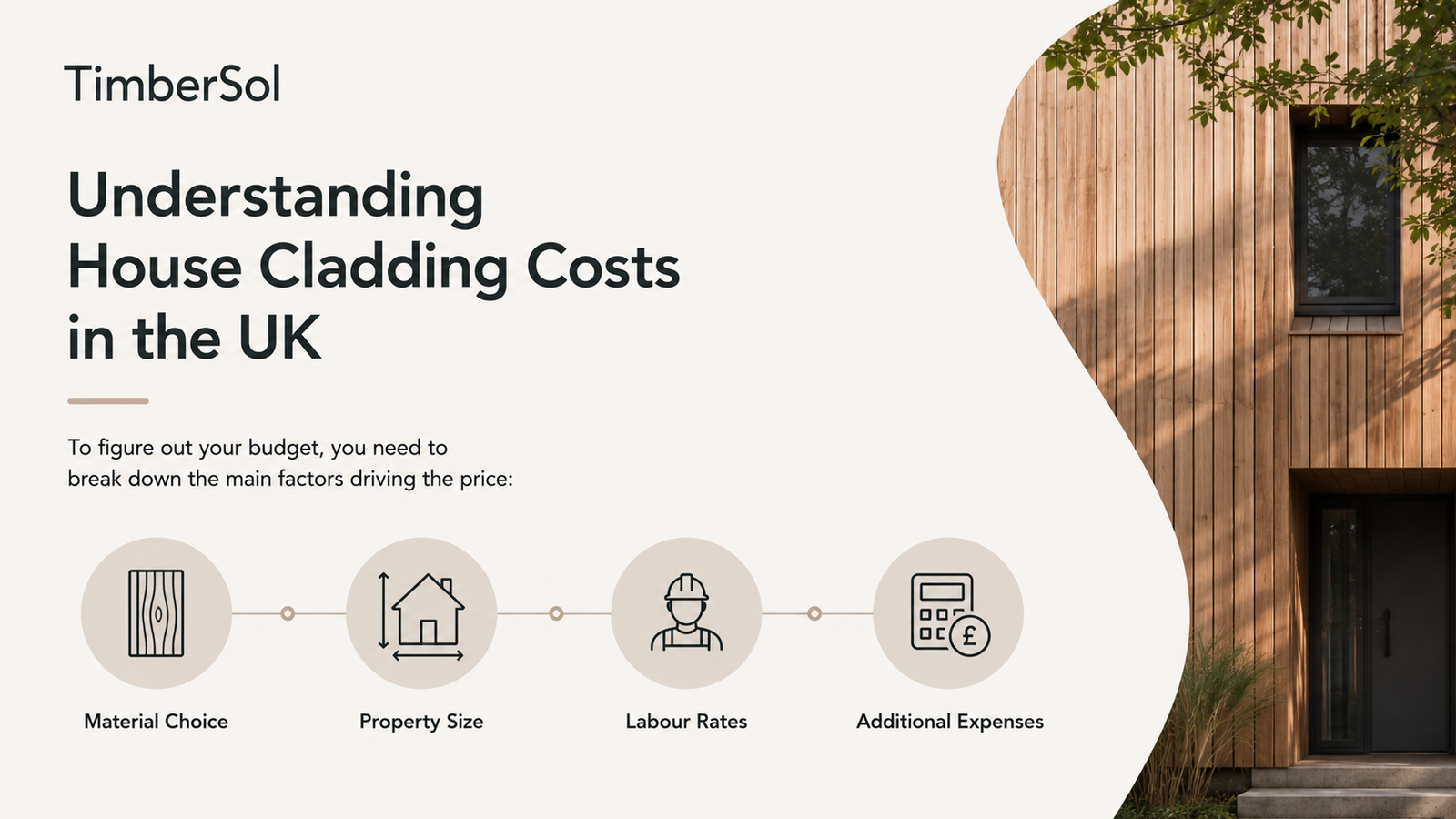
While cladding can seem like a hefty expense, it’s a brilliant way to transform how your home looks and feels. To figure out your budget, you need to break down the main factors driving the price:
- Material Choice: This is the biggest piece of the puzzle. Your options run the gamut from budget-friendly uPVC all the way up to premium hardwoods and sleek fibre cement.
- Property Size: It’s simple maths, really. A larger home means more wall area to cover, which requires more material and more installation time, pushing the total cost up.
- Labour Rates: The cost of labour can swing quite a bit depending on where you live and how tricky the job is. A complex installation on a period property will cost more than a straightforward job on a modern home.
- Additional Expenses: Don’t get caught out by the extras! You’ll need to factor in things like scaffolding hire, skip hire for waste disposal, and any repairs or prep work needed before the cladding can go on.
To give you a clearer idea of what to expect, here’s a quick overview of estimated costs for different cladding materials.
Estimated House Cladding Costs At a Glance
| Expense Category | Low-End Estimate (£) | Mid-Range Estimate (£) | High-End Estimate (£) |
|---|---|---|---|
| Material Cost (per m²) | £20 | £50 | £100 |
| Labour Cost (per m²) | £20 | £40 | £60 |
| Total Project Cost (per m²) | £40 | £90 | £160+ |
As you can see, the price per square metre really highlights the difference your choices can make.
A Quick Glance at the Numbers
Looking at the cost per square metre gives you a much better feel for the numbers. You could be looking at as little as £40 per square metre for basic options, but this can easily climb to £160 per square metre or more for top-of-the-range materials. This huge variation is precisely why it’s so vital to get a few detailed, written quotes from different installers.
To get a better handle on how large exterior projects are priced, playing around with tools like an online roofing cost calculator can be really insightful. Even though it’s for roofing, it shows how different factors come together to affect the final price, which is a useful lesson for any big home improvement job.
A well-planned cladding project is more than just an expense; it’s an investment in your property’s value, energy efficiency, and kerb appeal. The key is to balance upfront costs with long-term benefits and durability.
In the next sections, we’ll dig deeper into these costs. We’ll look at specific materials, how to estimate labour, and shine a light on those “hidden” extras so you can plan your project with total confidence.
What Are You Actually Paying For in a Cladding Quote?
When a quote for new cladding lands in your inbox, the total figure can be a bit of a shock. But that final number isn’t just pulled out of thin air. It’s a combination of distinct costs, and understanding them is the key to knowing if you’re getting a fair price.
Think of it like a bill from a garage. You’re not just paying for a new part; you’re paying for the part itself, the mechanic’s time and expertise to fit it, and any workshop sundries. A cladding quote is built the same way, typically breaking down into three key areas: materials, labour, and all the extra bits and pieces. Let’s pull back the curtain on each one.
The Cost of Cladding Materials
This is usually the biggest chunk of the bill and where you’ll see the most variation. The price per square metre can swing wildly depending on what you choose, from budget-friendly uPVC to a stunning, premium charred timber like Yakisugi.
As a rough guide, you might find a basic timber cladding starts around £20 per m². On the other hand, high-performance composite or fibre cement boards can easily cost double or triple that figure.
The quality and type of material are the main drivers behind the final cost. When you get a quote, make sure it clearly lists:
- Cladding Boards: The price for the main material, either per board or per square metre.
- Support Battens: This is the timber framework that gets fixed to your house, creating the structure for the cladding to attach to.
- Fixings and Trims: All the essential finishing touches like screws, corner pieces, and starter strips that ensure a neat, professional job.
It’s tempting to go for the cheapest option, but remember that higher-quality materials often prove their worth over time with better durability and less maintenance.
Understanding Labour Charges
Labour is the next big-ticket item. Installers calculate this in a few different ways. Some work on a day rate, which can be anywhere from £150 to £250 per tradesperson. Others might give you a fixed price for the entire job or charge per square metre.
The complexity of your house has a massive impact here. A straightforward, flat-walled bungalow is a much quicker job than a three-storey home riddled with tricky corners, windows, and architectural details. Every extra cut and careful adjustment adds time, and that time adds to the bill.
If you’re curious about what the work actually entails, you can get a better feel for the detailed process involved in a professional installation of cladding.
Uncovering the Hidden Extras
Finally, there are the additional costs needed to get the job done right. These are often the “hidden” expenses that can catch you off guard if they aren’t spelled out from the beginning.
Never assume a quote is all-inclusive. Always ask what is and isn’t covered to avoid unexpected bills later on. A transparent quote will detail every potential charge, giving you a complete financial picture.
Keep an eye out for these common extras:
- Scaffolding Hire: Absolutely essential for working safely on anything over one storey. This can easily add £500 to £1,000 (or more) to the project cost.
- Waste Disposal: Tearing off old cladding and getting rid of offcuts creates a lot of waste. You’ll likely need to pay for a skip to be hired and taken away.
- Preparatory Work: Sometimes, the wall underneath needs repairs before the new cladding can go on. This could involve anything from minor fixes to removing the entire existing exterior.
By getting your head around these three core components—materials, labour, and extras—you’ll be able to read any quote like a pro and know exactly where your money is going.
Choosing Your Cladding Material: Cost vs. Lifespan
Picking the right cladding material is easily the biggest decision you’ll make for your project. It’s the ultimate balancing act between what you spend now and how the material performs over the long haul. You’re really weighing up your immediate budget against future maintenance chores and how long you expect the cladding to last.
It’s that classic dilemma: a cheaper choice today might end up costing you more in time and money for upkeep down the line. On the other hand, investing in a more expensive, durable material could give you decades of hassle-free protection, making it a smarter move in the long run. Let’s break down the popular choices to help you find that sweet spot between cost, longevity, and the look you’re after.
To help you compare your options at a glance, we’ve put together a table that breaks down the most common materials by their installed cost, expected lifespan, and general maintenance needs.
Cladding Material Cost and Lifespan Comparison
| Material Type | Average Cost per m² (Installed) | Expected Lifespan (Years) | Maintenance Level |
|---|---|---|---|
| uPVC | £70 – £90 | 20-30 | Very Low (Occasional cleaning) |
| Softwood Timber | £90 – £120 | 20-40 | High (Regular painting/staining) |
| Fibre Cement | £120 – £160 | 50+ | Low (Occasional cleaning) |
| Hardwood Timber | £150 – £180 | 50-60 | Medium (Requires initial treatment) |
| Metal (Aluminium) | £200 – £230 | 50+ | Very Low (Often pre-finished) |
| Metal (Zinc) | £300 – £350 | 80+ | Very Low (Develops a natural patina) |
This table should give you a solid starting point for figuring out which material aligns best with your budget and how much time you’re willing to spend on upkeep over the years.
Budget-Friendly and Versatile Options
If keeping those initial costs down is your main focus, then uPVC and standard softwood timbers are probably already on your radar. uPVC is a real workhorse – it’s famously low-maintenance, won’t rot, and can last a good 20-30 years with little more than a wash now and then.
Softwood timbers like pine or larch offer that classic, natural look that never goes out of style. They’re certainly more affordable to buy, but they do need a bit of love. You’ll have to commit to regular treatments—staining or painting every few years—to fend off moisture and pests and help them reach their full 20-40 year lifespan.
Mid-Range Materials for Durability
Stepping up a bit in price gets you into materials that offer a fantastic blend of durability and great looks. Fibre cement is a real star in this category; it’s engineered to resist just about everything—fire, rot, and insects. You can expect it to last for 50 years or more with barely any maintenance besides a clean.
Premium timbers like Cedar and Siberian Larch also sit comfortably in this tier. They are naturally tougher than their softwood cousins and have a stunning appearance that just gets better with age. Look after them properly, and they can easily last 50-60 years, making them a brilliant long-term investment. To get a better feel for the different woods available, take a look at our guide on the types of cladding.
Premium Choices for Maximum Impact and Longevity
At the very top of the scale, you’ll find materials chosen for their knockout looks and incredible durability. Metals like aluminium and zinc create a sharp, contemporary finish and can last for well over 50 years. Aluminium often comes pre-finished, meaning it requires virtually zero maintenance.
Another incredible premium option is Yakisugi, the traditional Japanese method of charring timber, also known as shou sugi ban. This process doesn’t just create a dramatic, beautiful black finish; it also naturally preserves the wood. It becomes highly resistant to fire, rot, and pests and can last for an astonishing 80+ years.
Real-World Cost Examples for UK Homes
Talking about costs per square metre is useful, but it doesn’t always paint the full picture. It’s much easier to get a feel for your budget when you can see how those numbers stack up on real-world properties. So, let’s run through a few common scenarios for UK homes to give you a clearer idea of the cost to clad a house.
The final bill really boils down to two things: the size of your property and the material you pick. A small bungalow wrapped in uPVC will naturally be on the cheaper end of the scale, while a large, detached house finished with premium fibre cement will require a much bigger investment. Looking at a few examples should help you place your own project on that spectrum.
Single-Storey Bungalow Project
Let’s start with a classic single-storey bungalow, which typically has around 80m² of external wall to cover. Because all the work is at ground level, the job is much more straightforward. Labour costs tend to be lower as you might not need extensive scaffolding, which saves a nice chunk of change.
Here’s a rough idea of what you might pay:
- uPVC Cladding: A very popular and budget-friendly option. You’d be looking at a total cost of roughly £5,600 – £7,200.
- Timber Cladding (Softwood): If you’re after a more natural, traditional look, the price would be in the region of £7,200 – £9,600.
- Fibre Cement Cladding: For a modern, long-lasting finish that really makes a statement, you’ll need to budget around £9,600 – £12,800.
Two-Bedroom Terraced House Project
Next up, a standard two-bedroom terrace. In this case, you’re usually only cladding the front and back, so the total surface area might be similar to our bungalow – let’s say around 80-90m². The key difference here is the height. Working on the upper storey means scaffolding is almost certainly needed, which will add to the labour and equipment hire fees.
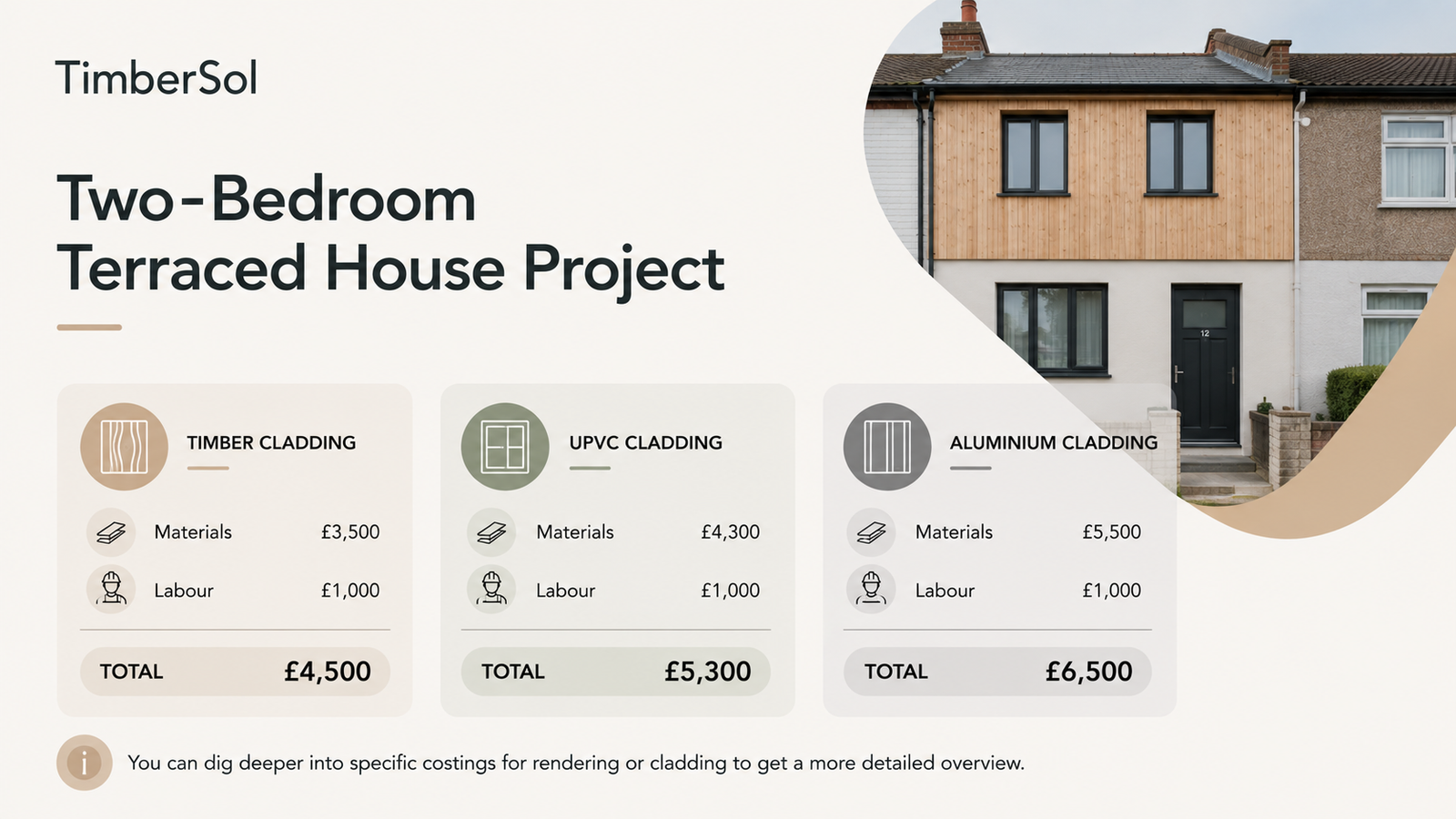
For a house like this, a timber cladding job might cost around £3,500 for materials plus about £1,000 for labour, totalling roughly £4,500. uPVC is a little more, with materials at approximately £4,300 plus the same labour, bringing the total to about £5,300. If you opt for aluminium, material costs jump to near £5,500 and labour costs to around £1,000, for a grand total of £6,500. You can dig deeper into specific costings for rendering or cladding to get a more detailed overview.
Remember, these examples are just estimates. The final cost will always depend on your specific property, your location in the UK, and the installer you choose. Getting multiple, detailed quotes is the only way to know for sure.
Three-Bedroom Semi-Detached House Project
Finally, let’s look at something bigger: a three-bedroom semi-detached home. With a typical wall area of about 120m², this is a more significant project. It demands more materials, more man-hours, and full scaffolding, all of which will be reflected in the quote you receive.
Here’s a ballpark cost breakdown for a semi:
- uPVC Cladding: You’d likely be quoted somewhere in the region of £8,400 – £10,800.
- Timber Cladding (Softwood): Expect a total project cost between £10,800 – £14,400.
- Fibre Cement Cladding: For a top-tier, exceptionally durable solution, the budget would need to be around £14,400 – £19,200.
Hopefully, these real-world examples help you connect the dots between the price of materials and the size of your house. It should give you a much more solid foundation for building a realistic budget to transform your home’s exterior.
Unexpected Factors That Can Increase Your Cladding Cost
When you’re putting a budget together, it’s natural to focus on the obvious stuff: the cladding material itself and the installer’s day rate. But I’ve seen plenty of projects where a few “hidden” costs creep in and catch homeowners by surprise. Getting ahead of these can save you a lot of headaches and keep your budget on track.
One of the biggest variables, believe it or not, is simply where you live. Labour costs swing quite a bit across the UK. You can expect to pay a premium for a team in London or the South East compared to what you’d pay for the same job in the North of England or Wales. It’s a simple supply-and-demand reality that can add a hefty sum to your final bill.
Then there’s the question of access. Is your house on a steep hill? Is the driveway too narrow for a delivery lorry? If your site is tricky to get to, it makes everything from erecting scaffolding to storing materials more difficult and time-consuming. That extra hassle will definitely find its way into the quote.
Architectural Complexity and Prep Work
The shape and style of your home play a huge role, too. A simple, modern, box-shaped house is a cladding team’s dream – it’s all straight lines and easy runs. But what if you have a period property? Think bay windows, dormers, and fiddly architectural details.
Every one of those extra corners, nooks, and crannies needs a precise cut and a careful fit, which eats up time and pushes labour costs up. The more intricate the design, the more you’ll need to budget for the skilled work involved.
The real unknown is often what’s lurking underneath your existing walls. Until the old surface comes off, you just don’t know. Finding and fixing issues like damp, rot, or structural weakness is essential before the new cladding goes on, and that can easily add hundreds, if not thousands, of pounds to the project.
Finally, some jobs just require a specialist, and that always comes at a premium.
- Asbestos Removal: If there’s any chance your old cladding or soffits contain asbestos, you’ll have to bring in a licensed specialist for safe removal. It’s expensive, but it’s not something you can ever cut corners on.
- Specialist Materials: Not all cladding is created equal. Materials like Yakisugi (charred timber) or zinc demand a specific skill set to install correctly, so you’ll be paying for that expertise.
- Fire Safety Regulations: Your project may need to meet certain fire safety standards, especially on multi-storey buildings. To get a better handle on this, it’s worth reading up on what it takes to achieve a Class 0 fire rating for your cladding.
Thinking through these factors from the start helps you build a much more realistic budget, giving you a buffer for whatever the project throws at you.
How to Save Money on Your Cladding Project
Knowing the numbers is one thing, but keeping them from spiralling out of control is the real challenge. The good news is there are plenty of practical ways to bring down the cost to clad your house without cutting corners on quality. A bit of smart planning can make a world of difference to the final invoice.
One of the best things you can do is get at least three detailed, itemised quotes from different installers. This isn’t just about comparing the final price; it’s about seeing exactly what you’re paying for. Don’t hesitate to ask questions or even negotiate if you see big differences between quotes.
Timing is another trick of the trade. Most contractors are swamped during the spring and summer. If you can schedule your project for the off-season—think autumn or late winter—you might find labour rates are a bit more competitive as demand is lower.
Smart Material Choices and DIY Prep
It’s easy to get drawn to the cheapest material on the shelf, but true value comes from balancing the initial cost with how well it will hold up over time. Look at materials like fibre cement; it’s a cost-effective option that’s incredibly resilient and low-maintenance, saving you a small fortune in the long run.
Sometimes, a full re-cladding project might be more than you need. It’s always worth exploring affordable ways to refresh your home’s exterior that could still give you the kerb appeal you’re after on a tighter budget.
Long-Term Investment: Try to think of your cladding as more than just an expense—it’s an investment in your home. A well-installed system boosts insulation, which can lead to noticeable savings on your energy bills year after year. Over time, those savings can effectively pay back a chunk of the initial cost.
If you’re not afraid to get your hands dirty, tackling some of the prep work yourself is a surefire way to shave off some labour costs.
- DIY Removal: You could potentially save a good sum by carefully removing the old cladding yourself. Just make sure you clear it with your installer first to ensure you’re doing it right.
- Site Clearance: Simply clearing the work area of things like garden furniture, potted plants, and other obstacles helps the pros work faster and more efficiently, which means less time on the clock.
By mixing smart shopping with strategic planning and a bit of your own effort, you can make your cladding project much more manageable for your wallet.
Your Cladding Cost Questions Answered
When you’re thinking about a big project like cladding, it’s natural for questions to pop up, especially around the budget. Let’s tackle some of the most common queries we hear from homeowners.
Does Adding Insulation Increase the Cost?
Yes, it does. Factoring in external wall insulation alongside your new cladding will typically add £80 to £120 per square metre to the initial quote. But don’t let that number put you off.
Think of it as a smart, long-term investment. That upfront cost will come back to you year after year in the form of lower energy bills. It’s also far more efficient to get both jobs done at the same time rather than treating them as two separate projects down the line.
Is It Cheaper to Clad a Bungalow?
It certainly is, most of the time. Cladding a single-storey bungalow usually works out cheaper than a two-storey house, and it really comes down to two simple things. The first is a smaller surface area, which means you need less material.
The second, and often more significant, saving comes from scaffolding. For a bungalow, you might need minimal scaffolding or none at all, which can instantly cut £250 to over £800 from your bill. That alone makes a huge difference to the final cost.
How Long Does Cladding Last, and Does It Add Value?
The lifespan of your cladding is tied directly to the material you pick. There’s a huge range, so you can choose based on your budget and how much maintenance you’re prepared to do.
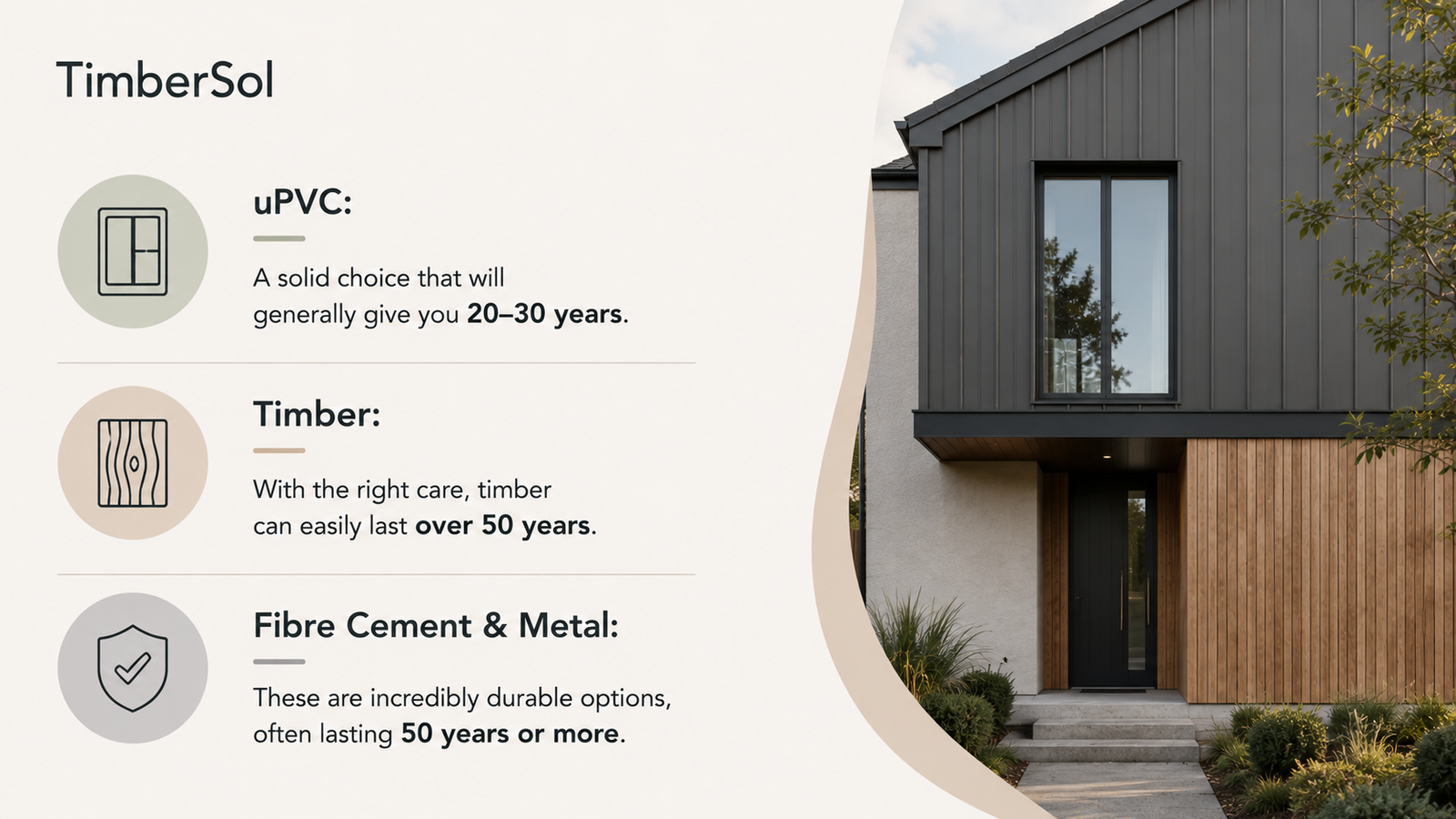
- uPVC: A solid choice that will generally give you 20-30 years.
- Timber: With the right care, timber can easily last over 50 years.
- Fibre Cement & Metal: These are incredibly durable options, often lasting 50 years or more.
And yes, good-quality cladding is a fantastic investment. It instantly transforms your home’s kerb appeal and can genuinely increase its market value, making it a real asset if you ever decide to sell.
Can I Use Yakisugi For My Home?
Of course! Yakisugi, also known as shou sugi ban, is a traditional Japanese technique of charring wood to preserve it. It’s a premium choice that creates a stunningly unique finish and is unbelievably durable.
Because it’s a specialist craft, the cost to clad a house with Yakisugi sits at the higher end of the scale, usually somewhere between £120 to £200+ per square metre once installed. For that, you get a low-maintenance, exceptionally long-lasting exterior that truly stands out.
At TimberSol, we specialise in creating beautiful, durable charred timber cladding using the authentic Yakisugi technique. Discover our range of sustainable and elegant timber solutions by visiting us at https://timbersol-backup.elnoirstudio.com.
