
A Guide to the Properties of Hardwoodss

When you think of hardwood, what comes to mind? Probably things like strength, durability, and a beautiful, rich grain. You’re not wrong. These are the classic hallmarks of hardwoods, and it’s their dense and complex cellular structure that gives them these sought-after qualities. This makes them a natural choice for anything built to last, from high-end furniture and flooring to intricate architectural details.
What Defines Hardwood Properties
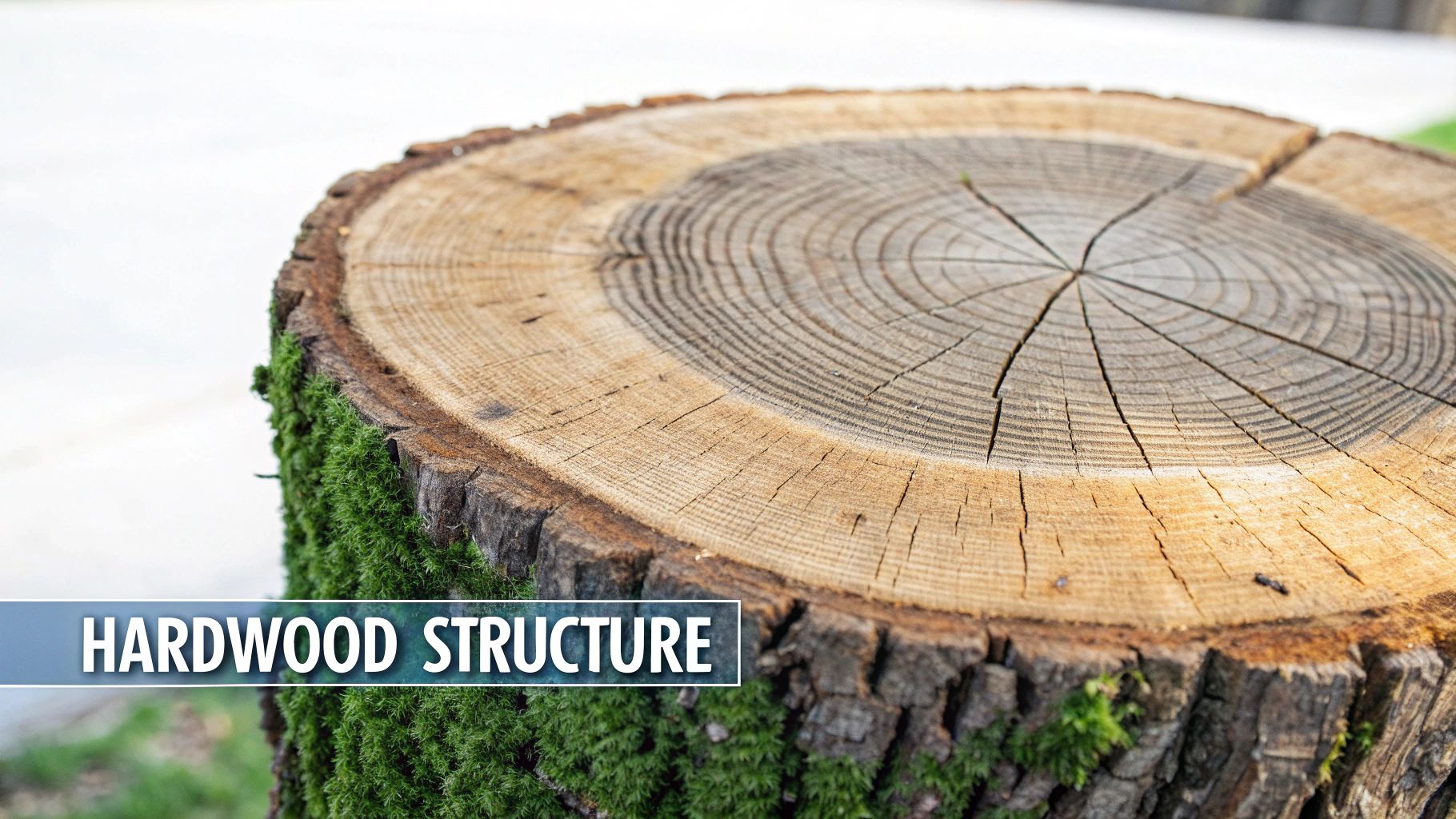
To really get what makes a hardwood tick, we need to go deeper than the name. It’s not just about the type of tree it comes from; it’s about the microscopic world within the wood that governs how it behaves.
Imagine comparing a tightly woven canvas to a loose-knit jumper. The canvas, like a hardwood, has a dense and intricate structure. This very complexity is the source of its inherent strength, its resistance to everyday wear and tear, and its distinctive, often stunning, grain. This biological blueprint is the key, as it directly impacts how the wood performs in the real world, whether it’s a craftsman’s workbench or exterior cladding.
The Biological Blueprint of Hardwoods
At its heart, the term ‘hardwood’ is actually a botanical one, not a direct measure of its physical toughness. Hardwoods come from angiosperm trees—think of the broad-leaved, deciduous trees like Oak, Ash, and Maple that drop their leaves in the autumn. Their cellular makeup includes vessel elements, or pores, which transport water. It’s these pores that create the unique and varied grain patterns we see when the timber is cut.
Softwoods, on the other hand, come from gymnosperm trees like pines and firs. They have a much simpler cell structure, which is why they are generally lighter and less dense. If you’re curious to learn more, you can dive into the key differences between hardwood and softwood here: https://timbersol-backup.elnoirstudio.com/blog/hardwood-softwood-difference/.
This biological starting point dictates everything else. The density, the cell arrangement, and the type of cells determine everything from how well a piece of wood resists a dent to how it absorbs oil or reacts to the intense heat of a charring process like Yakisugi.
The term ‘hardwood’ is a biological classification, not a simple measure of physical hardness. A wood’s performance is ultimately dictated by its dense, complex cell structure, which influences everything from its strength to its aesthetic appeal.
Challenging Common Misconceptions
One of the biggest myths is that all hardwoods are, well, hard. That’s not always the case. Take Balsa wood, for instance. It’s famously soft and light enough for model aeroplanes, yet botanically, it’s a hardwood. It’s a fantastic exception that proves the rule: the classification is about biology, not simply how the wood feels.
On the flip side, some softwoods like Yew can be incredibly hard and durable. Knowing this difference is crucial. It stops us from making broad assumptions and encourages a closer look at the specific traits of each timber species. You can explore a range of different hardwood types to see just how much their characteristics can vary.
This table offers a quick summary of the fundamental properties that define hardwoods and their practical implications for any project.
Key Hardwood Properties at a Glance
| Property | What It Means | Why It Matters |
|---|---|---|
| Botanical Origin | Comes from deciduous, broad-leaved (angiosperm) trees. | This is the core classification that separates it from softwoods. |
| Cell Structure | Dense and complex, with pores (vessel elements). | Creates greater strength, durability, and distinctive grain patterns. |
| Density | Generally higher density than softwoods (with exceptions). | Higher density usually means better resistance to dents and wear. |
| Durability | Typically offers excellent resistance to decay and insects. | Makes it a long-lasting choice for demanding applications. |
| Aesthetics | Rich, varied grain patterns and a wide range of natural colours. | Highly valued for decorative and high-end finished projects. |
With this foundational knowledge of cell structure and botanical classification in our back pocket, we can now dig into the specific mechanical and aesthetic properties that make these timbers so special.
Understanding Hardwood Density and Durability
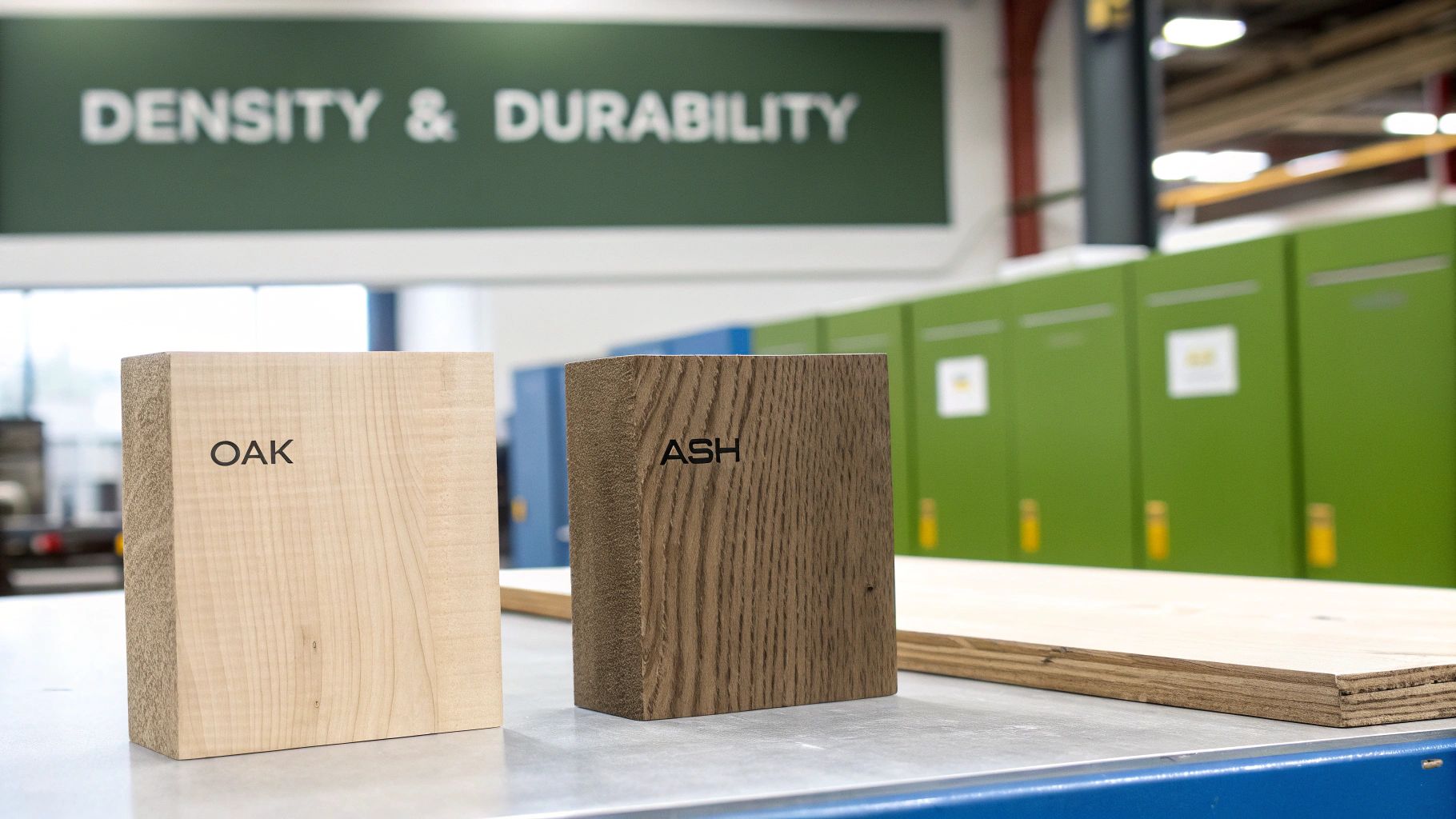
When you’re choosing a hardwood, two words come up time and time again: density and durability. Far from being just industry jargon, these two properties of hardwoods are what truly matter in the real world. They dictate how a piece of timber will perform over its lifetime, whether it’s underfoot as flooring, facing the elements as cladding, or bearing the weight of family meals as a kitchen table.
Think about it. When you’re picking a new worktop, you need something that won’t flinch if you accidentally drop a heavy pan. You want a material that can shrug off daily life. That kind of resilience comes directly from the wood’s density and its natural ability to resist wear and tear.
The Janka Hardness Test: A Practical Scorecard
So, how do we measure this toughness in a way that isn’t just guesswork? The industry standard is the Janka hardness test. It’s best to think of it as a practical scorecard that tells you how well a particular wood can stand up to dents and dings.
The test itself is straightforward: it measures the force needed to push a small 11.28-millimetre steel ball halfway into the wood. The result is the Janka rating, and it gives us a clear number to compare different species. A higher number means a harder, more resilient wood.
For instance, European Oak scores around 1,120 lbf (pounds-force), making it a brilliant choice for high-traffic areas. Black Walnut is also a solid performer, coming in at around 1,010 lbf. This isn’t just an abstract figure; it’s a vital piece of information that helps you match the right wood to the right job. For a busy staircase, a high Janka rating is essential. For a piece of decorative trim, maybe not so much.
Natural Durability: A Wood’s Inbuilt Defence System
Beyond hardness, we have to consider a wood’s natural durability. This is all about its inherent ability to fend off threats like rot, fungi, and insect attacks—a crucial factor for any timber destined for the great outdoors.
Some species are just born tougher than others. Over millennia, they’ve developed high concentrations of natural oils and protective compounds, known as extractives, that act like a built-in preservative system. This is why certain hardwoods can be used for garden furniture, decking, and fences without needing aggressive chemical treatments.
Species like Teak and Iroko are famous for this quality, making them go-to choices for exterior work. Understanding this inbuilt defence mechanism is key to choosing timber that will genuinely last for decades, even when left to the mercy of the British weather. If you’re weighing up options for an outdoor project, you might find our guide on https://timbersol-backup.elnoirstudio.com/blog/weather-resistant-hardwood/ a useful read.
A wood’s durability class is a formal rating of its natural resistance to biological decay. Class 1 timbers, such as Teak, are considered ‘very durable’ and can last over 25 years in direct ground contact without treatment, showcasing the incredible defensive properties of hardwoods.
The demand for these robust materials is a huge part of the construction industry. In the UK alone, the sawmilling and wood planing industry has grown to be worth an estimated £2.4 billion. This growth is closely tied to timber prices and construction policies, especially government goals for new home builds. Since residential construction is a major driver for sawmills—particularly for hardwood flooring and joinery—these policies are expected to keep the sector busy.
Connecting Properties to Real-World Performance
At the end of the day, density and durability are two sides of the same coin. A denser wood is almost always a more durable one. Its tightly packed cellular structure not only gives it weight and hardness but also creates a formidable barrier against moisture and pests.
This link is fundamental when you’re specifying materials for a demanding project, from beautiful garden features and hardscaping materials to interior flooring that needs to last a lifetime. By choosing a dense, durable hardwood, you’re not just buying a material; you’re investing in longevity, ensuring the final result is as tough as it is beautiful.
The Visual Appeal of Hardwood
Beyond its raw strength and durability, what truly makes hardwood special is its visual character. This isn’t just a building material; it’s a statement piece, a natural work of art. The aesthetic qualities of hardwood are what bring warmth, personality, and life to furniture, flooring, and architectural features.
These visual traits aren’t just skin deep. They’re a direct reflection of a tree’s life and biology. You can think of the grain as nature’s fingerprint—a unique pattern that tells a story, ensuring that no two boards are ever truly identical.
Understanding the Language of Wood Grain
Grain is arguably the most captivating aesthetic feature of any hardwood. It describes the direction, texture, and pattern of the wood fibres. Getting to grips with these patterns is the first step in choosing a timber that perfectly matches your design ambitions.
Different species create wildly different looks, each with its own feel:
- Straight Grain: Look at species like Maple, and you’ll see clean, parallel lines. This creates a sleek, consistent appearance that’s perfect for modern, minimalist spaces.
- Wavy Grain: In woods like Sycamore, the fibres grow in gentle, undulating waves. This adds a soft, flowing sense of movement to the surface.
- Interlocked Grain: Often seen in Sapele, this is a more complex pattern. It happens when wood fibres grow in spiralling, opposite directions, resulting in dramatic, ribbon-like effects when light hits it.
How the log is sawn also has a massive impact on the final look. A plain-sawn board, for example, will often show off that classic, flame-like “cathedral” pattern. Quarter-sawing the same log, however, produces a much straighter, more linear grain and can reveal stunning flecks and rays, particularly in Oak.
A Natural Palette of Rich Colours
Hardwoods come in an incredible spectrum of natural colours, often making artificial stains completely unnecessary. The timber’s inherent beauty is allowed to take centre stage. This colour comes from chemical compounds called extractives, which vary enormously from one species to another, and this natural variation is one of the most celebrated properties of hardwoods.
The range is breathtaking. You have the creamy, pale whites of Ash and Maple, ideal for creating bright and airy interiors. Then there are the warm, honeyed tones of classic Oak. Moving to the darker end, you’ll find the deep, luxurious reddish-browns of Mahogany and the almost-black richness of American Black Walnut.
The colour of hardwood is a living thing. Over time, as it’s exposed to light and air, it will mature, developing a deeper, richer patina. This graceful ageing process is a cherished quality that adds a sense of history and depth to the wood.
This inherent variation means that even within a single species, every board has its own unique character. Whether you’re crafting a traditional floor or a contemporary feature wall, the result is always full of visual depth and personality.
Texture and Lustre: How Hardwood Feels and Shines
Finally, let’s talk about the tactile side of things. Texture and lustre are all about the feel and shine of the wood. Texture refers to the surface feel, which is directly related to the size of the wood’s pores.
- Fine-textured woods like Cherry have tiny, closed pores, giving them a smooth, almost silky feel to the touch.
- Coarse-textured woods like Oak have large, open pores, which results in a more rustic and pronounced tactile quality.
Lustre, on the other hand, is the wood’s natural sheen or glow—how it catches and reflects light. A high-lustre wood like Satinwood can have an almost metallic shimmer, while others possess a softer, more subtle glow. While a good finish can certainly enhance this, the true lustre comes from the wood’s own cellular structure.
Together, these aesthetic properties of hardwoods—grain, colour, texture, and lustre—offer a rich toolkit for any designer or craftsperson. By understanding these elements, you can choose a timber that not only performs brilliantly but also perfectly captures the mood and style you’re aiming for.
How Hardwoods Respond to Charring and Finishes
The inherent qualities of a hardwood go far beyond its raw strength; they define how the timber will respond to treatments like charring and finishing. Understanding this relationship is the key to unlocking the wood’s true potential, transforming a durable material into a protected and breathtaking architectural feature.
It’s this dense, stable nature that makes many hardwoods such brilliant candidates for specialised treatments. This is especially true for the traditional Japanese technique of Yakisugi, where controlled charring creates a stunningly durable and long-lasting finish.
Why Density and Grain Are Crucial for Yakisugi
When it comes to charring, not all timbers are created equal. The success of the Yakisugi process leans heavily on the fundamental properties of hardwoods, particularly their density and grain structure.
A wood’s density dictates how it chars. Denser hardwoods tend to burn slower and more evenly, which allows a deep, consistent layer of carbon to form. This char layer is what creates the beautiful and highly protective ‘alligator skin’ texture, acting as a natural shield against moisture, insects, and decay.
The grain structure also has a huge say in the final look. Hardwoods with a prominent, open grain, like Oak, can produce spectacular visual effects when charred. The fire brings the natural patterns to the forefront, creating a beautiful contrast between the raised, blackened grain and the deeper, shadowed valleys. It’s this dance between light and texture that gives charred timber its unique soul. To learn more about achieving this look, take a look at our comprehensive guide to charred timber cladding.
The Yakisugi process isn’t just for show; it’s a functional transformation. The carbon layer created during charring is naturally resistant to water and pests, boosting the wood’s inherent durability without needing chemical preservatives.
Species like Oak and the modified timber Accoya are fantastic choices for charring. Oak’s high density and distinctive grain deliver a dramatic and resilient finish. Accoya, while technically a softwood, is modified to have the stability and durability of a hardwood, making it exceptionally well-suited to the demands of the charring process.
Here’s a quick look at how different hardwoods measure up for charring applications.
Comparing Hardwoods for Yakisugi Charring
| Hardwood Species | Key Properties | Typical Charring Result | Ideal Application |
|---|---|---|---|
| Oak | High density, prominent open grain, high tannins | Deep, dramatic ‘alligator skin’ char with pronounced grain texture. Very durable. | External cladding, decking, feature walls. |
| Larch | Good density, high resin content, straight grain | A consistent, silvery-black char that weathers beautifully. Very weather-resistant. | Cladding, fencing, and structural elements. |
| Accoya | Extremely stable, durable, modified softwood | Very uniform and stable char. Resists shrinking and swelling exceptionally well. | High-end architectural cladding, window frames. |
| Ash | Medium density, bold grain pattern | Can produce a striking visual contrast, but may require more care to achieve an even char. | Interior panelling, decorative features (less common for exteriors). |
Each species offers a unique canvas for the Yakisugi technique, highlighting the importance of choosing the right wood for the job.
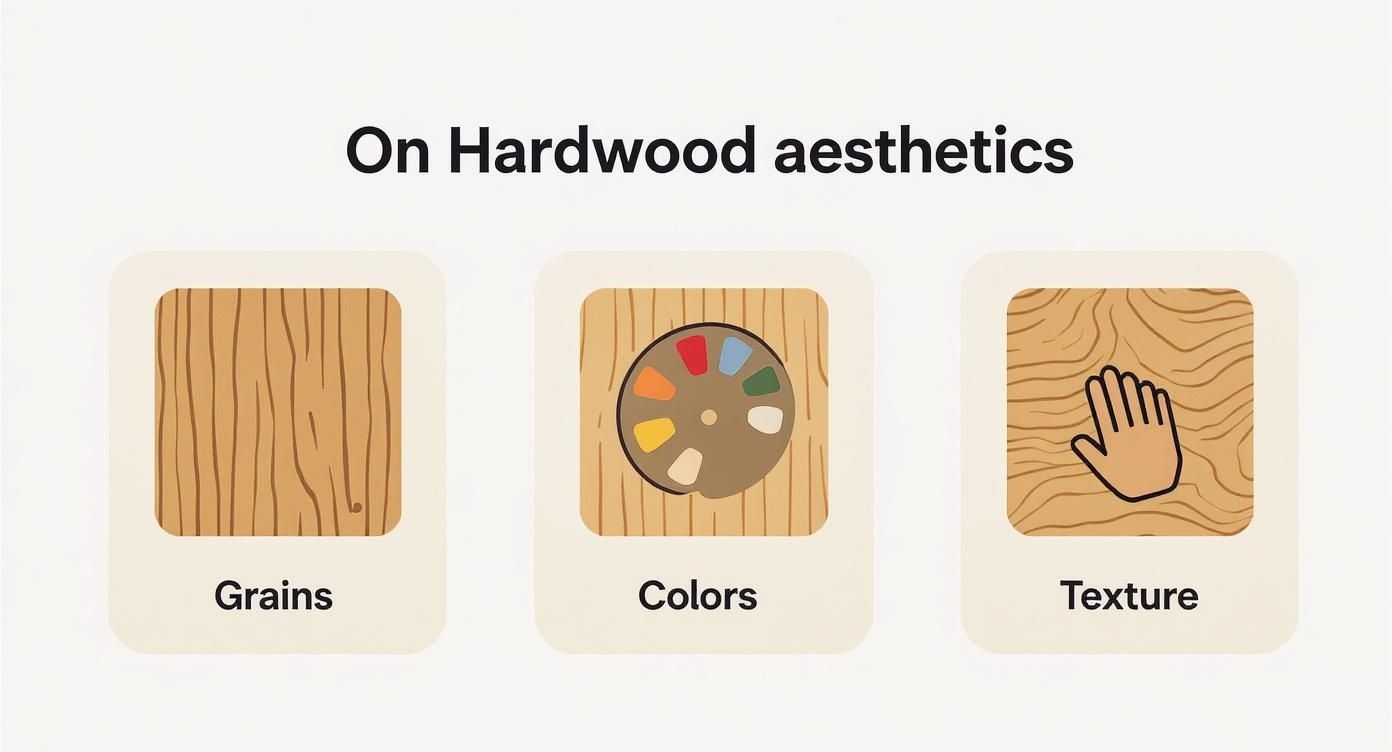
The infographic above gives a great visual summary of how the interplay of grain, colour, and texture defines a hardwood’s character—all of which can be transformed by the right finish.
How Hardwoods Take Oils and Stains
Beyond charring, the way a hardwood absorbs conventional finishes like oils and stains is another vital piece of the puzzle. This all comes down to the wood’s porosity—the size and layout of its pores.
- Open-pored woods, like Ash and Oak, are thirsty. They readily soak up oils and stains, allowing the finish to penetrate deep into the wood. This nourishes the timber and really makes the natural grain pop, creating a rich, textured look.
- Closed-pored woods, such as Maple and Cherry, have a much finer, tighter texture. They absorb finishes more slowly and evenly, which typically results in a smoother, more uniform surface colour.
The finish you choose can either celebrate or completely change these natural characteristics. Penetrating oils, for instance, tend to enhance the wood’s own colour and grain, giving it a warm, organic feel. On the other hand, surface stains can be used to hit a specific colour palette, offering more design freedom while still letting the wood’s natural texture shine through.
Ultimately, picking the right combination of hardwood and finish is a balancing act. It requires a genuine appreciation for the wood’s innate properties and a clear vision for what you want to achieve. By understanding how density, grain, and porosity influence these treatments, you can make informed choices that lead to both lasting protection and stunning results for any project.
Finding Sustainable Hardwoods in the UK
Choosing the right hardwood isn’t just about its looks or how tough it is; it’s also a statement about your commitment to the environment. With sustainability at the front of everyone’s minds, knowing where your timber comes from has never been more important. It’s about making a conscious decision to back well-managed forests and ensure your project is as green as it can be.
Making a smart choice starts with knowing what to look for. That’s where certifications come in. Think of them as a seal of approval, guaranteeing the wood you’re buying has been harvested in a way that doesn’t harm our planet’s forests.
What Do Sustainability Certifications Actually Mean?
When you’re looking at timber, you’ll probably see logos from the Forest Stewardship Council (FSC) and the Programme for the Endorsement of Forest Certification (PEFC). These aren’t just fancy stickers; they’re your proof of a sustainable supply chain.
- FSC Certification: This is a global, non-profit organisation dedicated to promoting responsible forest management. An FSC logo tells you the timber’s journey has been tracked from the forest right to the supplier. It ensures the wood comes from a source that respects biodiversity, the rights of indigenous peoples, and the forest’s overall health.
- PEFC Certification: As another worldwide alliance, PEFC endorses national certification systems. It works in a similar way, setting rigorous sustainability benchmarks that national standards have to meet.
By choosing certified wood, you’re supporting a system that sees forests as more than just a source of timber. It’s a vote for practices that fight illegal logging and help keep these vital ecosystems thriving for generations to come.
When you choose timber from a certified, well-managed forest, you’re also investing in a brilliant carbon storage solution. Trees pull CO2 out of the atmosphere as they grow, and that carbon stays locked inside the wood for the entire life of your cladding, decking, or furniture.
A Look at the UK’s Hardwood Supply Chain
Here in the UK, the hardwood supply chain might not be what you expect. While it’s easy to think of huge public forests, the reality is that private woodlands are the engine of our hardwood production.
In fact, private estates consistently supply over 90% of the country’s total hardwood output every year. To put some numbers on it, recent forestry statistics show that of the 814,000 green tonnes of UK hardwood produced, a massive 745,000 tonnes came from private woodlands. You can dig deeper into these figures in this Forestry Statistics 2024 report.
This really brings home the crucial role that private landowners play in providing the beautiful native species we see in everything from furniture to flooring across the country.
Local vs Imported: Which Is the Better Choice?
Deciding between locally grown and imported hardwoods means weighing up a few different factors. Sourcing timber locally, from UK-grown species like Oak, Ash, or Sycamore, has some pretty clear environmental wins.
The most obvious one is the reduction in “timber miles.” Buying wood that’s grown closer to home slashes the carbon footprint from transport. It doesn’t just support the local economy and British woodland management; it also gives you a timber that is perfectly adapted to the UK climate.
Of course, sometimes imported hardwoods are the only option for specific properties of hardwoods that aren’t available from native species, like the incredible durability of some tropical woods. If you do go down the imported route, it’s absolutely vital to make sure it has a credible certification like FSC or PEFC. This is your guarantee that it’s from a responsibly managed source and isn’t contributing to deforestation.
At the end of the day, making a sustainable choice is all about asking the right questions. By prioritising certified and, whenever you can, locally sourced timber, you can make sure your project doesn’t just look good—it does good, too.
Common Questions About Hardwood Properties
Diving into the world of hardwood can feel a bit overwhelming, with plenty of terminology and subtle differences to get your head around. To help clear things up and build on what we’ve already covered, I’ve put together answers to some of the most frequent questions we hear. Think of this as a handy reference to make sure you’re confident in your choices.
Are All Hardwoods Actually Hard?
This question comes up all the time, and it’s a great one. The simple answer is no. It’s a bit of a misnomer, really. The term ‘hardwood’ is actually a botanical label, not a description of its physical strength. Hardwoods are timbers that come from broad-leaved trees (the scientific term is angiosperm), while softwoods come from conifers.
A classic example to illustrate this is Balsa wood. It’s famously soft and light, but botanically speaking, it’s a hardwood. On the flip side, some softwoods like Yew are incredibly hard and dense. The real lesson here is to always look at the specific properties of the timber you’re considering, especially its Janka hardness rating, rather than going by the name alone.
Which Hardwood Is Best for Outdoor Use?
When you’re planning an outdoor project like decking or cladding, natural durability is king. You need a wood that can stand up to whatever the British weather throws at it—rot, moisture, and pests.
Timbers with a high natural durability rating are always the way to go. Your best bets include:
- Oak: A true classic, known for its sheer strength and high tannin content, which acts as a natural deterrent to insects and decay.
- Iroko and Teak: These tropical hardwoods are packed with natural oils that function like a built-in preservative, making them exceptionally good at resisting the elements.
- Accoya: While it starts life as a softwood, Accoya is modified at a molecular level to perform like the toughest hardwoods. It offers incredible stability and a seriously long lifespan outdoors.
Stick to species from Durability Class 1 or 2, and you can be sure your project will look great for years to come.
Choosing the right hardwood involves more than just selecting a species. It means understanding the market forces that influence availability and cost. The timber trade is a dynamic environment where pricing and demand are constantly shifting.
The hardwood trade here in the UK is a complex picture of import trends and price fluctuations. For instance, over a recent six-month period, hardwood plywood imports actually saw their value drop by 2%, even while the volume coming in rose by 11%. This strange situation was caused by a 12% fall in average prices, pointing to weaker demand and fierce competition. Meanwhile, softwood plywood imports were up in both volume and value, highlighting the pricing challenges hardwoods face in the UK market. You can find more insights into UK timber market trends on globalwood.org.
Why Does Wood Grain Look So Different?
The beautiful, unique grain patterns you see in every piece of wood are a direct reflection of the tree’s internal structure and, just as importantly, how it’s sawn. In hardwoods, the pores (or vessels) that transport water up the trunk are what create many of the distinctive patterns.
But how the log is milled makes a massive difference, too. Plain-sawn timber usually gives you that classic, wavy “cathedral” grain. Quarter-sawn timber, on the other hand, produces a much straighter, more linear pattern and can reveal stunning flecks and rays, particularly in Oak. It’s this combination—the species, its growing conditions, and the sawing method—that gives every single board its own unique fingerprint.
Can Any Hardwood Be Used for Yakisugi?
While you can technically char many hardwoods, some are far, far better suited to the Yakisugi (also known as shou sugi ban) process than others. The best candidates are dense and structurally stable, which allows them to char deeply and evenly without twisting or cracking under the intense heat.
Oak is a fantastic choice because its density and strong grain pattern create a deep, protective “alligator skin” texture when charred. Larch and Accoya are also very popular, as they are incredibly stable and deliver consistently beautiful results. Trying to char a softer, less dense hardwood just won’t give you that durable char layer, making them generally unsuitable for this demanding technique.
How Do I Choose Between an Oil or Varnish Finish?
Deciding on the right finish really comes down to the final look you want and how much protection the wood needs. The choice is essentially between a finish that soaks in versus one that sits on the surface.
- Penetrating Oils (like Tung or Linseed oil): These soak right into the wood fibres, nourishing them from the inside out and beautifully enhancing the natural colour and grain. They provide a more natural, matte appearance and are wonderfully easy to touch up—you just wipe on another coat.
- Surface Finishes (like polyurethane or varnish): These create a hard, protective film on top of the wood. They offer brilliant protection against scratches and spills, but they can sometimes look a bit like a plastic coating. The downside is that if this film gets damaged, it’s much more difficult to repair seamlessly.
For a high-traffic floor, a varnish is probably the more practical option. But for a piece of furniture where you want to feel and appreciate the natural texture of the wood, an oil finish is almost always the better choice. It all comes back to knowing the properties of hardwoods so you can pick a species and finish that will perform perfectly for your needs.
At TimberSol, we specialise in transforming high-quality, sustainable hardwoods into stunning charred timber products. If you’re looking for a finish that combines timeless beauty with exceptional durability, explore our range of Yakisugi cladding, decking, and fencing. Discover the perfect material for your next project at https://timbersol-backup.elnoirstudio.com.
