
Choosing Weather Resistant Hardwood for Outdoors

Weather resistant hardwood refers to dense timber species with natural oils, tannins, and a tight grain structure that provide built-in protection against moisture, rot, insects, and weathering. These qualities make it an ideal choice for outdoor applications such as decking, cladding, and fencing, particularly in harsh climates like the UK.
Ever wondered why some woods can withstand the unpredictable British weather for decades, while others begin to rot after just a few seasons? The answer lies in the wood’s natural defence system. Weather resistant hardwood can be thought of as timber with a built-in, heavy-duty protective layer—designed to handle whatever the climate throws at it.
This guide explores the key factors that influence durability, compares leading hardwood species such as Teak, Iroko, and Oak, and examines common outdoor applications including decking and cladding. It also covers essential maintenance practices and the importance of choosing sustainably sourced timber.
Understanding Your Hardwood’s Natural Armour
The exceptional resilience of outdoor hardwood is not by chance—it’s rooted in its natural biology. Certain timber species have evolved with unique characteristics that form a powerful, built-in defence against moisture, decay, and insect attack. Understanding these properties is key to selecting wood that not only looks impressive initially but also delivers long-term performance.
One of the most important protective features is a dense grain structure. When wood fibres are tightly packed, there is minimal space for water to penetrate. This natural barrier helps repel moisture before it can lead to rot, which is why hardwoods feel noticeably heavier and more solid compared to softwoods such as pine.
The Science Behind Durability
Durability in weather-resistant hardwood goes beyond physical density—the wood’s chemical composition plays an equally important role. Many high-performance species are rich in natural oils and resins, which create a hydrophobic barrier from within. This is particularly evident in tropical hardwoods like Teak, where the high oil content makes the timber naturally water-resistant from the outset.
In addition, some hardwoods contain natural chemical compounds known as extractives, which make the wood unappealing to pests and fungi. These substances, including tannins and polyphenols, provide several key advantages:
- Rot resistance: These compounds are naturally toxic to the microorganisms responsible for wood decay.
- Insect deterrence: Wood-boring insects are repelled by these chemicals, reducing the risk of infestation.
- Enhanced stability: They help minimise movement in the timber, reducing the likelihood of warping and surface checking over time.
This combination of dense fibres, protective oils, and defensive chemical compounds is what defines truly weather-resistant hardwood. It forms a complete, natural protection system that ensures long-term performance in even the most demanding outdoor environments.
By understanding the key properties that define these timbers, you can make a more informed decision for your next outdoor project. For a deeper insight into material specifications, explore our range of timber resources to help guide your selection.
Top Weather Resistant Hardwood Species for the UK
Choosing the right weather-resistant hardwood goes beyond durability—it’s about selecting a timber that suits your project. In the UK, where damp and unpredictable weather is the norm, outdoor timber must be able to withstand everything from persistent autumn rain to sudden summer downpours.
Fortunately, there are several hardwood species ideally suited to these conditions. Each offers a unique combination of colour, grain, and built-in defences against the elements, whether you’re working with materials like douglas fir wood cladding, spruce cladding or other durable exterior timbers. Selecting the right option ensures your decking, fencing, or cladding not only looks impressive from the outset but also delivers reliable, long-term performance.
The Unbeatable Trio: Teak, Iroko, and Oak
When it comes to performance, a few hardwood species consistently stand out. Teak, Iroko, and Oak have earned their reputation over centuries, used in everything from shipbuilding to large-scale architectural projects. They are true proven performers in the timber world.
- Teak (Tectona grandis) is widely regarded as the gold standard. Its exceptionally high natural oil content acts as a built-in protective layer, repelling water and providing outstanding resistance to rot and insects. Combined with its classic golden-brown colour and straight grain, Teak offers timeless visual appeal—making it a premium choice for outdoor decking.
- Iroko (Milicia excelsa) is often referred to as “African Teak” due to its similar performance characteristics. It provides excellent durability, natural oil content, and resistance to decay, typically at a more accessible price point. Iroko starts with a yellow to golden-brown tone and gradually matures into a rich copper hue, adding warmth to outdoor spaces.
- Oak (Quercus robur / petraea), particularly European Oak, is a traditional and widely trusted choice in the UK. Known for its strength and longevity, Oak contains high levels of tannins that naturally protect against pests and fungal decay. Its distinctive grain pattern and structural reliability make it a popular option for decking, pergolas, and timber framing.
The image below provides a clear overview of how these premium hardwoods perform in terms of cost, lifespan, and maintenance requirements.
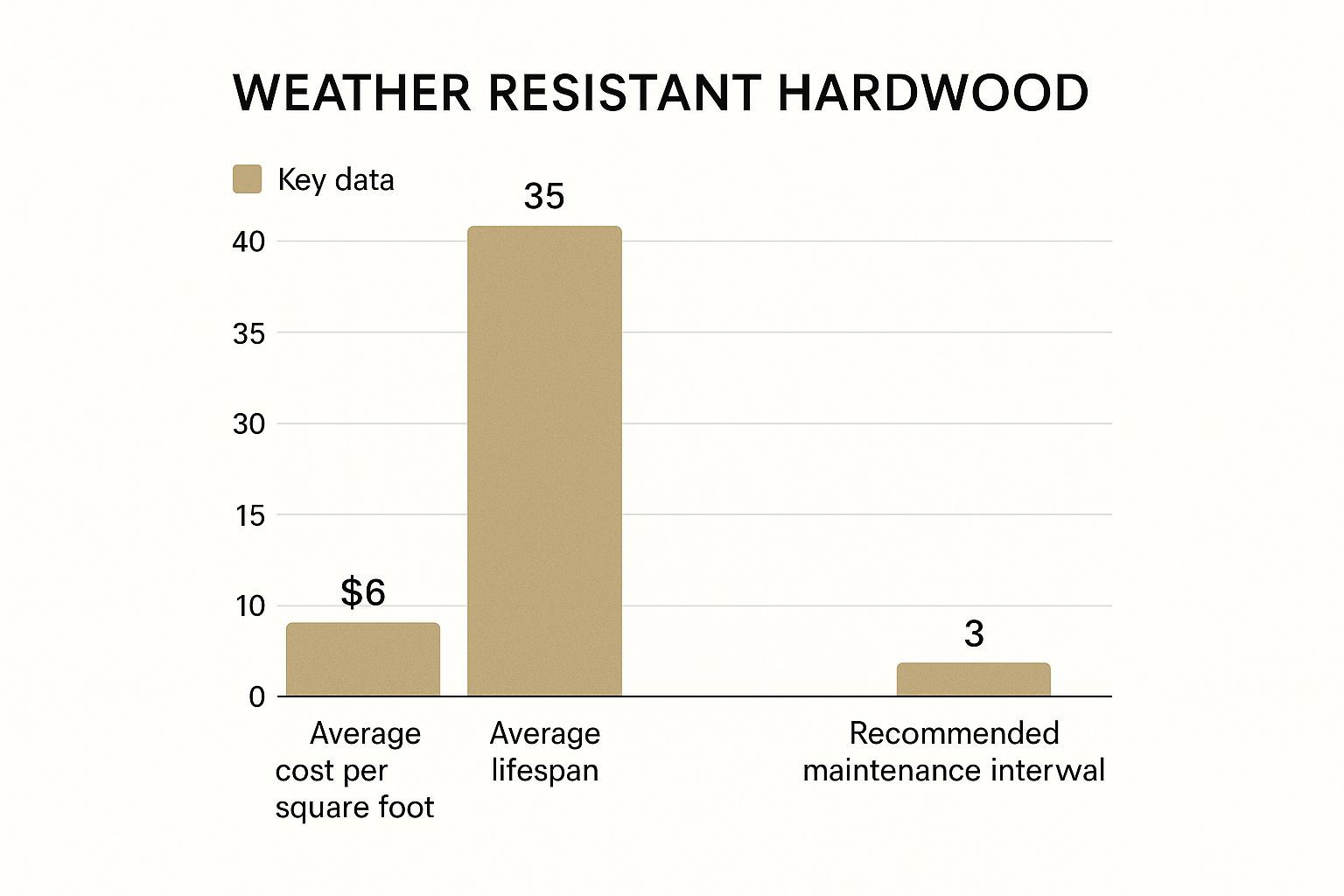
As you can see, while the initial investment may vary, all three offer impressive longevity with relatively low maintenance requirements, making them smart long-term investments.
Comparing Popular Weather Resistant Hardwoods
To help you compare your options at a glance, the table below outlines the key characteristics of some of the best hardwoods for the UK climate.
| Hardwood Species | Durability Class | Natural Colour | Maintenance Level | Typical Cost |
|---|---|---|---|---|
| Teak | Class 1 (Very Durable) | Golden-brown, ages to silver-grey | Low | High |
| Iroko | Class 1-2 (Durable) | Yellow to dark brown | Low | Medium-High |
| Oak | Class 2 (Durable) | Light brown with distinct grain | Medium | Medium-High |
| Balau | Class 1-2 (Durable) | Yellow-brown to reddish-brown | Medium | Medium |
| Sapele | Class 2-3 (Moderately Durable) | Reddish-brown with ribbon grain | Medium | Medium |
This comparison highlights that there is a suitable option for every budget and design preference—from the premium, low-maintenance appeal of Teak to the durability and excellent value offered by Balau.
Other Strong Contenders for UK Weather
Beyond the top three, several other hardwood species offer excellent performance and distinctive aesthetics. These can be considered strong alternatives, each with unique characteristics that may suit specific project requirements.
Balau is a great example. This Southeast Asian hardwood is extremely dense and durable, featuring rich reddish-brown tones and a distinctive interlocking grain. Its exceptional hardness makes it highly resistant to wear, making it particularly well-suited for high-traffic areas such as family decking or even commercial boardwalks.
Due to its density, Balau can be more demanding to work with during installation. However, the long-term durability and performance it offers make it a worthwhile investment.
Choosing the right hardwood species is more than just a technical decision—it’s a design choice. The timber’s natural colour, grain pattern, and the way it weathers over time will define the character of your outdoor space for years to come.
Another strong option is Sapele, a high-quality African hardwood known for its deep reddish-brown colour and distinctive ribbon-like grain. Importantly, Sapele offers greater stability than many other hardwoods, meaning it is less prone to warping or twisting in response to changing moisture levels. This stability, combined with its solid resistance to rot, makes it a dependable choice for applications such as cladding, outdoor furniture, and more.
The Hidden Factors in Hardwood Durability
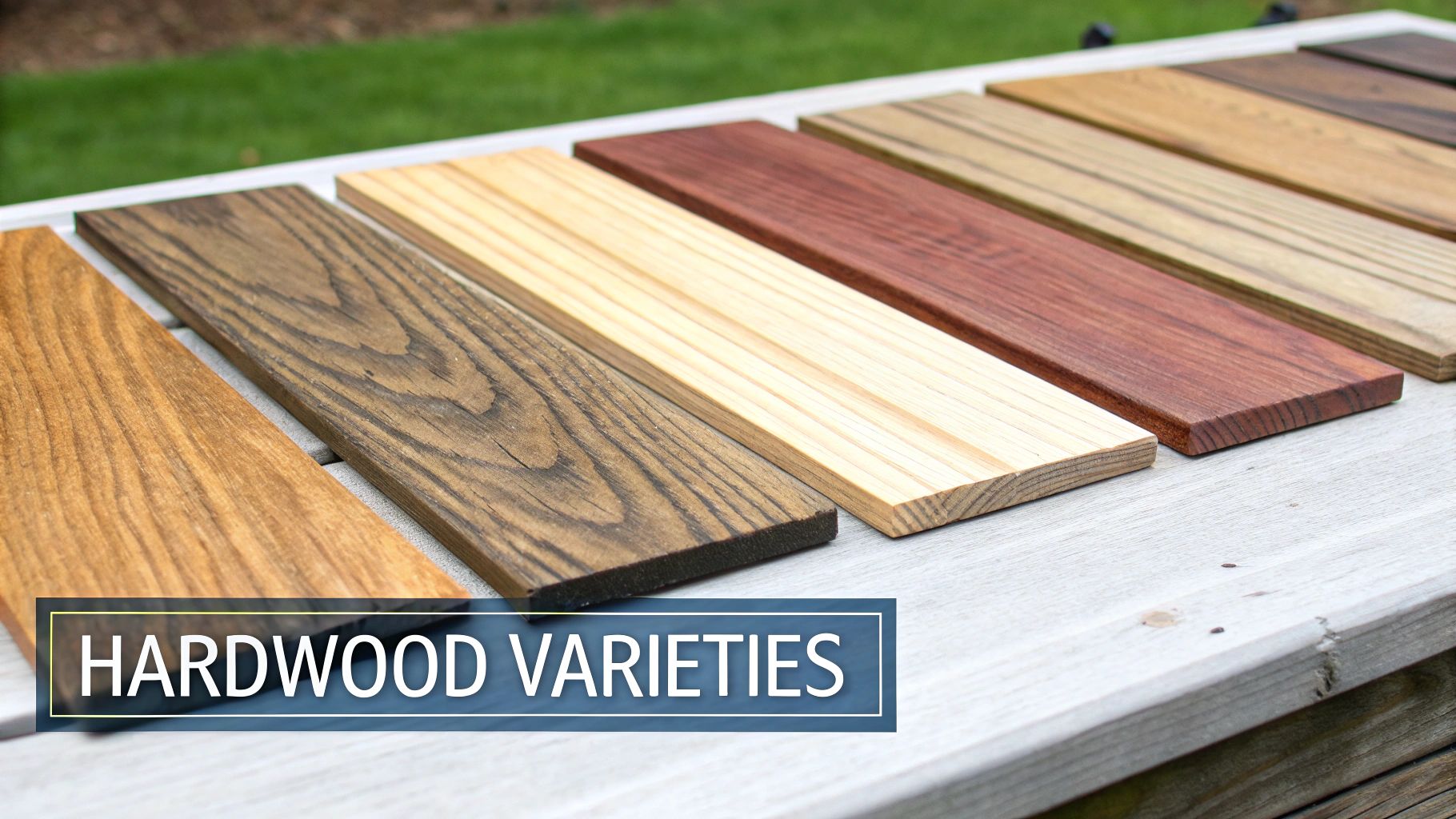
Choosing the right hardwood species is an important first step, but a timber’s true lifespan is determined long before it reaches your project. Much like cooking, even the highest-quality ingredients depend on proper preparation to deliver the best results.
Two boards of Oak may appear identical, yet differences in how they were cut and dried can significantly impact their performance. These factors can determine whether a deck lasts just a few years or continues performing for decades. Understanding these behind-the-scenes processes is essential when selecting hardwood that will genuinely stand the test of time.
Grain Density and Natural Oils
To understand hardwood durability, it’s important to look at the structure of the wood itself. A dense, tight grain is one of the most effective natural defences against moisture, as it leaves very little space for water to penetrate and initiate rot. In general, the heavier and more solid a piece of timber feels, the higher its density—and the stronger its natural resistance.
In addition, many high-performance hardwoods contain natural oils and resins that act as built-in preservatives. These substances help waterproof the timber from within, which is why species like Teak and Iroko are renowned for their durability in wet environments.
The combination of dense grain structure and high oil content creates a level of protection that goes far beyond surface treatments. This natural resilience is a defining characteristic of truly durable, weather-resistant hardwood.
The UK forestry market has long valued hardwood for its durability in outdoor applications. Between 2005 and 2014, hardwood production remained relatively stable at around 500,000 cubic metres per year. While this may seem significant, it represents only a small portion of the approximately 8 million cubic metres of softwood produced annually.
This contrast highlights how hardwood is prioritised for specialist uses such as cladding and decking.
The Importance of Cut and Seasoning
The way a log is cut into planks has a significant impact on how the wood performs over time. Different sawing methods produce very different results:
- Flat-sawn: This is the most common and cost-effective cutting method. However, boards produced this way are more prone to movement, including cupping, twisting, and warping over time.
- Quarter-sawn: This more precise method produces boards with a straight, uniform grain. These planks are significantly more stable and resistant to movement, making them ideal for high-performance applications such as charred timber cladding. You can explore our exceptionally stable charred cladding options to see the difference firsthand.
Seasoning is another critical factor. This process involves drying the timber to the correct moisture content before use. Properly seasoned wood—whether kiln-dried or air-dried—is far less likely to shrink, crack, or warp after installation. Skipping or rushing this stage can result in unstable timber, regardless of how durable the species itself may be.
Putting Weather-Resistant Hardwood to Work Outdoors
Understanding the technical qualities of weather-resistant hardwood is one thing—but seeing how it transforms an outdoor space is where its true value becomes clear. This is where durability meets design, and the natural beauty of these timbers comes to life. Whether used for decking, cladding, or fencing, hardwood offers a level of versatility that is difficult to match.
In the right application, these materials go beyond basic construction. They bring warmth, texture, and a strong connection to the natural environment. Let’s explore some of the most popular ways weather-resistant hardwood is used to create functional and visually striking outdoor spaces.
Creating Timeless and Durable Decking
A hardwood deck is more than just an outdoor surface—it becomes the focal point of your garden. It’s where everyday moments happen, from summer barbecues to quiet morning coffees. Choosing a dense, weather-resistant hardwood ensures your deck remains both visually appealing and structurally sound for years to come.
Hardwoods such as Iroko and Balau are excellent choices for decking. Their natural durability allows them to withstand heavy foot traffic, outdoor furniture, and the unpredictable British weather without splintering or rotting. This strength is also noticeable underfoot, providing a solid, high-quality feel that sets hardwood decking apart from softer alternatives.
Designing Striking Timber Cladding
Timber cladding is one of the most visually impactful ways to use weather-resistant hardwood, especially when using high-performance solutions such as charred accoya cladding or charred douglas fir cladding. It can transform a plain exterior into a striking architectural feature or add timeless character to a traditional property. The design possibilities are extensive, ranging from sleek, modern rainscreen systems to more rustic styles that weather naturally into an elegant silver-grey finish.
Hardwood cladding also functions as a natural, breathable layer for a building. Beyond its aesthetic appeal, it provides added protection against the elements, helping to improve insulation and extend the lifespan of the structure.
Demand for high-performance exterior materials has grown significantly in recent years. In the UK, the push for sustainable and climate-resilient construction solutions is driving increased interest in both hardwoods and durable softwoods within the timber cladding market. You can explore more about the UK timber UK timber cladding market and its trends to see how the industry continues to evolve.
Building Elegant and Secure Fencing
Fencing is often seen as a purely functional boundary, but with weather-resistant hardwood, it can become a defining feature of your landscape design. Hardwood fencing combines strength, security, and visual appeal in a way few other materials can match. Its natural density creates a solid, reliable barrier, while the rich grain patterns add depth and character to your outdoor space.
A hardwood fence is a long-term investment in both privacy and aesthetics. Unlike softwood panels that may warp or deteriorate within a few seasons, a well-installed Oak or Sapele fence can last for decades. Over time, it weathers naturally while maintaining its structural integrity, adding lasting value to your property.
Caring for Your Outdoor Hardwood Investment
https://www.youtube.com/embed/QQqz2fGqEmY
Choosing a premium, weather-resistant hardwood is a valuable investment in your property. The good news is that with simple, consistent care, you can ensure it not only lasts for decades but continues to look its best year after year.
Maintaining outdoor timber is far more straightforward than many people expect. It doesn’t require constant effort—just a practical, proactive approach to cleaning and finishing that helps preserve both its appearance and long-term performance.
The Great Debate: To Oil or Not to Oil?
One of the first and most important decisions you’ll make is how you want your hardwood to age over time. There are two distinct approaches, each offering a unique aesthetic that will define the look of your outdoor space for years to come.
- Preserving the original colour: If you want to maintain the deep, rich tones of freshly installed timber, applying a high-quality decking oil with UV protection is essential. Acting like a protective barrier, it shields the wood from sun exposure and helps repel moisture. To retain that vibrant, “just-installed” appearance, reapplication is typically needed every 1–3 years.
- Embracing the silver patina: Alternatively, you can allow the hardwood to weather naturally. Over time, exposure to sunlight and rain will transform the surface into a refined silvery-grey patina. This low-maintenance option is often favoured in modern design for its understated, organic look. Importantly, this change is purely cosmetic—the wood’s durability and performance remain unaffected.
A well-maintained hardwood deck or cladding is more than just a visual upgrade—it becomes a long-lasting extension of your home. Whether you choose a rich oiled finish or a natural silver patina, both approaches offer a durable and visually appealing result.
Your Simple Maintenance Schedule
Maintaining hardwood decking doesn’t need to be complicated. In most cases, a simple annual routine is enough to keep your timber looking great and performing at its best.
Start with a gentle clean. At least once a year, use a stiff brush and a mild, wood-friendly cleaning solution to remove built-up dirt, grime, and algae. This helps prevent moisture from becoming trapped on the surface, reducing the risk of long-term damage.
Once the deck is clean and fully dry, carry out a quick inspection. Check for any loose fixings or small surface cracks that may need attention. Addressing minor issues early helps prevent more significant problems over time.
If you want to maintain the original colour of the wood, this is also the ideal time to reapply a protective decking oil, following the manufacturer’s instructions.
This straightforward annual maintenance routine is key to ensuring your hardwood decking delivers decades of reliable performance.
Why Sustainable Hardwood Is a Smart Investment
Opting for high-quality timber that lasts is inherently sustainable. Rather than replacing softer woods every few years, a well-selected hardwood can perform reliably for decades. This significantly reduces waste and minimises the resources required for repeated replacements.
However, true sustainability also depends on responsible sourcing. It’s essential to look for recognised certifications such as the Forest Stewardship Council (FSC) or the Programme for the Endorsement of Forest Certification (PEFC). These certifications confirm that the timber comes from responsibly managed forests that protect biodiversity, support local communities, and ensure long-term forest regeneration.
An Investment in Value, Not an Expense
The higher upfront cost of premium hardwood can seem significant, but it’s best viewed as a long-term investment rather than a one-time expense. A well-crafted hardwood deck or striking timber cladding not only enhances visual appeal but can also increase your property’s overall value.
Over time, that initial investment pays off. Durable hardwood reduces the need for frequent repairs, replacements, and ongoing maintenance associated with less resilient materials. By choosing quality from the outset, you secure decades of performance along with lasting aesthetic appeal.
Investing in certified, weather-resistant hardwood is a commitment to both quality and sustainability. It supports responsible forestry practices while ensuring your outdoor space remains attractive, functional, and built to last for years to come.
The good news is that sourcing these materials is becoming increasingly accessible. Projections for the UK’s domestic supply are highly encouraging. A 50-year forecast suggests that Great Britain’s forests will produce an average of 1.6 million cubic metres of hardwood timber annually. For more detailed insights, you can explore the hardwood availability forecasts from Forest Research.
Frequently Asked Questions About Outdoor Hardwood
Starting a hardwood project is exciting, but it’s natural to have questions along the way. Below are clear, straightforward answers to some of the most common queries, helping you move forward with confidence.
How Long Does Weather Resistant Hardwood Last?
With proper installation and basic maintenance, high-quality weather-resistant hardwood can last between 25 and 50 years—or even longer. Certain species, such as Iroko and Teak, are particularly renowned for their exceptional longevity and can, in some cases, outlast the structures they are used on.
The exact lifespan will depend on several factors, including the type of timber selected, local climate conditions, and the level of ongoing care.
Is It Expensive to Install?
It’s true that the initial cost of premium hardwood is higher than treated softwood, but it should be viewed as a long-term investment rather than a short-term expense. Over time, the savings from reduced repairs and fewer replacements can be significant.
When considered over the full lifespan of your project, hardwood often proves to be more cost-effective. Installation costs are also comparable to other high-end decking or cladding materials.
The upfront investment delivers long-term value—providing decades of durability and visual appeal while eliminating the recurring costs associated with less resilient materials.
Can I Install Outdoor Hardwood Myself?
If you’re an experienced DIYer, installing hardwood decking or cladding is possible—but it comes with challenges. These timbers are extremely dense and heavy.
Proper installation also requires specialised tools and techniques to achieve a high-quality result. For this reason, professional installation is often recommended to ensure a precise finish and avoid costly mistakes.
If you have further questions, you can explore our comprehensive frequently asked questions page for more detailed guidance.
Ready to transform your outdoor space with timber that’s built to last? Discover the exceptional durability and distinctive beauty of charred timber solutions with TimberSol.
