
Types of Wood for Fence: Homeowner’s Guide to Durable Picks

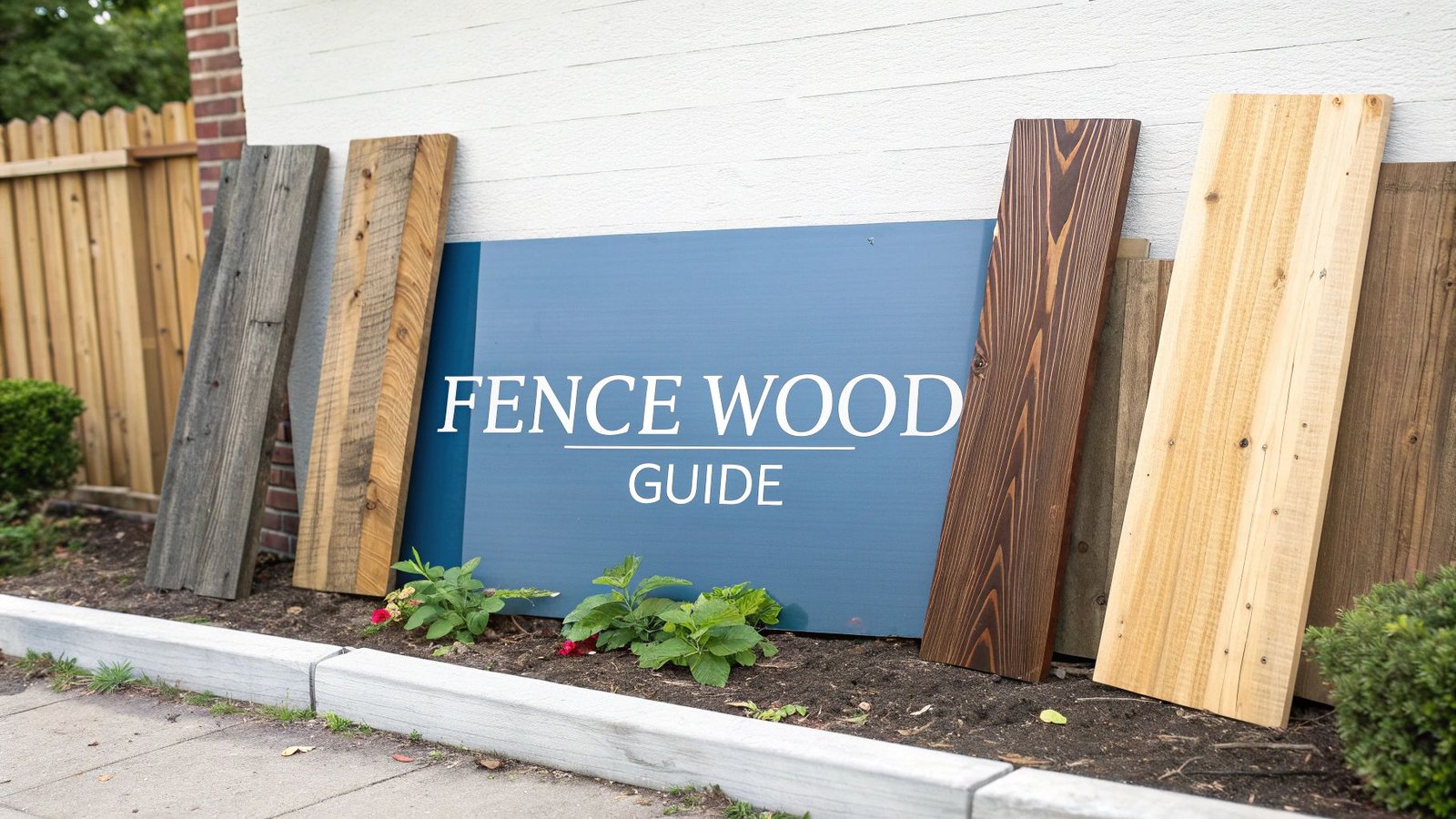
Choosing the right wood for your fence is about so much more than just picking a nice colour. It’s a fundamental decision that dictates how long your fence will last, how much work it’ll need over the years, and the overall value it adds to your home. The main types of wood for fence options range from familiar softwoods like Pine and Cedar, to tough hardwoods like Oak, and even modern modified timbers, each with its own story to tell.
Choosing the Right Wood for Your Garden Fence
Think of it like choosing the right material for a coat. What you pick determines everything that follows—from how well it stands up to the weather to how much care it needs. A fence isn’t just a boundary; it’s a choice that shapes the security, privacy, and character of your garden.
This guide is here to walk UK homeowners through that very decision. We’ll explore all the crucial factors, from dealing with our notoriously damp climate to fitting your budget and deciding how much maintenance you’re truly willing to do. Getting to grips with these trade-offs is the key to a fence you’ll be happy with for years to come.
The Three Main Families of Fence Wood
To make things a bit simpler, we can group fencing woods into three main categories. Each “family” has its own personality, making it a better fit for different needs and priorities.
- Softwoods: These are the go-to choice for many UK gardens, with Pine and Cedar leading the pack. They’re generally lighter on the wallet and easier for fencers to work with, which explains their popularity.
- Hardwoods: Think of woods like Oak. These are the heavyweights, known for being incredibly dense and naturally tough. A hardwood fence is a premium investment, but it pays you back with a much longer lifespan.
- Modified Timbers: This is where things get interesting. This modern category includes innovative materials like charred timber, where the wood is treated with processes like heat or charring to dramatically boost its resistance to rot, insects, and moisture.
The desire for quality fencing is clearly on the rise. The UK wood fencing market, valued at USD 608.0 million recently, is expected to grow to an impressive USD 788.5 million by 2030. This isn’t just about putting up a barrier; it reflects a real demand for fences that are both built to last and look fantastic.
Balancing Cost, Longevity, and Upkeep
When it comes down to it, your final choice will be a balancing act. A lower upfront cost with a softwood might mean more weekends spent staining or an earlier replacement down the line. On the other hand, investing more initially in a hardwood or modified wood could save you a great deal of time and money over the decades.
And of course, it’s not all about the practicalities. Don’t forget the huge role of fence installation in enhancing outdoor aesthetics. Let’s dive in and give you the confidence to weigh up the options and make the right call for your garden.
Exploring Popular Softwood Fencing Options
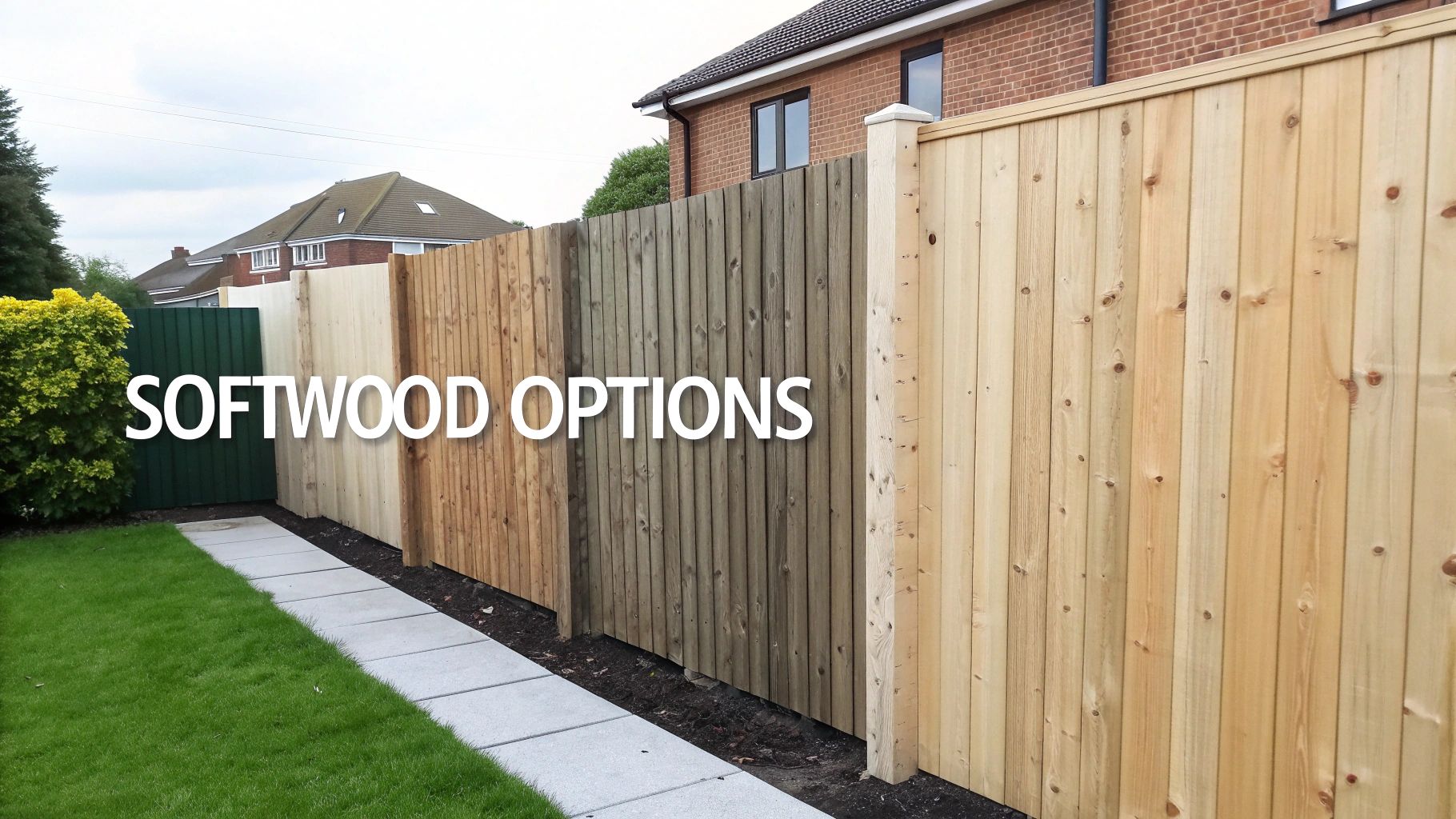
When you picture a classic British garden fence, you’re almost certainly thinking of a softwood. They are the true workhorses of the fencing world, hitting that sweet spot between affordability and solid performance that makes them the go-to choice for countless properties up and down the country.
Softwoods are your versatile all-rounders. They come from faster-growing coniferous trees, which keeps them wallet-friendly and makes them much easier to work with than dense hardwoods. It’s this accessibility that makes them so common.
Of course, their softer nature means they need a bit of help to fend off the famously damp British climate. This is where proper treatment isn’t just an option—it’s absolutely essential for building a fence that lasts.
Pressure-Treated Pine: The Budget-Friendly Favourite
Pressure-treated Pine is, without a doubt, the most common timber you’ll find in UK fence panels. It’s often sold as Redwood (not to be confused with the giant American trees) or Scots Pine, and you’ll recognise it by its pale, sometimes greenish tint and visible knots that give it a lovely, rustic character.
The magic is in the “pressure-treated” part. To make it durable, the timber is locked in a vacuum chamber, and powerful chemical preservatives are forced deep into its fibres. This process gives it a crucial defence against the rot, fungus, and insects that would make short work of untreated pine. In the UK, various types of wood are used for fencing, each with its unique characteristics. Redwood, also known as Scots Pine, is a popular choice due to its smooth finish and durability when pressure-treated and is often used for closeboard fencing. If you’re keen to explore more about the different species of timber for fencing and their applications, it’s worth a read.
This treatment makes it a fantastic, economical choice for all the classic fence styles, from sturdy closeboard panels to charming picket fences.
Decoding the Jargon: UC3 vs UC4 Treatment When you’re buying treated timber, you’ll see codes like ‘UC3’ and ‘UC4’. Think of it like this: UC3 is for wood that’s above ground but out in the weather—perfect for fence panels. UC4, however, is a much higher level of treatment designed for wood that’s in permanent contact with the ground, like your fence posts. For a long-lasting fence, making sure your posts are UC4 is non-negotiable.
Cedar: The Premium Softwood Option
If you’re after a step up in both looks and performance, Cedar is a brilliant choice. This softwood has a secret weapon: it’s naturally packed with oils that act as a built-in preservative, making it inherently resistant to moisture, rot, and insects.
This natural durability means Cedar often gets away without the chemical treatments Pine needs, though a good protective stain will help it keep its gorgeous colour for longer.
Aesthetically, Cedar is a stunner, with tones ranging from rich reddish-browns to warm ambers. If you leave it to the elements, it will weather gracefully into a beautiful, silvery-grey patina over time. It does cost more than treated Pine, but for many, the investment is well worth it for its low-maintenance appeal and superior lifespan, which can easily hit 15 to 20 years with a bit of care.
Key Considerations for Softwood Fencing
While softwoods offer fantastic value, it pays to know their quirks before you buy.
- Maintenance is a Must: Even treated softwoods need a little TLC. A fresh coat of quality fence stain or paint every few years will seal out moisture, protect it from UV damage, and keep it looking sharp.
- Durability: As the name implies, softwoods are less dense than hardwoods. This means they are a bit more prone to dings and scratches from a stray football or garden strimmer.
- Appearance: The natural grain and knots in Pine and Cedar are a huge part of their charm, lending a classic, rustic feel that fits perfectly into most garden designs.
Ultimately, softwoods like pressure-treated Pine and Cedar are practical and attractive solutions for most fencing projects. They strike an excellent balance between what you pay upfront and how they perform over the long haul, cementing their place as the sensible, popular choice for marking your boundary.
Getting to Grips with Durable Hardwood Fencing
When you’re looking for a fence that offers the ultimate in longevity and a truly premium finish, hardwoods are in a league of their own. These timbers are sourced from slow-growing deciduous trees, which results in a wood that’s incredibly dense, heavy, and naturally tough. It’s this innate strength that makes them one of the best choices for fencing.
This remarkable density is the secret to their resilience. Imagine the difference between a sponge and a brick; hardwood’s tightly packed fibres make it much harder for moisture and insects to find a way in. This means they can often brave the unpredictable UK weather for decades with very little fuss, slowly developing a beautiful, distinguished character as they age.
Of course, this superior performance and slow growth don’t come cheap. A hardwood fence is a significant upfront investment, but it’s one that really pays off in the long run through its exceptional lifespan and minimal need for repairs or replacements.
Oak: The Timeless British Classic
Oak is so much more than just a fencing material; it’s a symbol of strength and endurance, deeply woven into the British landscape. Choosing an Oak fence makes a powerful statement, admired for its classic beauty, distinctive grain, and impressive heft. It’s a choice that says permanence and quality.
The real magic of Oak lies in its natural durability. It’s packed with tannins, which are natural compounds that make it highly resistant to rot and insect attacks. This built-in defence means an untreated Oak fence can easily last for 20 years or more, far outliving many other timbers. Over time, it weathers to a stunning silvery-grey colour that looks right at home in any traditional garden.
Sweet Chestnut: A Sustainable and Sturdy Choice
Another brilliant British-grown hardwood is Sweet Chestnut. Just like Oak, it’s rich in tannins, giving it a superb natural resistance to decay. This makes it a fantastic, long-lasting option for fencing, particularly for posts and rails where that stubborn durability is a massive advantage.
One of the best things about Sweet Chestnut is its sustainability. For a hardwood, it grows relatively quickly and is often harvested using coppicing—a traditional woodland management technique where trees are cut back to ground level, prompting new shoots to grow. This sustainable cycle makes it a more environmentally friendly choice without ever compromising on performance.
The strength of hardwoods comes from their complex cellular structure, which is what gives them that renowned density and durability. It’s a fundamental difference that explains why they can outperform so many other materials over the long haul. To dig a bit deeper, you can learn more about the unique properties of hardwood and what makes it such a premium choice.
Key Things to Consider with Hardwood Fencing
While hardwoods offer unparalleled durability, there are a few practical points to weigh up before you take the plunge. A bit of forethought here will ensure you make a decision you’re happy with for years to come.
- Higher Initial Cost: Let’s be honest, the price is the biggest factor. Hardwoods are considerably more expensive than softwoods, a direct result of their slow growth and the difficulty in milling such dense timber.
- Sourcing is Crucial: It’s vital to know where your wood comes from. Always look for FSC (Forest Stewardship Council) certification to ensure your timber has been harvested from a responsibly managed forest.
- Weight and Installation: Hardwoods are seriously heavy. This makes installation a much more labour-intensive job, which can add to the cost. It’s work best left to experienced professionals who have the right gear and know-how to handle the material properly.
Ultimately, choosing a hardwood like Oak or Sweet Chestnut is a long-term investment in your property. It’s the perfect solution for creating a striking boundary fence or for properties in exposed locations where only the toughest material will do the job.
The Next Generation: Modified and Charred Wood Fencing
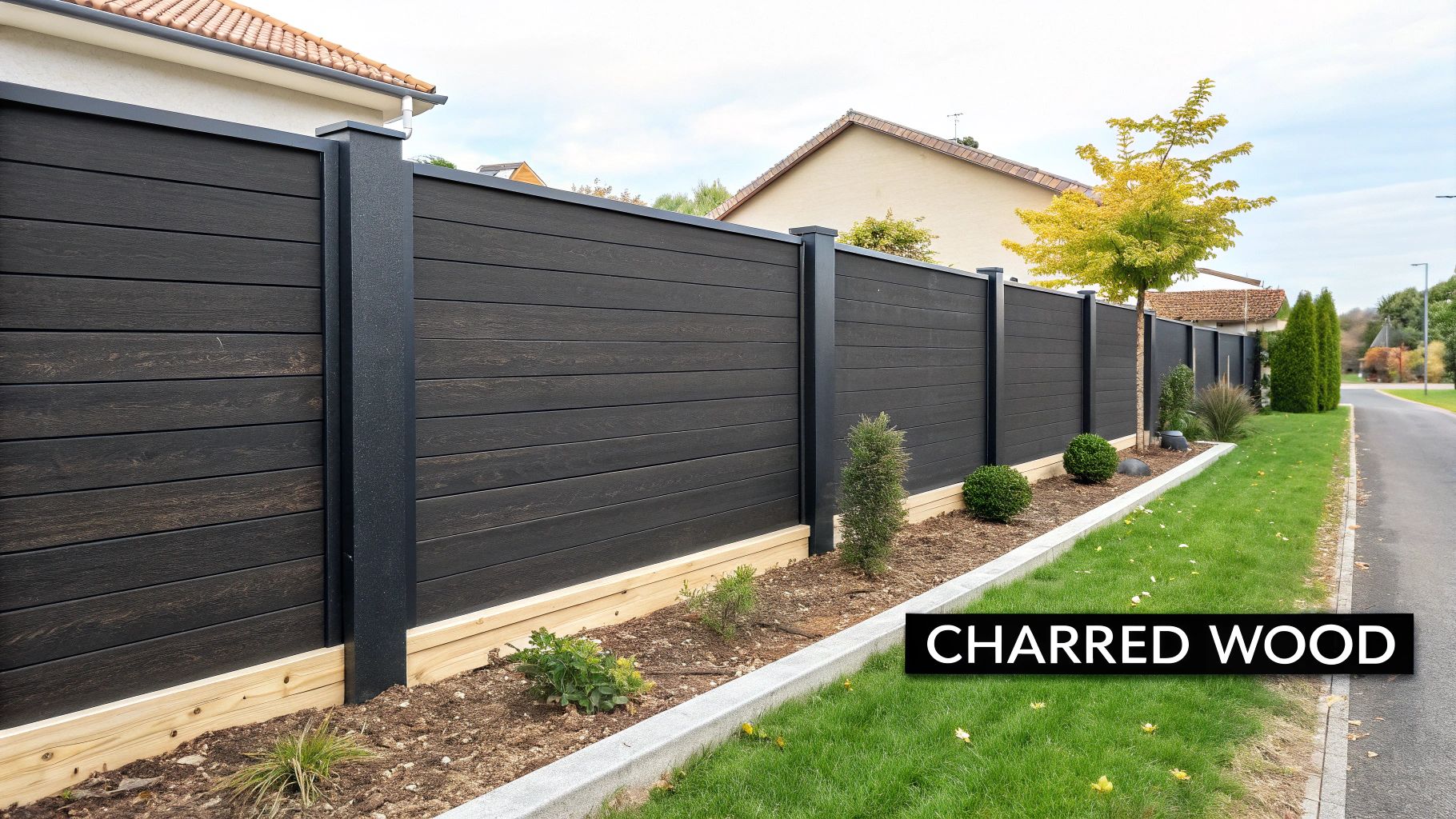
While the classic softwoods and hardwoods have served us well for garden boundaries, there’s a new wave of high-performance materials catching the eye of discerning homeowners. We’re talking about modified and charred woods, where science and ancient craft collide to produce fences with incredible resilience and truly head-turning style.
This isn’t just about slapping on a protective coat of paint or stain. These methods fundamentally change the timber’s very nature. They re-engineer the wood from the inside out, making it tough against the things that usually cause fences to fail: moisture, pests, and rot.
If you’re looking for a fence that breaks the mould and delivers on performance, these next-generation types of wood for fence options are an exciting alternative to the old guard.
Yakisugi: The Ancient Art of Charred Timber
Hailing from 18th-century Japan, Yakisugi (also known as shou sugi ban) is a breathtakingly beautiful and incredibly clever way to preserve wood. The technique involves carefully charring the surface of timber planks with a powerful flame before it’s cooled, cleaned, and sometimes oiled.
But this isn’t just for looks. The process creates a protective layer of carbon on the wood’s surface that acts as a natural, formidable barrier. It’s like giving the wood its own suit of armour, forged in fire.
This carbonised layer makes the timber exceptionally resistant to its biggest enemies. It puts off wood-boring insects, stops the fungal growth that causes rot, and even improves its fire resistance. The upshot? A fence that’s not only visually striking but also built to last, with a potential lifespan of 50 years or more.
Yakisugi transforms ordinary wood into a high-performance material using only fire. This ancient craft creates a protective carbon shield that naturally defends against rot, pests, and even fire, all while delivering a uniquely deep and textured aesthetic.
The deep, alligator-skin texture and silvery-black finish of charred timber offer a modern, sophisticated look that stands out. It’s a perfect way to create a statement boundary that blends artistry with sheer practicality, which is why it’s become a firm favourite among architects and designers.
Thermally Modified Wood: A Modern Powerhouse
Another major innovation in wood technology is thermal modification. This is a high-tech, yet completely chemical-free, process where timber is heated in a special kiln to temperatures between 180°C and 230°C, all in a low-oxygen environment to prevent it from simply burning.
You can think of it as carefully “baking” the wood. The intense heat permanently alters the wood’s cellular structure, breaking down the natural sugars and moisture-loving compounds that fungi and insects thrive on. Once their food source is gone, the wood becomes a much less appealing meal.
What’s more, the process dramatically improves the wood’s dimensional stability. By reducing its ability to absorb water by up to 50%, thermal modification makes the timber far less likely to warp, swell, or shrink with the seasons. That stability is a massive advantage here in the UK, with our notoriously changeable climate. If you’re curious about the science, you can read more on the thermal modification of wood and how it transforms its properties.
So, Why Choose Modified Wood Fencing?
Choosing a modified or charred wood fence really comes down to investing in superior performance and standout style. Here’s a quick rundown of why they are becoming such a popular choice:
- Exceptional Durability: Both charring and thermal modification create a material that’s highly resistant to rot, decay, and insect attack, meaning a much longer life for your fence.
- Low Maintenance: With their protection built right in, these woods require significantly less looking after than many traditional timbers.
- Unique Aesthetics: From the deep, textured black of Yakisugi to the rich, consistent tones of thermally treated wood, these options give your property a distinctive, contemporary edge.
- Environmental Credentials: By using heat and fire instead of chemicals to enhance the wood’s natural properties, these methods are often a more sustainable choice.
Comparing Fence Wood Costs And Lifespans
Choosing the right wood for your fence is a classic balancing act. You’re weighing up the cost today against how well it will perform for years to come. It’s about more than just the price per panel; you need to think about the total cost of ownership. Is it better to go for a cheap and cheerful softwood now, or invest in a premium hardwood that could outlast it twice over?
This guide is designed to help you navigate those trade-offs. We’ll break down the numbers—estimated costs, typical lifespans here in the UK, and the maintenance you can expect—so you can make a smart choice that you’ll be happy with for a long, long time.
Understanding The Initial Investment
The upfront cost of fencing materials can swing wildly. This all comes down to things like the wood’s rarity, how fast it grows, and the processing it needs. Softwoods are generally easy to get hold of and more affordable, whereas hardwoods and modified timbers come with a higher price tag for their natural toughness.
Here in the UK, our choices are often guided by durability, cost, and sustainability. For instance, a common softwood fence made from pine is easy on the wallet, with panels starting around £30, but you’ll be lucky to get more than five to ten years out of it. On the other hand, a hardwood fence, perhaps made from solid oak, can last over 20 years but costs a pretty penny—you could be looking at £300 for a single panel.
Factoring In Lifespan And Long-Term Value
A cheap fence that needs replacing every decade can quickly become a false economy. The real value of your investment only becomes clear over time when you factor in the cost of repairs, treatments, and eventual replacement.
A fence’s lifespan isn’t just a number—it’s a direct reflection of its long-term value. Investing in a more durable wood upfront often means spending less on repairs, treatments, and eventual replacement, saving you significant time and money over the fence’s life.
It’s also worth remembering that the wood’s natural durability isn’t the only thing that matters. Pests can slash the life of your fence in half. That’s why recognizing early signs of termites is absolutely crucial to protect your investment and make sure your fence stands the test of time.
Fence Wood Comparison Cost vs Lifespan
To make the decision a bit easier, let’s put some of the most popular fencing woods in the UK head-to-head. This table gives you a quick snapshot of what to expect in terms of cost, how long it will last, and how much work it’ll take to keep it looking good.
| Wood Type | Average Cost (per 6ft panel) | Estimated Lifespan | Maintenance Level | Best For |
|---|---|---|---|---|
| Pressure-Treated Pine | £30 – £60 | 10 – 15 Years | Moderate | Budget-conscious projects and classic styles |
| Cedar | £80 – £150 | 15 – 20+ Years | Low | Natural beauty and low-maintenance durability |
| Oak (Hardwood) | £200 – £400+ | 20 – 30+ Years | Low to Moderate | Premium, long-lasting statement boundaries |
| Yakisugi (Charred) | £150 – £300+ | 50+ Years | Very Low | Ultimate durability and a modern aesthetic |
The trade-offs are pretty clear. Pressure-treated pine is a great entry-level option, but it needs a bit of looking after to hit that 15-year mark. Meanwhile, something like Yakisugi has a hefty initial cost but promises decades of performance with barely any upkeep, really showing what long-term value looks like. No matter what you choose, regular care is key, and knowing how to protect wood outdoors will help you get the most out of any timber.
Your Final Checklist Before You Buy
Right, you’ve waded through the different types of wood for fence options, from budget-friendly softwoods right up to the premium modified timbers. Now it’s time to pull all that information together and make a decision you feel good about. Think of this as your final sanity check before you part with any cash.
Let’s start with the look. What are you actually trying to achieve? Picture the colour, the grain, and the finish. How will it sit with the style of your house and garden? Then, honestly assess how much upkeep you’re willing to do. Are you happy to get the stain out every couple of years, or do you need a solution you can pretty much put up and forget about?
This handy visual guide breaks down the most popular choices, comparing them on cost, lifespan, and how much looking after they’ll need.
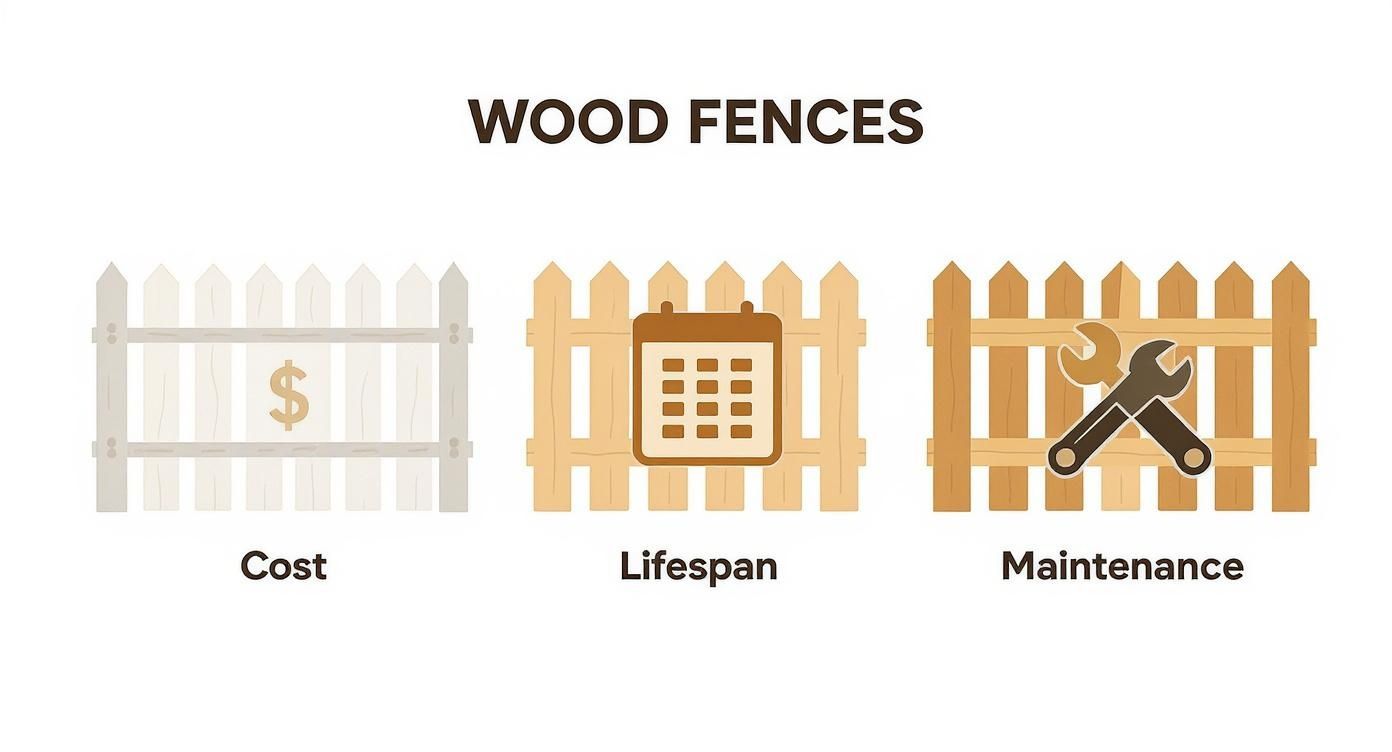
As you can see, there’s often a direct trade-off. A lower price tag at the start can mean more work and a shorter life down the line.
Climate and Local Conditions
Never underestimate the British weather. Your local climate has a huge say in how long your fence will last, and our damp conditions are notoriously tough on timber. Resistance to rot isn’t just a nice-to-have; it’s a must.
- For Wetter Regions: If you live somewhere particularly rainy, woods with natural protective oils like Cedar are a fantastic choice. The same goes for the incredible durability you get from charred timber or tough hardwoods like Oak, which fend off moisture naturally.
- For Exposed Areas: Is your fence going to be battered by strong winds or baked in the sun? The sheer density of hardwoods or the impressive stability of thermally modified wood will be your best bet to prevent warping and damage over time.
Sustainability and Sourcing
Choosing a fence that’s kind to the planet is more important than ever. Where your timber comes from really matters, both for the environment and for the quality of the wood you’re getting.
Always, always look for the FSC (Forest Stewardship Council) certification. This is your guarantee that the wood was sourced from responsibly managed forests, which helps protect biodiversity and supports local communities. It’s the simplest way to ensure your beautiful new fence doesn’t come at a hidden environmental cost.
The final piece of the puzzle is weighing your initial budget against long-term value. A cheaper fence panel might save you a few quid today, but it could end up costing you more in the long run with repairs and early replacement. Often, investing a bit more in a durable, long-lasting wood is the more economical choice over the fence’s entire lifespan.
By running through these final points – aesthetics, maintenance, climate, sustainability, and value – you’ll be in the perfect position to choose a wood that’s a fantastic fit for your home, your lifestyle, and your peace of mind.
Got Questions About Fence Wood? We’ve Got Answers
Picking the right timber for your fence can feel like a big decision, and it’s natural to have a few questions. To help you get it right, we’ve put together answers to some of the things we get asked most often.
What Is the Most Durable Wood for a Fence in the UK?
If you’re looking for a fence that will truly stand the test of time, you can’t go wrong with hardwoods like Oak or a properly treated wood like Yakisugi (charred timber). Oak is incredibly dense, giving it a natural defence against rot that can see it last for 20-30 years.
But for ultimate durability, Yakisugi is in a class of its own. The charring process creates a carbon layer that protects the wood, pushing its lifespan to 50 years or even more. It’s a serious long-term investment.
Which Fence Wood Needs the Least Looking After?
Nobody wants to spend their weekends maintaining a fence. If a “fit and forget” approach sounds good to you, then Cedar and Yakisugi are your best bets. Cedar contains natural oils that do a brilliant job of repelling insects and moisture, so it needs very little help from you.
Yakisugi takes this a step further. The charring process seals the wood so effectively against rot, pests, and the British weather that it often needs no further treatment for decades.
It’s worth remembering that a higher initial cost often means far less maintenance down the line. Spending a bit more on naturally resistant or modified woods will save you a lot of time, effort, and money on treatments and repairs in the future.
Can I Paint Any Type of Fence Wood?
You can paint most woods, but some take a finish much better than others. Pressure-treated Pine is a fantastic canvas for paint thanks to its pale, consistent surface. Lighter-coloured timbers like White Cedar also hold paint beautifully.
That said, it often feels like a shame to hide the gorgeous natural grain of a premium wood like Oak, or to cover the unique, textured finish of charred timber. Sometimes, the wood is best left to speak for itself.
Is Hardwood Always Better Than Softwood?
Not at all. It really comes down to what you value most. Hardwoods are champions of density and longevity, but they do cost more and can be trickier to work with during installation.
A good quality softwood, like Cedar, can be a fantastic choice. When looked after properly, it offers excellent durability and good looks for many years, often at a much more wallet-friendly price point.
For a fence that blends incredible durability with a striking, modern look, it’s hard to beat the ancient art of charred timber. At TimberSol, we specialise in creating Yakisugi fencing that’s built to last a lifetime.
Take a look at our range of high-performance, sustainable timber solutions over at the TimberSol website.
