
UK’s Best Types of Wood for a Fence

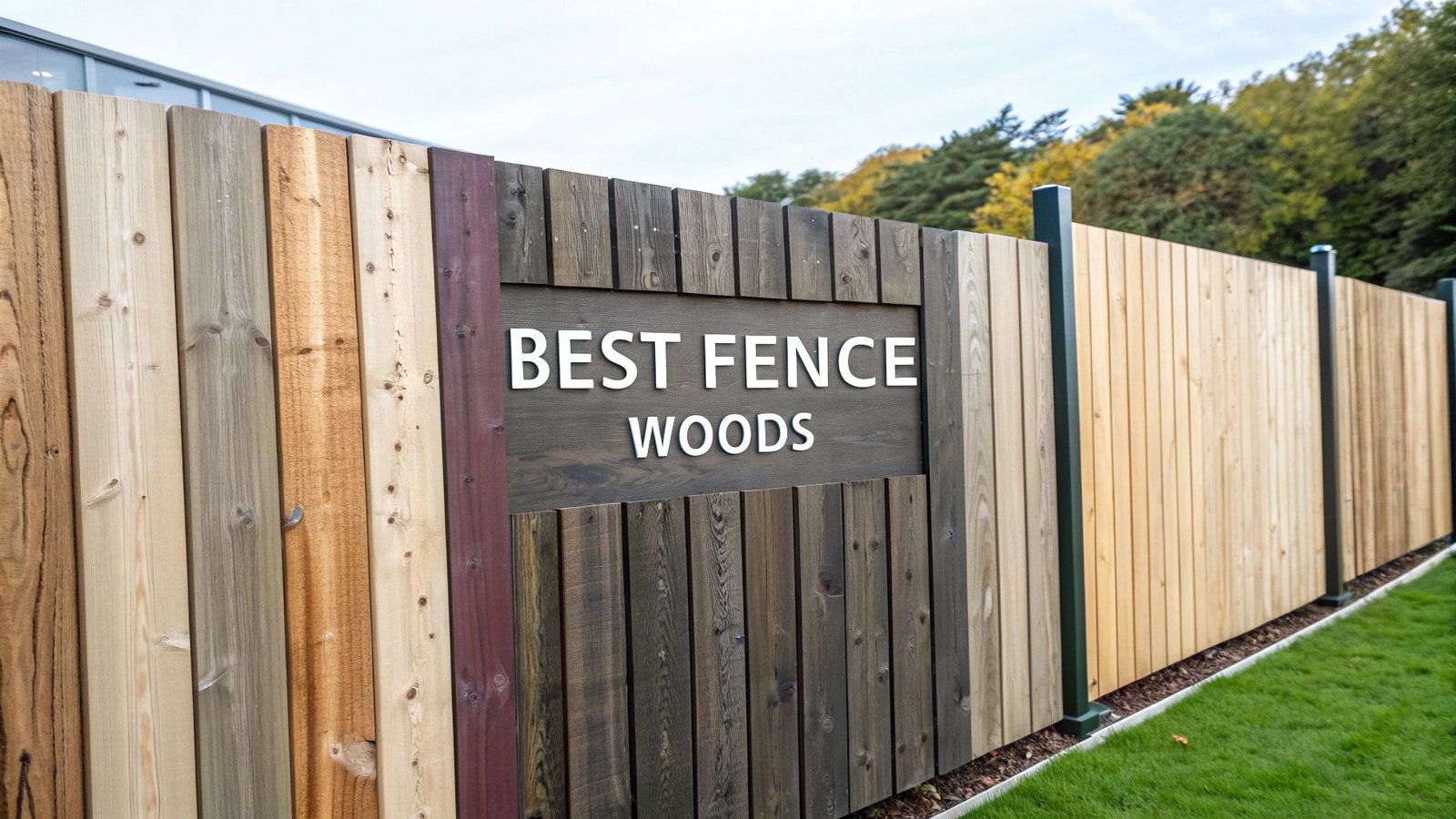
Choosing the right wood for your fence is a key decision that affects both the appearance of your home and its long-term maintenance costs. The most suitable options are typically those with natural resistance to rot—such as Cedar—or those that have been properly pressure-treated, like Pine. Cedar is often considered a premium choice due to its durability and low maintenance requirements, while pressure-treated Pine provides a reliable and more budget-friendly alternative.
This guide explores how to select the best wood for a UK garden fence based on factors such as durability, maintenance, cost, and visual appeal. It covers popular options including Cedar, Redwood, Pine, Fir, Cypress, Oak, and Yakisugi, helping you match each material to your budget, design preferences, and local climate conditions.
Choosing the Right Wood for Your UK Garden Fence
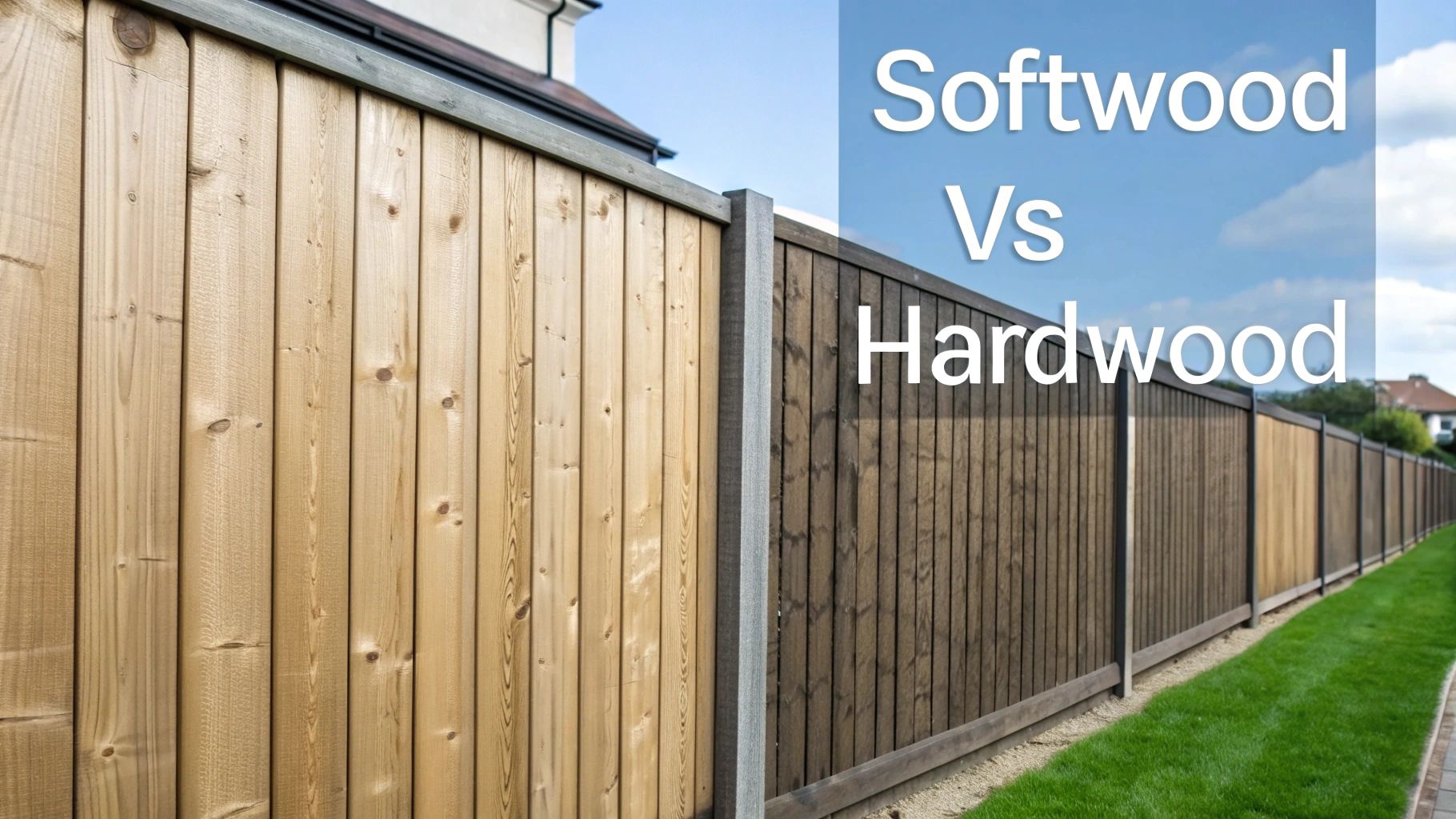
Selecting the right wood for your garden fence is much like choosing a coat for the UK’s famously unpredictable weather—it needs to look good while standing up to years of wind, rain, and changing seasons. Timber remains a timeless choice, valued for its natural strength and ability to blend seamlessly into garden landscapes while providing a reliable boundary.
The enduring popularity of wood fencing is reflected in market trends. The UK wood fencing market generates substantial revenue, estimated at USD 608 million, with projections reaching USD 788.5 million by 2030. This steady growth highlights the continued preference among homeowners for timber as a practical solution for defining outdoor spaces.
Key Factors to Consider
Before exploring the different types of timber, it’s important to define what matters most for your project. Clarifying these core factors will help ensure your fence is a long-term investment rather than a short-term solution.
- Durability and Climate Resistance: How well will the wood withstand the damp UK climate without warping or developing rot?
- Maintenance Commitment: Are you prepared for regular staining and sealing, or do you prefer a lower-maintenance, “fit and forget” option?
- Overall Cost: How does your initial budget compare with the timber’s expected lifespan and potential maintenance or repair costs over time?
- Aesthetic Style: Does the timber’s natural colour, grain, and finish complement your home’s architecture and garden design?
A fence is more than just a boundary—it contributes to your property’s character and security. Choosing the right timber ensures both peace of mind and long-term reliability.
This guide will walk you through the most popular timber options for fencing—from premium choices to dependable, budget-friendly solutions, while also reflecting how related materials such as douglas fir wood cladding are valued for their durability and natural character. By the end, you’ll have the confidence to select the right wood for a fence that delivers long-term value.
Premium Choices: Cedar and Redwood
When the goal is to combine visual appeal with long-term durability, Cedar and Redwood stand out as premium timber options. Rather than just a material choice, they represent a long-term investment in your property. While the initial cost is higher, they offer decades of reliable performance with minimal maintenance.
Their advantage lies in their natural composition. Both Cedar and Redwood contain inherent oils and tannins that act as a built-in protective barrier. This natural defence makes them highly resistant to common threats in the UK climate, including moisture, rot, and insect damage. As a result, they consistently outperform many other timber types without relying on intensive chemical treatments.
The Natural Beauty of Cedar
Western Red Cedar is widely valued for its balance of durability and natural elegance. Its warm, reddish-brown tones enhance the appearance of any garden, creating a refined and inviting backdrop.
Beyond its visual appeal, Cedar offers excellent dimensional stability—meaning it is less prone to warping, shrinking, or twisting in response to changing weather conditions. This helps fences maintain their shape and structure over time. In addition, its natural resins provide effective resistance to pests, contributing to a long lifespan.
The Richness and Strength of Redwood
Redwood offers many of the same advantages as Cedar, but with its own distinctive character. It is known for its deeper, richer red tones and typically finer grain. As a dense and robust timber, Redwood provides a durable solution—ideal for creating a fence that feels both solid and visually sophisticated.
Like Cedar, Redwood ages gracefully over time. If left untreated, its natural colour will gradually soften into a silvery-grey patina, a finish that is widely appreciated for its timeless, understated look.
So, which one should you choose? Ultimately, it often comes down to personal preference—the warm, natural tones of Cedar or the deeper, more luxurious red of Redwood. Either option delivers a high-quality fence built to stand the test of time. If you’d like to explore more durable timber options, our guide on weather-resistant hardwood is a great next step.
Budget-Friendly Options: Pine and Fir
While premium timbers have clear advantages, pressure-treated Pine and Fir remain the true workhorses of the UK fencing market, much like other practical exterior softwood solutions such as spruce cladding. They offer an excellent balance of affordability and dependable performance, making them a practical choice for a wide range of homeowners. Their widespread use reflects their ability to provide a strong, reliable boundary without exceeding budget constraints.
Their popularity is closely linked to availability. In the UK, softwood species such as pine and fir dominate the fencing industry, accounting for around 92% of total wood removals. Recent data indicates that approximately 9.9 million green tonnes of softwood were harvested from UK woodlands in a single year—an increase of 9% compared to the previous year. This highlights the strong demand for these versatile materials, as reflected in official UK softwood production data from Forest Research.
The Power of Pressure Treatment
The durability of Pine and Fir does not come naturally—they are inherently susceptible to rot and insect damage when left untreated. The key to their performance lies in pressure treatment.
This industrial process forces protective chemical preservatives deep into the wood’s cellular structure under high pressure. As a result, standard softwood is transformed into a far more durable material, capable of withstanding the UK’s damp climate. It provides essential protection against fungal decay and insect attack, significantly extending the lifespan of the timber.
Pressure-treated Pine and Fir represent a practical compromise. They deliver strength and longevity at a more accessible price point, as long as you’re prepared for a little routine care.
Upkeep and Maximising Lifespan
The lower upfront cost of Pine and Fir does come with a trade-off—slightly higher maintenance. While pressure treatment protects the timber internally, the surface remains exposed to weathering from sun and rain over time.
To maximise the lifespan of a pine or fir fence, a simple maintenance routine is all that’s needed:
- Annual Cleaning: Gently wash the fence each year to remove dirt, algae, and mildew buildup.
- Regular Sealing or Staining: Every two to three years, apply a high-quality waterproof sealant or wood stain. This adds an extra protective layer, helping to prevent moisture penetration and reduce surface weathering.
With consistent care, a pressure-treated pine or fir fence can last 15–20 years, making it a highly cost-effective option. It’s an ideal choice for those seeking durability and who are willing to carry out occasional maintenance to keep the fence in good condition.
Beyond the Usual: Exploring Unique Woods for a Standout Fence
While popular choices like Cedar and Pine suit most garden fencing projects, some designs call for something more distinctive. If you’re looking to add unique character or specific performance benefits, it’s worth considering alternative timber options such as Cypress and Oak.
These choices are ideal for homeowners aiming to create a more distinctive boundary for their property.
Cypress: The Damp-Weather Champion
For areas of the UK prone to persistent damp and wet conditions, Cypress is an excellent fencing option. Its key advantage lies in a naturally occurring oil called cypressene, which provides strong resistance against both rot and insect damage.
This built-in protection allows Cypress to achieve a lifespan comparable to premium timbers like Cedar, often lasting up to 30 years with minimal maintenance. In terms of appearance, it features a light, creamy white to yellowish-brown tone, offering a balance between rustic charm and refined aesthetics. Its lighter colour also makes it well-suited for staining or painting, providing flexibility in achieving a desired finish.
Oak: The Epitome of Timeless Strength
Oak is synonymous with strength, tradition, and longevity. As a dense and heavy hardwood, it creates a fence that feels exceptionally solid—more akin to a permanent structure than a simple boundary. This inherent robustness makes it particularly well-suited to rural properties or settings where security is a key priority.
Even when left untreated, Oak can maintain its structural integrity for 20 years or more, reflecting its natural resilience. Visually, it is defined by a pronounced grain pattern that adds a classic, distinguished character to any landscape.
Choosing Oak is a clear statement of intent—it reflects a preference for enduring quality and uncompromising strength, resulting in a fence that feels both substantial and timeless.
It’s important to note that both Cypress and Oak come with practical considerations in the UK. They are generally less common than widely used options like Pine, which often means higher costs. For this reason, it’s advisable to consult local timber merchants early in the process to confirm supply and pricing.
For the right project, however, their distinctive qualities—whether it’s Cypress’s natural resistance to damp conditions or Oak’s exceptional strength —can make them a worthwhile long-term investment.
The Art and Durability of Yakisugi Fencing
If you’re looking for a fence that doubles as a design statement, Yakisugi is a standout choice. This ancient Japanese technique transforms timber fencing from a simple boundary into a striking architectural feature. The process may seem unusual—carefully charring the surface of the wood—but the results are nothing short of incredible.
The controlled burning creates a carbonised outer layer that acts as a natural protective shield. This layer significantly improves water resistance and helps protect the timber from rot.
Yakisugi is also a powerful example of sustainable design, delivering enhanced performance without the need for chemical treatments. It offers a premium, design-forward solution that combines unique aesthetics with proven, long-lasting durability. For a closer look at this fascinating method, you can learn about the Yakisugi wood treatment process here.
Aesthetics Meets Performance
The visual impact of Yakisugi, also known as shou sugi ban, is both dramatic and refined. The charring process enhances the natural grain of the wood in a unique way, often creating a deep, textured “alligator-skin” effect that is rich in character and tactile appeal. This distinctive finish has made it a popular choice among architects and designers seeking to introduce depth and individuality into outdoor spaces.
Beyond its appearance, Yakisugi stands out for its exceptional durability and minimal maintenance requirements. The charred surface is highly weather-resistant and naturally deters insects. Although the initial cost may be higher than standard timber, its longevity makes it a cost-effective solution over time.
Yakisugi fencing elevates a functional boundary into a design feature with historical depth, demonstrating how traditional techniques can offer highly effective and visually striking solutions for modern applications.
It’s important to understand that not all timber species are suitable for the Yakisugi process. The best results are achieved with woods that have a higher resin content and a well-defined grain structure, as these respond most effectively to charring.
- Cedar: Widely regarded as the ideal choice. Its natural oils and inherent stability make it particularly well-suited to the Yakisugi technique.
- Larch: A strong and durable softwood that develops a highly resilient and visually striking charred surface.
Choosing Yakisugi goes beyond installing a fence—it represents an investment in a long-lasting, low-maintenance, and visually distinctive feature that can define your property for decades, similar to other premium exterior solutions such as charred accoya cladding.
Making Your Final Decision
By now, you’ve worked through the pros and cons of cedar, pine, and even charred timber. Choosing the right wood for your fence might feel like a big decision, but it doesn’t have to be complicated. This is the point where everything comes together—matching the right material to your home, garden, and lifestyle.
Think of it as a final, common-sense check before committing. First, be honest about maintenance. Are you happy to spend a weekend every couple of years re-staining a pine fence, or would you prefer a “set it and forget it” option like cedar that can naturally weather to a silvery-grey finish? Answering this one question can quickly narrow your options.
Next, consider your local conditions. The British climate varies, and location matters. A property on a damp, exposed coast will put far more stress on timber than one in a sheltered inland area. In wetter environments, woods with strong natural resistance—such as cedar or cypress—prove their value over time.
Aligning Style and Practicality
A fence is not just a boundary—it’s a defining feature of your home’s overall character. The style needs to feel cohesive. A sleek, modern new-build can be elevated by the bold, architectural lines of a Yakisugi fence, while a traditional country cottage pairs naturally with the timeless appeal of Oak or the warm, inviting tones of Redwood. Rather than viewing the timber in isolation, consider how it will sit alongside your brickwork, planting, and the wider landscape.
To help visualise how different priorities influence your choice, take a look at this breakdown.
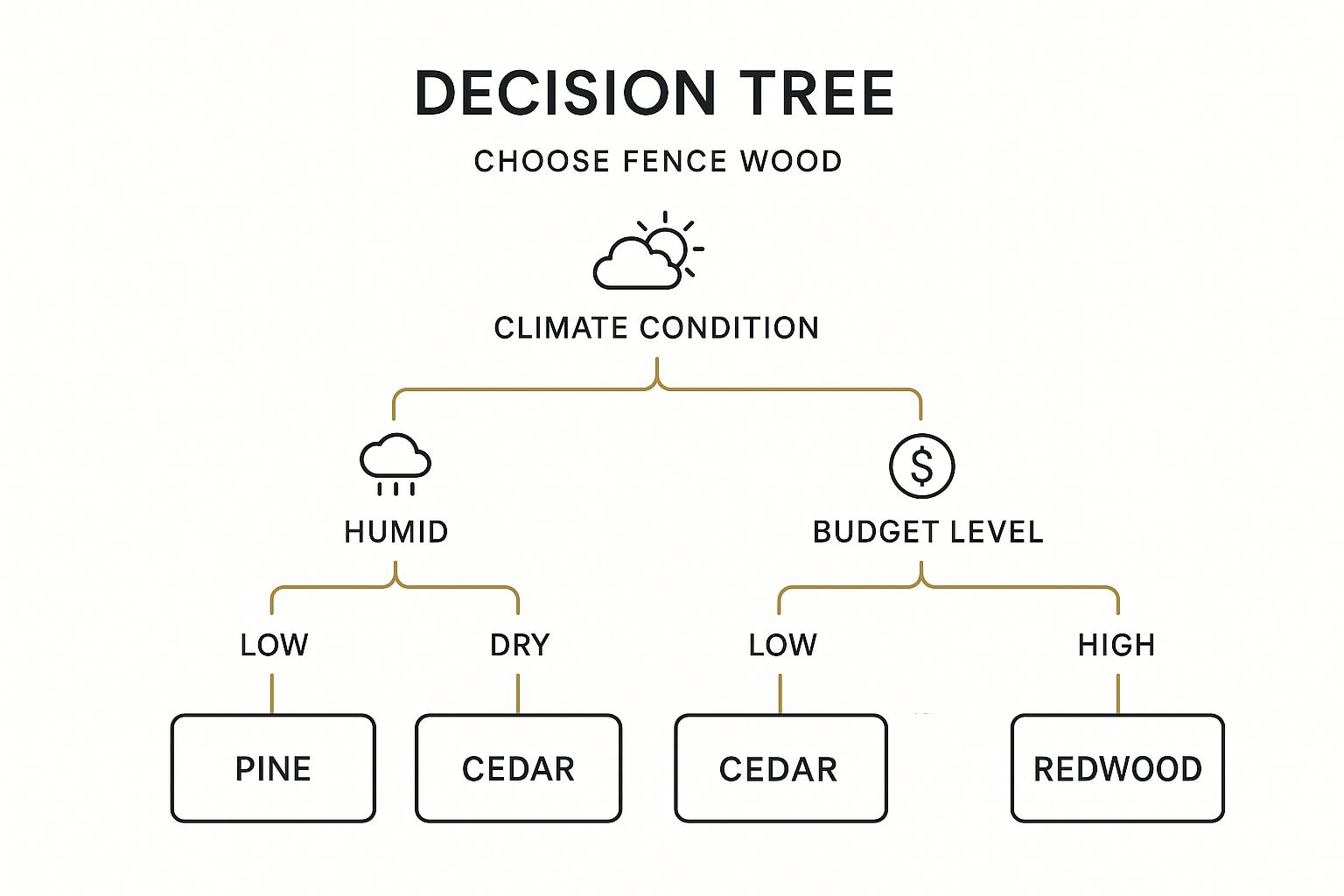
As shown, in humid conditions with a higher budget, Redwood stands out as a leading option. In contrast, if cost-efficiency is the main priority, pressure-treated Pine is a reliable workhorse across most climates.
Decision Matrix: Your Ideal Fence Wood
To simplify your decision, use a quick scoring approach. Rate each factor—from 1 (low priority) to 5 (high priority)—based on what matters most to you, then compare which timber aligns best with your needs.
| Factor | Pine/Fir | Cedar/Redwood | Cypress/Oak | Yakisugi |
|---|---|---|---|---|
| Budget-Friendly | High | Medium | Low | Low |
| Low Maintenance | Low | High | High | Very High |
| Natural Rot Resistance | Low (needs treatment) | Very High | High | Very High |
| Classic Looks | Medium | High | Very High | Low (Modern) |
| Modern Aesthetics | Low | Medium | Medium | Very High |
This isn’t about identifying a single “best” wood, but about finding the right fit for your priorities. A higher score for Pine typically reflects a focus on budget, while a preference for Yakisugi points towards a modern, low-maintenance finish.
Finally, it’s essential to weigh upfront cost against long-term value. While a more affordable Pine fence may reduce initial expenses, it typically requires greater ongoing investment in maintenance and treatments over time. For a comprehensive overview of how to protect your timber from the elements, refer to a detailed guide on how to protect wood outdoors. Asking the right questions at the outset ensures you choose a fence that will meet your expectations for years to come.
Frequently Asked Questions About Fence Wood
Choosing the right timber for your fence can feel like the final hurdle. Even after comparing options, it’s completely normal to have a few practical questions before making a decision. Let’s clear those up so you can move forward with complete confidence.
Think of this as a final check-in—addressing the common concerns homeowners across the UK face, from coping with damp weather conditions to making the most of a limited budget.
What Is the Most Durable Wood for a UK Fence?
Western Red Cedar is widely regarded as one of the most durable options for UK fencing. Its natural oils provide an inherent defence against moisture and pests, allowing it to perform reliably for decades with minimal maintenance—making it a near “fit and forget” solution.
For an even higher level of durability, charred timber produced using the Yakisugi method is an excellent alternative, particularly in applications such as charred douglas fir cladding. The charring process forms a protective carbon layer on the surface, significantly enhancing water resistance and overall resilience against harsh weather conditions.
How Can I Make a Less Expensive Pine Fence Last Longer?
The most important first step is to choose properly pressure-treated pine. This treatment forces preservatives deep into the wood, providing essential protection against rot and insects from the outset.
Once installed, a little ongoing care goes a long way:
- Annual Clean: Gently wash the fence each year to remove dirt, algae, and grime.
- Regular Sealing: Reapply a high-quality waterproof sealant or stain every 2–3 years. This acts as a protective barrier, preventing moisture from penetrating the wood—one of the main causes of deterioration in the UK climate.
- Good Drainage: Ensure posts are installed correctly. Setting them in concrete with a gravel base helps water drain away, reducing the risk of rot at ground level.
Is It Better to Stain or Paint a Wooden Fence?
For most UK timber fences, staining is generally the better option. A stain penetrates into the wood, providing protection from within while allowing the natural grain and texture to remain visible. It works with the timber rather than covering it, and because it doesn’t form a surface layer, it won’t peel or flake—making future reapplication straightforward.
Paint, by contrast, creates a solid film on the surface. Once that layer cracks or chips, moisture can become trapped underneath, increasing the risk of hidden rot over time. For high-quality timbers such as Cedar or Redwood, staining is particularly beneficial, as it preserves their natural character while allowing the wood to breathe.
Ready to transform your property with a fence that combines striking design with long-lasting durability? At TimberSol, we specialise in premium charred timber products crafted using the traditional Yakisugi technique. Explore our range of cladding, decking, and fencing solutions to find a sustainable option tailored to your project. Visit https://timbersol-backup.elnoirstudio.com to learn more.
