
How much does decking cost: UK guide to decking prices

Decking in the UK typically costs between £1,500 and £9,000+, depending on deck size, material choice, design complexity, and regional labour rates. A professionally installed small softwood deck may start at around £1,500, while a large hardwood or composite decking project can exceed £6,000 – £9,000.
Decking costs in the UK depend primarily on deck size, material choice, and regional labour rates, with prices ranging from budget softwood options to premium composite solutions. Additional factors such as groundwork preparation, subframe construction, site access, permits, and finishing features can significantly influence the final quote. Careful planning, efficient design decisions, and comparing multiple contractor quotes help manage and optimise the overall investment. All of this is discussed in detail in the article below.
Your Quick Guide to UK Decking Costs
Before you start dreaming of long summer evenings and barbecues, it’s wise to get a firm grip on the potential investment. Decking costs involve far more than just the boards you walk on; they also include the structural frame, fixings, and the skilled labour required to assemble everything correctly. Understanding these elements early is essential for setting a realistic budget and avoiding unexpected expenses.
To help you get started, let’s look at some typical project costs.
Average Decking Costs At A Glance
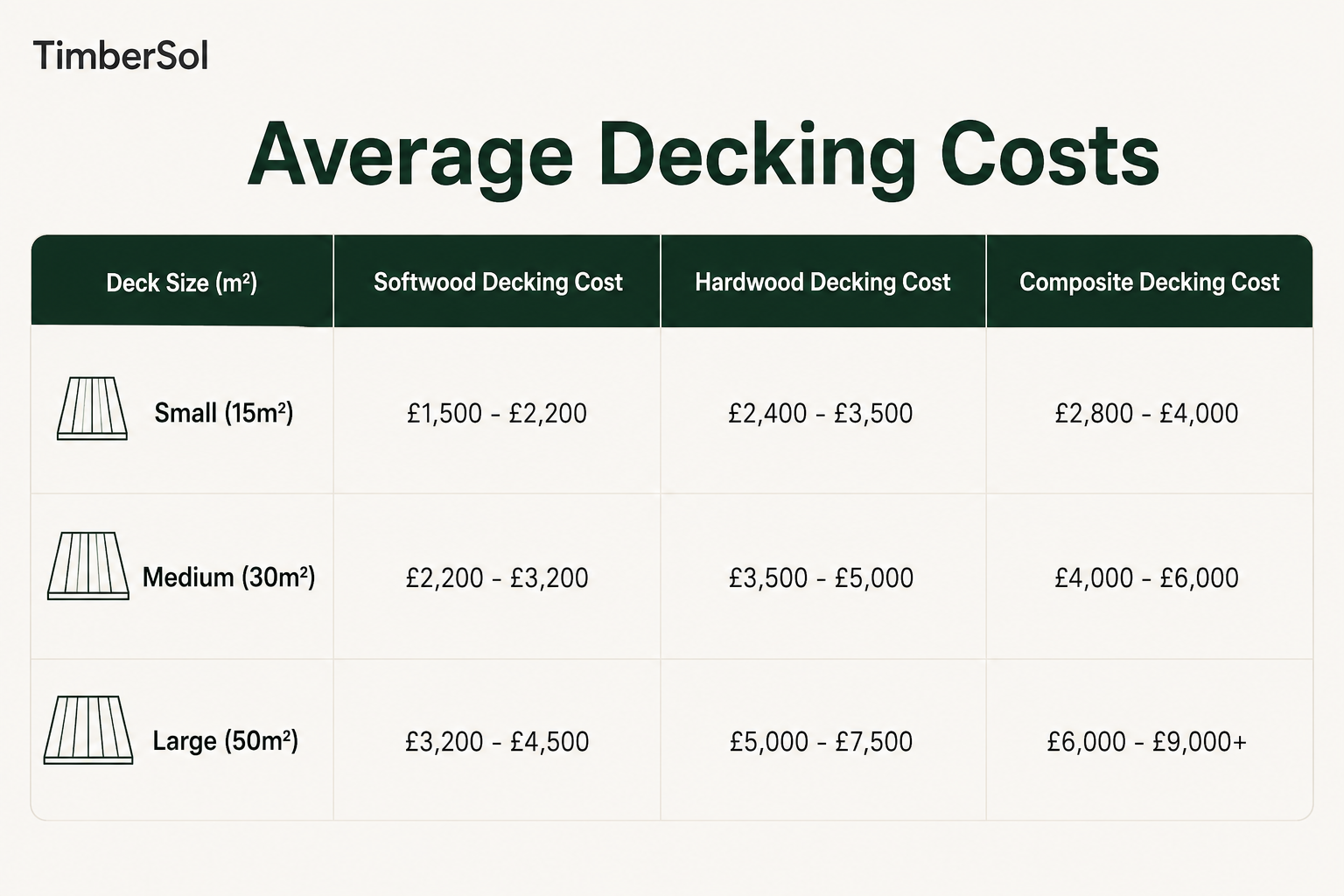
To provide a clearer overview of how deck size and material choice influence total price, the summary table below outlines typical UK cost estimates. These figures are indicative and serve as a practical starting point for budget planning.
| Deck Size (m²) | Softwood Decking Cost | Hardwood Decking Cost | Composite Decking Cost |
|---|---|---|---|
| Small (15m²) | £1,500 – £2,200 | £2,400 – £3,500 | £2,800 – £4,000 |
| Medium (30m²) | £2,200 – £3,200 | £3,500 – £5,000 | £4,000 – £6,000 |
| Large (50m²) | £3,200 – £4,500 | £5,000 – £7,500 | £6,000 – £9,000+ |
As the comparison shows, the final decking cost can vary substantially depending on specification. The difference between a small softwood deck and a large composite installation is significant, reinforcing the importance of project planning.
How Location and Size Impact Your Budget
For a standard, medium-sized timber deck of approximately 30m², the average UK cost is around £2,600, typically covering both materials and professional installation.
Location significantly affects the final quote. Labour rates in London and the South East are commonly 20 – 25% higher than the national average. A composite deck in these regions may cost between £2,800 and £6,000, while the same project in the North of England may range from £2,000 to £4,300. This regional pricing difference reflects variations in labour demand and operating costs.
This chart gives you a quick visual summary of how costs scale up with size for different materials.
Size remains one of the strongest cost drivers. Accurate measurements are essential at the planning stage. To estimate material quantities, use the board calculator: https://timbersol-backup.elnoirstudio.com/resources/board-calculator/
To place decking costs in a broader financial perspective, comparing them with overall home renovation budgets can clarify how outdoor improvements fit within total property investment planning.
How Decking Material Affects Your Budget
It truly forms the foundation of the entire project’s cost. Much like choosing the engine for a car, your selection affects not only the upfront price but also long-term performance and ongoing maintenance expenses.
In the UK, the main options typically come down to three materials: softwood, hardwood, and composite decking. Each has its own characteristics, price range, and maintenance requirements, influencing both your initial investment and the time and cost involved in future upkeep.
Softwood: The Budget-Friendly Choice
Softwood, typically sourced from pine or spruce, is the most common and affordable decking material in the UK. It is a popular choice for homeowners who want an attractive garden deck without a large upfront investment. Its natural appearance and accessible price point make it an appealing starting option.
The trade-off for the lower initial cost is ongoing maintenance. Softwood is more susceptible to rot and insect damage, meaning it requires annual treatment, staining, or sealing to withstand the unpredictable British weather. Without consistent maintenance, its lifespan can shorten significantly.
Softwood decking offers an economical way to install a deck on a tighter budget, but it requires a regular maintenance commitment to preserve its appearance and durability over time.
Hardwood: A Premium and Durable Option
If you’re looking for natural beauty combined with long-term durability, hardwood decking is a strong investment. Sourced from slow-growing species such as Oak or Iroko, hardwood boards are dense and naturally resistant to rot and pests. Douglas fir is another durable structural timber frequently specified for exterior projects, valued for its strength and dimensional stability. This inherent durability allows them to last significantly longer than softwood, often for several decades.
The trade-off is a higher upfront cost. The quality, density, and longevity of hardwood place it at a premium price point compared to softwood. Although it requires less maintenance overall, occasional oiling helps preserve its rich colour and maintain its appearance over time.
For homeowners seeking enhanced durability and a darker architectural finish, options such as black charred wood cladding provide increased resistance to moisture, UV exposure, and long-term weathering.
Composite: The Low-Maintenance Modern Alternative
Composite decking, made from a blend of recycled wood fibres and plastic, has grown significantly in popularity. Its primary advantage is minimal maintenance. Unlike traditional timber, composite boards do not rot, warp, or splinter, and they do not require staining or sealing. Routine cleaning with soap and water is typically sufficient.
The upfront cost is usually higher than softwood and can be similar to some hardwood options. However, the long-term savings are where composite stands out. When you factor in the money and time saved on maintenance products and labour, it can prove to be a cost-effective choice over the deck’s lifespan. The decision between traditional timber and modern composite is significant, for homeowners considering premium timber alternatives, thermally modified or charred finishes such as black charred wood decking provide enhanced durability while retaining a natural wood aesthetic. So for a more detailed comparison, you can explore the guide on wood vs composite decks.
To give you a clearer understanding of how these materials compare, let’s now break down the key differences.
Decking Material Cost Comparison Per Square Metre
| Material Type | Average Cost per m² (Supplied & Fitted) | Typical Lifespan | Annual Maintenance Level |
|---|---|---|---|
| Softwood | £70 – £90 | 10–15 Years | High (Annual cleaning, staining, or sealing required) |
| Hardwood | £110 – £130 | 25–40+ Years | Low (Occasional oiling to maintain colour) |
| Composite | £120 – £240 | 25–30+ Years | Very Low (Periodic cleaning with soap and water) |
As you can see, the initial cost is only one part of the overall picture. A cheaper material may require greater investment of time and money over the years, while a more expensive option may need very little ongoing attention. The right choice depends on balancing your immediate budget with your long-term plans.
Calculating Decking Installation Labour Costs
Once you’ve chosen your decking material, the next major cost component is labour. Understanding how installers calculate their fees is essential to interpreting the total project quote. Labour charges reflect the skill level required, the time involved, and the complexity of transforming raw materials into a safe and professionally finished outdoor living space.
Think of it like assembling flat-pack furniture. A small bookshelf on a perfectly level floor is quick and straightforward. But fitting that same bookshelf into an uneven alcove, cutting it precisely to size, and reinforcing it to carry extra weight takes more time and expertise. Building a deck works in much the same way.
What Pushes Labour Prices Up?
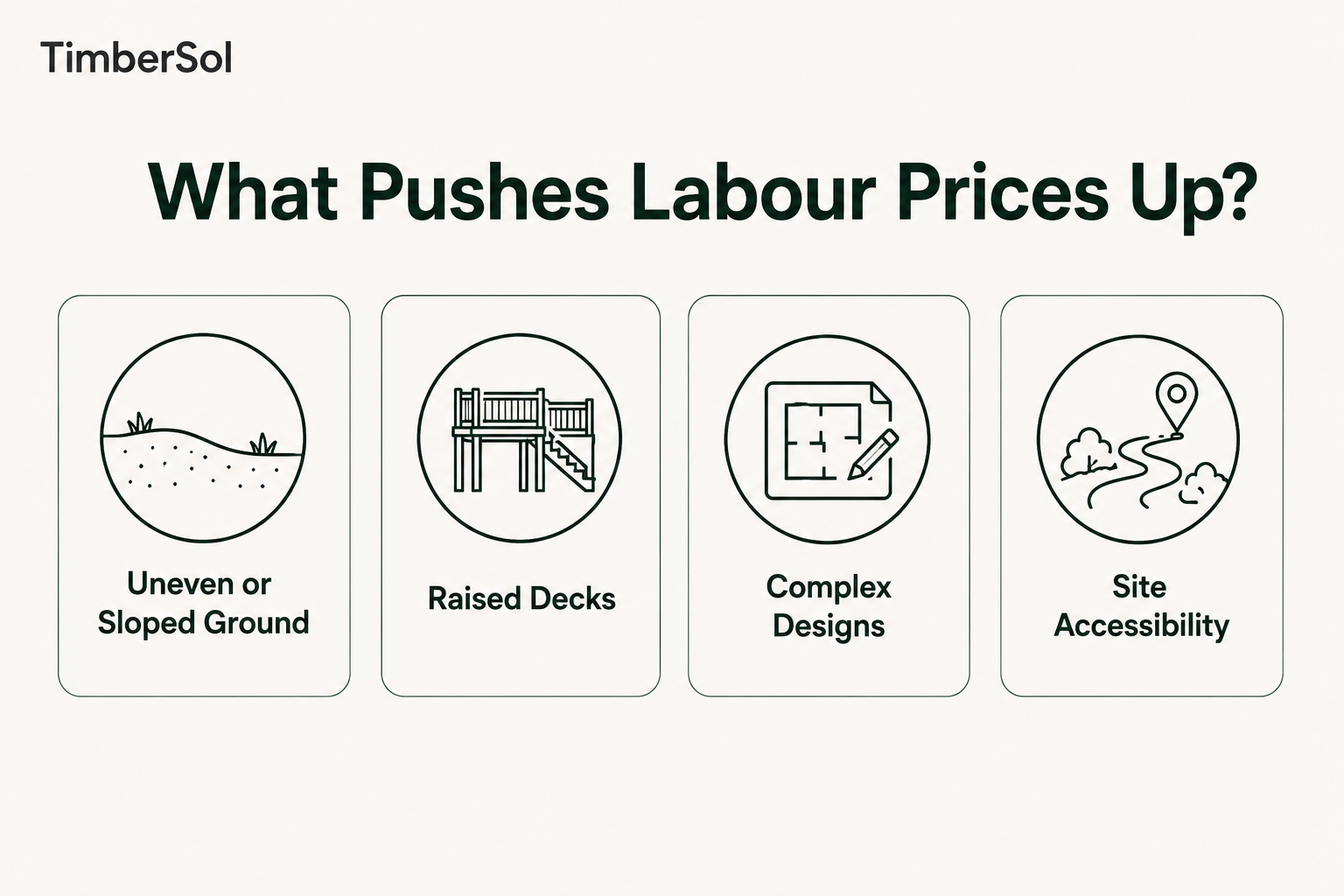
Several factors can turn a straightforward decking installation into a more time-consuming, and therefore more expensive, project. A professional installer will assess your garden layout and design requirements before preparing a quote, taking these common variables into account:
- Uneven or Sloped Ground: A sloped garden increases groundwork requirements. It often involves additional excavation, deeper footings, and a more complex subframe to ensure the finished deck is completely level.
- Raised Decks: An elevated deck requires enhanced structural work. It’ll need extra support, steps, and safety railings which increase labour time.
- Complex Designs: Decorative layouts such as herringbone or diagonal patterns demand more precise cutting and detailed planning compared to standard straight-board installations, resulting in higher labour costs.
- Site Accessibility: Difficult access routes – such as staircases, or transporting materials through the house – add time and effort, which installers include in their labour pricing.
UK Labour Rates: A Regional Overview
Your location in the UK significantly influences the cost of hiring a skilled decking installer. As with other trades such as plumbing or electrical work, rates are typically higher in major cities than in rural areas.
Labour represents a substantial portion of the total decking budget. The national average hourly rate for a deck installer generally falls between £40 and £60. In practice, most professionals quote a day rate, where regional differences become more noticeable.
In London and the South East, day rates commonly range from £200 to £300, reflecting higher living costs. In contrast, areas such as the North of England or Wales often see day rates between £140 and £200.
To illustrate the impact, consider a standard 30m² timber deck requiring two installers over several days. Depending on the region, labour alone could total between £1,200 and £1,800. For additional information on average decking installation costs is available from Better Home Hub. Factoring in regional labour variation is essential when setting a realistic project budget.
Uncovering the Hidden Costs of a Decking Project
When budgeting for a new deck, it’s common to focus on the main figures: the cost of the decking boards and the installer’s labour rate. However, limiting your estimate to these headline numbers can lead to unexpected expenses. Smaller, less visible costs often significantly affect the final budget.
To understand the true cost of a decking project, it’s essential to look beyond the surface.
The durability and performance of any deck depend on proper groundwork. Just as a house requires a stable foundation, a deck relies on the same principle. Each preparatory stage carries its own cost implications.
Before installation begins, your garden may require a fair bit of work. These steps are critical to ensuring the deck performs reliably over time and protects your overall investment.
Groundwork and Structural Essentials
A stable and level base is the starting point for any successful decking project. If your garden is sloped or uneven, excavation will be required, increasing labour time and overall cost. Once the ground is prepared, a solid subframe must be constructed. This structural framework forms the unseen support system that carries the entire deck.
These foundational elements are essential components of your budget:
- Site Preparation: Clearing the area, levelling the ground, or removing an existing patio can add several hundred pounds.
- Weed Membrane: Installing a high-quality weed control fabric prevents vegetation from growing through board gaps and protects the deck structure from moisture-related issues.
- Subframe Materials: Joists, support posts, and structural fixings represent a significant material cost separate from the decking boards.
- Skip Hire: Excavated soil, old paving, packaging, and timber offcuts must be removed safely. Skip hire is often overlooked but is a necessary project expense.
Deck construction involves far more than the visible surface boards. The durability, safety, and lifespan of the structure depend directly on the quality of the groundwork and subframe. Reducing costs at this stage increases the risk of expensive future repairs.
The Finishing Touches and Final Details
Once the main structure is complete, the finishing elements transform a basic platform into a functional outdoor living space. These additions enhance safety and aesthetics, but they can increase the total project cost by 20 – 30% or more.
Common finishing features include:
- Steps and Stairs: Any raised deck requires safe access. More intricate step designs increase both material costs and labour time.
- Balustrades and Railings: Essential for safety on elevated decks. Options range from traditional timber spindles to modern glass panels, with significant cost variation depending on material choice.
- Lighting: Integrated LED lighting improves visibility and ambience. Installation typically requires a qualified electrician and specialised outdoor fittings.
- Stains and Sealants: Timber decking requires protective treatments to maintain appearance and resist UK weather conditions. For additional guidance, refer to a detailed guide on protecting wood outdoors.
How Your Location Impacts Decking Prices
Location plays a major role in the total cost of a decking project. Pricing is influenced not only by materials but also by regional labour rates, delivery charges, and, in some cases, local council planning fees.
In London and the South East, decking projects typically cost 20 – 25% more than the UK average. Higher wages, increased operating costs, and stronger demand all contribute to elevated contractor quotes in these areas.
Regional differences are noticeable across the country:
- London & South East: Highest overall rates due to strong demand and higher property values.
- North of England & Wales: More competitive pricing, with typical labour day rates around £140 – £200.
- Scotland: Often slightly below the national average, with skilled labour commonly ranging from £130 – £190 per day.
Regional Price Differences
The price difference for the same decking project can vary significantly depending on location. Here’s a quick comparison to illustrate the point:
| Region | Labour Rate per Day | Composite Decking Cost (30m²) |
|---|---|---|
| London & SE | £200–£300 | £2,800–£6,000 |
| North of England & Wales | £140–£200 | £2,000–£4,300 |
| Scotland | £130–£190 | £1,900–£4,200 |
Looking at different markets also highlights how local economics shape pricing structures. For example, you can see how pricing and services are presented by local deck contractors in Massachusetts.
Remember, in the UK, labour rates alone can vary by up to 25% between regions. For this reason, obtaining multiple quotes from local decking installers remains the most reliable way to get an accurate picture of your cost.
Urban Versus Rural Access
Decking costs are influenced not only by region but also by the specific location and accessibility of your property. Transporting materials and equipment to a city-centre terrace differs significantly from working on a rural property with easy driveway access.
In urban areas, narrow streets, limited parking, and carrying materials through the house to reach the garden all extend installation time.
Additional urban-related costs may include:
- Delivery surcharges if suppliers cannot park close to the property.
- Council permits for temporary loading zones, typically costing £50 – £150.
- Traffic delays that reduce on-site working time and potentially increase labour charges.
In rural locations, site access is often easier. However, longer travel distances for the installation team may result in added travel fees included in the overall quote.
Seasonality and Labour Availability
Decking installation follows clear seasonal demand patterns. Spring and summer are peak periods, as homeowners aim to complete projects before warmer weather arrives. Higher demand during these months often results in increased labour rates and extended waiting times.
When installers operate at full capacity, pricing tends to reflect that demand. Planning ahead can give a better deal.
Consider these strategies:
- Book during the off-season: Scheduling installation in autumn or early winter may provide better contractor availability and more competitive rates.
- Request quotes early: Securing quotes well before spring helps lock in pricing before peak demand begins.
- Remain flexible with start dates: Flexibility can allow you to take advantage of unexpected availability if another project is postponed.
Planning Fees and Permit Costs
Council requirements can affect the total cost of your decking project. Planning permission may be required, particularly for decks raised more than 30cm above ground level.
Fees vary between local authorities and can add approximately £100 – £500 to your budget. In some cases, an initial site survey is necessary. Although this introduces an additional expense, it helps prevent compliance issues and costly corrections later.
Potential additional costs include:
- Council permit fees, which depend on the specific application and local authority regulations.
- Professional site surveys, typically ranging from £50 to £150.
- Inspection charges to confirm compliance with building regulations.
Including these regulatory expenses in your budget is essential when calculating total decking costs. Contacting local installers early, comparing multiple quotes, and clarifying permit requirements will provide a clearer understanding of the full project investment.
Smart Ways to Save on Your Decking Project
Getting a stunning new deck doesn’t have to break the bank. With some forward planning and smart decision-making, you can reduce costs without compromising the final result. The key is understanding where to invest and where it makes sense to save.
Material choice is the biggest factor in controlling your budget. While exotic hardwoods and premium composite boards offer impressive aesthetics and durability, a quality pressure-treated softwood deck can achieve a great look at a much lower upfront cost. The trade-off is maintenance. If you’re willing to stain or treat the deck annually, the initial savings can be significant.
Simplify Your Design and Get Your Hands Dirty
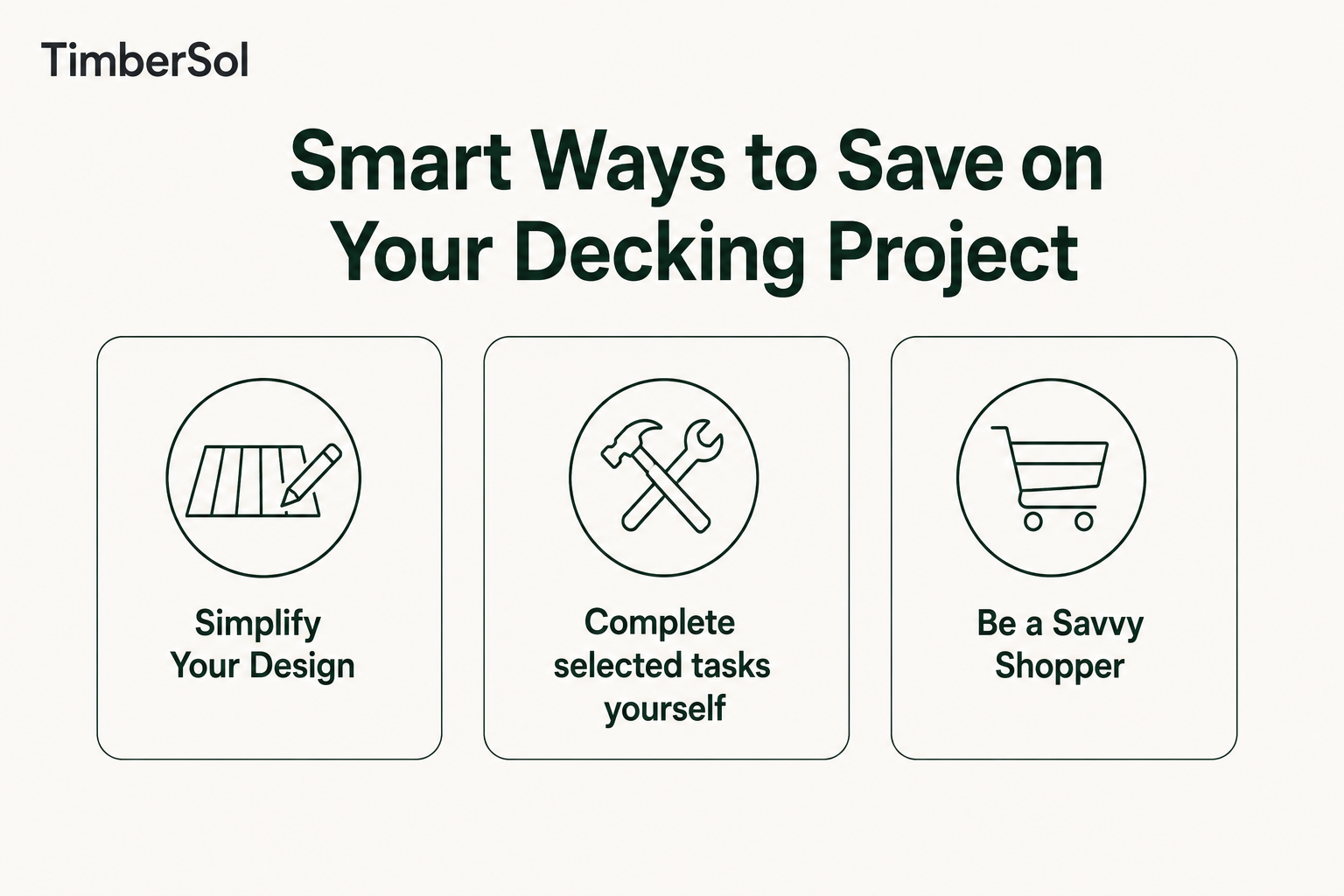
Design complexity directly affects labour costs. A simple, rectangular, ground-level deck is significantly faster and cheaper to install than a multi-level structure with curves or custom inlays. Keeping the design straightforward reduces build time and lowers overall labour charges.
Another effective way to reduce costs is to complete selected tasks yourself. Structural elements such as the subframe should remain the responsibility of experienced professionals. However, non-structural tasks can be managed independently.
Consider handling the preparatory and finishing stages of the project. Clearing vegetation before installation can reduce labour time. After construction is complete, applying stain or sealant yourself can further lower the final invoice.
This hybrid approach maintains professional quality where it matters most while allowing you to reduce costs on less technical aspects of the project.
Be a Savvy Shopper
When calculating how much your decking project will cost, comparing multiple quotes is essential. Accepting the first estimate limits your ability to assess fair market value for materials and labour. Gathering several proposals ensures competitive pricing and greater cost transparency.
Follow these practical steps:
- Get at least three quotes: Comparing multiple estimates establishes a realistic pricing baseline in your area and helps identify unusually high or unusually low offers.
- Request an itemised breakdown: A detailed quote allows you to compare like for like, showing exactly what you’re paying for, including materials, labour, and waste removal.
- Time your project carefully: Decking installers are busiest in spring and summer. If possible, schedule your build during autumn or winter, when demand is lower and pricing may be more competitive.
Answering Your Decking Cost Questions
As you move closer to making a final decision, several common questions often arise about decking costs and installation. Addressing these key concerns helps you proceed with clarity and confidence.
Is It Cheaper to Build a Deck or a Patio?
In most cases, a basic concrete slab patio will cost less than a timber deck. However, that’s not the whole story.
Costs begin to align when higher-end options are introduced. Premium natural stone paving or intricate patio patterns can increase the total price to match, or even exceed, that of a well-constructed softwood deck.
The final cost difference depends on material selection, the extent of groundwork required, and regional labour rates.
Does Decking Add Value to Your House?
Yes, a well-built deck can add measurable value to your property. Installing decking extends your usable living space.
This improved indoor-outdoor flow is highly attractive to buyers. A functional and visually appealing garden space helps a property stand out in the market and can support stronger resale potential.
Coordinating the deck with complementary elements such as charred black wood fencing can further strengthen visual cohesion and enhance overall property appeal.
A thoughtfully designed deck is more than a surface addition; it enhances lifestyle appeal and can contribute to a higher final sale price.
How Long Does It Take to Install a Deck?
Installation time depends on the size and complexity of the project. A simple, ground-level deck on flat terrain can typically be completed by a professional team within 1 – 2 days.
More complex designs require additional time. Raised decks, multi-level structures, integrated seating, and safety railings increase construction stages and labour hours. Projects of this type often take 3 – 5 days or longer.
Requesting a clear installation timeline within your quote ensures realistic planning and avoids unexpected delays.
Ready to explore premium, long-lasting decking solutions for your project? TimberSol specialises in high-quality Yakisugi charred timber, including charred accoya cladding and charred douglas fir cladding, combining distinctive aesthetics with exceptional durability and weather resistance. Discover the full range at https://timbersol-backup.elnoirstudio.com.
