
Charred Wood Blog
Wood Versus Composite Decking UK Homeowner Guide

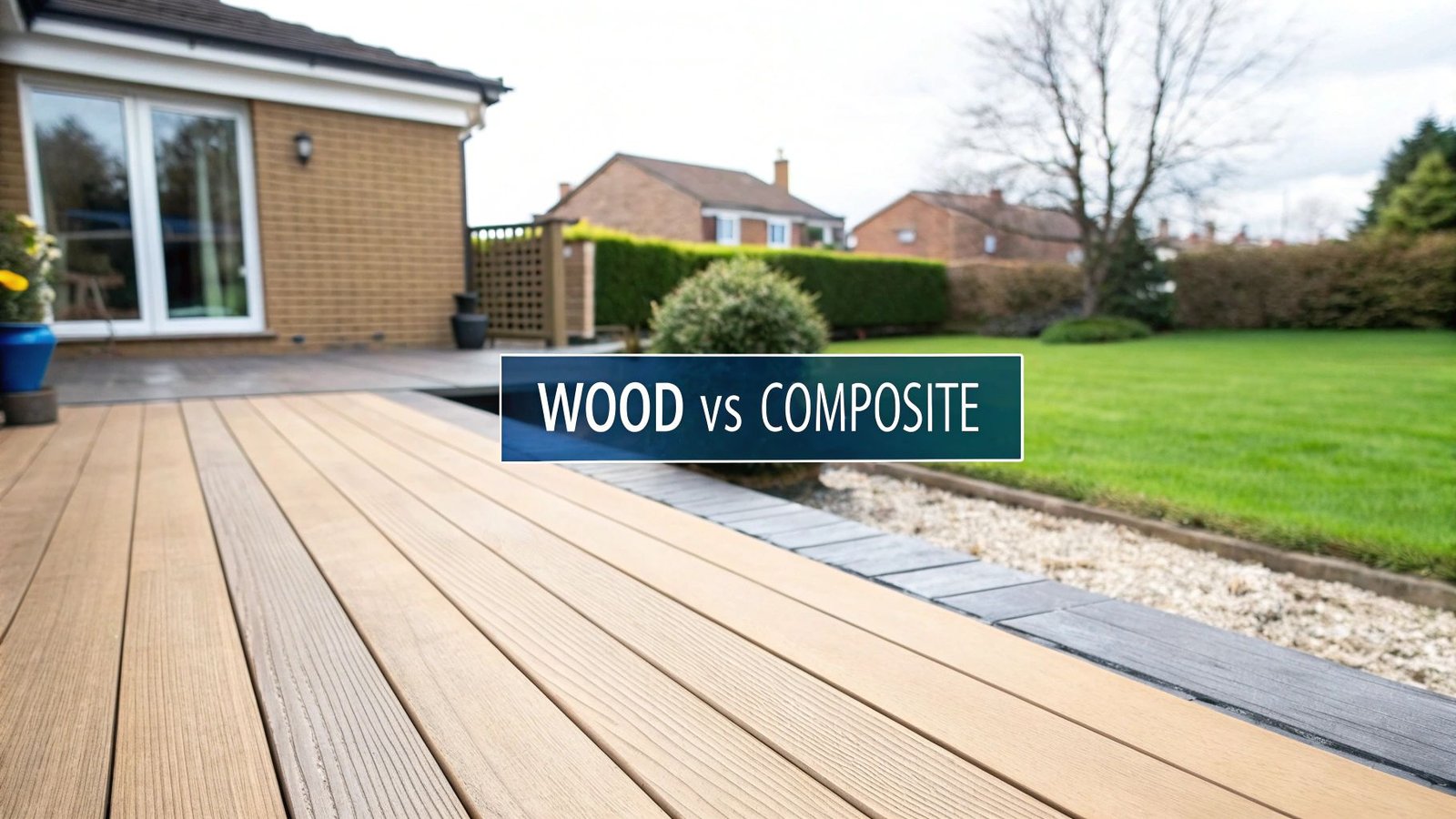
When it comes to building a new garden deck, the big question almost always boils down to wood versus composite decking. It’s a classic head-to-head. At its heart, the choice is simple: natural wood offers that unbeatable authentic charm for a lower initial price, but it demands regular maintenance, especially with our notoriously damp UK weather. On the other side, composite decking asks for a bigger investment upfront but rewards you with incredible durability and very little upkeep for years to come.
Choosing Your Decking: Wood Versus Composite
Picking the right decking is a major decision that shapes your entire outdoor living space. Whether you lean towards traditional timber or a modern composite really depends on what you value most—your budget, how much maintenance you’re willing to do, and the look you’re going for. Each material brings its own unique set of pros and cons that will define your experience with the deck over its lifetime.
For many homeowners in the UK, the natural beauty and more wallet-friendly starting price of timber are hard to ignore. Woods like pressure-treated pine or a stunning hardwood provide a classic, timeless feel. But that authenticity comes with a non-negotiable commitment: you’ll be cleaning, sanding, and sealing it every year to fend off moisture, rot, and sun damage.
Composite decking, however, is a different beast altogether. It’s engineered for pure resilience. Crafted from a mix of recycled wood fibres and plastic polymers, it’s built to shrug off fading, staining, and mould without needing constant attention. This “fit and forget” quality is precisely why it’s become so popular—it means more time enjoying your garden and less time working on it.
This simple decision tree helps frame the choice based on what matters most to you: initial cost or long-term convenience.
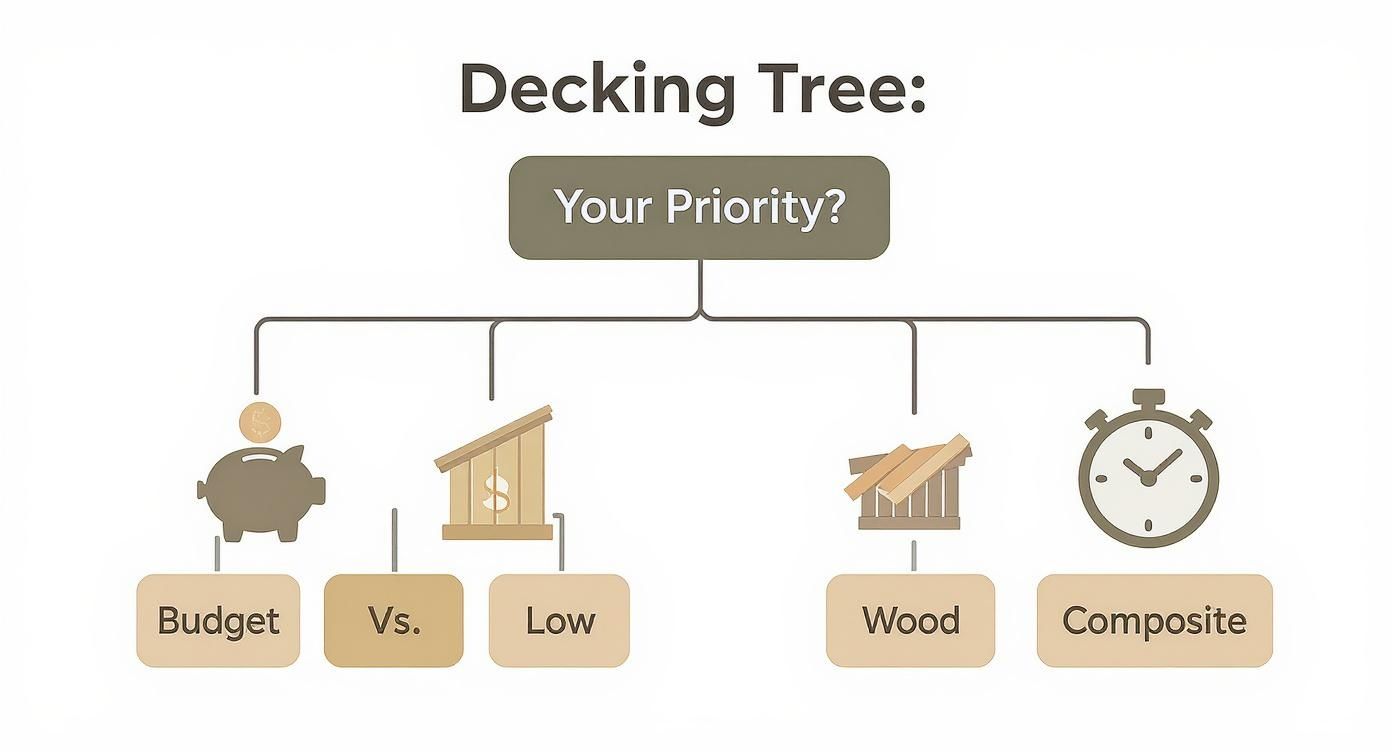
As the infographic highlights, if keeping the initial spend down is your top priority, wood is the way to go. If you’d rather minimise future chores, composite is the clear winner.
To make things even clearer, let’s break down how these two materials stack up against each other across the factors that really count.
At-a-Glance Comparison Wood vs Composite Decking
Sometimes you just need to see the key differences side-by-side. This table offers a quick snapshot of how traditional wood and modern composite decking compare on the most important points for UK homeowners.
| Factor | Wood Decking | Composite Decking |
|---|---|---|
| Initial Cost | Lower | Higher |
| Maintenance | High (annual staining/sealing) | Low (occasional cleaning) |
| Durability | Vulnerable to rot, insects, warping | Resistant to rot, insects, fading |
| Lifespan | 10-25 years (with proper care) | 25-50+ years |
| Aesthetics | Natural, authentic grain and colour | Consistent colour, realistic textures |
| Sustainability | Renewable (if sustainably sourced) | Made from recycled materials |
Ultimately, this quick comparison shows there’s no single “best” option—just the best option for your specific situation. It’s all about weighing that upfront cost against the long-term commitment.
A Deep Dive Into Decking Materials
To really get to the heart of the wood versus composite debate, you have to start with what they’re made of. The raw materials dictate everything else – from how the deck looks and feels underfoot to how it copes with the notoriously unpredictable UK weather. Each option has its own origin story, and that’s where the differences begin.
Natural wood decking brings an authenticity that’s simply impossible to manufacture. Its character comes from the unique grain, the knots, and the organic texture of the timber itself. Here in the UK, your options run the gamut from affordable softwoods right through to stunning, premium hardwoods.
The Charm of Natural Timber
For many, the journey starts with pressure-treated softwood, which is usually pine. This wood is forced through a treatment process that infuses it with preservatives, giving it a fighting chance against rot and pests. It’s a solid, budget-friendly choice, but it needs a bit of love and attention each year to stop it from weathering and keep it looking smart.
If you’re after something a bit more special with built-in durability, hardwoods like Oak or Iroko are fantastic. These timbers are naturally dense and far more resistant to decay. Their deep colours and intricate grain patterns can create a truly spectacular outdoor living area. If this sounds like the right path for you, exploring the different types of hardwoods for decking will give you a much clearer picture of what each one offers.
There’s a connection to nature with real wood that engineered products can’t quite replicate. The subtle differences from one board to the next mean no two wood decks are ever the same – it’s a genuinely bespoke finish for your home.
The Science of Composite Decking
Composite decking, on the other hand, is a purpose-built product born from a clever mix of recycled materials. At its core, you’ll find a blend of recycled wood fibres and plastic polymers. This fusion creates a board that mimics the look of wood but has the tough resilience of plastic, specifically designed to sidestep the common issues timber faces.
But it’s important to know that not all composite boards are the same. The main difference comes down to whether they are “capped” or “uncapped”.
- Uncapped Composites: These were the original composite boards. While durable, their exposed wood fibres can make them more prone to staining and fading over the years.
- Capped Composites: This is the new standard, and for good reason. These boards have a protective polymer shell wrapped around the inner core, a bit like the plastic coating on a wire. This outer layer gives them superior resistance to stains, scratches, and UV fading.
That protective cap is a game-changer in the UK, where a deck is constantly battered by rain one day and sun the next. The shell locks out moisture, preventing it from seeping into the core and effectively stopping the rot, mould, and algae that can be such a headache with natural wood. This engineered toughness is the whole secret behind composite decking’s low-maintenance appeal.
A Practical Guide to Decking Costs
When you’re weighing up wood versus composite decking, your first thought is probably about the price tag. But just looking at the cost per board doesn’t give you the full picture. To really get to grips with the finances, you have to consider the total cost of ownership over the deck’s entire life. It’s a classic balancing act: the initial spend versus what you’ll fork out for maintenance and repairs down the line.
At first glance, wood decking looks like the more affordable choice. A basic pressure-treated softwood deck is often the cheapest option upfront, which is a huge draw if you’re working with a tight budget. Even premium hardwoods can still have a lower initial price than high-end composite boards.
But that initial saving is just the beginning of the story. The real cost becomes clear over the next 10 to 15 years.
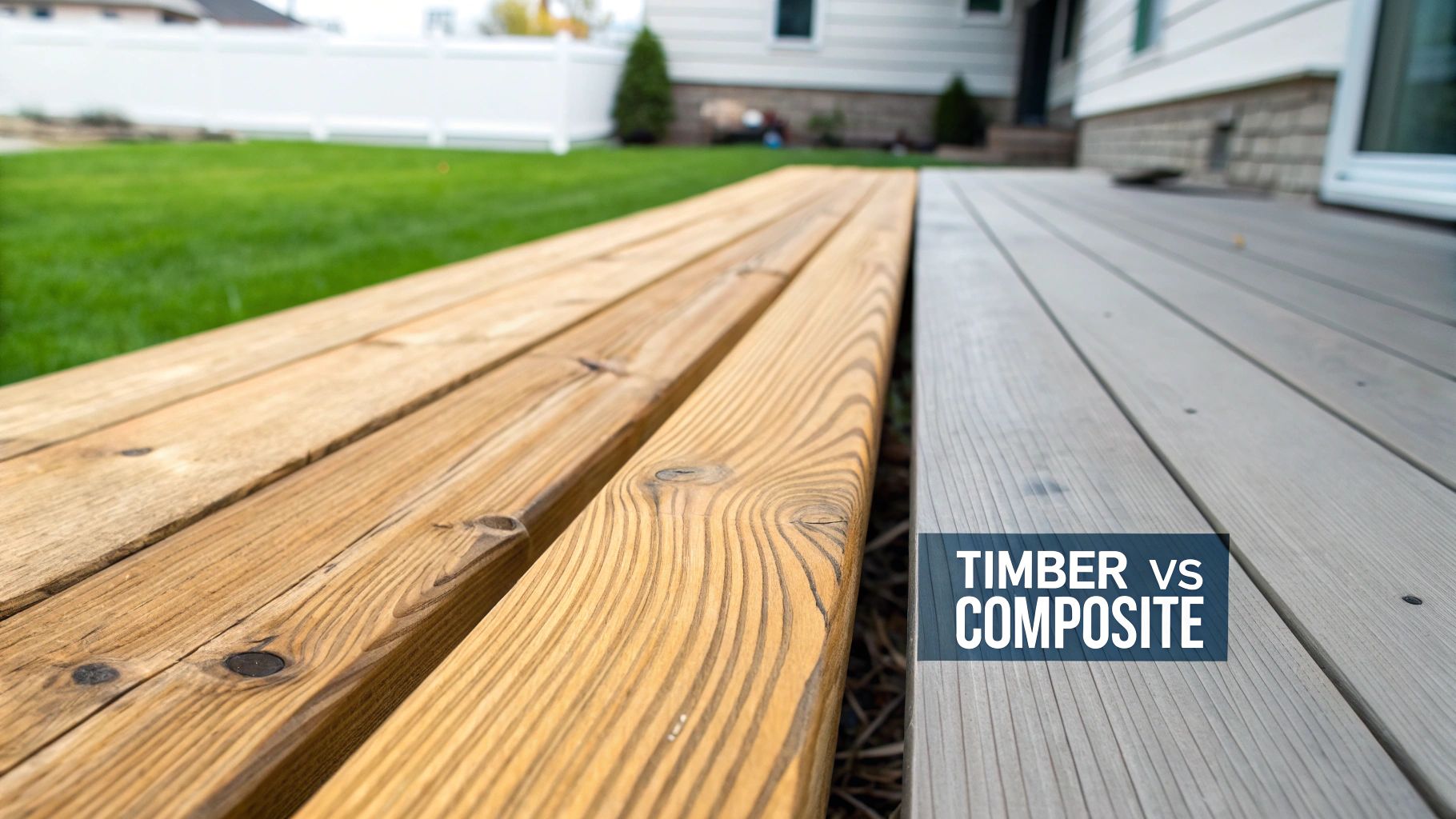
Calculating The True Cost Of Ownership
The long-term cost of a timber deck really comes down to its upkeep. To protect it from the notoriously damp UK weather, you’ll need to factor in the recurring expense of cleaning products, stains, and sealants. These aren’t just one-time buys; they’re an annual or biennial commitment to keep your deck looking good and structurally sound.
Believe me, these costs can add up surprisingly quickly:
- Annual Cleaning Supplies: You’ll need specialised deck cleaners to get rid of the inevitable algae and grime.
- Stains and Sealants: A quality sealant is non-negotiable for repelling water and preventing rot. This needs reapplication every one to three years.
- Labour Costs: Even if you do the work yourself, your time is valuable. If you hire a professional for the sanding, staining, and sealing, the labour costs can be pretty hefty.
- Board Replacements: Over time, it’s almost certain some boards will warp, splinter, or rot. Replacing them is essential for safety and aesthetics, but it’s another cost to add to the tally.
When you add all this up over a decade, that “cheaper” wood deck often ends up costing a lot more than you initially thought. For a closer look at the numbers, our guide on how much decking costs breaks it all down.
The Long-Term Value Of Composite Decking
There’s no getting around it: composite decking requires a bigger investment upfront. The advanced manufacturing process and durable materials mean a higher price per square metre. The real financial win, however, comes from what you don’t have to spend money on later.
Over a 15-year period, the total cost of ownership for a high-quality composite deck can be significantly lower than for a wood deck. That initial premium is absorbed by having almost zero maintenance spending.
Apart from the occasional wash with soap and water to keep it looking fresh, composite decking doesn’t need any staining, sealing, or sanding. This hassle-free resilience is a massive part of why it’s become so popular. In fact, the UK’s Wood Plastic Composite (WPC) decking market is projected to hit $476.54 million by 2028, growing faster than traditional timber. This shows a real shift in what homeowners are looking for: long-term, low-maintenance solutions.
When you’re planning your decking project, especially if it’s part of a bigger home makeover, knowing how to manage your funds is crucial. You can find some great general advice on budgeting for home renovations that’s useful for any project, big or small. In the end, the wood vs. composite debate is a perfect example of short-term savings versus long-term value. Wood might save you cash today, but composite saves you time, effort, and money for years to come—often making it the smarter financial choice in the long run.
Durability and Maintenance in the UK Climate
Let’s be honest, the UK’s damp, unpredictable weather is the ultimate test for any outdoor material. When you’re weighing up wood versus composite decking, how each one handles the relentless cycle of rain, sun, and frost is a massive factor. This performance directly affects how your deck looks and, more importantly, how much effort and money you’ll pour into it over the years.
Natural wood, for all its charm, has a fundamental weakness against the British climate. Timber is porous, meaning it soaks up moisture like a sponge. In those shady, perpetually damp corners of a garden, this becomes a perfect breeding ground for mould, mildew, and algae, quickly turning your beautiful deck into a discoloured, slippery hazard.
This vulnerability to moisture is why wood decking demands a strict annual maintenance routine. If you skip it, the timber will inevitably start to suffer. You’ll soon see boards splintering, warping, or even rotting, which compromises not just the look but the actual safety of your deck.
The Annual Ritual of Wood Deck Maintenance
Protecting a timber deck isn’t just a quick hose-down; it’s a yearly commitment. You have to be prepared to roll up your sleeves and follow a multi-step process to shield the wood from the elements.
A typical year of maintenance involves:
- A Deep Clean: Getting on your hands and knees with a stiff brush and a proper deck cleaner to scrub away a year’s worth of grime, algae, and dirt.
- Sanding: A light sand across the surface gets rid of any splinters, smooths out rough spots, and opens up the wood’s pores to accept a new protective coat.
- Staining or Oiling: Applying a fresh layer of stain or oil is crucial for restoring the colour and giving the wood vital UV protection against sun damage.
- Sealing: The final step is a high-quality waterproof sealant to repel moisture and stop it from seeping deep into the wood fibres.
This isn’t a one-and-done job; it’s a recurring part of owning a wood deck. If you go down the timber route, understanding how to protect wood outdoors is non-negotiable for getting the most out of it. If you’re thinking of painting it, choosing the best exterior wood paints can make all the difference in its lifespan and appearance.
Engineered Resilience of Composite Decking
Composite decking flips the script on durability. It’s been specifically engineered from the ground up to resist the very problems that plague timber in our damp climate. By combining wood fibres with plastic polymers, manufacturers create a non-porous surface that simply doesn’t let moisture in.
This one feature is a game-changer. It makes composite boards incredibly resistant to rot, mould, and mildew. Water beads up on the surface instead of soaking in, which means algae and fungi don’t get the damp home they need to grow.
The real win for composite decking in the UK is its low-maintenance nature. You get to skip the annual marathon of sanding and sealing, which frees up your weekends and saves a surprising amount of money on treatments over the deck’s life.
Modern composite boards go even further. The best-quality options are “capped,” meaning they have a tough polymer shell that encases the inner core. This outer layer gives you superior protection against:
- Fading: The cap has UV inhibitors built in, protecting the board’s colour from being bleached out by the sun.
- Staining: Spilt wine, greasy barbecue drips, or fallen leaves can be wiped away without leaving a permanent stain.
- Scratching: That durable shell is far more resistant to scuffs and scratches from garden furniture, pet claws, and general foot traffic than most softwoods.
Long-Term Performance Comparison in UK Conditions
To really see the difference, it helps to compare them side-by-side. The table below breaks down how each material copes with common UK weather challenges over the long term, assuming the wood deck gets its necessary yearly TLC.
| Performance Factor | Wood Decking (with annual maintenance) | Composite Decking (with occasional cleaning) |
|---|---|---|
| Moisture & Rot | Prone to absorbing water; can rot if sealant fails or in persistently damp areas. | Highly resistant; non-porous surface prevents water absorption and rot. |
| Splintering & Warping | Natural movement can cause splintering and warping over time, even with care. | Dimensionally stable; will not splinter, warp, or crack due to moisture. |
| Algae & Mould | The porous surface provides an ideal breeding ground, leading to slippery patches. | The non-porous, often capped surface, inhibits algae and mould growth. |
| Colour Fading (UV) | Fades to a silvery grey without annual staining/oiling. Pigments degrade. | Minimal fading thanks to built-in UV inhibitors, especially on capped boards. |
| Stain Resistance | Spills can soak in quickly, leading to permanent stains if not cleaned immediately. | Most spills sit on the surface and can be wiped clean without leaving a mark. |
The contrast is pretty stark. While a well-maintained wood deck can certainly last, its appearance and safety are directly tied to your diligence. A composite deck, on the other hand, is designed to look good and stay structurally sound with very little effort from you, offering genuine peace of mind year after year.
Aesthetics and Design: Finding Your Perfect Look
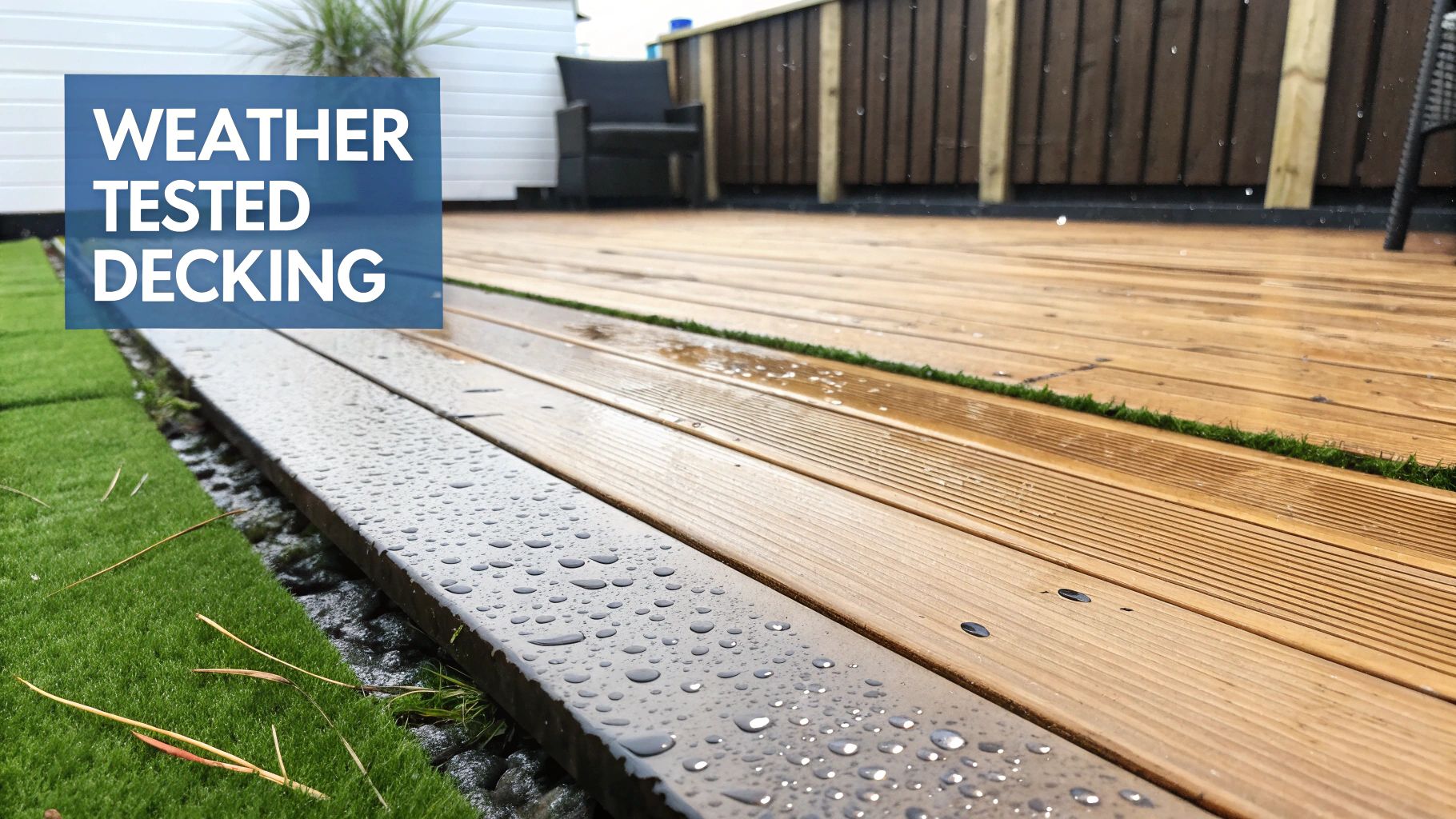
The look of your deck is arguably the most exciting part of the decision. It’s what sets the tone for your entire garden, so let’s get into the visual differences between classic wood and modern composite decking. Each has its own distinct personality and design potential.
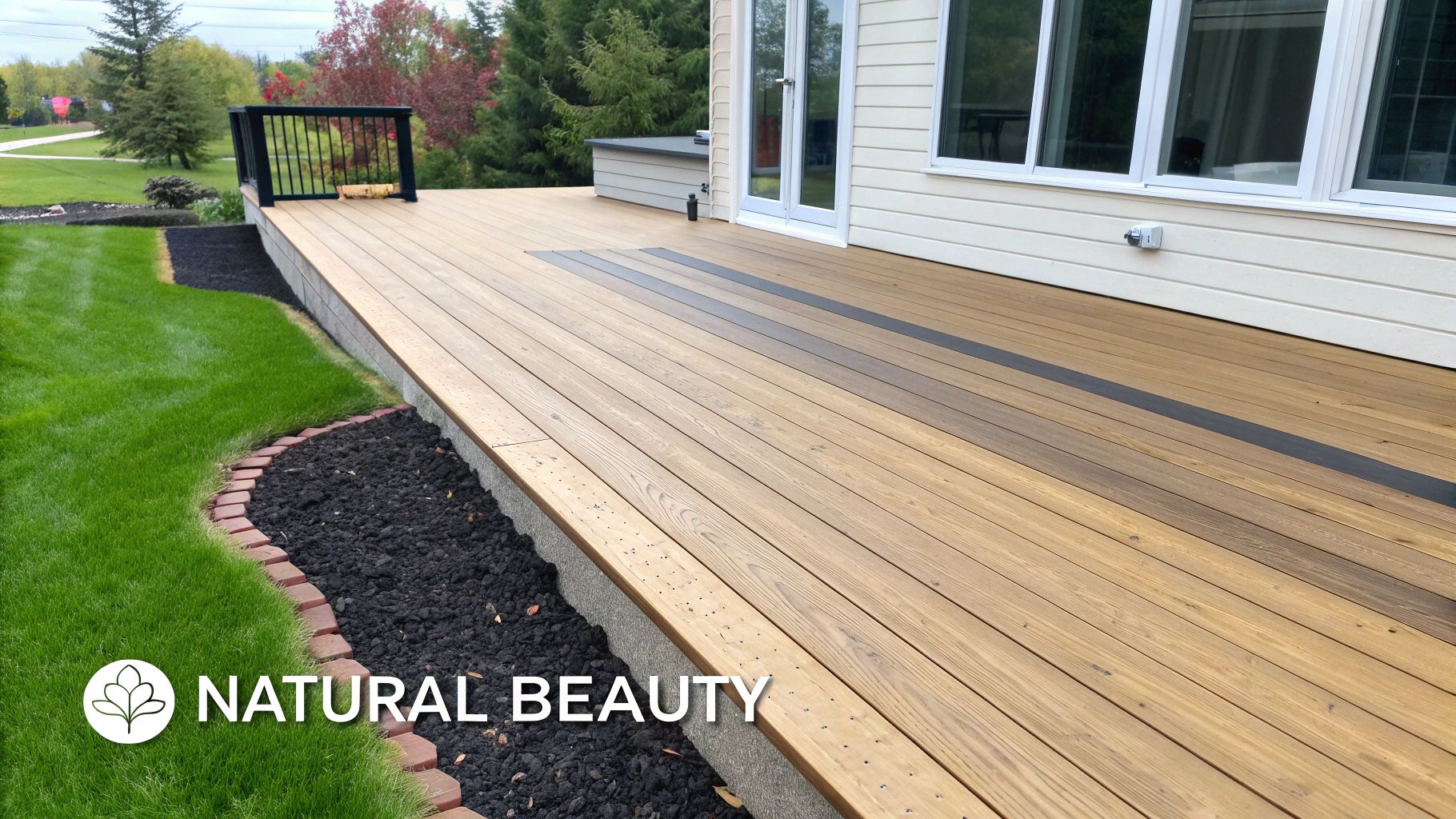
For many, nothing beats the authentic, timeless appeal of natural wood. Each timber board is completely unique, with its own grain, knots, and subtle shifts in colour. It’s this natural variation that gives a wooden deck its warm, inviting character and helps it blend seamlessly into a garden setting.
Over the years, a wood deck evolves. If you let it be, it will gradually weather to a beautiful, silvery-grey patina, which many people love. With a bit of maintenance, you can preserve its original rich tones. This ageing process is part of its organic charm.
The Natural Canvas of Wood
Wood is wonderfully versatile. You can stain it in a vast range of colours, from light, natural hues to deep, dramatic shades, making it easy to complement the style of your home and garden.
If you’re after a truly distinctive finish, you can explore specialist treatments. A fantastic example is Yakisugi, the traditional Japanese technique of charring wood. This not only makes the timber more durable but also creates a stunning, deeply textured black finish that is both elegant and eye-catching.
The Engineered Elegance of Composite
Composite decking has made huge strides. Once seen as a purely practical alternative, today’s composites are a genuinely sophisticated design choice, engineered to beautifully replicate the look of real wood while offering more creative possibilities.
You can now find composite boards in an incredible variety of colours and textures. Many feature multi-tonal streaking and deep, embossed grain patterns that convincingly mimic everything from exotic hardwoods to rustic pine. This consistency across every board delivers a clean, polished finish that’s perfect for contemporary designs.
Where composite really shines is in its design precision. It allows for flawless, complex patterns that can be tricky to pull off with natural timber, which is more likely to split or warp when cut into intricate shapes.
This opens up some brilliant design avenues for a truly bespoke deck.
- Hidden Fastening Systems: Most composite brands offer systems with hidden clips that slide into grooves along the board edges. The result is a sleek, screw-free surface that looks incredibly clean and modern.
- Curved Designs: Composite boards can be heat-bent to create sweeping curves, allowing your deck to flow organically with the contours of your garden.
- Intricate Inlays and Borders: Because it’s so dimensionally stable, composite is perfect for creating detailed patterns, contrasting borders, or striking inlays without the worry of boards expanding and contracting over time.
In the end, it really is a matter of personal preference. If you love authentic, natural character that tells a story over time, wood is hard to beat. But if you’re drawn to consistent colour and the freedom to create flawless, modern designs, composite offers unmatched precision and flexibility.
Evaluating Sustainability and Environmental Impact
When it comes to building a deck, the choice between wood and composite isn’t just about looks or upkeep anymore. For many of us, the environmental impact is a huge part of the decision. But the truth is, the “green” choice isn’t black and white. You really have to dig into where these materials come from, how they’re made, and what happens to them at the end of their life.
Wood is a natural, renewable resource, which on the surface makes it seem like the obvious eco-friendly option. And it can be, provided it’s sourced responsibly. The key is to look for certifications from bodies like the Forest Stewardship Council (FSC) or the Programme for the Endorsement of Forest Certification (PEFC). These labels are your assurance that the timber comes from forests managed in a way that protects wildlife habitats and supports local communities.
Without that stamp of approval, you run the risk of buying wood from illegal logging operations, which contributes to deforestation. It’s also worth remembering that pressure-treated timber involves chemicals and energy for transport, adding to its overall environmental footprint.
The Recycled Core of Composite Decking
This is where composite decking really shines from an environmental perspective. The best composite boards are a clever mix of reclaimed wood fibres and recycled plastics—things like old shopping bags and milk jugs that would otherwise be clogging up a landfill.
By giving this waste a new, long-lasting purpose, composite decking champions a more circular economy. For anyone wanting to minimise the environmental cost of their project, this is a massive plus.
The core sustainability claim for composite decking is its ability to turn waste into a durable, long-lasting building material. This reduces landfill burden and decreases the demand for virgin plastics and timber.
Of course, it’s not a perfect solution. The manufacturing process itself is quite energy-intensive, requiring a lot of power to blend, heat, and mould the materials together. And at the end of its very long life, composite decking isn’t biodegradable. Recycling it can be tricky, which poses a disposal challenge down the line.
Making an Informed Environmental Choice
So, which is the greener choice? Honestly, it depends entirely on your personal priorities. Neither option is flawless. If you value natural, renewable materials and biodegradability, a responsibly sourced wood deck is an excellent choice. But if your main concern is reducing landfill waste and making use of recycled materials, then composite decking makes a very strong case.
Traditional wooden decking still commands a large part of the market, though its position is being challenged by these more modern alternatives. The global wooden decking market was valued at USD 8.3 billion in 2024, but its growth is slowing as people become more aware of sustainability issues. You can explore more about these market trends and their drivers to see how attitudes are changing.
Ultimately, the wood versus composite decking debate comes down to what matters most to you. It’s about weighing up the entire lifecycle of each material and choosing the one that best aligns with your own environmental principles.
Answering Your Final Decking Questions
So, you’ve weighed up the costs, considered the maintenance, and pictured how both materials would look in your garden. Yet, a few practical questions might still be swirling around your head. It’s these final details that often make all the difference. Let’s tackle some of the most common queries we hear from UK homeowners before they make their final choice.
Getting these last points cleared up will give you the confidence that you’re not just buying some decking, but making a long-term investment that’s perfectly suited to your home and lifestyle.
Is Composite Decking Slippery in the UK Rain?
This is a really sensible question, especially with our notoriously damp weather. It’s a common myth that composite gets slick when wet, but modern boards are designed specifically to counter this. Good quality composite decking comes with an embossed, textured finish that offers surprisingly good grip underfoot.
In fact, it often outperforms traditional wood, which can develop a slippery layer of algae if not cleaned regularly. Reputable composite brands put their products through rigorous slip-resistance tests, making them a safe bet for family gardens, around hot tubs, or anywhere that sees a lot of rain.
Can I Fit the Deck Myself, or Should I Call in a Pro?
If you’re a dab hand at DIY and have the right tools, installing either type of decking is certainly possible. The real make-or-break factor for any deck isn’t the boards on top, but the substructure underneath. Get that wrong, and you’re in for a world of problems.
Composite decking, in particular, has very specific rules for installation that you have to follow to the letter, or you’ll void the warranty. Things like joist spacing, ensuring enough airflow, and using the correct hidden fixings require real precision. For a flawless finish and to be certain your investment is protected, we’d always suggest hiring an experienced fitter.
Which Decking Adds More Value to My Home?
A well-built deck of any kind is a fantastic way to boost your property’s value by creating a proper outdoor living area. A stunning hardwood deck will always catch a buyer’s eye, but the “low-maintenance” tag that comes with composite decking is a massive selling point in today’s market.
Think about it from a buyer’s perspective. A high-end composite deck is seen as a feature they can enjoy immediately without having to worry about future weekends spent sanding and staining.
When a potential buyer sees a deck that looks great and requires almost no work, it’s often viewed as a premium, hassle-free upgrade. This convenience factor can lead to a better return on your investment.
Ultimately, both materials add appeal, but the “fit and forget” convenience of composite often gives it a slight edge for busy homeowners who value their time as much as their home’s aesthetics.
Ready to create a stunning, durable outdoor space with a unique aesthetic? TimberSol specialises in high-quality charred timber decking and cladding using the timeless Yakisugi technique. Discover our range of sustainable and elegant solutions at https://timbersol-backup.elnoirstudio.com.
