
10 Types of Wood Fences: Your Complete Guide for 2025

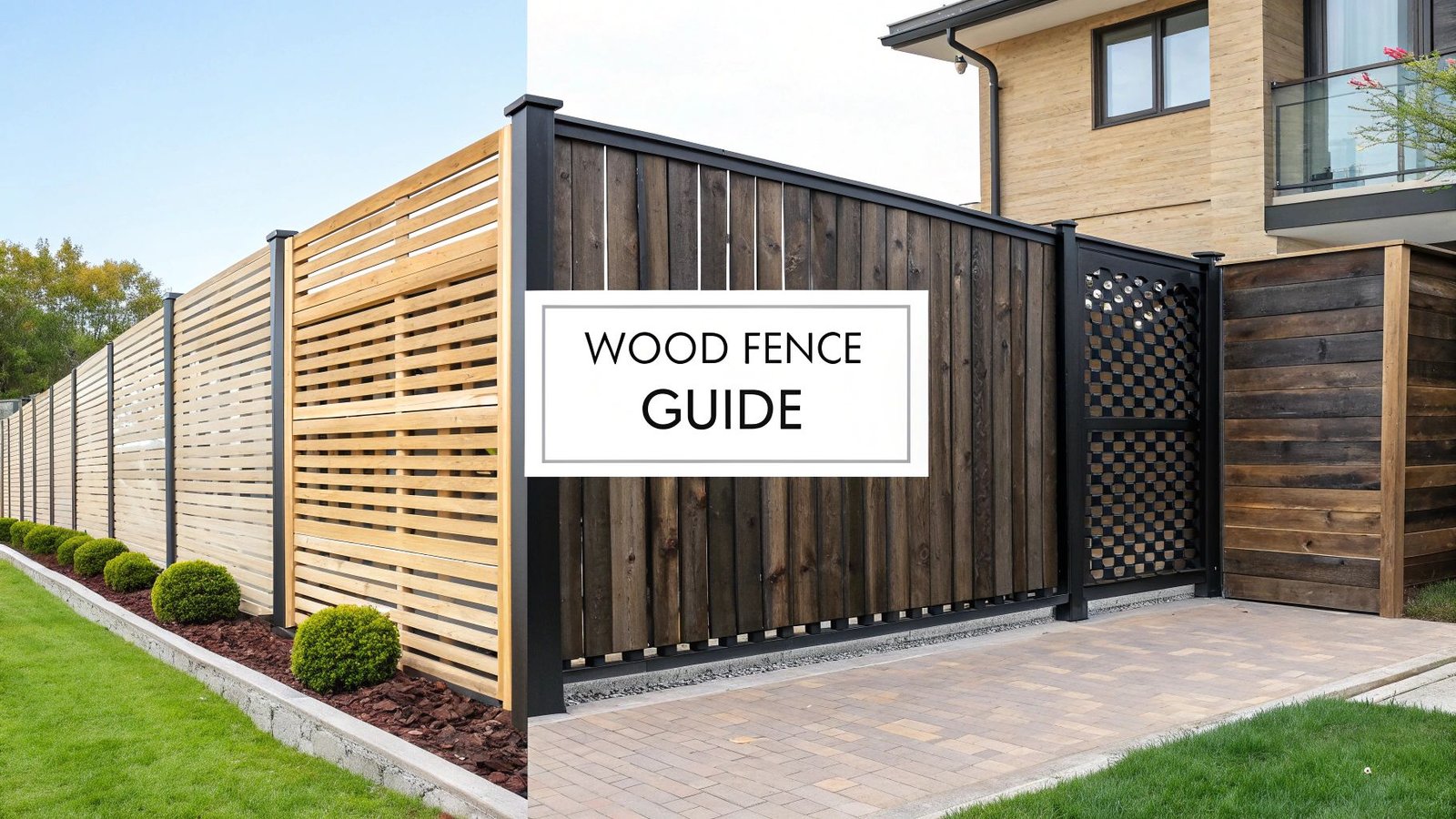
A well-chosen wooden fence does more than just mark a boundary; it defines your outdoor space, enhances security, and significantly boosts your property's kerb appeal. With a vast array of styles available, from traditional to contemporary, selecting the right one can feel overwhelming. This comprehensive guide simplifies the process by exploring ten distinct types of wood fences, detailing their unique aesthetic qualities, functional benefits, and ideal applications for various properties. Understanding these differences is crucial for creating a cohesive and secure perimeter that truly complements your architectural vision.
We will break down the specific design elements, privacy levels, and installation considerations for each style. Whether you're seeking the quintessential charm of a classic picket fence, the robust security of a solid privacy fence, or the sleek, modern lines of horizontal slats, this listicle provides the actionable insights you need. By examining the pros and cons of popular options like Shadowbox, Board and Batten, and Lattice, you can make an informed decision that aligns with your practical requirements and design aspirations. As you consider the complete visual harmony of your property's exterior, a detailed guide to choosing custom wood driveway gates can also provide valuable insights into wood selection and complementary designs. Let's delve into the options that will transform your garden into a private, stylish, and secure sanctuary.
1. Picket Fence: The Quintessential Boundary Marker
Among the various types of wood fences, the picket fence stands as a timeless symbol of domestic charm and welcoming boundaries. Its iconic design features evenly-spaced vertical boards, known as pickets, attached to horizontal rails. Typically standing at a modest height of 3-4 feet, its primary purpose is decorative rather than for high security, making it a perfect choice for front gardens and property lines where maintaining visibility is key.
This classic style excels at creating a clear, yet friendly, demarcation of space without obstructing views. It elegantly frames a landscape, adds kerb appeal, and keeps small pets or children safely contained. Its open design allows sunlight and air to pass through, which is beneficial for garden health. The traditional aesthetic has been a beloved staple in British gardens for generations, adding a touch of timeless elegance that complements both heritage and modern homes.
Implementation and Maintenance Tips
To ensure your picket fence remains a beautiful feature for years to come, consider these practical points:
- Spacing: For a visually balanced look, maintain a gap of 2-3 inches between each picket. This classic spacing provides definition without feeling closed off.
- Material Choice: Opt for pressure-treated timber to resist rot and insect damage. Naturally durable woods like cedar are also excellent choices for enhanced longevity.
- Protection: Fit post caps on top of each fence post. This simple addition prevents water from seeping into the end grain, which is a primary cause of decay.
- Upkeep: To protect the wood and maintain its appearance, plan to re-paint or apply a fresh coat of stain every 3-5 years.
2. Privacy Fence (Solid Board): The Ultimate Seclusion Screen
Among the most functional types of wood fences, the solid board privacy fence offers unparalleled seclusion and security. Its design features vertical wooden boards affixed tightly together against horizontal rails, creating a solid, uninterrupted barrier. Typically constructed to a height of 6-8 feet, its primary role is to completely obscure the view into a property, making it an excellent choice for back gardens, swimming pool enclosures, and properties bordering busy areas.
This style is perfect for homeowners seeking a private sanctuary, providing a robust screen that shields against prying eyes and reduces ambient noise. Its solid construction also acts as an effective windbreak and offers a secure boundary for keeping children and pets safely contained. The clean, uniform appearance lends a sense of order and structure to a landscape, suiting both modern suburban homes and commercial properties where privacy is paramount.
Implementation and Maintenance Tips
To build a durable and effective privacy fence, pay close attention to these key details:
- Post Spacing: For maximum stability against wind and time, ensure fence posts are installed no more than 6 feet apart. This prevents the horizontal rails from sagging.
- Board Choice: Use 1×6 or 1×8 boards for a classic residential look. For added visual interest and strength, consider a "board on board" style where boards overlap slightly.
- Drainage: Protect the base of your fence from moisture. Installing boards slightly above ground level or using a gravel board at the bottom will prevent premature rot.
- Height Regulations: Be aware of local planning permissions regarding fence height. To understand the rules in your area, you can learn more about maximum fence height regulations in the UK.
3. Split Rail Fence: The Rustic Rural Boundary
Embodying a rugged, pastoral charm, the split rail fence is a quintessential feature of rural and countryside landscapes. This design is one of the most open and resource-efficient types of wood fences, constructed from two to four horizontal rails fitted into mortised posts. Its character comes from the rough-hewn, often uneven timber, which creates a natural, organic appearance perfect for defining large property boundaries without blocking scenic views.
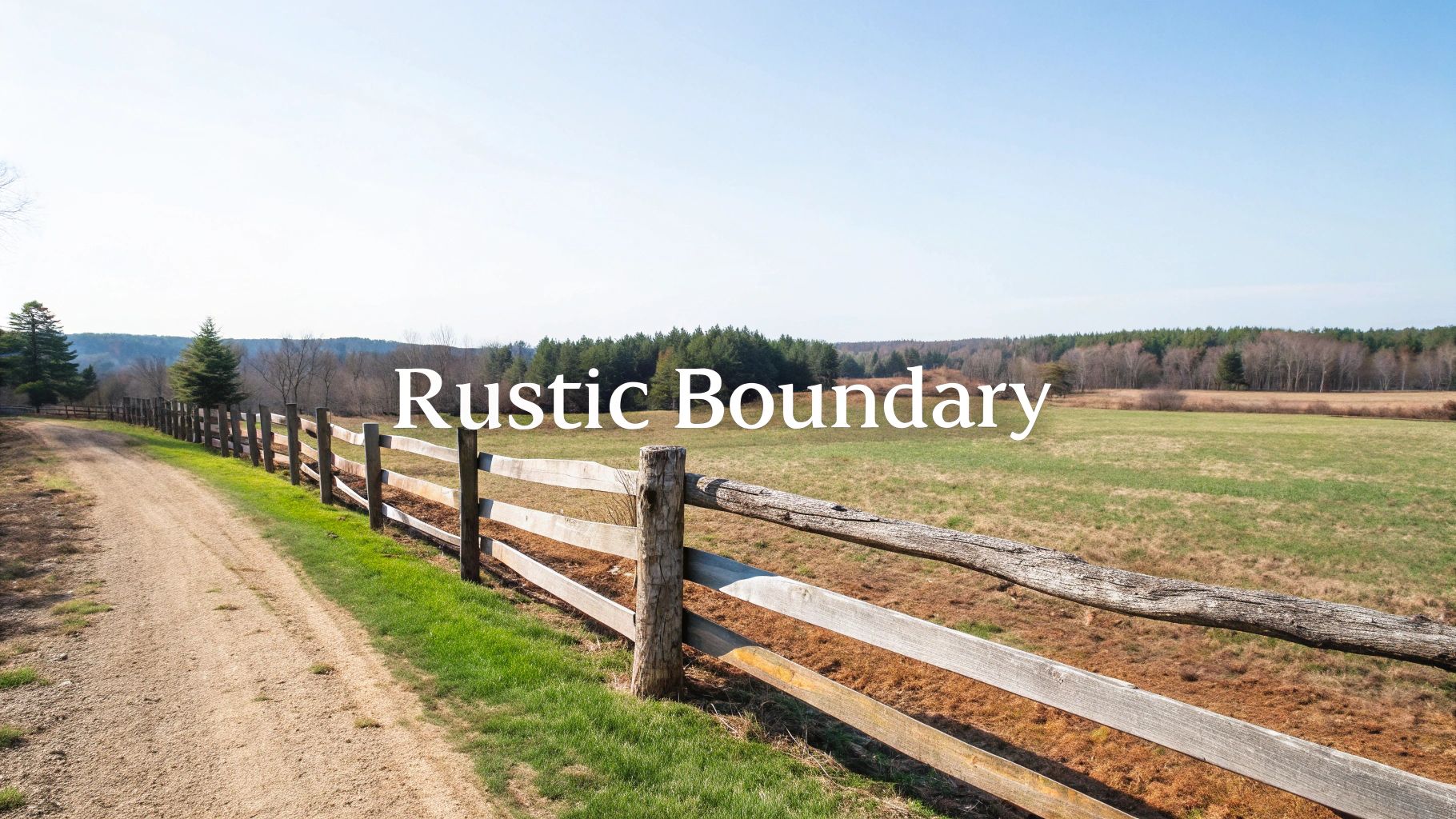
Popularised by early American frontier life, this style is ideal for marking the perimeters of ranches, farms, and large gardens where high security is not a priority. Its simple, open structure provides a distinct boundary for livestock like horses and cattle while seamlessly blending into the natural environment. The split rail fence offers a cost-effective solution for fencing extensive areas, delivering a strong sense of place and historic authenticity.
Implementation and Maintenance Tips
To maximise the lifespan and rustic appeal of your split rail fence, keep these key points in mind:
- Material Selection: Choose naturally rot-resistant timber such as cedar or opt for pressure-treated pine. These materials will significantly extend the fence's durability against the British weather.
- Rail Spacing: Customise the spacing between rails based on your needs. Wider gaps are suitable for property lines, while closer spacing is better for containing larger animals.
- Post Security: Ensure the posts are set deep enough, typically one-third of their length, and secured with concrete or gravel for stability, especially in soft soil.
- Reinforcement: For containing smaller livestock or pets, consider attaching wire mesh discreetly to the interior side of the fence. This maintains the aesthetic while enhancing containment.
4. Shadowbox Fence: Privacy with Aesthetic Depth
The shadowbox fence offers a sophisticated twist on traditional privacy fencing, balancing seclusion with a visually dynamic design. This style is constructed with vertical boards attached to alternating sides of the horizontal rails. This "board-on-board" configuration creates a semi-private boundary that looks equally attractive from both your property and your neighbour's, making it a "good neighbour" fence.
This design cleverly obstructs a direct line of sight while still allowing air and some light to filter through, preventing the boxed-in feeling of a solid barrier. From a straight-on view, it appears solid, but from an angle, the gaps become visible, adding depth and shadow play. This makes it an ideal choice for modern suburban backyards and contemporary residential developments where both privacy and aesthetic appeal are highly valued.
Implementation and Maintenance Tips
To create a striking and durable shadowbox fence, focus on precision during installation and regular upkeep:
- Board Placement: For the best balance of privacy and airflow, install the vertical boards with an offset of approximately 1-2 inches on alternating sides of the rails.
- Consistent Gaps: Ensure the spacing between each board is uniform to create a clean, professional finish. Inconsistent gaps can detract from the intended visual effect.
- Aesthetic Detail: For a neater appearance, install the boards with the cut ends facing inward toward the rails, hiding them from the primary sightlines.
- Annual Care: Applying a fresh coat of stain or a water-repellent sealant annually is crucial to protect the wood from moisture and UV damage, preserving its colour and structural integrity.
5. Board and Batten Fence: Rustic Charm Meets Modern Privacy
Originating from traditional barn construction, the board and batten fence brings a robust and visually textured presence to the landscape. This style is one of the most effective types of wood fences for achieving full privacy, constructed by placing wide vertical boards side-by-side and covering the seams with narrower vertical strips called battens. The result is a solid, gap-free barrier with a distinctive layered and rhythmic pattern.
This fencing style has seen a surge in popularity, transitioning from its rural roots to become a favourite in modern farmhouse and contemporary residential designs. It offers unparalleled privacy and a strong architectural statement, making it ideal for back gardens, boundary lines, and commercial properties where both security and aesthetic appeal are priorities. Its solid construction also provides a significant sound buffer, adding a layer of tranquillity to any outdoor space.
Implementation and Maintenance Tips
To build a durable and attractive board and batten fence, focus on these key details:
- Structural Integrity: Stagger the joints of the battens so they do not align with the joints of the main boards behind them. This simple technique significantly enhances the overall strength of the fence panel.
- Fastener Choice: Always use galvanised or stainless steel screws and nails to prevent rust stains from bleeding into the wood and compromising its appearance over time.
- Proper Protection: Apply a high-quality, water-resistant sealant to all surfaces, paying special attention to the end grains of both boards and battens. For detailed guidance, you can find valuable tips on how to protect wood outdoors.
- Scale and Proportion: Carefully consider the width of the boards in relation to the scale of your property. Wider boards can create a bold, modern look, while narrower combinations suit more compact spaces.
6. Lattice Fence: The Elegant and Airy Screen
The lattice fence is one of the most versatile and decorative types of wood fences, celebrated for its distinctive cross-hatch pattern. It features thin wooden strips, or laths, woven together diagonally to create a grid of diamond-shaped or square openings. This design masterfully balances privacy with openness, making it an excellent choice for areas where you want to create a sense of enclosure without completely blocking light or airflow.
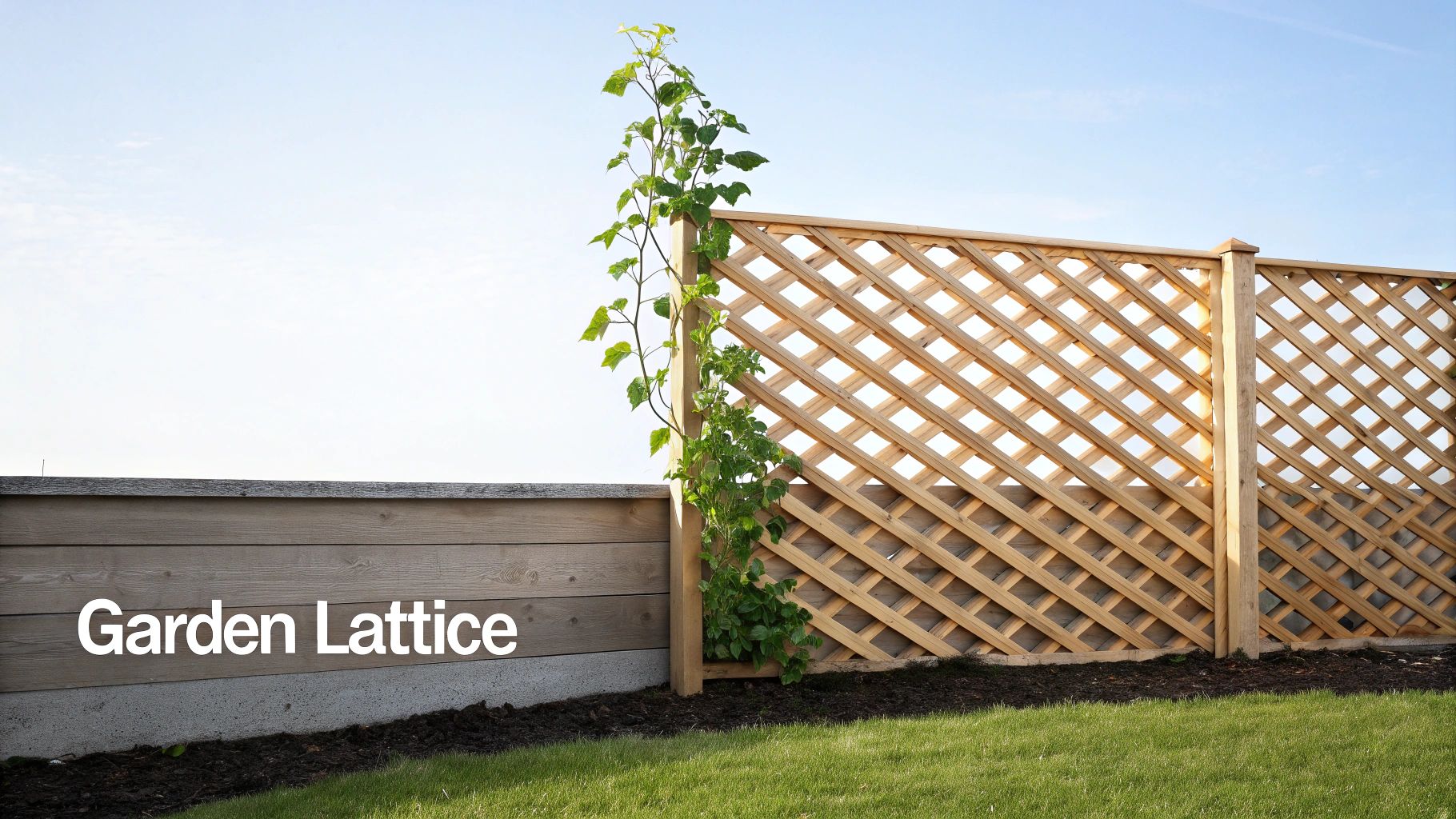
Its semi-private nature makes it ideal for garden borders, patio enclosures, or as an elegant topper for a solid privacy fence. A lattice fence can serve as a stunning backdrop for climbing plants like roses or ivy, integrating seamlessly into a garden's landscape. Popularised in traditional garden design and Victorian-era landscaping, its timeless appeal continues to be favoured by contemporary architects seeking a blend of function and aesthetic grace.
Implementation and Maintenance Tips
To maximise the beauty and lifespan of your lattice fence, follow these key implementation and upkeep guidelines:
- Support Structure: For stability, especially in windy areas, ensure support posts are installed no more than 4-6 feet apart. Closer spacing is crucial for taller lattice panels.
- Material Selection: Use pressure-treated timber or naturally resilient woods like cedar to withstand moisture and prevent insect infestations. This is vital given the many joints in a lattice design.
- Fixings: Opt for stainless steel or galvanised screws and nails when assembling your fence. This small detail prevents unsightly rust streaks from developing over time.
- Finishing: Apply a quality paint or stain every 2-3 years. A sprayer can make this task much easier and ensures even coverage across the intricate lattice pattern, protecting it from the elements.
7. Dog-Ear Fence: A Modern Twist on a Classic
The Dog-Ear fence is a stylish evolution of the traditional picket, offering a more contemporary and refined look. This design is distinguished by the top corner of each vertical board being cut off at an angle, creating a shape that resembles a folded-down page corner or a "dog ear". This simple modification softens the fence line, providing a more decorative and less abrupt finish than a flat-top picket, making it a popular choice among the various types of wood fences for modern homes.
This style provides a continuous, visually interesting boundary that is both welcoming and clearly defined. It’s frequently used in suburban developments and contemporary cottage designs where a balance between privacy, aesthetics, and a neighbour-friendly appearance is desired. The dog-ear cut prevents the sharp, uniform look of a solid privacy fence while still offering substantial coverage, creating an appealing rhythm along the property line that complements both landscaping and architecture.
Implementation and Maintenance Tips
To achieve a professional and long-lasting dog-ear fence, consider these key details:
- Angle Precision: For the classic dog-ear appearance, ensure each corner is cut at a consistent 45-degree angle. This uniformity is crucial for a polished, professional look.
- Seal the Cuts: The angled cuts expose the end grain of the timber, making it vulnerable to moisture. Thoroughly seal these cut edges with a quality wood preservative before installation to prevent rot and decay.
- Consider Pre-Cut Boards: To save significant time and labour on-site, purchase pre-cut dog-ear fence boards. This ensures every picket is identical, leading to a perfectly uniform finish.
- Regular Finishing: To maintain the wood's integrity and colour, plan to re-stain or paint your fence every 3-4 years. This protective layer is vital for shielding it from the elements.
8. Horizontal Slat Fence: A Contemporary Statement
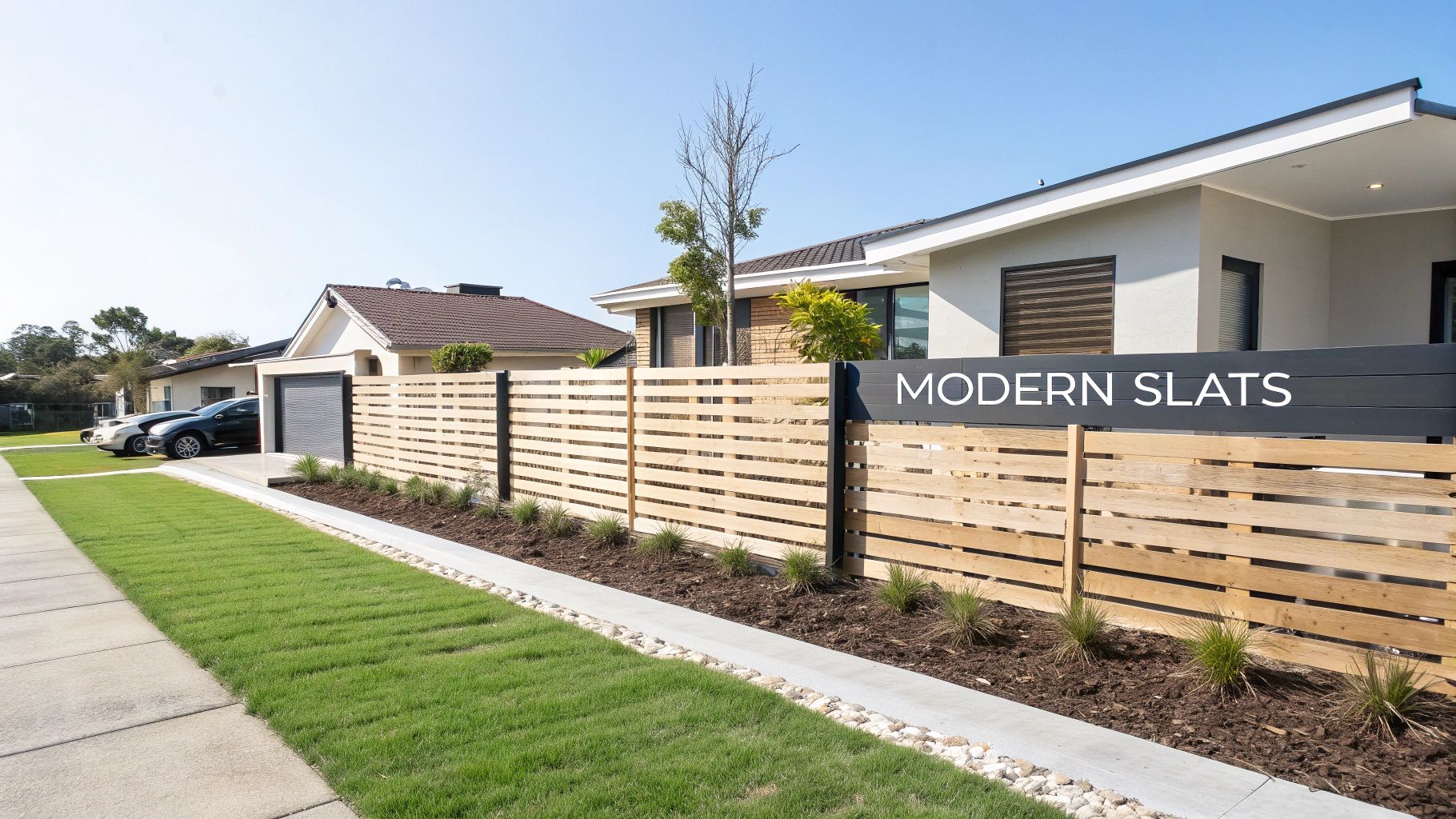
Breaking from traditional vertical designs, the horizontal slat fence has emerged as a leading choice among the many types of wood fences for those seeking a modern and sophisticated boundary. This style features boards, or slats, that run horizontally from post to post, creating strong, clean lines that can make a space feel wider and more expansive. Its contemporary aesthetic is a favourite in minimalist landscape designs and modern architectural projects, offering a sleek alternative to more conventional fencing.
This design excels at providing privacy while maintaining a light, uncluttered feel. Depending on the spacing between slats, it can offer near-total seclusion or a semi-private screen that allows light and air to filter through. Its linear nature draws the eye along the landscape, making it a powerful design element in urban gardens, contemporary residential properties, and commercial developments where style is paramount.
Implementation and Maintenance Tips
To achieve a professional and durable horizontal fence, consider these key details:
- Post Spacing: To prevent sagging, set robust 4×4 or 4×6 posts no more than 4-6 feet apart. The shorter span provides essential support for the horizontal boards.
- Board Spacing: For a crisp, modern look, maintain a tight gap of around 1-2 inches between each slat. For a more open feel, this gap can be widened.
- Material Selection: Use high-quality, stable timber like cedar or a durable composite material to minimise warping over time, which is a greater risk with horizontal orientations.
- Finishing Touches: Staggering the boards on alternate sides of the posts can create a unique, textured appearance that adds visual depth and interest to the structure.
9. Tongue and Groove Fence: The Pinnacle of Privacy and Polish
For those seeking the ultimate combination of privacy, strength, and a refined aesthetic, the tongue and groove fence is an exemplary choice among the many types of wood fences. This sophisticated style features specially milled boards where a protruding ridge, or 'tongue', on one edge fits perfectly into a corresponding 'groove' on the next. This interlocking system creates a solid, gap-free panel with a seamless, high-end finish that looks identical from both sides.
Its design provides unparalleled privacy and acts as an effective sound barrier, making it ideal for high-end residential properties and commercial establishments where seclusion and a polished look are paramount. The tight fit between boards also offers excellent protection against wind and rain, enhancing the fence's durability and structural integrity. This style is a favourite in contemporary luxury landscaping, where its clean lines and architectural quality complement modern design principles.
Implementation and Maintenance Tips
Achieving the flawless finish of a tongue and groove fence requires precision and careful planning. Consider these key points for a successful installation:
- Wood Choice: Use kiln-dried timber to minimise the natural expansion and contraction that can lead to warping or gaps after installation.
- Post Precision: Ensure all fence posts are set perfectly plumb (vertically straight). Even a slight angle can compromise the interlocking mechanism and the overall fit.
- Professional Installation: Due to the precise nature of the joinery, it is highly recommended to hire experienced fence contractors who specialise in this style.
- Finishing Touches: Apply a high-quality sealant or stain immediately after installation and reapply every few years to protect the wood from moisture and UV damage, preserving its sophisticated appearance.
10. Decorative Ornamental Wood Fence: A Statement of Artistry
Transforming a simple boundary into a bespoke work of art, the decorative ornamental wood fence is where functionality meets creative expression. This style moves beyond standard designs, featuring artistic cuts, intricate patterns, or custom-milled shapes that serve as a striking architectural feature. From geometric latticework to nature-inspired silhouettes carved into the boards, these fences are designed to be focal points, making them ideal for high-end residential properties, boutique hotels, and public art installations where aesthetics are paramount.
Unlike other types of wood fences focused purely on privacy or security, an ornamental design makes a powerful statement about a property's character and attention to detail. It offers a unique opportunity to integrate personal style or architectural themes directly into the landscape. This approach turns the fence line into a canvas, creating a distinctive and memorable boundary that enhances the property's overall design narrative and visual appeal, proving that a fence can be both a barrier and a beautiful centrepiece.
Implementation and Maintenance Tips
To create an ornamental fence that is both stunning and durable, careful planning and execution are essential:
- Design Collaboration: Work closely with experienced fence designers, landscape architects, or specialised craftspeople. Their expertise is crucial for translating a complex concept into a feasible and structurally sound design.
- Material Selection: Choose high-quality, stable timbers like cedar or Accoya. These woods hold intricate details well and offer superior resistance to warping and decay, protecting your investment.
- Protect Intricate Cuts: The detailed cuts and exposed end grains are vulnerable to moisture. Ensure every surface is thoroughly sealed with a high-performance sealant or stain to prevent water ingress and rot.
- Consider Regulations: Before finalising a design, check local planning permissions and neighbourhood covenants. Highly artistic or unconventional designs may require approval to ensure they align with community aesthetic standards.
Top 10 Wood Fence Types Comparison
| Style | Implementation complexity | Resource requirements | Expected outcomes | Ideal use cases | Key advantages | Typical cost |
|---|---|---|---|---|---|---|
| Picket Fence | Low — simple posts & rails, easy repairs | Moderate — standard lumber, paint/stain, basic hardware | Decorative boundary, open sightlines; minimal privacy/security | Front yards, heritage properties, curb appeal | Classic look, affordable, easy repairs | $15–25 / linear ft |
| Privacy Fence (Solid Board) | Moderate — tight board installation, solid panels | High — more lumber, sturdy posts, sealing/finish | Full privacy and security; reduces wind and noise | Backyards, pools, commercial perimeters | Complete privacy, durable, secure | $20–40 / linear ft |
| Split Rail Fence | Low — simple rail insertion into posts | Low — fewer rails, rough‑hewn wood | Rustic boundary with high visibility; low privacy/security | Farms, ranches, rural properties | Affordable, rustic aesthetic, easy to install | $8–15 / linear ft |
| Shadowbox Fence | Moderate — alternating board installation | Moderate — similar to privacy but less material overall | Good privacy with airflow; attractive both sides | Modern residential, mixed neighborhoods | Balanced privacy/aesthetics; better wind resistance | $18–35 / linear ft |
| Board and Batten Fence | Moderate–High — battens and staggered joints | High — wide boards, battens, quality fasteners | Strong, durable privacy with vertical decorative lines | Modern farmhouses, high‑end residential | Very durable; refined vertical pattern | $25–45 / linear ft |
| Lattice Fence | Low — panelized, straightforward installation | Low — thin strips or prefab panels | Decorative partial privacy; light and air flow; plant support | Gardens, deck railings, fence toppers | Decorative, allows light/air, affordable | $10–20 / linear ft |
| Dog‑Ear Fence | Low–Moderate — cut angled pickets, similar to picket install | Moderate — standard picket materials, some cutting | Refined picket appearance; limited privacy | Suburban front yards, transitional homes | Decorative, improved runoff, modest cost | $18–28 / linear ft |
| Horizontal Slat Fence | Moderate — requires strong posts and supports | Moderate — long boards, brackets, quality materials | Modern, spacious aesthetic; adjustable privacy; needs support | Contemporary homes, urban properties | Sleek, flexible privacy, modern look | $20–35 / linear ft |
| Tongue and Groove Fence | High — precise interlocking installation, skilled labor | High — kiln‑dried boards, accurate posts, skilled installers | Seamless, weather‑resistant privacy; refined finish | High‑end residential, architectural projects | Seamless appearance, superior durability/privacy | $35–60 / linear ft |
| Decorative Ornamental Wood Fence | High — custom design and skilled fabrication | Very high — premium materials, custom cutting | Unique artistic statement; privacy varies by design | Luxury properties, public art, custom installations | One‑of‑a‑kind aesthetic, high curb appeal | $40–100+ / linear ft |
Making Your Final Decision on the Right Wood Fence
Navigating the diverse world of wood fencing can feel complex, but this exploration of popular designs should empower you to make a confident and informed choice. We have journeyed through a wide array of types of wood fences, from the timeless charm of a traditional picket fence to the sleek, modern lines of horizontal slats and the robust security of a tongue and groove installation. Each style offers a unique blend of form and function, tailored to meet different needs for privacy, security, and aesthetic appeal.
Your final decision hinges on a careful evaluation of your specific requirements. The open, rustic appeal of a split rail fence might perfectly suit a sprawling countryside property, while the intricate design of a lattice fence could offer semi-privacy and a beautiful trellis for climbing plants in a compact urban garden. Similarly, a shadowbox fence provides an elegant solution that looks appealing from both your and your neighbour’s perspective, fostering good relations while defining boundaries.
Key Factors to Guide Your Choice
Before you commit, it's crucial to synthesise the information and apply it to your unique situation. Consider these final points as a checklist to guide your selection process:
- Primary Function: What is the main job your fence needs to do? Is it for securing a perimeter, ensuring complete privacy from onlookers, creating a safe enclosure for pets, or simply adding a decorative boundary to your landscape? Clarity on this point will immediately narrow your options.
- Aesthetic Harmony: Your fence is a prominent architectural feature. It should complement your home’s existing style, whether that is modern, traditional, or rustic. Look at the lines, materials, and overall feel of your property and choose a fence that enhances, rather than clashes with, its character.
- Maintenance Commitment: Be realistic about the time and effort you are willing to dedicate to upkeep. While all wood requires some level of care, certain timbers and finishes are more demanding than others. For those seeking a low-maintenance yet beautiful solution, investing in advanced treatments like Yakisugi (also known as shou sugi ban) can provide exceptional longevity with minimal effort.
- Long-Term Investment: A fence is more than just a barrier; it's an investment in your property. Beyond aesthetics and privacy, installing the right wooden fence can significantly contribute to your home's overall curb appeal and even help increase property value. Choosing a high-quality material and a suitable style is a decision that pays dividends for years to come.
Ultimately, selecting from the various types of wood fences is about finding the perfect balance between practicality and personality. Your fence will frame your outdoor living space, welcome guests, and stand as a testament to your home's style. By taking the time to match the right design to your specific needs and environment, you ensure a result that is not only functional and durable but also a source of lasting pride and satisfaction.
Ready to transform your vision into a stunning, long-lasting reality? Explore the exceptional durability and unique beauty of charred timber with TimberSol. Specialising in the ancient art of Yakisugi, we provide premium, sustainable wood solutions perfect for any fence project. Visit us at TimberSol to discover how our products can deliver unparalleled style and performance for your property.
