
How to Prevent Wood Rot: Expert Tips for Your UK Home

Wood rot prevention is a comprehensive process that combines moisture control, selection of durable timber, application of protective treatments, and regular maintenance to prevent fungal decay in the UK’s damp climate. Effective ventilation, high-quality finishes, and routine inspections support long-term timber performance in both indoor and outdoor environments.
Stopping wood rot requires a multi-layered approach. Effective prevention depends on moisture control, selecting suitable timber from the outset, applying quality protective finishes, and carrying out regular maintenance checks. The core objective is to create conditions in which rot-causing fungi cannot establish. This means keeping timber consistently dry and ensuring proper ventilation.
The article outlines how the UK’s damp climate promotes wet rot and dry rot, explaining how to recognise early warning signs before significant structural damage develops. It examines key prevention strategies, including appropriate timber selection, effective drainage, proper ventilation, use of preservatives and protective coatings, Yakisugi surface protection, and routine inspections to maintain long-term timber durability.
Understanding the Threat of Wood Rot in the UK Climate
To prevent wood rot effectively, it is essential to understand the conditions that allow it to develop. In the UK, the consistently damp and mild climate creates highly favourable conditions for fungi that cause timber decay.
Wood rot is not a single issue but involves two distinct types of fungal attack.
The Two Faces of Fungal Decay
The primary forms of timber decay in the UK are wet rot and dry rot. Although both require moisture to develop, their behaviour and level of risk differ significantly.
- Wet Rot: Commonly caused by fungi such as Coniophora puteana, wet rot develops when timber moisture content exceeds approximately 50%. It typically occurs in areas exposed to persistent water saturation, including leaking window sills, fence posts embedded in damp soil, or decking surfaces where standing water accumulates. Affected wood becomes darker in appearance and soft or spongy in texture.
- Dry Rot: Caused by Serpula lacrymans, dry rot can initiate at lower moisture levels, around 20%. Its primary risk lies in its ability to spread beyond the original moisture source. It can travel through masonry, plaster, and brickwork to locate additional timber, continuing to cause structural damage even after the initial leak has been resolved. Dry rot is generally more destructive.
How the UK Climate Creates a Perfect Storm
Persistent rainfall and elevated humidity levels in the UK prevent exterior timber from drying fully between wet periods. This sustained dampness is the primary reason fungal decay remains a widespread issue.
In older properties, such as Victorian terraces with limited subfloor ventilation, stagnant damp air beneath floorboards creates ideal conditions for fungal growth. In outdoor settings, garden decking can retain moisture when leaves and debris accumulate between boards, preventing airflow and prolonging surface saturation. These routine situations demonstrate how local climate conditions increase decay risk.
Wood rot is not inevitable; it occurs only when specific environmental conditions are present. By controlling those conditions – improving drainage, increasing ventilation, and preventing direct contact between timber and damp ground – you can prevent fungal decay before it begins.
Recognising the Early Warning Signs
Preventing wood rot begins with identifying the earliest signs of moisture and fungal activity. Before timber visibly crumbles, other indicators typically appear.
A persistent musty or earthy smell in areas such as cellars or under stairs signals damp conditions and possible fungal growth. When inspecting outdoor timber like fences or sheds, bubbling, flaking, or cracked paint often indicates trapped moisture beneath the surface, which can lead to decay.
A simple inspection method is to press a screwdriver into any suspicious area. If the tool sinks in easily, decay is likely present. Identifying these warning signs early can mean the difference between a minor repair and a significant, costly restoration.
Choosing the Right Timber for Lasting Durability
Effective wood rot prevention begins at the timber selection stage. Selecting the appropriate species before applying any paint or sealant provides inherent resistance to fungal decay. This initial decision establishes long-term durability and reduces future maintenance demands.
Timber species vary significantly in performance, particularly in the UK’s damp climate. Some woods possess strong natural resistance, while others are highly vulnerable to moisture-related decay. Key factors influencing durability include timber density and the presence of natural oils.
For projects where maximum dimensional stability and long service life are critical, charred accoya cladding offers a modified timber solution engineered for exceptional resistance to moisture and decay in UK conditions.
Understanding Natural Timber Resistance
A timber’s natural durability depends on its heartwood – the dense, non-living inner core of the tree. Heartwood contains natural compounds such as tannins and oils, which act as built-in preservatives. These compounds make it significantly more resistant to moisture and fungal attack than the softer outer sapwood.
For projects exposed to the elements, including decking, fence posts, or exterior cladding, choosing a species with strong, durable heartwood provides a clear advantage against decay in the UK’s damp climate.
Using naturally resistant timber is comparable to constructing a castle from stone rather than mud bricks. While ongoing maintenance remains necessary, the core material is inherently stronger and better suited to withstand prolonged exposure to a wet climate.
Regular inspections are essential, even when using high-durability timber. Identifying moisture problems early prevents fungal decay from establishing and spreading.
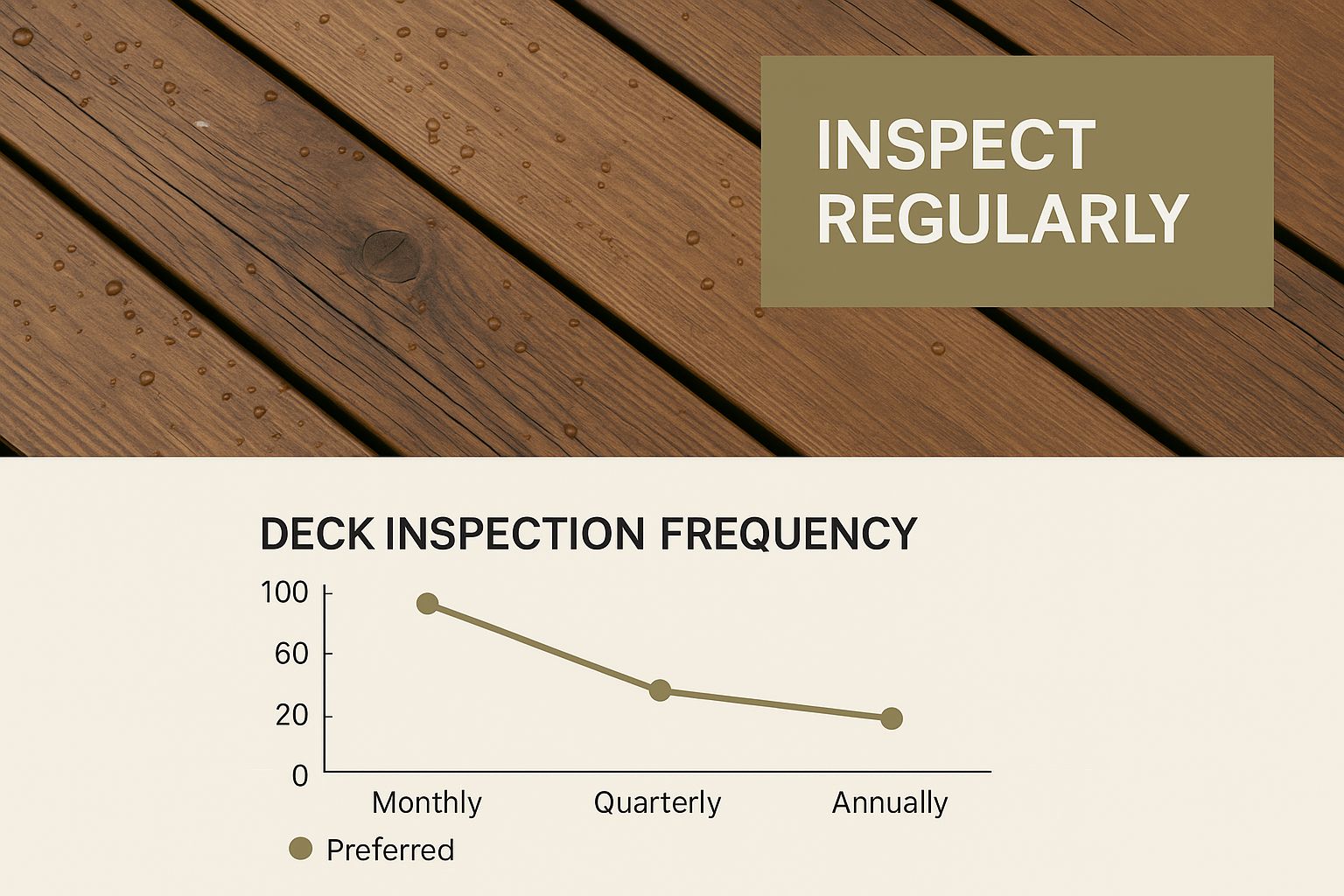
Regardless of the timber species selected, consistent vigilance and routine monitoring are fundamental to effective long-term wood rot prevention.
Comparing Rot Resistance of Common UK Timbers
To support informed timber selection, comparing the rot resistance of commonly used UK species provides practical clarity. Evaluating durability characteristics helps balance performance requirements with specific project conditions.
| Wood Species | Natural Rot Resistance | Best Use Cases | Notes for UK Climate |
|---|---|---|---|
| Oak (European) | High to Very High | Structural beams, posts, decking, gates | Excellent, but its high tannin content can cause staining when in contact with metal. |
| Western Red Cedar | High | Cladding, fencing, roofing shingles | Lightweight and stable. Weathers beautifully to a silver-grey if left untreated. |
| Larch (Siberian) | Moderate to High | Decking, cladding, garden furniture | A very dense and resinous softwood that offers great durability for its price point. |
| Pine (Untreated) | Low | Interior joinery, furniture | Should never be used externally without pressure treatment. Highly prone to rot. |
| Yew | Very High | Gate posts, outdoor furniture, carving | One of the most durable native timbers, but often only available in smaller sections. |
Selecting the appropriate species from the beginning reduces the risk of future decay and minimises maintenance demands. Early research contributes directly to longer-lasting timber performance.
Top Timber Choices for the UK Climate
Selecting timber for outdoor use in the UK requires balancing durability, cost, and visual appeal. The following species are recognised for strong resistance to decay and suitability for Britain’s damp conditions:
- Oak: A dense, high-strength hardwood with elevated tannin content in the heartwood, providing strong resistance to insects and fungal decay. Commonly specified for structural elements, posts, and premium decking applications.
- Western Red Cedar: Lightweight yet dimensionally stable, making it suitable for cladding and fencing. Contains natural oils (thujaplicins) that inhibit decay-causing fungi. When left untreated, it weathers to a silvery-grey finish.
- Larch: Both Siberian and European Larch contain high resin levels, contributing to strong natural durability. Frequently used as a cost-effective alternative to Cedar for cladding and decking projects across the UK.
- Spruce: Softwoods such as spruce are also widely used in UK exterior projects, although they require correct treatment to improve long-term resistance in persistently damp conditions.
- Douglas fir: Structurally reliable option, valued for its straight grain pattern and strong load-bearing performance in exterior applications.
- Yew: Not commonly used in large-scale construction, but highly rot-resistant. The heartwood offers exceptional durability, making it suitable for smaller, high-value applications such as bespoke garden furniture or gate posts designed for extended lifespan.
Woods That Demand Careful Treatment
Some popular softwoods are significantly more vulnerable to rot and require additional protection.
Pine, for example, is widely available and cost-effective, but its natural resistance to decay is low. For outdoor use, it must be pressure-treated. This treatment process forces preservatives deep into the wood’s cellular structure, creating a barrier that limits moisture absorption and fungal attack. You can learn more about the strongest types of wood in our detailed guide.
Although treated softwoods can perform well, investing in naturally durable timber from the start often reduces long-term maintenance, repair, and replacement costs. Choosing the right material upfront supports better durability and sustained appearance over time.
Mastering Moisture Control to Stop Rot in its Tracks
The most important principle in preventing wood rot is moisture control. Fungi that cause timber decay depend on water to survive. By identifying and eliminating sources of dampness, you remove the essential condition required for rot to develop.
Think of it as creating conditions where rot-causing fungi cannot establish or survive. By eliminating persistent moisture, you address the root cause of decay, making this the most effective long-term strategy for maintaining sound timber. The process begins with identifying and resolving hidden sources of dampness before they lead to sustained moisture exposure.
Winning the Ground Game: Drainage and Airflow
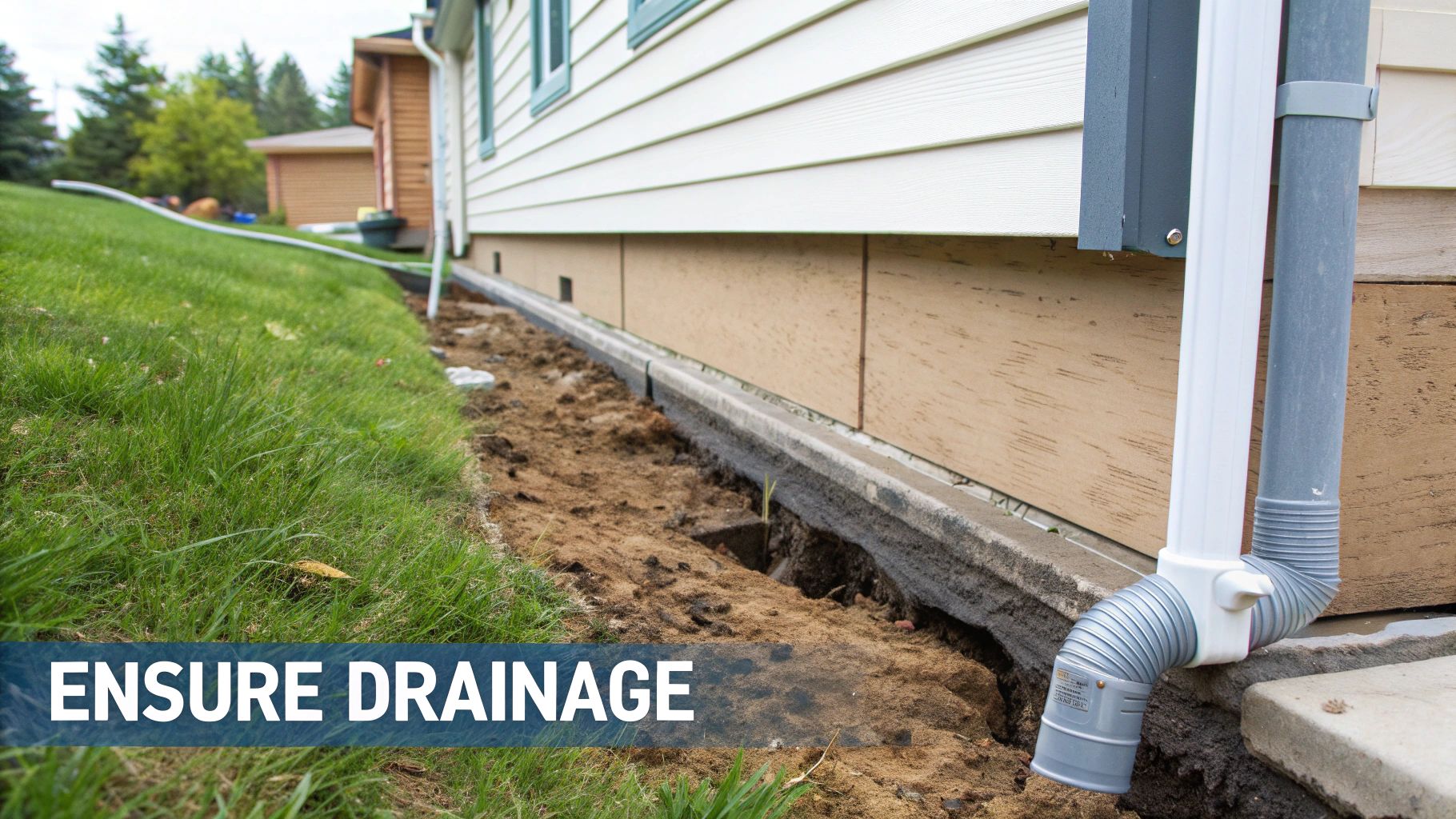
Many wood rot issues originate where timber is positioned too close to the ground or where water is allowed to accumulate. Persistent damp conditions at ground level create an ideal environment for fungal decay. Effective drainage and ventilation form the first layer of protection.
A common problem is soil, mulch, or accumulated leaves placed directly against wooden cladding or fence panels. These materials retain moisture and transfer it into the timber. A minimum clearance of 150mm (6 inches) between the ground and any wooden element is essential. This gap promotes airflow and allows timber to dry properly after rainfall.
Fence posts are particularly susceptible to decay. The surrounding ground should slope away from the base to prevent standing water. When installing posts, placing gravel or coarse sand below ground level improves drainage and reduces prolonged moisture exposure.
Tackling Aerial Assaults: Gutters and Leaks
Moisture from above can be as damaging as ground-level damp, particularly when exposure is prolonged. Faulty guttering systems are a frequent cause of rot affecting fascia boards, soffits, and window frames.
Blocked gutters allow rainwater to overflow and run down external walls, repeatedly saturating adjacent timber. Inspecting and clearing gutters twice per year – once in late autumn after leaf fall and again in spring – helps prevent overflow-related damage. Even small defects, such as cracked pipes or displaced roof tiles, can introduce sustained moisture into structural timbers over time.
A continuously dripping tap or small plumbing leak can release significant volumes of moisture into a building’s structure over the course of a year. Addressing these issues promptly is one of the most cost-effective methods of preventing extensive rot damage.
Routine inspection, particularly after periods of heavy rainfall, enables early detection and reduces the likelihood of escalating structural deterioration.
Promoting Ventilation in Enclosed Spaces
Poorly ventilated areas with damp, stagnant air create ideal conditions for fungal decay. Sub-floor voids, cellars, and inadequately ventilated loft spaces are particularly vulnerable, especially to dry rot. Increasing airflow in these enclosed environments is essential.
Practical ventilation measures include:
- Check Air Bricks: Ensure air bricks around the property’s foundation remain unobstructed by soil, plants, or debris. They enable airflow beneath suspended floors.
- Boost Sub-floor Airflow: In older properties prone to damp, installing additional air bricks or low-powered ventilation fans can improve air circulation and maintain dry timbers.
- Declutter Confined Areas: Avoid placing stored items or furniture directly against walls in cellars or sheds. Leaving clearance supports airflow and prevents trapped moisture.
Spotting and Fixing Common Moisture Traps
Preventing wood rot requires identifying areas where moisture accumulates. Routine inspections around the property can reveal early warning signs before decay develops.
Common moisture traps include:
- Decking Debris: Leaves, soil, and moss lodged between deck boards retain water and restrict drying. Removing debris with a stiff brush and rinsing with a hose restores airflow and reduces prolonged dampness.
- Flaking Paint: Bubbling or peeling paint on window sills indicates trapped moisture beneath the surface. The affected area should be scraped back, allowed to dry fully, and then resealed correctly.
- Green Algae or Moss: Visible green growth on timber signals persistent damp conditions. While not the direct cause of rot, it indicates an environment conducive to fungal decay.
Addressing these moisture sources alters the environmental conditions that enable fungal growth. Proactive moisture management strengthens timber performance and supports long-term structural stability.
Creating a Shield: Modern and Traditional Ways to Protect Wood
Once moisture is effectively managed, the next stage of protection focuses on the timber surface. Creating a durable, resilient barrier prevents water from penetrating the wood fibres and reduces the risk of decay. This is achieved through protective finishes, preservative treatments, and established traditional methods designed to enhance long-term resistance.
Modern Preservatives and Pre-Treated Timber
For outdoor projects using softwoods such as Pine, pressure-treated timber provides strong baseline protection. Pressure treatment forces chemical preservatives deep into the timber’s cellular structure within a controlled vacuum environment, delivering long-lasting resistance against fungal decay and insect attack.
When selecting treated timber, the Use Class rating must match the intended application:
- Use Class 3: Suitable for exterior applications above ground level where timber is not in direct contact with soil or standing water.
- Use Class 4: Required for timber in direct ground contact or exposed to persistent moisture, such as fence posts or decking joists.
Additional surface-applied preservatives can further enhance protection:
- Solvent-Based Preservatives: Penetrate deeply and provide strong protection, particularly effective for sealing exposed end grain.
- Water-Based Preservatives: Offer effective defence with lower odour and easier cleanup. Many formulations include added fungicides and insecticides.
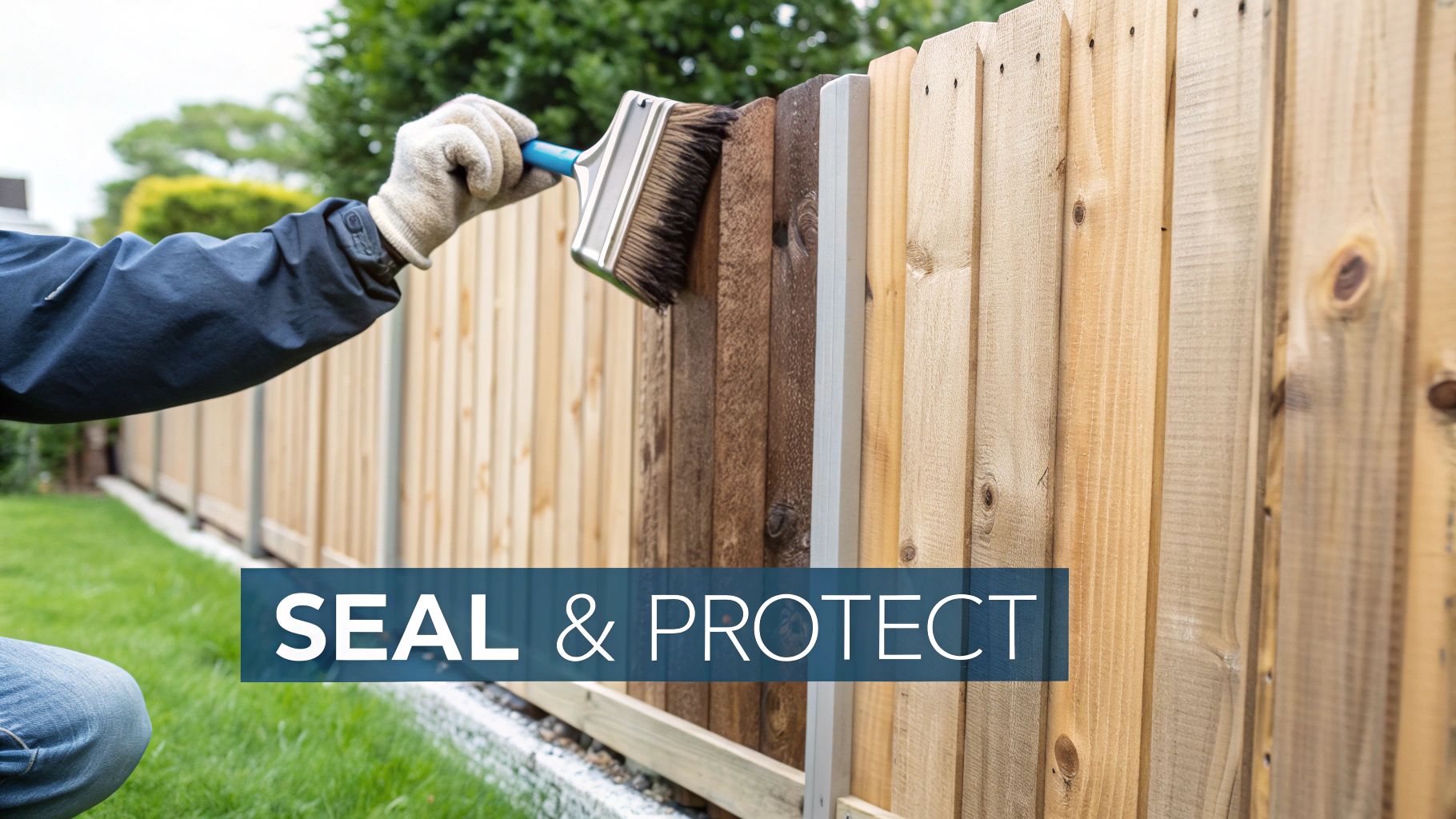
Special attention must be given to the end grain. Cutting timber exposes porous fibres that readily absorb moisture. Applying preservative generously to all cut ends significantly reduces moisture ingress and is one of the most effective preventative measures against rot.
The Protective Power of Paints and Stains
Paints and stains serve as protective barriers by forming a surface layer that limits rainwater penetration into timber. Their effectiveness depends on correct application and ongoing maintenance to prevent coating failure.
Stains penetrate into the wood fibres while allowing the natural grain texture to remain visible. Oil-based stains provide strong water repellency, while water-based alternatives offer improved colour retention and lower environmental impact.
Paint creates a thicker external barrier but requires careful maintenance. If paint cracks or peels, trapped moisture can accelerate decay. For effective protection, application should include a high-quality exterior primer followed by at least two durable topcoats to ensure resilience against UK weather conditions.
Embracing the Ancient Art of Yakisugi
Yakisugi, also known as Shou Sugi Ban, is a traditional Japanese wood preservation technique that enhances both durability and appearance. The process involves controlled surface charring of timber – traditionally cedar – using flame treatment.
The resulting carbonised layer provides natural resistance to moisture, fire, insects, and fungal decay. The heat alters the wood’s cellular structure, reducing its susceptibility to rot-causing organisms. In addition to performance benefits, Yakisugi produces distinctive textured black finishes, making it a preferred choice for premium architectural cladding and fencing projects.
Further practical guidance on timber protection methods is available in our detailed resource on protecting wood outdoors.
Zeroing In on the Weak Spots
Targeted protection is often more effective than treating an entire structure uniformly. Fence posts are a common example, as decay frequently develops at ground level where moisture, oxygen, and fungi combine.
In the UK, protective solutions have been developed for critical timber infrastructure such as utility poles. Specialised ground-line sleeves used alongside preservatives shield the most vulnerable section. Products such as Polesaver Rot-Guard™ sleeves have been shown to extend pole lifespan by more than 20 years. You can see the research behind this on Polesaver.com.
This targeted approach can also be applied to domestic garden structures. Installing post-saver sleeves on fence or gate posts before ground installation creates a waterproof and airtight barrier at the highest-risk zone. This focused strategy provides cost-effective protection by preventing decay at the point where it most commonly begins.
Look After Your Timber with a Solid Maintenance Routine
https://www.youtube.com/embed/naA3wkHJeWM
Wood rot prevention requires ongoing maintenance rather than a single intervention. Consistent inspection and care are essential to prevent minor moisture issues from developing into structural damage. A structured maintenance routine reduces long-term repair costs and preserves timber performance.
Seasonal inspections function as preventative assessments. Regular checks allow early detection of subtle warning signs. Identifying and addressing issues at an early stage ensures repairs remain manageable and cost-effective while preventing advanced fungal decay.
Your Seasonal Inspection Checklist
A structured inspection routine does not require excessive time if key risk areas are prioritised. Inspect timber elements at least twice per year, ideally in spring and autumn, when seasonal changes often reveal emerging weaknesses.
Use the following checklist during inspections:
- Probe for Soft Spots: Use a screwdriver or bradawl to test vulnerable areas such as fence post bases, decking joists, and window sills. Sound timber remains firm under pressure. Soft or spongy resistance indicates potential rot.
- Identify Water Traps: Check for areas where water can accumulate. Inspect gutters for blockages causing overflow onto fascia boards, remove debris between deck boards, and ensure soil is not built up against wooden cladding. These locations commonly initiate decay.
- Assess Protective Coatings: Examine painted or stained surfaces for cracking, peeling, or bubbling. These defects often signal trapped moisture beneath the coating. Any compromised finish should be prioritised for repair.
Knowing When It’s Time to Reapply a Finish
Protective coatings gradually degrade due to exposure to sunlight, rainfall, and temperature fluctuations. Monitoring their condition is an essential part of long-term wood rot prevention.
For decking or garden furniture, a simple water test provides a clear indication of performance. Sprinkle a few drops of water onto the surface. If the water beads, the protective layer remains effective. If it absorbs into the timber and darkens the surface, the seal has deteriorated and requires reapplication.
Reapplying a finish at the appropriate time reduces long-term workload. Light sanding followed by a fresh coat of stain or oil every few years is significantly less demanding than removing a fully failed coating and addressing early-stage decay beneath.
Maintaining an intact protective finish remains a core component of preventing wood rot on exposed timber surfaces.
Why Consistent Monitoring Matters
Maintaining a consistent inspection schedule enables early detection of moisture issues and fungal activity.
Timber decay is a recognised risk across both historic and modern UK buildings. Even landmark sites such as Hampton Court Palace and Windsor Castle manage dry rot through structured monitoring and specialist oversight, combining expert assessment with ongoing inspection protocols. You can read more about professional timber decay management at EBSSurvey.co.uk.
The same principle applies to residential properties. Early intervention reduces repair costs and prevents structural deterioration, helping ensure timber remains strong, safe, and visually sound over the long term.
Your Top Wood Rot Questions, Answered
Even with a clear prevention strategy, wood rot often raises practical concerns. Understanding the details can determine whether an issue is resolved quickly or escalates into costly structural damage. Below are common questions raised by UK homeowners, along with direct explanations to support effective timber decay management.
“Can I just paint over the rotten bit?”
No. Painting over rotten timber does not stop decay.
Applying paint to compromised wood only conceals the problem while trapping moisture and fungal activity beneath the surface. This can accelerate further deterioration rather than prevent it.
Proper remediation requires removing all affected material. Every section of soft or spongy timber must be cut or scraped back to sound, structurally solid wood. After removal, the exposed area should be treated with a wood hardener, repaired with an appropriate exterior-grade filler, and only then prepared for priming and painting.
“Do I have to replace the wood, or can I just treat it?”
The correct approach depends on the location and severity of the decay. If wet rot is limited to a small, contained area on a non-structural element – such as a window sill or decorative trim – repair is often possible.
The standard repair process includes:
- Excavate the Damage: Remove all decayed timber.
- Strengthen the Remaining Wood: Apply a wood hardener to stabilise the exposed solid timber.
- Kill the Spores: Treat the affected area with a fungicide to reduce the risk of recurrence.
- Rebuild and Finish: Use a two-part epoxy filler to restore the shape, then sand smooth before priming and painting.
If rot affects structural components such as deck joists, floorboards, or roof timbers, replacement is required. Cosmetic patching is not appropriate for load-bearing elements, as compromised structural timber poses safety risks.
“How can I tell if it’s wet rot or dry rot?”
Wet rot is more common and generally less aggressive. Affected timber becomes soft and spongy. When dried, it tends to crumble and split into small, elongated fragments. Dark discolouration is often visible, and the fungal activity typically remains confined to the persistently damp area.
Dry rot is significantly more destructive.
A key indicator is deep, cube-like cracking across the wood grain. Additional signs include white, cotton-like mycelium growth and, in advanced stages, rust-red fruiting bodies that release spores.
Because of its ability to spread and cause structural damage, dry rot requires prompt professional assessment and treatment rather than DIY repair.
If you have more specific questions, you can find more answers on our list of frequently asked questions about timber.
“I thought pressure-treated wood couldn’t rot?”
Pressure-treated timber provides strong resistance to rot, but it is not immune to decay. The treatment process forces preservatives deep into the wood’s cellular structure, forming a protective barrier against fungal attack. This significantly extends service life, particularly for timber in ground contact.
However, protection can be compromised. Cutting pressure-treated timber exposes untreated internal wood. Any freshly cut end must be sealed with an appropriate end-grain preservative to maintain full protection against moisture ingress.
Over time, preservative effectiveness gradually reduces. Periodic maintenance, including the application of a water-repellent finish every few years, helps sustain durability and extend the lifespan of treated timber.
At TimberSol, we believe long-term durability begins with selecting the right material from the outset. Our Yakisugi charred timber offers a natural, visually distinctive, and highly durable protective surface designed to withstand demanding UK weather conditions. By choosing timber with inherent resistance you establish a strong foundation for lasting performance. Explore our range of charred cladding, decking, and fencing solutions to see how traditional Yakisugi craftsmanship delivers modern protection. Learn more athttps://timbersol-backup.elnoirstudio.com.
