
UK Charred Wood Siding Cost A Complete Pricing Guide

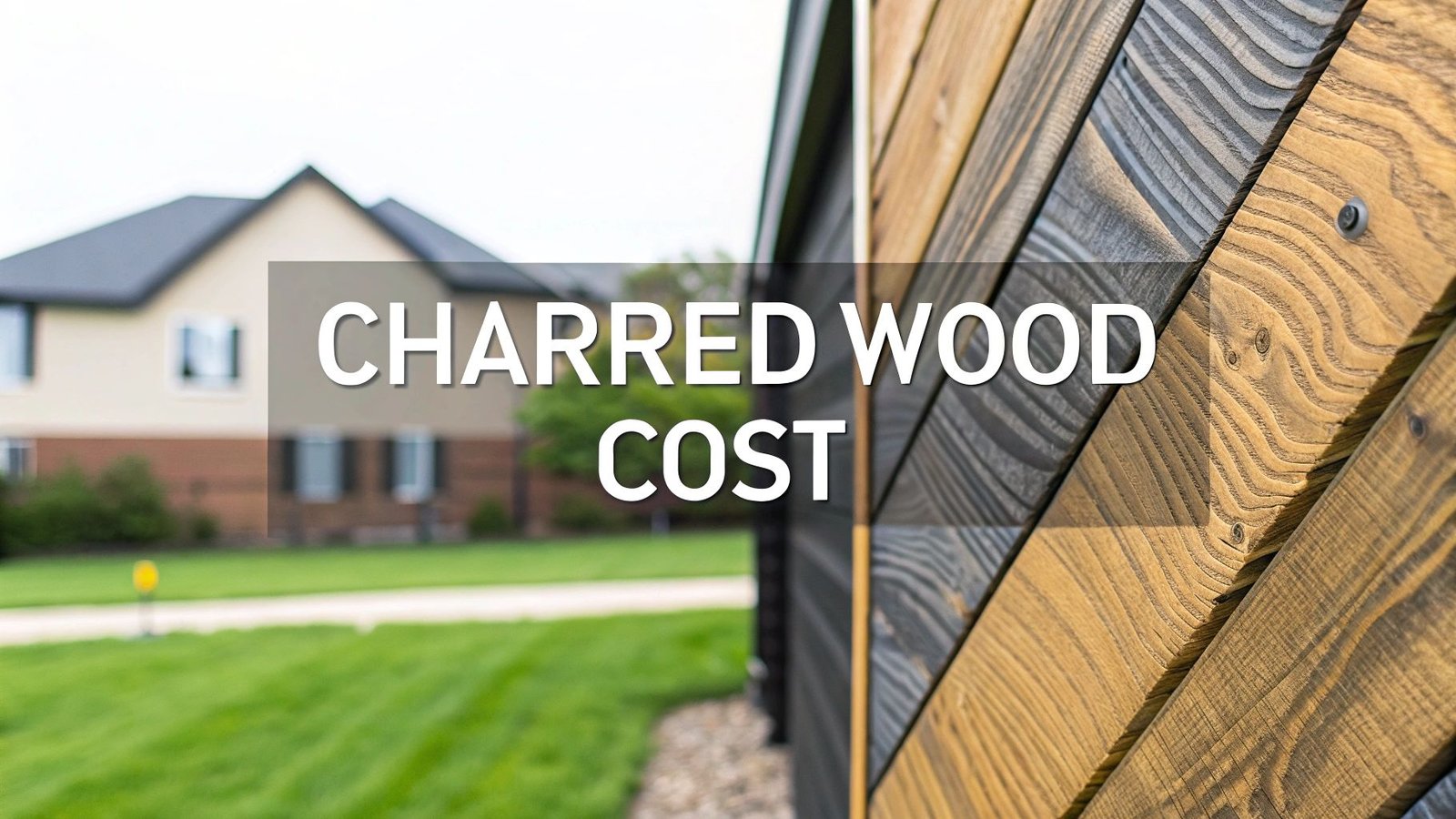
When you’re planning a new look for your building’s exterior, the cost of charred wood siding is naturally one of the first things to consider. In the UK, you can generally expect this to fall somewhere between £75 and £150 per square metre, which covers both the materials and the professional fitting. This puts it firmly in the premium category, but for that, you get an incredible aesthetic and truly impressive durability.
Your Quick Guide to Charred Wood Siding Costs
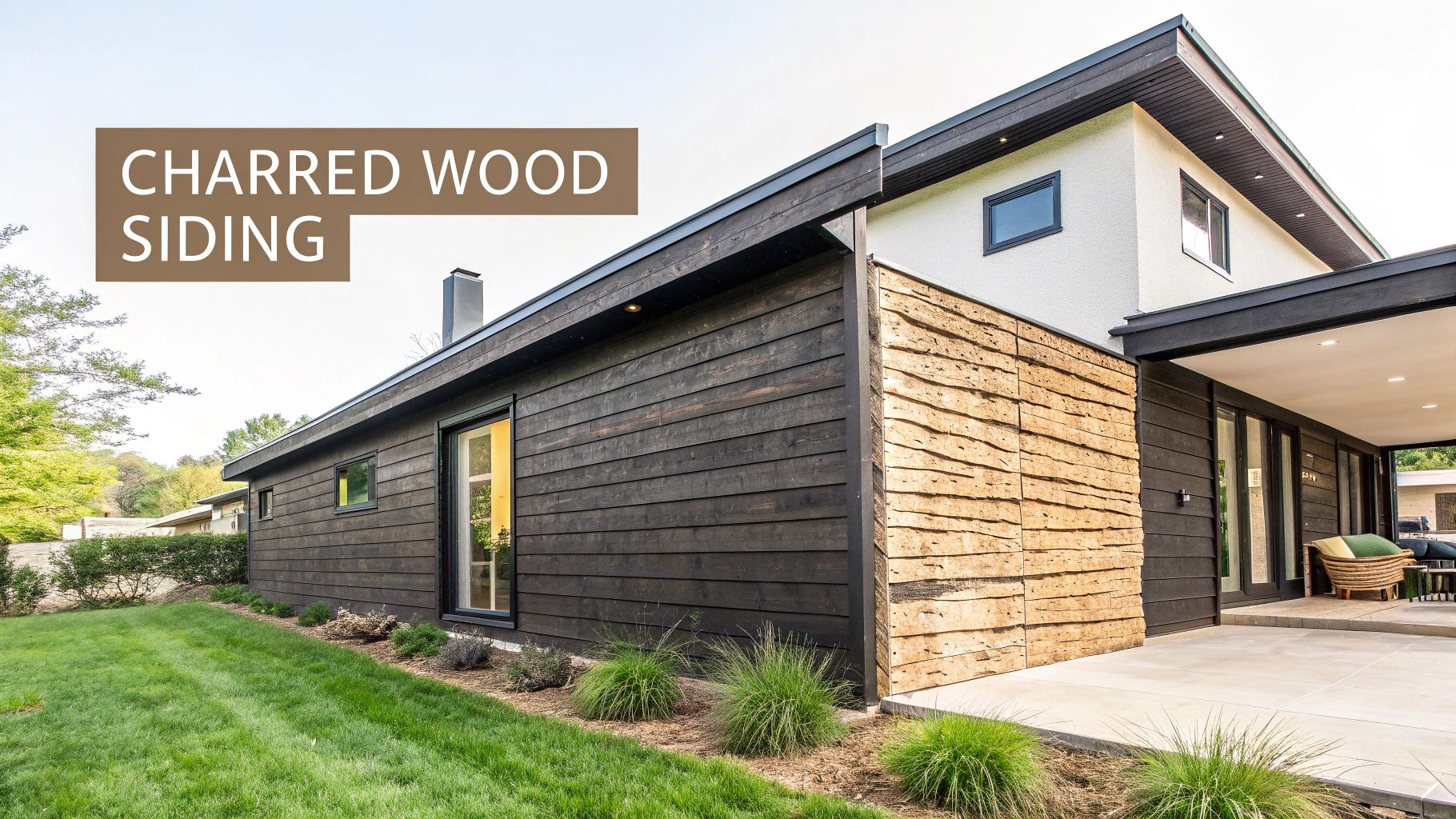
Charred wood siding, especially when done using the traditional Japanese method of Yakisugi, isn’t just another type of cladding. It’s a real statement piece, blending style with a promise of longevity.
The whole process is a craft. It involves meticulously burning the surface of the timber to create a distinctive, carbonised layer. This isn’t just for looks; this beautiful dark layer naturally shields the wood underneath. It’s this level of craftsmanship and the performance boost it provides that are reflected in the price.
Compared to more common materials like standard softwood or vinyl, charred wood sits in a higher price bracket. That £75 to £150 per square metre figure covers the specially treated material and the skilled labour needed to get a perfect finish. For a deeper dive into what goes into this cost, you can find detailed Yakisugi pricing insights on timbersol.co.uk.
It’s tempting to focus only on the initial outlay, but that doesn’t tell the whole story. The real value comes into play over the long term. That charred surface is a fantastic barrier against rot, insects, and harsh weather, meaning you’ll spend far less time and money on maintenance compared to other types of timber cladding.
UK Cladding Cost Comparison Per Square Metre
To really get a feel for where charred wood stands, it helps to see it side-by-side with other popular choices on the market. The table below gives a quick overview of what you might expect to pay for different cladding options in the UK.
| Cladding Type | Average Material & Installation Cost (per m²) | Primary Benefit |
|---|---|---|
| Charred Wood (Yakisugi) | £75 – £150 | Exceptional durability and unique aesthetic |
| Standard Timber | £50 – £100 | Natural appearance and affordability |
| Vinyl (UPVC) | £30 – £75 | Low initial cost and minimal maintenance |
As you can see, while the initial investment for charred wood is higher, its unique combination of benefits often justifies the cost over the building’s lifetime.
Ultimately, choosing charred wood is an investment. You’re paying for a high-performance, visually stunning facade that’s built to last. It’s a compelling mix of ancient technique and modern architectural design that really stands out from the crowd.
Understanding Yakisugi and Its Impact on Price
To really get your head around the cost of charred wood siding, you have to look past the simple fact that it’s burnt timber. The technique, known as Yakisugi, is an ancient Japanese craft, and it’s a world away from just taking a blowtorch to a plank of wood. It’s a carefully controlled art form that transforms ordinary timber into something stronger, more resilient, and genuinely stunning.
Think of it like this: you can buy a mass-produced table, or you can buy one handcrafted by a master carpenter. The time, skill, and deep understanding that go into properly charring each board are what give Yakisugi its value and, in turn, its premium price tag.
The process involves methodically scorching the wood’s surface with intense heat, which creates a protective carbon layer. This isn’t a job for a machine on an assembly line. It demands a real feel for how different timbers react to fire, ensuring the perfect char is achieved without damaging the wood’s core strength.
The Craftsmanship Behind the Cost
At its heart, the price of Yakisugi siding comes down to the sheer amount of skilled labour involved. Every single plank goes through multiple stages—from the initial charring to the brushing and final sealing—and each step is carried out with an expert eye. This painstaking approach is what guarantees a consistent, beautiful finish and brings out the best protective qualities of the charred layer.
This isn’t just for show. That carbon layer is a natural shield against insects, rot, and even fire, massively boosting the wood’s durability and lifespan.
What you’re really investing in is a cladding designed to last for generations with very little maintenance. So, when you look at the cost, you’re not just buying wood; you’re paying for a time-honoured technique that delivers performance far beyond standard siding. You can learn more about the specific steps in our guide to the Yakisugi technique.
The end result is a material that offers an unmatched blend of breathtaking aesthetics and practical, long-term benefits—a balance that other timber claddings just can’t strike.
Why This Ancient Art Thrives in Modern UK Architecture
There’s a good reason why Yakisugi has become so popular across the UK. Its dramatic, textured finish creates a powerful contrast against common building materials like glass, steel, and brick, allowing architects to design buildings with incredible visual depth and character.
From sleek, contemporary city homes to rustic countryside retreats, charred wood is remarkably versatile and fits beautifully into all sorts of design schemes. The final appearance can be tailored in many ways, depending on a few key choices:
- The type of wood: Different species like cedar, pine, and larch all react to the flames uniquely, producing distinct grain patterns and textures.
- The intensity of the char: You can have a deep, crackled “alligator” skin finish or a much softer, brushed-back effect that just hints at the charring.
- The final oil or sealant: This not only protects the char but can also give it a matte, satin, or even a subtly coloured tint.
This ability to customise is what makes Yakisugi a true premium product. Once you understand the craft that goes into it, the price starts to look less like an expense and more like a smart investment in your property’s future and its lasting kerb appeal.
What Goes Into the Cost of Charred Wood Siding?
When you start pricing up a charred wood siding project, you’ll quickly realise that the final figure is more than just a simple cost per square metre. It’s a combination of several key factors, each playing a significant part in the overall budget. Think of it less like buying a product off the shelf and more like commissioning a bespoke piece of work.
The total cost of charred wood siding really boils down to four main ingredients: the type of timber you choose, the specific char and finish, how complex the installation is, and even where in the country you’re located.
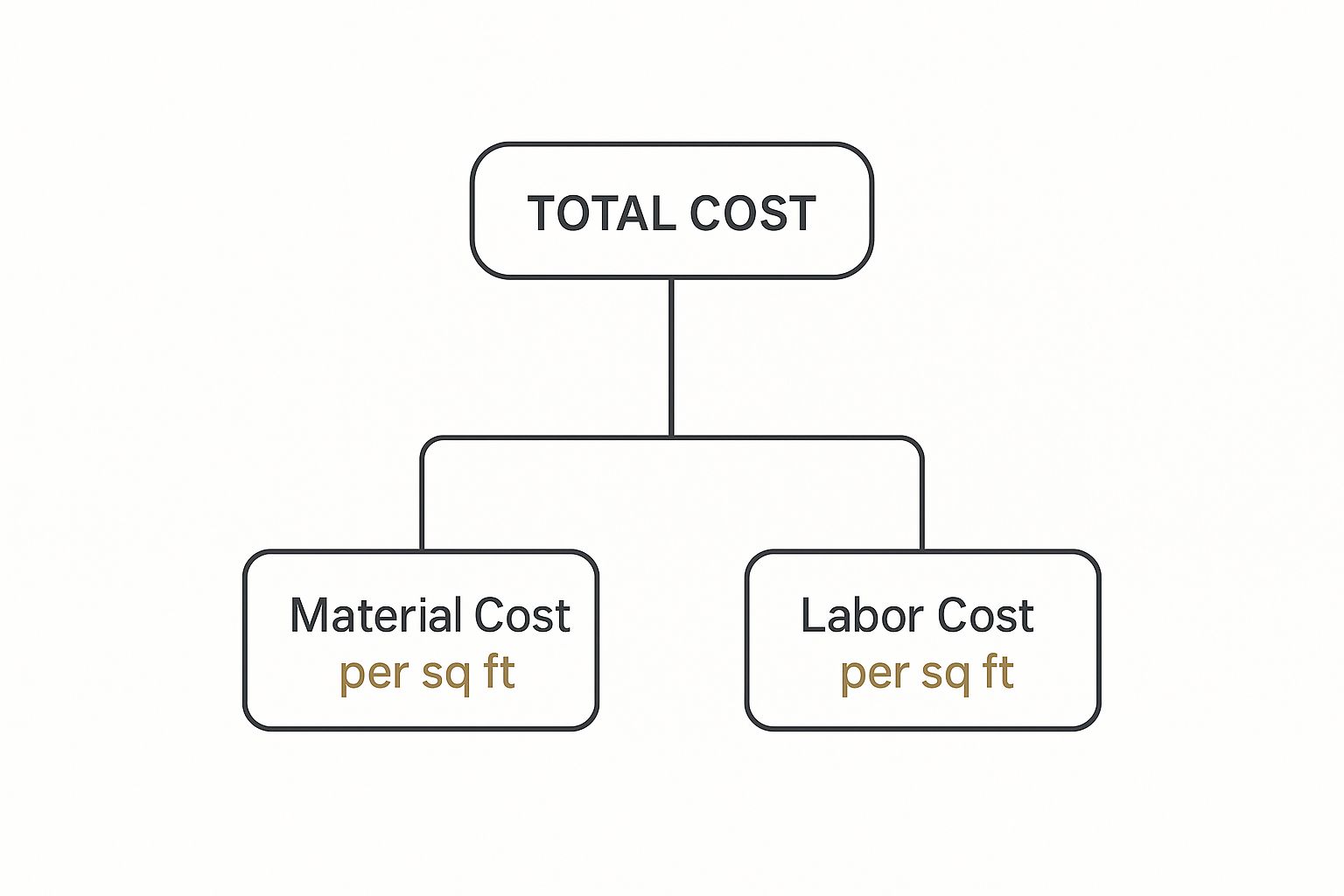
As you can see, the materials and the skilled hands needed to fit them are both major parts of the equation. Let’s break down what that means for your project.
The Timber You Choose
This is the starting point and arguably the biggest influence on your material costs. While you can technically char almost any wood, only a handful of species have the right characteristics to create the durable, beautiful finish that Yakisugi is famous for.
In the UK, you’ll most commonly come across these options:
- Cedar: This is often seen as the premium choice. Species like Western Red Cedar are naturally resilient and stable, making them perfect for the charring process. That quality, of course, comes at a higher price.
- Larch: A fantastic, hard-wearing alternative. Siberian Larch, in particular, is a popular pick because it offers great longevity and a striking grain without the premium cost of cedar.
- Pine: If you’re working with a tighter budget, certain types of pine, like Thermally Modified Pine, are a great way in. They might not be as dense as the others, but modern treatments make them a solid and attractive choice.
It’s also worth remembering that timber prices aren’t static. The market fluctuates. For instance, data from Timber Development UK showed the timber price index dropped from 129.31 in September 2022 to 107.87 just a year later – a fall of about 17%. These shifts directly affect material costs, so always work with up-to-date quotes. You can read more about timber market trends in the UK to get a better feel for this.
The choice of wood species is a balancing act between aesthetics, durability, and budget. The table below gives a quick overview of how different timbers stack up.
Cost Influence of Different Wood Species
| Wood Species | Relative Cost | Key Characteristics |
|---|---|---|
| Cedar (e.g., Western Red) | High | Naturally durable, stable, and rot-resistant. Considered the premium standard for Yakisugi. |
| Siberian Larch | Medium | Very dense and robust. A hard-wearing, cost-effective alternative to cedar with a beautiful grain. |
| Thermally Modified Pine | Low-Medium | Budget-friendly option. Thermal modification improves its stability and resistance to decay. |
As you can see, what you gain in budget-friendliness with a wood like pine, you trade for the inherent natural resilience found in cedar. Each has its place depending on the project’s goals.
Char Intensity and Finish
Once you’ve picked your timber, the next cost factor is how it’s treated. This is where the real craft of Yakisugi shines through, and that extra labour and expertise are reflected in the price.
A deep, dramatic “alligator” char, for example, leaves a thick, protective layer of carbon that needs very careful handling. On the other hand, a lighter char that’s then heavily brushed back to reveal the grain below involves more hands-on processing.
The level of brushing and the type of oil or sealant applied are not just aesthetic choices. They contribute to the labour-intensive nature of producing finished Yakisugi boards, directly impacting the material cost.
Each step—the charring, the brushing, the oiling—adds time and skill to the process, and this is built into the final price of the boards you buy.
Installation and Regional Rates
Finally, we get to the fitting. The cost here is hugely dependent on two things: the complexity of your building and the going rate for skilled labour in your area.
Cladding a simple, flat-faced bungalow will be much quicker, and therefore cheaper, than tackling a three-storey home with lots of corners, windows, and fiddly architectural details. Every cut, every corner, and every join takes time.
On top of that, labour rates vary wildly across the UK. You can expect to pay a fair bit more for a carpenter in London and the South East than you would in other parts of the country. Your postcode has a direct impact on the final quote you’ll receive for installation.
What to Expect from Professional Installation Costs
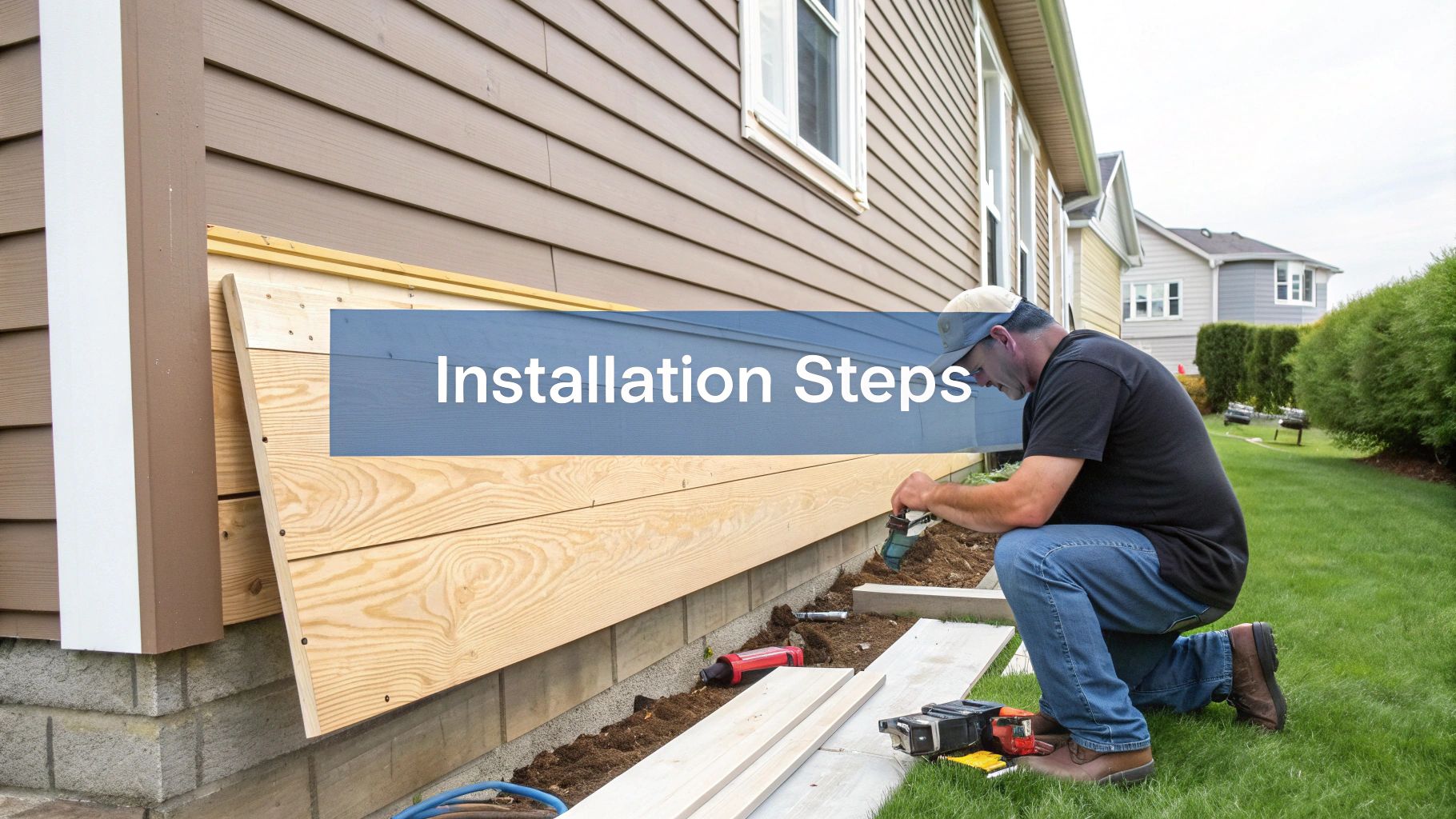
When budgeting for your project, it’s easy to focus on the price of the wood itself, but the labour involved in fitting charred wood is a significant and often underestimated part of the total bill. Installing this specialised siding is a world away from fitting standard cladding, and that difference in skill is directly reflected in the charred wood siding cost.
Unlike regular timber, Yakisugi needs careful handling to protect its delicate carbonised surface. That char layer, while tough against the elements, can be surprisingly brittle. An installer without the right touch can easily cause chips, scratches, or even smudges, which means wasted materials and a finish that looks patchy.
This isn’t a job that can be rushed. Each board must be measured, cut, and fitted with a level of precision that honours the material.
The Specialist Skills Required
Fitting charred wood is a craft, plain and simple. A professional team with real-world Yakisugi experience knows exactly what it takes to get a flawless, long-lasting finish.
Their expertise really shines in a few key areas:
- Handling: They know how to move and position each board without marring the delicate, sooty surface.
- Cutting: Using the right blades and techniques is vital for clean cuts that don’t cause the char to splinter or flake away.
- Fixings: They’ll choose the correct stainless steel nails or screws and know exactly where to place them to allow for the wood’s natural movement while preventing ugly rust streaks down the line.
Trying to save a bit of cash with a DIY attempt or by hiring a general builder who’s never worked with Yakisugi is often a false economy. Mistakes are not only expensive to fix, but they can also seriously compromise the weather resistance and lifespan of your beautiful new facade.
A professional installer isn’t just fitting wood; they are preserving the integrity of a highly specialised finish. Their expertise is your best insurance against future problems and ensures the final result matches your vision.
Typical UK Installation Costs
So, what should you set aside for the labour? Here in the UK, you can expect professional installation for charred wood siding to range from £40 to £80 per square metre. Of course, this can shift depending on where you are in the country and how complex the design of your property is.
When you get a quote, make sure it’s properly itemised. A reputable contractor will break down the costs for materials, labour, fixings, waste disposal, and any scaffolding needed. Be cautious of quotes that just give you one vague, all-in figure.
Ultimately, investing in a specialist is about making sure your stunning charred wood siding performs as brilliantly as it looks for many, many years.
The Long-Term Value of Charred Wood Siding
It’s easy to look at the initial charred wood siding cost and stop there. But to really understand its financial impact, you have to look at the bigger picture—one that unfolds over decades. That’s where you start to see the impressive long-term value and how that initial premium pays for itself.
The Yakisugi process does more than just create a stunning finish; it actually forges a natural, resilient shield around the timber. This carbonised layer is a fantastic deterrent against all the usual suspects that give wood siding a bad name: moisture, rot, and pesky insects. This built-in durability is what leads directly to significant savings down the road.
Resisting the Elements and Minimising Maintenance
Think about standard timber cladding for a moment. It often needs a fresh coat of paint, stain, or sealant every few years to keep it looking good and performing well. Charred wood, on the other hand, stands strong with very little help from you. The char layer provides robust protection against UV degradation, meaning it won’t weather and fade nearly as quickly as untreated wood.
This incredible resilience means you get to skip the recurring costs and labour that come with typical siding upkeep. Yes, charred wood siding is more expensive upfront here in the UK, but its longevity and low-maintenance nature bring that investment into balance. The charring process can extend the life of timber cladding by 20-30 years or more compared to untreated wood. For a broader look at how different cladding costs compare over time, it’s worth reviewing detailed house cladding cost guides.
This isn’t just about saving money; it’s about saving you time and hassle for years to come.
By investing in a material that naturally protects itself, you are effectively pre-paying for decades of durability and peace of mind, transforming an initial expense into a long-term asset for your property.
A Smart Investment in Your Property’s Future
The longevity and minimal upkeep of charred wood also have a knock-on effect on your property’s value. A high-quality, durable, and visually striking exterior is a major selling point. It immediately signals quality and low future costs to any potential buyer.
This is exactly why looking at the charred wood siding cost as a long-term investment is so crucial. When you start adding up the money you won’t be spending on treatments, repairs, and eventual replacements, Yakisugi often comes out as the more sensible, cost-effective choice over its entire lifecycle. To see the full list of performance advantages, take a look at our detailed overview of charred wood siding benefits.
Ultimately, choosing charred wood is about prioritising lasting quality. It’s an investment in a facade that will not only hold its beauty but will also protect your home for a lifetime, asking for very little in return.
How to Budget for Your Siding Project
Getting your finances in order is the first real step towards making that charred wood dream a reality. Think of your budget as a roadmap for the project – it’s what will guide you from the initial idea to a stunning finished home, all without any nasty financial surprises along the way.
The best place to start is with a tape measure. You need to work out the total square meterage of the exterior walls you want to cover. Don’t forget to subtract the area taken up by windows and doors! Getting this measurement right is vital, as pretty much everything, from the timber itself to the labour, is priced per square metre.
Building Your Financial Plan
Once you have your measurements, you can start asking specialist installers for quotes. I always recommend getting at least three different quotes. This gives you a much clearer picture of what the going rate is in your area and helps you understand the average charred wood siding cost for a project of your size.
Here’s a golden rule I always tell people: add a 10-15% contingency fund on top of your final estimated cost. This isn’t an excuse to overspend. It’s your safety net for those unexpected problems that can pop up, like discovering a bit of rot that needs fixing or getting your material calculations slightly off.
To make things easier, here’s a simple checklist to make sure you’ve thought of everything:
- Material Quantity: Get an accurate count of how much siding you’ll need. A handy online board calculator can give you a really precise number of boards for your specific project.
- Labour Costs: Make sure any quote you get breaks down the cost of the professional installation. You want to see exactly what you’re paying for.
- Extra Supplies: Remember to account for things like battens, fixings (stainless steel screws are a must), and any special trims for corners or edges.
- Contingency Fund: As mentioned, set aside that extra 10-15% of the total project cost. You’ll be glad you did if you need it.
- Waste Removal: Check if your installer’s quote includes the cost of a skip or disposing of all the offcuts and old materials.
Let’s put that into perspective. Imagine you’re cladding a typical semi-detached house in the UK with about 80 square metres of wall. If the all-in cost averages out to £115 per m², your starting point is £9,200. By adding a 15% contingency (£1,380), your total project budget becomes £10,580. Now you’re properly prepared for a smooth and successful installation.
Got Questions About Charred Wood Siding? Let’s Clear Things Up
It’s completely normal to have a few lingering questions when you’re looking at a material as distinctive as charred wood. Getting to grips with the finer points of Yakisugi cladding is the best way to understand its true value and decide if it’s the right choice for your home and your wallet.
One of the first things people ask is whether they can save on the charred wood siding cost by doing it themselves. It’s a tempting thought, but charring timber is a real craft. It demands a very specific skill set to get the heat just right, ensuring you protect the wood without compromising its strength.
A professional finish guarantees that beautiful, durable result you’re after. Going the DIY route, on the other hand, can easily lead to a patchy finish and a pile of expensive, wasted timber.
How Does It Hold Up in the UK Weather?
Longevity is another big question, and a fair one given our climate. Properly crafted Yakisugi (also known as shou sugi ban) is incredibly resilient, often lasting for 80 years or more, even against the unpredictable British weather. That carbon layer on the surface acts as a natural, built-in shield against moisture and UV damage.
It’s also famous for being low-maintenance, and that reputation is well-deserved. Forget the constant cycle of staining and painting that comes with standard timber cladding. Charred wood just needs a gentle clean now and then. You might choose to re-apply a coat of oil every 10 to 15 years to keep the colour rich, but this isn’t strictly necessary for its protective function.
The real beauty of Yakisugi is its long-term value. The minimal upkeep over its incredibly long lifespan often means the higher initial cost pays for itself when compared to other siding materials.
So, how does it stack up against other high-end, non-wood options? Materials like aluminium or composite cladding can be in a similar price range, but they simply don’t offer the same organic texture, depth of colour, and unique character. Ultimately, the decision comes down to what you value more: a one-of-a-kind natural aesthetic or a more uniform, manufactured look.
Ready to explore the timeless beauty and durability of charred timber for your project? The team at TimberSol provides expert guidance and premium Yakisugi products to bring your vision to life. Discover our range of charred timber solutions at timbersol.co.uk.
