
Cladding or Render: Which Is Better for Your Home?

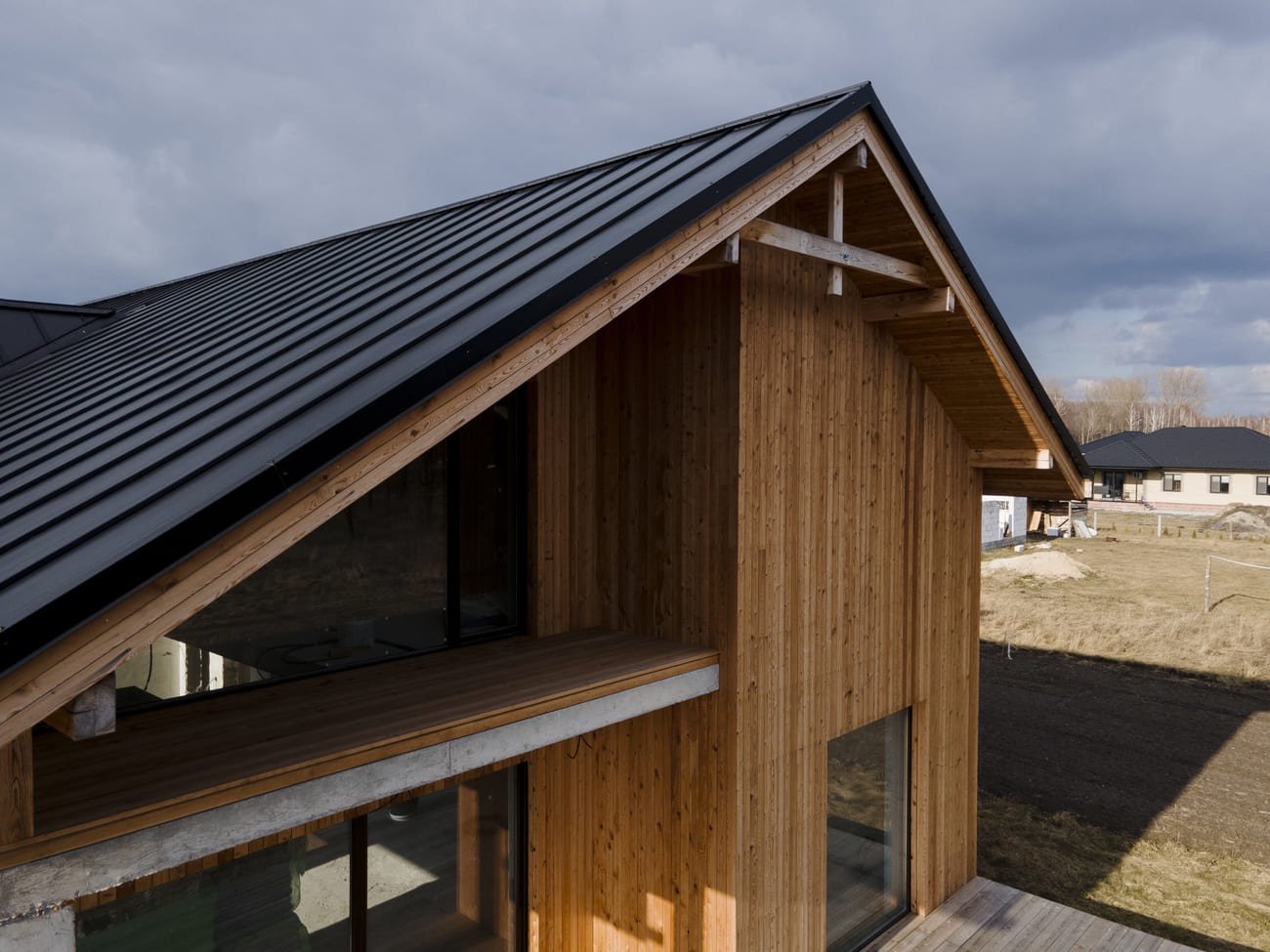
Cladding and render are often compared as if one is clearly better than the other. In reality, both serve the same purpose: protecting your home’s exterior while improving its appearance. The difference lies in how they provide that protection, how they age, and what level of maintenance they may require over time.
For some, render’s smooth, seamless finish and lower upfront cost make it an attractive choice. Others prefer the warmth, texture, and design flexibility that cladding can bring to a property’s exterior. Neither approach is inherently superior, but each comes with its own trade-offs in terms of maintenance, durability, insulation performance, and long-term value.
Understanding those differences before making a decision can help save time and money in the long run. In this guide, we’ll compare cladding and render side by side to help you determine which option may best suit your property, budget, and expectations.
Cladding vs Render: Which Is Better for Your Home?
Neither finish is universally better; the right choice depends on your budget, the appearance you want to achieve, and how much maintenance you are willing to undertake. Both help protect the wall behind, so the decision usually comes down to your priorities rather than a clear winner.
The rule of thumb is simple. Cladding generally offers greater design flexibility, more texture options, and potentially improved insulation performance, while render is often chosen for its clean, seamless finish and typically lower upfront cost.
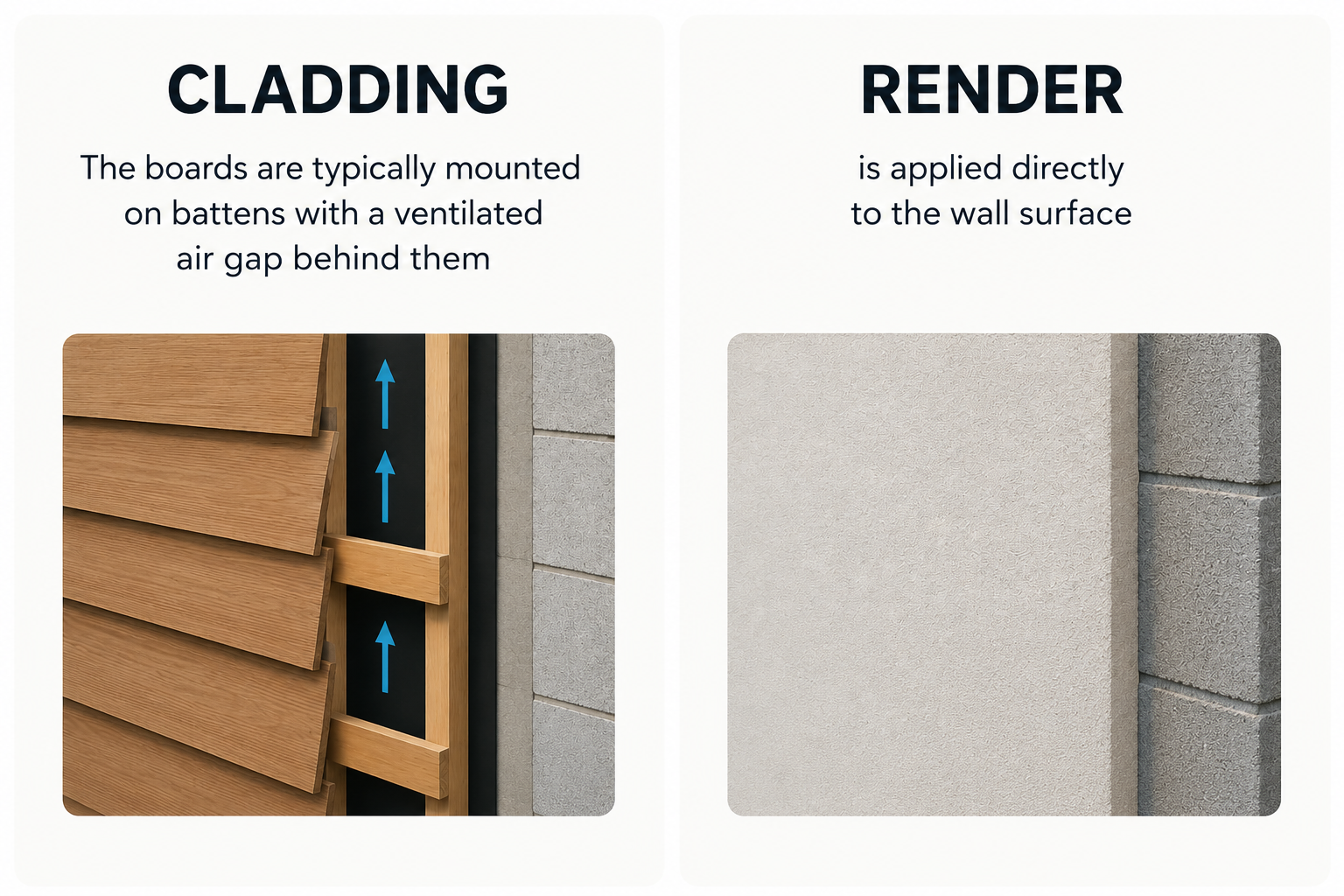
Cladding is a system of boards or panels that may be made from timber, composite materials, PVC, stone, or metal. The boards are typically mounted on battens with a ventilated air gap behind them, which helps the wall manage moisture and allows water to drain away.
Render is a wet-applied coating, typically made from cement, acrylic, or silicone-based materials, that is applied directly to the wall surface. It forms a continuous finish across the elevation.
That structural difference matters because it influences how each finish may deteriorate and how repairs are typically carried out. Cladding generally functions as a layered, ventilated rainscreen system, so damaged boards can often be replaced individually. Render acts as a bonded surface finish, meaning cracks may require patch repairs or the recoating of affected areas.
Both are also commonly used finishes for External Wall Insulation (EWI) systems. As a result, choosing between them can form part of an insulation upgrade rather than simply a cosmetic improvement.
So before comparing cost and upkeep, consider what you value most: a uniform painted finish or the natural depth and warmth of timber cladding.
Cladding vs Render: Cost Comparison (2026 UK)
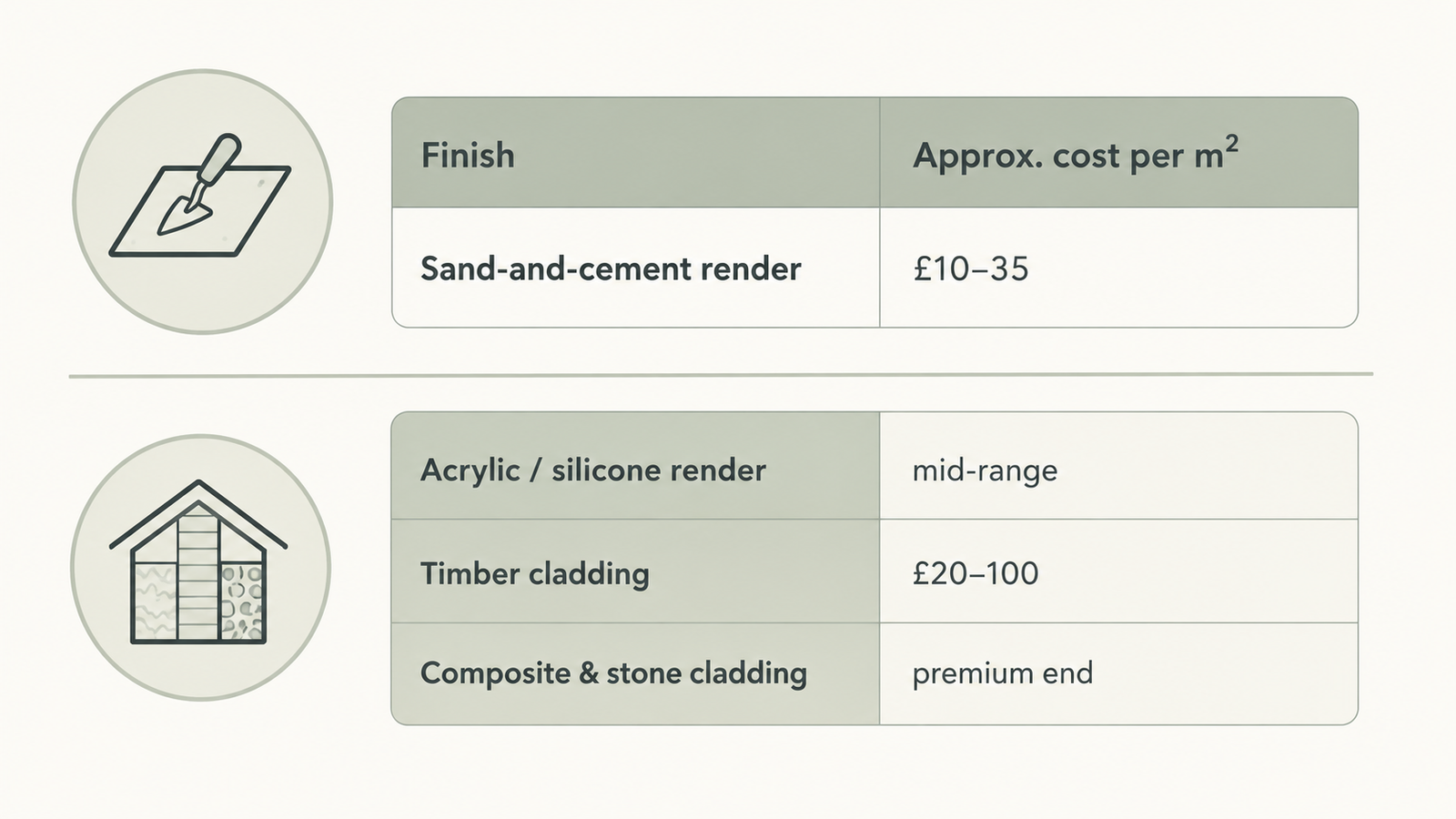
Render is generally less expensive upfront, with basic sand-and-cement render typically sitting at the lower end of the cost range. Cladding covers a much wider price range because material selection is often the main factor influencing overall cost.
The figures below are approximate and provided for general guidance only.
| Finish | Approx. cost per m² |
| Sand-and-cement render | £10–35 |
| Acrylic / silicone render | mid-range |
| Timber cladding | £20–100 |
| Composite & stone cladding | premium end |
Actual quotes can vary by region, scaffolding requirements, wall condition, and local labour rates, so two similar homes may receive noticeably different estimates.
Premium cladding materials, such as cedar, oak, or charred timber, typically cost more upfront. However, they may offer a longer service life and, when combined with insulation behind the battens, can contribute to improved thermal performance. As a result, they may provide better long-term value rather than simply reducing initial costs.
Cladding can also involve additional costs, as battens, fixings, finishing trims, and scaffolding all contribute to the overall installation price. Render typically requires fewer of these components, but it depends on suitable weather conditions for curing, so prolonged wet or cold periods may extend the installation timeline.
For a detailed breakdown, see our guide to house cladding costs. For larger exterior projects, available finance options may help spread the cost over time, potentially making premium finishes more accessible without necessarily compromising on quality.
Pros and Cons of Cladding vs Render
Each finish has its own advantages and limitations, so comparing them side by side can help you choose the option that best suits your property, budget, and maintenance preferences.
Pros and Cons of Cladding
Cladding offers greater design flexibility than render, with a range of materials and profiles that can provide a variety of visual effects. Boards are available in styles such as shiplap, shadow gap, and feather edge, helping to add texture and depth to a property’s exterior.
The ventilated cavity behind the boards helps manage moisture and allows airflow behind the cladding. Some timber cladding options can be left to weather naturally, developing a silver-grey appearance over time. Charred Yakisugi timber can offer additional durability, as its carbonised surface may help improve resistance to moisture, decay, and insect attack while providing a relatively low-maintenance finish.
There are trade-offs to consider, however. Cladding typically costs more upfront, and some softwood species may require regular treatment to help reduce the risk of rot, weathering, or splitting over time.
Fire performance requirements may also be an important consideration for certain types of buildings. In some conservation areas or for listed properties, planning permission or other approvals may be required before external alterations are carried out.
Performance depends heavily on the correct installation of the batten cavity and ventilation gap, as this rainscreen detail helps manage water ingress and protect the wall structure over time.
Pros and Cons of Rendering
A clean, seamless finish is one of rendering’s main strengths, giving elevations a uniform, contemporary appearance. Render is also available in a wide range of colours and typically sits at the lower end of the cost range, making it one of the more affordable upfront options.
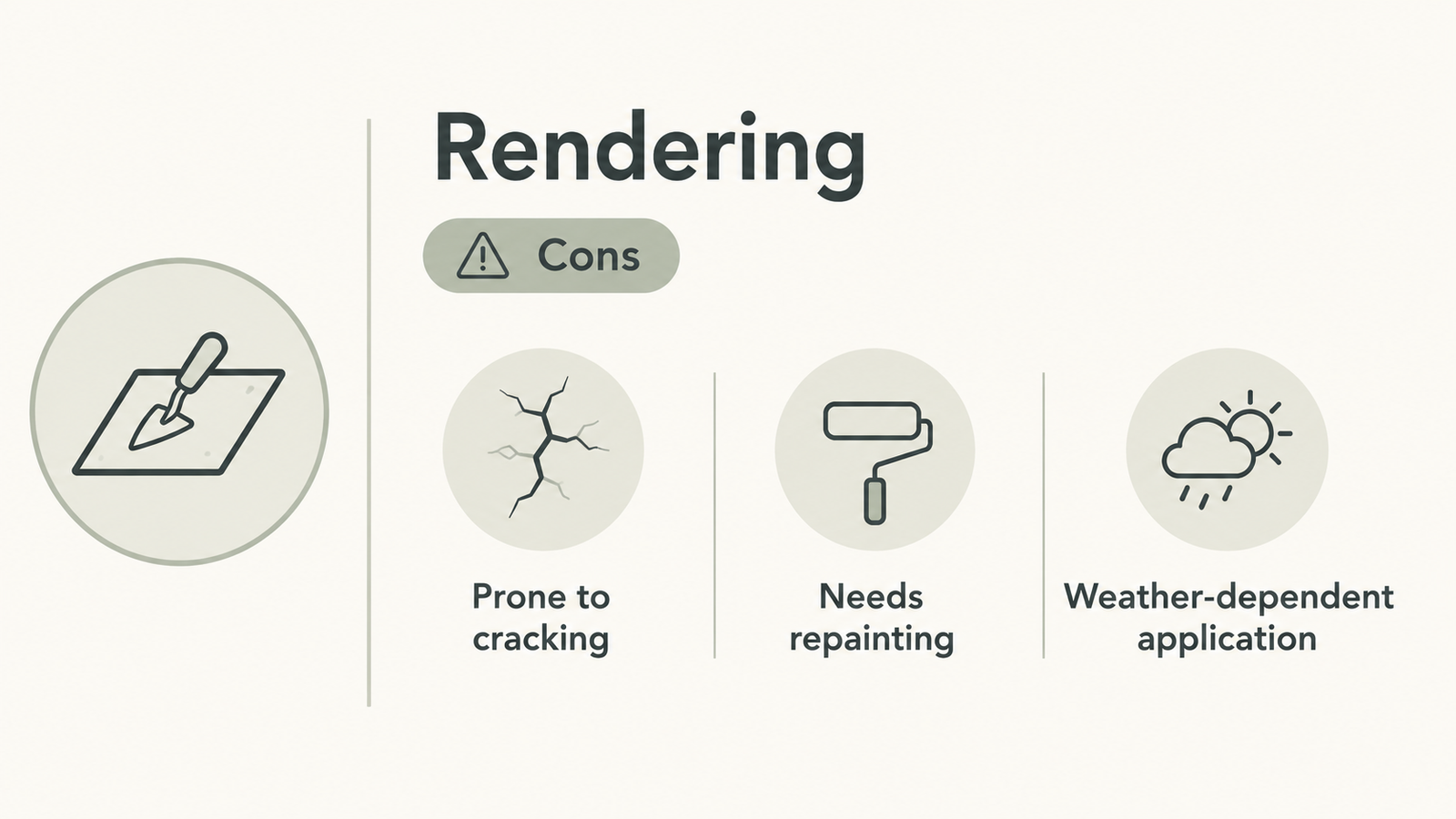
The downside lies in how it ages. Traditional sand-and-cement render can be prone to cracking as buildings naturally move and settle, and it may require repainting periodically. Application is also weather-dependent, as wet or cold conditions can slow curing and extend installation times.
Flexible silicone thin-coat render is generally more resistant to cracking and may require little maintenance beyond occasional cleaning, although it typically costs more than basic cement render.
One further consideration is maintenance. Render can show algae growth and staining on shaded or damp elevations, so north-facing walls may require periodic cleaning to maintain their appearance.
Maintenance, Durability & Thermal Efficiency Compared
The clearest contrast between the two finishes is not necessarily which lasts longer, but how each system ages and how much maintenance it may require over time. That difference can have a significant impact on the total cost of ownership over the long term.
Render ages as a bonded surface finish. Traditional sand-and-cement render may provide a service life of around 15–25 years, although this can vary depending on installation quality, exposure, and maintenance. It may also require periodic repainting, as its relatively rigid nature can make it more susceptible to cracking as buildings move and settle.
Silicone thin-coat render is generally more flexible and resistant to cracking. Some systems are offered with warranties of up to around 25 years, depending on the manufacturer and installation conditions, and they may require little maintenance beyond occasional cleaning if algae or surface staining develops.
Timber cladding behaves differently because it relies on movement, not coatings. Class 2/3 heartwood survives untreated and weathers naturally to a silver-grey finish. Its movement is driven by humidity, settling near 16% moisture content in UK conditions, which a ventilated batten cavity manages behind the boards.
Thermal performance depends heavily on what sits behind the finish. Render bonds tightly over External Wall Insulation (EWI) to form a continuous insulated layer, while cladding with insulation behind the battens can also provide strong thermal performance. Uninsulated cladding alone, however, offers limited thermal benefit.
Both finishes weatherproof the wall, but they do so through different principles. Render forms a protective outer layer, whereas cladding works on the rainscreen principle, using a ventilated air gap to help manage water and allow the structure to dry out.
The practical takeaway is simple. Choose render if you prefer a uniform appearance and relatively low maintenance, or choose charred timber cladding for its natural character, breathability, and distinctive finish.
Cladding or Render: FAQ
What Is Better, Cladding or Render?
Neither finish is universally better. Cladding generally offers greater design flexibility and can be combined with insulation systems to achieve strong thermal performance, while render is often chosen for its clean, seamless appearance and typically lower upfront cost. The right choice depends on your priorities rather than a fixed rule.
A simple decision rule can help: choose render if your budget is limited and you want a uniform, contemporary finish, or choose cladding if you value natural texture, breathability, and a distinctive appearance. Maintenance requirements can often influence the decision, as each finish ages differently.
Is It Cheaper to Clad or Render?
Render is generally cheaper upfront, with sand-and-cement render sitting at the lower end of the cost range. Its bonded application typically uses fewer components than a battened cladding system, which can help reduce initial costs.
Premium cladding such as cedar, oak, or charred timber costs more at the outset, but it may offer a longer service life and can contribute to improved thermal performance when paired with External Wall Insulation (EWI). As a result, the higher upfront investment may provide better long-term value.
What Are the Disadvantages of Cladding?
Higher upfront cost is often one of the main drawbacks, followed by ongoing maintenance requirements for some timber species, fire-performance considerations, and possible planning permission requirements in conservation areas or for listed buildings. These factors vary depending on the material and location.
Durable options reduce many of these concerns. Naturally durable heartwood and charred (Yakisugi) timber can resist rot and weathering with relatively little upkeep, as the protective carbon layer may help protect the surface from moisture and insect attack.
Can You Combine Cladding and Render on the Same House?
Yes, combining a rendered base with timber or composite cladding feature panels is a popular contemporary design approach. This combination can help homeowners balance cost and appearance across different elevations.
For example, render can be used on the main walls as a cost-effective finish, while timber cladding highlights a feature gable or entrance. Using render on the main walls can help reduce upfront costs, while cladding adds texture and visual interest in key areas. The result is a layered design that avoids the cost of cladding the entire property.
For homeowners leaning toward the natural warmth and breathability of timber, charred cladding offers a relatively low-maintenance finish that weathers gracefully over time. At TimberSol, we craft Yakisugi (Shou Sugi Ban) cladding in species such as larch, oak, and Accoya. Through a controlled surface-charring process, a protective carbon layer is formed that can help improve resistance to moisture, rot, and insect attack. The timber is then sealed with a brushed oil finish to create a refined, long-lasting appearance.
Whether you are rendering a base elevation or cladding an entire extension, our charred timber finishes bring character that paint and render cannot easily replicate. Order a sample to experience the finish in person, request a quote for your project, and let our team guide you through profile, shade, and installation options from start to finish.
