
Larch vs Cedar Cladding: Appearance, Durability, Cost & Which to Choose

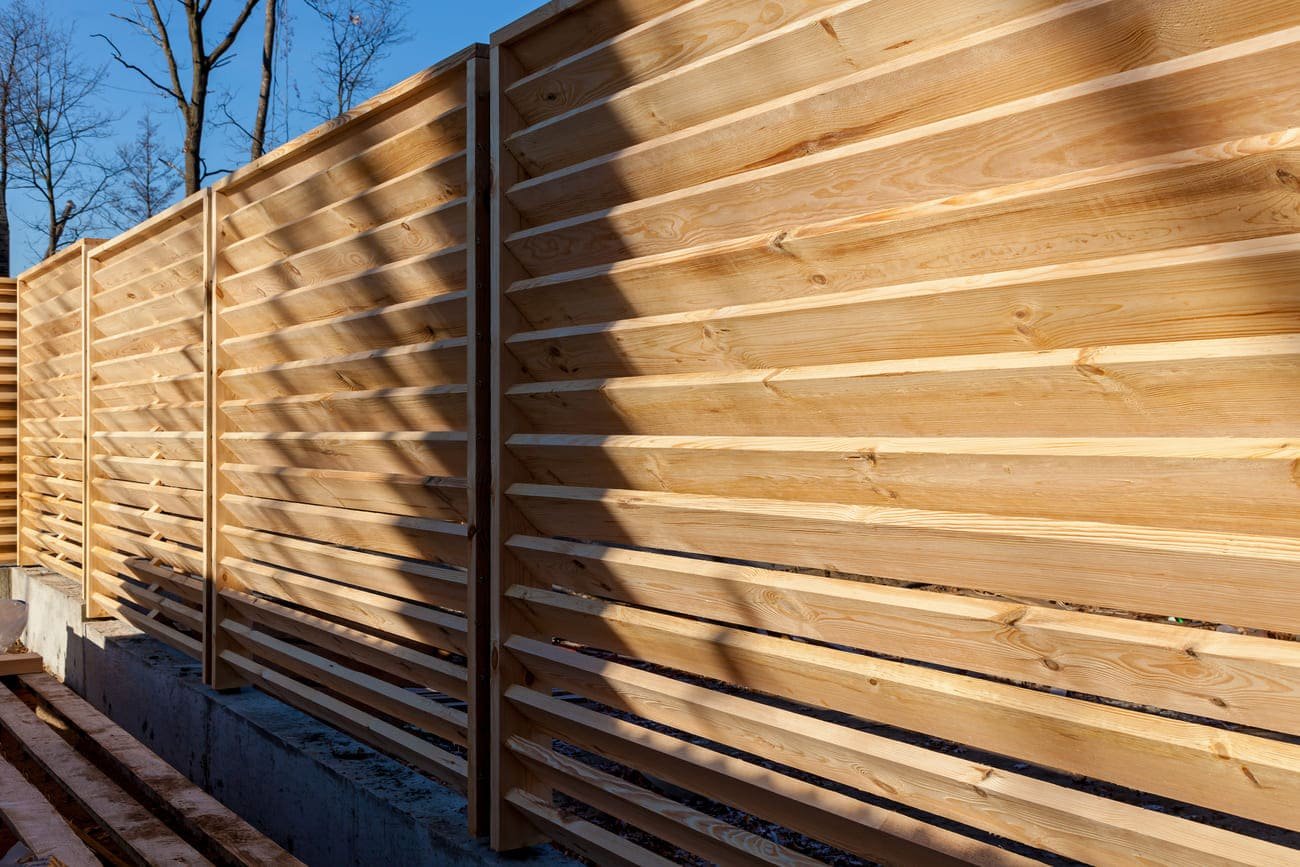
At first glance, larch and cedar cladding seem remarkably similar. Both are popular natural timbers, weather beautifully over time, and have a proven track record in residential and commercial projects. Yet beneath those similarities lie important differences that can affect everything from installation costs to long-term performance.
Larch is typically chosen for its strength, durability, and value. Cedar, meanwhile, is prized for its stability, lighter weight, and refined appearance. Neither is universally better, but each excels in different situations depending on the design, budget, and performance requirements of a project.
In this guide, we’ll compare larch and cedar cladding side by side, looking at appearance, durability, lifespan, maintenance requirements, and cost to help you determine which timber is the better fit for your project.
What Are Larch and Cedar Cladding? Key Differences at a Glance
Larch is harder, denser, and cheaper, while Western Red Cedar is more dimensionally stable, lighter, and slightly more durable. The better choice depends on whether budget and hardness matter most or whether stability and a warm, even tone are the priority.
European larch and Siberian larch are fast-growing, resinous softwoods widely sourced across the UK and Europe. Both display golden to honey-brown tones with characterful, frequent knots, making larch a value-led cladding timber.
Western Red Cedar is typically imported from North America, particularly Canada. As a slow-grown softwood, it offers a warm reddish-brown colour and a fine, knot-light grain prized for clean façades.
| Property | European Larch | Western Red Cedar |
| Colour | Golden to honey-brown | Warm reddish-brown |
| Janka hardness | 740 lbf | 350 lbf |
| Density | 575 kg/m³ | 370 kg/m³ |
| BS EN 350 durability | Class 3 (Moderately Durable) | Class 2 (Durable) |
| Volumetric shrinkage | 12.5% | 6.8% |
| Indicative lifespan | 30+ years | 40+ years |
| Relative cost | Lower | Higher |
| Weight | Heavier | Lighter |
Both species can be installed untreated for exterior cladding, provided the perishable sapwood is excluded. Left unfinished, both timbers weather to a silver-grey patina as UV light breaks down the surface lignin.
For buyers seeking colour stability with minimal upkeep, charred larch offers a distinctive alternative that is worth considering alongside these natural options.
Appearance, Durability and Lifespan: Larch vs Cedar Compared
Appearance and Weathering
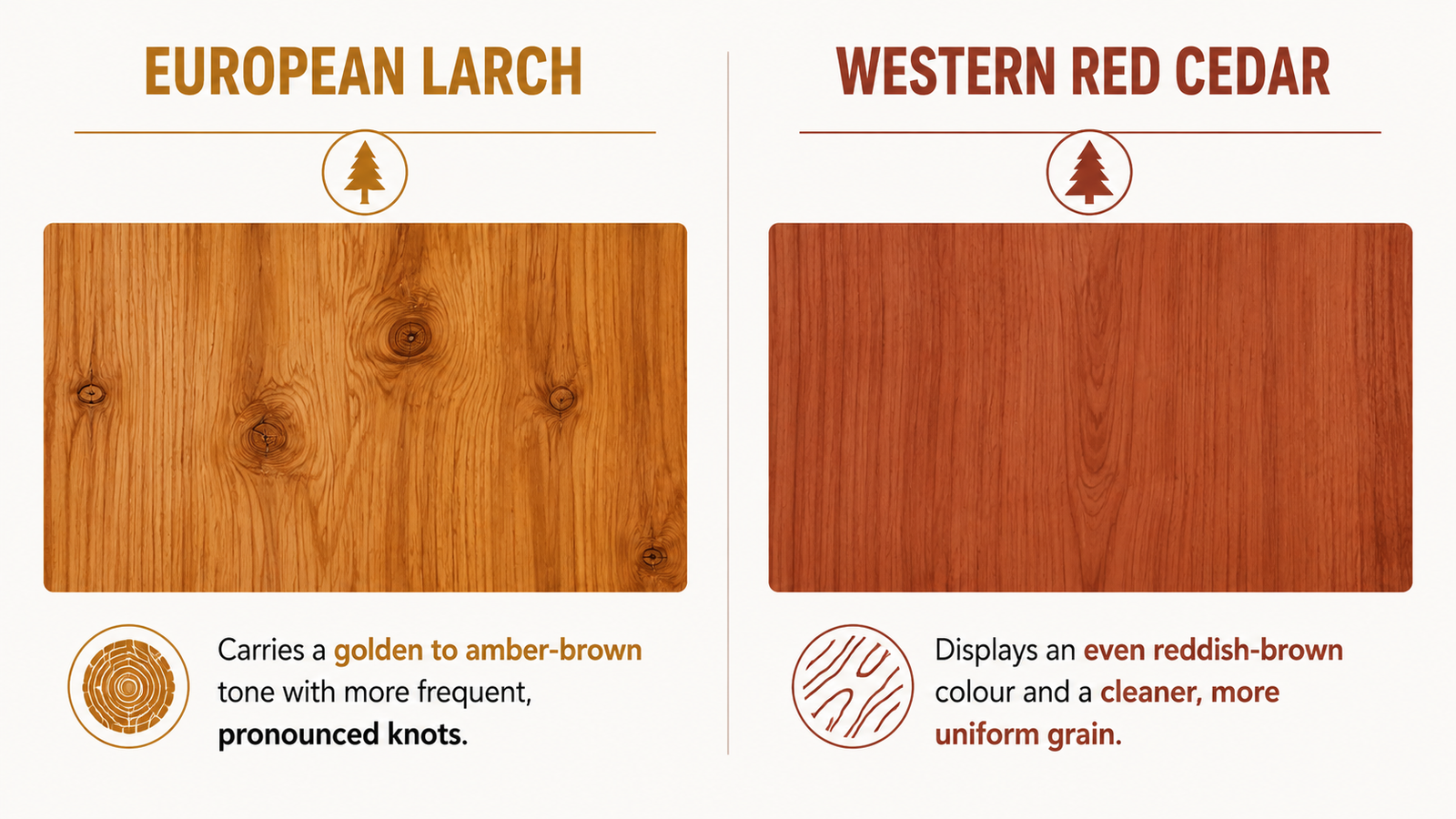
European larch carries a golden to amber-brown tone with more frequent, pronounced knots, while Western Red Cedar displays an even reddish-brown colour and a cleaner, more uniform grain. This contrast makes cedar a natural choice for façades that benefit from a smooth, knot-light surface.
Both timbers develop a silver-grey patina over time as UV light triggers the photodegradation of surface lignin. Left untreated, the colour typically shifts within the first one to two years of exposure.
Grade choice also shapes the final look. Unsorted (clear) grades carry far fewer knots than sawfalling or fifth-grade material, so buyers seeking a refined finish should specify a higher grade rather than rely on species alone.
A charred (Yakisugi) finish offers an alternative to natural weathering, providing a stable, distinctive dark surface from day one. For larch in particular, charred larch cladding helps maintain a consistent tone and reduces ongoing colour maintenance.
Durability, Density and Lifespan
Cedar has a slight advantage in durability. Imported Western Red Cedar is classified as BS EN 350 Class 2 (Durable), whereas European larch is Class 3 (Moderately Durable). Both can be installed untreated for cladding, provided the sapwood is excluded.
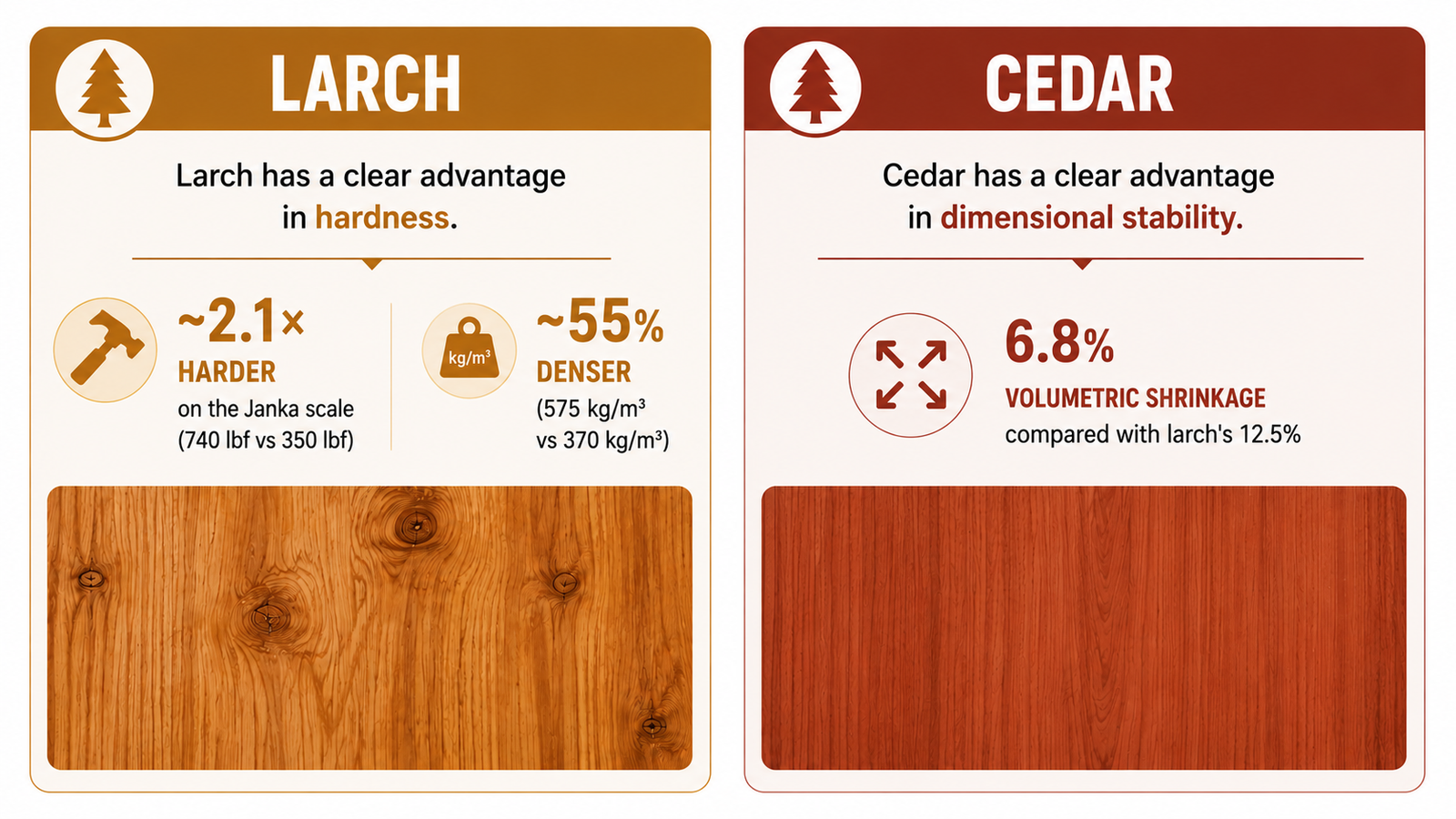
Larch has a clear advantage in hardness. It is roughly 2.1 times harder on the Janka scale (740 lbf versus 350 lbf) and around 55% denser (575 kg/m³ versus 370 kg/m³). As a result, larch resists dents and scratches more effectively on low-level cladding, gates, and accessible walls where impact damage is more likely.
Cedar has a clear advantage in dimensional stability. Its volumetric shrinkage is 6.8% compared with larch’s 12.5%, so cedar boards are less prone to cupping, twisting, and gapping as humidity levels change throughout the year. This stability makes Western Red Cedar one of the most dimensionally stable softwoods used for cladding.
In practice, both species provide a long service life when correctly installed:
- Larch: 30+ years untreated, provided proper ventilation is maintained and sapwood is excluded.
- Western Red Cedar: 40+ years untreated under the same conditions.
Ventilation gaps behind the boards and the exclusion of perishable sapwood help extend the service life of both timbers, as trapped moisture is the primary cause of premature decay in timber cladding.
Cost and Maintenance: Which Is Cheaper, Larch or Cedar?
Larch is generally the more affordable option because it grows faster and is widely available across the UK and Europe, whereas Western Red Cedar commands a premium due to its slower growth rate and the costs associated with importing it from Canada.
Pricing reflects sourcing and availability. Homegrown British cedar typically sits between European larch and imported Western Red Cedar in terms of cost, while Siberian larch can be slightly more expensive than European larch due to import logistics and its tighter, denser grain.
Both species can be left untreated for cladding, allowing them to weather naturally to a silver-grey patina. To retain their original golden or reddish tones, a UV-protective oil or stain is required, as exposure to sunlight gradually breaks down the surface lignin.
Fixings matter just as much as the finish. Use A4 (316) or A2 stainless steel fasteners for both timbers, as larch’s natural resins and cedar’s extractives can corrode and stain standard steel, leaving dark streaks down the boards.
Ongoing maintenance requirements are minimal. Plan for occasional re-oiling to refresh the colour, along with periodic checks of fixings and ventilation gaps to ensure the rear of the cladding remains well ventilated and able to dry freely.
For more information on finishes and long-term performance, see our guidance on protecting wood outdoors.
Which Should You Choose for Your Cladding Project?
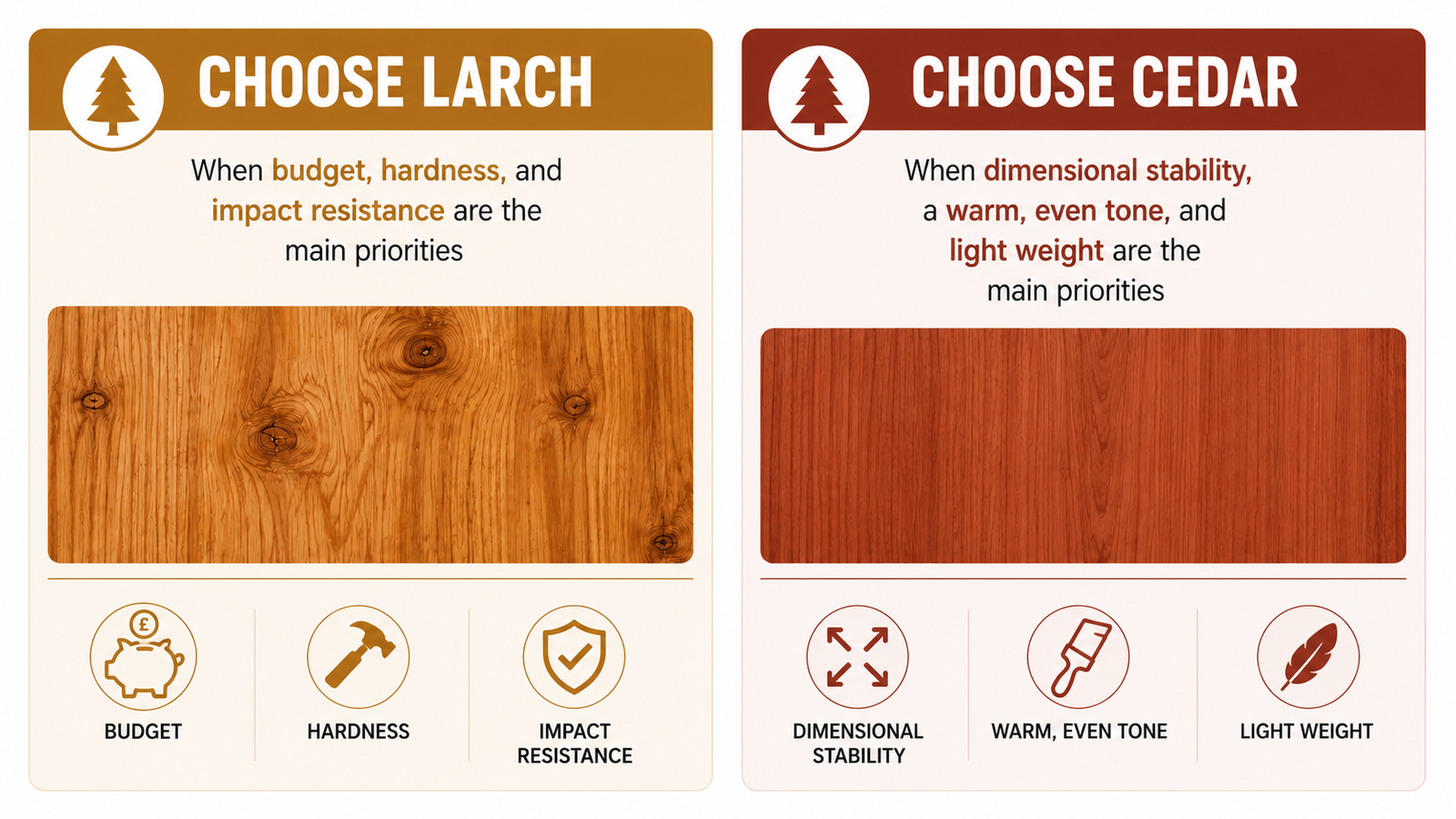
Choose larch when budget, hardness, and impact resistance are the main priorities. Its dense, durable surface suits low-level walls, garden rooms, fencing, and high-traffic areas where knocks and scuffs are more likely.
Choose cedar when dimensional stability, a warm, even tone, and light weight are the main priorities. Cedar performs particularly well on larger façades, complex detailing, and projects where minimal seasonal movement is critical, as its low shrinkage helps keep boards straight through changing humidity levels.
Larch carries some trade-offs that are worth considering:
- More pronounced knots than clear-grade cedar.
- Higher resin content, which can occasionally bleed to the surface.
- Greater weight, making installation and handling more demanding.
- Slightly lower dimensional stability.
Cedar has its own compromises. Its relatively soft surface makes it more susceptible to dents and marks, and it commands a higher price due to its slow growth rate and reliance on imported supply.
A short safety note for DIY installers: Western Red Cedar dust contains plicatic acid, a recognised cause of occupational asthma, while larch dust can cause skin irritation. Use dust extraction and wear a suitable mask when cutting either timber.
Poor cladding performance is usually the result of low-durability untreated softwoods unsuited to UK weather, inadequate ventilation gaps, or non-stainless-steel fixings that corrode and cause staining. Both species perform well when correctly specified.
For a low-maintenance, stable alternative, charred larch cladding combines larch’s hardness with a protective carbon layer. Ordering a sample is a sensible first step before committing to a larger project.
Larch vs Cedar Cladding: FAQ
Is larch or cedar better for cladding?
Neither timber is a clear winner, as each excels in different areas. Larch is harder, denser, and more affordable, while Western Red Cedar offers better dimensional stability, a warm reddish tone, and a slightly longer lifespan.
Your project requirements will determine the best choice. Choose larch if budget and hardness are the main priorities, and choose cedar if dimensional stability and appearance matter most.
Which is cheaper, cedar or larch?
Larch is generally the more affordable option because it grows faster and is widely available across the UK and Europe, helping to keep supply costs lower. Western Red Cedar commands a premium due to its slower growth rate and reliance on imported supply, particularly from Canada.
Homegrown British cedar sits between European larch and imported Western Red Cedar in terms of price, offering a middle-ground option for buyers who want cedar’s character without paying the full premium for imported material.
What are the disadvantages of larch wood for cladding?
Larch’s main drawbacks are its more pronounced knots compared with clear-grade cedar, a higher resin content that can occasionally bleed to the surface, greater weight, and slightly lower dimensional stability as humidity levels change throughout the year.
These trade-offs are relatively minor when weighed against larch’s hardness and value. Grade choice also matters, as unsorted (clear) grades contain far fewer knots than sawfalling or fifth-grade material.
What cladding should you avoid?
Avoid low-durability untreated softwoods that are unsuited to UK weather, as they can deteriorate rapidly without adequate protection. Also avoid cladding installed without proper ventilation gaps or fixed with non-stainless-steel fasteners, as both can shorten its service life and lead to staining.
Both larch and cedar remain excellent choices when correctly specified and installed. Whether you favour larch for its hardness and value or cedar for its stability and refined grain, charring can enhance the performance of either species. At TimberSol, we transform timber using the traditional Yakisugi technique, creating a protective carbon layer that improves resistance to moisture, rot, and insects while delivering a distinctive, low-maintenance finish.
If you are weighing up your options, the best way to assess the look and feel is to see and handle the timber in person. Order a sample in the shade that best suits your project, and our team will help you choose the right profile, size, and finish for your project.
