
Choosing the Best Timber for Fences in the UK

When you’re choosing the best timber for fences, it really boils down to a classic trio: how long it will last, how much it costs, and the look you’re going for. Get this choice right, and you’ll have a fence that stands proud for decades, not just a couple of years.
What Really Makes Timber Good for Fencing
Picking the right timber for your fence is about more than just finding a colour that matches your garden furniture. It’s about understanding what helps wood survive outside, day in and day out. Think of it like buying a coat for a miserable British winter – a thin, stylish jacket might look the part, but it won’t keep you warm and dry when the weather turns. It’s the same with your fence; the best timber has natural, built-in qualities to fend off everything our lovely, unpredictable climate can throw at it.
And it’s a big deal for a lot of people. The UK wood fencing market pulled in around USD 608 million in 2024, and it’s on track to hit nearly USD 788.5 million by 2030. That’s a lot of homeowners investing in their boundaries, with classic picket fences making up a huge chunk of that—41.81% of sales, to be exact.
This infographic lays out the three big things you need to weigh up.
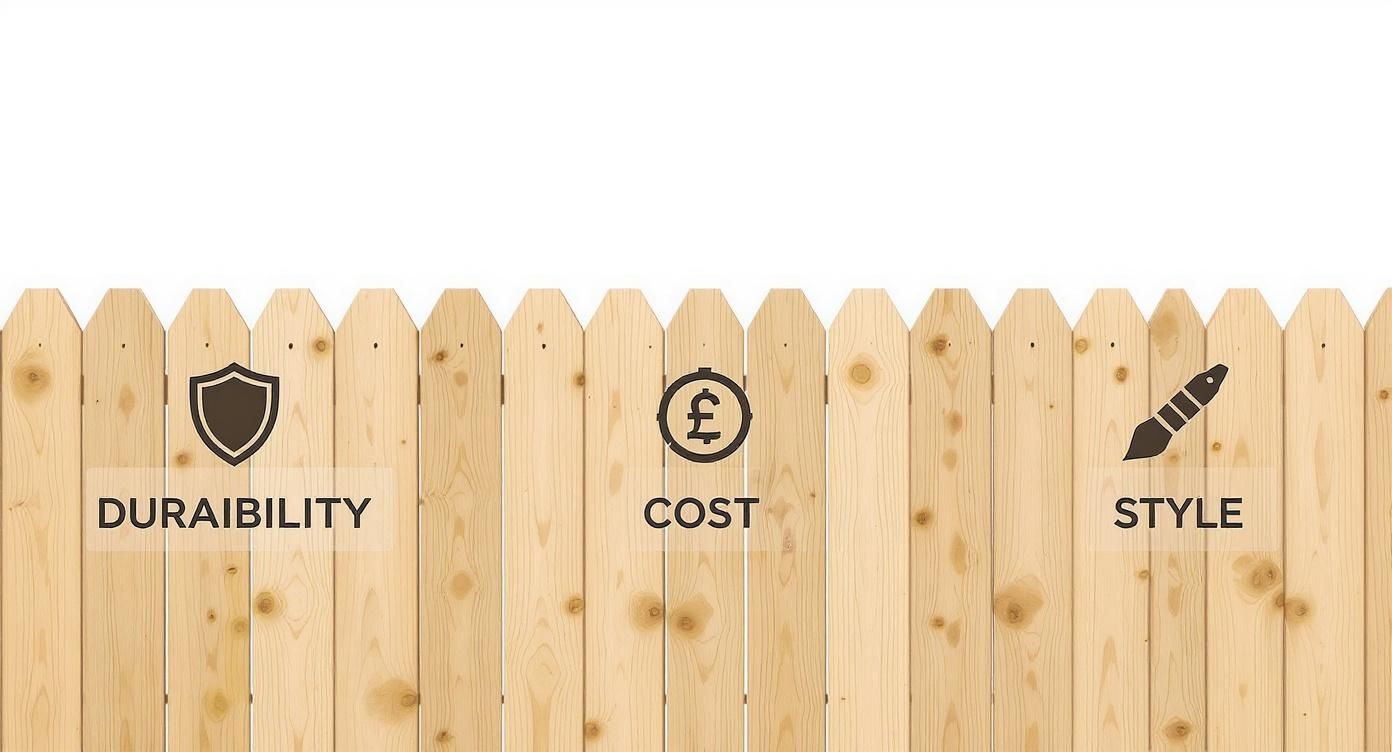
Ultimately, durability, cost, and style are all linked. The perfect timber for you will be the one that finds the sweet spot right in the middle of those three.
Key Factors for Fence Timber
When you’re looking at different types of wood, you need to think about two things: its natural toughness and how it’s been prepared for life outdoors. Some timbers are just naturally better at it. They’re dense, oily, and have their own built-in defence system against rot and hungry insects.
A fence is only as strong as its weakest component. Investing in durable, properly treated timber from the start prevents costly repairs and premature replacement down the line, ensuring your boundary remains secure and attractive for years.
Other woods, especially the softwoods we see everywhere, need a bit of help. They rely on special treatment processes to give them the backbone they need to survive outside. Getting your head around these basic differences is the first step to making a smart choice you won’t regret. If you’re after some more general insights into wood fences, this is a great place to start.
Comparing Popular Fence Timbers in the UK
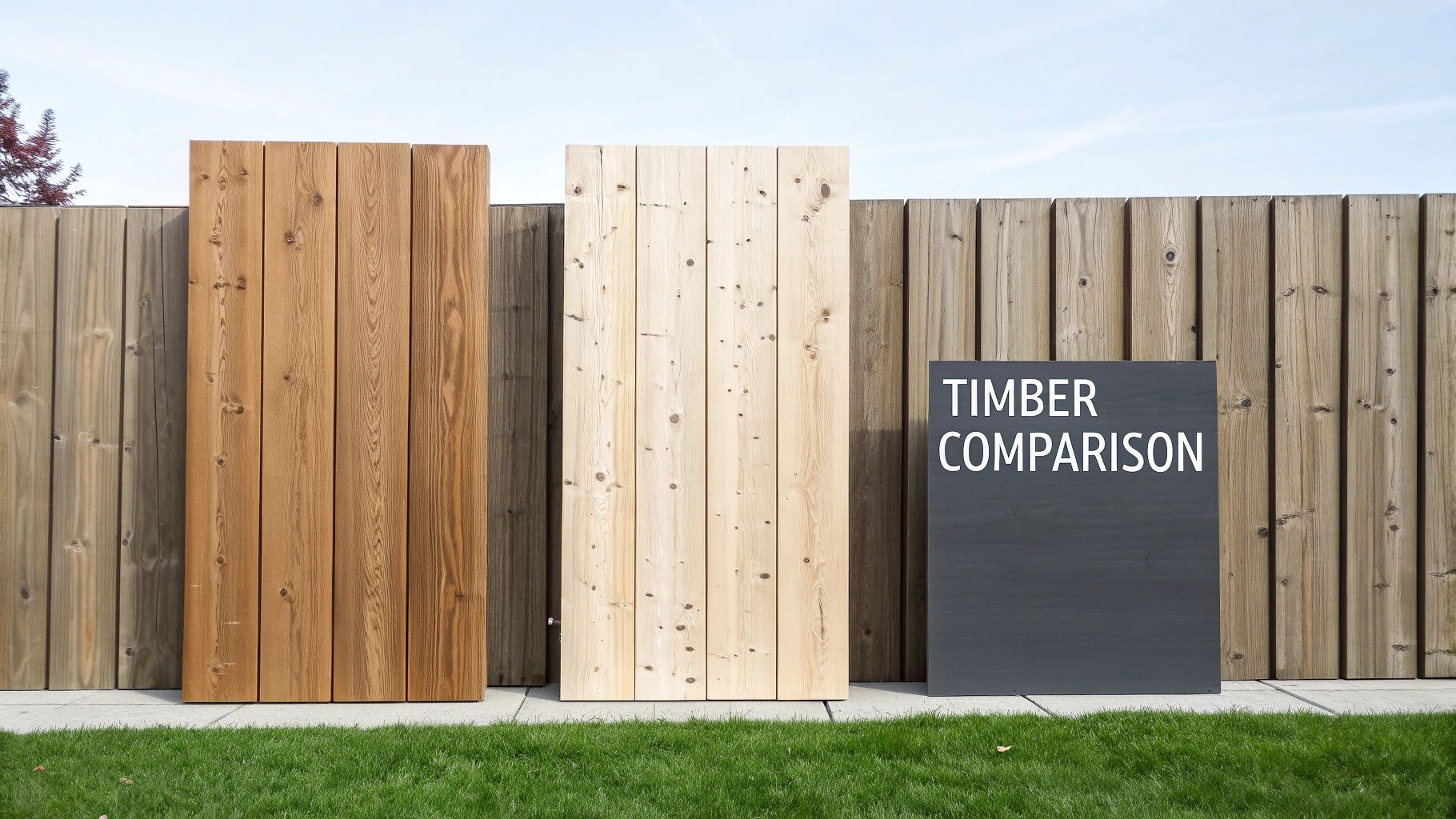
When you’re choosing the right timber for your fence, it nearly always boils down to a classic balancing act: initial cost versus long-term performance. In the UK, you’re essentially looking at two main camps. On one side, you have budget-friendly softwoods that need a bit of help from chemical treatments to survive our climate. On the other, you’ve got premium hardwoods that come with their own natural armour.
Getting your head around this is the key to picking a fence that fits your wallet now and won’t let you down in the years to come. It’s a big decision, especially when you consider how much timber we use. In 2024 alone, the UK produced around 0.8 million green tonnes of timber for things like round fencing and shavings, which shows just how central this material is to our homes and gardens.
The Softwood Solution: Pine and Spruce
For a lot of homeowners, pressure-treated softwood is the bread and butter of fencing. Timbers like pine and spruce are fast-growing and readily available, which keeps the price down and makes them a very popular choice.
But here’s the catch. In its raw, untreated state, softwood is incredibly vulnerable to rot and hungry insects. That’s why the treatment process isn’t just a bonus feature—it’s absolutely essential. Pressure treatment forces preservatives deep into the wood’s fibres, giving it the strength it needs to stand up to the damp British weather for a good 10–15 years.
The Hardwood Advantage: Oak and Cedar
At the premium end of the scale, you’ll find hardwoods like oak and cedar. Yes, they come with a higher price tag, but what you’re paying for is exceptional, natural durability. These woods have a dense grain and are packed with natural oils, which act as a powerful, built-in defence against moisture and pests.
An untreated cedar fence can easily last 20–25 years, while a solid oak fence could be standing strong for generations. They need far less looking after than softwoods, and many people love the attractive silver-grey patina they develop over time without losing their strength. If you want to explore this further, our guide covering various types of wood fences is a great next step.
Choosing a timber is an investment in your property’s boundary. A cheaper softwood may save money initially, but a durable hardwood often delivers better value over its longer lifespan, requiring less frequent repair and replacement.
UK Fence Timber Comparison Guide
To make the choice a bit clearer, here’s a quick side-by-side look at the most common options you’ll encounter.
| Timber Species | Typical Lifespan (Treated) | Average Cost | Rot Resistance (Untreated) | Maintenance Level |
|---|---|---|---|---|
| Pine/Spruce (Softwood) | 10–15 years | Low | Low | High (Annual treatment) |
| Larch (Softwood) | 15–20 years | Low-Medium | Medium | Medium (Benefits from treatment) |
| Cedar (Softwood) | 20–25 years | High | Very High | Low (Weathers naturally) |
| Oak (Hardwood) | 25+ years | Very High | Excellent | Low (Extremely durable) |
This table highlights that while softwoods are easy on the wallet upfront, hardwoods really shine when it comes to longevity and low maintenance.
Making the Right Choice for Your Garden
So, how do you decide? If budget is your main concern, a properly treated softwood fence is a perfectly good, attractive solution—as long as you’re prepared to keep up with regular maintenance. But if you’re playing the long game and value a low-maintenance future, the initial investment in a hardwood like cedar or oak will pay for itself over the decades.
Ultimately, the best choice is the one that strikes the right balance between what you can spend today and what you want from your garden in the future.
Decoding Timber Treatments and Finishes
Leaving fence timber exposed to the elements is a bit like leaving a steel tool out in the rain—sooner or later, nature will win. For wood, that means a constant battle against moisture, rot-causing fungi, and hungry insects. This is where treatments and finishes come in, acting as your timber’s first and most essential line of defence.
These aren’t just optional extras; they’re fundamental to making your investment last. Think of them as a permanent coat of armour, designed to shield the wood from the relentless damp of the UK climate. Knowing what goes into these treatments helps you understand exactly what you’re buying.
Pressure Treatment: The Foundation of Durability
The go-to method for protecting softwoods like pine is pressure treatment, a process you might hear referred to by the brand name Tanalith. This isn’t just a quick spray-on job. The timber is loaded into a sealed chamber, and a powerful vacuum sucks all the air out of the wood’s cells.
With the air gone, a special preservative is forced deep into the timber’s structure under immense pressure. This ensures the protection isn’t just skin-deep but goes right to the core. It’s absolutely vital for any softwood destined for a life outdoors, especially for fence parts that will be in constant contact with damp soil.
A fence is only as strong as its posts. Using the wrong timber for the parts that go into the ground is the single biggest reason fences fail before their time.
It’s crucial to get familiar with the “Use Class” (UC) rating of treated timber. This simple system tells you where the wood can be safely used, guaranteeing it has the right level of protection for the job.
- UC3: Suitable for Above Ground. This level of treatment is for timber that’s outside but doesn’t touch the ground. It’s perfect for fence panels, rails, and gravel boards.
- UC4: Essential for Ground Contact. This is a much more intensive treatment for timber that will be permanently in the ground or fresh water. All fence posts must be UC4 rated to stop them rotting away at the base.
Surface Finishes: An Extra Layer of Protection
While pressure treatment provides the core defence against rot from within, a surface finish adds another shield against the weather and UV rays. It also gives you the chance to customise the look of your fence. These finishes seal the outer layer, stopping moisture from soaking in and preventing the sun from bleaching the timber to a faded, silvery grey.
- Stains: These soak into the wood, adding colour without hiding the natural grain. Good quality stains also contain fungicides and UV inhibitors for extra protection.
- Oils: Products like decking or fencing oil nourish the wood as they soak in. They provide a water-repellent finish that really makes the natural beauty of the timber pop.
- Paints: A coat of paint creates a solid, opaque barrier on the wood’s surface. It offers fantastic protection from moisture and UV damage, plus it gives you limitless colour options.
Getting the right combination of deep-down treatment and a quality surface finish is the key. It ensures your fence not only looks great on day one but also stands strong against whatever the British weather can throw at it for many years to come.
Exploring Yakisugi Charred Timber Fencing
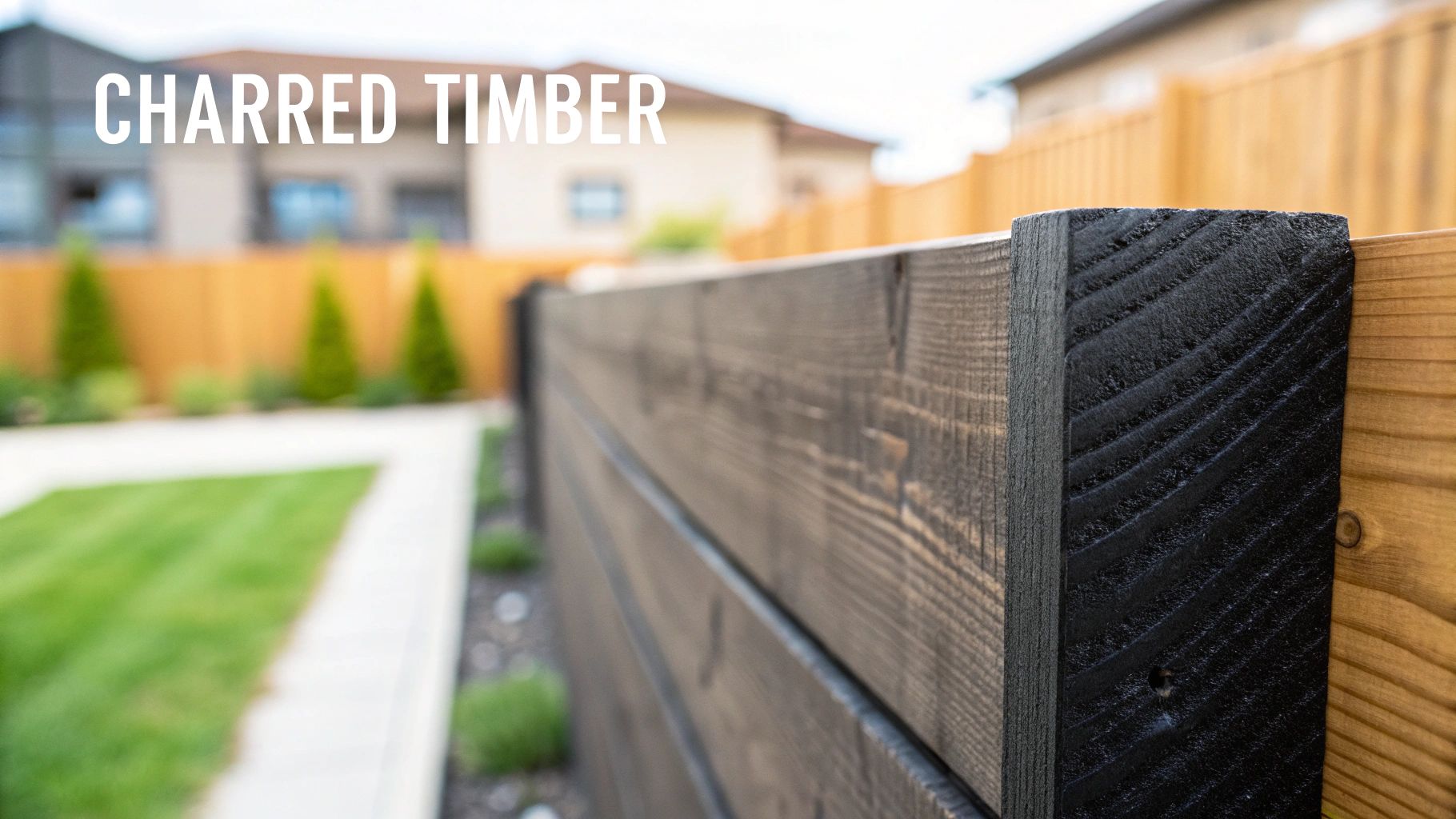
While pressure treatments are the go-to for many modern fences, an ancient technique from 18th-century Japan is making a huge comeback in garden design. It’s called Yakisugi, a time-honoured method of preserving wood by charring its surface with fire.
This isn’t just a cosmetic treatment. The process fundamentally changes the timber. By burning away the soft, vulnerable outer fibres, you create a dense, carbonised layer. It’s like forming a natural, built-in shield that’s waterproof and pest-proof, rather than just applying a coating that sits on top.
The final look is incredibly striking, but the practical benefits are just as impressive. This carbon barrier offers amazing protection without a single chemical, making it a fantastic, eco-friendly choice for anyone wanting a truly unique fence.
The Natural Benefits of Charred Timber
The appeal of a charred timber fence goes way beyond its dramatic, dark finish. The charring process armours the wood against the very elements that cause problems for timber in the UK’s damp climate.
- Exceptional Rot and Moisture Resistance: The carbonised surface is naturally hydrophobic, which is a fancy way of saying it repels water. This dramatically cuts down the risk of moisture getting in, which is the number one cause of rot and fungal decay.
- Natural Insect Deterrent: Wood-boring insects simply don’t like the taste or texture of the charred surface. It creates a powerful, chemical-free barrier that keeps pests at bay.
- Enhanced Fire Resistance: This one might sound odd, but it’s true. The charring process actually makes the timber more resistant to fire. The burnt outer layer acts as an insulator, slowing down the ignition of the wood underneath.
By transforming the wood’s surface with fire, Yakisugi creates a fence that is not only protected from the elements but also tells a story of craftsmanship and natural resilience. It’s a testament to how ancient wisdom can provide elegant, sustainable solutions for modern living.
Why Larch and Cedar are Ideal for Yakisugi
You can’t just char any old piece of wood and expect good results. The best candidates have the right density and resin content to create a durable, stable finish. For fencing here in the UK, a couple of species really shine.
Larch and Cedar are perfect for the Yakisugi process. Their natural oils and tight grain structure mean they char evenly and deeply without becoming brittle or losing their strength. The result is that beautiful, deep-black textured finish that looks so stunning in a contemporary garden.
If this has sparked your interest, you can dive deeper into the Yakisugi shou sugi ban technique and see how it’s done. It’s a premium choice, but for a fence that is both low-maintenance and incredibly long-lasting, it’s hard to beat.
Proper Installation for a Longer Fence Life
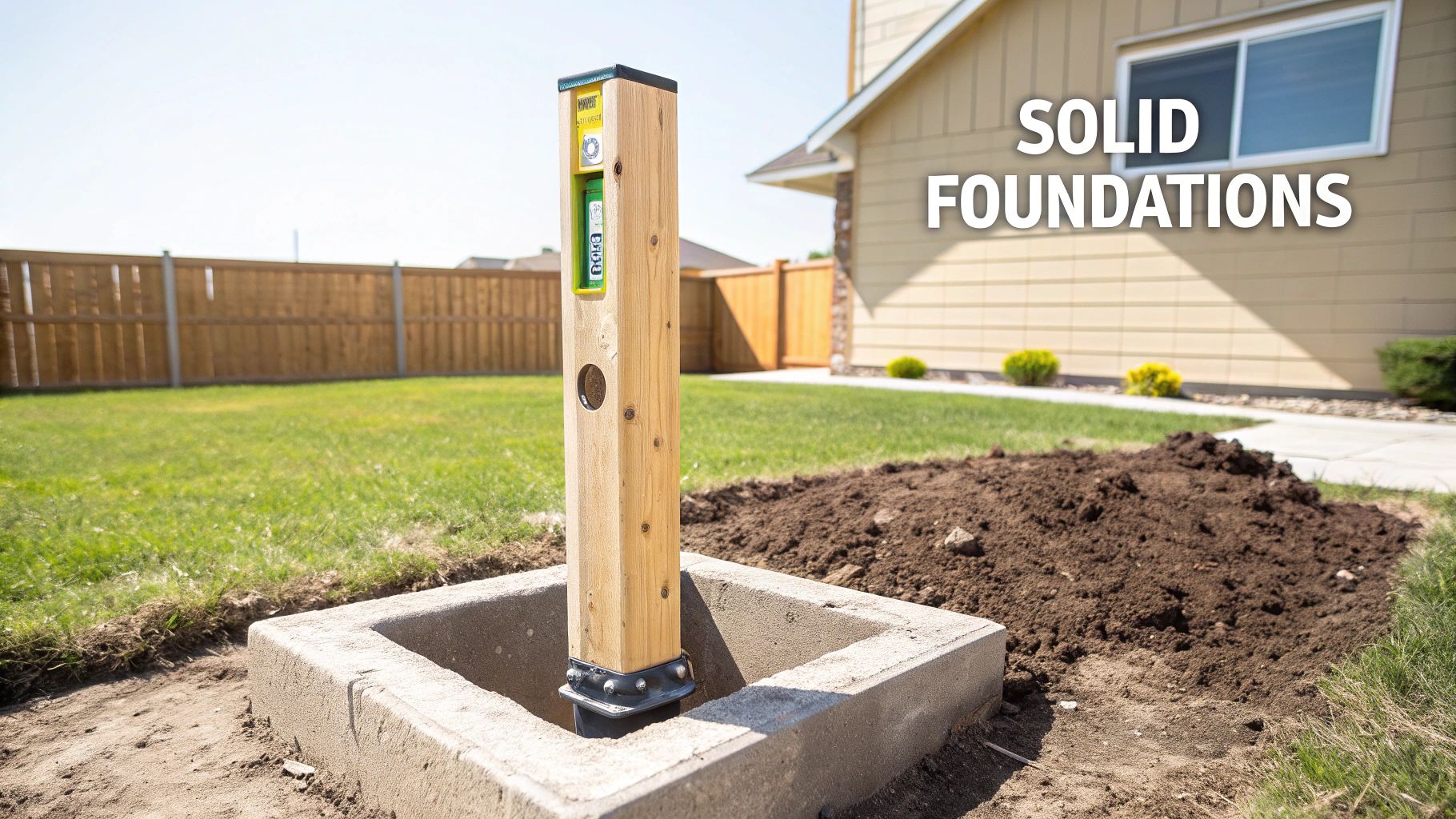
You can pick the finest oak or the most beautifully charred cedar, but if it’s not put in the ground correctly, it’s all for nothing. Proper installation is the crucial link between great materials and a fence that actually lasts, heading off the common problems that can send a fence to an early grave.
It’s just like building a house. A shaky foundation will bring the whole thing down, no matter how solid the walls are. For your fence, that foundation is the posts. Getting this bit right is probably the single most important part of the job.
Securing Your Fence Posts
The stability of your entire fence comes down to how well those posts are anchored. If you see a wobbly post, you’re looking at the first sign of failure, and the root of the problem is almost always underground.
A good rule of thumb is that at least one-third of the post’s total length should be buried. So, for a typical 1.8-metre high fence, you’ll want a 2.4-metre post sunk into a hole that’s at least 60cm deep. That depth gives it the leverage it needs to stand up to strong winds without starting to lean.
A fence is only as strong as its posts. Securing them properly in concrete at the right depth is non-negotiable for creating a structure that can withstand the elements and the test of time.
For a truly bombproof installation, setting your posts in concrete is the way to go. This creates a solid footing that locks the post in place, spreads the load, and keeps your fence line straight and true for years.
Preventing Premature Rot
Moisture is the number one enemy of a timber fence. While treatments and durable woods give you a great head start, smart installation adds another vital layer of defence against rot, especially at ground level where the timber is most vulnerable.
One of the easiest yet most effective tricks is to keep your fence panels and gravel boards slightly off the ground. Even a small gap of 2-5cm makes a huge difference, preventing them from constantly wicking up moisture from the damp soil.
Here are a few other essential tips to keep in mind:
- Use the Right Fixings: Don’t cut corners here. Always use galvanised or stainless steel screws and nails. Cheaper fixings will rust, leaving ugly streaks down your timber and eventually compromising the fence’s strength.
- Slope Concrete Footings: As you’re setting the posts, shape the top of the concrete so it slopes slightly away from the wood. This simple step ensures rainwater runs off instead of pooling right at the base of the post.
- Protect Cut Ends: Any time you cut a piece of treated timber, you expose a fresh, vulnerable end. Always have a quality end-grain preservative on hand to paint onto these cuts before you fix them in place.
Following these straightforward practices ensures your chosen timber can do its job properly. The result is a strong, handsome fence that will stand guard over your property for many years to come.
Your Guide to Timber Fence Maintenance
When you’ve invested in a quality timber fence, a little care goes a long way in protecting it. Regular maintenance stops small issues from escalating into big, expensive problems, ensuring your boundary not only looks great but remains structurally sound for years to come. Think of it as a simple annual health check for one of your garden’s most important features.
This is more important than ever. The UK fencing market is set to grow by around 6.03% annually between 2024 and 2032, and wood is still the top choice for its natural beauty and environmental benefits. Looking after your fence is simply a smart way to protect its value. For those interested in the numbers, you can read more about these UK timber industry predictions on ttjonline.com.
Creating a Simple Maintenance Plan
A good maintenance schedule doesn’t have to be complicated or time-consuming. By breaking the jobs down by season, you can stay on top of everything without it feeling like a massive chore.
A yearly walk-around is your best friend here. Look for any loose posts, wobbly panels, or cracked boards. Pay special attention to the base of the fence, where the timber is most vulnerable to constant moisture from the soil and any overgrown plants.
Keeping your fence clean and clear of debris is the single most effective thing you can do. It allows the timber to breathe and dry out properly, which is the absolute key to preventing rot.
Seasonal Upkeep for Different Timbers
Not all fences need the same amount of attention. The type of wood your fence is made from will dictate the kind of upkeep it requires.
- Pressure-Treated Softwood: This common choice needs the most hands-on care. Each spring, give it a gentle clean with a stiff brush and some soapy water to shift any dirt and green algae that’s built up over winter. Plan to reapply a quality fence stain or preservative every 2-3 years to keep its protection against rain and sun topped up.
- Hardwoods and Yakisugi: These premium options are fantastically low-maintenance. A quick annual clean is usually all they need to look their best. Hardwoods will gradually weather to a beautiful silvery grey, while Yakisugi holds its deep, charred finish for decades with very little help from you.
If you want to explore more defensive strategies, have a look at our guide on how to protect wood outdoors. Ultimately, a simple, consistent routine is the secret to a timber fence that looks fantastic and lasts a lifetime.
Got Questions About Fence Timber? We’ve Got Answers
When you’re ready to build, a few final questions always pop up. It’s completely normal. Here are some straightforward answers to the queries we hear most often, designed to give you that last bit of confidence before you get started.
What’s the Cheapest Timber for a Garden Fence in the UK?
If you’re working to a tight budget, your best bet is usually a pressure-treated softwood like pine or spruce. It’s affordable, but there’s a catch.
For any posts going into the ground, you absolutely must make sure they have a UC4 rating. Anything less just won’t last. With this kind of timber, you’ll also need to commit to regular maintenance—a fresh coat of stain or sealant every couple of years—to get a decent lifespan of around 10-15 years out of it.
How Long Will a Timber Fence Actually Last?
That’s the million-dollar question, and the answer really comes down to three things: the type of wood you choose, how well it’s been treated, and the quality of the installation.
- A standard pressure-treated softwood fence, if looked after, should give you 10-15 years.
- Choosing a naturally tough hardwood like Oak or Cedar is a bigger investment upfront, but they can easily last over 25 years with very little fuss.
- For ultimate longevity, a Yakisugi (charred timber) fence is in a league of its own. Thanks to the natural preservation from the charring process, you could be looking at 50 years or more.
Think of it this way: the lifespan of your fence is a direct reflection of your initial investment in materials and installation. Spending a bit more on better timber and proper ground preparation really does pay off, saving you the headache and cost of replacing it all in a decade’s time.
Do I Need Planning Permission for a Timber Fence?
For the most part, you’re in the clear. In the UK, you generally don’t need planning permission for a fence as long as it’s under 2 metres high.
The main exception is if your fence runs alongside a road or footpath used by vehicles. In that case, the height limit drops to 1 metre. It’s also worth remembering that rules can be much stricter if you live in a conservation area or a listed building.
A quick call or visit to your local council’s website is always a smart move before you start digging. It’s a simple step that can save you from a lot of potential trouble down the line.
At TimberSol, we’re passionate about creating stunningly beautiful and incredibly durable charred timber using the authentic Yakisugi technique. It’s perfect for fences, cladding, and decking. To see how our sustainable, low-maintenance timber can elevate your outdoor space, come and explore our work at https://timbersol-backup.elnoirstudio.com.
