
A Guide to Timber for External Cladding

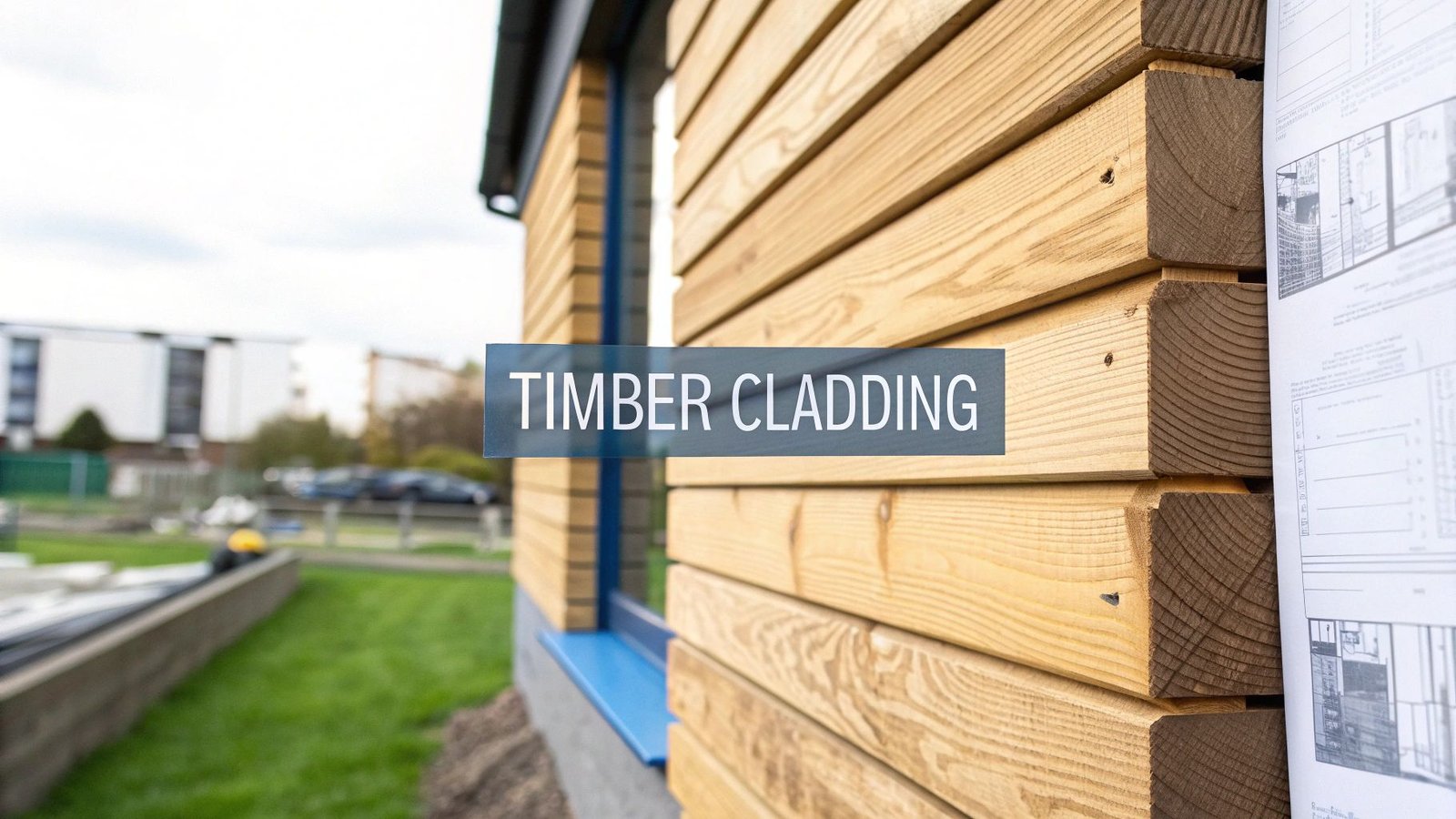
When it comes to modern British architecture, timber cladding has become a real standout feature, effortlessly mixing natural good looks with solid, long-lasting performance. Finding the best timber for external cladding is all about striking the right balance between durability, cost, and visuals to match your project and the local climate. Choices like Siberian Larch, Cedar, and some of the newer modified timbers are popular for a reason—they deliver on both longevity and style.
Why Timber Cladding is Making a Comeback in UK Architecture
Timber has well and truly shaken off its old-fashioned image. It’s no longer just for rustic log cabins; you’ll now see it gracing the exteriors of state-of-the-art homes and high-spec commercial buildings. There’s something about its natural warmth and texture that provides a beautiful, soft contrast to harder materials like glass and steel, creating buildings that feel both contemporary and grounded in nature. But this isn’t just a comeback based on looks—it’s driven by real-world performance and sustainability credentials.
One of the best things about timber cladding is its sheer versatility. You can have the stunning silvery-grey patina that cedar develops as it weathers, or the deep, dramatic tones of charred larch. This huge design palette gives architects and homeowners the freedom to create exteriors that are truly unique, making a statement while still blending in with the surrounding environment.
The Growing Appetite for Natural Materials
Here in the UK, the move towards using natural building materials is more than just a fleeting trend; it’s a fundamental shift in the market. The demand for timber cladding is booming, with the market valued at an estimated $1.09 billion USD in 2024 and forecast to nearly double to $2.15 billion USD by 2032. This isn’t happening by accident. It’s supported by government-led initiatives like the ‘Timber in Construction Roadmap’, which is actively encouraging the use of homegrown timber to help slash carbon emissions. For a deeper dive into these numbers, the comprehensive research from Verified Market Research is a great resource.
This surge really reflects a growing appreciation for materials that are not only beautiful but also kind to the planet. As sustainability becomes a top priority for builders and designers, timber is a clear winner. It’s a renewable resource that actually locks up carbon for the entire lifespan of the building.
Key Factors in Selecting Your Timber
Choosing the right timber for your cladding isn’t a decision to be taken lightly. It’s about more than just picking a colour you like; it’s about understanding how that wood will stand up to decades of whatever the famously unpredictable UK weather throws at it.
To get it right, you need to weigh up a few key things:
- Durability and Lifespan: How well can the wood fend off rot, pests, and damp? Different species are given a durability class rating, which is a really reliable way to gauge their expected lifespan out in the elements.
- Aesthetic Qualities: Think about the wood’s natural colour and grain. Just as important is how it will weather over the years. Some timbers will hold onto their original colour with a bit of treatment, while others will age gracefully into a lovely silver-grey.
- Maintenance Requirements: This is a big one. Are you happy to get the oil or stain out every few years, or are you looking for a ‘fit and forget’ option? Some timbers need that regular TLC to maintain their colour and condition, whereas others can be left to their own devices.
- Budget: The price tags can vary wildly, from cost-effective softwoods like British Larch right up to premium modified timbers. It’s crucial to look beyond the initial cost and think about the long-term value, factoring in what you might save on maintenance down the line.
Comparing Popular Timber Cladding Species
Choosing the right timber for your external cladding is a bit like casting the lead actor in a play. The choice you make will define the character, feel, and long-term success of the whole project. Every species brings its own unique script to the table—a specific combination of looks, resilience, and cost. Getting to grips with these differences is the first step to making sure your building’s exterior will look fantastic for years to come.
This simple decision tree can help you weigh up what matters most to your project, whether that’s long-life durability, a tight budget, or a specific aesthetic.
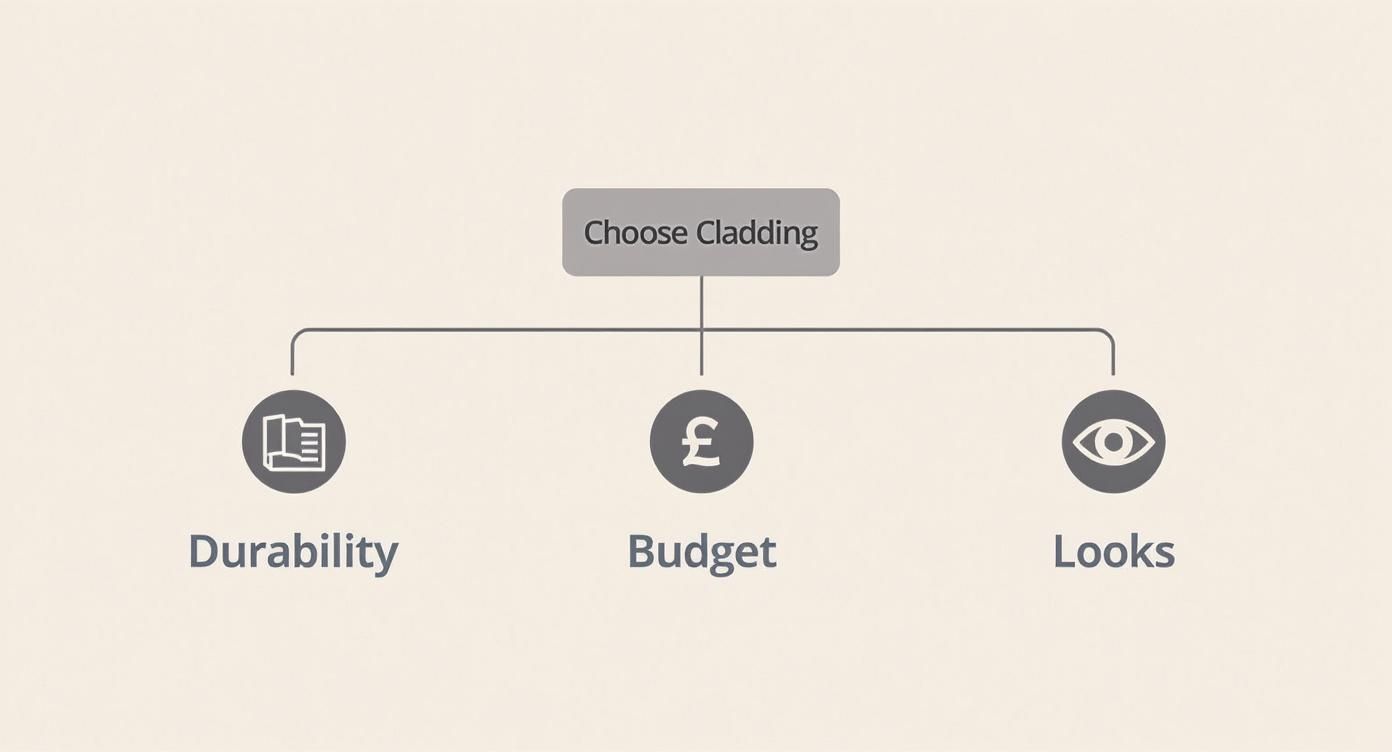
As the infographic shows, there are always trade-offs. The premium timbers tend to tick all the boxes for looks and durability, while the more wallet-friendly options might need a little more thought and care.
The Hardy Softwoods: Larch and Cedar
When you start looking at timber cladding in the UK, two names pop up time and again: Siberian Larch and Western Red Cedar. They’re both softwoods, but don’t let the name fool you. These timbers are incredibly tough and perfectly suited for braving the elements.
Siberian Larch is a dense, resinous wood that’s famous for its natural hardiness. All that resin acts like a built-in preservative, warding off rot and insects without needing chemical treatments. It starts life as a pale yellow or golden-brown timber and, if left to its own devices, will weather into a beautiful, distinguished silvery grey.
Western Red Cedar, on the other hand, is loved for its stunning spectrum of reddish-browns and ambers. It’s also surprisingly lightweight, which makes it much easier to handle and install on site. Its natural oils give it fantastic protection against decay and pests. To get a better feel for what makes it so special, you can dive into the properties of cedar cladding.
One of the biggest factors when weighing these two up is stability. Cedar is known for its exceptionally low shrinkage, meaning it barely moves, warps, or twists as moisture levels change. That’s a huge plus in the famously unpredictable British climate.
The Timeless Strength of Oak
If you’re after something classic and seriously robust, you can’t go wrong with British Oak. As a hardwood, it’s incredibly dense and strong, making it one of the most durable native timbers we have for cladding. Its distinctive grain and warm, honey tones lend a sense of history and permanence to any building.
Of course, that level of performance comes with a higher price tag and a bit more work during installation. Oak is heavy and has a tendency to move, so it must be properly seasoned and fixed with real care to avoid problems later on. It’s also packed with tannins that react with iron, so using stainless steel fixings is an absolute must to prevent unsightly black stains.
The New Generation: Modified Timbers
Looking beyond the traditional woods, modern technology has given us a new class of materials: modified timbers. These are woods that have been engineered at a cellular level to give them far better durability and stability than nature intended.
Two of the front-runners here are Thermowood and Accoya.
- Thermowood: This is typically pine or spruce that has been heat-treated in a special kiln. The high temperatures cook out the resins and moisture, making the wood incredibly stable and much more resistant to rot.
- Accoya: This wood goes through a process called acetylation, which permanently changes its chemical structure. The end result is a timber that’s virtually rot-proof, unbelievably stable, and even comes with a 50-year warranty when used above ground.
Charred Timber: A Fusion of Tradition and Performance
For a truly exceptional finish, it’s worth looking at the ancient Japanese technique of Yakisugi (also known as shou sugi ban). This involves carefully charring the surface of the wood, which creates a striking black, carbonised finish. This isn’t just about aesthetics; that charred layer is a powerful, chemical-free shield.
The charring process makes the timber highly resistant to fire, rot, and insects. Timbers like Larch and Pine are perfect candidates for this treatment. The final look can range from a deep, consistent black to a more textured, “alligator skin” effect, offering a dramatic aesthetic that feels both ancient and incredibly modern. It’s a perfect example of how traditional craftsmanship can create a truly high-performance material.
Understanding What Makes Timber Perform
When you’re choosing the right timber for external cladding, it’s easy to get caught up in how it looks—the colour, the grain, the texture. But the real story of how that timber will perform is written in its physical properties. Getting to grips with these factors is like learning the wood’s language. It lets you predict how it will stand up to the UK’s notoriously unpredictable sun, wind, and rain once it’s fixed to your building.
It’s simply not enough to pick a timber that looks fantastic on day one. You need the confidence that it will stay straight, fight off rot, and hold its own for decades to come. Let’s break down the key performance indicators that separate a truly resilient cladding material from one that’s just going to cause headaches down the road.
Decoding Durability Classes
The first, and arguably most important, metric to understand is a timber’s natural durability. Here in the UK, we use the BS EN 350 standard to classify a timber’s innate resistance to decay and insect attack. Think of it as a lifespan forecast for wood used outdoors.
The classes are pretty straightforward:
- Class 1 (Very Durable): These are the champions of longevity. Timbers like Accoya are expected to last over 25 years even when in contact with the ground, so as cladding, their lifespan is significantly longer.
- Class 2 (Durable): This is where you’ll find trusted species like Western Red Cedar and Oak, with an expected service life of 15-25 years.
- Class 3 (Moderately Durable): A popular category that includes choices like Siberian Larch, which you can expect to last around 10-15 years.
- Class 4 (Slightly Durable): Woods such as European Spruce fall into this group. With a lifespan of 5-10 years, they almost always need a preservative treatment to be viable for external use.
- Class 5 (Not Durable): Timbers like Beech are completely unsuitable for cladding, lasting 0-5 years when exposed to the elements.
Stick to a timber from Class 1, 2, or 3, and you’re giving your project a solid foundation for a long-lasting façade with minimal fuss.
The Importance of Dimensional Stability
Ever noticed how a wooden gate can swell and jam in the damp of winter, then shrink and swing freely again in the summer? That’s dimensional instability in action. It’s a term that describes how much a piece of wood is likely to move—to warp, cup, twist, or shrink—as it naturally absorbs and releases moisture from the air.
For external cladding, stability is non-negotiable. An unstable timber can pull itself away from its fixings, open up gaps that let rainwater in, and ruin the building’s appearance with a distorted, wavy finish.
A highly stable timber, like Western Red Cedar or a modified wood like Thermowood, will hold its shape and size remarkably well through the changing seasons. This dimensional stability is what keeps cladding looking flat, uniform, and sharp for its entire life.
This consistency doesn’t just protect the building’s shell from the weather; it preserves the clean, architectural lines that were part of the original vision.
Getting Moisture Content Right
Wood is a natural material, and its relationship with water is at the heart of how it behaves. The amount of water held within the wood’s fibres is called its moisture content (MC), and it directly affects its stability. A freshly felled log—or ‘green’ timber—can have a moisture content of 30% or more.
For external cladding, the timber must be properly dried, or ‘seasoned’, before it ever gets to the site. The aim is to lower its MC to a level that will be in balance with the average humidity of its new home. For most of the UK, that means a target moisture content of around 16-18%.
If you install timber with a high moisture content, it will shrink dramatically as it dries out on the wall, causing boards to crack, fixings to work loose, and joints to gap. On the flip side, installing bone-dry timber in a typically damp climate will cause it to swell and potentially buckle. Making sure your supplier provides timber at the correct moisture content is one of the single most important steps to avoiding problems later on.
Finishes, Treatments, and Long-Term Protection
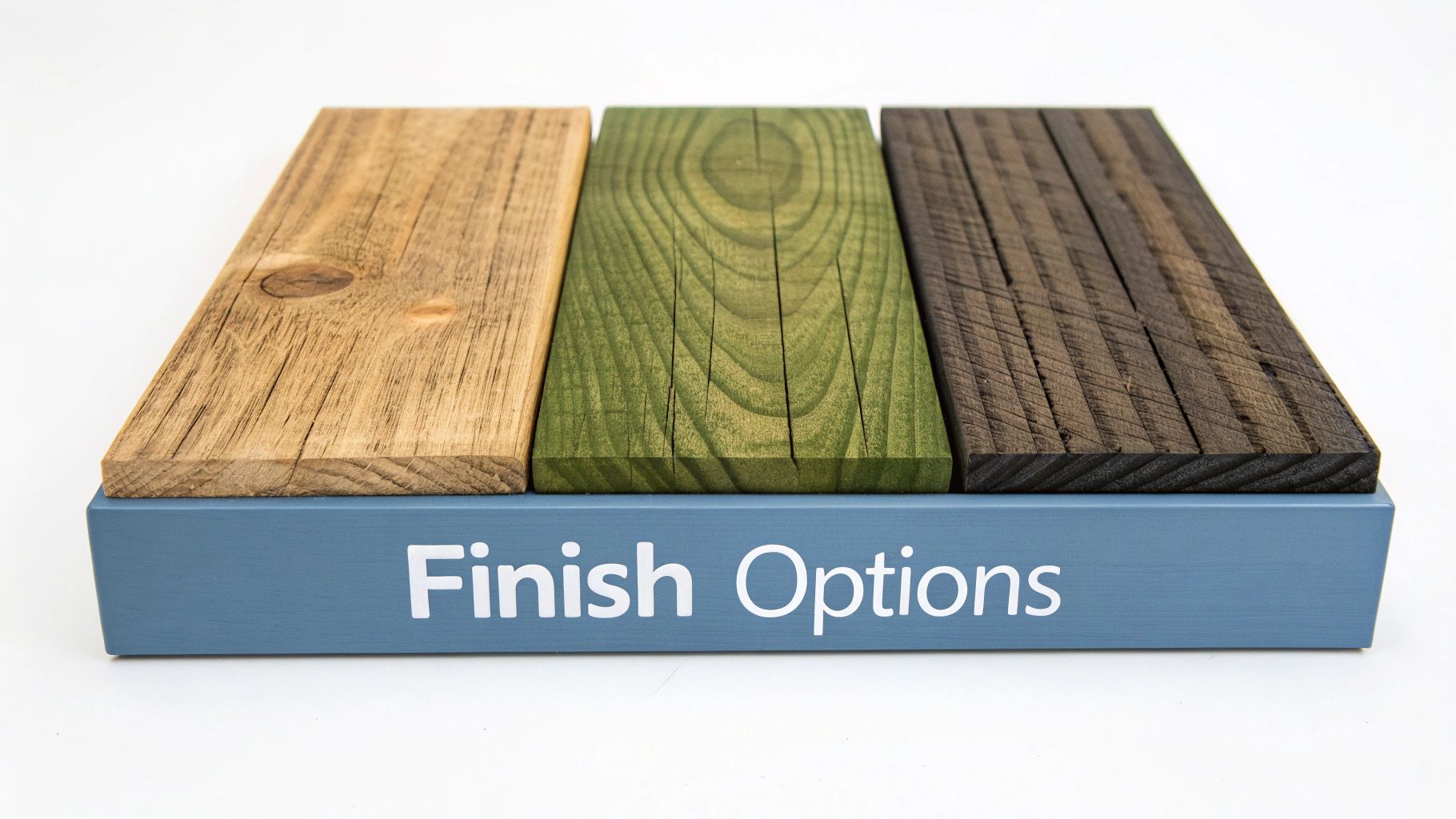
You’ve chosen the perfect timber species for your external cladding, which is a huge step. But the job isn’t finished just yet. The next critical decision is how to treat the wood—or whether to treat it at all. This choice will define your building’s final look, its long-term behaviour, and how much maintenance you’ll be doing down the line.
Ultimately, you have two main paths to follow. You can either let nature take its course and embrace the wood’s natural ageing process, or you can step in with protective treatments to preserve its original colour and add an extra layer of defence against the elements. Each approach has its own charm and practical considerations, suiting different aesthetic goals and lifestyles.
The Beauty of Natural Weathering
Sometimes, the best approach is to do nothing at all. For naturally durable timbers like Cedar, Larch, or Oak, leaving the wood untreated allows it to develop a stunning, silvery-grey patina over time. This isn’t a sign of rot or decay; it’s simply the result of sunlight and rain working their magic on the wood’s surface.
This hands-off approach gives you a low-maintenance solution that lets the building evolve and settle into its surroundings. Architects often seek out these soft, muted tones for contemporary designs because of their subtle, organic feel. Just be aware that the weathering process isn’t always perfectly uniform—areas that get more sun and rain will turn grey faster than more sheltered spots.
Applying Protective Finishes
If you’d rather keep the timber’s original warm tones or want to introduce a specific colour, a protective finish is the way to go. These treatments act as a shield against moisture and UV radiation, the two main culprits behind weathering and degradation.
You’ve got a few solid options to consider:
- Penetrating Oils: These soak deep into the wood fibres, nourishing the timber from the inside out and making the natural grain pop. They generally provide a semi-translucent finish that enriches the wood’s existing colour.
- Stains: Containing pigments that colour the wood, stains still allow the beautiful grain to show through. They often offer better UV protection than clear oils.
- Paints: For a completely opaque and uniform colour, paint offers the highest level of protection. A quality exterior paint system creates a tough film that seals the timber from moisture and sun, but it does mean covering up the natural character of the wood.
It’s important to remember that these finishes aren’t a one-and-done solution. They all need reapplication every few years to stay effective. How often depends on the specific product you use and how exposed your building is to the weather.
The Ancient Art of Yakisugi
For a truly show-stopping combination of aesthetics and durability, it’s hard to beat the traditional Japanese technique of Yakisugi (also known as shou sugi ban). This method involves charring the surface of the timber, creating a carbonised layer that is both beautiful and incredibly resilient.
This charred layer becomes a powerful, natural preservative. The process makes the wood highly resistant to rot, insects, and even fire. The resulting deep black, textured finish is dramatic and sophisticated, offering a unique look that feels both ancient and modern at the same time.
The transformation is remarkable. By burning the outer layer of cellulose, you release the wood’s most flammable compounds. This means that, counterintuitively, charred timber actually has a higher ignition temperature, making it more fire-resistant than untreated wood.
When you follow up with a natural oil finish, the carbonised surface becomes a waterproof barrier that can last for decades with very little upkeep. For anyone interested in sustainable building methods, it’s worth exploring the benefits of non-toxic wood preservatives, which align perfectly with the principles behind Yakisugi.
Your choice of finish gives your cladding project its final identity. For more ideas on how modern aesthetics can meet protective solutions, check out the latest hot outdoor living trends, including decking. Whether you let your timber go silver, protect it with oils, or embrace the dramatic elegance of Yakisugi, the right finish will ensure your cladding looks fantastic for years to come.
Getting Your Cladding Installation Spot On
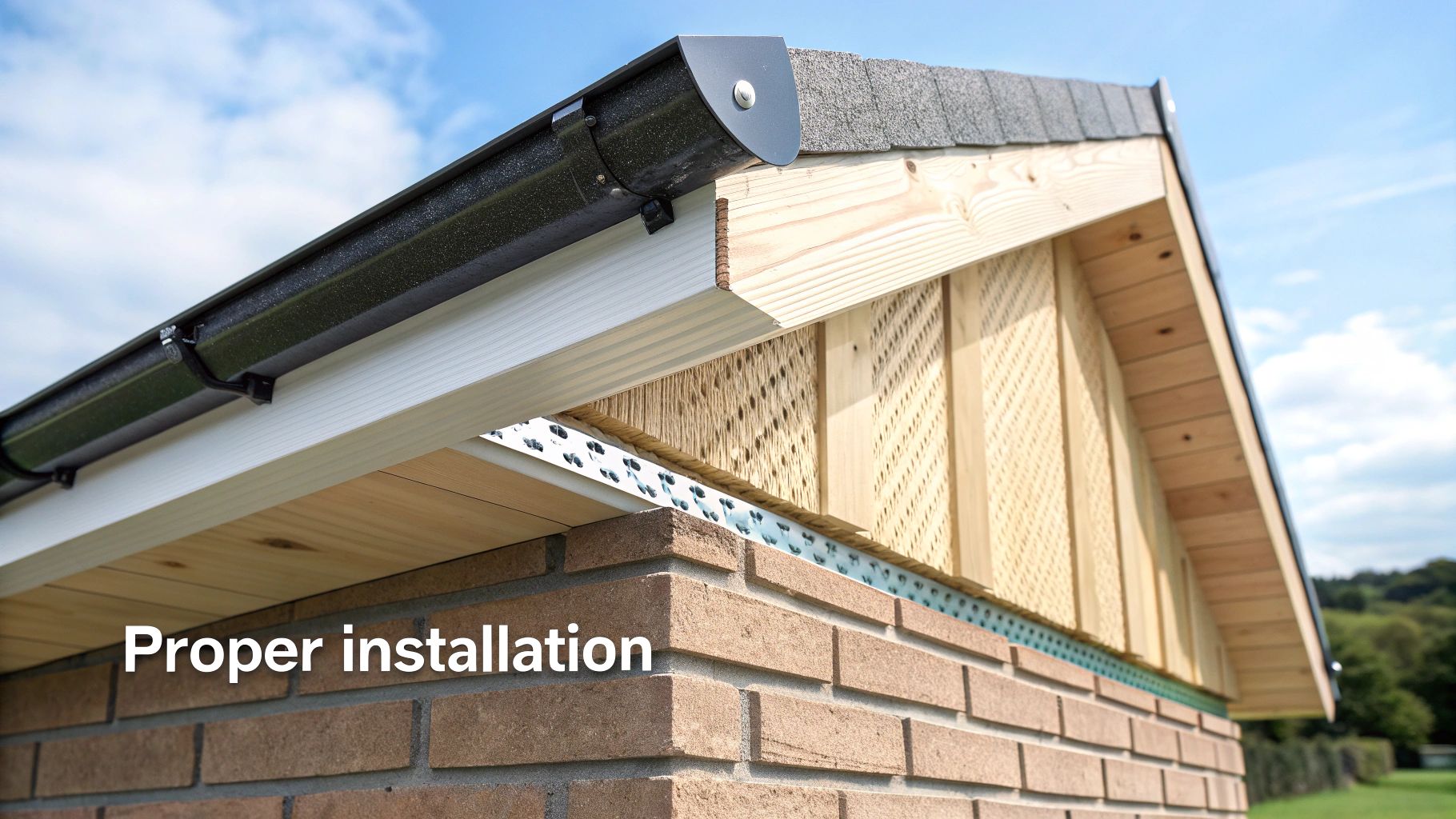
Choosing a beautiful, high-quality timber is a great start, but it’s only half the story. The real secret to long-lasting external cladding lies in how well it’s installed. Even the most resilient wood species can fail if fitted poorly, opening the door to problems with moisture, warping, and a spoiled finish. Getting the installation right isn’t just a recommendation; it’s essential for a façade that looks fantastic and performs for decades to come.
This focus on proper installation has never been more relevant. In the 2021/22 financial year, UK government spending on housing development hit around £9.6 billion, a 10% jump from the previous year. This investment is fuelling demand for high-performance materials like timber, making it crucial that we protect these assets with flawless application. For a deeper dive, you can discover more insights about the UK timber cladding market.
The Absolute Necessity of a Ventilated Cavity
If there’s one golden rule in timber cladding, it’s this: you must create a ventilated cavity. Think of it as giving your building space to breathe. By fixing vertical battens to the structural wall and then attaching the cladding boards to those battens, you create an air gap—usually between 19mm and 25mm deep.
This gap is a game-changer. It works like a chimney, allowing air to circulate freely from bottom to top. Its job is brilliantly simple but absolutely critical: it ensures any moisture that finds its way behind the cladding can evaporate and drain away before it causes any harm.
Without proper ventilation, moisture gets trapped. It sits against the back of the timber and your building’s wall, creating a damp, stagnant environment that’s a perfect recipe for rot and mould. This can seriously damage both the cladding and the structure itself.
A well-ventilated cavity allows the timber to dry out evenly after a downpour, which keeps it stable and dramatically extends its life.
Choosing the Right Fixings
It’s often the little details that make the biggest difference, and that’s certainly true when it comes to fixings. Using the wrong screws or nails can completely ruin the look of your cladding and even lead to it failing years ahead of time.
Always, always opt for high-quality, corrosion-resistant fixings. Stainless steel (A2 or A4 grade) is the industry benchmark for good reason. It won’t rust and cause those ugly black or brown streaks to run down your boards—a common sight when cheaper galvanised fixings react with the natural tannins in woods like Oak or Cedar.
For a rock-solid installation, keep these points in mind:
- Screws are Better than Nails: They provide much better holding power and are far less likely to loosen as the timber expands and contracts with the seasons.
- Get the Length Right: Your fixings should penetrate the support batten by at least 25mm to get a really secure grip.
- Always Pre-Drill: This is especially important near the ends of boards. Pre-drilling a pilot hole is a simple step that prevents the timber from splitting.
Understanding Cladding Profiles
The shape of the board, known as its profile, does more than just define the final look. It plays a huge part in how your façade sheds water. Different profiles create unique shadow lines and textures, but their main job is to interlock in a way that keeps the rain out.
Some of the most popular profiles include:
- Shiplap: With its classic overlapping edge, shiplap provides excellent weather protection and creates a slightly rustic, textured feel.
- Tongue-and-Groove (T&G): These boards interlock tightly for a sleek, contemporary finish with very fine, clean lines.
- Rainscreen (Open Joint): This modern approach uses square-edged boards with a deliberate gap between them. It looks stunning but relies completely on the ventilated cavity and a high-performance membrane behind it to manage moisture.
Each profile strikes a different balance between aesthetics and performance. Choosing the right one ensures your cladding not only brings your design vision to life but also provides a tough, weather-tight shield for your building.
Environmental Benefits of Sustainable Timber
Opting for timber cladding is about so much more than just looks; it’s a powerful statement about your commitment to the environment. Wood is pretty special among mainstream building materials. Why? Because it’s a renewable resource that literally works for the planet its whole life.
Trees act as natural carbon sinks, pulling CO2 out of the atmosphere. That carbon stays locked inside the wood for the entire time it’s on your building. Think of it as turning your building’s exterior into a long-term carbon vault, actively helping to counteract emissions. This is a huge reason timber is fast becoming the go-to material for green-minded projects across the UK.
Sourcing Responsibly for a Healthier Planet
Of course, the whole environmental argument for timber hinges on one critical thing: responsible sourcing. To make sure your project is genuinely green, you’ve got to choose wood from sustainably managed forests.
This is where certifications from groups like the Forest Stewardship Council (FSC) and the Programme for the Endorsement of of Forest Certification (PEFC) come in. They’re your seal of approval. These labels guarantee that for every tree cut down, new ones are planted, which keeps the forest healthy, protects biodiversity, and ensures it can keep absorbing carbon for years to come. For a deeper dive, you can learn about the core principles of timber sustainability in our dedicated article.
This focus on responsible materials mirrors a wider trend, where sustainable landscaping practices are also making a big impact, changing how we approach our outdoor spaces from the ground up.
Timber’s Role in Achieving Net Zero
The choices we make in construction have a massive impact. In fact, the UK’s built environment accounts for an eye-watering 25% of the country’s total greenhouse gas emissions each year. It’s a huge number.
In response, the government is pushing for greater use of wood through its ‘Timber in Construction Roadmap’. This plan is a cornerstone of the UK’s strategy to hit net zero by 2050, placing timber cladding right at the heart of the solution. You can read the full government roadmap to see the big picture.
When you choose sustainably sourced timber cladding, you’re not just creating a beautiful façade. You’re taking an active part in a national mission to build a greener future. It’s a practical, effective, and stunning way to shrink a building’s carbon footprint right from the start.
Answering Your Top Timber Cladding Questions
Even after diving into the details, you probably still have a few practical questions on your mind. That’s perfectly normal. This section tackles some of the most common queries we hear from architects and homeowners, giving you the clear answers you need to move forward with confidence.
How Long Does Timber Cladding Last?
This is the big one, and the answer really comes down to two things: the timber you choose and how well it’s installed.
If you opt for a highly durable species—something from Durability Class 1 or 2 like Accoya or Western Red Cedar—you can realistically expect it to last for 50 years or more. The key is ensuring it’s properly fitted with a ventilated cavity behind it to keep moisture at bay.
For a moderately durable choice like Siberian Larch (Class 3), you’re looking at a solid service life of around 15-20 years. That said, you can push this much further by applying a good quality protective finish or by choosing a charred Yakisugi treatment from the start.
Is Timber Cladding a Fire Risk?
It’s a valid concern. While timber will, of course, burn, its behaviour in a fire is surprisingly predictable. As it burns, it forms a layer of char which actually insulates the unburnt wood underneath. This helps the structure hold its integrity for longer than you might think—often outperforming unprotected steel in a fire.
For projects where fire safety is paramount, you’re not out of options. Many timber species can be factory-treated with fire-retardant chemicals to meet strict UK Building Regulations. It’s also worth remembering that dense hardwoods and charred timber have inherently better fire resistance than untreated softwoods.
Always get up to speed with the latest fire safety regulations for your specific building type and location before making a final decision.
How Much Maintenance Will It Need?
The level of upkeep really depends on the look you’re going for and the timber you’ve chosen.
- Low Maintenance: If you love the idea of your cladding weathering naturally to a beautiful silver-grey, then durable timbers like Cedar or Larch are fantastic. They require almost nothing more than a gentle clean now and then. Charred timber is another champion of low maintenance, typically only needing a fresh coat of oil every 10-15 years.
- Regular Maintenance: Want to preserve that ‘just installed’ colour? You’ll need to commit to a bit more work. Using a protective oil or stain means you’ll likely need to reapply it every 3-7 years. The exact timing depends on the specific product you use and how much sun and rain your building gets.
What’s the Most Cost-Effective Timber?
When you’re thinking about cost, it’s crucial to look beyond the initial price tag and consider the whole-life value.
Initially, options like British Larch or treated softwoods are often the friendliest on the wallet.
However, spending a little more upfront on a naturally durable timber, like Siberian Larch, can easily pay for itself over time. You’ll save on maintenance costs, and it simply won’t need replacing for a much longer time. The real cost is always a balance between the initial material price, the complexity of installation, and what you’ll need to spend on it down the line.
Here’s a quick summary of those common questions.
Frequently Asked Questions
| Question | Answer |
|---|---|
| How long will my timber cladding last? | A durable species (Class 1-2) like Western Red Cedar can last 50+ years if installed correctly. A moderately durable species (Class 3) like Siberian Larch typically lasts 15-20 years, but this can be extended with finishes or charring. |
| Is timber cladding a serious fire risk? | Timber is combustible, but it chars at a predictable rate, which insulates the core and helps maintain structural integrity. For higher-risk projects, fire-retardant treatments are available to meet UK Building Regulations. |
| What kind of maintenance is required? | It varies. Durable timbers can be left to weather naturally with minimal upkeep. Finishes to preserve colour need reapplying every 3-7 years. Charred timber is very low maintenance, often only needing re-oiling every 10-15 years. |
| Which timber is the most budget-friendly? | British Larch or treated softwoods usually have the lowest initial cost. However, more durable timbers can be more cost-effective long-term due to lower maintenance and a longer lifespan. |
Hopefully, that clears a few things up! Choosing the right timber is about balancing aesthetics, performance, and budget to get the perfect result for your project.
For a unique and highly durable timber for external cladding that blends an ancient craft with modern performance, take a look at the stunning range of charred timber products at TimberSol. Discover how our Yakisugi cladding can bring unmatched beauty and resilience to your project at https://timbersol-backup.elnoirstudio.com.
