
Charred Wood Blog
Types of wood fence: UK Homeowner’s Guide

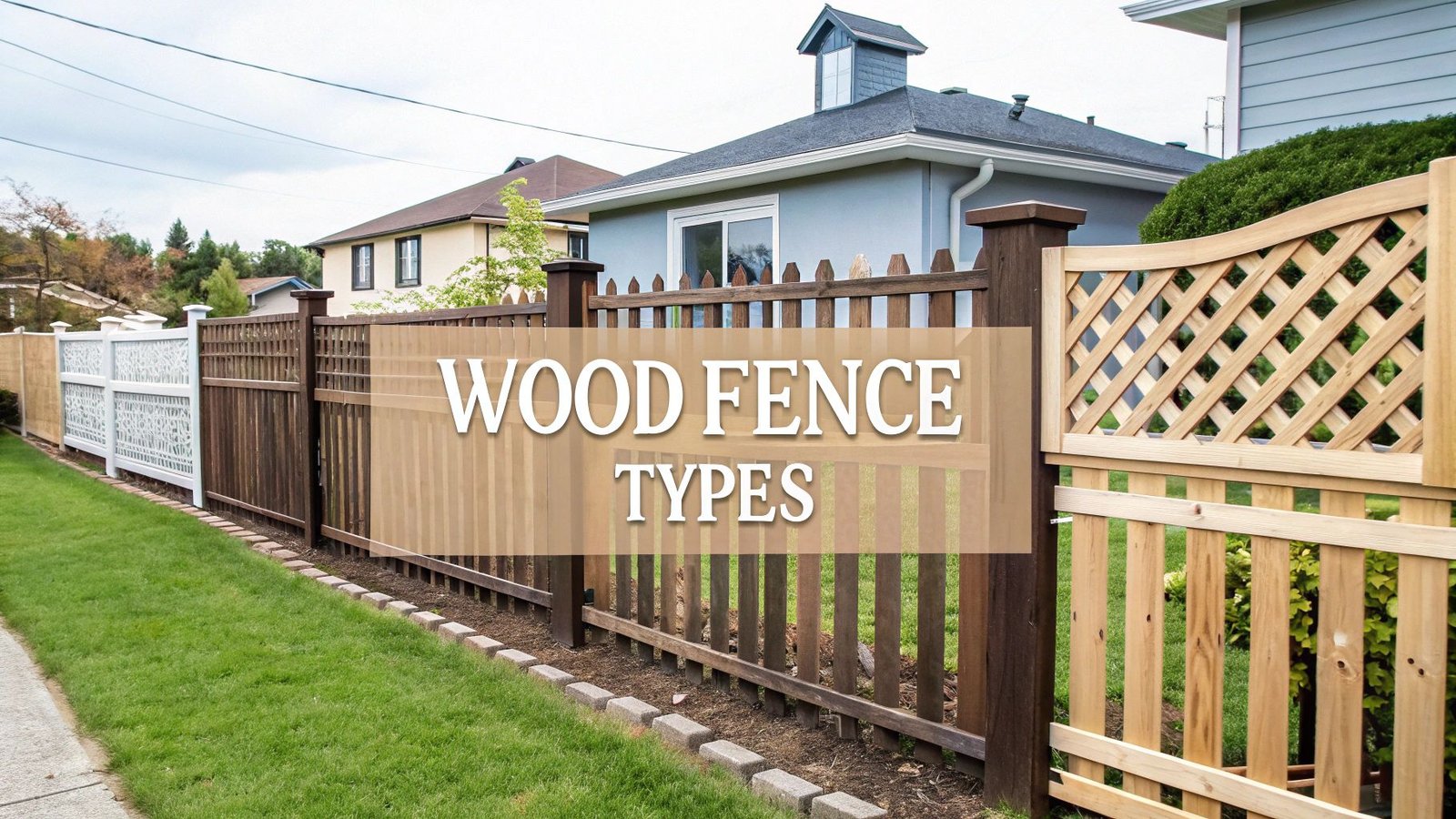
Picking the right wood fence is about much more than just choosing a style; it’s about setting the entire tone for your garden, defining its personality and how secure it feels. The main types of wood fence you’ll come across range from tall, solid privacy fences designed to create a secluded hideaway, to the classic, charming picket fence that sets a friendly, traditional boundary. Getting to grips with what each design is built for is the best place to start.
Why a Wood Fence is the UK’s Garden Staple
Think of a fence as the frame for your outdoor masterpiece. It’s one of the most defining features of any garden. And while there are plenty of modern materials out there, good old-fashioned wood continues to be a firm favourite across the UK. It just has this natural charm and versatility that helps it blend beautifully into the classic British landscape. A wooden fence isn’t just a barrier; it’s a feature that adds real warmth and texture.
The love for timber fencing isn’t just a feeling; the numbers back it up. The UK’s wood fencing market pulled in around USD 608 million in 2024 and is expected to climb by about 4.5% each year until 2030. This consistent growth tells you that homeowners are still more than happy to invest in the timeless appeal of wood. If you’re curious about these trends, you can dig deeper in the full report on wood fencing from grandviewresearch.com.
Key Benefits of Choosing Wood
- Looks for Every Garden: From the rustic, open feel of a split-rail fence to the sleek, solid lines of featherboard, wood can be crafted to match any garden theme. It works just as well in a modern city plot as it does around a rambling country cottage.
- Natural Charm: You just can’t beat the real thing. The unique grain and warm colours of timber create a link to nature that synthetic materials often find hard to mimic.
- Good Value for Money: When you compare it to options like wrought iron or premium composite panels, wood is often a much more budget-friendly choice, especially for the initial outlay.
A well-chosen wood fence does more than just mark out your property. It elevates the entire feel of your garden, creating a beautiful backdrop for your plants to shine and giving you a private space to unwind.
Of course, once you’ve settled on the perfect fence, ensuring a professional garden fence install is key to making sure it stands firm for years to come. This guide will walk you through the most popular styles, helping you figure out which type of wood fence is the perfect blend of practicality and personality for your home.
Exploring Popular Wood Fence Styles
Choosing a wood fence isn’t just about marking out your property line; it’s about defining the whole character of your garden. The style you pick sets the tone, balancing privacy, security, and pure aesthetic appeal. Getting to grips with the most popular designs is the first real step to imagining how your outdoor space will look and feel.
Think of it like choosing a coat. A heavy winter parka offers total protection from the elements, while a stylish trench coat is more about making a statement. Fences are much the same—different styles are built for different jobs, whether you’re creating a private retreat or simply framing a lovely view.
This visual guide is a great starting point. It helps you quickly see how your main goal—be it privacy, style, or security—points you towards the right kind of fence.
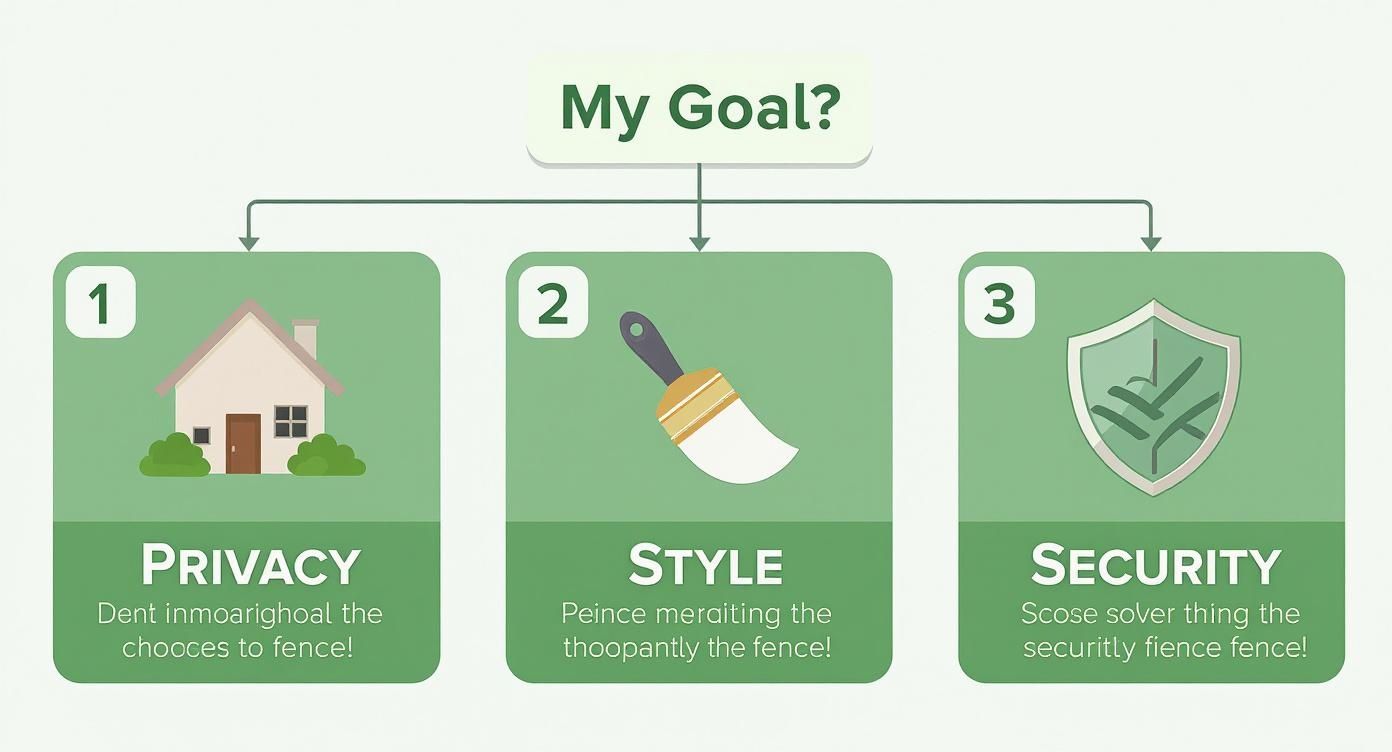
As you can see, knowing what you want to achieve makes narrowing down the options a whole lot simpler.
To help you compare the main players at a glance, here’s a quick rundown of what each style brings to the table.
Quick Guide to Common Fence Styles
| Fence Style | Primary Use | Privacy Level | Best For |
|---|---|---|---|
| Closeboard | Security & Privacy | High | Back gardens, boundary lines, noise reduction |
| Picket | Decoration & Boundary | Low | Front gardens, defining spaces, curb appeal |
| Lattice-Top | Privacy with Style | Medium-High | Enhancing plain panels, adding a decorative touch |
| Split-Rail | Boundary Marking | Very Low | Large rural properties, rustic or country settings |
This table should give you a solid foundation, but let’s dig into what makes each of these styles unique.
The Privacy Powerhouse: Closeboard Fencing
When total seclusion is what you’re after, closeboard fencing is the undisputed champion here in the UK. Often called featherboard, this style is the garden equivalent of drawing the curtains for the night. It’s built from vertical timber boards that overlap and are fixed to horizontal rails, creating a solid, gap-free barrier.
The result is maximum privacy and a real sense of security. It’s a tough, durable choice, perfect for boundaries with neighbours or for properties that back onto a public footpath. Its solid construction also does a decent job of dampening noise, helping to mute the drone of traffic or the chatter from next door.
The Classic Charmer: Picket Fencing
If you’re looking for that friendly, traditional cottage feel, the picket fence is a timeless classic. With its evenly spaced boards and often pointed or rounded tops, it creates a welcoming boundary without completely walling you off from the world.
This style is a brilliant choice for front gardens, adding heaps of character and curb appeal while keeping small children and pets safely contained. It’s not about privacy; it’s about defining your space with a light, airy touch that lets the sunshine and breezes through.
Choosing a fence style is ultimately about defining your relationship with the space around you. Do you want an open, inviting border or a solid, private enclosure? Answering that question is key to finding the perfect match.
Decorative and Elegant Designs
Of course, it doesn’t have to be all-or-nothing. For those who want to blend privacy with a bit of flair, a few styles offer the perfect compromise.
- Lattice-Top Panels: A fantastic hybrid option. These panels give you a solid fence for privacy at the bottom but feature a decorative, open-work lattice at the top. This clever design stops the fence from feeling too heavy or imposing and lets light filter through beautifully.
- Split-Rail Fencing: The go-to for a rustic, countryside look. Perfect for larger properties, this style uses simple horizontal rails slotted into posts. It’s one of the most open fence types, designed to mark a boundary in a natural, unobtrusive way rather than provide security. It has a charming, agricultural feel that works perfectly with country homes and sprawling gardens.
Selecting the Right Timber for Your Fence
Once you’ve settled on a style, the next big decision is choosing the right timber. Think of it like picking the right fabric for a coat; the material dictates not just the look, but how well it will stand up to the UK’s often damp and unpredictable weather. Your choice will directly impact your fence’s lifespan, how much maintenance it needs, and of course, the final cost.
The world of fencing timber really boils down to two main camps: softwoods and hardwoods. Each offers a different balance of durability, aesthetics, and price, so it’s well worth understanding what sets them apart.
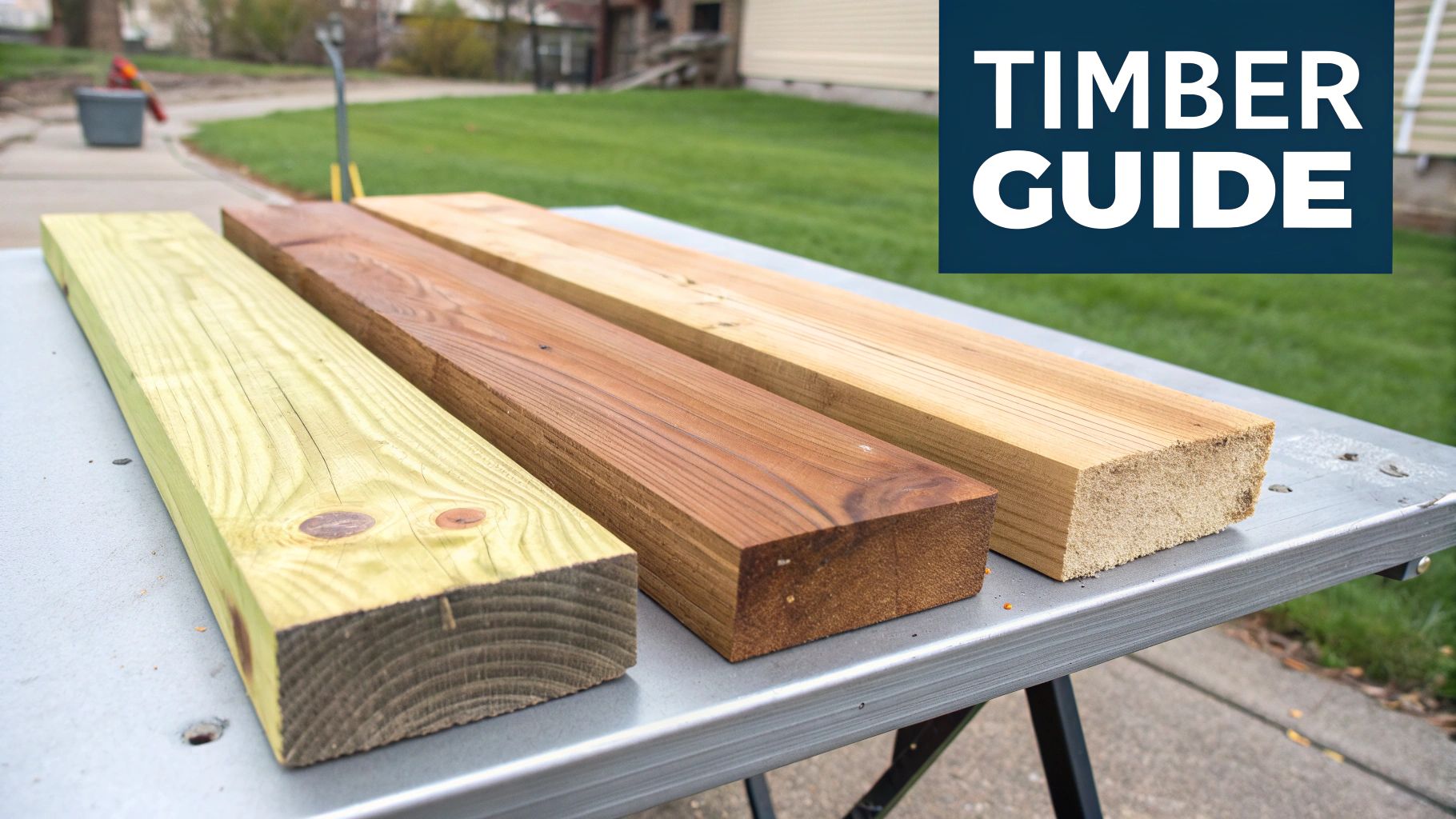
Softwoods vs Hardwoods: A Practical Comparison
Softwoods like pine and cedar are popular for a reason – they’re easy to find and much easier on the wallet. In 2025, a standard softwood panel costs around £30, which makes it a really accessible option for most homeowners. The catch? This lower upfront cost comes with a trade-off in longevity. You can typically expect them to last only 5 to 10 years before rot or insect damage starts to take hold.
On the other end of the spectrum, hardwoods such as oak are the heavyweights of the timber world. They are incredibly dense, seriously durable, and naturally resistant to decay, often lasting for 20 years or more. This impressive resilience comes at a significant premium, though. A solid oak panel will set you back roughly £300 – a tenfold increase compared to its softwood equivalent.
The Importance of Pressure Treatment
No matter which timber you lean towards, pressure treatment is an absolute must-have for any wood destined for a life outdoors in the UK. This industrial process forces chemical preservatives deep into the wood’s cellular structure, creating a formidable barrier against moisture, rot, and destructive insects. Without it, even the sturdiest-looking timber will quickly start to break down once it’s exposed to the elements.
Choosing untreated wood for a fence is like buying a car without a protective coat of paint. It might look fine at first, but it won’t take long for the weather to cause serious, irreversible damage.
You can learn more about how to select the https://timbersol-backup.elnoirstudio.com/blog/best-wood-for-outdoor-use/ in our detailed guide, which covers various timber species and their suitability for garden projects.
Specialised Finishes: Yakisugi
For those after a truly unique and exceptionally durable finish, there’s a centuries-old Japanese technique worth exploring. This method, known as Yakisugi (yakisugi also known as shou sugi ban), involves carefully charring the surface of the wood with fire.
This controlled burning process achieves several remarkable things all at once:
- It creates a waterproof, carbonised layer that’s highly resistant to rot.
- The charring makes the wood unappetising to insects, acting as a natural pest deterrent.
- It results in a stunning, deep black finish with a distinctive texture that is both rustic and modern.
This ancient technique transforms ordinary timber into a resilient and beautiful material, perfect for creating a real statement fence. Once you have selected your timber, it’s just as important to think about the fasteners. You can refer to a comprehensive guide to the best screws for woodworking projects to make sure your fence is securely put together.
Thinking Beyond Traditional Wood Fencing
https://www.youtube.com/embed/4ZwRapgSGQk
While the classic, natural charm of a real wood fence is undeniable, it’s certainly not your only choice when it comes to marking out a beautiful and sturdy boundary for your property. Modern materials bring some compelling advantages to the table, and one of the frontrunners is undoubtedly composite fencing. This clever material is an engineered blend of recycled wood fibres and tough plastics, designed to give you the best of both worlds.
It’s easy to see why homeowners are increasingly turning to composite. It neatly sidesteps the common headaches that come with owning a timber fence in the unpredictable UK climate, like rot, warping, and insect attacks. This built-in resilience means you get the handsome look of wood without the constant maintenance worries.
Why Make the Switch to a Composite Fence?
The biggest draw for most people is the promise of an almost entirely maintenance-free life. Forget the annual ritual of sanding, staining, or sealing that wood demands. A simple wash down with soap and water is all a composite fence ever really needs to look its best, leaving your weekends free for enjoying your garden rather than working on it.
This ‘fit and forget’ quality is a huge part of its growing appeal. Composite fencing is becoming a go-to choice across the UK in 2025, thanks to its mix of durability, eco-friendly credentials, and minimal upkeep. It delivers that sought-after timber look while standing strong against mould, mildew, and the fading effects of the sun. You can get a feel for the latest designs over at Ecoscape.co.uk, who are tracking the latest trends.
The key thing to remember is this: while composite might cost more upfront than a standard softwood fence, its incredible lifespan and zero maintenance costs often make it the smarter financial choice in the long run.
A Long-Term Investment in Your Home
When it comes to durability, composite fencing is in a league of its own. These fences are engineered to last, with many suppliers backing their products with warranties of up to 25 years. That’s a world away from many softwood fences, which can often need major repairs or even a full replacement in under a decade.
By opting for composite, you’re not just buying a fence; you’re investing in a long-term solution that saves you money over time on repairs and treatments. These same benefits apply to other garden features too, as we explore in our guide on composite decking versus wood. If a hassle-free, long-lasting fence that looks great with next to no effort sounds like a good deal, then composite is an alternative you should seriously consider.
Essential Maintenance for a Long-Lasting Wood Fence
A beautiful wood fence is a real investment, boosting your home’s security and kerb appeal. To keep it standing strong against the unpredictable UK weather and looking its best, a little bit of annual maintenance goes a very long way. Think of it as a small bit of prevention to avoid a big, costly cure later on.

Just like any other part of your home, your fence needs a bit of care to do its job properly. The first step is always a good, thorough clean. You need to shift the grime, algae, and mildew that inevitably build up, especially in our damp climate. A simple wash with soapy water or a dedicated fence cleaner is usually all it takes.
Getting the surface clean and clear sets you up perfectly for the most important job: sealing or staining.
Creating a Protective Barrier
Applying a quality sealant or stain is like giving your fence a durable, weather-proof coat. This barrier is absolutely vital for shielding the timber from its two worst enemies: moisture and ultraviolet (UV) light. Moisture is what leads to rot, while the sun’s UV rays will bleach the colour, dry the wood out, and eventually cause it to crack.
As a rule of thumb, plan to re-seal or re-stain your fence every two to three years. A good test is to see if water beads up on the surface; if it soaks in instead, it’s time for a fresh coat. This one task alone can add years to the life of many types of wood fence.
“Regular maintenance isn’t just about looks; it’s the single most effective way to get the most out of your timber fence. A weekend of work every couple of years can stop rot in its tracks and save you the hassle and cost of a full replacement.”
Beyond the big jobs, it pays to get into the habit of giving your fence a quick once-over every so often.
Annual Inspection and Minor Repairs
At least once a year, take a slow walk along your fence line and have a proper look. You’re searching for those common little issues that are a piece of cake to fix when you catch them early but can snowball into major headaches if left alone.
Here’s a simple checklist for your annual inspection:
- Wobbly Posts: Give each post a gentle push. If there’s a lot of give, the post could be rotting at ground level, or its concrete footing might be failing. Securing a wobbly post now is far easier than dealing with a collapsed section of fence later.
- Loose or Cracked Boards: Keep an eye out for any split pickets, damaged panels, or sagging rails. Swapping out a single board is a quick and cheap fix.
- Failing Fasteners: Look for rusty nails or screws. Rust not only stains the wood but also means the fastener is losing its grip. Replacing them with galvanised or stainless steel versions is a worthwhile upgrade.
By following these straightforward steps, you can keep your fence as a sturdy, attractive feature of your garden for years to come. For a deeper dive into this topic, you can learn more about how to protect wood outdoors in our detailed guide.
Your Wood Fence Questions, Answered
Picking the right wood fence means balancing aesthetics, the right type of timber, and how much upkeep you’re prepared for. To help you get it right, we’ve put together some straightforward answers to the questions we hear most often from homeowners.
How Long Does a Wood Fence Actually Last in the UK?
Honestly, this all comes down to the timber you choose and how well you look after it. For a standard pressure-treated softwood fence, like pine, you can realistically expect it to last somewhere between 10 and 15 years, especially with our famously damp British weather.
But if you invest in a more naturally durable timber, you can add years to its life. A cedar fence, for instance, will often see you through 15 to 20 years, while a top-tier hardwood like oak can stand proud for 25 years or more. The secret to hitting those numbers? Regular cleaning and sealing.
Do I Need Planning Permission to Put Up a New Fence?
For the most part, you can put up a new garden fence in the UK without needing to bother with planning permission. But, and it’s a big but, there are a few important exceptions to keep in mind.
You’ll almost certainly need permission if:
- The fence you want to build is over 2 metres high.
- It’s next to a road or footpath and stands over 1 metre high.
- Your house is a listed building or sits within a Conservation Area.
- Your fence will border the garden of a neighbouring listed building.
If you have even the slightest doubt, it’s always worth a quick call to your local planning authority before you start. It’s a simple check that can save a world of hassle later on.
A quick tip on boundaries: Don’t just assume you know who owns which fence. It’s a common trip-up. The best way to avoid neighbourly disputes is to check your property deeds to confirm exactly where your responsibility lies before a single post goes in the ground.
What’s the Best Wood Fence for Privacy?
If you want to feel properly secluded in your garden, you can’t beat closeboard fencing (sometimes called featherboard). The whole design is based on vertical boards that overlap, which creates a completely solid barrier with no gaps for prying eyes.
It’s a really sturdy style of fence, so on top of giving you total privacy, it adds a good bit of security and can even help to muffle some of the noise from the street or next door. For pure, uninterrupted privacy, it’s the go-to choice.
How Much Work is a Wood Fence to Maintain?
Let’s be realistic: every wood fence needs a bit of TLC to fight off rot, pests, and the relentless British weather. The good news is that a simple annual routine is usually all it takes to keep it looking great and extend its lifespan significantly.
Think of it as a simple yearly checklist:
- A Good Clean: Once a year, give it a gentle scrub with a stiff brush and some soapy water. This gets rid of the grime, algae, and mildew that trap dampness against the wood.
- A Quick Inspection: Every so often, just walk the perimeter. Are any posts wobbly? Any boards loose? Look out for any early signs of rot, especially at the base of the posts.
- Seal and Protect: Re-applying a good quality waterproof sealant or stain every 2 to 3 years is non-negotiable. It’s the fence’s best defence against moisture and sun damage.
Putting in a little effort consistently is so much easier than tackling a major repair job—or worse, a full replacement—a few years down the line.
At TimberSol, we specialise in creating beautiful and incredibly durable timber products using the ancient Yakisugi charring technique. If you’re looking for a fence that combines stunning aesthetics with exceptional resilience, explore our range of charred timber solutions. Discover the difference at https://timbersol-backup.elnoirstudio.com.
