
Decking Wood vs Composite A UK Homeowner’s Guide

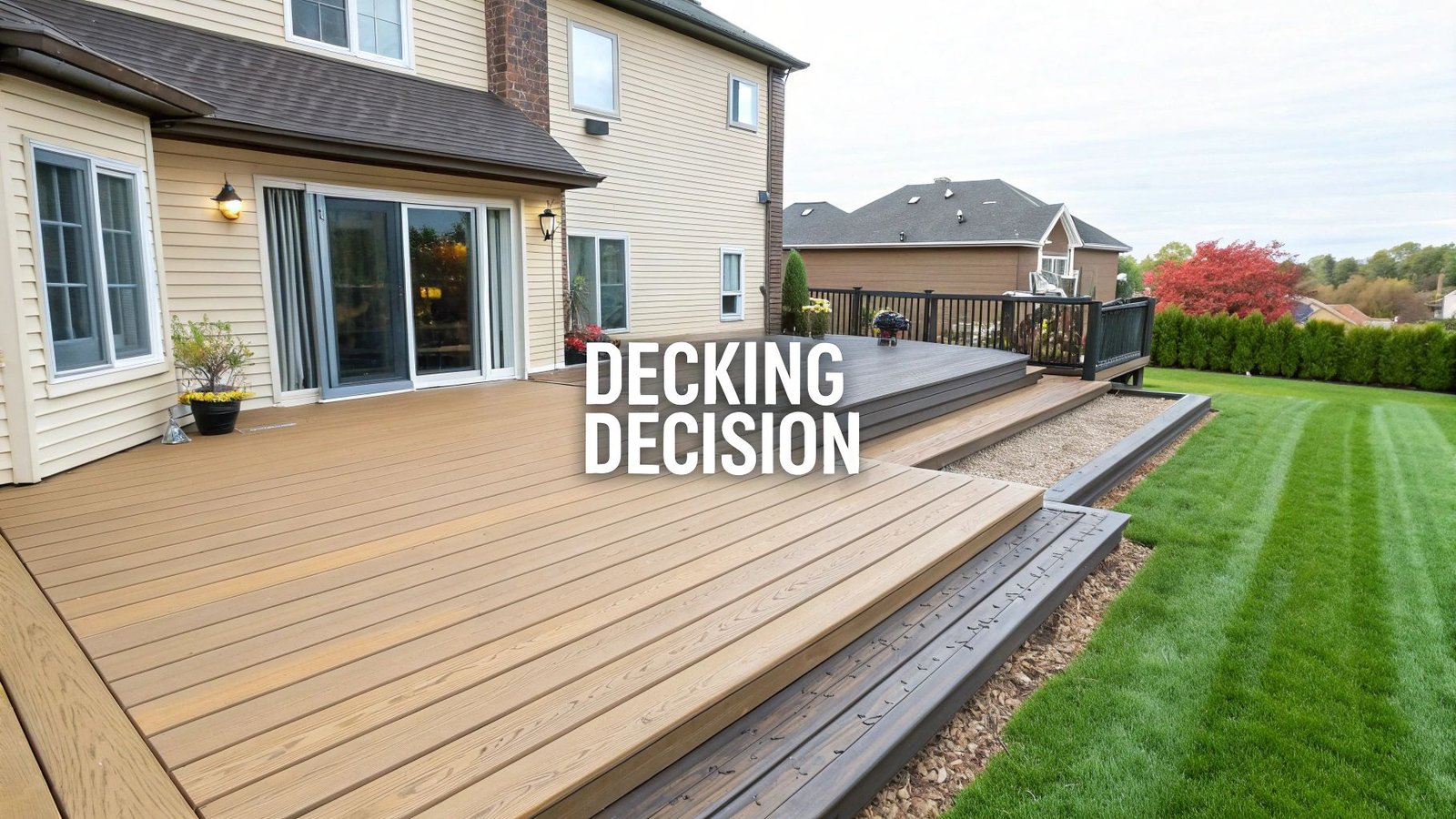
When you’re trying to decide between wood and composite decking, what it really comes down to is what you value most. If you’re after a deck that looks great with minimal fuss, then composite decking is probably already on your radar. But if you can’t resist the timeless charm of real timber, traditional wood has an appeal that’s hard to beat, even with the upkeep it demands.
Choosing Your Ideal Garden Decking
Picking the right material for your garden deck is a big decision. It’s one that will shape not just the look and feel of your outdoor space, but also how much time and money you’ll spend on it down the line. You’re essentially choosing between the classic, natural beauty of real timber and the practical, low-maintenance appeal of modern composite boards.
Each material has its own clear strengths, and getting to grips with them is the key to building a deck you’ll be happy with for years. Let’s lay out the groundwork for this comparison.
Natural wood decking offers an authenticity that’s hard to replicate. The unique grain, the feel underfoot – it connects your garden to the natural world. That connection, however, comes with a catch. Here in the UK, our damp climate means wood needs regular attention. You’ll have to commit to seasonal sealing, staining, and cleaning to keep rot and decay at bay.
On the flip side, you have composite decking. It’s a clever mix of wood fibres and recycled plastics, engineered specifically to stand up to the British weather right from the start. You won’t need to stain or seal it, and it keeps its colour much longer than most woods. For anyone who’d rather be relaxing on their deck than working on it, it’s a very compelling option. The trade-off? A higher price tag to begin with and an appearance that, while stylish, doesn’t quite have the organic character of real wood.
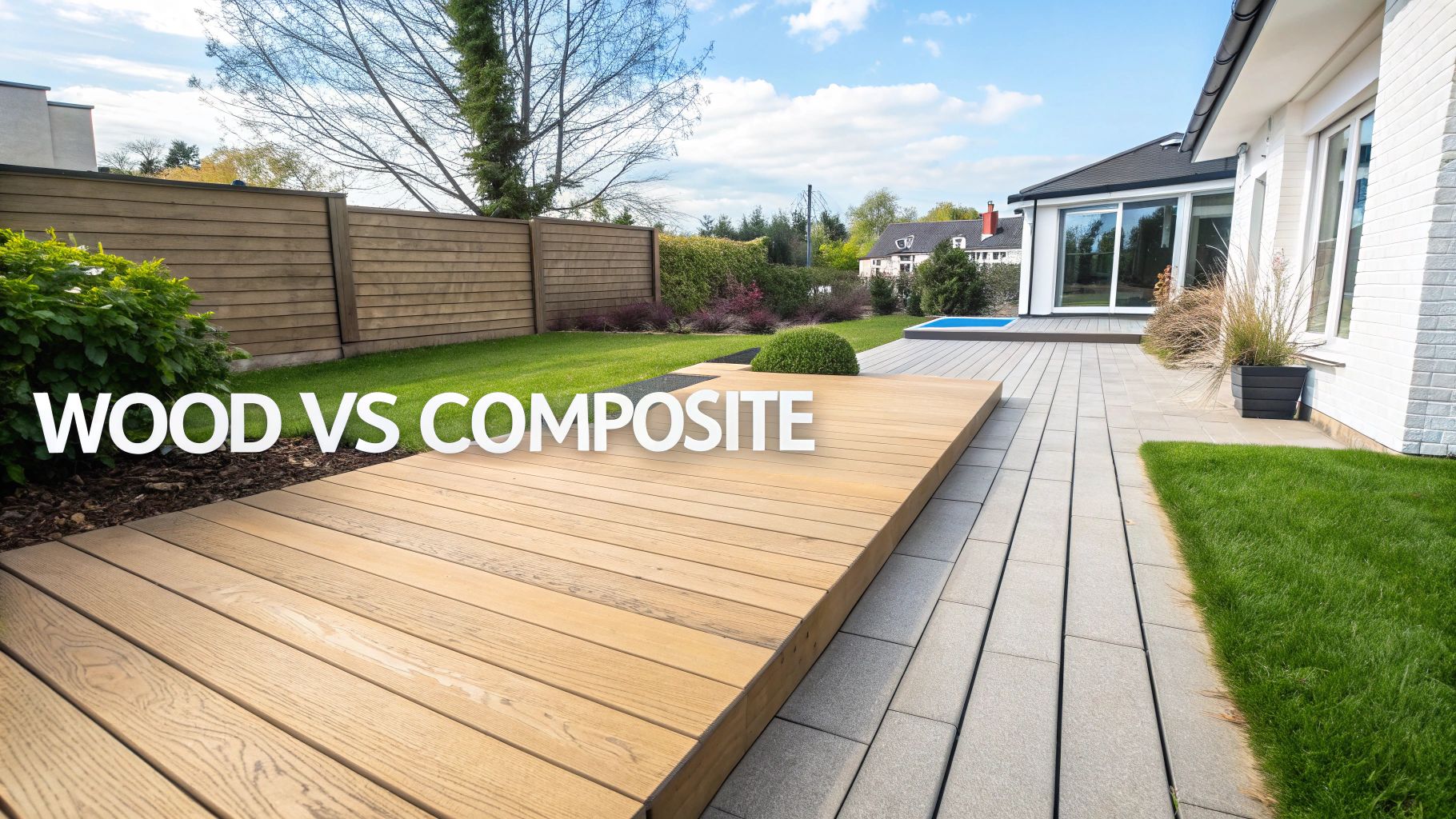
Wood vs Composite Decking At a Glance
To help you get a clear picture, we’ve put together a simple table that breaks down the essential differences. Think of it as a starting point to see which material naturally fits your lifestyle, budget, and vision for your garden.
| Factor | Traditional Wood Decking | Composite Decking |
|---|---|---|
| Initial Cost | Lower for softwoods, higher for hardwoods. Generally more affordable upfront. | Higher initial investment, with costs varying by brand and quality. |
| Maintenance Demands | High. Requires annual cleaning, sanding, staining, or sealing to prevent rot. | Low. Needs occasional cleaning with soap and water to prevent mildew. |
| Typical Lifespan | 10-15 years for softwood; 25+ years for quality hardwood with proper care. | 25-30+ years, often backed by extensive warranties against fading and staining. |
| Aesthetics | Authentic, natural appearance with unique grain patterns. Can be stained any colour. | Consistent, uniform look. Available in a wide range of colours and finishes. |
| Weather Resistance | Susceptible to rot, warping, and splintering if not maintained. | Highly resistant to moisture, rot, and pests. Can be prone to scratches. |
This quick overview highlights the core trade-offs. Now, let’s dig a little deeper into what these differences mean in the real world.
Comparing Durability in the UK Climate
Let’s be honest, the British weather is relentless. From endless drizzle to the occasional surprise heatwave, your decking is constantly under assault. How well it stands up to this abuse, year after year, is probably the most important thing to consider. When it comes to decking wood vs composite, the real debate is about how each one handles the damp, fluctuating temperatures that define our climate.
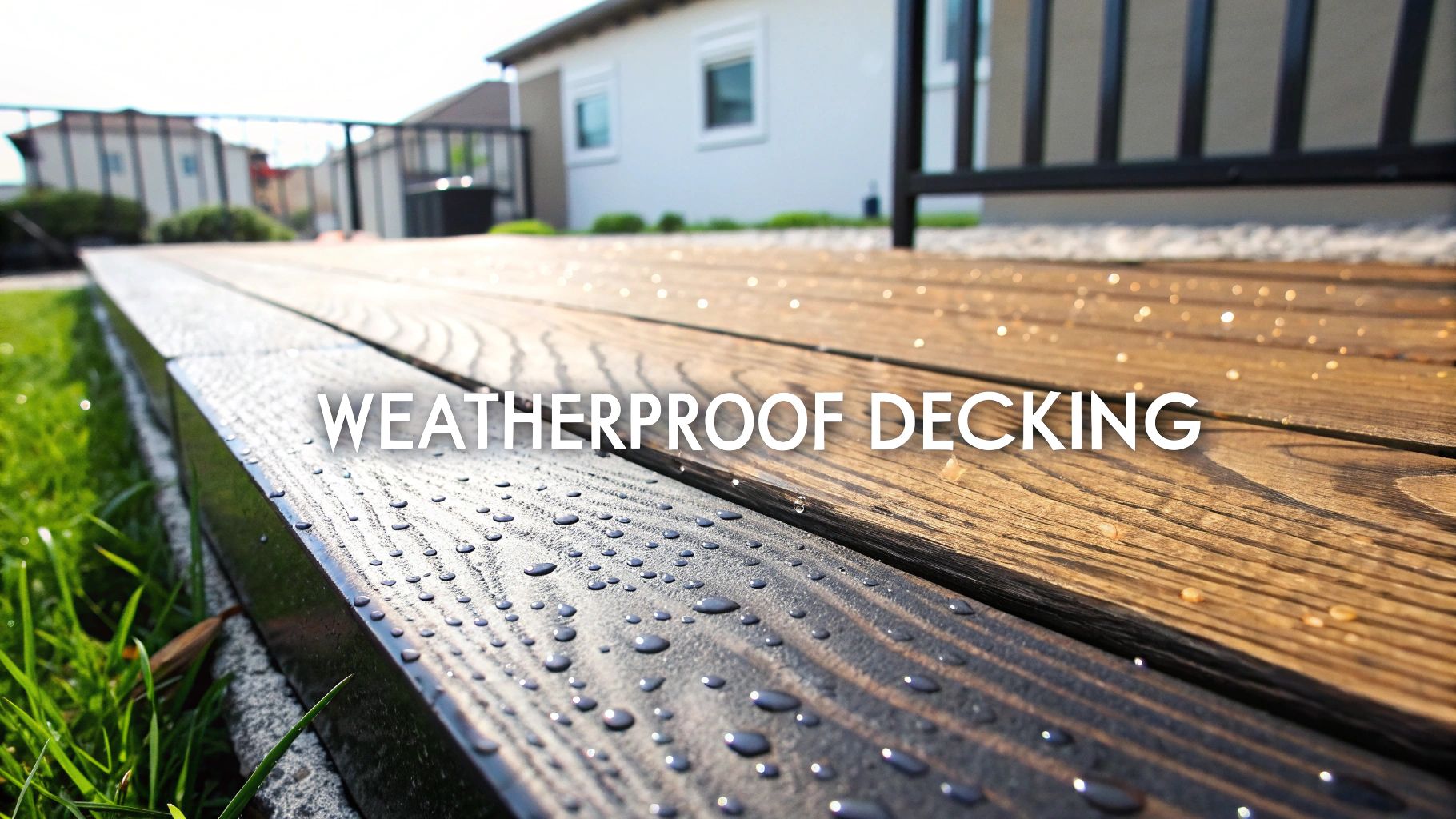
Traditional timber has a natural weakness: moisture. If it’s not consistently protected, wood will soak up water, leading to a host of problems we’ve all seen in UK gardens. Swelling, warping, and the dreaded rot are almost inevitable without proper care.
On top of that, damp wood is an open invitation for pests like wood-boring insects and mould, which can seriously compromise the structure of your deck. And while hardwoods are tougher than softwoods, no untreated timber is completely immune to the challenges of our weather.
Composite Decking: An Engineered Defence
Composite decking was designed specifically to solve these problems. By mixing wood fibres with plastic polymers, manufacturers created a material that simply doesn’t absorb moisture in the same way. This one quality gives it a massive head start in the damp UK environment.
Because composite boards don’t rot, warp, or splinter like natural wood, they offer a far more predictable and stable performance over their lifespan. They are also completely immune to the pests that can plague timber, taking another common durability worry off the table.
Composite decking’s engineered resilience against moisture is its greatest strength, particularly in climates where dampness is a constant. This prevents the primary causes of decay—rot and fungal growth—that shorten the lifespan of unprotected natural wood.
But this engineered durability isn’t a magic bullet; it comes with its own set of trade-offs. While composites are fantastic at resisting moisture, they face different challenges from the elements.
Fading UV Rays and Scratches
One of the most common complaints about composite decking is its vulnerability to the sun. Over time, constant exposure to UV rays can cause the colour to fade, especially on the cheaper, uncapped boards. While manufacturers have made huge improvements with protective capping and UV inhibitors, it’s still something to keep in mind.
Also, while composites are tough, they aren’t scratch-proof. Dragging heavy garden furniture or even a dog’s claws can leave permanent marks. Unlike real wood, which you can often sand down and refinish, repairing scratches on a composite board is a much trickier business.
Finally, composite decking can get surprisingly hot, especially in darker colours. On one of those rare, glorious British summer afternoons, the surface can become uncomfortable to walk on with bare feet—a small but important point for families with children or pets.
Yakisugi: A Natural Approach to Extreme Durability
For those who love the authentic feel of real wood but need durability that can compete with high-end composites, there’s a fantastic alternative rooted in ancient craftsmanship. The Japanese technique of Yakisugi (also known as shou sugi ban) involves charring the surface of timber, which creates a stunning and weatherproof protective layer.
This process gives the wood a remarkable set of benefits that directly counter the weaknesses of traditional timber in the UK:
- Exceptional Water Resistance: The carbon layer from the charring is naturally hydrophobic. It actively repels water, stopping it from soaking into the wood and dramatically reducing the risk of rot and warping.
- Natural Pest Deterrence: The charring process makes the timber inedible to insects and resistant to fungal growth, providing a natural defence without any chemical treatments.
- Enhanced Fire Retardancy: It sounds counterintuitive, but charring the wood actually makes it more resistant to fire. The carbonised layer acts as an insulator, slowing down combustion.
TimberSol’s charred timber decking offers a solution that marries the raw beauty of wood with a level of resilience that stands up to both composites and the harshest UK weather. It gives you a distinct, sophisticated look while delivering a low-maintenance, long-lasting deck that isn’t built on plastics. It’s the perfect choice for anyone looking for the ultimate blend of performance and natural elegance.
Breaking Down the True Cost of Ownership
Choosing a deck based purely on the price per square metre is a classic mistake. It’s like buying a car without asking about its fuel economy or repair costs. You see the sticker price, but you miss the bigger financial picture. The real story of wood vs composite decking costs doesn’t show up on the initial invoice; it plays out over years of maintenance, repairs, and your own time.
To make a smart decision, you have to look past the upfront cost. You need to think about the long-term commitment, both in money and effort, that each material demands to keep it looking its best.
Upfront Investment: Wood vs Composite
On paper, traditional wood often looks like the clear winner for those on a tight budget. Pressure-treated softwood, a staple for UK gardens, can be noticeably cheaper to buy than most composite boards, making it a very tempting starting point.
But not all wood is created equal. If you start looking at premium hardwoods like Ipe or Teak, the price gap shrinks dramatically. In fact, they can easily match or even cost more than mid-range composite options. So, the initial outlay for wood really depends on where you want to sit on the quality spectrum.
Composite decking, on the other hand, almost always has a higher ticket price. The manufacturing process, which fuses recycled wood fibres with plastics, creates a dense, durable board that simply costs more to produce. The market is certainly responding; the UK’s wood-plastic composite sector is forecast to hit $476.54 million by 2028, a trend largely powered by its reputation for durability and easy DIY installation. You can read more about this WPC decking market growth on cognitivemarketresearch.com.
Projecting Long-Term Costs: A 20-Year View
Here’s where the financial script really flips. That lower initial cost for a wood deck? Think of it as a down payment. The real expense comes from two decades of necessary upkeep.
A deck is a long-term addition to your home. To understand its true cost, you must calculate the total investment over at least 15-20 years, including all materials, labour, and maintenance products.
Let’s break down the typical lifecycle for a standard pressure-treated softwood deck here in the UK:
- Annual Cleaning: You’ll need specific cleaners to battle the inevitable algae, mould, and grime that our damp climate encourages.
- Annual Sealing/Staining: This is non-negotiable. It’s the only way to protect the timber from moisture, rot, and UV damage. That means buying tins of stain or sealant, plus brushes and rollers, every single year.
- Board Replacements: It’s almost a certainty that over a 20-year span, some boards will give up the ghost. They’ll warp, split, or start to rot, and you’ll have to replace them.
When you add it all up, the cost of stains, sealers, cleaners, and replacement boards—not to mention the value of your own weekends spent working on it—can easily double the original price of the deck. For a deeper dive into these numbers, check out our guide on how much decking really costs.
The Low-Maintenance Dividend of Composite
In contrast, composite decking offers a far simpler and more predictable long-term financial forecast. Its biggest selling point is that it virtually eliminates all those recurring maintenance costs.
- No Staining or Sealing: Ever. The colour and protective layer are baked in during manufacturing. You will never need to buy a tin of stain.
- Minimal Cleaning Costs: A good scrub with soap and water a couple of times a year is typically all it takes to keep it looking sharp.
- No Rot or Warping: Because the material is so resistant to moisture, you won’t be budgeting for replacement boards due to decay.
Yes, the upfront cost is higher. But the total cost of ownership for composite decking often breaks even with wood around the 10-year mark. Stretch that out to 20 or 25 years, and composite almost always comes out ahead as the more economical choice. You’re paying for predictable, minimal expenses year after year—a crucial factor when weighing the charm of natural wood against the engineered convenience of composite.
A Realistic Look at Decking Maintenance
When you’re weighing up wood vs composite decking, it’s easy to get swept up in marketing slogans promising a lifetime of effortless outdoor living. But let’s be realistic: every deck, regardless of material, is going to need some attention. The real question is what kind of attention you’re willing to give, and how often.

The upkeep for wood and composite decking follows two completely different scripts. One is a hands-on, seasonal routine to preserve its natural beauty and strength. The other is more of a simple, reactive cleaning job to keep its engineered surface looking sharp. Let’s get into what that actually means for you.
The Annual Ritual of Wood Decking Care
Choosing a traditional timber deck means you’re signing up for a seasonal maintenance schedule. This isn’t just about aesthetics; it’s a critical process for protecting the wood from the notoriously damp UK climate and keeping it structurally sound for the long haul.
A typical year of wood deck ownership involves a few key jobs:
- Spring Deep Clean: Once winter has passed, a simple sweep won’t cut it. Your deck will need a proper scrub with a dedicated cleaner to shift the grime, algae, and mildew that’s built up, which can make the boards surprisingly slippery.
- Summer Inspection and Repair: This is your chance to play detective. Look for splintering boards, wobbly screws, or any patches that look a bit soft—the first tell-tale signs of rot. Any problem boards should be sanded down or replaced before the issue gets worse.
- Autumn Sealing or Staining: This is the big one. Applying a fresh coat of sealant or stain is absolutely non-negotiable. This barrier is what repels water, stops moisture from seeping into the grain, and protects the timber from UV damage. For a complete rundown, you can learn more about how to protect wood outdoors in our detailed article.
This cycle of cleaning, repairing, and re-sealing is the fundamental trade-off for the natural charm of a standard wood deck.
Clarifying the ‘Low-Maintenance’ Promise of Composite
Composite decking is, quite rightly, sold as the low-maintenance alternative. It completely does away with the need for any sanding, staining, or sealing. But here’s the crucial distinction: low-maintenance isn’t no-maintenance. You still need a simple cleaning routine to keep it looking good and prevent common problems.
While composite decking frees you from the annual cycle of sanding and sealing, it still demands regular cleaning to prevent the build-up of surface mould and mildew, which can thrive on organic debris like fallen leaves and pollen.
The main job is pretty straightforward: a good wash with soap and water or a gentle pressure washer twice a year. This is usually all it takes to lift dirt and stop mildew from getting a foothold. It’s worth noting that with older, uncapped composite boards, you have to be quick to clean up spills like grease or red wine before they stain the more porous surface. Modern capped composites are much better at resisting stains, but acting fast is always the best approach.
And one final point—minor scratches on composite boards are a pain to fix, as you can’t just sand them out like you can with wood.
Exploring Aesthetics and Design Potential
Your deck is more than just a place to put a table and chairs; it’s the heart of your garden, an extension of your home’s character. When you’re weighing up wood decking vs composite, the look and feel are just as crucial as how long it will last. This choice will set the tone for your entire outdoor space for years to come.
There’s an authenticity to traditional wood decking that you just can’t manufacture. Every single board is unique, with its own grain, knots, and texture. This natural character lends a real warmth and timeless charm to a garden, creating a space that feels connected to the world around it.
What’s more, wood is incredibly versatile. You can stain it in a near-endless range of colours, allowing you to perfectly complement your home’s exterior or even give it a complete makeover every few years. This flexibility means your deck can evolve right along with your style.
The Consistent Appeal of Composite
Composite decking, on the other hand, offers a clean, consistent, and modern look. The manufacturing process guarantees that every board is uniform in colour and texture. This is perfect for creating sleek, contemporary designs where you want a predictable and flawless finish. You won’t have to worry about variations between batches or unexpected patterns.
The range of colours for composite decking is huge, with options that mimic everything from tropical hardwoods to cool, contemporary greys and even stone-like finishes. This gives you a lot to work with from a design perspective, but remember that the colour you pick is the colour you get for good. Unlike wood, you can’t just sand it down and re-stain it if you fancy a change.
The core aesthetic difference is this: wood offers unique, natural character that you can customise over time, while composite provides consistent, modern uniformity that is fixed from the day of installation.
To get a better sense of how different materials might look in your garden, you could play around with some of the advanced AI landscape design tools available now. They can help you experiment with colours and layouts before you make a final decision.
Yakisugi: A Bold and Sophisticated Alternative
For anyone looking for a truly standout finish that bridges the gap between natural and modern, there’s another option worth considering. TimberSol’s charred timber, created using the ancient Japanese technique of Yakisugi, has a visual depth that neither standard wood nor composite can touch.
The charring process does more than just protect the wood; it completely transforms how it looks. It throws the natural grain into sharp relief, creating a rich, textured surface with a silvery-black lustre that’s both rustic and incredibly sophisticated. It’s a compelling alternative to the uniformity of composite and the more familiar look of stained wood.
- Deep, Rich Texture: The carbon layer formed by the flame gives the wood an almost alligator-skin-like texture, which is visually stunning and different on every board.
- Dynamic Colour: Depending on how the light hits it, charred timber can shift from a deep, matte black to a shimmering silver, adding a real sense of life to your deck.
- Enhanced Natural Beauty: Instead of masking the wood’s grain with stain, the Yakisugi process actually highlights it, celebrating the timber’s own unique story.
This technique results in a dramatic, high-end finish that can turn an ordinary garden design into something truly special. If you want a deck that makes a bold statement while staying true to the beauty of real wood, charred timber is an unmatched choice. For more inspiration, take a look at some of these decking designs for gardens to see how different materials can create incredible outdoor spaces.
Which Decking Material Is Right for You?
Choosing between wood and composite decking really boils down to what you value most. There’s no single ‘best’ material out there; there’s only the one that fits your lifestyle, your budget, and the vision you have for your outdoor space. The key is to be honest with yourself about your priorities.
Are you working to a tight budget and don’t mind a bit of annual upkeep? If so, a pressure-treated softwood deck is a great, wallet-friendly choice. On the other hand, if your main goal is to spend your weekends relaxing, not sanding and staining, and you’re prepared to invest more upfront for that convenience, a high-quality composite deck is probably the way to go.
Matching the Material to Your Motivation
For many, nothing beats the authentic charm of real wood. If you love the natural grain, the warmth underfoot, and the ability to change the look with a new stain down the line, then traditional timber is the clear winner. You’re essentially accepting the annual maintenance as a small price to pay for its timeless appeal.
But what if neither of these standard options quite fits the bill? Perhaps you’re aiming for a bold, architectural outdoor space that really makes a statement. In that case, you might be looking for something that offers the soul of natural wood but with a unique, contemporary twist—a material that moves beyond the typical wood vs. composite debate.
This decision tree can help guide you based on what you want to see when you look at your deck: a classic natural grain, a uniform modern colour, or a striking, bold texture.
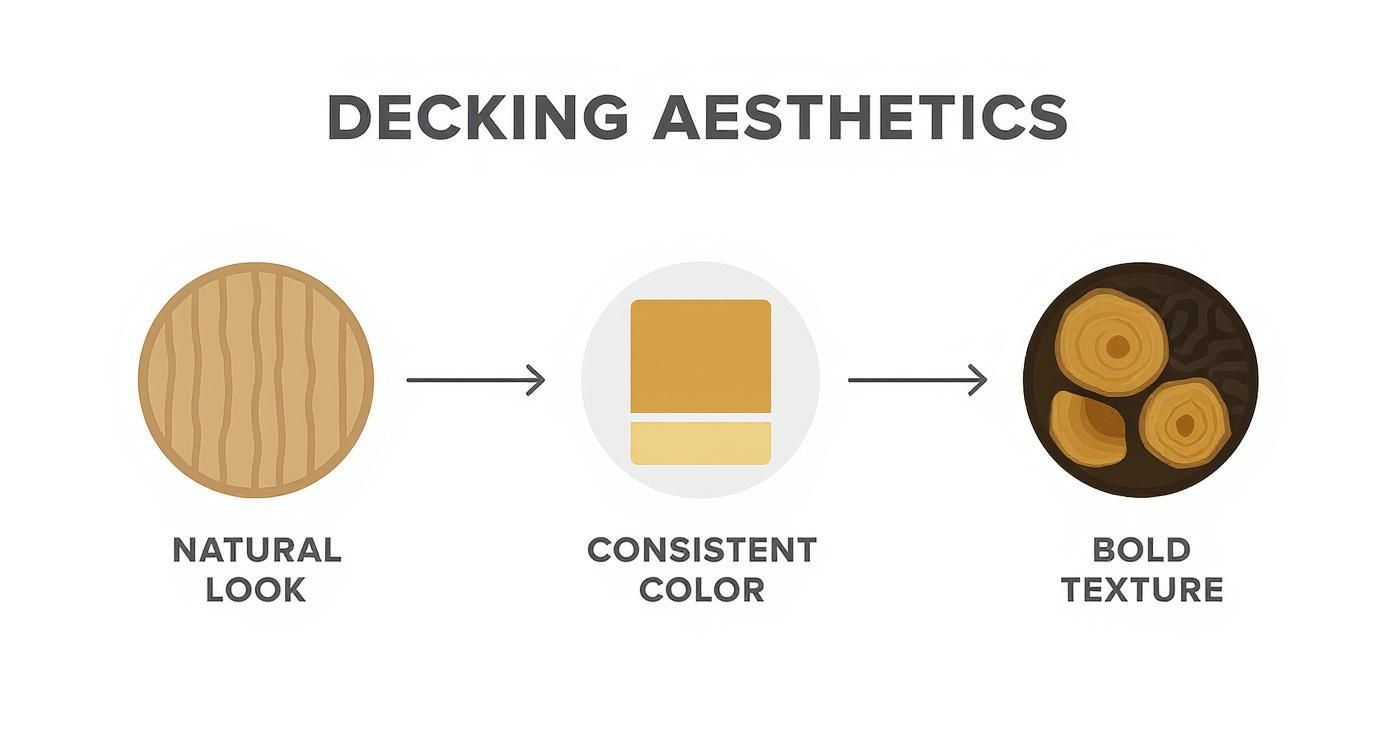
As the visual shows, for a finish that is truly distinctive and textured while still being deeply rooted in natural wood, charred timber carves out a compelling third path.
The Best of Both Worlds with Charred Timber
This is where TimberSol’s charred timber really comes into its own. By using the ancient Yakisugi technique, we’ve created a material that provides a fantastic solution for homeowners who don’t want to compromise. It has all the organic beauty and sustainability of real wood, but with durability and low-maintenance features that can go head-to-head with premium composites.
For those who see their deck as more than just a functional space—as a genuine architectural statement—charred timber perfectly bridges the gap. It offers the resilience of a modern material without losing the character and soul of natural wood.
You don’t have to sacrifice sophisticated design for lasting performance. A charred timber deck is naturally resistant to rot, pests, and the unpredictable UK weather, all while showing off a deep, dramatic texture that brings the wood’s natural beauty to the forefront. It’s the perfect foundation for an outdoor space that’s built to last and reflects a commitment to quality.
Once you’ve weighed up your options, you can explore a wide range of decking options to find the perfect match for your home.
Got Questions? We’ve Got Answers
When you’re weighing up wood and composite decking, a few questions always seem to pop up. Making the right choice means getting straight answers, so here’s what we hear most often from our customers across the UK.
Is Composite Decking a Slip Hazard in the Rain?
It’s a fair question, especially with our notoriously damp British weather. The good news is that modern composite boards are engineered with safety in mind. Most have a textured or grooved surface specifically designed to give you more grip underfoot than you’d get from a smooth, wet timber plank.
That said, no outdoor surface is completely slip-proof. If algae or mould starts to build up, it can create a slick film. A simple, regular clean is all it takes to keep your composite deck safe and ready for any weather.
Can I Change My Mind and Paint My Composite Deck Later?
In short, no. You can’t paint or stain composite decking. The colour is baked right into the material during manufacturing, which is how it stays so consistent over its lifetime.
If you try to apply paint, it just won’t bond properly with the non-porous surface and will inevitably start to peel and flake. This will look a mess and, more importantly, will almost certainly void your warranty. So, the colour you pick on day one is the one you’ll enjoy for years to come.
This is a key difference to remember. Wood gives you the freedom to change its look, but composite offers you permanent, hassle-free colour. You’re locking in your aesthetic from the start.
How Does Charred Timber (Yakisugi) Stack Up Against Composite on Maintenance?
This is where things get interesting. Yakisugi, the traditional Japanese method of charring wood, creates a decking material that gives composite a real run for its money on maintenance, but with the soul of real timber. The charring process creates a natural seal on the wood, making it incredibly resistant to rot, insects, and moisture.
Unlike traditional wood, it doesn’t need yearly sealing or staining. In fact, it often requires even less cleaning than composite to keep its striking, deep finish. For anyone looking for a low-upkeep deck that is both natural and incredibly durable, charred timber is an exceptional choice.
If you’re looking for a decking solution that blends the authentic beauty of wood with modern performance and minimal fuss, take a look at the unique charred timber options at TimberSol. Find out more and see our products at https://timbersol-backup.elnoirstudio.com to start planning an outdoor space that’s built to last.
