
10 Inspiring Patio Decking Ideas for 2025

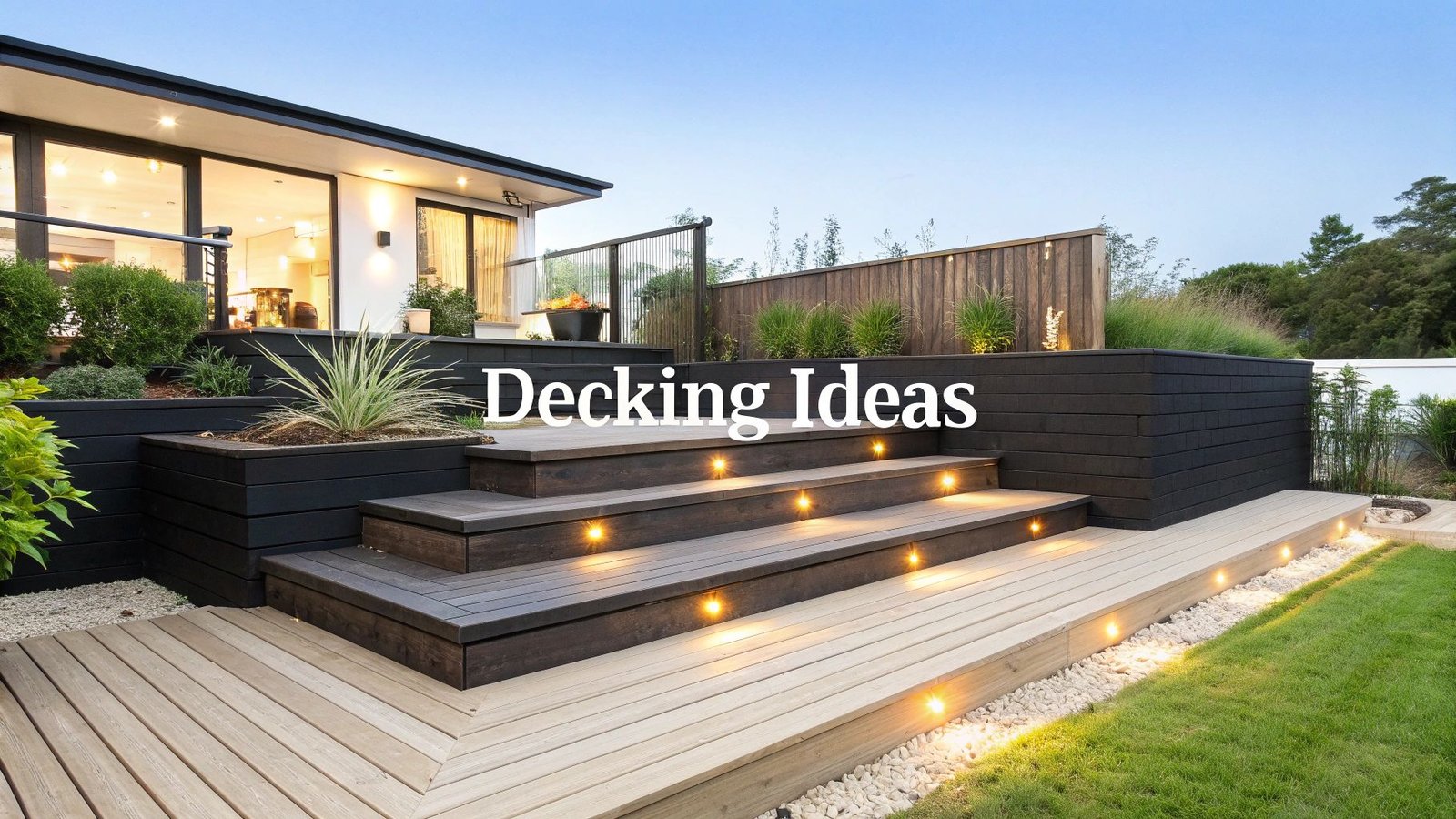
Your garden is more than just an outdoor space; it’s an extension of your home, a place for relaxation, entertainment, and making memories. Choosing the right decking is the foundation of creating a truly remarkable outdoor sanctuary. In this comprehensive guide, we’re moving beyond the standard to explore a curated selection of exceptional patio decking ideas that will inspire your next project.
This list provides actionable insights into everything from the timeless elegance of charred timber, crafted using the Yakisugi technique, to innovative multi-level designs and ultra-low-maintenance composite materials. We’ll delve into the unique benefits, practical considerations, and styling tips for each concept, helping you design a patio deck that is not only beautiful but perfectly suited to your lifestyle and your home’s character. While planning your ultimate patio decking, you might also explore alternatives like adding premium garden rooms and glass conservatories to further extend your living space outdoors.
Prepare to reimagine your outdoor living space with functional, stylish, and durable solutions that will transform how you experience your garden.
1. Composite Decking
Composite decking offers a compelling alternative to traditional timber, blending wood fibres with recycled plastic polymers to create a durable, low-maintenance material. This innovative patio decking idea provides the sought-after aesthetic of natural wood without vulnerabilities like rotting, splintering, or insect damage. Its engineered composition ensures it withstands the harsh UK weather, from constant rain to summer sun, without needing the annual staining or sealing that timber requires.
Popularised by industry leaders like Trex and TimberTech, composite materials are a versatile choice. You can see them used in modern suburban homes for poolside areas where slip and moisture resistance are key, or in high-traffic commercial restaurant patios where durability is paramount.
Key Advantages and Implementation
When choosing composite, consider “capped” varieties, which have an extra protective layer for superior stain and fade resistance. For a flawless finish, use hidden fastening systems that clip into the grooved edges of the boards, eliminating visible screws. Proper installation is crucial for performance.
Pro Tip: Always leave a small gap between boards during installation. Composite materials expand and contract with temperature changes, and this spacing prevents buckling and ensures a long-lasting, stable surface.
At a Glance: Composite Decking Highlights
The infographic below summarises the key benefits that make composite decking a leading choice for longevity and sustainability.
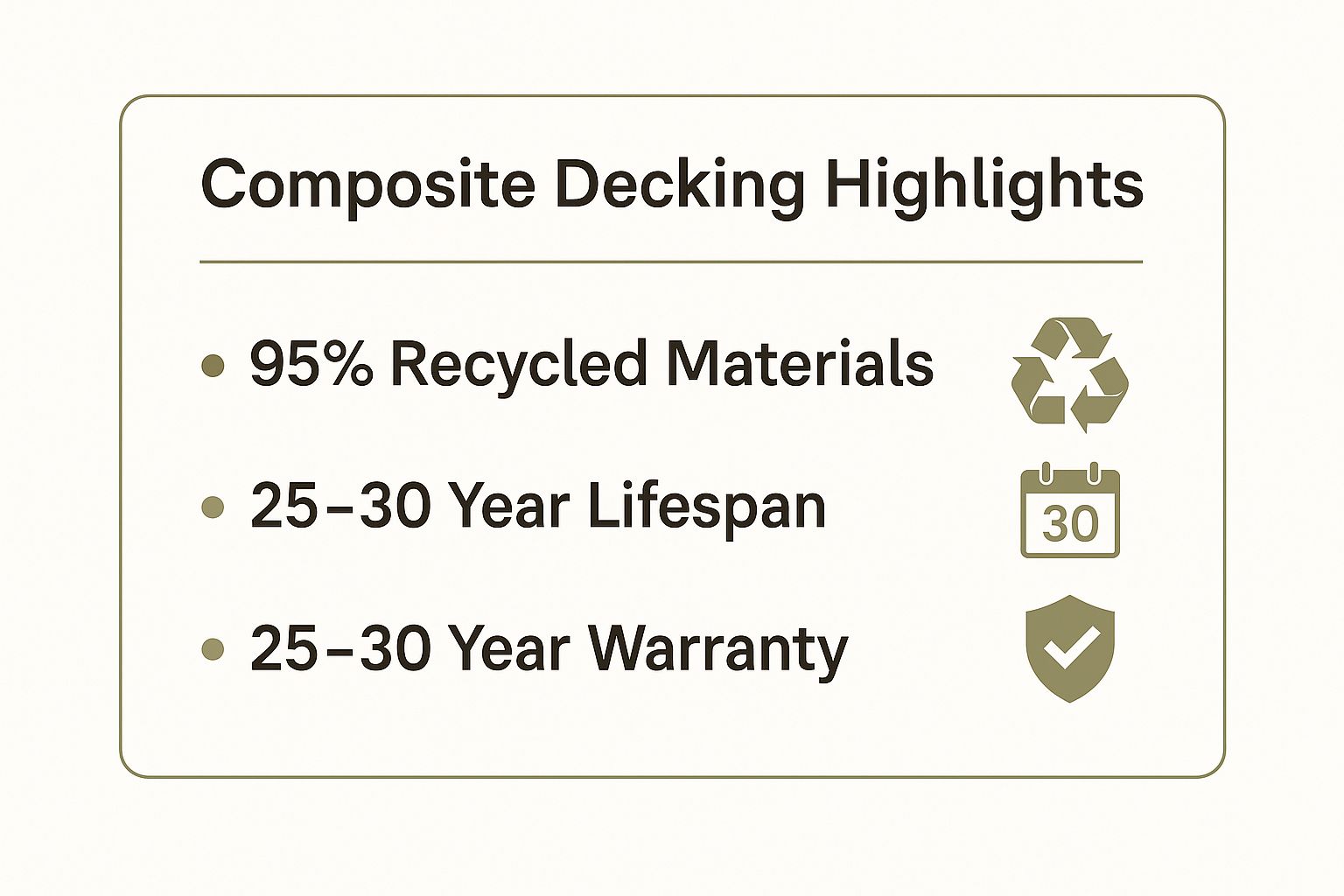
These figures highlight not only the material’s impressive lifespan but also the strong warranties that back its performance, offering peace of mind for your investment. For a detailed comparison of its benefits against traditional wood, you can learn more about the differences between wood and composite decks.
2. Multi-Level Deck Design
Multi-level deck designs introduce architectural depth to your outdoor space by creating distinct functional zones at varying heights. This is one of the most effective patio decking ideas for sloped gardens or larger properties where you want to separate areas for dining, lounging, or socialising. The change in elevation not only adds visual interest but can also integrate the patio seamlessly with the home’s structure and surrounding landscape.
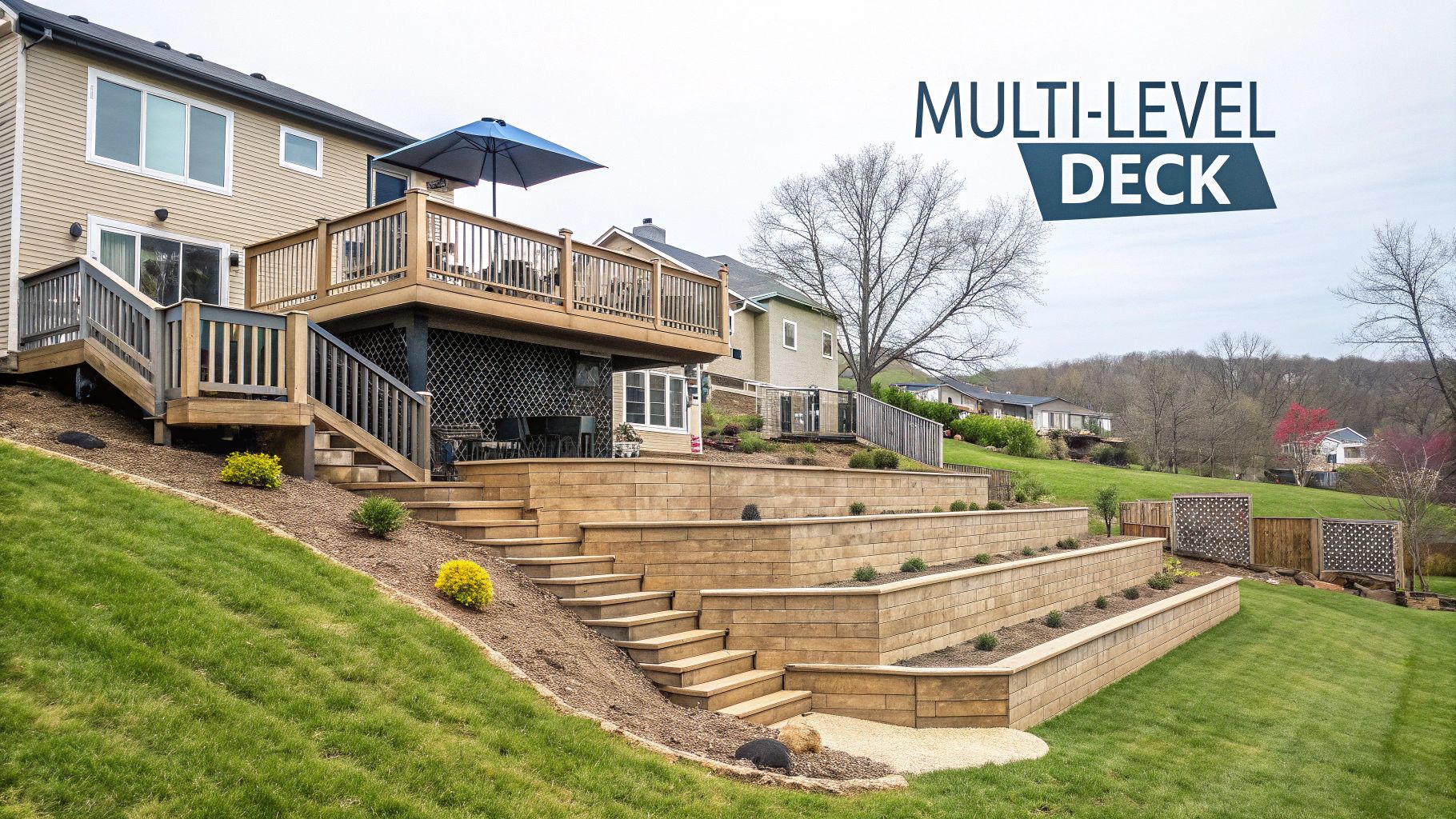
Popularised by landscape architects and seen in publications like Better Homes & Gardens, this approach is highly versatile. You can see it on lakefront properties with tiered levels leading down to the water or on hillside homes where the deck descends with the natural gradient. It’s also perfect for defining a secluded hot tub area away from a main dining space.
Key Advantages and Implementation
To implement a multi-level design, plan each tier with a specific purpose in mind. For instance, the upper level, closest to the house, could be for dining, while a lower level serves as a more relaxed lounge with a fire pit. Using consistent materials across all levels ensures a cohesive look, while built-in planters between tiers can soften the transition with greenery.
Pro Tip: Ensure steps between levels are well-lit for safety after dark. Step riser lights are a subtle yet highly effective solution that improves visibility without creating harsh glare, enhancing both safety and ambiance.
Visualising a Multi-Level Layout
The video below demonstrates how varying levels can transform a standard garden into a dynamic and highly functional outdoor living area.
This visual guide shows the construction process and the finished effect, highlighting how to create flow and purpose. For more inspiration on complex structures, you can explore designs from specialised builders like DeckTec, who showcase a range of possibilities.
3. Hardwood Tropical Decking (Ipe, Tigerwood, Cumaru)
Exotic hardwood decking uses dense, naturally resilient tropical woods that offer unparalleled beauty and longevity. These premium materials, especially Ipe (Brazilian walnut), Tigerwood, and Cumaru, are prized for their rich colours, tight grain patterns, and exceptional resistance to rot, insects, and harsh weather. While representing a higher initial investment than domestic softwoods, these hardwoods deliver a luxury finish and can last over 50 years, making them a wise choice for high-end patio decking ideas.
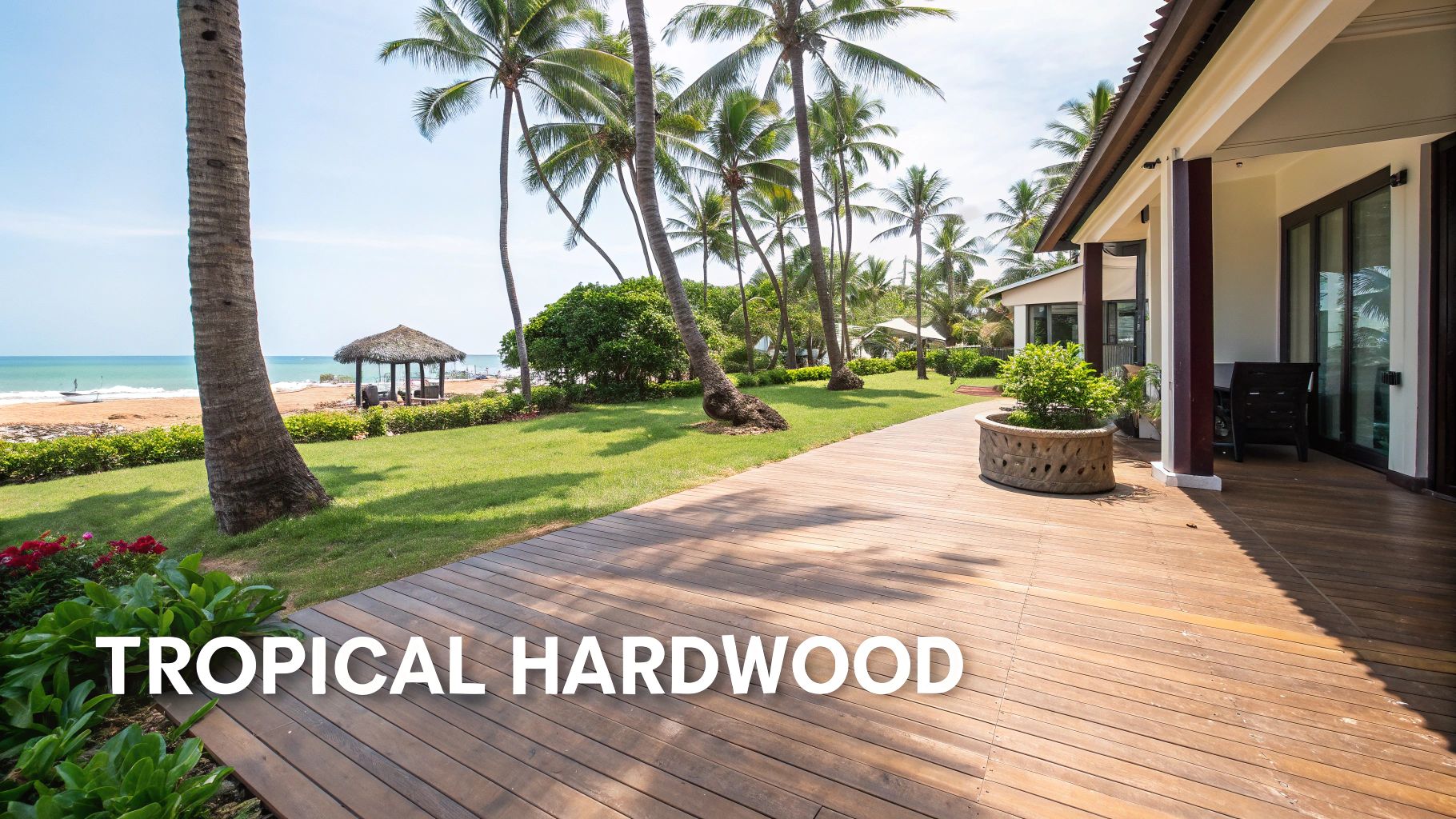
Popularised by high-end landscape architects and suppliers like MataverdeDecking, these woods are a statement feature. You will often find them on luxury resort pool decks in the Caribbean, high-end residential patios in exclusive postcodes, and even famous commercial applications like the Brooklyn Bridge boardwalk, which famously used Ipe for its durability.
Key Advantages and Implementation
When working with tropical hardwoods, precision is essential. These woods are so dense that all screw holes must be pre-drilled to prevent the material from splitting. It is also crucial to use high-quality stainless steel fasteners to avoid unsightly dark stains caused by chemical reactions with the wood’s natural tannins. For sustained beauty, ensure you are sourcing the best wood for outdoor use from reputable, FSC-certified suppliers.
Pro Tip: Allow the decking boards to acclimate on-site for one to two weeks before installation. This lets the timber adjust to your local humidity and temperature, significantly reducing the risk of warping or cupping after it has been fitted.
At a Glance: Tropical Hardwood Highlights
The inherent qualities of woods like Ipe make them a superior choice for a long-term, low-maintenance patio.
- Extreme Durability: Possesses a natural hardness that resists scratches, dents, and heavy foot traffic.
- Natural Resistance: Contains oils and extracts that repel insects and prevent fungal decay without chemical treatments.
- Fire Resistant: Ipe has a Class A fire rating, the same as concrete and steel, offering an added layer of safety.
- Stunning Aesthetics: The rich, deep colours and intricate grain patterns provide a sophisticated and timeless look that weathers to an elegant silver-grey if left untreated.
4. Ground-Level Platform Deck
A ground-level platform deck, often called a floating or patio deck, sits directly on or very close to the ground, usually with a minimal elevation of only a few inches. This design eliminates the need for railings and complex structural supports, fostering an intimate, seamless connection with the surrounding garden or landscape. As one of the most accessible patio decking ideas, this style offers a clean, contemporary aesthetic that is exceptionally DIY-friendly.
This approach is perfect for creating dedicated zones within a garden. Popular examples include a circular platform for a fire pit seating area, a tranquil yoga platform nestled amongst plants, or a sleek poolside lounging space. In urban settings, they are often used to create functional, stylish entertaining areas in side-yards where space is at a premium.
Key Advantages and Implementation
A key to a successful ground-level deck is proper ground preparation to ensure longevity and stability. Start by laying a robust landscape fabric and a layer of gravel to promote drainage and prevent weed growth. Although it sits low, the structure still requires stable footings; using post anchors set in concrete will prevent shifting. This design provides an excellent opportunity to integrate subtle, ground-level LED lighting for a sophisticated evening ambience.
Pro Tip: Ensure you leave a small ventilation gap of at least a couple of inches between the deck and your house. This prevents moisture from becoming trapped against your home’s foundation, which is crucial for avoiding damp-related issues.
At a Glance: Ground-Level Deck Highlights
This deck style is celebrated for its simplicity and direct integration with the landscape. It is an ideal solution for level gardens, offering a straightforward yet elegant way to define an outdoor living space without the expense or complexity of a raised structure. The absence of railings opens up the view, making the garden feel larger and more accessible.
This design’s versatility makes it a favourite among DIY enthusiasts featured in publications like Family Handyman and popular home improvement channels. For a detailed guide on framing for this type of structure, you can explore resources on how to build a ground-level deck frame.
5. Deck-Patio Combination
A deck-patio combination creates a dynamic, multi-level outdoor living space by merging an elevated deck with a ground-level patio. This hybrid design is a standout among patio decking ideas, offering the warmth of wood or composite decking alongside the texture and permanence of stone, pavers, or concrete. The result is a visually engaging landscape with distinct functional zones, maximising your garden’s usability and aesthetic appeal.
This approach is highly versatile and is often championed by landscape design firms. Common examples include an elevated composite deck for dining that steps down onto a stone paver patio with a fire pit, or a timber deck that flows seamlessly into a stamped concrete poolside area. The transition between materials and elevations adds depth and character to any outdoor space.
Key Advantages and Implementation
To create a cohesive look, choose complementary colours and materials for both the deck and patio surfaces. For instance, the warm tones in a timber deck can be echoed in the shades of a bluestone patio. Designing wide, gradual steps between the two levels creates an inviting and safe transition. For those considering a harmonious blend of decking and patio space, exploring options like expert patio paver installation can greatly enhance your outdoor living area.
Pro Tip: Plan the layout of your ground-level patio area first. This allows you to design the deck to complement the patio’s shape, size, and function, ensuring a well-integrated and harmonious final design.
At a Glance: Deck-Patio Combination Highlights
The key benefits of this hybrid design lie in its ability to create distinct yet connected zones for different activities, such as dining, lounging, and cooking.
- Zoned Functionality: Use the elevated deck for dining or seating and the patio for a fire pit, outdoor kitchen, or lounge area.
- Visual Interest: The mix of materials, textures, and heights adds architectural depth and sophistication.
- Maximises Usability: This design effectively utilises sloped or uneven gardens by creating multiple flat, functional surfaces.
- Enhanced Flow: A well-designed transition encourages movement and makes the entire outdoor area feel larger and more interconnected.
This combination offers a practical and stylish solution, turning a simple garden into a multi-faceted outdoor retreat perfect for both entertaining and everyday relaxation.
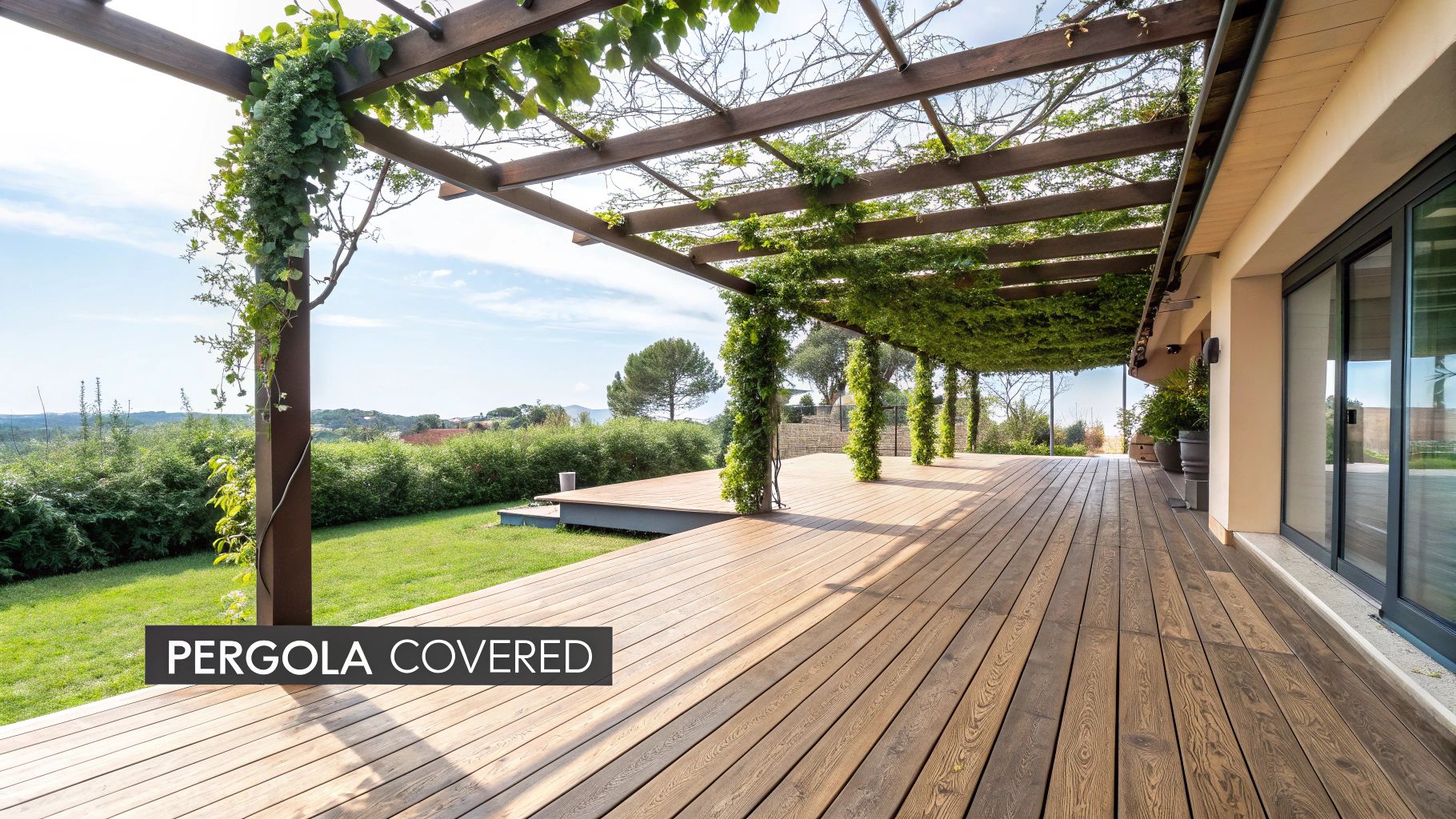
6. Pergola-Covered Deck
A pergola-covered deck adds an elegant architectural layer to your outdoor space, creating a defined area for dining or relaxation. This classic structure, featuring an open-slatted roof supported by columns, provides partial shade without completely blocking the sun, maintaining an airy and open feel. Integrating a pergola is one of the most effective patio decking ideas for adding vertical interest and a sense of enclosure.
This design solution offers a framework for customisation, from climbing plants to integrated lighting. You see it in Mediterranean-style villas where bougainvillea weaves through the rafters, or in contemporary homes featuring sleek, motorised louvered pergolas from innovators like StruXure, allowing precise control over sun and shade.
Key Advantages and Implementation
When planning your pergola, consider its orientation. Positioning the rafters on an east-west axis provides maximum shade during the hot afternoon sun. For the structure itself, materials like aluminium and vinyl offer a low-maintenance alternative to traditional timber. A well-designed pergola enhances both comfort and aesthetic appeal, extending the usability of your deck throughout the day.
Pro Tip: Ensure your pergola’s height is between 8 and 10 feet. This clearance provides ample headroom and promotes better air circulation, preventing the space from feeling cramped, especially on warm summer days.
At a Glance: Pergola-Covered Deck Highlights
A pergola-covered deck excels at creating a versatile outdoor room that is both functional and beautiful. Its key attributes include:
- Architectural Definition: Clearly defines outdoor zones like seating or dining areas.
- Customisable Shade: From fixed rafters to adjustable louvers and retractable canopies.
- Enhanced Ambiance: Provides a structure for lighting, fans, and hanging plants.
- Increased Usability: Makes the deck more comfortable during sunny or drizzly weather.
This addition elevates a simple deck into a sophisticated and inviting extension of your home. To explore modern, weather-resistant options, you can find inspiration from companies that specialise in customisable pergola kits.
7. Built-in Deck Features (Benches, Planters, Storage)
Integrating features directly into your deck’s structure is a sophisticated patio decking idea that elevates both form and function. This approach involves building elements like seating benches, planter boxes, and storage compartments into the deck’s design, creating a seamless and custom-finished appearance. It maximises space efficiency, eliminates the clutter of separate furniture, and provides a cohesive, high-end look.
This concept is particularly valuable for smaller patios where every square metre counts. You can see it expertly applied in urban gardens with L-shaped corner benches that double as storage, or in modern designs where raised planters act as natural privacy screens from neighbours. These additions transform a simple platform into a multi-functional outdoor living room.
Key Advantages and Implementation
When planning built-ins, focus on ergonomics and durability. For seating, a bench height of 40-45 cm (16-18 inches) with a depth of 45-60 cm (18-24 inches) provides optimal comfort. Planter boxes require proper drainage holes and should be constructed from rot-resistant materials like cedar or composite boards to withstand constant moisture.
Pro Tip: For built-in bench storage, install hinged lids with gas-shock supports. This simple addition makes accessing the storage effortless and prevents the lid from slamming shut, adding a touch of luxury and practicality.
At a Glance: Built-in Feature Highlights
The table below summarises the key benefits that make integrated features a smart choice for creating a functional and polished outdoor space.
| Feature | Primary Benefit | Ideal Application |
|---|---|---|
| Built-in Benches | Maximises seating and saves valuable floor space. | Small decks or perimeter seating |
| Integrated Planters | Adds greenery and acts as a natural screen. | Enhancing privacy and defining zones |
| Concealed Storage | Reduces clutter by hiding cushions and tools. | Benches, stairs, or unused corner space |
| Custom Add-ons | Creates a tailored, high-end finish. | Entertainment areas with bars or counters |
These elements prove that thoughtful design is key to a successful deck project. By building in functionality from the start, you create a more organised, spacious, and inviting patio environment that perfectly suits your lifestyle.
8. Diagonal or Herringbone Decking Pattern
Breaking away from standard parallel layouts, diagonal and herringbone patterns introduce a dynamic sense of movement and sophistication to your patio. These patio decking ideas use angled boards to create visual interest. A diagonal pattern runs the boards at a 45-degree angle to the house, while a herringbone layout forms an elegant V-shaped interlocking design, adding a bespoke, craftsman-like quality to the space.
This technique is particularly effective for making smaller patios feel more expansive and can guide the eye towards a focal point, like a garden view or seating area. You can see these intricate patterns on the patios of boutique hotels, adding a touch of luxury, or complementing the architecture of Victorian-style homes, often framed with a decorative border to complete the look.
Key Advantages and Implementation
Careful planning is essential to execute these patterns successfully, as they require more complex cuts and a stronger substructure. For a herringbone design, double joists are needed where the angled boards meet to ensure adequate support and a secure fixing point. Accurately marking your layout with chalk lines before starting will ensure precision and symmetry.
Pro Tip: When budgeting for a diagonal or herringbone pattern, account for approximately 15-20% more material than a standard layout. The angled cuts result in more offcut waste, so ordering extra decking is crucial to avoid running short.
At a Glance: Patterned Decking Highlights
This approach transforms your deck from a simple platform into a deliberate design feature.
- Visual Impact: Creates a high-end, custom appearance that elevates the entire outdoor area.
- Space Enhancement: The angular lines can make a narrow or small patio feel wider and more open.
- Structural Strength: When installed correctly over a reinforced frame, the interlocking nature of the boards can increase the deck’s overall rigidity.
The added complexity is a worthwhile trade-off for the dramatic and unique aesthetic it delivers, turning your patio into a true centrepiece of your garden design.
9. Low-Maintenance PVC/Vinyl Decking
PVC decking offers the pinnacle of low-maintenance outdoor flooring, engineered entirely from synthetic polymers with no wood content. This innovative patio decking idea provides an exceptionally durable surface that is highly resistant to the common issues affecting other materials, such as stains, scratches, moisture, and fading. Its all-synthetic composition means it will never rot, warp, or suffer from insect damage, making it a “fit and forget” solution for busy homeowners.
Pioneered by brands like AZEK and Wolf Decking, PVC is a premium choice often seen in demanding environments. You can find it on oceanfront properties where salt spray is a concern, commercial hotel poolsides where slip resistance is vital, and luxury rooftop terraces where longevity and minimal upkeep are non-negotiable.
Key Advantages and Implementation
When selecting PVC decking, consider that lighter colours will absorb less heat, keeping the surface cooler underfoot in direct sunlight. Like composite, proper installation is key to performance, and hidden fasteners are recommended for a clean, modern aesthetic. The material’s impervious nature makes it ideal for rental properties or high-traffic public spaces where maintenance budgets are tight.
Pro Tip: While incredibly durable, PVC expands and contracts more than wood. Ensure your installer leaves adequate expansion gaps between boards and where the deck meets the house to prevent buckling and ensure a stable, long-lasting surface.
At a Glance: PVC/Vinyl Decking Highlights
- Unmatched Durability: Completely resistant to moisture, rot, and insects.
- Minimal Maintenance: Requires only occasional cleaning with soap and water; no sealing or staining needed.
- Superior Resistance: Excellent defence against scratches, stains, and fading, often backed by 50-year warranties.
- Safety Conscious: Many options come with textured, slip-resistant finishes, perfect for poolside or marina applications.
The benefits make PVC a top-tier investment for those prioritising long-term performance and hassle-free ownership. For a deeper dive into how it compares with other materials, you can explore the AZEK decking range to see the technology in action.
10. Eco-Friendly Reclaimed or Sustainable Wood Decking
For an environmentally conscious approach, reclaimed or sustainable wood decking offers a patio decking idea that is both beautiful and responsible. This option utilises either timber salvaged from old structures like barns and docks or new wood sourced from responsibly managed forests certified by organisations like the FSC (Forest Stewardship Council). The result is a deck with a unique story, rich character, and a reduced environmental footprint.
This approach is highly valued in projects aiming for authenticity and sustainability. You can see reclaimed timber used in urban loft conversions to add historical depth or in modern farmhouse designs where its weathered patina provides instant rustic charm. Similarly, FSC-certified cedar is a popular choice for eco-resorts and LEED-certified green building projects, where environmental impact is a primary consideration.
Key Advantages and Implementation
When working with reclaimed wood, it is crucial to source from reputable dealers who can verify the timber’s history and structural integrity. All boards should be inspected, with old nails and metal fragments carefully removed before installation. For sustainable new wood, always look for the FSC certification mark. Consider thermally modified options like ash or pine, which use a non-toxic heat treatment process to enhance durability and stability.
Pro Tip: Mix boards from different reclaimed sources to create a more dynamic and varied aesthetic. This blending of patinas, grain patterns, and tones will give your patio a truly one-of-a-kind character that cannot be replicated with new materials.
At a Glance: Eco-Friendly Decking Highlights
Opting for sustainable materials not only enhances your property’s aesthetic but also aligns your project with green building principles. This choice reflects a commitment to preserving natural resources for future generations.
- Reclaimed Wood: Offers unmatched character with a rich history and weathered look.
- Sustainable New Wood: Ensures responsible forestry practices through certifications like FSC.
- Reduced Impact: Lowers demand for virgin materials and supports a circular economy.
- Unique Aesthetic: Provides a distinctive, non-uniform appearance that adds value and charm.
These benefits make eco-friendly wood a compelling choice for homeowners and designers seeking a deck that tells a story. To better understand the lifecycle and impact of your material choices, you can explore the sustainability of timber.
Patio Decking Ideas Comparison Matrix
| Item | Implementation Complexity | Resource Requirements | Expected Outcomes | Ideal Use Cases | Key Advantages |
|---|---|---|---|---|---|
| Composite Decking | Moderate – requires professional installation | Recycled wood fibers & plastics | Durable, low-maintenance, wood-like appearance | Modern patios, poolside, rooftop decks | Low maintenance, eco-friendly, long lifespan |
| Multi-Level Deck Design | High – complex structural design and permits | Varies, depends on multiple levels | Functional zones, architectural interest | Sloped yards, large properties, entertaining zones | Maximizes space, visual appeal, privacy options |
| Hardwood Tropical Decking (Ipe, etc.) | High – requires expert handling & tools | Dense tropical hardwoods | Extremely durable, luxurious finish | Luxury homes, resorts, high-end patios | Long lifespan, natural beauty, fire resistant |
| Ground-Level Platform Deck | Low – simplest design, often DIY-friendly | Basic wood or composite materials | Intimate connection to landscape | Flat yards, budget projects, beginners | Budget-friendly, easy installation, seamless flow |
| Deck-Patio Combination | High – coordination of multiple materials | Wood/composite and stone/pavers | Varied textures, functional outdoor zones | Larger yards, multi-use outdoor living | Maximize space, texture variety, property value |
| Pergola-Covered Deck | Moderate to high – additional structure | Wood, aluminum, or vinyl options | Partial shade, architectural interest | Sunny climates, patios needing shade | Shade without enclosure, enhances ambiance |
| Built-in Deck Features | Moderate – custom structural elements | Wood/composite with hardware | Space-efficient, cohesive deck design | Small decks, custom high-end decks | Maximizes space, reduces clutter |
| Diagonal or Herringbone Decking Pattern | High – intricate pattern requiring skill | More decking material & framing | Visual interest, perceived space increase | Medium-large decks, custom aesthetic focus | Enhances appearance, defines zones |
| Low-Maintenance PVC/Vinyl Decking | Moderate – professional installation recommended | 100% synthetic vinyl polymers | Longest lifespan, minimal maintenance | Waterfront, luxury applications, high moisture | Lowest maintenance, stain & fade resistant |
| Eco-Friendly Reclaimed or Sustainable Wood Decking | Moderate – depends on wood condition | Reclaimed or FSC-certified woods | Unique character, environmentally responsible | Eco-conscious homeowners, rustic/farmhouse styles | Sustainable, unique aesthetics, eco-friendly |
Bringing Your Vision to Life
Choosing the perfect decking is a significant decision, one that shapes how you experience your outdoor space for years to come.## Bringing Your Vision to Life
Choosing the perfect decking is a significant decision, one that shapes how you experience your outdoor space for years to come. As we’ve explored throughout this roundup of innovative patio decking ideas, the possibilities extend far beyond a simple arrangement of wooden planks. Your outdoor living area is a canvas, and the right decking material and design are your primary tools for creating a masterpiece that is both functional and beautiful.
We’ve delved into the architectural drama of multi-level designs that create distinct zones for dining and lounging, and the seamless indoor-outdoor flow offered by ground-level platform decks. We’ve contrasted the exotic, rich tones of tropical hardwoods like Ipe with the ultra-low maintenance and consistent colour of modern PVC and composite decking. The key takeaway is that there is no single “best” option; the ideal solution is a carefully considered synthesis of your aesthetic preferences, lifestyle demands, and long-term maintenance appetite. The most inspiring designs often emerge from combining elements, such as integrating a pergola for shade over a herringbone-patterned deck or incorporating built-in benches and planters to maximise a compact space.
Your Actionable Next Steps
Translating inspiration into reality requires a structured approach. Before breaking ground, it’s crucial to refine your vision and plan meticulously.
- Define Your Priorities: Revisit the ideas presented. Are you prioritising longevity and minimal upkeep, as offered by composite materials? Or is the natural, evolving character of sustainable timber more aligned with your vision? List your top three “must-haves” for your project.
- Measure and Visualise: Take precise measurements of your space. Use garden stakes and string to map out the potential footprint of your new deck. This physical outline helps you visualise scale, assess traffic flow, and determine how the structure will interact with your home and garden.
- Material Sampling: Never finalise a material choice based on a screen image alone. Order samples of your top contenders, whether it’s different shades of composite decking or various finishes of hardwood. Place them outside to observe how their appearance changes in natural sunlight throughout the day.
- Consult Professionals: Engage with landscape designers, architects, or reputable builders early in the process. Their expertise can help you navigate local planning permissions, optimise your design for your specific site, and provide realistic budget estimates.
By thoughtfully considering these patio decking ideas and undertaking a structured planning process, you move from abstract concepts to a tangible, achievable project. You’re not just building a deck; you are crafting an extension of your home, a personalised sanctuary designed for relaxation, entertainment, and connection with the outdoors. This investment in careful planning ensures your new deck will not only add significant value to your property but will also profoundly enrich your daily life for many years.
Ready to explore a material that combines unparalleled durability with breathtaking aesthetics? Discover the timeless beauty and resilience of Yakisugi with TimberSol. Visit TimberSol to see how our premium charred timber can provide a sustainable, low-maintenance, and visually stunning foundation for your ultimate patio deck.
