
Best Hardwoods for Decking: Durable & Stylish Options

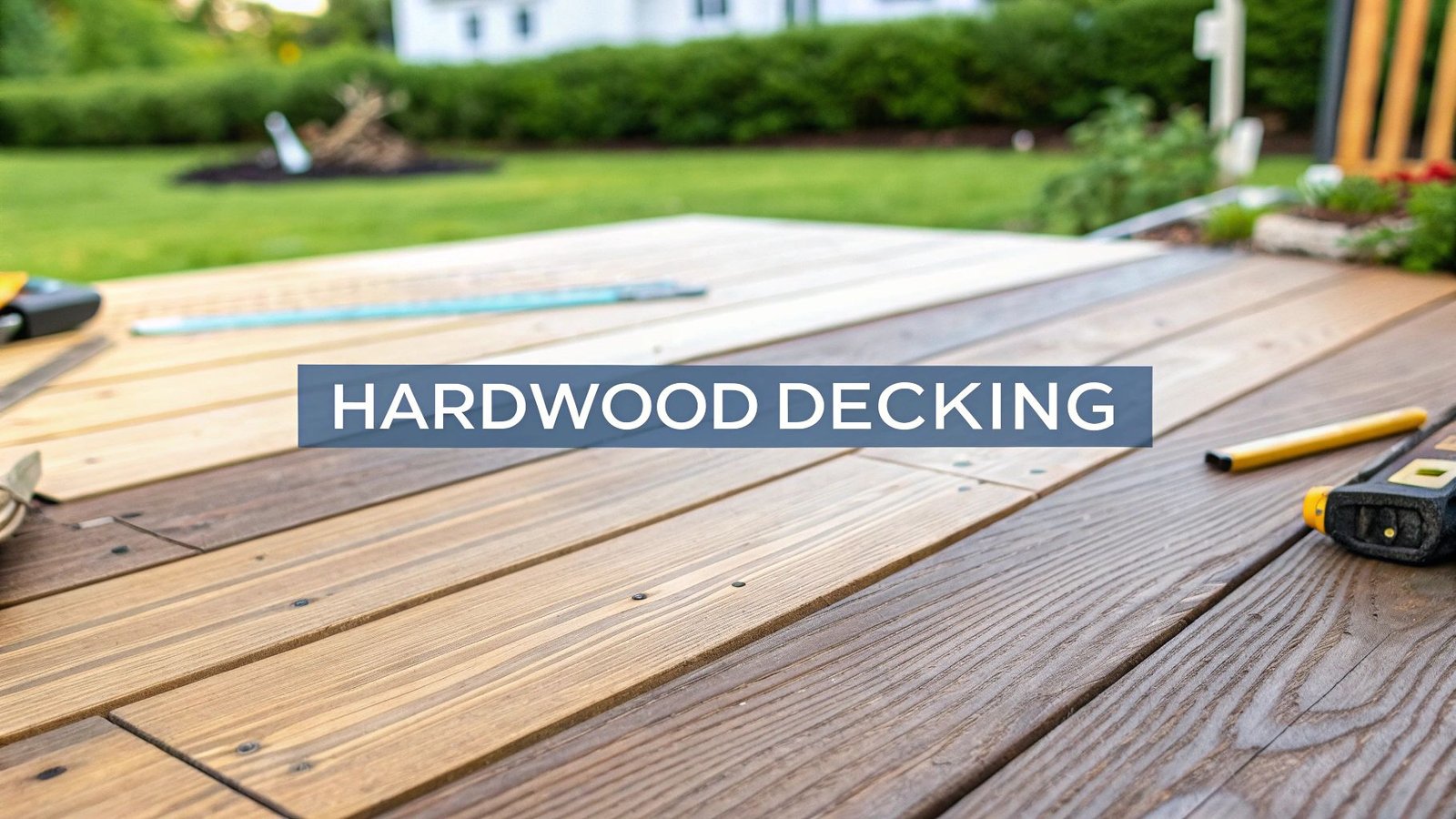
The best hardwoods for decking are dense, durable timber species such as Ipe, Cumaru, and Teak. These hardwoods are known for their high Janka hardness, natural oil content, and strong resistance to rot, moisture, and insects—making them ideal for long-lasting outdoor decking, especially in demanding climates like the UK.
When choosing the best hardwoods for decking, you’re not just selecting a material—you’re investing in exceptional strength, natural beauty, and a lifespan that far exceeds most alternatives. Species like Ipe, Cumaru, and Teak are widely regarded as leaders in the decking market, offering outstanding durability that can withstand the UK’s unpredictable weather conditions. They remain a top-tier choice for high-quality garden decking.
This article explores key properties such as hardness and density, compares leading hardwood species, highlights the importance of sustainability certifications, and outlines essential maintenance and installation considerations.
Why Choose Hardwood for Your UK Garden Deck?
Hardwoods are naturally dense and incredibly tough, giving them built-in resistance to the scuffs and scrapes of daily life. This isn’t just about preventing marks from garden furniture or the dog’s claws. That inherent strength translates directly into a much longer lifespan, with many hardwood decks lasting 25 years or more with surprisingly little maintenance. This level of longevity makes hardwood a genuinely smart investment for your home.
It’s a bit like choosing between a standard family saloon and a rugged 4×4—both will get you from A to B, but one is purpose-built to handle harsh conditions with far greater resilience and a touch more class.
Beauty and Durability Combined
Beyond their exceptional durability, hardwoods offer a level of natural beauty that is difficult to replicate. Each plank features a unique grain pattern and rich, deep colouring, ranging from the warm reddish-browns of Cumaru to the classic golden tones of Teak. This natural variation ensures your decking becomes a visually striking, one-of-a-kind outdoor space that adds both character and value to your property.
When planning a hardwood deck, it’s also important to consider how it integrates with the overall structural landscaping of your garden, including surrounding elements like fencing. A well-designed deck is more than just a functional platform—it serves as a central feature that should seamlessly complement your home’s architectural style and the layout of your outdoor space.
Choosing hardwood is a commitment to long-term durability. Unlike softer woods that may require replacement every 10–15 years, a properly installed hardwood deck becomes a permanent, reliable feature in your garden for decades.
This guide will walk you through the top hardwood decking options available, alongside complementary solutions such as black charred wood cladding for cohesive outdoor design, helping you choose a material that not only looks exceptional from day one but also performs reliably in the damp, ever-changing UK climate for years to come.
What Makes a Hardwood Decking Truly Durable?
Three key characteristics set the best hardwood decking apart: hardness, density, and natural resistance to rot and pests. These qualities determine whether your deck can withstand heavy garden furniture, constant foot traffic, and the notoriously unpredictable British weather.
To understand hardness, imagine pressing your thumb into a piece of balsa wood versus a solid piece of oak—one yields easily, while the other barely moves. This resistance is measured by the Janka hardness scale, which calculates the force required to embed a small steel ball halfway into the wood. It provides a reliable benchmark for a timber’s ability to resist dents and surface damage.
A high Janka rating ensures your decking can handle everyday wear and tear, from dropped plant pots to scraping furniture, making it well-suited for the demands of outdoor living.
Hardness, Density, and Natural Defences
A wood’s hardness and density are closely linked. Denser timbers have tightly packed fibres, leaving minimal space for moisture to penetrate. In a damp climate like the UK’s, this is a crucial advantage, particularly when working with exterior materials such as spruce cladding. It helps prevent common issues such as warping, twisting, and swelling—problems that can quickly compromise a deck made from lower-quality materials. This density also contributes to the wood’s solid, premium feel underfoot. For a deeper understanding, you can explore the fundamental properties of hardwood in our detailed guide.
However, physical strength is only part of the equation. The best hardwoods for decking also contain natural oils and compounds known as tannins. These act as the wood’s built-in defence system, making it unappealing to termites and other wood-boring insects, while also resisting the fungi responsible for rot. This is one of the key reasons why species like Ipe can last for decades without the need for chemical treatments.
The chart below provides a clear comparison of how the top hardwood decking options perform across these essential characteristics.
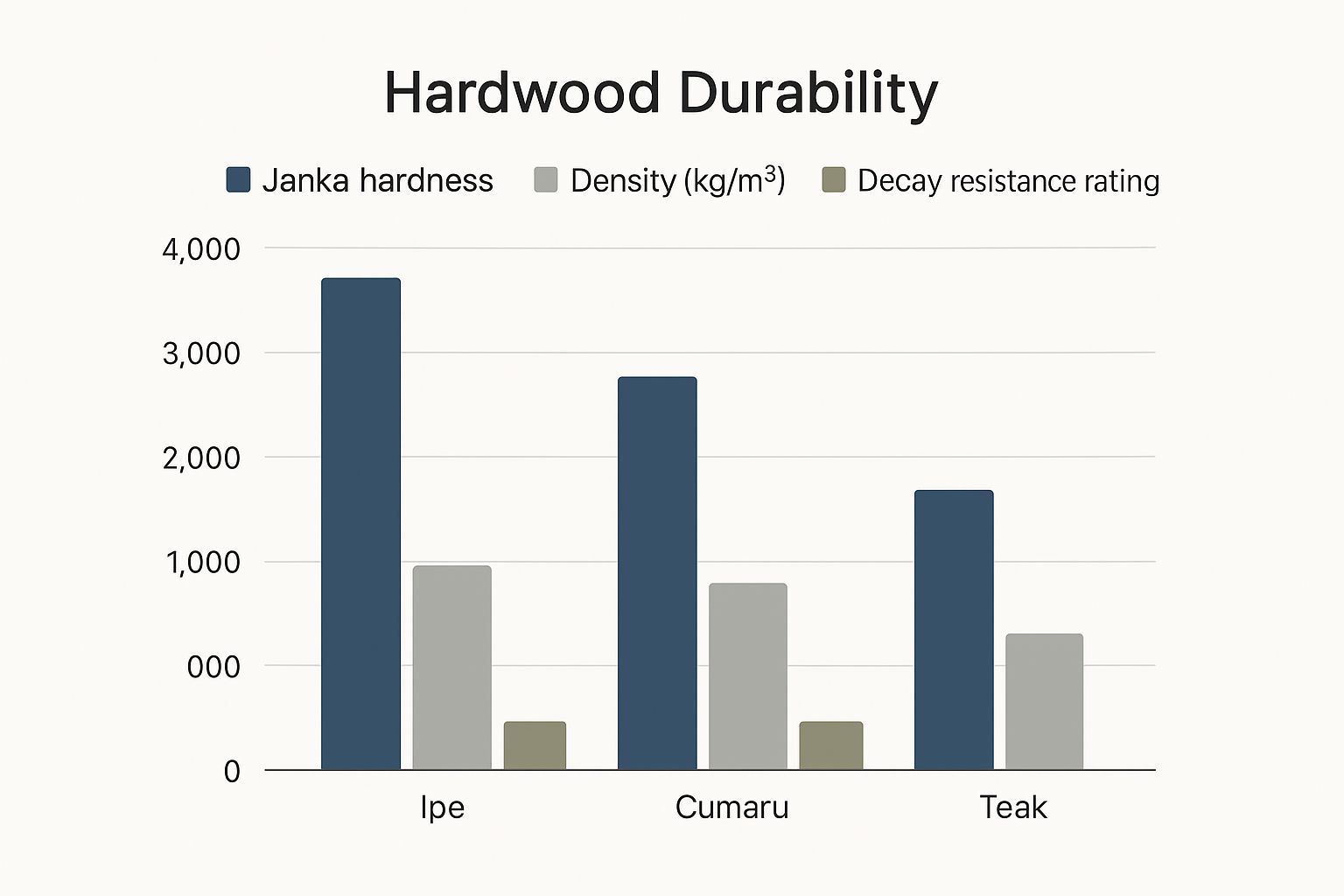
As you can see, Ipe stands out as the undisputed leader in both hardness and density, which is why it has earned its reputation as one of the toughest decking materials available.
Understanding these core characteristics helps you make a much smarter investment. A deck built from timber with a high Janka rating, excellent density, and natural resistance to rot is not just a short-term purchase—it’s a long-lasting addition to your home, designed for enjoyment rather than ongoing repairs.
It’s clear that homeowners are increasingly recognising these benefits. The growing demand for durable and visually appealing outdoor spaces has brought hardwood decking into the spotlight. In fact, the broader treated wood sector, which includes these high-performance timbers, is projected to grow at an annual rate of 6.9% between 2025 and 2030. This reflects a wider shift towards prioritising quality, durability, and long-term value in modern construction materials.
A Closer Look at the Top Hardwood Decking Timbers
When choosing a hardwood for your deck, you’re balancing three key factors: appearance, durability, and cost. While there is a wide range of timber options available, a select group of species has earned a strong reputation as the best choices—particularly for withstanding the unpredictable British weather. These hardwoods are the true heavyweights of the decking world, each offering distinct advantages for outdoor spaces.
Let’s take a closer look at these popular hardwood decking timbers. Understanding their unique characteristics is key to selecting a material that not only looks exceptional from day one but also delivers long-lasting performance for years to come.
Ipe: The Undisputed Champion
There’s a reason Ipe (pronounced ee-pay) is often called “ironwood”. It sets the benchmark that all other hardwood decking materials are measured against. Native to South America, Ipe is exceptionally dense, with a Janka hardness rating of around 3,680 lbf. In practical terms, this means it easily resists scratches, dents, and the everyday wear and tear of outdoor use.
Ipe’s natural oils are one of its greatest strengths, providing outstanding resistance to rot, decay, and insect damage. It’s not uncommon for a properly installed Ipe deck to last 50 years or more with minimal maintenance. Its rich, deep chocolate-brown colour adds to its appeal, and over time, if left untreated, it will naturally weather into an elegant silver-grey patina. Of course, all this performance comes at a premium, and its extreme hardness makes it challenging to work with—making it a job best left to professionals.
Cumaru: The Resilient Contender
Think of Cumaru as Ipe’s highly capable counterpart. This Brazilian hardwood is often the preferred choice for those seeking premium performance at a more accessible price point. It is exceptionally dense and durable, with a Janka hardness of around 3,540 lbf, placing it firmly in the same top tier. Like Ipe, Cumaru offers excellent resistance to rot, decay, and insect damage.
In terms of appearance, Cumaru features a warm, reddish-brown tone with a distinctive interlocked grain, giving it a rich and characterful look. While it is incredibly tough, it can be slightly more reactive than Ipe, meaning proper on-site acclimatisation is important to minimise movement after installation.
Ultimately, the choice between Ipe and Cumaru often comes down to budget and aesthetic preference. Both hardwoods deliver outstanding strength and long-term performance, making either option a reliable investment for decades.
Teak: The Marine-Grade Classic
Teak has a heritage that few other timbers can match. For centuries, it has been the preferred material for shipbuilding, valued for its exceptional stability and resistance to water. This maritime legacy makes it an outstanding choice for decking, particularly in damp climates. Its high natural oil content forms a powerful barrier against moisture, helping to prevent warping and cracking while also deterring pests.
Compared to dense “ironwoods” like Ipe and Cumaru, Teak is technically softer, with a Janka hardness rating of around 2,330 lbf. However, it remains more than durable enough for residential decking applications. It is especially prized for its classic golden-honey colour and straight grain, which naturally weathers over time into an elegant silvery patina.
One important consideration with Teak is its cost. It is often among the most expensive hardwood decking options, largely due to high global demand and its slow growth rate.
To better understand how these hardwoods compare, refer to the quick comparison below.
Hardwood Decking Species at a Glance
This table provides a direct comparison of the leading hardwood decking options, highlighting their key characteristics to help you choose the best fit for your project and budget.
| Hardwood Species | Janka Hardness (lbf) | Average Lifespan (untreated) | Typical Cost per m² | Maintenance Level |
|---|---|---|---|---|
| Ipe | ~3,680 | 50+ years | ££££ | Low |
| Cumaru | ~3,540 | 30-40 years | £££ | Low |
| Teak | ~2,330 | 40+ years | £££££ | Low |
| Balau | ~1,600 | 20-30 years | ££ | Low to Medium |
Viewing these timbers side by side makes it easier to identify which option aligns with your priorities—whether that’s maximum durability, a specific visual style, or overall cost. Each hardwood offers its own distinct qualities, ensuring there’s a suitable choice for virtually any garden design, whether complemented by materials such as oak cladding or douglas fir wood cladding.
How to Source Sustainable and Ethical Hardwood
The most reliable way to ensure your timber comes from a legitimate and responsibly managed source is to look for recognised certifications. These act as a hallmark for wood—a trusted assurance that verifies its origin and tracks its journey from forest to finished product.
A high-quality deck comes with peace of mind, knowing the timber has been sourced ethically. By choosing sustainable hardwoods, you’re not only making an environmentally responsible decision but also supporting well-managed forests and the communities that rely on them.
Understanding Key Certifications
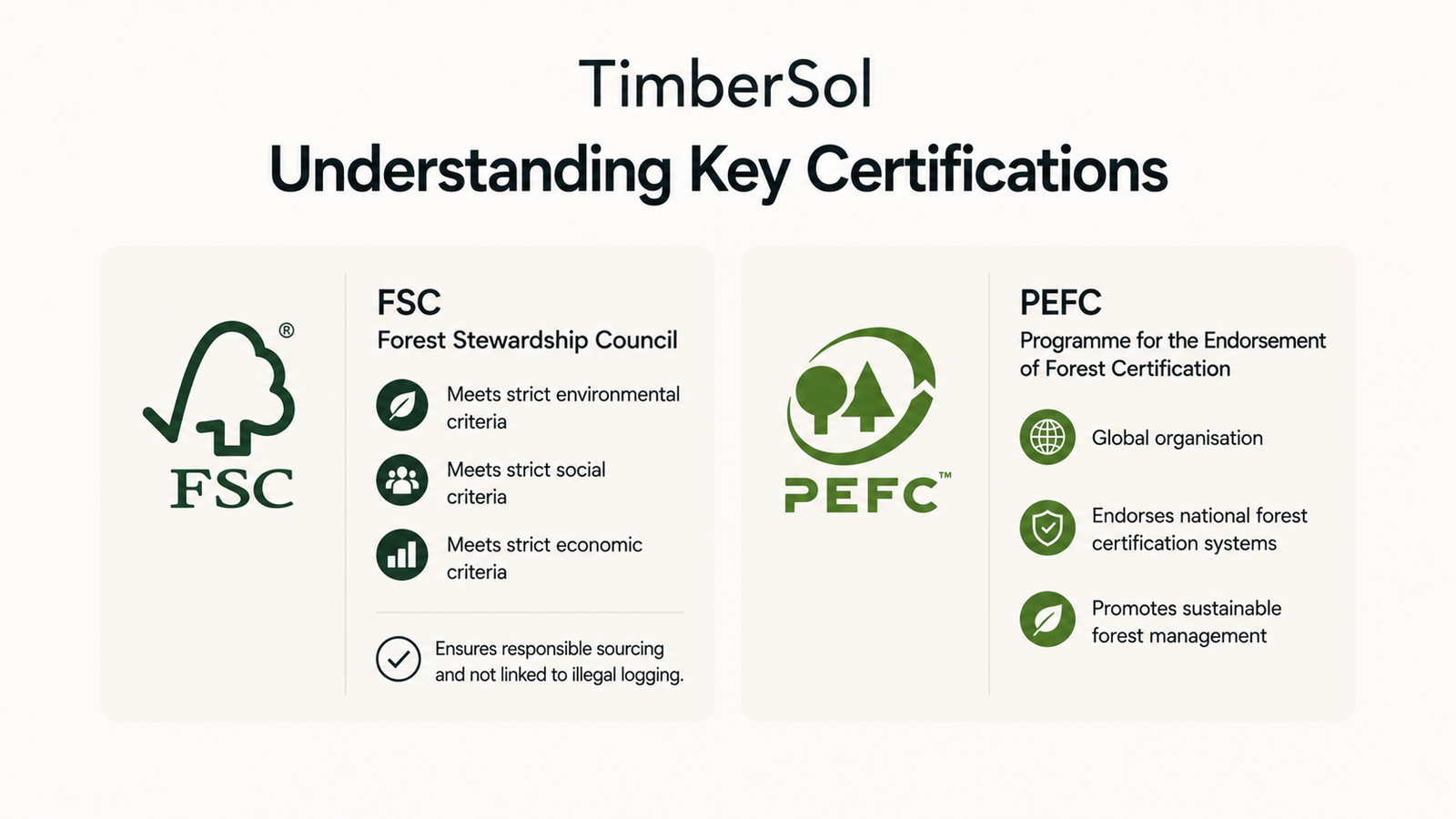
In the timber industry, certain certifications carry significant authority. The most widely recognised and trusted standard in the UK and globally is the Forest Stewardship Council (FSC). The FSC label indicates that the wood meets strict environmental, social, and economic criteria, helping ensure it has been sourced responsibly and not linked to illegal logging.
Another important certification is the Programme for the Endorsement of Forest Certification (PEFC). This global organisation supports and endorses national forest certification systems, all working towards the shared goal of sustainable forest management.
Both FSC and PEFC certifications provide reassurance that your timber purchase is both ethical and environmentally responsible.
Don’t rely solely on a supplier’s claims. A reputable company will be transparent about its sourcing practices and should be able to provide certification codes upon request. These can then be verified directly through the official FSC or PEFC databases. For a more in-depth understanding, you can explore the critical role of sustainable timber practices in our dedicated article.
Choosing durable, long-lasting hardwood is also an inherently eco-friendly decision. By selecting timber that can last 30, 40, or even 50+ years, you significantly reduce the need for replacement and minimise the associated waste over time.
The Growing Demand for Responsible Timber
The shift towards sustainability is transforming the entire timber industry. The European wooden decking market, currently valued at approximately USD 26.04 billion, is projected to experience significant growth. A major driver behind this expansion is increasing consumer demand for materials that are not only visually appealing but also ethically sourced.
The UK plays a central role in this movement, with a strong preference for hardwoods sourced from responsibly managed forests. You can learn more about European wooden decking market trends and forecasts to better understand this shift.
By choosing certified timber, you become part of a global movement that supports sustainable forestry practices—helping ensure that forests, and the high-quality decking materials they provide, remain available for generations to come.
Keeping Your Deck Looking Its Best
Choosing a premium hardwood for your deck is an excellent first step. The good news is that maintaining it requires far less effort than many people expect. In fact, the most noticeable change over time is a completely natural one.
As dense tropical hardwoods like Ipe and Cumaru are exposed to sunlight and rain, they gradually weather from their original deep, rich tones to an elegant silvery-grey. It’s important to understand that this is purely a cosmetic change. This natural silvering does not indicate rot or structural damage—it is simply the surface reacting to UV exposure, while the wood’s strength and integrity remain fully intact.
Many homeowners appreciate this aged, weathered appearance as it blends beautifully into the surrounding garden. However, if you prefer to maintain the fresh, vibrant colour, you absolutely can.
Cleaning and Oiling Your Deck
Regular cleaning is the most important job, especially in the damp UK climate. Sweeping away leaves, dirt, and debris prevents moisture from becoming trapped on the surface—one of the main causes of mould and algae growth. A more thorough clean a couple of times a year, using a stiff brush and a suitable deck cleaner, will help keep your deck in excellent condition.
If you want to maintain that freshly installed colour, using a high-quality decking oil with UV inhibitors is key. This helps nourish the wood by replenishing its natural oils, while also acting as a protective barrier against sunlight to reduce fading.
Oiling your deck is a choice, not a necessity. It ultimately comes down to personal preference—whether you prefer the deep, warm tones of freshly installed timber or the elegant, silvery-grey patina of naturally aged hardwood.
The process itself is straightforward:
- Clean the deck: Ensure the surface is thoroughly clean and completely dry.
- Apply a thin coat: Use a brush or roller to apply a thin, even layer of decking oil. Avoid over-applying.
- Wipe off excess oil: Allow the oil to absorb for 15–20 minutes, then wipe away any excess with a clean cloth. This step is essential to prevent a sticky or uneven finish.
Depending on sun exposure, reapplication may be needed every 12–18 months to maintain the wood’s rich, original colour.
A Unique Alternative: Yakisugi
If you’re looking for a distinctive and highly durable option, the ancient Japanese technique of charring wood is well worth considering. Known as Yakisugi (or shou sugi ban), this method involves carefully burning the surface of timber.
The controlled charring process creates a carbonised layer that offers exceptional resistance to water, rot, insects, and even fire, as demonstrated in materials such as charred accoya cladding and charred douglas fir cladding. It also results in a striking deep black finish with a unique, textured surface, often used in applications like fencing. While it may not be suitable for every type of hardwood, Yakisugi provides a compelling way to combine traditional craftsmanship with modern design—creating a deck that truly stands out.
Hardwood vs Composite Decking: A Realistic Comparison
Choosing between natural hardwood and modern composite decking is one of the first—and most important—decisions when planning a new deck. It’s a classic comparison: the timeless, natural appeal of real timber versus the engineered convenience of composite boards. Both options have clear advantages, but the right choice ultimately depends on your priorities for outdoor living.
Composite decking is often favoured for its low-maintenance appeal. Made from a blend of wood fibres and recycled plastics, it is designed to resist fading, staining, and rot without the need for regular sanding or oiling. However, this convenience can come at the cost of authenticity. Composite boards can appear overly uniform and may feel less natural underfoot, lacking the unique character and texture of real wood.
Aesthetics and Feel
There’s a natural warmth and character to real hardwood that simply can’t be replicated. Every plank of timber, whether Ipe or Garapa, features unique grain patterns and subtle colour variations, creating a deck that is truly one of a kind.
Walking on a solid hardwood deck feels substantial and connects your home to the garden in a way that plastic-based materials often struggle to. While composite decking has improved significantly, many options still appear slightly uniform, with a sheen or repetitive pattern that can feel less authentic in an outdoor setting.
From a practical standpoint, hardwood also offers an advantage when it comes to maintenance. Surface scratches can often be sanded out and refinished, restoring the board’s appearance. In contrast, deeper damage to composite decking usually requires full plank replacement, and achieving an exact colour match over time can be difficult.
Long-Term Value and Durability
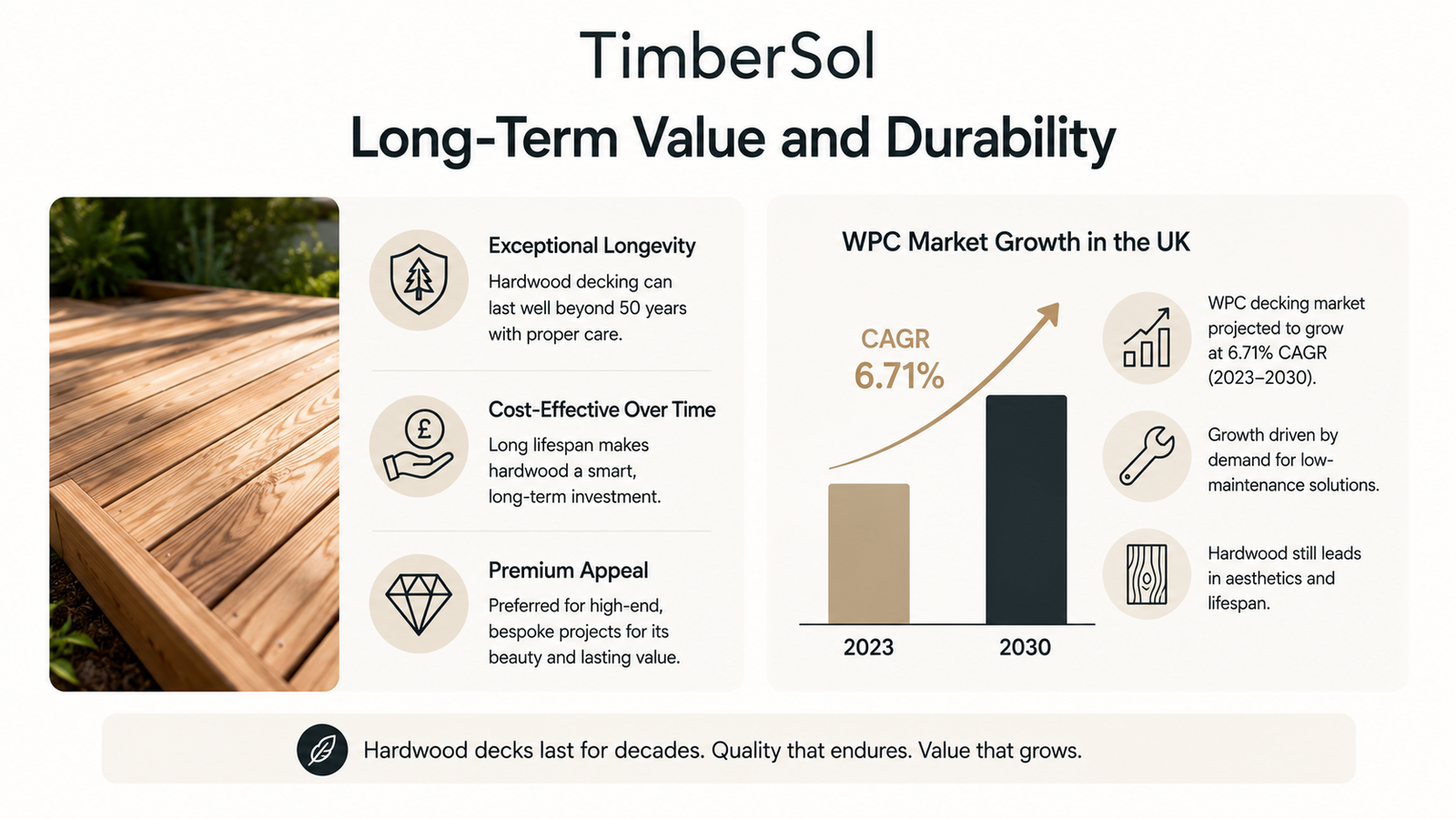
While composite decking is undeniably durable, premium hardwoods operate on an entirely different level. With proper care, hardwood decking can last well beyond 50 years. Over time, this longevity can make hardwood a surprisingly cost-effective investment. This is a key consideration for homeowners, explored in more detail in our in-depth comparison of wood and composite decks.
Market trends reflect this divide in priorities. While hardwood remains the preferred choice for high-end, bespoke projects, wood-plastic composite (WPC) decking continues to gain traction in the UK. The WPC market is projected to grow at a compound annual growth rate (CAGR) of approximately 6.71% between 2023 and 2030. This growth is largely driven by demand for low-maintenance solutions, although hardwood still leads in terms of aesthetics and lifespan.
Ultimately, the best choice depends on your priorities. If minimal maintenance is your main concern, composite decking is a practical option. However, if you value timeless aesthetics, natural authenticity, and long-term durability, real hardwood remains unmatched.
Your Hardwood Decking Questions Answered
Choosing the right hardwood for your deck is a significant decision. It goes beyond aesthetics—it’s a long-term investment in your home. To help you make an informed choice, let’s address some of the most common questions from homeowners across the UK.
Consider this your final checklist to clarify any remaining questions before creating the garden space you’ve been planning.
How Much More Will Hardwood Decking Cost Compared to Softwood?
There’s no denying that hardwood decking comes with a higher upfront cost. In most cases, you can expect to pay between two and five times more than standard pressure-treated softwood. However, the initial price doesn’t tell the full story.
With proper care, a hardwood deck can last 25–50+ years, and in some cases even longer. By comparison, a softwood deck may require full replacement within 10–15 years. When considered over the long term, the exceptional durability of hardwood often makes it the more cost-effective option, helping you avoid the expense and disruption of multiple replacements over time.
Is DIY Installation a Realistic Option for a Hardwood Deck?
For most homeowners, DIY installation of a hardwood deck is not recommended. While experienced DIYers with the right tools may be able to take it on, professional installation is strongly advised. Tropical hardwoods are exceptionally dense and heavy, making them difficult to work with. Cutting requires specialised carbide-tipped blades, and every fixing point must be pre-drilled before inserting screws.
Beyond the tools, proper installation technique is critical. Professionals understand the importance of adequate ventilation beneath the deck—especially in the damp UK climate. Ensuring proper airflow prevents moisture from becoming trapped, which can lead to warping, cupping, and a reduced lifespan of the decking.
Will My New Hardwood Deck Be Slippery When It Rains?
Any outdoor surface can become slightly slippery when wet, but the dense, natural grain of hardwood provides a good level of grip underfoot. For added safety, many suppliers offer decking boards with grooved or reeded profiles, designed to improve traction and help channel water away from the surface.
In practice, the most effective way to maintain a safe deck is through regular maintenance. Simple steps like sweeping away debris and occasionally cleaning the surface to prevent algae or mildew build-up will help ensure your deck remains safe and inviting space in all weather conditions.
Where Can I Learn More?
If you’d like to explore the topic further, the Timbercloud blog offers a wide range of in-depth articles covering various aspects of wood and decking. It’s an excellent resource for expanding your knowledge.
For a truly unique and durable decking solution that combines ancient craftsmanship with modern resilience, explore the stunning range of charred timber options at TimberSol. Discover how Yakisugi decking can transform your outdoor space by visiting https://timbersol-backup.elnoirstudio.com.
