
Charred Wood Blog
A Guide to Wooden Cladding Panels

Think of wooden cladding panels as a bespoke suit for your home. They do more than just make it look good; they provide a crucial layer of protection, boosting both its performance and its personality. This guide will walk you through everything, from picking the right wood to keeping it looking great for years to come.
Transforming Your Home with Wooden Cladding
Wooden cladding is far more than a cosmetic touch-up. It’s a fundamental part of a building’s external shell, or ‘envelope’. By fixing timber boards to the outside of your property, you’re creating a robust barrier that delivers on both practical and aesthetic fronts, instantly lifting its kerb appeal and architectural presence.
It’s no surprise that this approach is gaining real traction across the UK. In fact, the market for timber cladding is set to grow by over 4% annually between 2025 and 2030, a clear sign that homeowners and builders are looking for beautiful, sustainable materials.
This infographic captures just how dramatically wooden cladding can redefine a building’s exterior.
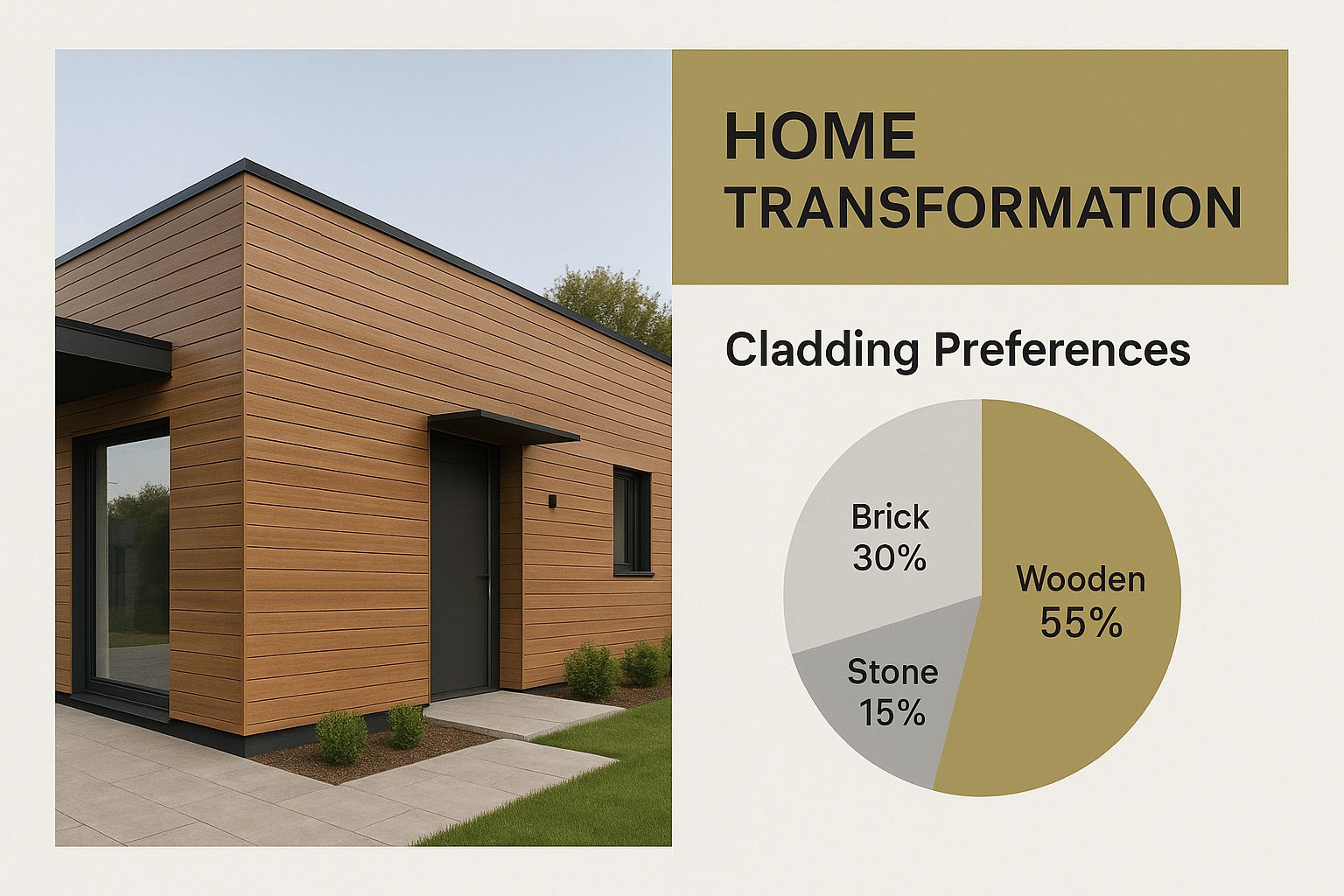
As you can see, the visual change is immediate, turning what might be a plain façade into a contemporary architectural statement.
Key Advantages for Homeowners
One of the biggest wins is the boost to your home’s thermal insulation. Wood is a natural insulator, and when you combine that with the small air gap created during installation, you get a home that stays warmer in winter and cooler in summer. Over time, that translates into real savings on your energy bills.
But the benefits don’t stop there. Here’s a quick look at why wooden cladding is such a smart move for homeowners.
Key Benefits of Wooden Cladding at a Glance
| Benefit | Brief Description |
|---|---|
| Aesthetic Versatility | Offers unmatched warmth and texture. Styles range from rustic oak to sleek, charred Yakisugi, suiting any design. |
| Increased Property Value | A well-executed cladding installation is a highly desirable feature that can significantly raise a property’s market value. |
| Durability and Longevity | The right timber, properly maintained, will last for decades, shielding your home’s structure from the elements. |
| Improved Insulation | The natural properties of wood help to regulate internal temperatures, leading to lower energy consumption and bills. |
Ultimately, choosing wooden cladding means you’re investing in more than just a pretty face for your house.
Beyond the obvious good looks, wooden cladding offers several other compelling advantages:
- Aesthetic Versatility: Timber brings a warmth and character that synthetic materials just can’t replicate. Whether you’re after the rustic charm of traditional oak or the striking, modern look of charred Japanese cedar (Yakisugi), there’s a finish to match your vision.
- Increased Property Value: A thoughtfully designed and professionally installed cladding system is a premium feature that can make your property much more attractive to future buyers.
- Durability and Longevity: When you select the right species of timber and look after it properly, your cladding can last for decades, protecting the structural walls from wind, rain, and whatever else the British weather throws at it.
By wrapping your home in a natural, breathable material, you are not only enhancing its beauty but also investing in its long-term health and efficiency. This makes timber a smart, forward-thinking choice.
For a more detailed exploration of how this material can benefit your property, take a look at our complete guide to timber external cladding.
Choosing the Right Wood for Your Cladding
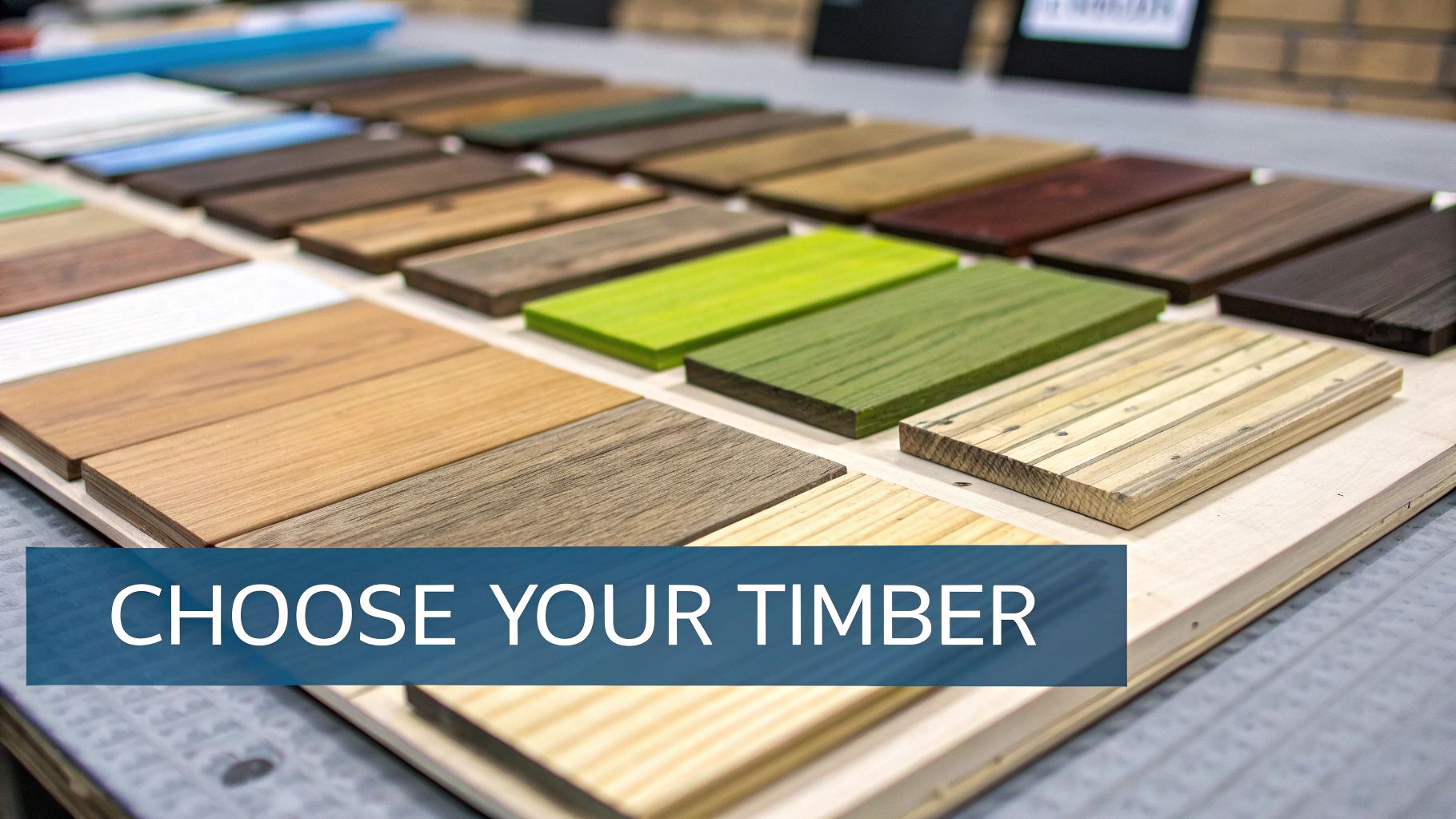
Picking the right timber for your wooden cladding panels is a bit like choosing the perfect coat. It needs to look fantastic, of course, but it also has to stand up to the British weather and fit your budget and maintenance expectations. The world of wood is wonderfully varied, with every species bringing its own unique blend of character, strength, and cost to the table.
This choice is fundamental; it dictates not just the final look but also the long-term performance of your home’s exterior. To get it right, you need to get to know the distinct personalities of the most popular options out there.
Popular Softwood Choices
In the UK, softwoods are often the first port of call for cladding projects. Why? They’re easy to work with, come at an attractive price, and many have a natural knack for resisting the elements. They really hit that sweet spot between beauty and practicality.
Two of the biggest names in softwood cladding are:
- Cedar: Western Red Cedar is a true classic. It’s loved for its stunning reddish-brown colours and the fact it’s incredibly stable, meaning it doesn’t warp or twist much. It’s packed with natural oils that ward off rot and insects, so you can even leave it untreated to weather into a gorgeous silver-grey.
- Larch: Siberian Larch is another top contender, a seriously dense and durable wood that can give some hardwoods a run for their money. Its warm, golden-yellow colour creates an inviting feel, and its high resin content acts as a natural defence against decay.
Durable Hardwood Options
If you’re after ultimate durability and a truly premium finish, then hardwoods are a sound investment. They are much denser and tougher than most softwoods, making them a brilliant choice for high-traffic areas or simply when you want a cladding that will last for generations.
Oak is the quintessential British hardwood, a symbol of strength with its famous, distinctive grain. It demands a bit more care during installation to account for its natural movement, but its timeless appeal and sheer robustness make it a prime choice for a classic, long-lasting façade. Looking into the best wood for outdoor use can offer more detail on how different timbers handle our climate.
Specialised and Modified Timbers
Stepping beyond the traditional, modern wood treatments have opened up a whole new world of high-performance cladding. These options take the natural beauty of timber and give it a serious upgrade in durability and stability.
Modified timbers give you the best of both worlds: the authentic look of wood combined with scientifically enhanced performance. The result is a material that’s more stable, durable, and moisture-resistant than in its natural state.
A great example is thermally modified wood. The timber is heated in a special kiln, changing its very structure to make it far more stable and resistant to rot. You get a lightweight, durable cladding material, often with a beautiful, rich, and darkened colour.
Then there’s Yakisugi, the ancient Japanese art of charring wood to preserve it. Also known as shou sugi ban, this technique creates a striking, blackened finish that is not only visually dramatic but also incredibly resistant to fire, pests, and rot. The carbon layer on the surface acts as a natural shield, creating a low-maintenance cladding with a potential lifespan of over 50 years. It’s the perfect way to make a bold, contemporary architectural statement.
The Sustainable Choice for Modern Building
Beyond its natural beauty, opting for wooden cladding panels is a real statement in sustainable design. We’re all more aware of the environmental impact of building materials these days, and wood consistently comes out on top as a genuinely green choice. It offers credentials that synthetic alternatives just can’t compete with.
Unlike the energy-hungry processes needed to create metal or uPVC, timber comes from a truly renewable source: responsibly managed forests. These aren’t just patches of trees; they’re carefully managed ecosystems where for every tree harvested, new ones are planted. This cycle ensures we have a continuous supply without draining our natural resources.
Understanding Carbon Sequestration
One of wood’s most incredible environmental benefits is carbon sequestration. It’s a simple but powerful idea. Think of a tree as a natural carbon sponge. As it grows, it absorbs carbon dioxide (CO2)—a primary greenhouse gas—from the atmosphere and locks it away inside its wood fibres.
When that tree is harvested and turned into cladding panels, all that stored carbon stays right there in the wood. Your home’s exterior literally becomes a carbon store for the entire life of the cladding, actively keeping CO2 out of the atmosphere for decades. This gives timber a much lower carbon footprint than materials like steel or concrete, which pump out huge emissions during their manufacture.
By choosing wood, you are effectively turning your building’s façade into a carbon sink. This makes timber cladding not just a design choice, but an active contribution to a healthier climate.
It’s no surprise that more and more people are choosing eco-friendly materials like this. The global market for wooden wall cladding was valued at around USD 6.79 billion in 2024 and is expected to grow to USD 10.8 billion by 2035, driven almost entirely by this demand for sustainable solutions. You can see the full picture in the latest market analysis.
How to Verify Sustainable Sourcing
So, how do you make sure your choice is genuinely good for the planet? The key is to look for sustainability certifications. These labels are your guarantee that the timber comes from forests managed in an environmentally and socially responsible way. Our guide on the sustainability of timber takes a much deeper dive into this.
When you’re choosing your cladding, keep an eye out for these two main certifications:
- FSC (Forest Stewardship Council): A globally recognised gold standard. It ensures the timber is harvested from forests managed in a way that protects biodiversity and supports the rights of local communities.
- PEFC (Programme for the Endorsement of Forest Certification): Another major international organisation that promotes sustainable forest management through independent, third-party checks.
By making sure your wooden cladding panels are FSC or PEFC certified, you can be confident you’re supporting responsible forestry and making a genuinely positive impact with your project.
Planning Your Cladding Installation
Any great wooden cladding project is won or lost in the planning stage. Now that you’ve got your ideal timber picked out, it’s time to connect that vision with a flawless, long-lasting installation. Paying close attention to the details at this point is what guarantees your home’s new exterior will look and perform beautifully for decades to come.
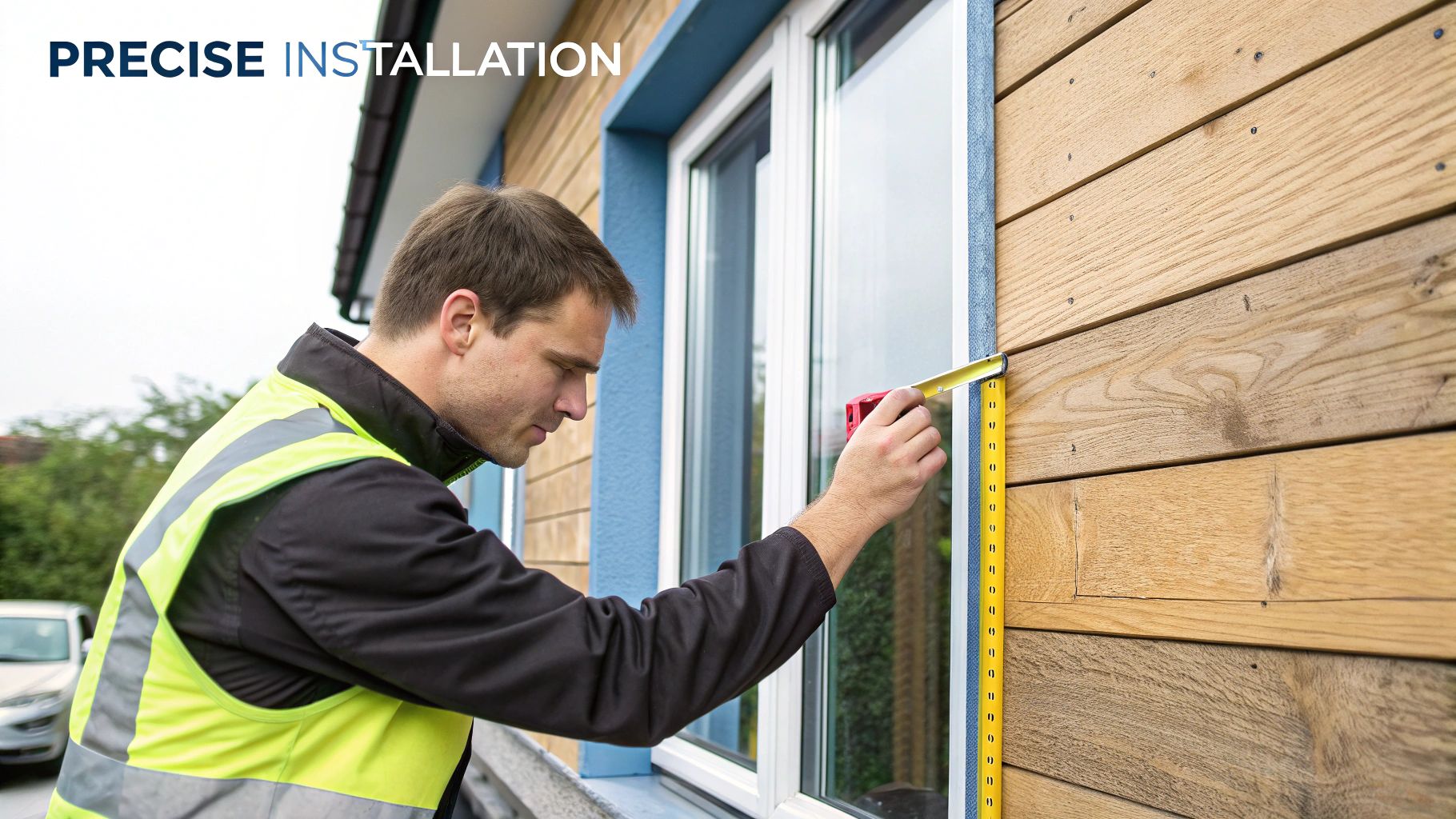
The first big decision is the profile of the wooden cladding panels. This simply means the shape of each individual board and the way they connect. Every profile gives a different visual effect and offers varying levels of weather protection.
Common Cladding Profiles
Two of the most popular profiles you’ll come across are shiplap and tongue-and-groove. Each has its own design that impacts both the final look and how well it defends the building against the elements.
- Shiplap: This profile has an overlapping “L” shaped joint, known as a rebate, on each board. This smart design lets the boards sit flush against each other while creating a lovely shadow line. More importantly, it provides excellent weather resistance by cleverly directing water away from the join.
- Tongue-and-Groove (T&G): With T&G, one side of the board has a protruding ridge (the tongue) that slots perfectly into a channel (the groove) on the board next to it. The result is a tight, interlocking surface with a clean, almost seamless appearance that’s fantastic at blocking wind and rain.
Ultimately, your choice comes down to aesthetics: do you prefer the crisp, defined lines of shiplap or the smooth, uniform finish of T&G?
The Importance of a Ventilated Rainscreen
If there’s one thing you absolutely must get right, it’s creating a ventilated rainscreen. This isn’t just industry jargon; it’s the secret to a long and healthy life for both your cladding and your home. It’s all about installing the cladding onto vertical battens, which creates a vital air gap between the back of the timber and your building’s main waterproof layer.
Why is this gap so crucial? It’s all about moisture management. Any water that finds its way behind the panels can drain away, while constant airflow allows the timber to dry out properly. This stops moisture from getting trapped against your home’s structure, which is the number one cause of rot and damp problems.
Think of a rainscreen as a breathable waterproof jacket for your house. The outer layer (the cladding) takes the brunt of the weather, while the air gap underneath ensures that anything that gets through can escape, keeping the core structure perfectly dry.
Essential Pre-Installation Checks
Before a single board goes up, a couple of final checks will save you a world of headaches later on. First, let the timber acclimatise. Wood is a natural material, and it will expand and contract with humidity. Storing the cladding on-site for a week or two before you start allows it to adjust to its new environment, which massively reduces the risk of it warping or unsightly gaps appearing down the line.
Finally, don’t skimp on the fixings. Always use high-quality stainless steel screws or nails. Cheaper galvanised fixings can react with the natural tannins found in woods like oak and cedar. This reaction causes ugly black streaks and corrosion over time. Getting these small details right is what separates a professional, durable finish from a job that needs redoing in a few years.
Keeping Your New Cladding in Top Shape
Fitting beautiful wooden cladding panels is one thing, but knowing how to look after them is what guarantees they’ll stay a standout feature for years, even decades. The great news is that the level of upkeep is entirely up to you, and it all depends on the final look you’re going for.
One of timber’s most charming qualities is how it ages. If you leave it to face the elements, most types of wood will slowly develop a gorgeous, silver-grey patina. This isn’t a sign of rot or damage; it’s a completely natural weathering process that many people actually want for its elegant, rustic appeal.
Letting Nature Take Its Course
That classic silvery look happens as the sun’s UV rays and rain work their magic on the surface of the wood. Opting to let your cladding weather naturally is by far the lowest-maintenance route. All it really needs is an occasional clean to get rid of surface grime and stop any mildew from setting in.
Holding on to That ‘Just Installed’ Colour
If, on the other hand, you love the original, fresh-from-the-mill colour of your timber, you’ll need to protect it with a finish. This acts as a shield against UV light and moisture, slowing down the ageing process and keeping those rich, warm tones locked in.
You’ve got a few options when it comes to finishes, and each has its own pros and cons:
- Penetrating Oils: These are brilliant because they soak right into the wood, feeding the fibres and really making the natural grain pop. You’ll need to reapply them every few years to keep that protection topped up.
- Stains: Stains add a layer of colour but are transparent enough to let the wood’s natural texture shine through. They give great UV protection and can last quite a while before you need to think about a fresh coat.
- Paints: For the ultimate barrier and a solid block of colour, paint is your answer. It forms a tough film over the surface, but the trade-off is that you lose the natural look of the grain. When it’s time to repaint, the prep work is also a bit more involved.
The finish you pick sets your maintenance calendar. Oils give you a natural aesthetic but require more regular attention. Paints offer a tough, long-lasting shield but hide the timber’s true character.
A Simple Clean Goes a Long Way
Whether you decide to treat your cladding or let it go grey gracefully, a bit of regular cleaning is key. A gentle wash once a year is usually all it takes to keep your wooden cladding panels looking fantastic.
Just follow these straightforward steps to keep your exterior in prime condition:
- Start by giving the surface a light scrub with a soft-bristled brush to knock off any loose dirt, dust, and cobwebs.
- Next, wash the panels down with a bucket of mild, soapy water or a proper wood cleaning solution.
- Whatever you do, don’t be tempted to use a high-pressure jet washer. The force can easily splinter the wood fibres and drive moisture deep into the structure where you don’t want it.
- Finally, give everything a good rinse with a regular garden hose to wash away any soapy residue.
This simple annual routine is enough to stop grime and algae from building up, protecting your investment and making sure your home’s exterior remains a feature you can be proud of.
Got Questions About Wooden Cladding?
Even with all the details covered, it’s completely normal to have a few practical questions buzzing around before you dive into a project. This is where we tackle the common queries we hear day in, and day out, giving you the clear, straightforward answers you need to move forward with confidence.
We’ll get straight to the point on everything from budget worries to how well timber really stands up to the British weather.
What’s the Price Tag for Wooden Cladding in the UK?
The cost of wooden cladding panels can swing quite a bit. It all comes down to the type of wood you choose, the profile you like, and any special treatments it might have. Think of it like buying a car—a basic model does the job, but the premium features and finishes will cost you more.
To give you a rough idea, here’s a general breakdown of what to expect:
- Budget-Friendly Softwoods: Timbers like Pine or Larch are a great entry point, usually landing between £20 and £40 per square metre.
- Hardwearing Mid-Range Woods: For something more resilient, you’ll be looking at timbers like Western Red Cedar, which often sit in the £50 to £80 per square metre range.
- Premium and Modified Timbers: At the top end, you’ve got stunning hardwoods or advanced materials like Accoya, which can push past £100 per square metre.
Just remember to factor in the extra costs for installation, good quality stainless steel fixings, and any oils or finishes you plan on using.
How Long Will My Wooden Cladding Actually Last?
The lifespan of your cladding really depends on three things: the timber you pick, how well it’s installed, and how you look after it. Get these right, and it can easily outlive many other exterior finishes.
Naturally tough woods like Siberian Larch or Cedar can look great for an impressive 40-60 years—sometimes even longer—without needing any chemical treatments. Hardwoods can last even longer. Even a well-installed system using treated softwood can still give you a solid 15-30 years of service.
If there’s one secret to a long life for your cladding, it’s a proper installation. Good ventilation behind the panels is everything—it stops moisture from getting trapped and is the key to making any timber cladding system last.
Is Wood Cladding Really a Good Idea in the Wet UK Climate?
Absolutely. People have been building with wood in the UK for centuries, and it has proven its worth in our damp climate time and again. The secret to making it work lies in two things: choosing the right timber and installing it correctly.
Timbers that are naturally durable or have been properly treated have a built-in resistance to the rot and insect attacks that damp conditions encourage. But the real game-changer for performance in a wet climate is a ventilated rainscreen installation. This method creates an air gap behind the cladding, which lets any rain that gets through drain away and allows air to circulate. It’s a simple but vital feature that keeps the main structure of your building dry and prevents damp-related headaches.
Will I Need Planning Permission for Cladding?
In many cases, adding cladding to your house is considered ‘permitted development’, meaning you don’t need to apply for planning permission. But don’t assume you’re in the clear, as getting this wrong can be a costly mistake.
You will almost certainly need to get permission if your property is:
- A listed building.
- Located in a conservation area.
- Within a National Park or an Area of Outstanding Natural Beauty (AONB).
The rules can also be tighter if the materials you want to use don’t fit in with the look of the local area. To be safe, it’s always best to have a quick chat with your local planning authority before you start any work.
Ready to transform your home with a unique and durable exterior? TimberSol specialises in high-quality charred timber cladding using the ancient Yakisugi technique. Discover our stunning range of products and find the perfect finish for your project.
