
Wood vs Composite Decks: Which Is Best for Your Home?

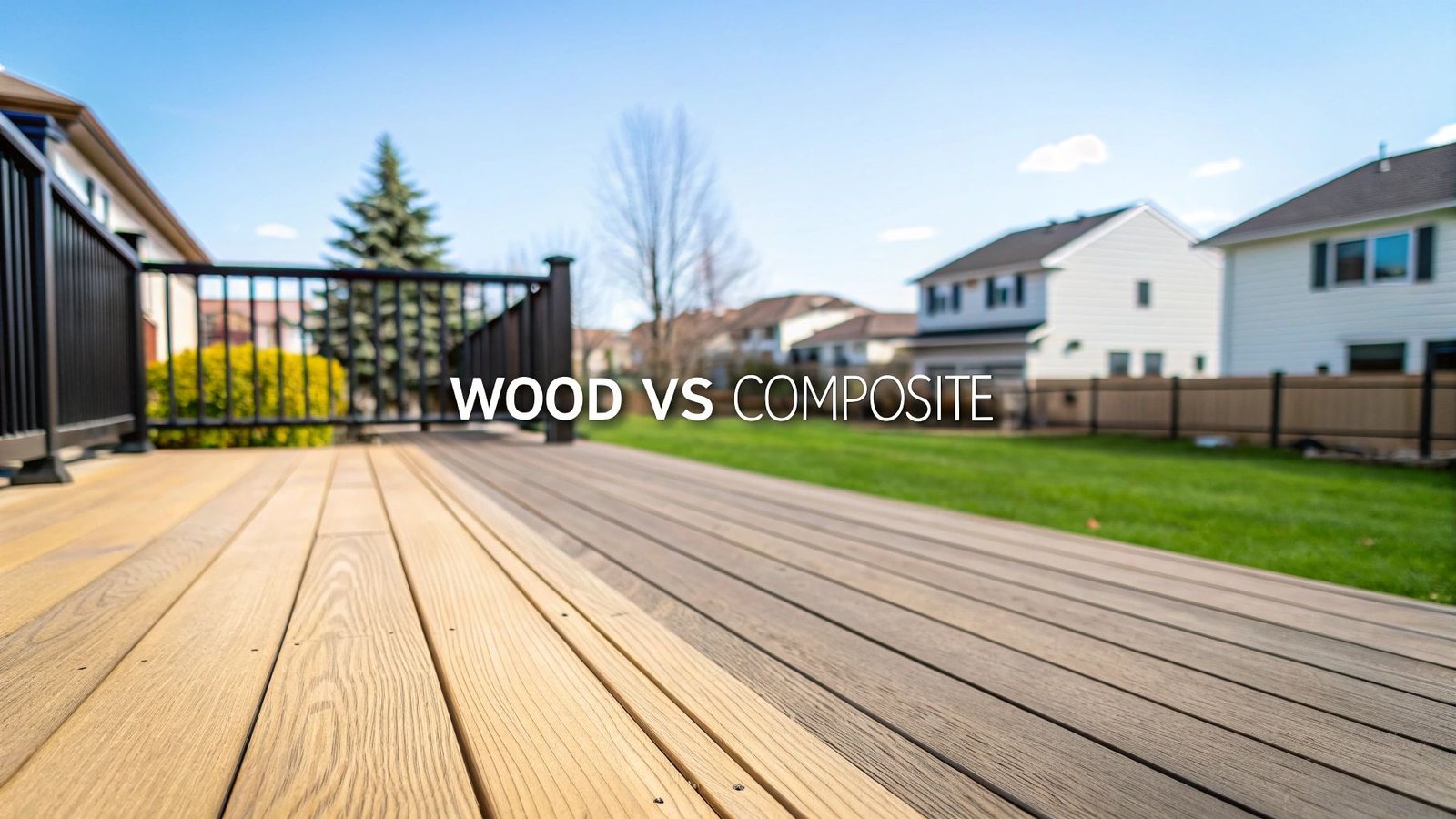
The great debate of wood vs composite decks really boils down to a single choice: do you prefer timeless, natural beauty or modern, low-maintenance convenience? Wood gives you that authentic look and feel at a lower initial price, but it comes with a commitment to yearly upkeep. Composite, on the other hand, offers a durable, hassle-free surface that costs more upfront but saves you time and effort down the line.
Choosing Your Perfect Deck: An Overview
Picking between wood and composite decking is one of the biggest decisions you’ll make when creating your ideal outdoor space here in the UK. There’s no single “best” answer; the right choice hinges entirely on your budget, how you plan to use the space, and what your long-term priorities are.
Traditional timber decking, often made from pressure-treated pine or cedar, has a natural charm that’s hard to beat. Its classic appearance blends beautifully into any garden, and it’s generally the more wallet-friendly option to start with. The catch? That natural beauty requires regular work. You’ll need to commit to cleaning, staining, and sealing it to fend off the effects of our damp British weather.
Then you have composite decking, an engineered board made from a mix of wood fibres and recycled plastics. This clever combination results in a seriously robust material that’s highly resistant to rot, insects, and fading. While it certainly costs more to install, the payback comes in the form of incredibly low upkeep—a simple wash now and then is all it takes to keep it looking great.
The chart below gives you a clear visual breakdown of how the two stack up on cost, maintenance, and lifespan.
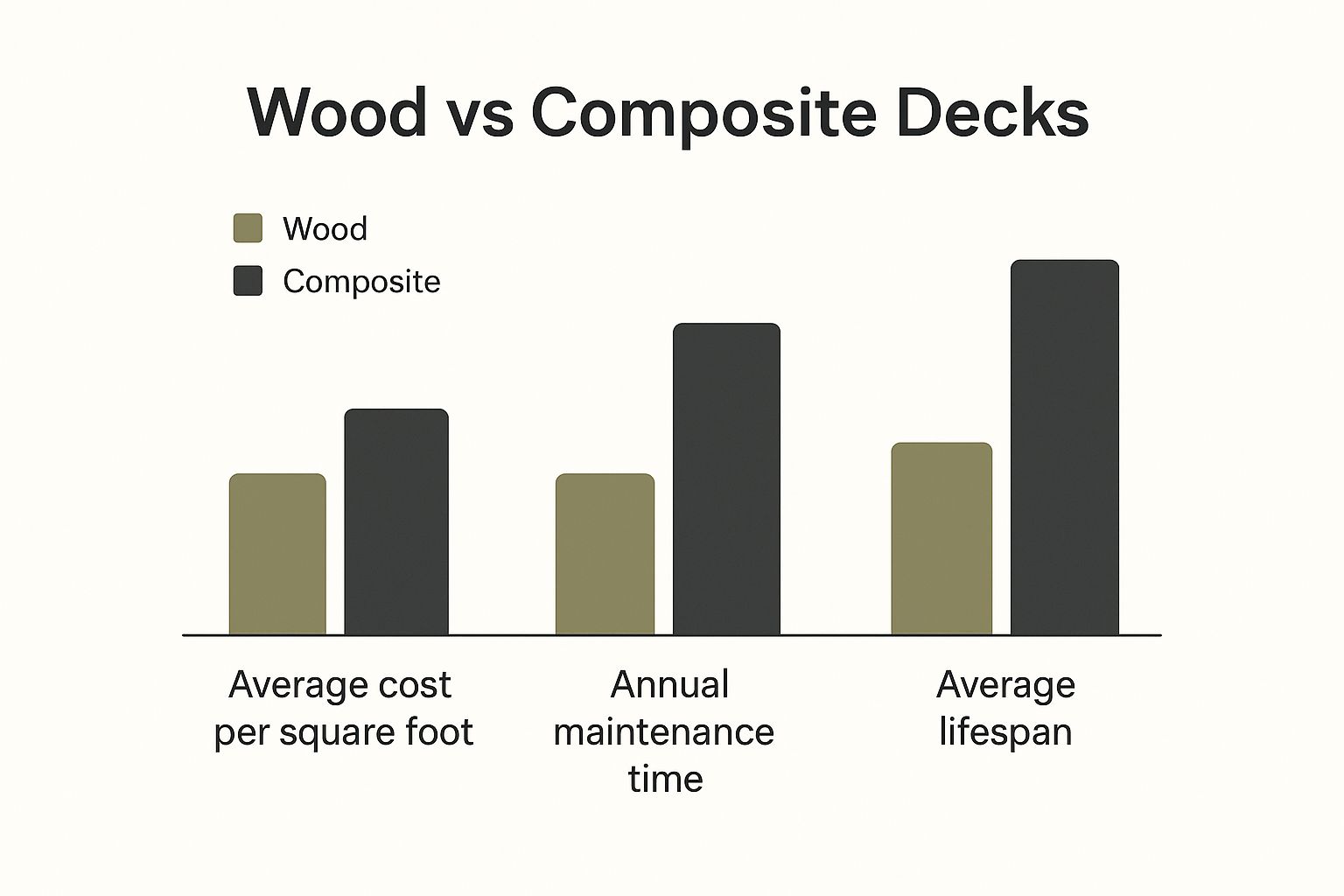
As you can see, timber might be cheaper to buy, but composite decking gives you a much longer lifespan with just a fraction of the annual maintenance.
Wood vs Composite Decking At a Glance
To help you see the differences side-by-side, here’s a quick summary of the key points for each material. This table is designed to give you a high-level overview to help you grasp the main trade-offs at a glance.
| Factor | Wood Decking | Composite Decking |
|---|---|---|
| Initial Cost | Lower initial investment, making it a great choice for tighter budgets. | Higher upfront cost, often 50-100% more than pressure-treated wood. |
| Maintenance | High. Expect to be sanding, sealing, or staining it annually to prevent rot and fading. | Low. Just needs an occasional clean with soap and water to keep it looking its best. |
| Durability | Prone to rot, warping, splintering, and insect damage if maintenance is neglected. | Highly resistant to rot, mould, insects, and fading, especially capped versions. |
| Aesthetics | Authentic, natural beauty with unique grain patterns. Can be stained or painted any colour. | Consistent colour and texture. Available in a wide range of finishes that mimic real wood. |
Ultimately, this table highlights the core trade-off: wood offers natural charm at a lower initial cost but demands your time, whereas composite offers modern convenience for a higher price but gives you your weekends back.
Comparing the Total Cost of Ownership
When you’re weighing up wood versus composite decking, the initial price tag is what most people focus on, but that’s really just the tip of the iceberg. To get a true sense of the cost, you need to look at the total cost of ownership over the entire life of your deck.
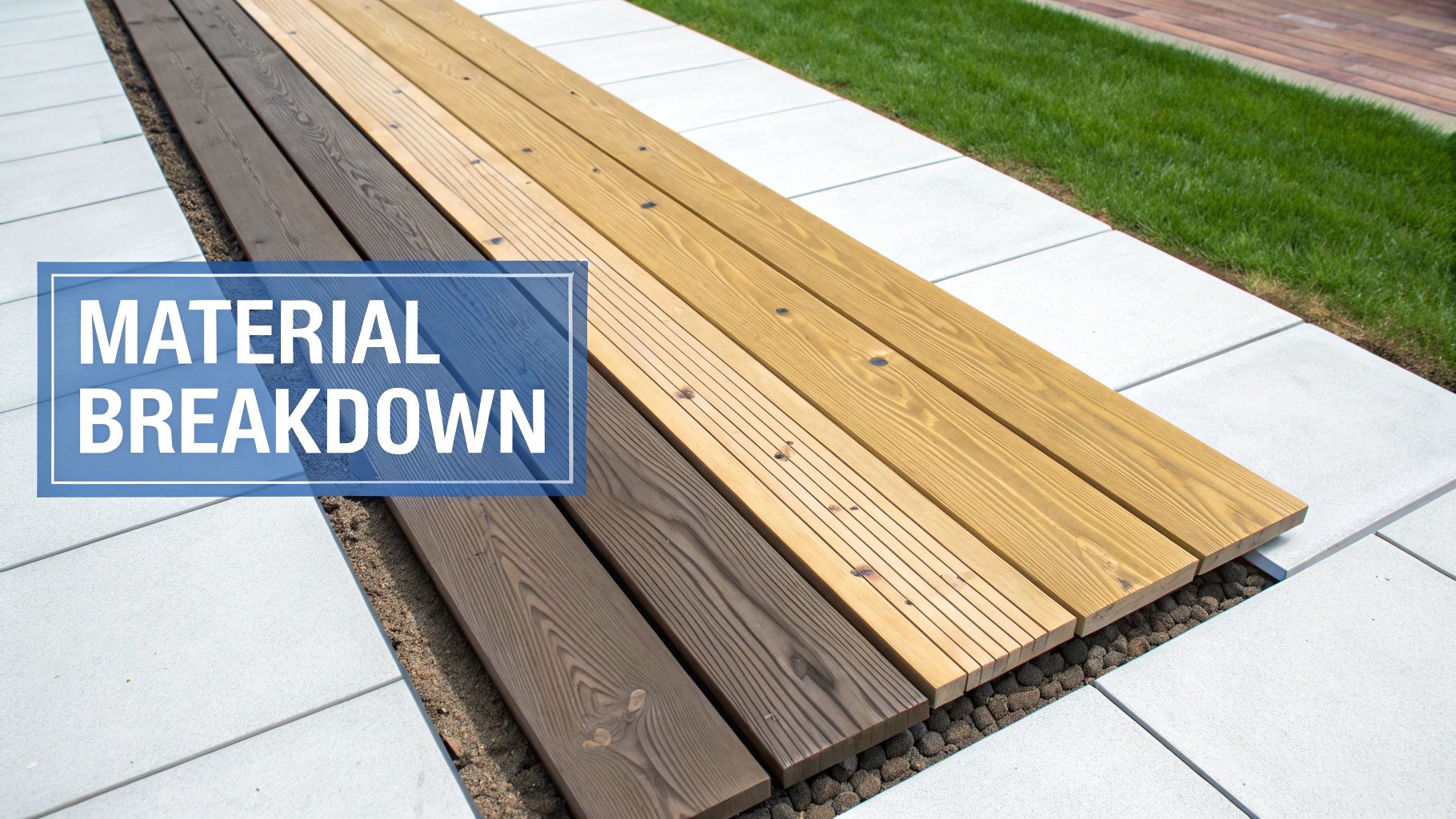
There’s no getting around it: wood is the more budget-friendly choice at the outset. Materials like pressure-treated pine can be significantly cheaper per square metre than most composite boards, which makes wood a tempting option if you’re working with a tight initial budget.
But this is where the financial paths of the two materials really start to split. The real cost of a wooden deck isn’t in the installation; it’s in the years of upkeep that follow.
Factoring in Long-Term Upkeep
A timber deck needs regular TLC to stand up to the notoriously damp UK weather. This isn’t just a friendly suggestion—it’s essential for preventing rot, warping, and fading. These recurring costs can really add up over the years.
- Annual Staining and Sealing: Be prepared to spend a few hundred pounds every year or two on stains, sealants, and all the gear needed to apply them.
- Cleaning Supplies: You’ll likely need specialised deck cleaners to keep on top of the inevitable algae and mildew growth.
- Potential Repairs: Sooner or later, some boards will warp or start to rot. Replacing them means more money spent on materials and labour.
Composite decking, on the other hand, asks for very little from your wallet after it’s been installed. A simple wash-down with soap and water is usually all it takes to keep it looking great, completely sidestepping those recurring maintenance bills that come with wood.
Think of it like this: a wooden deck is like a subscription service where you pay annually in both time and money. A composite deck is more of a one-off purchase, with nearly all of the cost paid right at the start.
Return on Investment and Resale Value
Let’s also talk about property value, because that’s a huge part of the financial equation. Traditional wooden decking still has a strong appeal in the UK market. In fact, a well-maintained wooden deck can add around 83% of its installation cost back to your home’s value at resale. Composite decks, while popular, tend to recoup a bit less at roughly 68%.
For a wider view on how these expenses fit into the bigger picture, it’s worth understanding UK build costs in general. While the higher initial outlay for composite can feel like a big hurdle, running the numbers over a 15 or 20-year period often shows it to be the more cost-effective choice. Those initial savings from a wooden deck can be completely wiped out by a decade of maintenance, making composite a much savvier long-term investment for many homeowners.
Durability in the UK: A Realistic Look
When you’re choosing between a classic wood deck and a modern composite one, durability isn’t just a buzzword. In the UK, it’s the single most important factor. Our famously damp winters and surprisingly strong summer sun test outdoor materials like nowhere else, and wood and composite stand up to the challenge in very different ways.
Natural wood has an undeniable charm, but it’s fundamentally at odds with our climate. The constant moisture makes timber a playground for rot and fungal growth. Those cycles of wet and dry, warm and cold, cause boards to warp, split, and crack over time. A wooden deck is beautiful, but it’s a beauty you have to fight to preserve.
This is exactly where composite decking shines. It was engineered from the ground up to solve these problems. By mixing wood fibres with recycled plastics, manufacturers create a non-porous board that simply shrugs off moisture. That means no rot, no warping, and no nasty splinters, even after years of relentless British rain.
The Real-World Maintenance of Wood
Keeping a wooden deck looking good and, more importantly, structurally safe, isn’t a one-and-done job. It’s an annual ritual that demands your time and money.
Think of it as a yearly MOT for your deck:
- Deep Cleaning: You’ll need to scrub away the dirt, algae, and mildew that flourish in our damp conditions.
- Sanding: This is for smoothing out the inevitable splinters and rough patches that pop up.
- Sealing or Staining: A fresh protective coat is essential to repel water and shield the wood from UV damage.
Skip this routine, and you’re leaving your timber defenceless, drastically cutting its lifespan short. If you’re set on the natural beauty of timber, it’s absolutely crucial to learn how to protect wood outdoors properly to get a decent return on your investment.
On the other hand, composite decking is a different story entirely. A simple wash with soap and water is usually all it takes to get it looking fresh again, freeing up your weekends for relaxing, not sanding.
Colour Fading and UV Resistance
Beyond the rain, there’s the sun. The sun’s UV rays are another major enemy of wood, gradually bleaching its rich colour to a silvery grey. Some people love that weathered, coastal look, but if you want to keep that just-installed richness, you’ll be re-staining it every few years.
Composite decking’s biggest advantage here is its built-in defence against fading. The best modern boards are “capped” – they have a tough outer shell that seals in the colour and offers fantastic resistance to UV rays and stains from everyday spills like wine or barbecue grease.
This protective cap means the deck you install today will look almost identical in ten years, with very little colour loss. For a wooden deck to have that same colour consistency, you’d be locked into a relentless cycle of expensive and time-consuming upkeep. When it comes to long-term, low-effort durability in the UK, composite is the undisputed winner.
Exploring Aesthetic Appeal and Design Flexibility

When it comes to the great debate between wood and composite decking, how it looks is often the final hurdle. The visual and stylistic differences are significant, so getting to grips with them is essential for choosing a material that truly suits your home and garden.
Let’s be honest, nothing quite captures the authentic, natural charm of real wood. Each timber board is completely unique, telling its own story through intricate grain patterns, knots, and subtle shifts in colour. Woods like cedar, oak, and Ipe have a warmth and richness that creates a genuine connection between your outdoor space and the natural world. For many, that inherent character is simply irreplaceable.
Beyond its natural beauty, wood offers incredible design freedom. You can stain it to enhance its deep, natural tones or paint it any colour you can dream of. This gives you the power to completely reinvent your deck’s look down the line, making wood a fantastic canvas for your creative side.
The Evolution of Composite Aesthetics
Composite decking has come an incredibly long way. Gone are the days when it looked plasticky and obviously artificial. Modern manufacturing now creates boards with impressively realistic wood-grain textures and multi-tonal colour variations that mimic the look of exotic hardwoods, but without all the demanding upkeep.
This progress means you now have a huge range of colours and finishes to choose from, spanning everything from deep, earthy browns to sleek, contemporary greys. This variety makes it easy to find a composite board that perfectly complements your home’s exterior, giving you a consistent and predictable look across the entire deck.
For many, the choice boils down to authenticity versus consistency. Wood offers a one-of-a-kind, organic beauty that can’t be perfectly replicated. On the other hand, composite provides a flawless, uniform finish that holds its look for years with very little effort.
Specialised Finishes and Architectural Harmony
Wood isn’t just about standard stains and paints. It can be treated with specialised finishes for a truly unique aesthetic. A brilliant example is Yakisugi, a traditional Japanese technique of charring the wood. This process, also known as shou sugi ban, creates a stunning, dark, and highly durable surface that makes a bold architectural statement.
While you won’t find artisanal finishes like Yakisugi for composite, its strength lies in providing a clean, modern look. The uniform boards create the kind of sharp, crisp lines that are perfect for contemporary home designs.
If you’re looking for inspiration on how different materials can transform your outdoor space, our guide to decking designs for gardens is packed with ideas. Ultimately, whether you lean towards the rustic charm of wood or the sleek uniformity of composite, both materials give you the opportunity to create a beautiful and inviting outdoor living area.
What About the Environmental Impact?
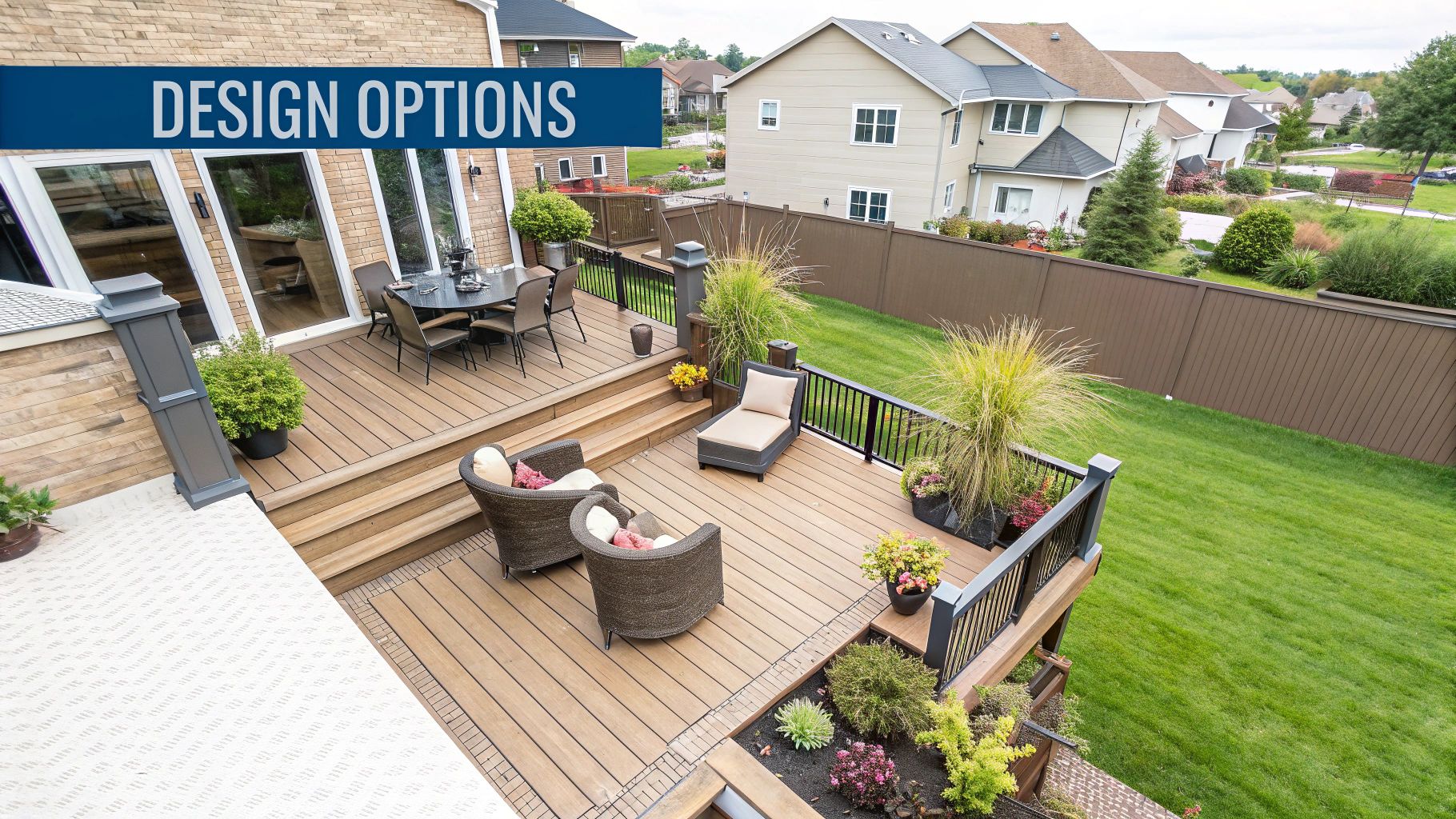
When you’re weighing up wood and composite decking, the environmental side of things is becoming a bigger and bigger factor for many of us. At first, wood seems the clear winner. It’s natural, it’s renewable, and when its time is up, it biodegrades back into the earth.
But there’s a crucial catch: its true green credentials depend entirely on where it comes from. For timber to be a genuinely sustainable choice, you have to be sure it’s sourced from a responsibly managed forest. Always check for certifications like the FSC (Forest Stewardship Council) or PEFC (Programme for the Endorsement of Forest Certification). These logos are your guarantee that the wood was harvested in a way that protects ancient woodlands and local ecosystems.
The Composite Decking Lifecycle
Composite decking tells a different, but equally compelling, environmental story. Most composite boards are made from a clever blend of waste wood fibres and recycled plastics—think old plastic bags and bottles. This manufacturing process gives a second life to a huge amount of plastic that would otherwise be clogging up UK landfills for centuries.
This focus on recycled content is a major reason for its popularity. In fact, capped composite decking now commands a 59.23% revenue share in the UK market for 2024, partly because of its green credentials. It’s a trend that’s clearly here to stay.
The real debate isn’t just ‘natural versus manufactured’. You have to look at the entire lifecycle—from how the raw materials are sourced and processed to how long the final product lasts and what happens to it at the end of its life.
While making composite boards does use more energy than milling timber, you have to balance that against their incredible durability. A composite deck can last for decades with minimal upkeep, meaning fewer resources are used on replacements and maintenance products over its lifetime.
If you’re keen to explore this further, our guide on eco-friendly construction materials is a great next step. Ultimately, both materials have a solid case for being a sustainable choice; they just get there in completely different ways. Your decision really comes down to which approach best fits with your own environmental values.
Making the Right Choice for Your Home
So, after weighing up all the pros and cons, how do you actually decide between wood and composite decking? It really boils down to one simple question: what does your ideal weekend look like? The wood vs composite decks debate doesn’t have a universal winner; the only thing that matters is finding the right fit for your home, your budget, and your lifestyle.
Thinking through a few real-world scenarios usually makes the path forward much clearer. Each material really shines in different situations, making it the perfect choice for homeowners with very different priorities.
Who Should Choose a Wood Deck?
A traditional timber deck is, without a doubt, the perfect match for the hands-on homeowner who genuinely enjoys the process of looking after their home. If you don’t see annual staining as a chore but as a satisfying weekend project, then timber is a fantastic choice.
Consider wood if you:
- Are a DIY enthusiast: You’re comfortable with tools and actually look forward to the upkeep that keeps your deck looking its best year after year.
- Prioritise natural aesthetics above all: Nothing beats the authentic, unique grain and warm feel of real timber. If that’s what you value most, the choice is simple.
- Have a stricter initial budget: Wood’s lower upfront cost means you can create a beautiful outdoor space right now, without the hefty initial investment that composite demands.
In short, wood is for the purist. It’s for the homeowner who believes the rich character and endless customisation potential of natural timber are well worth the ongoing commitment to its care.
Who Should Choose a Composite Deck?
On the flip side, composite decking is engineered for convenience and total peace of mind. It’s the ideal solution for anyone who wants a stunning, functional outdoor space without adding another job to their to-do list.
Composite is likely the better fit if you:
- Lead a busy lifestyle: You’d rather spend your free time enjoying your garden with family and friends, not sanding and sealing deck boards.
- Are willing to invest for long-term ease: You see the higher upfront cost as a smart payment for decades of minimal upkeep and worry-free durability.
- Have children or pets: The splinter-free, consistent surface of composite boards provides a much safer environment for little feet and paws to run around on.
Ultimately, the best deck isn’t made of a specific material—it’s the one that becomes a seamless part of your life. By being honest about your budget, your tolerance for maintenance, and your vision for your garden, you can confidently pick the material that will bring you the most joy for years to come.
Frequently Asked Questions
Even after weighing up the pros and cons, you might still have a few questions rolling around in your mind. Let’s tackle some of the most common ones to help you make that final decision with confidence.
Can You Install Composite Decking on a Wood Frame?
Yes, you certainly can. In fact, it’s a popular and savvy way to give an old timber deck a facelift without starting from scratch.
As long as your existing wooden frame is in good nick—structurally sound, free of rot, and up to current building codes—you can simply swap out the old timber boards for new composite ones. This can save you a fair bit on labour and materials. But, and this is a big but, always get a professional to inspect the frame first. There’s no point putting a brand-new, 25-year composite surface on a substructure that’s on its last legs.
How Do You Repair Scratches on Each Decking Type?
This is where the two materials really show their differences. With a timber deck, a minor scratch is usually no drama. A quick sand and a fresh coat of stain or sealant, and it’s like it never happened.
Composite decking is a different story. Since the colour and texture are baked into the surface layer, you can’t just sand a scratch away without ruining the board’s protective cap and its look. A gentle touch with a heat gun can sometimes help minor scuffs blend in, but for deeper gouges, you’re often looking at replacing the entire board.
Does Resale Value Differ Between Wood and Composite Decks?
When it comes to recouping your investment, the numbers are interesting. Traditional wood decks in the UK tend to retain a bit more of their value, returning around 83% of their initial cost, while composite decks come in at about 68%.
But that’s not the whole picture. The low-maintenance appeal of composite decking is a huge draw for homeowners, and its residential segment accounts for around 65% of the total market revenue. This shows a clear shift in buyer preference. You can dig deeper into these market trends and insights on businessresearchinsights.com.
In the end, any well-maintained deck adds value. The real deciding factor often boils down to the buyer’s personal taste. Some will always prefer the classic, natural beauty of wood, while others will be won over by the easy-going lifestyle a composite deck offers.
Ready to transform your outdoor space with a deck that combines stunning aesthetics with unmatched durability? At TimberSol, we specialise in premium charred timber products created using the traditional Yakisugi technique. Our cladding and decking solutions offer a unique and elegant finish that stands the test of time. https://timbersol-backup.elnoirstudio.com
