
A Guide to Eco Friendly Construction Materials

Eco-friendly construction materials are building resources designed to minimise environmental impact throughout their entire lifecycle. They prioritise low embodied carbon, efficient use of resources, recyclability, durability, and the creation of healthy indoor environments.
When we talk about eco-friendly construction materials, we refer to building supplies selected for their reduced environmental impact. This goes beyond the finished product to consider the material’s entire lifecycle—from sourcing and production to use and end-of-life disposal. These materials prioritise resource efficiency, energy conservation, and healthier indoor environments, making them a practical long-term investment.
This article explains what eco-friendly construction materials are and how their lifecycle influences sustainability, from sourcing through to end-of-life. It also examines the environmental impact of conventional construction, highlights key sustainable material options, and outlines how to select them using lifecycle assessment and circular economy principles.
What Are Eco Friendly Construction Materials?
A useful way to understand eco-friendly building materials is through comparison. Conventional building materials can be similar to fast-fashion products—low upfront cost, but often energy-intensive to produce, less durable, and more likely to end up as waste.
Eco-friendly materials, by contrast, are comparable to high-quality, durable products made from recycled resources. While they may involve a higher initial investment, they offer better performance, longer lifespan, and the potential for recycling at the end of their life.
It represents a fundamental shift in approach. Instead of the traditional “take, make, dispose” model, the focus is moving towards a circular system that prioritises longevity and efficient use of resources. This requires looking beyond the finished product and evaluating the entire lifecycle of a material.
A Lifecycle Perspective
To properly assess whether a material is sustainable, it is essential to consider its entire lifecycle. This means evaluating its impact at every stage.
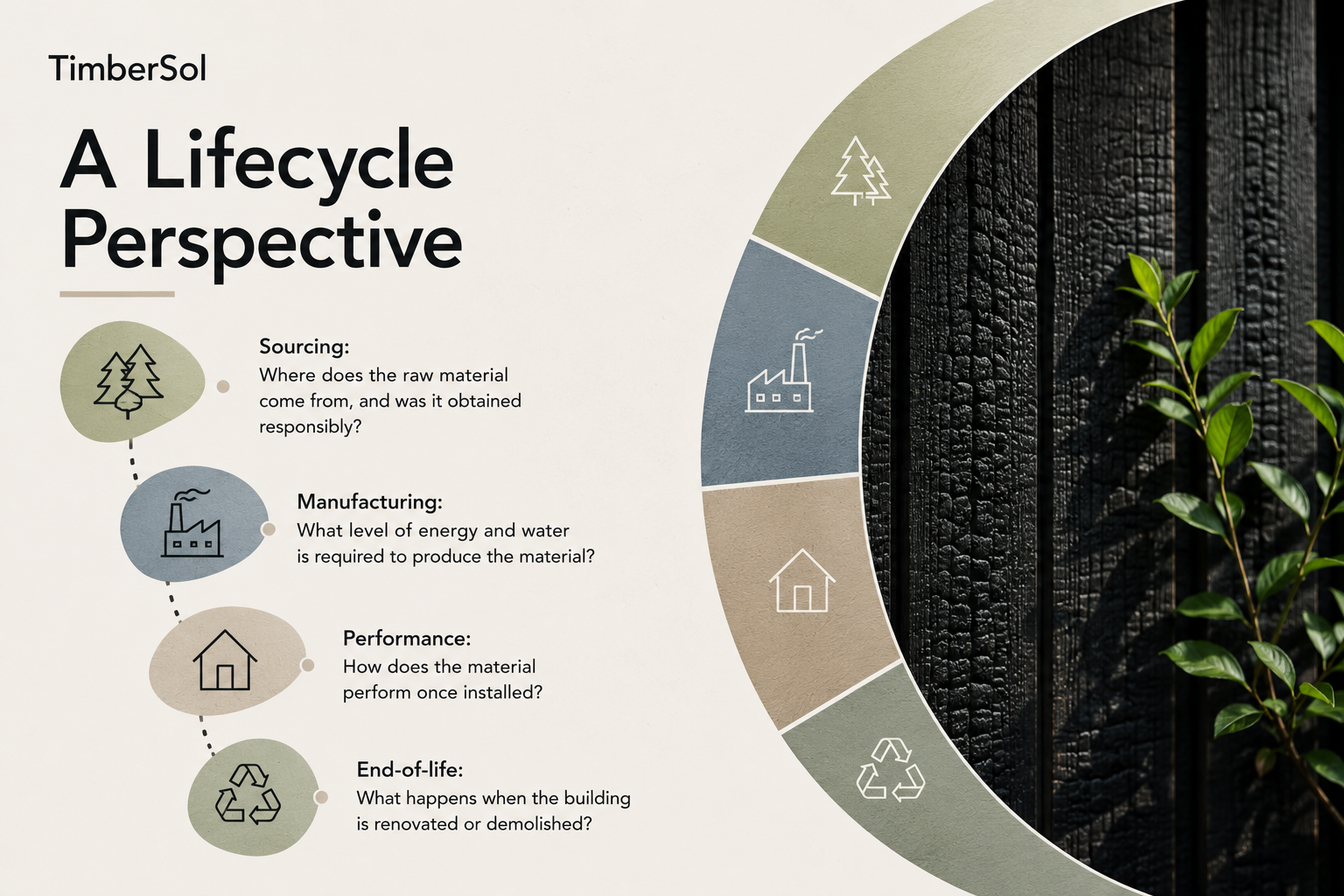
- Sourcing: Where does the raw material come from, and was it obtained responsibly? In the case of timber, this involves verifying that it originates from certified, sustainably managed forests where resources are replenished.
- Manufacturing: What level of energy and water is required to produce the material? Does the process generate significant emissions or pollutants?
- Performance: How does the material perform once installed? Does it contribute to energy efficiency or support healthier indoor air quality by minimising harmful substances?
- End-of-life: What happens when the building is renovated or demolished? Can the material be reused, recycled, or repurposed, or will it become waste?
A truly sustainable material is not defined simply by being “natural.” It requires a holistic evaluation of its environmental impact across its entire lifecycle—from cradle to grave, or ideally from cradle to cradle, where it can be reused or transformed into new materials.
Across the UK, this approach is no longer optional—it is becoming a standard requirement. Choosing materials with low embodied carbon, high recycled content, and strong durability is not only environmentally responsible but also a strategic decision. It supports the development of buildings that are more resilient, energy-efficient, and valuable over time. By selecting materials that align with natural systems, it is possible to create structures that both serve immediate needs and contribute to long-term environmental sustainability.
The True Cost of Conventional Construction
To fully understand the value of eco-friendly construction materials, we first need to recognise the true cost of conventional building methods. This cost goes far beyond the financial price tag—it represents a burden placed on the environment. The buildings we construct today often carry a hidden environmental footprint, one that begins long before anyone moves in.
This impact begins with an intense demand for raw materials. The construction industry operates at a scale that requires a continuous extraction of resources, making it one of the largest consumers of natural materials globally.
Producing materials such as steel, cement, and bricks requires a significant amount of energy. These processes involve large-scale industrial operations, including kilns that run continuously and rely heavily on fossil fuels. This high energy demand contributes directly to substantial greenhouse gas emissions, making it a major environmental cost.
The Scale of Consumption and Emissions
The figures for the UK alone paint a stark picture. Traditional construction consumes vast amounts of new resources, fuelling quarrying and mining operations that permanently scar landscapes.
The scale of energy required to produce and transport conventional materials is equally significant. In the UK, construction requires around 170 million tonnes of primary materials and products, along with an additional 125 million tonnes of quarry products each year. This process consumes approximately 6 million tonnes of energy annually and generates around 23 million tonnes of CO2 emissions. For a deeper dive, see this insightful report on green building materials.
This heavy reliance on energy-intensive production makes the construction sector a major contributor to the UK’s carbon footprint and a key target for climate action.
But the environmental impact extends far beyond sourcing and production. A significant portion of construction materials is never even used, with large quantities discarded before a project is completed.
The journey from factory to building site is often marked by inefficiencies, including over-ordering and material damage. As a result, this process generates substantial waste, placing increasing pressure on already overloaded landfills.
The Piling Problem of Construction Waste
Construction waste is one of the clearest indicators of inefficiency in conventional building practices—visible in the overflowing skips on streets wherever projects are underway.
The scale of this issue is substantial. It is estimated that around 30% of all building materials delivered to a typical construction site end up as waste. This goes far beyond minor offcuts or broken bricks, representing a significant loss of resources, energy, and financial investment.
Just think about what fills those skips:
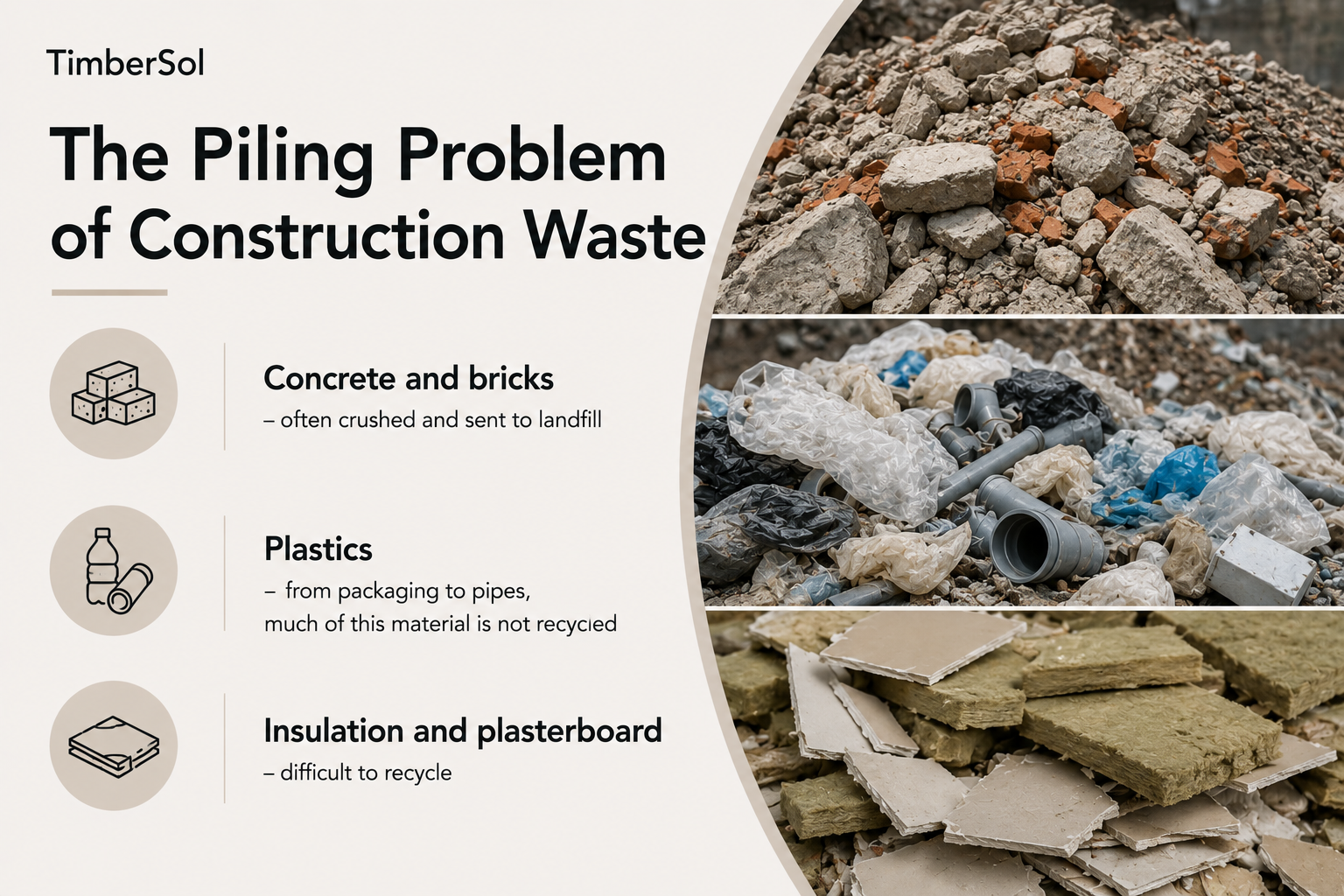
- Concrete and bricks – often crushed and sent to landfill, these heavy materials take up a significant space.
- Plastics – from packaging to pipes, much of this material is not recycled and can persist in the environment for hundreds of years.
- Insulation and plasterboard – difficult to recycle, these materials frequently contaminate other, more valuable waste streams.
This linear “take, make, dispose” approach is entirely unsustainable. It depletes finite resources at an alarming rate while simultaneously creating vast amounts of waste that must be managed.
This is precisely why a shift towards eco-friendly construction materials is not just a good idea—it is a practical necessity for building a more responsible and resilient future. By understanding these hidden costs, we can begin to make smarter choices that benefit both our projects and the planet.
A Closer Look at Today’s Top Eco-Friendly Building Materials
Now that we understand the “why”, it’s time to explore the “what”. The world of sustainable construction offers a wide range of practical, high-performing, and visually appealing materials that are transforming the industry. These are no longer niche alternatives—they are increasingly becoming front-and-centre choices for UK projects aiming to reduce environmental impact without compromising on quality or aesthetics.
The key is to look beyond standard materials and consider options that provide benefits throughout their entire lifecycle, from production to end-of-life.
Comparing Popular Eco Friendly Construction Materials
To provide a clear overview, the table below compares some of the leading eco-friendly construction materials, highlighting what they’re best at and where you’ll most likely see them used in the UK.
| Material | Primary Benefit | Common UK Applications |
|---|---|---|
| Reclaimed Timber | Minimal carbon footprint and rich character. | Cladding, flooring, structural beams, feature walls. |
| Bamboo | Extremely rapid growth and high strength. | Flooring, cabinetry, panelling, some structural use. |
| Cork | Natural insulation and regenerative harvesting. | Flooring, wall tiles, insulation boards. |
| Recycled Steel | Infinitely recyclable without loss of quality. | Structural frames, beams, reinforcement. |
| Sheep’s Wool | Superior thermal and moisture regulation. | Loft insulation, cavity wall insulation, acoustic panels. |
Each material offers distinct advantages, and the most suitable choice will ultimately depend on the specific requirements of your project.
Reclaimed Timber: A Second Life for Wood
There is a unique appeal in giving old wood a new purpose. Sourced from dismantled barns, warehouses, and historic industrial buildings, reclaimed timber diverts high-quality materials from landfill while bringing renewed life to them. It’s not just recycling—it’s about preserving the history and character embedded in every grain.
One of its greatest advantages is its exceptionally low environmental impact. No new trees are cut down, and the processing required is minimal, resulting in very low embodied carbon. In addition, old-growth timber is typically denser and more durable than newly sourced wood, offering enhanced strength. For those drawn to the aesthetic of aged wood, explore the different types of old wood siding in our detailed guide.
Bamboo: The Super-Fast Grass
Bamboo may look and feel like wood, but it is actually a grass—and an exceptionally fast-growing one. Some species can grow up to a metre in a single day, reaching full maturity within just three to five years. Compared to the decades required for most hardwoods such as oak cladding, this makes bamboo a standout material in terms of renewability.
In addition to its rapid growth, bamboo is remarkably strong and flexible, making it well-suited for applications such as flooring, cabinetry, and even certain structural elements. Its natural ability to absorb carbon is another major plus.
Cork: Nature’s Insulator
Harvested from the bark of the Cork Oak tree, cork is a prime example of a truly regenerative material. The harvesting process is carefully managed—the bark is stripped without harming the tree, which then naturally regenerates over a period of around nine years, allowing the cycle to repeat.
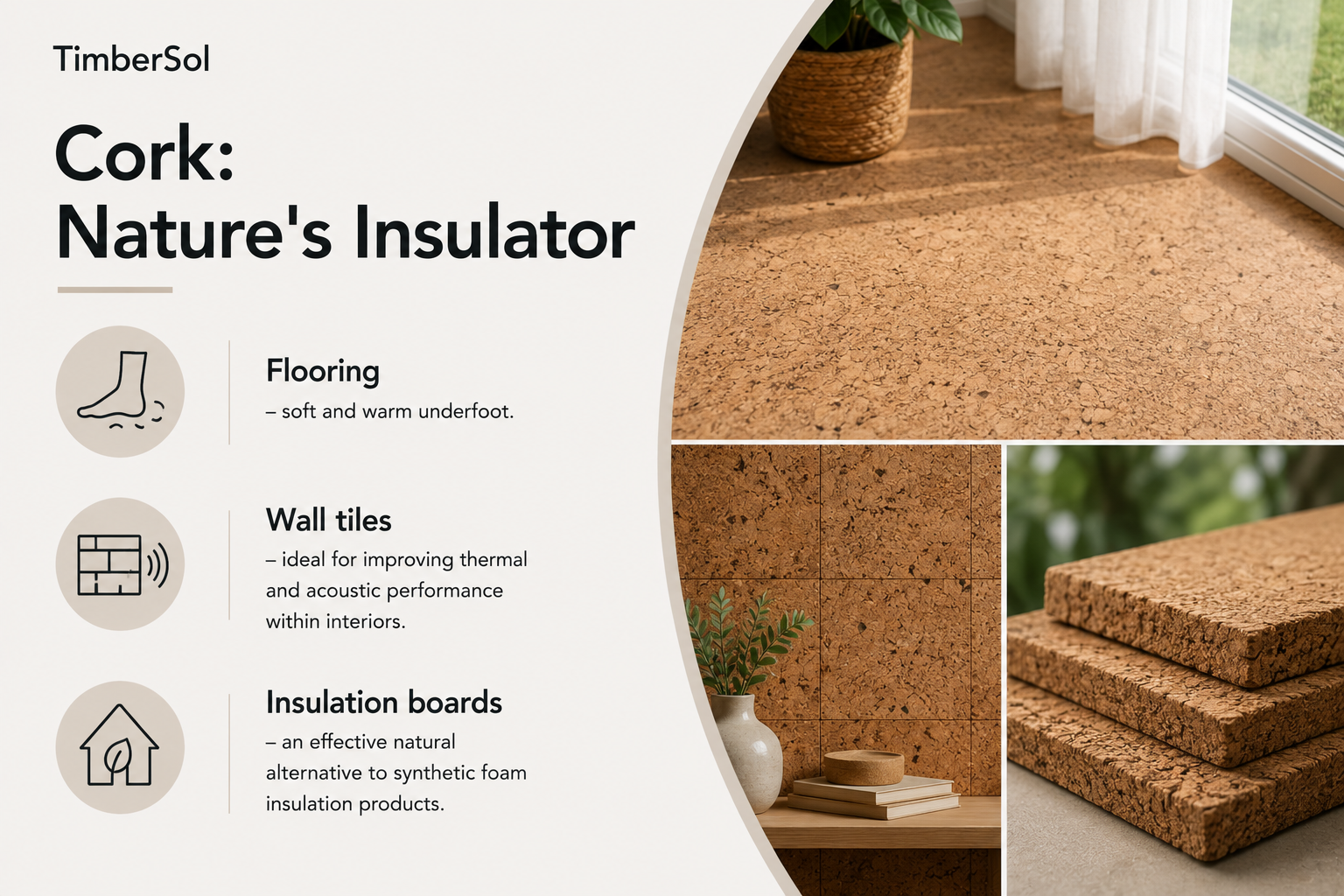
Cork’s natural honeycomb structure gives it excellent insulating properties, both thermally and acoustically, similar to lightweight timber solutions such as spruce cladding used in modern construction. It is also naturally resistant to moisture, mould, and even fire, making it a highly versatile material for:
- Flooring – soft and warm underfoot.
- Wall tiles – ideal for improving thermal and acoustic performance within interiors.
- Insulation boards – an effective natural alternative to synthetic foam insulation products.
Recycled Steel: The Circular Champion
Steel may not seem like an obvious choice for an eco-friendly materials list, but its key advantage lies in its recyclability. It can be melted down and reused repeatedly without losing any of its structural integrity, making it a true champion of the circular economy.
Using recycled steel significantly reduces the environmental impact associated with new steel production, which is highly energy-intensive. By opting for recycled steel, builders can lower project-related carbon emissions while also reducing the demand for raw iron ore extraction.
Sheep’s Wool: The Smart Insulator
For a truly natural and highly effective insulation material, sheep’s wool stands out as a strong choice. It is a fully renewable resource, shorn annually, and requires minimal energy to process into insulation.
Sheep’s wool provides excellent thermal performance, helping to keep buildings warm in winter and cool in summer. Its standout feature, however, is its breathability—it can absorb and release moisture from the air without becoming damp or losing its insulating properties. This ability helps regulate indoor humidity, reduce condensation, and support healthier indoor air quality, making it an ideal option for residential applications.
How to Choose the Right Materials for Your Project
Choosing the right eco-friendly construction materials for your project is less like picking something off a supermarket shelf and more like a chef selecting ingredients for a signature dish. It’s a thoughtful process where you consider how everything works together to achieve the desired result. Simply adding a “green” label to a material doesn’t automatically make it the right choice—you need a clear framework to ensure it aligns with your project’s specific needs, from budget and climate to performance and aesthetic.
This means looking beyond marketing buzz and asking the tougher questions. By assessing materials against a defined set of criteria, you can make informed decisions that genuinely balance environmental responsibility with practical construction demands. It’s also the most effective way to avoid common pitfalls and ensure your choices deliver a positive impact throughout the building’s entire lifecycle.
Start with a Lifecycle Assessment
The gold standard for understanding a material’s true environmental impact is a Lifecycle Assessment (LCA). Think of it as a complete environmental “biography” of a material, tracing its entire journey—from the extraction of raw resources to its final disposal or reuse. An LCA provides one of the most reliable ways to compare eco-friendly construction materials on a level playing field.
An LCA examines several key stages:
- Raw Material Extraction – the impact of mining, harvesting, or quarrying base materials.
- Manufacturing and Processing – the energy, water, and waste involved in turning raw materials into a finished product
- Transportation – the carbon footprint of moving materials from factory to construction site.
- Operational Performance – how the material influences a building’s ongoing energy efficiency.
- End-of-Life – whether the material can be reused, recycled, or responsibly disposed of.
Understand Embodied Carbon
A key component of the Lifecycle Assessment (LCA) is embodied carbon. This refers to the total greenhouse gas emissions generated during the production of a building material, up to the point it is installed on-site. Materials such as concrete and steel are known for their high embodied carbon due to the energy-intensive processes required to produce them.
In contrast, materials like sustainably sourced timber, including options such as douglas fir wood cladding, can act as carbon sinks. As trees grow, they absorb CO2 from the atmosphere, which remains stored in the wood for as long as it is used within a building. Choosing materials with low—or even negative—embodied carbon is one of the most effective ways to reduce a project’s overall climate impact from the outset.
By prioritising embodied carbon, you address the building’s hidden environmental cost before it even enters its operational phase. It’s about creating a positive environmental impact from day one, not just over the long term.
Consider Durability and Longevity
A material cannot be considered truly sustainable if it deteriorates quickly and requires frequent replacement. Durability is a fundamental aspect of eco-friendly design, as it reduces waste, lowers the demand for new resources, and minimises long-term maintenance costs. A material that lasts 50 years instead of 15 has a significantly lower environmental impact over the building’s lifecycle.
When assessing durability, context is critical. For exterior cladding in the UK, materials must withstand constant exposure to wind, rain, and temperature fluctuations. For flooring in high-traffic commercial environments, durability under heavy use is essential. Choosing robust options—such as the strongest types of wood for structural elements or other high-performance applications—is a strategic investment in the building’s long-term performance.
Prioritise Local Sourcing and End-of-Life Options
Material sourcing plays a crucial role in overall sustainability. Choosing locally sourced materials helps reduce “construction miles”, cutting down on fuel consumption and emissions associated with long-distance transportation. It also supports local economies and often ensures materials are better suited to the regional climate.
It’s equally important to consider what happens at the end of a material’s life. When planning a project, ask:
- Can it be reused? Materials like reclaimed timber and bricks can be salvaged and given a second life.
- Is it recyclable? Steel and aluminium, for example, can be melted down and reused repeatedly without losing quality.
- Will it biodegrade? Natural, untreated materials such as cork or wool can return to the earth without leaving harmful residues.
Designing with disassembly and reuse in mind is a forward-thinking approach. It aligns with circular economy principles, helping ensure your project contributes to a sustainable future rather than adding to landfill waste.
Embracing Circular Economy Principles in Building
A powerful concept is reshaping the construction industry, shifting it away from traditionally wasteful practices towards a more efficient and sustainable future. This concept is the circular economy, directly challenging the long-standing “take, make, dispose” model that has dominated the sector for generations.
Rather than following a linear path that ends in landfill, a circular approach is based on a continuous loop. It focuses on keeping resources in use for as long as possible, extracting maximum value from them, and then recovering and regenerating materials at the end of their lifecycle.
To put it simply, a conventional building is often treated like a disposable coffee cup—used once and discarded. In contrast, a circular building is designed more like a set of high-quality building blocks, where each component can be reused, carefully disassembled, and reconfigured into new forms again and again.
This shift in mindset transforms every stage of construction, from the initial design phase through to eventual deconstruction.
From Linear Waste to a Circular Loop
Adopting circular economy principles requires a fundamental rethink of how buildings are designed, constructed, and eventually deconstructed. It shifts the perspective from viewing materials as disposable consumables to recognising them as valuable assets that should never become waste.
This transition is not just theoretical—it relies on several practical strategies:
- Designing for Deconstruction – creating buildings with components that can be easily disassembled and recovered, rather than demolished into unusable waste
- Prioritising Reuse – favouring salvaged materials such as reclaimed timber or bricks, and designing new components for reuse across multiple projects
- Choosing Recyclable Materials – selecting materials like steel or aluminium that can be recycled into high-quality products without degradation
- Extending Lifespan – using durable materials and robust construction methods to minimise the need for frequent repairs and replacements
By treating buildings as material banks for the future, this approach significantly reduces the demand for virgin resources and lowers the environmental impact associated with their extraction and processing.
This forward-thinking approach is rapidly gaining momentum. A circular model focuses on designing buildings—and the materials within them—for longevity and reuse from the very outset.
Research indicates that, using methods already available today, raw material consumption could be reduced by more than one-third by 2035. This reduction alone has the potential to lower the construction sector’s carbon footprint by an estimated 39%. For further insight, explore more on constructing a sustainable future for the UK economy.
Practical Steps Towards a Circular Future
Putting circular economy principles into practice doesn’t need to be overly complex. It often begins by asking different questions at the planning stage. Instead of “What can we build?”, the focus shifts to “What can we build with what we already have available?”.
This change in perspective leads to actionable decisions that any project can adopt. It might involve prioritising salvaged timber for flooring, using modular wall systems that can be reconfigured over time, or specifying mechanical fixings instead of permanent chemical adhesives. Each of these choices helps keep valuable materials in circulation.
By embracing the circular economy, the construction industry goes beyond simply selecting eco-friendly construction materials—it actively contributes to building a more resource-efficient, economically sustainable, and environmentally responsible future for the UK.
Spotlight on Charred Timber: A Timeless Solution
Some of the most effective eco-friendly building materials are not modern inventions, but traditional techniques reintroduced for contemporary use. Charred timber is a strong example of this, combining a time-tested preservation method with a distinctive, modern aesthetic that is increasingly popular among UK architects and builders.
This material is created using an ancient Japanese technique known as Yakisugi (also called Shou Sugi Ban), widely used in products such as charred douglas fir cladding and charred accoya cladding. The process is straightforward yet highly effective: timber planks are carefully charred, cooled, cleaned to remove excess soot, and often finished with a natural oil. While it may seem counterintuitive, this controlled charring process does not weaken the wood—instead, it produces a visually striking and resilient building material.
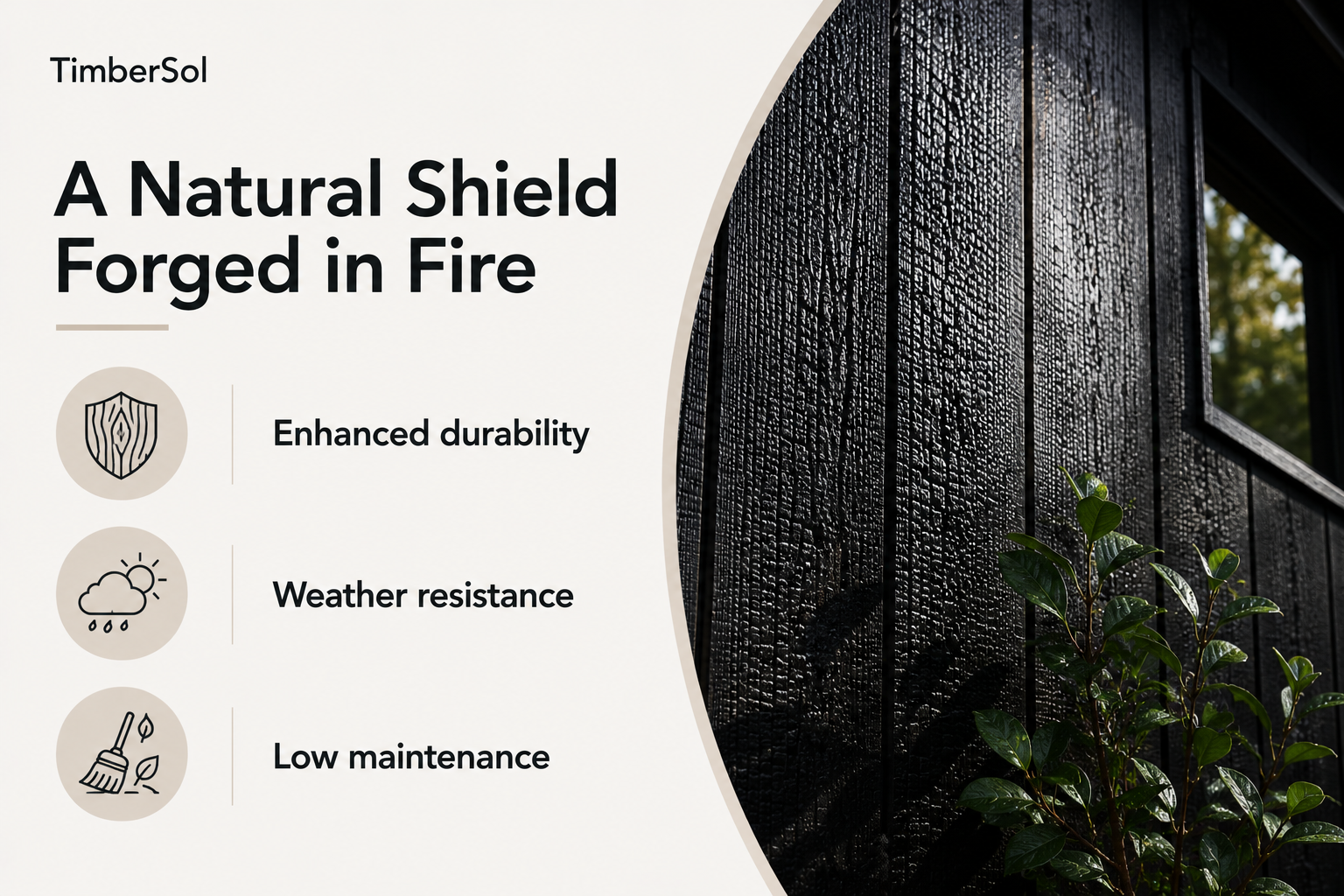
A Natural Shield Forged in Fire
The true strength of charred timber lies in how fire transforms the wood’s cellular structure. The intense heat carbonises the surface, forming a protective layer that naturally resists common threats—without the need for toxic chemicals or paints.
This natural preservation method delivers a range of benefits, making charred timber particularly well-suited for exterior applications such as cladding, fencing, and decking:
- Enhanced durability – the charred layer acts as a barrier against rot, decay, and insect damage, significantly extending the lifespan of the timber
- Weather resistance – Yakisugi reduces the wood’s porosity, improving its ability to repel water and perform in the UK’s damp climate
- Low maintenance – unlike painted or treated wood, charred timber requires minimal upkeep while maintaining its performance and appearance
Yakisugi demonstrates how working with natural processes can enhance material performance. By using fire to strengthen and protect the wood, it creates a solution that is both sustainable and highly durable.
The Sustainable and Aesthetic Choice
Beyond its practical advantages, charred timber stands out as a genuinely sustainable material. The process begins with responsibly sourced wood and avoids the use of harmful volatile organic compounds (VOCs) commonly found in chemical treatments—supporting healthier buildings and a cleaner environment.
Its visual appeal is equally compelling. The rich, textured black finish creates a distinctive aesthetic, ranging from a smooth, uniform char to a more rugged, crackled “alligator skin” effect.
This combination of durability, sustainability, and striking appearance makes charred timber a premium choice for projects that demand both high performance and a unique design. To see how it performs in practice, explore the full range of charred wood siding benefits in our comprehensive overview.
Answering Your Questions About Green Building
Switching to eco-friendly construction materials can feel like a significant step, and it’s completely natural to have questions about how it works in practice. Addressing these common concerns helps remove uncertainty and gives you the confidence to make informed decisions for your next project—whether it’s a small garden office or a large-scale commercial development.
Let’s explore some of the most frequently asked questions.
Are Eco-Friendly Materials More Expensive?
The answer isn’t a straightforward yes or no. While some eco-friendly construction materials may have a higher upfront cost, they often deliver significant savings over time. It’s best to view them as a long-term investment rather than a short-term expense.
For example, materials with strong insulating properties—such as sheep’s wool or cork—can reduce heating and cooling costs throughout the building’s lifespan. Similarly, highly durable options like charred timber require less maintenance and fewer replacements, lowering ongoing expenses. The key is to consider the total lifecycle cost, rather than focusing solely on the initial price, to understand their true financial value.
How Can I Verify a Material Is Genuinely Green?
The most reliable way to distinguish genuinely sustainable materials from greenwashing is to look for recognised third-party certifications.
In the UK and Europe, several trusted labels can help guide your decision:
- FSC (Forest Stewardship Council) – ensures that wood products come from responsibly managed forests
- Cradle to Cradle – assesses product safety for both people and the environment, as well as its potential for reuse or recycling
- Environmental Product Declarations (EPDs) – provide transparent, verified data on a material’s environmental impact
An EPD outlines the material’s full lifecycle—from raw material extraction to end-of-life—offering one of the most dependable tools for making informed, sustainable choices.
Where Can I Find These Materials in the UK?
Many mainstream builders’ merchants in the UK now stock a growing range of sustainable materials alongside traditional options.
For more specialised products—such as reclaimed timber, bamboo panels, or cork flooring—it’s often best to turn to dedicated suppliers. Many of these operate online and offer nationwide delivery. Architectural salvage yards are also a valuable resource, particularly for sourcing unique reclaimed materials.
When it comes to more specialised solutions like charred timber, working directly with a specialist supplier helps ensure high-quality, sustainably sourced products, supported by expert guidance.
For a solution that combines timeless design with sustainability, explore the durable and visually striking range of charred timber products from TimberSol. Discover how our Yakisugi cladding, decking, and fencing can bring natural resilience to your project at https://timbersol-backup.elnoirstudio.com.
