
A Homeowner’s Guide to External Timber Cladding

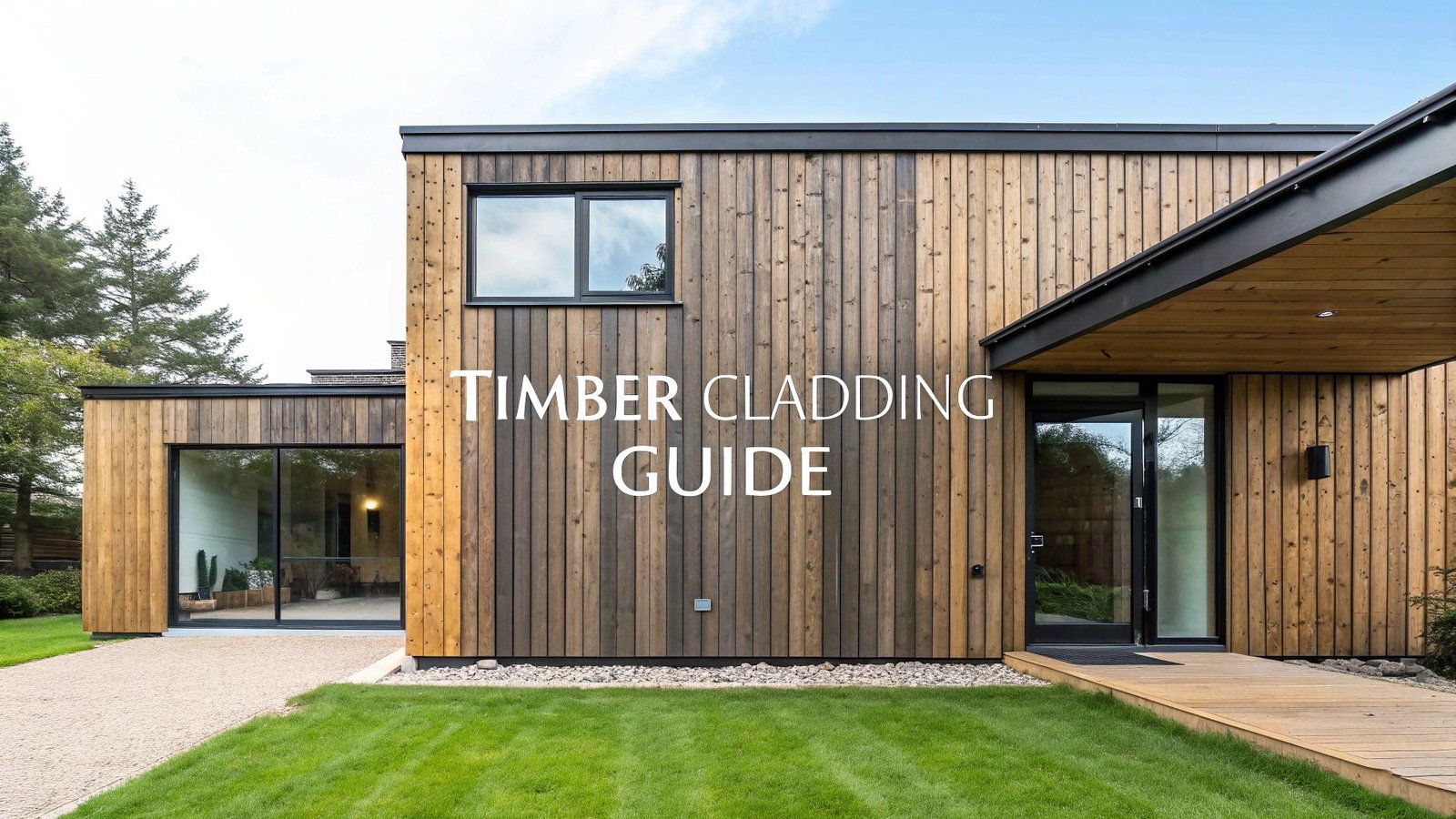
When you see a building wrapped in timber, you’re looking at its external cladding. Think of it as a high-quality, breathable jacket for a house – it’s the outermost layer that provides both protection and style. It’s the first thing you see, and it’s the building’s first line of defence against the Great British weather.
What Is External Timber Cladding?
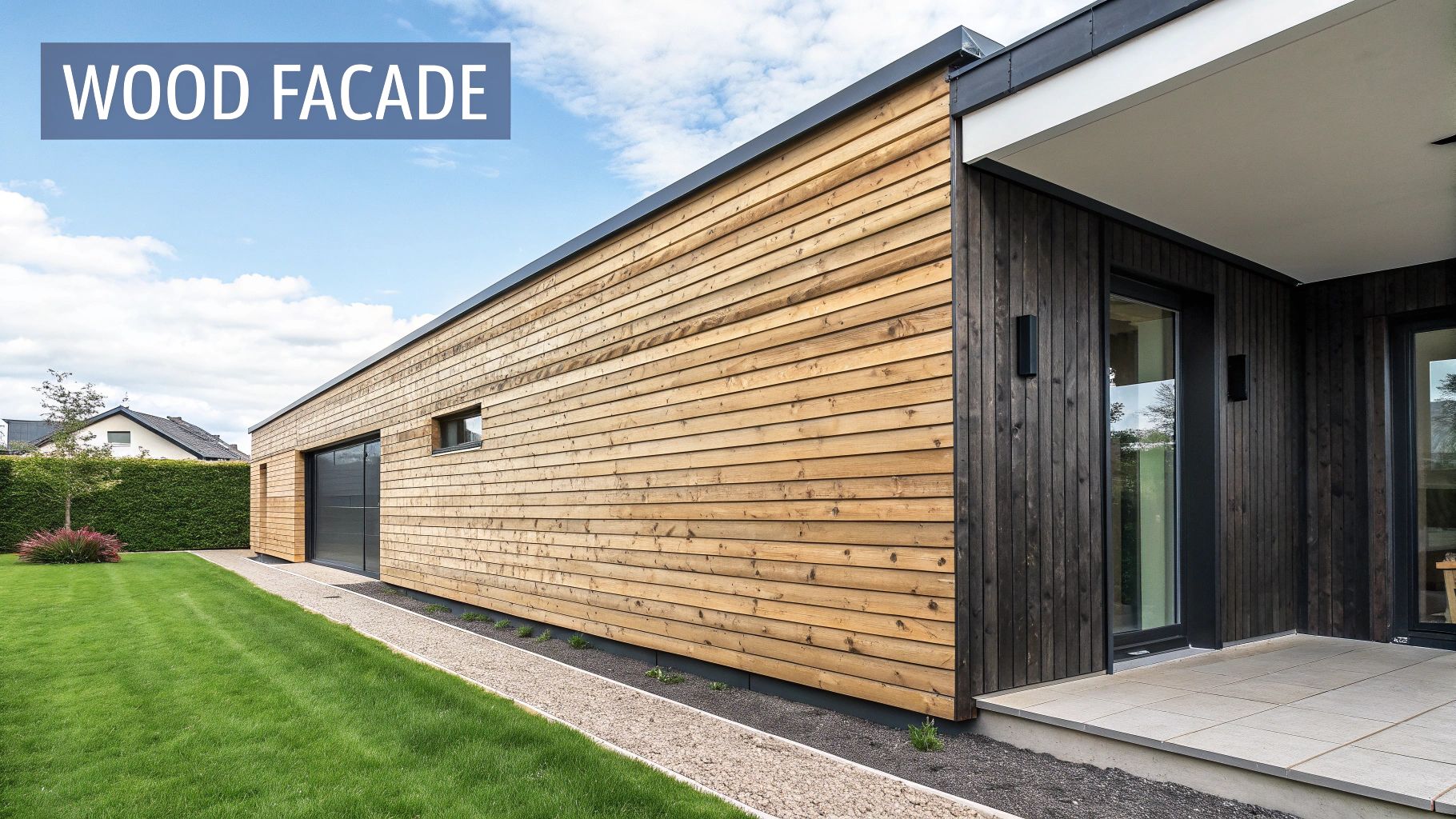
Simply put, external timber cladding is the skin applied to the outside of a building. While it does contribute to the overall structure, its real job is twofold: performance and aesthetics. It stands guard against the elements, shielding the core of the building from rain, wind, and fluctuating temperatures.
But this protective layer is also one of the most powerful tools in an architect’s or homeowner’s design kit. The specific wood you choose, how it’s finished, and the way it’s installed can completely transform a property’s character. It introduces a warmth, texture, and natural feel that materials like brick and render just can’t replicate. Timber can make a brand-new house feel grounded and established, or it can give a tired, dated property a sharp, contemporary edge.
The Dual Role of Performance and Aesthetics
Timber cladding is one of those rare materials where function and beauty are perfectly balanced. This is exactly why it’s become such a popular choice for all kinds of projects, from garden rooms to grand architectural homes. It just works, on every level.
On the practical side, cladding seriously boosts a building’s performance:
- Weather Resistance: It acts as a robust barrier, forcing rainwater to run off and stopping wind from finding its way into the building’s structural core.
- Thermal Insulation: Wood is a fantastic natural insulator. Adding a layer of cladding improves the building’s thermal envelope, helping to keep it warm in winter and cool in summer. This often translates to lower energy bills.
- Durability: With the right choice of timber and finish, your cladding can last for decades, often ageing beautifully and developing more character over time.
Then there’s the creative side, where it offers incredible design freedom:
External timber cladding allows you to paint with texture and light. The natural grain of the wood, combined with different profiles and finishes, provides an almost limitless palette for creating a unique and personal architectural statement.
You can create anything from a sleek, minimalist facade with dark, charred timbers to a cosy, rustic look with the soft tones of natural oak. The possibilities are truly enormous, making it a smart and stylish option for almost any new build or renovation.
So, Why Choose Timber Cladding?
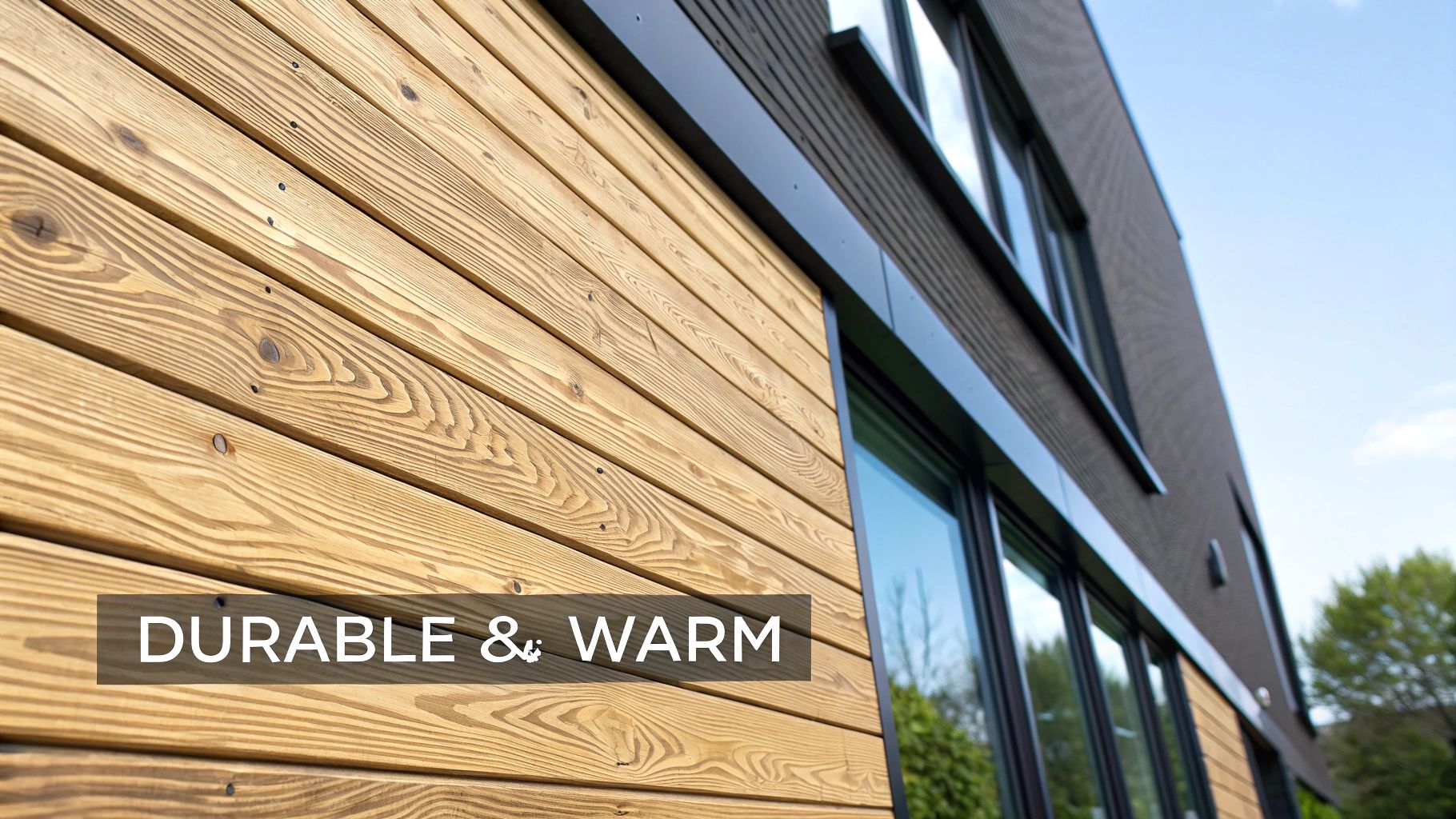
Deciding on external timber cladding is one of those choices that pays you back in spades, both visually and practically. It’s easy to focus on its striking appearance, but timber brings so much more to the table, making it a sound long-term investment for any property. This isn’t just about following a trend; it’s about choosing a material that genuinely performs.
The first thing that grabs you is its incredible aesthetic appeal. You just can’t fake the unique grain and texture of real wood. Each board tells its own story, bringing a natural warmth and character that synthetic materials always struggle to imitate. Whether you’re after a cosy, rustic vibe or a clean, contemporary finish, timber just works.
On a practical note, installation is often far simpler than with heavier materials like brick or stone. Since timber is relatively lightweight, it doesn’t put as much strain on the building’s structure. This can mean less complex foundation work and lower labour costs, which is a welcome bonus for renovations and new builds alike.
Sustainable and Surprisingly Energy Efficient
With everyone thinking more about our environmental impact, timber’s green credentials really stand out. It’s a renewable resource, and when sourced responsibly, it has a much smaller carbon footprint than most common building materials.
Timber is what’s known as a natural carbon sink. As a tree grows, it pulls CO2 from the atmosphere, and that carbon stays locked away in the wood long after it’s been harvested and installed on your home. It’s a brilliant choice for anyone wanting to build more consciously.
This move towards sustainable building is gaining real momentum. The UK government’s spending on housing development, which hit roughly £9.6 billion in 2021/22, shows a clear shift towards greener construction. This drives demand for materials like timber cladding, which is valued for its protective qualities and energy efficiency in our climate. If you’re interested, you can read more about the government’s strategy in the Timber in Construction Roadmap.
Performance and Durability
Forget any old-fashioned ideas about high-maintenance wood. Thanks to modern treatments and smarter timber choices, today’s cladding is incredibly durable and needs surprisingly little upkeep. It also provides excellent thermal insulation, acting as a natural blanket that helps keep your home warmer in winter and cooler in summer. Over time, that translates into real savings on your energy bills.
What’s more, specific techniques like the Japanese art of Yakisugi (charring the wood) can dramatically boost timber’s natural resilience. This ancient process hardens the surface, making the cladding far more resistant to everyday threats.
- Pest Infestation: That charred layer is a natural turn-off for insects.
- Moisture and Rot: The carbonised surface acts as a barrier, stopping water from seeping in.
- Fire: It might sound counterintuitive, but the charring process actually creates a surface that is harder to ignite.
Choosing Your Timber Species and Finish
This is where your project really starts to come alive. Picking the right timber and finish for your external cladding is a delicate balance between the look you want to achieve, practical needs like durability, and of course, your budget. Here in the UK, we’re fortunate to have a fantastic range of homegrown and imported woods, each with its own distinct character ready to transform a building’s exterior.
Think of it like choosing the fabric for a made-to-measure suit; the material itself dictates the final look, feel, and how well it performs over time. Softwoods such as Larch and Cedar are perennial favourites, loved for their natural warmth and inherent resistance to decay. On the other hand, hardwoods like Oak bring incredible density and a classic, premium feel that signals strength and longevity.
Making the right choice here is fundamental, as it influences everything that follows, from the complexity of the installation right through to the long-term maintenance schedule.
Popular Timber Species in the UK
When you look at the UK market, a few timber species consistently prove their worth. Siberian Larch is a standout choice, largely thanks to its high resin content, which works as a natural defence against rot and insects. It also weathers beautifully, starting as a warm yellow-orange before settling into a distinguished silvery-grey over the years.
Western Red Cedar is another brilliant option. It’s prized for its rich, reddish-brown tones and its impressive dimensional stability—meaning it’s much less likely to warp or shrink with changes in humidity. As a bonus, it’s also surprisingly lightweight, which can make life a lot easier during installation.
And then there’s Oak, the quintessential British timber. Famed for its sheer strength and unmistakable grain, Oak delivers a robust and timeless finish. Its high density makes it exceptionally durable, capable of shrugging off the worst of the British weather for generations, making it a go-to for high-end homes and commercial projects.
This quick comparison gives you an idea of the lifespan and typical cost of these three popular choices.
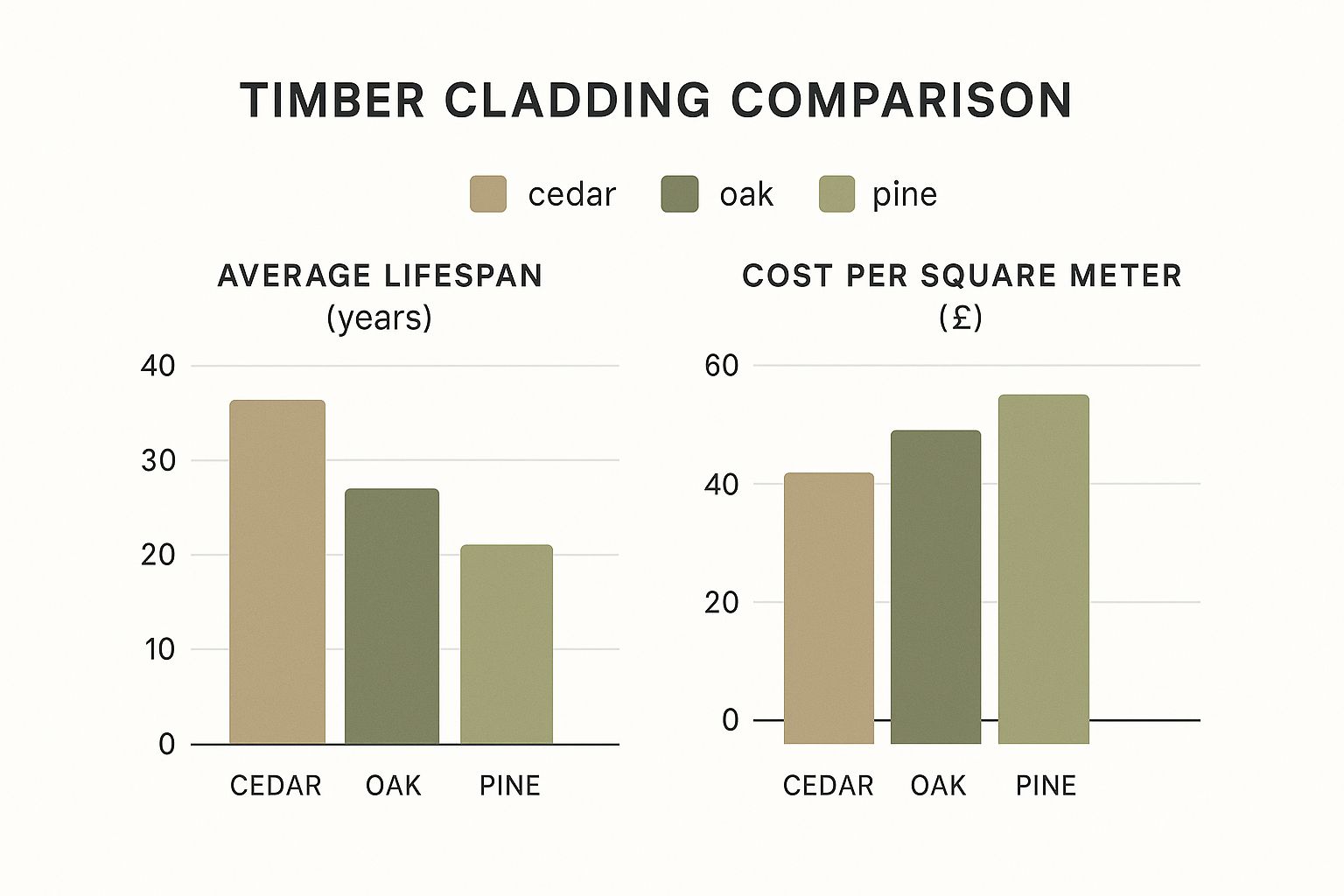
As you can see, while hardwoods like Oak command a higher initial price, their significantly longer lifespan often makes them a worthwhile investment for projects where longevity is the top priority.
To give you a clearer picture, here’s a breakdown of the key attributes for some of the most common cladding timbers. This should help you weigh up the options based on your specific project needs.
Comparison of Popular Timber Cladding Species
| Timber Species | Typical Cost | Durability | Maintenance Level | Best For |
|---|---|---|---|---|
| Siberian Larch | ££ | Good (Class 3) | Low to Medium | Cost-effective projects needing a modern, silvery-grey weathered look. |
| Western Red Cedar | £££ | Very Good (Class 2) | Low to Medium | Lightweight applications and achieving rich, warm colour tones. |
| British Oak | ££££ | Very Good (Class 2) | Medium | Premium, long-lasting facades that require maximum strength. |
| Thermowood | £££ | Good (Class 2) | Low | Stable, eco-friendly cladding with excellent resistance to decay. |
| Accoya | £££££ | Excellent (Class 1) | Very Low | Demanding environments where ultimate durability and stability are key. |
Ultimately, the best timber is the one that fits your design vision, performs well in your local climate, and aligns with your budget and maintenance expectations.
The Art of the Finish: Yakisugi and Beyond
The raw timber is only half the story; the finish you choose has a huge effect on both the final look and the level of protection. While traditional oils and stains are great for enhancing colour and adding a protective layer, some more specialised treatments offer unique advantages.
One of the most visually stunning and effective finishes is Yakisugi, the ancient Japanese technique of preserving wood by charring its surface. Also known as shou sugi ban, this process creates a dense carbonised layer on the face of the timber.
Yakisugi does more than just create a beautiful, blackened aesthetic. The charring process fundamentally changes the wood’s cellular structure, making it exceptionally resistant to fire, insects, and moisture. It’s a perfect marriage of ancient wisdom and modern performance.
This controlled burning results in a beautiful, textured finish that is both dramatic and incredibly durable, which means much less maintenance down the line. If you’re keen to learn more about different preservation methods, our detailed guide on how to protect wood outdoors is a great place to start.
It’s clear that timber cladding is more popular than ever. The UK market is seeing steady growth, with forecasts pointing to an approximate 4% compound annual growth rate through to 2033. This demand is being fuelled by innovations in fire-rated products and efficient prefabricated systems, with classic materials like Oak holding their ground due to their proven durability.
Understanding Cladding Styles and Profiles
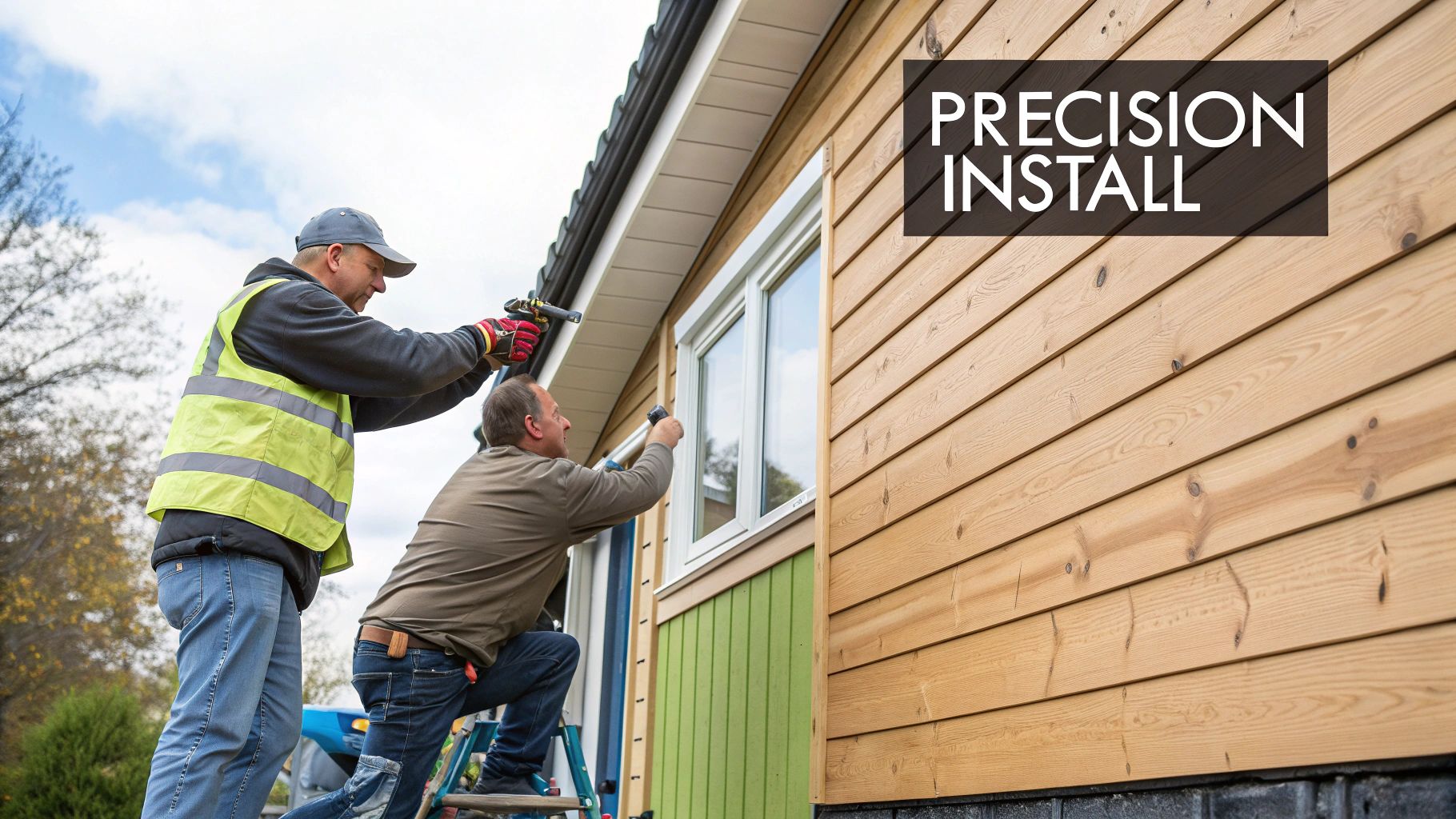
While the species and finish of your timber set the initial tone, it’s the profile—the shape of each board and how it connects to its neighbour—that truly defines a building’s character. This choice dictates the texture, the shadow lines, and the overall rhythm of the façade. It’s what turns a simple wall into a deliberate architectural statement.
Think of it like choosing a specific brushstroke for a painting. A wide, flat stroke gives you a smooth, uniform surface. A textured, overlapping stroke, on the other hand, adds real depth and drama. Each style of external timber cladding offers a different “brushstroke,” creating a unique visual that works with the building’s form.
The way you install the boards, whether horizontally or vertically, also has a powerful influence. This orientation can trick the eye, completely altering how we perceive a building’s proportions. It’s a simple yet incredibly effective design tool.
Common Cladding Profiles Explained
You’ll find a few profiles that are consistently popular in UK architecture, each offering its own distinct look and feel. The way the boards join together is what creates these styles, influencing everything from weather resistance to the play of light across the wall.
Here are three of the most common profiles you’ll come across:
- Tongue and Groove: This features an interlocking design where a ‘tongue’ on one board fits snugly into a ‘groove’ on the next. The result is a sleek, continuous surface with very fine shadow lines, making it perfect for modern, minimalist designs.
- Shiplap: With its overlapping ‘L’-shaped joint, shiplap provides excellent weather protection while creating a more defined, linear shadow gap than tongue and groove. It offers a clean, contemporary look that works beautifully both horizontally and vertically.
- Board and Batten: If you’re after a more rustic, traditional appearance, this style is a great choice. It uses wide vertical boards with narrower strips (battens) covering the joints, creating a bold, textured pattern with deep shadows that adds a sense of heritage and character.
Your choice of profile is a fundamental design decision. A modern home might use a smooth, interlocking tongue and groove system for a seamless finish, whereas a country barn conversion could embrace the rustic charm of board and batten to honour its agricultural roots.
The Impact of Installation Direction
Once you’ve settled on a profile, you have to decide which way to run it. Horizontal installation is the more traditional approach. It creates lines that lead the eye around the building, making it feel wider and more grounded. It’s a classic look that suits many architectural styles.
For a traditional and popular aesthetic, homeowners often opt for feather edge cladding profiles, which provide a distinctive overlapping appearance on external walls.
In contrast, vertical installation draws the eye upwards, which can make a single-storey building appear taller and more imposing. This orientation often lends a more contemporary feel and can be particularly effective at highlighting a building’s height. If you’re interested in the striking aesthetics of vertical cladding, especially with unique finishes, our guide to charred timber cladding provides more insight into creating a dramatic façade.
Cost, Upkeep, and Long-Term Value
https://www.youtube.com/embed/3i9kgdGVO9s
When you’re thinking about investing in external timber cladding, it’s easy to get focused on the initial price tag. But to really understand the value, you have to look at the entire lifecycle—from the cost of the boards and installation to the upkeep it’ll need and, most importantly, how long it will last.
The upfront cost can swing quite a bit depending on what you choose. A hardwood like Oak is naturally going to be more expensive to buy than a softwood like Larch. However, that higher initial spend often pays for itself over the years with superior durability and a much longer lifespan, making it the more economical choice in the long run.
Don’t forget to factor in the installation, too. Getting it fitted professionally is absolutely crucial for making sure the cladding does its job properly for decades. If you want to get into the nitty-gritty of what a good installation looks like, we have a detailed guide on the installation of cladding.
Lifespan and Durability Factors
So, how long will your timber cladding actually last? Well, that depends on a few key things working together. A naturally tough timber like Oak can easily last for 60+ years, but its real-world lifespan is shaped by its environment and how you look after it. Here in the UK, the damp climate, UV exposure, and specific local conditions all have a say.
Your best defence against the elements is proper installation and the right finish from day one. Take a finish like Yakisugi, for example. The charring process creates a natural carbon layer that acts as a shield, protecting the wood from moisture, insects, and even fire. This can dramatically extend the timber’s life with very little effort from you.
Choosing the right timber and finish for your specific location isn’t just about looks; it’s a strategic move that directly impacts the long-term value. A well-chosen cladding system will not only outlast many synthetic alternatives but will often look even better as it ages.
Realistic Maintenance Routines
The idea that timber cladding is high-maintenance is a common misconception. In reality, the upkeep is often surprisingly minimal and depends entirely on the wood, the finish, and the final look you’re going for.
- For a Natural Weathered Look: If you love the idea of your cladding slowly maturing into a beautiful silvery-grey, your job is easy. A simple clean with a soft brush and water once a year is usually all it takes to keep dirt and algae at bay.
- To Preserve Colour: Want to keep that ‘just installed’ colour? You’ll need to reapply a protective finish, like a UV-blocking oil or stain, every few years. How often you do this depends on the product you use and how much sun and rain your building gets.
- For Charred Finishes: This is where it gets really simple. Yakisugi cladding is incredibly low-maintenance. The char provides such robust, long-lasting protection that it often just needs a rinse down every so often to look its best for decades.
This straightforward approach to care ensures your cladding remains a stunning and valuable feature for years to come. It’s also worth noting that to help with the initial costs of energy-efficient home improvements, there are sometimes potential funding opportunities like the Green Homes Grant Scheme.
What’s Next for Timber Cladding in UK Homes?
External timber cladding is well and truly moving from the fringes of architectural design into the mainstream of UK homebuilding. This isn’t just a fleeting trend. It’s a shift driven by homeowners who want natural, beautiful materials and supported by government policies pushing for greener construction methods. As the UK marches towards its net-zero carbon targets, timber is stepping into the spotlight as a go-to solution.
But this is about more than just good looks. Real innovation in timber treatments and smarter installation techniques are turning a traditional material into a powerhouse for modern, energy-efficient homes. These developments mean today’s timber cladding can stand up to the toughest standards for durability, weather resistance, and fire safety, making it a genuinely practical choice for the future.
The Drive Towards Sustainable Building
The UK government’s focus on sustainability is laying the groundwork for timber to flourish. For instance, initiatives from the UK Tree Planting Taskforce aim to boost England’s woodland cover from 14.5% to 16.5% by 2050.
Think about this: timber framing was used in only about 9% of new builds in England back in 2019. Now compare that to Scotland, where the figure was a massive 92%. This gap shows just how much room there is for growth. A healthier domestic timber supply will make it easier to meet the rising demand for external timber cladding and create new green jobs along the way. You can dig deeper into these figures with insights on the growth of UK timber cladding.
The future of housing in the UK is clearly tied to materials that are both renewable and deliver on performance. Timber cladding hits that sweet spot perfectly, offering a low-carbon building solution without ever sacrificing style or durability.
As policies continue to champion sustainable building, you can expect to see timber cladding become an even more common and celebrated part of our towns and cities, shaping the character of British homes for generations.
A Few Common Questions About Timber Cladding
As you get closer to making a final decision on your timber cladding, a few practical questions almost always pop up. Let’s tackle some of the most common ones to help you move forward with confidence.
Do I Need Planning Permission?
This is probably the number one question we get asked. For most homes in the UK, the good news is that you probably won’t need planning permission. Adding or replacing cladding usually falls under ‘permitted development rights’.
However, there’s a big ‘but’. If your property is in a conservation area, a National Park, or an Area of Outstanding Natural Beauty, the rules are much stricter. It’s always a good idea to have a quick chat with your local planning authority before you start—it can save a lot of headaches later on.
What About Fire Safety?
Understandably, fire safety is a huge concern. UK building regulations are rightly very strict, particularly for taller buildings. The key is to choose the right material and finish. Many types of timber can be treated with fire retardants to meet these high standards, often achieving a Class B rating, making them perfectly safe for most applications.
How Long Will It Really Last?
The lifespan of timber cladding really comes down to two things: the type of wood you choose and how it’s finished. A hardwood like Oak, for example, can easily last for over 60 years. Even a durable softwood like Siberian Larch will give you a solid 30-50 years of service. Finishes like the traditional Japanese Yakisugi charring technique can push that lifespan out even further.
Should I Choose Treated or Untreated Timber?
This leads nicely into the next common query. What’s the real difference?
- Untreated Timber: This relies on the wood’s own natural defences—its density and oils—to protect it. Over time, it will weather gracefully to a beautiful silvery-grey patina.
- Treated Timber: This wood has been given a helping hand. It might be pressure-treated with chemicals or thermally modified to massively boost its resistance to rot and insects. This also helps it hold onto its original colour for much longer.
Ultimately, choosing between treated and untreated timber is a balancing act. It’s about weighing the aesthetic you’re after against the level of protection you need for your local climate and your specific project. When chosen correctly, both are fantastic options.
Hopefully, these answers clear up a few of those lingering questions as you finalise the perfect external timber cladding for your home.
Ready to bring the timeless beauty and durability of charred timber to your project? Explore the premium TimberSol collection of Yakisugi cladding, decking, and fencing. Visit us to find the perfect sustainable solution.
