
Types of Wood for Fences: Find Your Perfect Choice

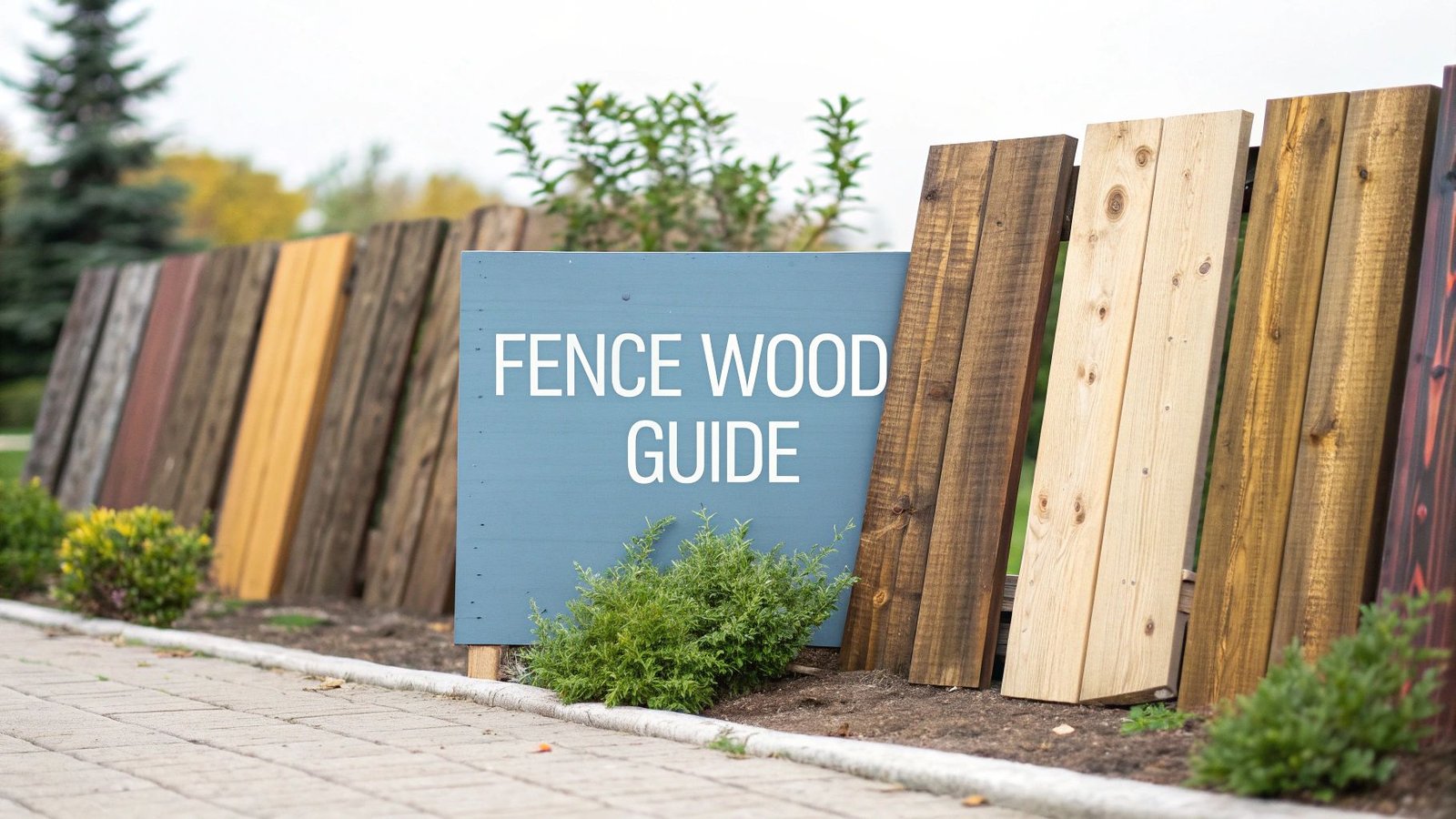
Picking the right timber is probably the single most important decision you’ll make for your new fence. It’s what determines whether it looks great and stands the test of time. The best types of wood for fences strike a perfect balance between durability, cost, and visual appeal, ensuring it complements your home and can handle the lovely British weather. Your options range from affordable, pressure-treated pine all the way up to naturally tough cedar and premium redwood.
Choosing the Right Wood for Your Fence
Selecting the perfect timber for your fence isn’t just a practical task; it’s a real investment in your home’s security, privacy, and kerb appeal. Think of it like choosing the right coat for your garden—it needs to be tough enough for the UK’s demanding weather, but it also has to match your personal style.
A few key factors will help guide your decision, making sure you end up with a fence that stands strong against the elements for many years to come.
Key Factors to Consider
Before we get into the specific types of wood, it’s a good idea to think about what matters most to you. Knowing your priorities from the start makes the whole process a lot simpler.
- Climate Resilience: The UK is damp. That means you need wood that naturally resists rot and isn’t a tasty snack for insects. Some timbers have this built-in, while others need a bit of help from chemical treatments.
- Budget: Let’s be honest, cost is a big one. Prices vary wildly, from budget-friendly pine to the more premium hardwoods. Your budget will quickly help you narrow down the field.
- Aesthetic Goals: What look are you going for? A rustic, natural vibe or something more sleek and modern? The colour, grain, and texture of the wood are central to the final appearance.
- Maintenance Commitment: How much time are you willing to spend on upkeep? Some woods need a fresh coat of stain or sealant every year to stay in top shape, while others can be left to weather gracefully. Be realistic about what you’re prepared to do. If you need some pointers, our guide on how to protect wood outdoors has plenty of practical advice.
Quick Comparison of Popular Fence Woods
To give you a quick overview, this table breaks down the most common fencing woods. It’s a great starting point for seeing how different materials stack up at a glance.
| Wood Type | Average Cost | Expected Lifespan | Maintenance Needs | Best For |
|---|---|---|---|---|
| Pine | £ | 10-15 years | High (needs regular sealing) | Budget-conscious projects |
| Cedar | ££ | 15-25 years | Low (naturally rot-resistant) | Natural beauty & durability |
| Redwood | £££ | 25+ years | Low (naturally rot & insect-resistant) | Longevity & premium appearance |
| Charred | £££ | 50+ years | Very Low (fire & rot-resistant) | Ultimate durability & modern style |
As you can see, each wood has its place. Your final choice really comes down to balancing that initial cost against how long you want it to last and how much work you’re willing to put in over the years.
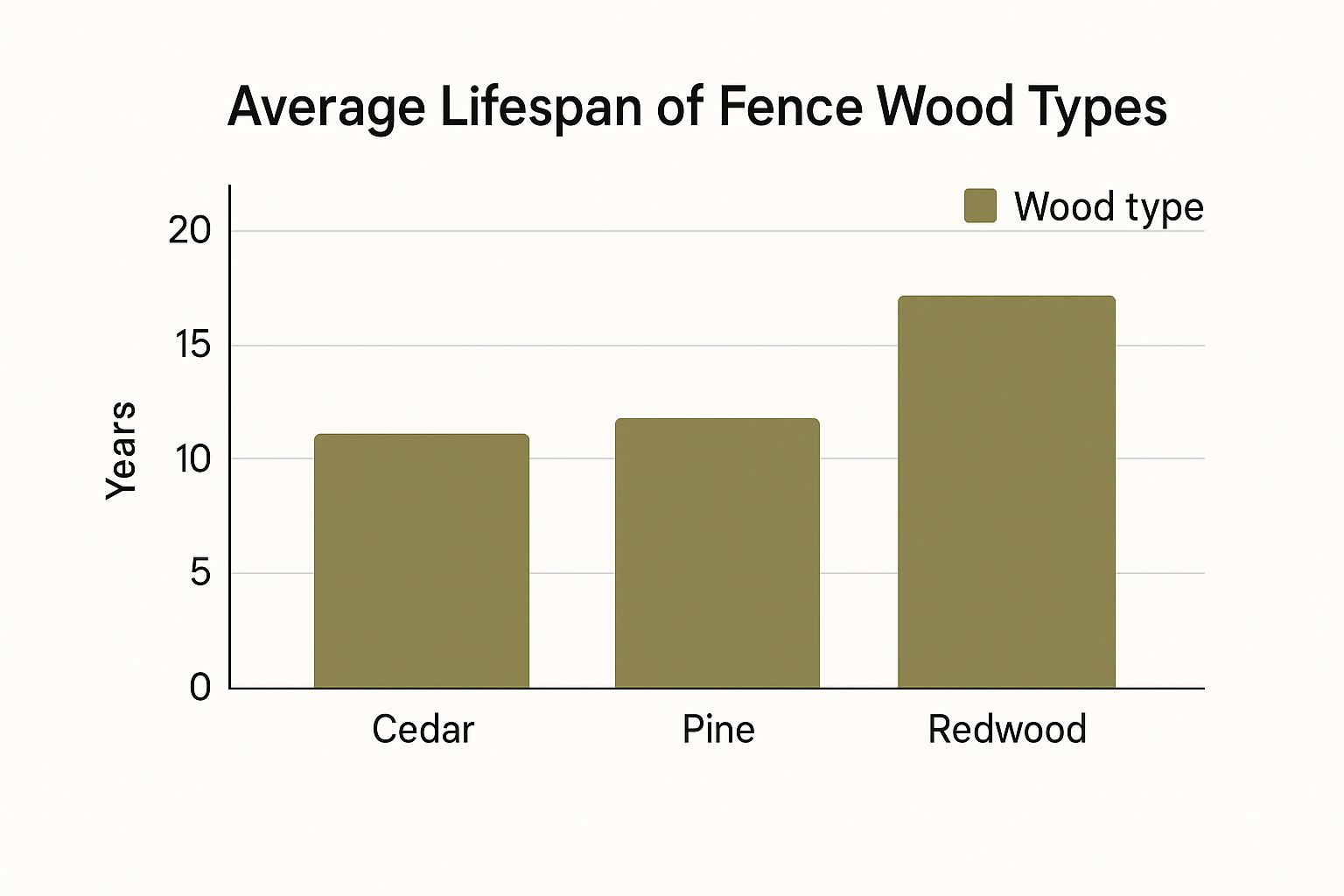
The data really highlights that while pine is a decent, wallet-friendly option, something like redwood offers a much longer lifespan, which can make it a smarter investment in the long run. Of course, wood isn’t the only option out there. For those still weighing things up, this comprehensive guide on metal vs. wood gate designs offers some valuable insights into other materials.
Pressure-Treated Pine: The UK Standard
When you picture a classic British garden fence, chances are you’re thinking of pressure-treated pine. It’s the absolute workhorse of the fencing world, and for good reason—it delivers a practical and affordable boundary for countless homes up and down the country. But what makes this humble softwood so incredibly popular?
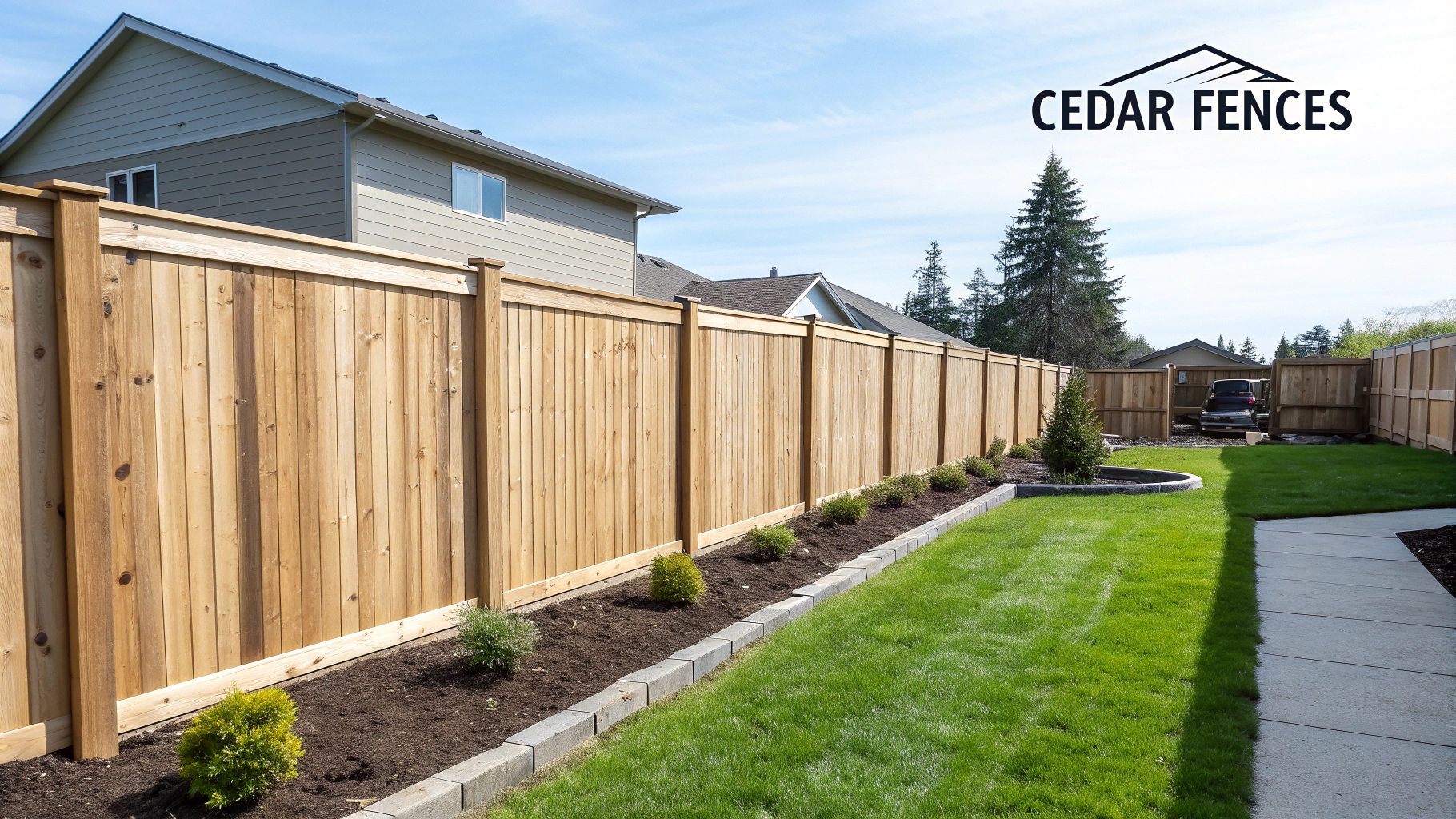
The secret isn’t really in the pine itself, but in the industrial process it goes through. On its own, pine is quite vulnerable to our famously damp UK climate, leaving it wide open to rot and insect attack. This is where pressure treatment steps in, giving the timber a serious upgrade in durability.
What Is Pressure Treatment, Exactly?
The process is pretty clever. First, the pine is loaded into a large, sealed cylinder. A powerful vacuum then sucks all the air out from the wood’s cellular structure, creating a void. With the air gone, a special preservative solution is flooded into the chamber and forced deep into the wood fibres under immense pressure.
This technique ensures the protective chemicals don’t just sit on the surface; they penetrate right to the core. The result is a robust barrier against the fungi and insects that cause timber to decay. It’s this treatment that gives the wood its tell-tale greenish hue, though this does fade to a more honey-brown colour over time.
A key species used for this is Scots Pine, which you’ll often see marketed simply as ‘Redwood’ in fencing circles. Scots Pine has a fine grain that gives a lovely smooth finish, but its natural softness makes pressure treatment absolutely essential. Once treated, it becomes a tough, reliable material perfect for everything from closeboard panels to premium slatted screens. You can learn more about the different timber species for fencing from Fenceinfo.co.uk.
The Pros and Cons
Let’s be clear: the main draw for pressure-treated pine is its affordability. It gives you a durable fence for a fraction of what you’d pay for naturally tough timbers like cedar. This makes it a fantastic option if you’ve got a lot of ground to cover or are simply working to a tighter budget.
It’s also incredibly versatile and can be used to create all the classic fence styles we know and love:
- Closeboard Panels: The go-to choice for solid privacy and security.
- Picket Fences: Perfect for that traditional, charming garden boundary.
- Hit and Miss Panels: A great design that offers screening but still lets the wind pass through.
Of course, it’s not all sunshine and roses. This type of wood does come with a few compromises.
The biggest catch with pressure-treated pine is the ongoing maintenance. While the treatment stops rot, it can’t prevent the wood from weathering, warping, or cracking under the relentless cycle of sun and rain.
To keep your fence looking good and to get the most out of its typical 10 to 15-year lifespan, you’ll need to apply a good quality stain or sealant every couple of years. If you skip this, the fence will inevitably turn a silvery grey and could start to degrade much faster, which kind of defeats the purpose of choosing it for its long-term value.
Naturally Resilient Woods Like Cedar and Redwood
While pressure-treated pine is a solid, budget-friendly choice, moving up to naturally resilient woods like cedar and redwood is a completely different game. Think of it like choosing a coat with built-in waterproofing instead of one you have to spray yourself. These premium timbers don’t rely on chemical treatments to fend off the elements; their defence system is organic, making them some of the best woods for fencing in the UK.
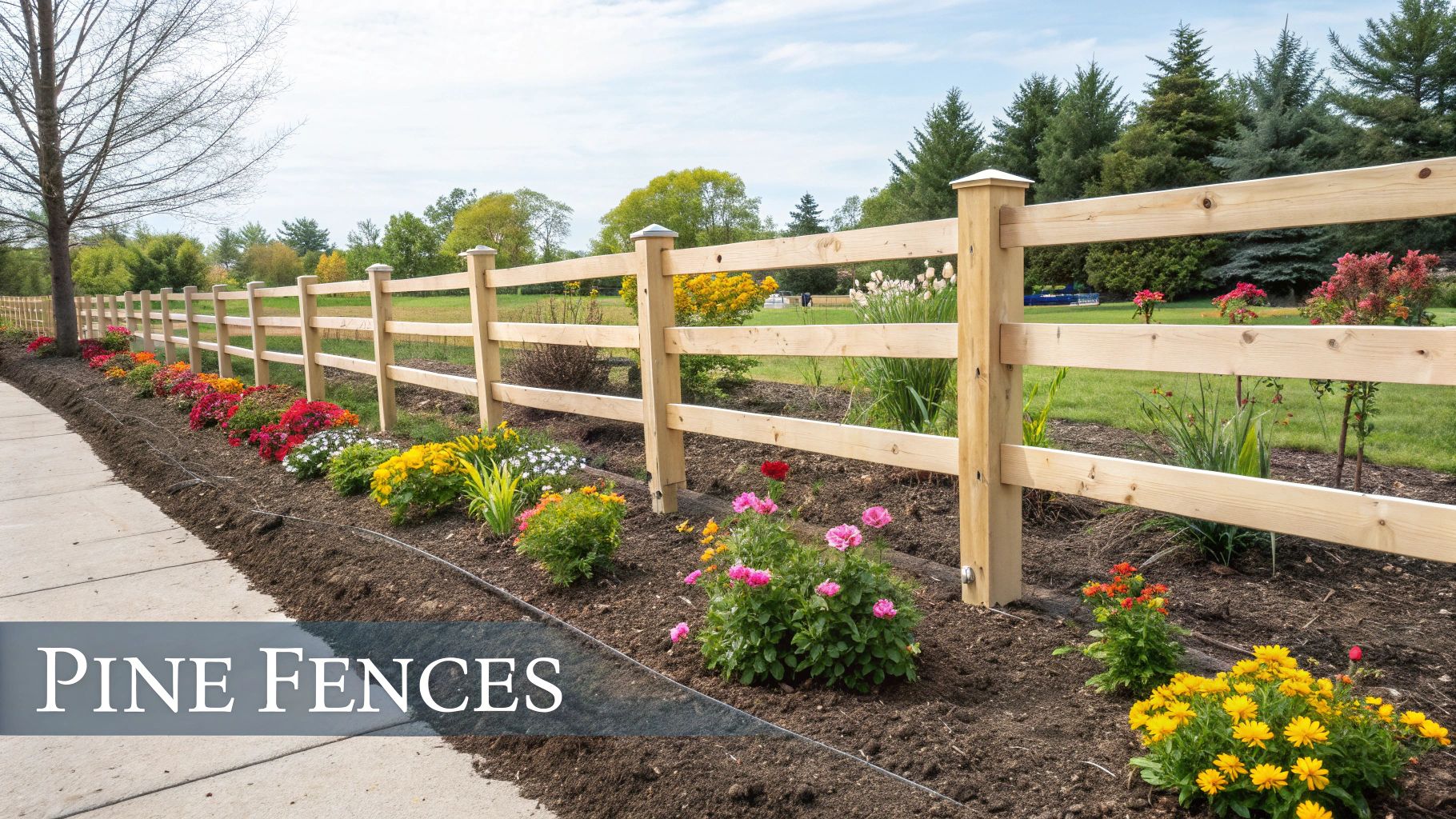
This resilience isn’t magic—it’s down to simple biology. Both cedar and redwood are packed with natural oils and compounds called tannins. These substances taste bitter, making them a powerful deterrent for hungry insects like termites, while also stopping the growth of fungi that cause rot. It’s this built-in protection that allows these woods to last for decades, even in our damp UK climate, without needing any artificial preservatives.
The Aromatic Charm of Cedar
Western Red Cedar is a hugely popular choice, and for good reason. Its appeal goes way beyond just durability. It’s famous for its stunning range of colours, which can vary from soft ambers and reddish cinnamons to deep, rich browns. This natural variation gives every cedar fence a unique, vibrant character that’s almost impossible to replicate.
And then there’s that distinct, pleasant aroma that so many people love. The very same oils that protect the wood from pests are responsible for its signature scent. Cedar is also surprisingly lightweight, which makes it much easier to handle and install compared to some of the denser timbers out there.
A quick look at cedar’s benefits:
- Natural Resistance: Its inherent oils actively repel insects and prevent decay from setting in.
- Dimensional Stability: Cedar is far less likely to shrink, swell, or warp with changing weather than many other woods.
- Aesthetic Beauty: It offers a rich tapestry of natural colours that, if left untreated, will weather gracefully to an attractive silvery grey.
The Strength and Richness of Redwood
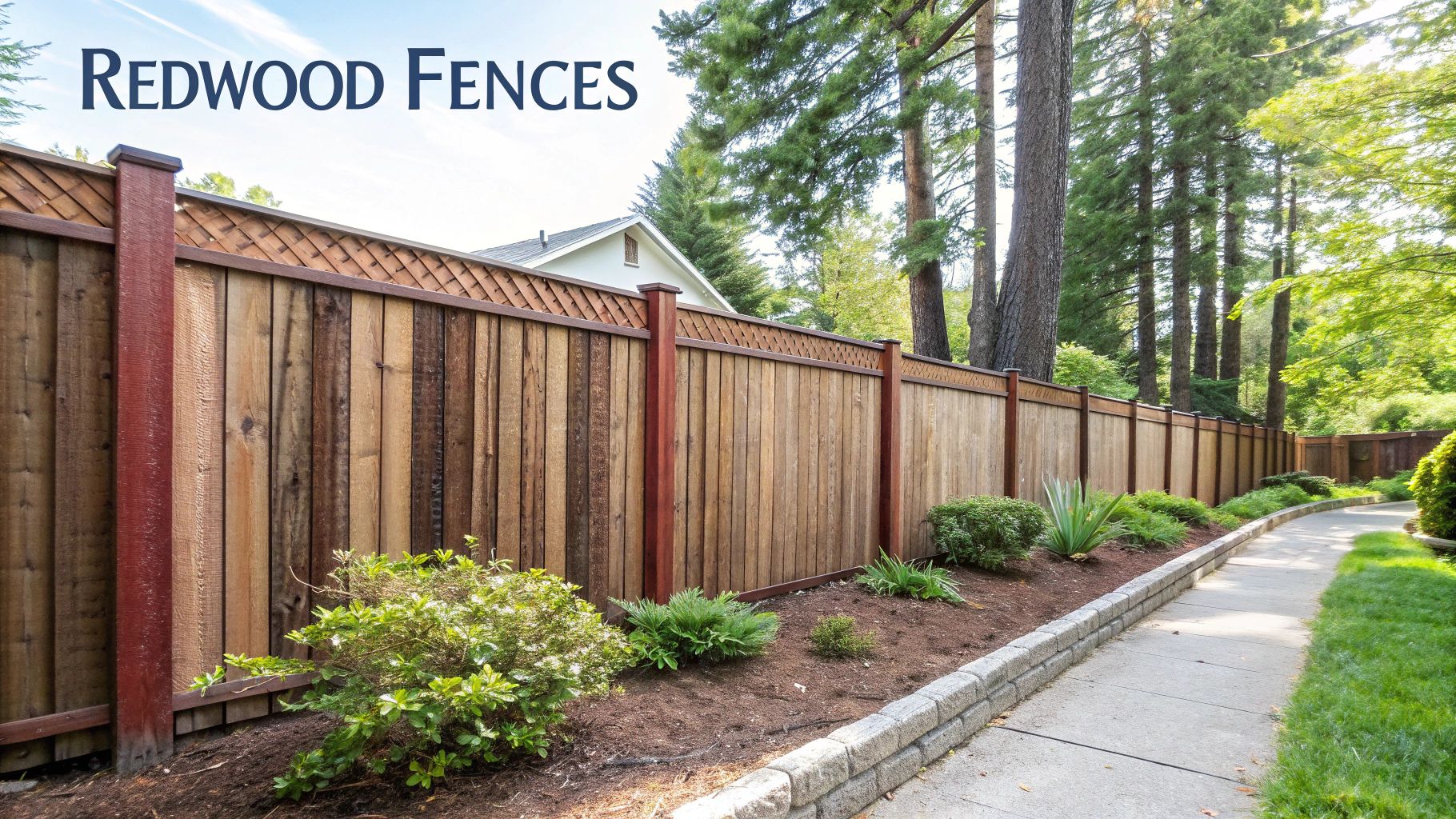
Redwood sits at the premium end of the scale, renowned for its incredible longevity and structural integrity. Its deep, reddish-brown tones immediately bring a sense of luxury and elegance to any property. The heartwood, in particular, is dense with the protective tannins that give redwood its distinctive colour and its impressive lifespan, which can easily top 20-25 years with very little upkeep.
Redwood’s superior stability and strength make it an excellent choice not just for fence panels but also for the structural posts and rails that form the backbone of your fence. It holds its shape extremely well over time.
Of course, both cedar and redwood come with a higher up-front cost than treated pine. But their long-term value is where they truly shine. By investing in these naturally durable woods, you’re buying a fence that demands far less maintenance over its lifetime. You’ll save a significant amount of time and money on the stains, sealants, and repairs that other timbers inevitably need, making them a fantastic long-term investment.
Stepping Up to Unique and High-Performance Timbers
While the usual suspects get the job done, sometimes you want a fence that does more than just mark a boundary. You want something that makes a statement. This is where high-performance and unique timbers come in, offering a blend of exceptional durability and a look that truly sets your property apart. Think of these not just as fencing materials, but as long-term investments in style.
Among these top-tier choices are dense hardwoods like Oak. Famous for its sheer strength and gorgeous grain, an Oak fence is built to last for decades, often outliving even the hardiest softwoods. Its natural toughness means it can take a beating from both boisterous kids and the notoriously unpredictable UK weather. If you want to dive deeper into how it measures up, our guide to the strongest types of wood has all the details.
A quick word of advice, though. When you’re choosing a hardwood like Oak, it’s crucial to check it’s from a sustainable source. Always look for certifications that confirm the timber has been harvested responsibly to help protect our precious woodlands.
The Ancient Art of Yakisugi (Charred Timber)
If you’re after the absolute best in both striking aesthetics and incredible performance, an ancient Japanese technique called Yakisugi is hard to beat. By charring the surface of the wood, this traditional method turns regular timber into a long-lasting work of art. The process, also known as shou sugi ban, is as captivating as the final result.
It works by carefully burning the surface of the timber—usually cedar—to create a deep, black, carbonised layer. After burning, the wood is cooled, cleaned off with a stiff brush, and sometimes finished with a natural oil. What you’re left with is a dramatic, blackened finish that is surprisingly tough.
This controlled charring process forms a waterproof, carbon shield on the wood’s exterior. It’s naturally resistant to fire, rot, and insects, making it a centuries-old, chemical-free way to produce timber that can last for over 50 years with very little upkeep.
The look of Yakisugi is completely unique. Its rich, textured surface, often compared to alligator skin, gives a modern yet timeless feel that works with almost any style of home. It’s more than just a fence; it’s functional art for your garden.
But this isn’t just about appearances. The practical benefits are what make it a truly brilliant choice:
- Built to Last: That carbon layer is a powerful barrier against moisture and UV damage.
- Pest-Proof: The charring process makes the wood taste terrible to insects and other pests.
- Fire-Resistant: It might sound strange, but charring the wood actually makes it less likely to catch fire.
Opting for a Yakisugi fence is a choice for longevity, low maintenance, and a seriously bold look. While it costs more upfront than standard fencing timbers, its incredible lifespan and stunning appearance deliver lasting value for anyone who wants their boundary to be as impressive as their home.
Getting to Grips with UK Timber Standards
When you’re choosing wood for a new fence, it’s easy to get caught up in the look and feel of different timbers. But beyond aesthetics, you need to be sure your materials meet crucial UK safety and performance standards. A fence is only as strong as its posts, and the timber that goes into the ground has a tough job to do.
This is where the Timber Use Class system comes in. Think of it as a simple grading system that tells you exactly where a piece of treated timber is safe to use. It’s a non-negotiable factor that can mean the difference between a fence that lasts for a couple of seasons and one that stands strong for well over a decade.
Why Use Class 4 is a Must-Have
For any bit of timber that will be in permanent contact with the ground—like your fence posts—the mandatory standard is Use Class 4 (UC4). This isn’t just a suggestion; it’s a requirement.
UC4 timber has been put through a high-pressure treatment process, forcing preservatives deep into the wood. This process is specifically designed to arm it against the constant moisture and soil-dwelling microbes that cause rot.
In the UK, timber fencing has to meet strict quality standards. For fence posts, the minimum recommendation is Use Class 4, which is governed by the BS.8417 standard. This ensures that softwoods like Scots Pine get the right level of treatment to survive our damp ground conditions for years.
Simply put, if you use anything less than UC4-treated timber for your fence posts, you’re setting yourself up for failure. The post will inevitably rot at the base, and the whole fence will become unstable, no matter how good the panels are.
Making the Right Choice
When you’re buying your fencing materials, always ask the supplier to confirm the posts are treated to Use Class 4. A good merchant will have this information readily available, but asking the question shows you know what you’re looking for and helps you sidestep substandard products.
This one simple check ensures your investment is not only safe and compliant but built to last in the classic British weather. And while we’re focused on UK standards here, it’s worth noting that understanding broader regulations for building materials can offer a wider perspective on why these material standards are so important in construction worldwide.
Weighing the Pros and Cons of Composite Fencing
While nothing beats the classic charm of a real timber fence, it’s not the only game in town anymore. Modern materials are giving wood a serious run for its money, and composite fencing is leading the charge. It’s become a go-to for homeowners who want that wood-look aesthetic without the weekend-stealing upkeep.
So, what is it exactly?
Think of composite boards as a high-tech blend of natural and man-made. They’re manufactured from a mix of recycled wood fibres and plastics, creating a material that beautifully mimics the warmth of timber but boasts the resilience of a synthetic. For many, it’s the perfect middle ground.
The Low Maintenance Advantage
The biggest selling point for composite fencing is, without a doubt, its ability to shrug off almost anything the British weather throws at it. Unlike traditional wood, composite boards are engineered to last without you needing to spend your bank holidays staining, sealing, or painting them. That alone is a massive saving in time, effort, and money over the years.
Here’s what makes it so tough:
- Rot and Insect Proof: The plastic element creates a barrier against moisture, which means no rot. It also makes the boards completely unappealing to wood-boring pests.
- Fade Resistance: UV inhibitors are baked into the material during production, so the colour you choose is the colour it stays. No more sad, grey fences after a few years of sun.
- A Flawless Finish: Every board comes out of the factory looking identical in colour and texture, giving your fence a clean, uniform look that’s hard to achieve with natural timber.
Understanding the Trade-Offs
Of course, there’s no such thing as a perfect material. The main hurdle with composite fencing is the initial cost. It’s certainly a bigger investment upfront compared to pressure-treated pine or even some cedar options, which can make it feel like a stretch for the budget.
But it’s vital to look at the bigger picture. When you add up the cost of stains, sealants, and the odd replacement board for a timber fence over 10-15 years, the total cost of owning a composite fence often starts to look a lot more reasonable.
Composite fencing is a fast-growing market, with top-tier options now designed to last 25 years or more, all while resisting warping, mould, and fading. You can find more on the latest trends in composite fencing at Ecoscape UK. For a deeper dive, our article comparing composite decking vs wood covers many of the same principles and might be worth a read.
A Few Common Questions About Fence Wood
Choosing the right timber for your fence can feel a bit overwhelming, and it’s natural to have a few questions. Wondering about how long it’ll last or how much work it’ll be to keep it looking good? These are the exact things you should be asking. Let’s clear up some of the most common queries to help you feel confident in your decision.
How Long Should I Expect My Wooden Fence to Last?
This is a big one, and the answer really comes down to the timber you pick. Your standard pressure-treated pine fence, if looked after, will probably give you a good 10 to 15 years of service. It’s a solid, reliable choice for many homeowners.
If you’re after something a bit more long-lasting, naturally tough softwoods like Cedar are a fantastic step up. Their natural resistance to rot and pesky insects means you’re looking at a lifespan closer to 15 to 25 years. Then you have the premium options. Timbers like Redwood or specially treated Yakisugi can last an incredible 25 to 50 years, sometimes even longer, making them a true investment in your property.
What’s the Easiest Wood to Look After?
If you’d rather spend your weekends relaxing than re-staining your fence, then you’ll want to lean towards timbers that are naturally durable.
- Cedar and Redwood: These are the classic “fit and forget” options. They’re packed with natural oils that insects and rot simply hate, so you don’t need to treat them every year. If you leave them be, they’ll slowly weather to a rather beautiful silvery-grey colour.
- Yakisugi (Charred Timber): The charring process isn’t just for looks; it creates a protective carbon layer. This makes the wood incredibly resilient against moisture, pests, and even fire, meaning it demands very little from you over its exceptionally long life.
On the other hand, while pressure-treated pine is protected from rot, it does need a fresh coat of sealant every so often to stop it from weathering and warping, placing it firmly in the higher-maintenance category.
Which Wood Copes Best with the British Weather?
Given the UK’s love for damp, drizzly weather, resistance to rot is absolutely key. This is why pressure-treated pine is so popular here; its chemical treatment is designed specifically to stand up to our wet conditions.
That said, woods like Western Red Cedar are also a superb choice. Cedar is naturally very stable, so it doesn’t tend to warp or shrink as much when the humidity swings up and down. Its own oils provide a powerful defence against decay, making it one of the best types of wood for fences in our climate.
A quick tip from experience: no matter which wood you choose, how it’s installed is just as important. Good drainage and making sure the fence panels aren’t sitting directly on soggy ground will add years to its life.
For a fence that brings together incredible durability and a striking, modern look, take a look at the charred timber solutions from TimberSol. Our Yakisugi fencing is crafted to brave the elements while adding a bold architectural touch to your home. Visit us at https://timbersol-backup.elnoirstudio.com to see the lasting beauty of charred wood for yourself.
