
Timber Cladding Vertical: The Ultimate UK Guide

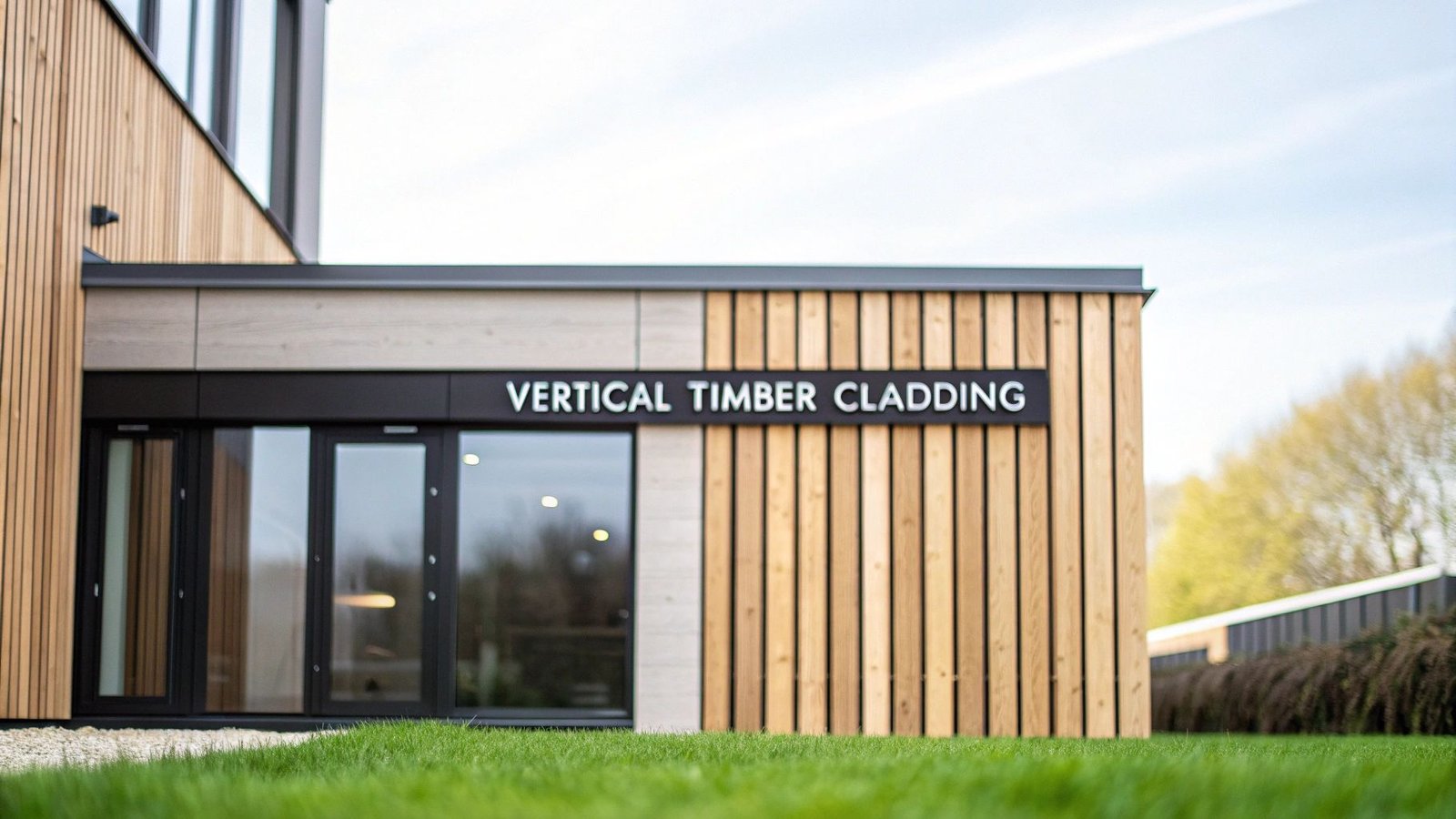
Vertical timber cladding is making a real mark on UK architecture. It’s a simple concept: fitting wooden boards upright instead of across. The result? A clean, modern look that gives buildings a sense of height and elegance. But it’s not just about aesthetics; this orientation is also fantastic at shrugging off the British weather, which is a major win.
The Rise of Vertical Timber Cladding in UK Architecture
You can see a definite shift happening in British design. For a long time, horizontal timber cladding was the go-to, giving us that familiar, rustic look. But now, architects, builders, and homeowners are looking at things from a different angle—literally. They’re opting for the crisp, rhythmic lines of timber cladding vertical installations. This isn’t just a fleeting fashion; it’s a genuine change in how we think about a building’s skin.
This move towards vertical lines comes from a desire for a sleeker, more contemporary feel. While horizontal boards can sometimes make a building seem shorter and wider, vertical lines do the opposite. They draw your eye upwards, creating an illusion of height and a more slender profile. It’s a clever design choice that gives buildings a bit of extra presence and sophistication.
A Modern Aesthetic Statement
Vertical cladding is a confident choice. It creates a façade with a strong, linear pattern, and as the sun moves, the shadows cast by the boards shift, bringing texture and life to the surface. It’s an effect that works brilliantly with minimalist and modern designs, where the focus is on clean forms and honest materials.
So, what’s driving this trend?
- Illusion of Height: Those vertical lines are brilliant at making walls feel taller. It’s a great way to add a sense of grandeur, especially to single-storey homes or extensions.
- Clean and Contemporary Feel: The continuous lines deliver a sharp, organised look that pairs beautifully with other modern materials like glass and steel.
- Unique Rhythmic Texture: The repetition of the boards creates a pattern that’s visually interesting and adds character without being too busy.
For architects and clients looking into vertical timber cladding for UK projects, figuring out the design costs early on is crucial. Using a tool like an architecture design fee estimator can be a big help during that initial planning phase.
In the end, choosing a vertical layout is a considered architectural move. It shows an appreciation for clean geometry and natural materials, setting the building apart as a thoughtfully crafted structure. And cleverly, this stylish choice also hints at better performance, especially when it comes to dealing with our notoriously unpredictable weather.
Why Choose a Vertical Orientation for Your Cladding
Deciding to install your cladding vertically is more than just a matter of taste; it’s a smart move that brings both aesthetic flair and practical, hard-wearing benefits. This orientation works with gravity, not against it, which is a massive advantage in the often damp UK climate.
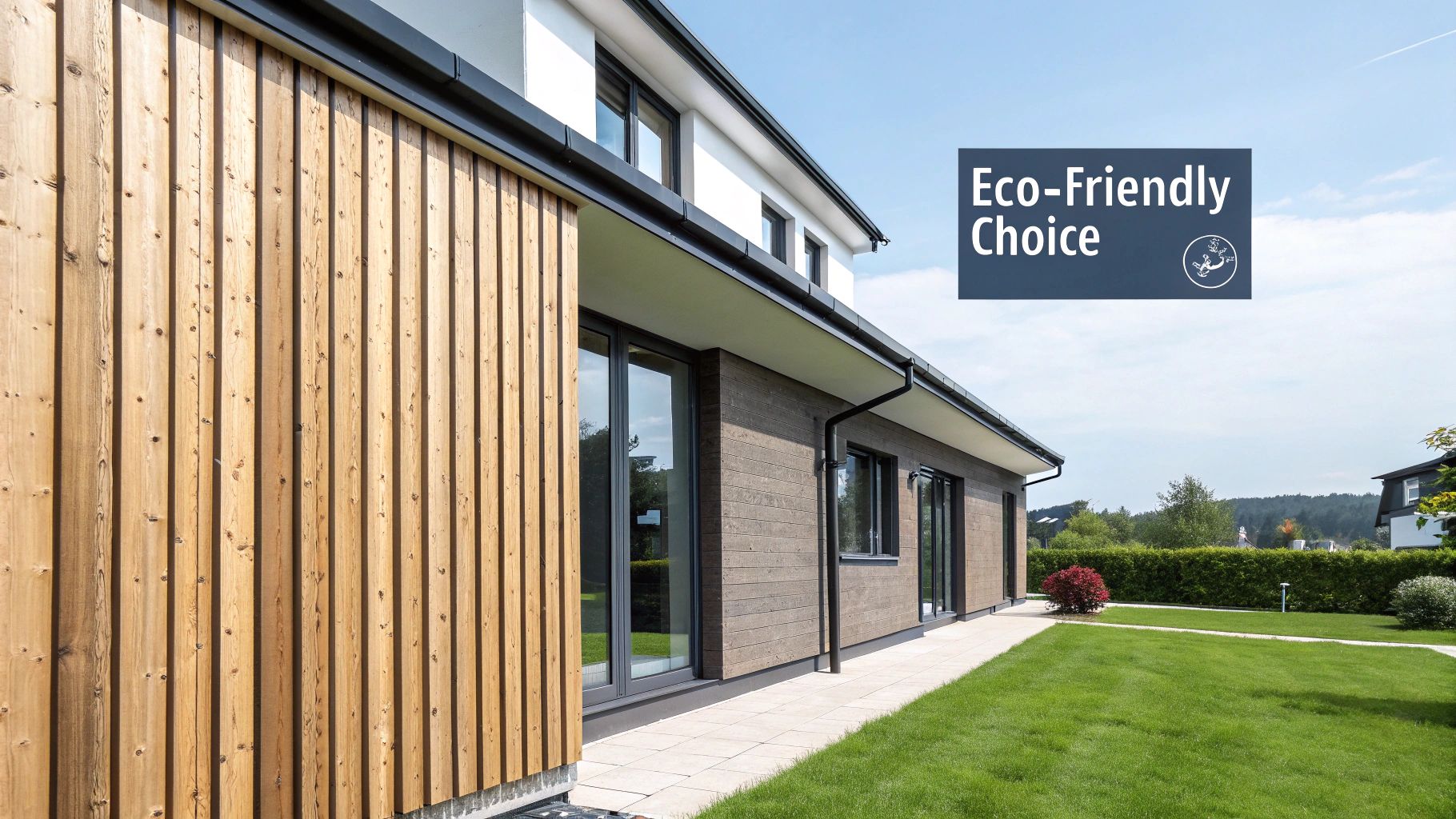
Think about it: horizontal boards can create tiny ledges where water might linger, eventually finding its way into the joints. With timber cladding vertical installations, you create a clear, direct channel for rainwater to simply run off and away. This simple shift in direction dramatically cuts down the risk of moisture getting trapped, which is the number one enemy when it comes to preventing rot, mildew, and long-term decay.
It’s a brilliantly simple way to protect the core structure of the building for years to come.
Drawing the Eye Upwards
Beyond the practicalities, the visual effect of vertical cladding is instant and impressive. Those clean, continuous lines running from top to bottom have a real impact on a building’s perceived proportions, creating a stunning illusion of height and elegance.
This design technique is especially useful for:
- Making single-storey buildings feel taller and more imposing. The vertical lines naturally draw your eyes upward, giving a smaller structure a much grander presence.
- Giving multi-storey properties a sleeker, more refined look. It can break up wide, heavy facades, introducing a sense of grace.
- Creating a contemporary, rhythmic pattern. The repetition of the boards adds fantastic texture and depth, catching the light and creating shifting shadows as the day goes on.
This distinctive look is a big reason why timber cladding vertical styles are popping up all over the UK. Industry insiders are seeing a real move towards narrow batten cladding as a signature of modern design, with thermally modified timbers like Scots pine becoming a go-to choice for their stability in our climate. If you’re curious, you can explore more about upcoming timber design trends to see how this style is influencing new architecture.
Vertical cladding acts like a well-designed raincoat for your home. It doesn’t just block the rain; it actively channels it away, ensuring the structure beneath stays dry and protected for the long term.
A Durable and Lasting Impression
By marrying superior weather protection with a sophisticated look, vertical timber cladding really does offer the best of both worlds. It’s a design choice where you don’t have to compromise between beauty and performance. In fact, it proves that sometimes the most elegant solution is also the most sensible one.
Ultimately, choosing a vertical layout is an investment in both the kerb appeal and the long-term health of your property. It’s a forward-thinking choice that stands up to the elements while making a bold architectural statement that feels both timeless and completely current.
Choosing the Right Timber Species and Treatment
Picking the right wood for your vertical cladding project is where the building’s personality really starts to shine. The timber you land on will define more than just its colour and grain; it sets the tone for durability, how often it needs maintaining, and the overall budget. It’s a classic balancing act between the look you want and how you need it to perform day-to-day.
Here in the UK, we’re spoilt for choice. You’ve got the warm, golden hues of softwoods like Larch and Cedar on one hand, and the classic, robust strength of hardwoods like Oak on the other. Each has its own unique character. Larch, for instance, is naturally high in resin, which gives it fantastic protection against decay. Western Red Cedar, meanwhile, is famously lightweight and stable, and if left to its own devices, it weathers into a beautiful, distinguished silvery grey.
Popular Timber Choices for Vertical Cladding
So, how do you choose? It comes down to weighing up a few key factors. Are you after a timber that needs a regular coat of oil to keep its rich colour, or do you prefer the idea of letting it age gracefully on its own? Is the budget the main driver, or is getting the longest possible lifespan your number one priority?
Here’s a quick rundown of some of the most popular options:
- Siberian Larch: A really durable and cost-effective choice. It starts with a warm yellow-orange colour that eventually fades to a soft silver. Its density also makes it great at resisting knocks and scrapes.
- Western Red Cedar: Loved for its stunning range of colours, from deep reddish-browns to light ambers. It’s incredibly stable, so it’s less prone to warping, and its natural oils are a brilliant defence against insects and rot.
- European Oak: A premium hardwood that everyone knows for its strength and beautiful, distinctive grain. Oak is exceptionally durable, but it does need careful handling and treatment to manage its natural tannins, which can cause staining if not properly addressed.
- Thermally Modified Timber: Woods like ash or pine are super-heated with steam, a process that dramatically improves their stability and durability. This makes them a fantastic, sustainable alternative to some tropical hardwoods.
Choosing wisely means getting to grips with how different materials stand up to the elements. For a closer look, this detailed guide on weather-resistant hardwood is a great resource for understanding how various species perform in the UK climate.
The table below breaks down some of the most common choices, helping you compare them at a glance.
Comparison of Popular Timber Cladding Species
| Timber Species | Durability | Typical Cost | Maintenance Needs | Best For |
|---|---|---|---|---|
| Siberian Larch | High (Naturally) | ££ | Low; can be left to silver or oiled to retain colour | Cost-effective durability and a modern, weathering aesthetic. |
| Western Red Cedar | Very High (Naturally) | £££ | Very Low; oils protect it, but it silvers beautifully | High-end projects where stability and rich colour are key. |
| European Oak | Very High | ££££ | Medium; requires treatment to manage tannins | Prestigious builds demanding strength and classic character. |
| Thermally Modified Ash | Excellent | £££ | Low; stable and resistant to decay | Sustainable projects wanting a dark, uniform, and stable finish. |
As you can see, each timber has its own set of pros and cons. Your final decision will likely come down to that perfect intersection of budget, desired look, and long-term performance.
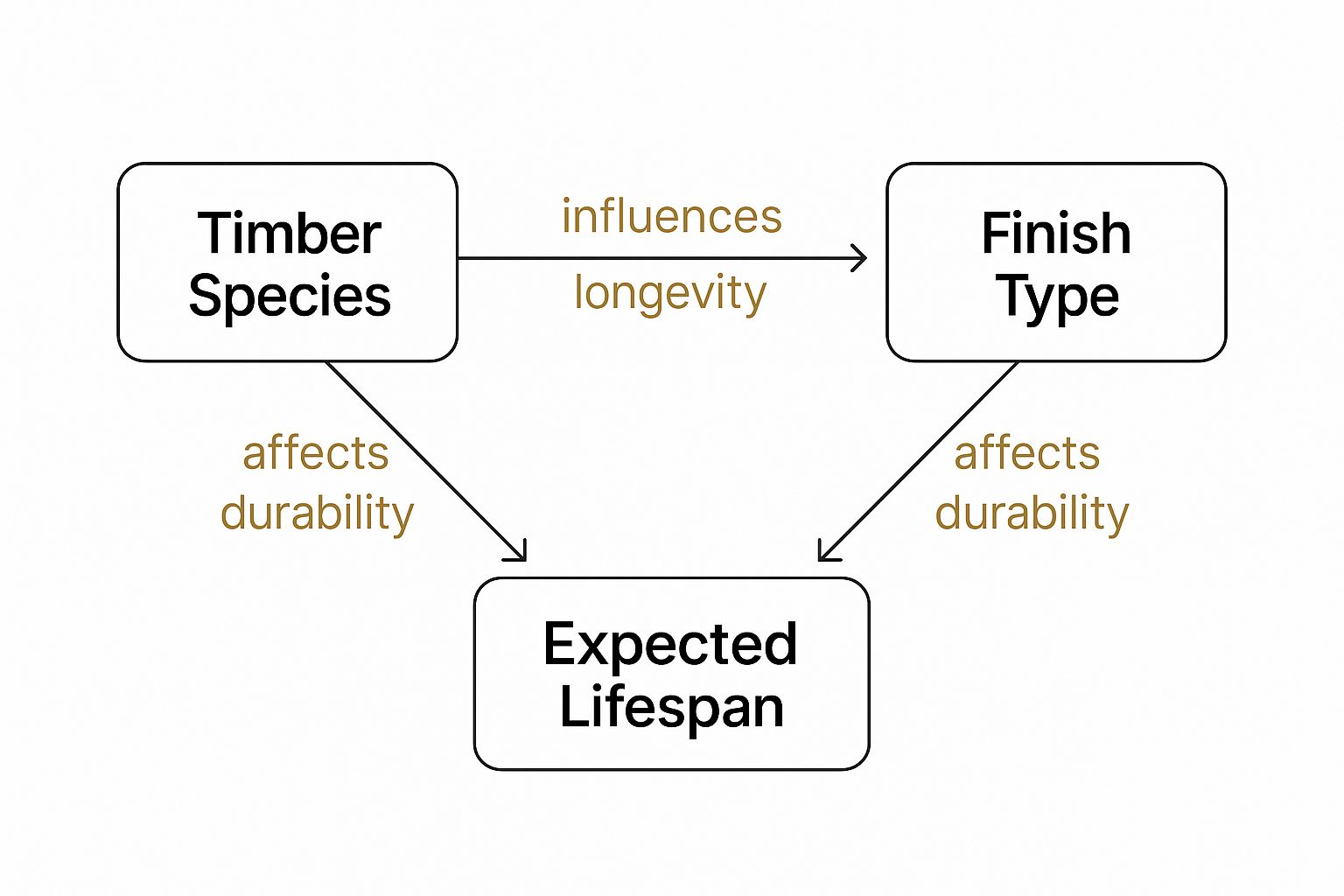
The message here is pretty clear: investing in a naturally durable timber and pairing it with a quality protective finish is the secret to a long-lasting façade. Spending a bit more upfront on the right materials really does pay off in the long run.
Advanced Treatments: The Power of Charred Timber
Beyond the usual oils and stains, some incredible treatments can completely change the look and performance of timber cladding. One of the most dramatic is Yakisugi, the ancient Japanese art of charring wood.
Yakisugi, also known as shou sugi ban, is a process that is about so much more than aesthetics. It’s a powerful, natural form of preservation.
By charring the surface, you create a layer of carbon that’s brilliantly resistant to water, fire, and pests. It’s a method that’s been proven over centuries, resulting in a unique, deep black finish with an incredible texture.
Yakisugi cladding is famously low-maintenance and can last an astonishingly long time – some applications are known to endure for over 80 years with very little upkeep. This makes it a fantastic option if you’re looking for a bold, statement look for your vertical timber cladding without signing up for years of regular retreatment.
The finish isn’t one-size-fits-all, either. It can range from a heavily charred, almost reptilian “alligator skin” texture to a much smoother, brushed finish that lets the wood grain peek through the dark surface. This versatility means it looks just as at home on a rustic barn conversion as it does on a sleek, ultra-modern building. It’s a truly beautiful and practical solution.
Getting the Design and Installation Right
A stunning vertical timber facade is no happy accident. It’s born from smart design choices and a meticulous installation process. Nailing these fundamentals is the secret to ensuring your cladding not only looks fantastic but also stands up to the British weather for years to come.
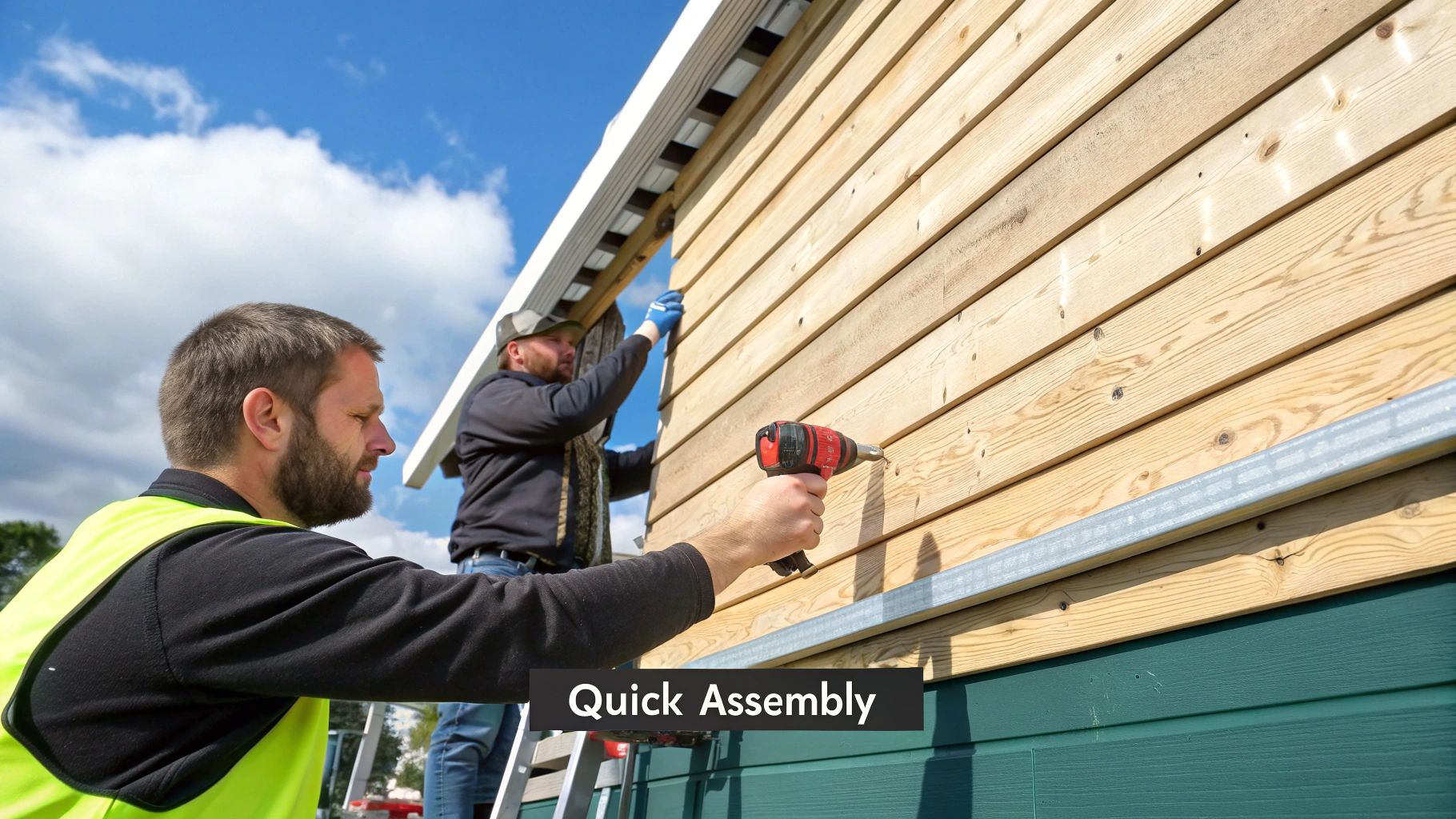
The single most critical detail is the ventilation gap. You can think of this as giving your building essential breathing room. A continuous air gap, at least 25mm deep, must sit behind the cladding boards. This space is a game-changer; it lets air flow freely, whisking away any moisture that finds its way behind the timber and stopping rot before it can even think about starting.
Without this gap, moisture gets trapped, and that’s a recipe for disaster. For any timber cladding vertical project, especially in our damp climate, this is an absolute non-negotiable.
Fixing Methods: More Than Just Nuts and Bolts
How the boards are fixed to the building plays a huge part in the final look and long-term durability. You’ve really got two main paths to go down.
- Visible Face Fixing: The classic approach. Here, screws or nails go directly through the face of the boards into the battens behind. The fixings are on show, creating a robust, honest aesthetic that provides an incredibly strong attachment.
- Secret (Hidden) Nailing: If you’re after a clean, contemporary finish, this is the way to go. The fixings are driven through the tongue of the board (or a special recess), so they’re completely hidden by the next board. The result is a seamless surface that really lets the vertical lines and the wood’s natural beauty shine.
Your choice of fixing isn’t just a technical detail—it’s a core part of the design. Visible fixings can lend a rustic or even industrial feel, while hidden fixings deliver that sharp, minimalist look where the timber itself is the star.
Profiles and Patterns: Adding Character and Texture
The shape of your cladding boards, or their ‘profile’, dictates both how weatherproof the facade is and its overall visual style. A tongue-and-groove profile, for instance, is brilliant at keeping wind and rain out thanks to its interlocking edges, which create a smooth, tight finish.
Another fantastic option for vertical cladding is the board-and-batten style. This involves laying wide boards first, then covering the joints with narrower battens. It adds incredible depth and creates beautiful shadow lines that bring the whole surface to life. You can play with the board and batten widths to create different visual rhythms, completely changing the building’s character.
Of course, a great project thinks about the bigger picture, too. Considering things like the role of waste management in sustainable construction projects helps ensure your beautiful new facade is part of an environmentally responsible build from start to finish.
Keeping Your Vertical Timber Cladding in Top Shape
You’ve invested in a beautiful timber facade, and with a bit of know-how, you can make sure it stands the test of time. A well-cared-for cladding system doesn’t just look stunning; it properly protects your home for decades, preserving its value and appeal.
The kind of upkeep your cladding needs really comes down to the timber you chose and its finish. If you’ve gone for something naturally tough and low-maintenance, like thermally modified wood or charred timber (Yakisugi), you’re mostly looking at a simple annual check-up. Just walk the perimeter, look for any damage, make sure the fixings are still tight, and clear out any leaves or dirt from the ventilation gap.
The Basics: A Good Clean and a Keen Eye
Think of it like washing your car – a little bit of regular, gentle cleaning goes a long way. At least once a year, grab a soft brush and some clean water to wash away any surface dust and grime. This is a crucial step because that build-up can trap moisture and give mould a place to start growing.
While you’re cleaning, keep an eye out for a few key things:
- Fixings and Fastenings: Are any screws or nails looking loose? If so, simply tighten them up.
- Board Condition: Check for any significant cracks, splits, or warping, paying extra attention to the corners and joints where boards meet.
- Finish Integrity: If your timber is coated, look for any signs of peeling, patchiness, or significant fading.
Catching these small issues early makes them incredibly easy to sort out. For a deeper dive into general timber care, have a look at our guide on how to protect wood outdoors.
To Refinish or to Weather Naturally?
For cladding treated with a protective oil or stain, you’ll need to reapply it every few years. This keeps the wood nourished, prevents it from drying out, and maintains that rich, vibrant colour. Always follow the manufacturer’s guidance, and make sure the cladding is clean and completely dry before you start.
On the other hand, you could do nothing at all. Many people choose timbers like cedar or larch specifically so they can let them age naturally. Over time, these woods develop a beautiful, silvery-grey patina that requires no recoating whatsoever. It’s a look that’s become incredibly popular across the UK, especially in England and Wales, where durable timber cladding is in high demand. Oak, with its inherent strength and classic appeal, is another top choice for vertical installations that perfectly suit the region’s dynamic building styles.
Understanding the UK Market for Timber Cladding
Deciding on vertical timber cladding for your project is more than just a stylistic whim; it’s a savvy investment that taps right into a significant shift happening in UK construction. There’s a real groundswell of demand for natural, sustainable building materials, and timber is finding itself right at the heart of modern British architecture.
Knowing this trend is out there should give you confidence in your choice. When you understand the market, you can see how your project is part of a bigger picture—a move towards greener, more thoughtful design. Choosing timber isn’t just for today; it’s about adding long-term value and relevance to your property.
A Growing Appetite for Natural Materials
You can see it everywhere—a clear and rising interest in building with materials that look good and do good. Timber, particularly when it’s sourced from properly managed forests, ticks both boxes beautifully. It brings a warmth and character to a building that synthetic alternatives just can’t seem to match.
This isn’t just a feeling; the numbers back it up. The UK’s timber cladding market is on a solid growth path, with forecasts pointing to a compound annual growth rate (CAGR) of around 4% between 2025 and 2030. This upward curve is being fuelled by a sharper focus on sustainable building and a boom in construction, especially new homes. Vertical timber cladding is a big part of this story, prized for its clean, contemporary aesthetic and practical advantages like better water runoff. You can dig into the specifics and learn more about the UK timber cladding market analysis on mordorintelligence.com.
By choosing timber, you’re doing more than just improving how your property looks. You’re actively participating in a more sustainable approach to construction. It’s a choice that says you understand modern value, where style and environmental responsibility go hand-in-hand.
Investing in Long-Term Value
What this market momentum really means is that properties featuring high-quality timber cladding are becoming more and more desirable. They stand out as well-designed, premium buildings that are perfectly in tune with current architectural thinking. Whether you’re starting from scratch or giving an old place a new lease of life, using timber sends a clear message of quality.
A great place to start exploring the possibilities is by browsing a curated selection of high-quality timber cladding products that are designed for the demands of the modern UK market. Getting this choice right from the outset ensures your project will stay relevant, valuable, and beautiful for years to come.
Got Questions About Vertical Timber Cladding?
Even with the best-laid plans, it’s natural to have a few questions before committing to a big project like cladding your home. Let’s tackle some of the most common queries we hear about vertical timber cladding to help you feel confident in your choice.
Is Vertical Cladding More Expensive Than Horizontal?
This is probably the number one question people ask. The materials themselves cost the same, but the installation can sometimes be a little more involved. Setting up the vertical battens needed for this orientation can take a bit more time and precision than a standard horizontal layout, which might nudge the labour costs up slightly. In the grand scheme of things, though, the difference is usually pretty small.
Does Vertical Cladding Last Longer?
In a climate like the UK’s, where we’re no strangers to a bit of rain, the short answer is often yes. Think about how water flows: straight down. Vertical boards give rainwater a direct path to the ground, so it doesn’t have a chance to sit and pool on the edges of the boards. This simple, effective drainage dramatically cuts down the risk of moisture damage and rot, which can mean a longer, healthier life for your timber.
What Kind of Buildings Does It Suit?
One of the best things about vertical cladding is its versatility. It looks incredible on modern, minimalist builds, where it really emphasises those clean, sharp lines. On smaller, single-storey properties, it’s a brilliant design trick to draw the eye upwards and create a sense of height. You can even use it on a more traditional home to add a striking, contemporary feature.
Is It Harder to Maintain?
Not at all. The maintenance routine is pretty much identical to horizontal cladding. Whether it’s a gentle clean-down or applying a fresh coat of treatment, the process is the same whichever way the boards are facing.
The decision to go vertical is really an investment in two things: excellent performance against the weather and a distinct, modern look. It’s a smart and stylish choice that fits perfectly with today’s architectural trends.
Can You Mix Vertical and Horizontal Cladding?
Absolutely! This is a fantastic way to get creative. Using a mix of orientations on different parts of a building can break up large, flat walls and highlight interesting architectural details like extensions or entranceways. It adds a really dynamic and unique character to your home’s exterior.
Ready to bring the timeless beauty and durability of charred timber to your next project? Explore the stunning range of Yakisugi cladding, decking, and fencing at TimberSol and discover a sustainable solution that makes a lasting statement. Find your perfect finish today at https://timbersol-backup.elnoirstudio.com.
