
Composite Decking vs Wood A UK Homeowner’s Guide

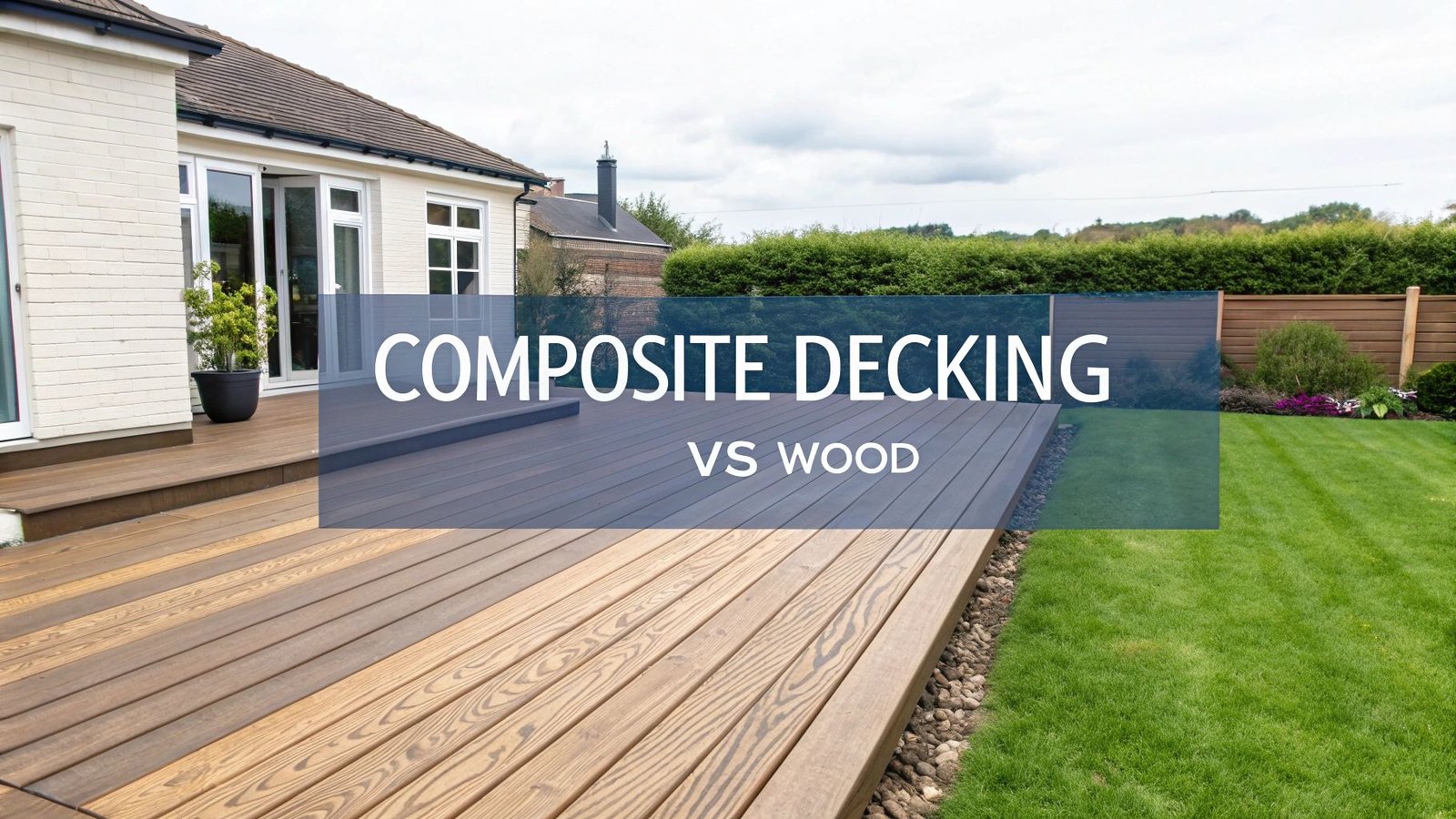
When comparing composite decking with traditional wood decking, the decision often comes down to a familiar trade-off: invest more upfront for minimal maintenance, or save initially and commit to ongoing upkeep. A real wood deck offers natural, authentic charm and a lower starting cost, but it requires regular care, including annual maintenance. In contrast, composite decking involves a higher initial investment but delivers a durable, low-maintenance solution designed to withstand the damp UK climate.
This guide explores how both materials perform in UK weather conditions, compares total lifetime ownership costs, and highlights design possibilities—including options like charred wood. It also helps you determine which decking solution best fits your budget, lifestyle, and long-term expectations.
The Great British Decking Debate: A Quick Overview
Choosing the right material for your garden decking is a major decision for any UK homeowner. It’s not only about appearance—it directly impacts your budget and how much time you’ll spend on maintenance in the years ahead. Traditional wood decking offers timeless, natural beauty, while composite decking provides modern durability and low-maintenance convenience.
This overview focuses on the key differences to help you quickly understand the core trade-offs. With a clear grasp of these fundamentals, you’ll be better prepared to explore the finer details and choose the option that best suits your home, lifestyle, and budget. As composite decking continues to grow in popularity, the debate between composite and wood decking is becoming increasingly relevant.
You can already see this shift happening across the UK market. Revenue from composite decking is projected to grow significantly—from £64 million (USD 80.7 million) to over £196 million (USD 247.2 million) by 2033. This rapid growth highlights a clear trend: homeowners are increasingly choosing durable, low-maintenance solutions that can withstand the UK’s damp climate without rotting or deteriorating. For a deeper understanding, you can explore UK composite decking market trends to see the full picture.
Before diving into the details, it helps to start with a clear overview.
The table below provides a side-by-side comparison of composite decking and wood decking across the key factors that matter most to UK homeowners—serving as a quick, practical reference point.
Composite vs Wood Decking At a Glance
| Feature | Composite Decking | Wood Decking |
|---|---|---|
| Initial Cost | Higher upfront investment | Lower initial cost, varies by timber type |
| Maintenance | Low (occasional cleaning) | High (annual staining, sealing, cleaning) |
| Lifespan | 25-30+ years with warranty | 10-25 years, depending on care and wood type |
| Durability | Resists rot, insects, warping, and fading | Susceptible to rot, pests, warping, and splintering |
| Aesthetics | Consistent colour and texture, wide range | Natural grain, weathers over time, can be stained |
| Safety | Often textured for slip resistance | Can become slippery when wet or algae-covered |
This at-a-glance comparison gives you a clear starting point. Now, let’s dig deeper into each of these areas to help you make a fully informed choice for your outdoor space.
A Practical Comparison of Decking Materials
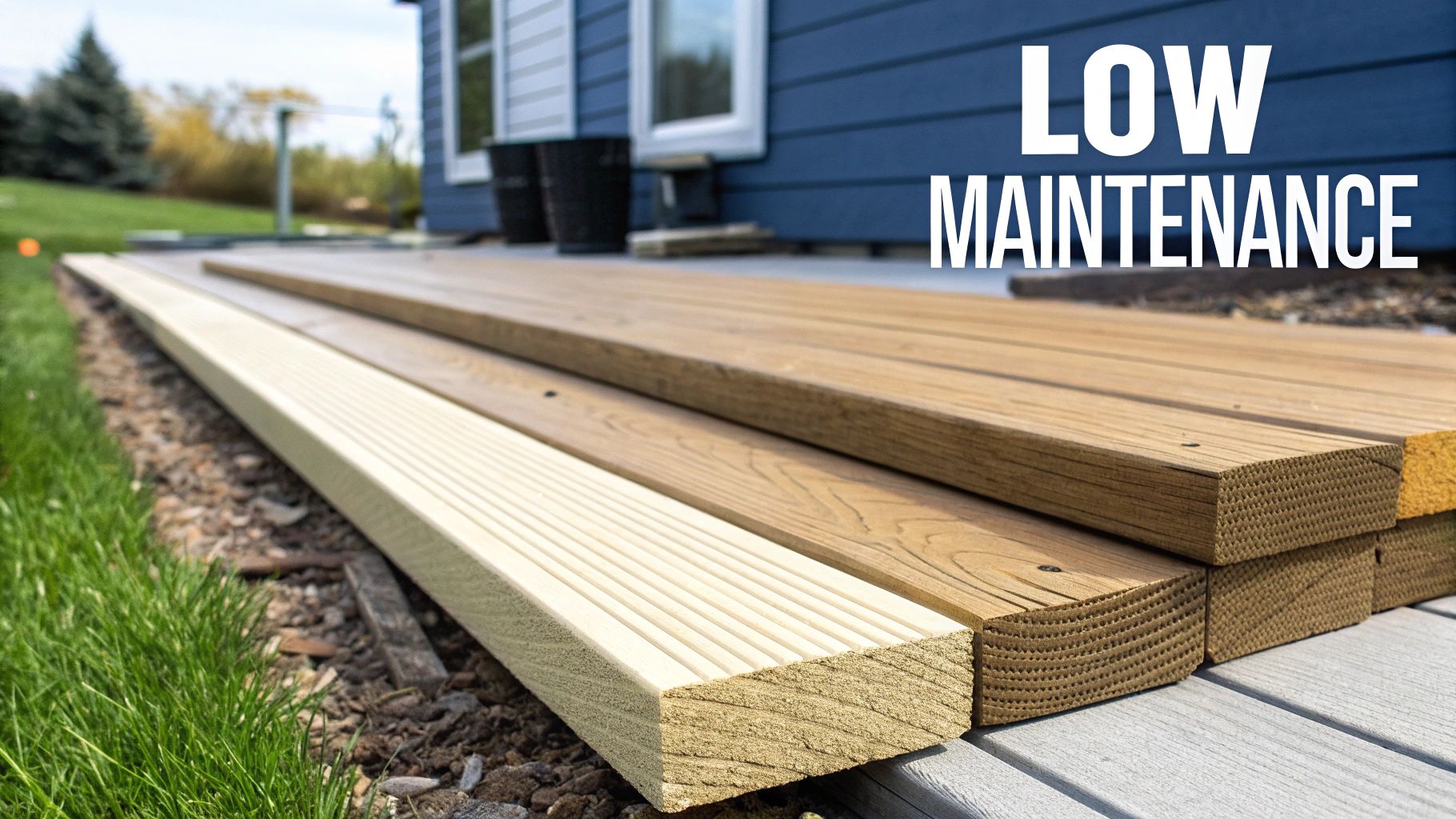
To properly evaluate the composite decking vs wood decking debate, it’s important to focus on real-world performance—especially in the UK’s damp and unpredictable climate. A deck is more than just a surface; it’s an extension of your home that needs to withstand rain, sunlight, and everyday use.
This comparison looks at the practical factors that matter most to homeowners. From long-term durability and ongoing maintenance requirements to safety underfoot in wet conditions, we’ll cover the details that influence day-to-day use. Understanding these aspects is key to choosing a decking solution you’ll enjoy for years, not just in the first season.
Durability and Resistance in a Damp Climate
In the UK, moisture is the biggest threat to any outdoor structure—and this is where the difference between composite decking and timber decking becomes most apparent, particularly when comparing exterior materials like spruce cladding. Traditional wood, especially softwood, is naturally porous and absorbs water easily. Without consistent annual sealing and treatment, this moisture can lead to rot, mildew, and fungal growth, making maintenance an ongoing challenge.
Composite decking, by contrast, is specifically engineered to resist these issues. Made from a blend of wood fibres and recycled plastics, it is far less absorbent than natural timber. Most modern composite boards are also capped with a protective polymer shell, acting as a highly effective barrier against moisture—almost like a built-in raincoat. This significantly reduces the risk of rot and decay that commonly affects wood decking.
Key Differentiator: Composite decking’s advanced moisture resistance gives it a clear advantage in damp climates, dramatically lowering the long-term risk of structural damage compared to most timber options.
Maintenance Demands: Staining, Cleaning, and Upkeep
The appeal of a low-maintenance garden is hard to ignore, and this is where composite decking stands out. Keeping it in good condition is simple—an occasional wash with soapy water is usually enough to remove surface dirt. There’s no need for sanding, staining, or sealing, making it a convenient, time-saving option for homeowners.
Wood decking, however, requires a more hands-on approach. To prevent it from weathering into a silvery-grey tone and to protect it from the elements, regular annual maintenance is essential. This typically includes:
- A deep clean: removing built-up dirt, algae, and any deteriorating sealant
- Sanding: smoothing out splinters and rough areas before refinishing
- Staining or sealing: applying a protective layer to guard against moisture and UV damage
This is not a one-time task but an ongoing commitment of both time and cost throughout the lifespan of the deck.
A Durable Wood Alternative: Yakisugi (Charred Timber)
For homeowners who appreciate the natural look of real wood but want to avoid intensive maintenance, charred timber offers a compelling alternative. The traditional Japanese technique known as Yakisugi involves carefully charring the wood’s surface to create a protective carbon layer.
This process effectively seals the timber, enhancing its resistance to moisture, rot, and insects without the need for chemical treatments, as seen in high-performance solutions such as charred accoya cladding and charred douglas fir cladding. Charred wood delivers a distinctive, refined aesthetic while offering durability that can rival many composite decking options. It bridges the gap between natural beauty and engineered performance, although it typically comes at a more premium price point. For further insight, explore guides on weather-resistant hardwood to understand how different timbers perform in harsh conditions and why treatments like charring are so effective.
Safety and Slip Resistance
Deck safety becomes especially important during wet and drizzly British weather. Traditional wood decking can become slippery when wet, particularly if algae or mildew begins to build up on the surface, creating a potential hazard.
Composite decking is designed with this in mind. Most boards feature a textured surface or an embossed wood-grain pattern that improves grip underfoot. While no decking material is completely slip-proof, high-quality composite decking typically provides more consistent traction in wet conditions compared to smooth, treated timber. This makes it a safer and more practical choice for families with children, as well as for areas around pools and hot tubs.
Analysing the True Cost Over a Deck’s Lifetime
When comparing composite decking vs wood decking, the initial quote is only the starting point of a much broader financial picture. Installing a deck is a long-term investment, and making the right choice requires understanding the total cost of ownership over its full lifespan. What appears to be the cheaper option upfront may prove more expensive over the next decade or two.
This analysis goes beyond basic price per square metre. In addition to upfront installation costs, it considers the ongoing and cumulative expenses associated with each material over time. By evaluating costs across 10, 15, and 25-year periods, you can gain a clearer view of the true long-term value.
Deconstructing the Initial Outlay
The upfront cost of building a deck is often the most visible expense, and this is where wood decking can appear more attractive. Pressure-treated softwood is typically the most budget-friendly option, making it a popular choice for homeowners working with a limited initial budget. At the premium end, hardwoods and specialised materials such as charred wood come with a higher price point.
Composite decking, in comparison, generally requires a higher initial investment than standard softwood. This reflects the advanced manufacturing processes and the use of recycled materials that contribute to its durability and weather resistance. However, it’s at this stage that the cost trajectories of wood decking and composite decking begin to diverge significantly over time.
The Hidden Costs of Wood Decking Maintenance
The lower upfront cost of wood decking often comes with ongoing maintenance requirements, introducing recurring expenses over time. These are not one-off costs but regular annual or biennial tasks that can add up significantly throughout the lifespan of your deck.
To keep timber decking in good condition and structurally sound, you should plan for:
- Sealers and stains: essential for protecting wood from moisture and UV damage, typically costing between £30 and £70 per tin depending on quality
- Cleaning solutions: specialised products needed to remove algae, mould, and embedded dirt before re-treatment
- Tools and applicators: including brushes, rollers, and potentially pressure washer rental as part of regular upkeep
- Board replacements: over time, some boards may warp, crack, or rot, leading to additional material and labour costs
Individually, these costs may seem manageable, but over time they accumulate—often turning an initially affordable option into a more expensive long-term investment. For a deeper understanding of maintenance requirements across different materials, exploring decking and cladding resources can provide valuable insights.
A key financial takeaway is that wood decking behaves like an ongoing subscription—requiring continuous spending of both time and money—whereas composite decking is closer to a one-time investment with minimal ongoing costs.
This comparison helps visualise the key differences in cost and lifespan between typical composite decking and wood decking options.
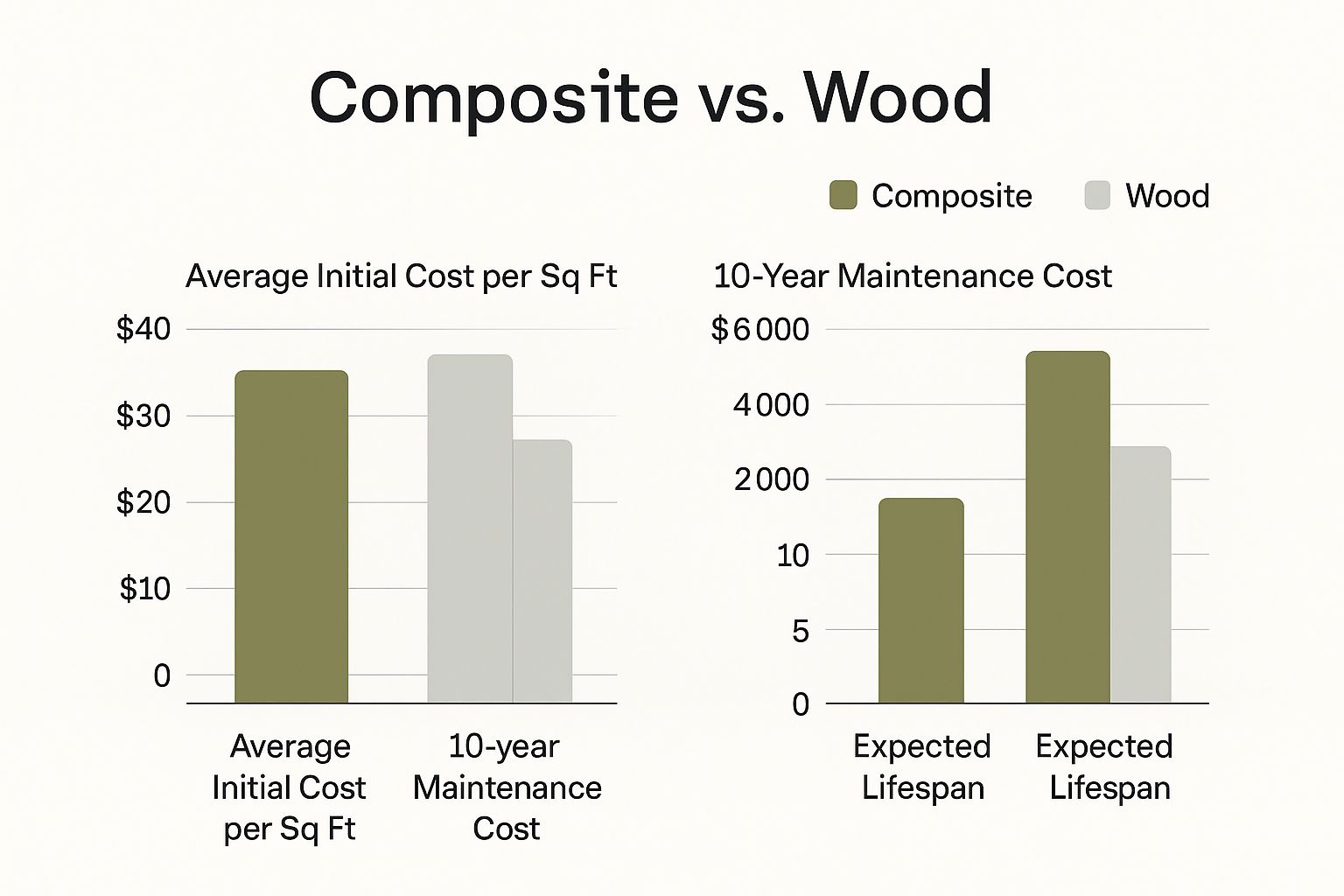
As shown, wood decking may have a lower initial price, but ongoing maintenance costs quickly narrow the financial gap. Within around a decade, the total investment becomes much more comparable—despite wood generally offering a shorter overall lifespan.
Projected 25-Year Cost of Ownership Per Square Metre
To accurately compare composite decking vs wood decking from a financial perspective, it’s essential to evaluate total expenditure over a typical lifespan. The table below outlines the estimated cost of ownership per square metre over 25 years, including both initial installation and cumulative maintenance.
This projection takes into account material costs, ongoing treatments required for wood decking, and potential board replacements over time—providing a more realistic view of long-term expenses.
| Decking Material | Initial Cost per m² | Average Annual Maintenance Cost | Projected 25-Year Total Cost |
|---|---|---|---|
| Softwood (e.g., Pine) | £60 – £90 | £8 – £12 | £260 – £390 |
| Hardwood (e.g., Ipe) | £120 – £180 | £5 – £9 | £245 – £405 |
| Charred Wood (Yakisugi) | £150 – £220 | £2 – £5 | £200 – £345 |
| Composite Decking | £100 – £160 | £1 – £3 | £125 – £235 |
The data clearly shows that the initial savings associated with softwood decking are often offset by decades of maintenance costs. In contrast, composite decking, despite its higher upfront price, tends to be the more cost-effective option in the long run due to its minimal upkeep. This shifts the focus from “what does it cost to buy?” to “what does it truly cost to own?”.
Comparing Visual Appeal and Design Possibilities
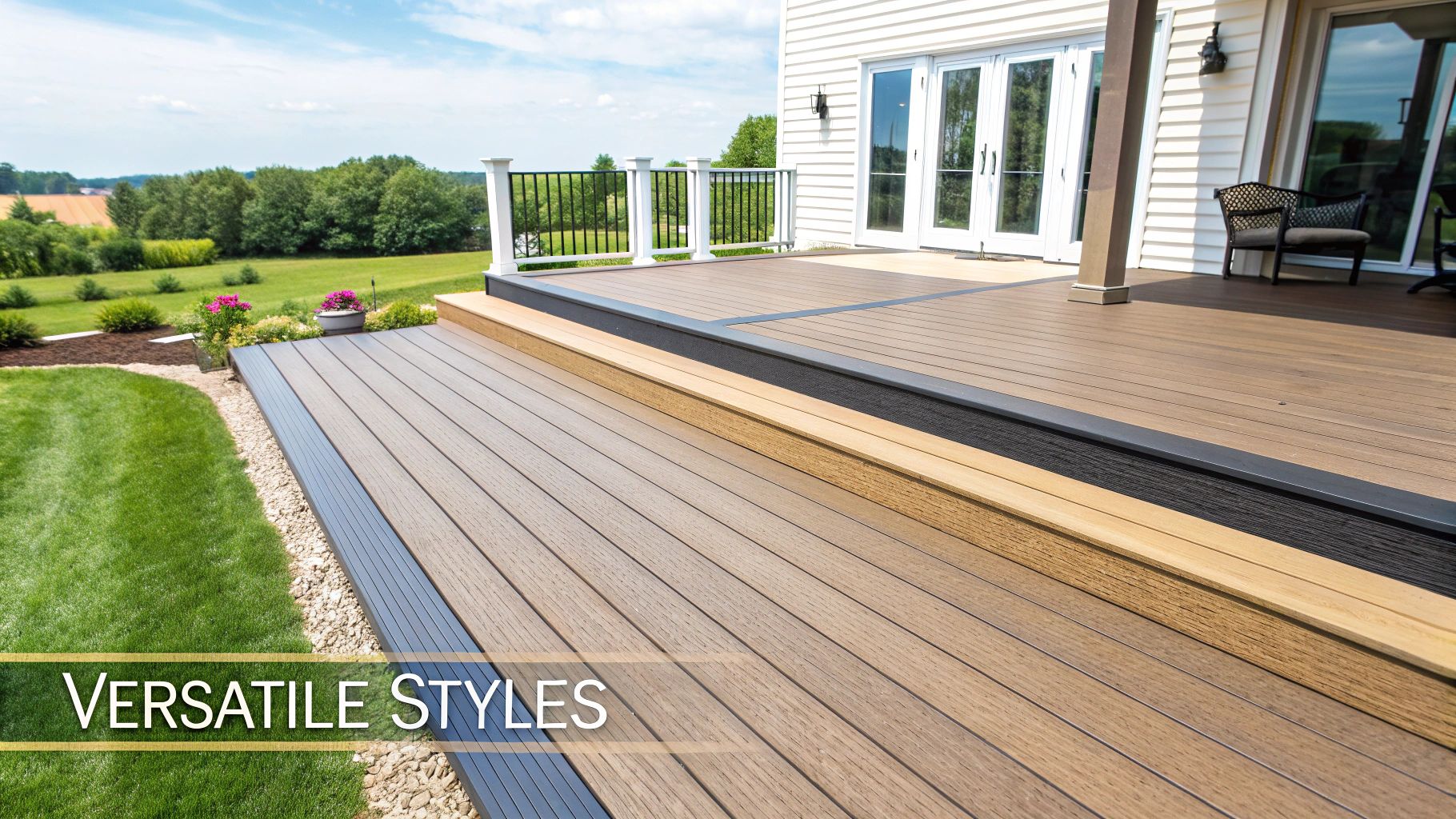
The appearance of your decking plays a key role in shaping the overall atmosphere of your outdoor space. It becomes the backdrop for everyday moments—from relaxed mornings to social gatherings—so choosing the right material is as much about aesthetics as it is about performance. Composite decking and wood decking offer two distinct approaches to design and visual appeal.
Traditional wood decking stands out for its authentic, natural beauty. Each board features unique grain patterns, knots, and subtle colour variations, creating a truly organic look. Whether you prefer the warm, rustic character of pressure-treated pine or the rich, refined tones of hardwoods like Ipe, timber provides a strong connection to nature that is difficult to replicate, including options such as oak cladding or douglas fir wood cladding.
However, this natural appearance evolves over time. Without regular maintenance, wood will gradually weather and develop a silvery-grey patina. While some homeowners appreciate this aged look, others may find the ongoing staining and sealing required to maintain a consistent appearance less appealing.
The Consistent Look of Composite Decking
Composite decking offers a completely different approach to design by prioritising consistency and control. Engineered for uniformity, each board features the same colour and texture, creating a clean, seamless finish that works especially well in modern outdoor spaces. For homeowners with a clearly defined design vision, this level of predictability is a major advantage.
The manufacturing process also allows for a wide range of colours and finishes that go beyond what natural wood can achieve. This gives you greater flexibility to tailor the exact look of your decking.
- Modern greys and charcoals: ideal for sleek, contemporary spaces that complement modern architecture
- Rich earth tones: designed to replicate the appearance of classic hardwoods like walnut or oak, without the maintenance requirements
- Variegated finishes: multi-tonal patterns that mimic the natural variation of real wood grain for a more authentic look
This broad selection makes it easier to coordinate your decking with your home’s exterior, garden furniture, and overall design style. Unlike wood, the colour you choose remains consistent over time, with minimal fading and very little upkeep required.
Charred Wood: A Bold and Unique Alternative
For homeowners who value the authenticity of real wood but want a more striking, premium finish, charred wood offers a distinctive solution. Inspired by the traditional Japanese technique of Yakisugi, this process involves carefully burning the surface of the timber to form a protective, carbonised layer that enhances both durability and visual appeal.
The result is a deep, rich finish with unique textures, ranging from smooth matte black surfaces to dramatic, crackled “alligator skin” effects. This bold aesthetic makes charred wood an ideal choice for contemporary, design-focused homes where decking is intended to stand out as a key architectural feature.
Design Insight: Charred wood sits at the intersection of natural timber and modern design. It combines organic character with a strong visual impact, offering a unique texture and colour that elevates outdoor spaces and makes it a premium option for design-led projects.
Ultimately, the right choice depends on the atmosphere you want to create in your outdoor space. If you prefer a classic, natural look that evolves over time, traditional wood decking remains a strong option. If your priorities are consistency, a wide range of colours, and a clean, low-maintenance finish, composite decking is the more practical choice. For those seeking a bold, durable, and design-led solution, charred wood delivers a distinctive visual impact that stands apart from both.
Weighing Up the Environmental and Sustainability Impact
When planning a new deck, environmental impact is becoming an increasingly important factor for many homeowners. The composite decking vs wood decking comparison is particularly relevant in terms of sustainability, as each material comes with its own advantages and trade-offs. To make a well-informed and responsible choice, it’s essential to consider the full lifecycle—from sourcing to eventual disposal.
Wood: The Natural, Renewable Choice?
The lifecycle of wood decking begins in the forest, and when sourced responsibly, timber is a highly renewable material. Choosing wood with recognised certifications such as FSC (Forest Stewardship Council) ensures it comes from sustainably managed forests that protect biodiversity and support local communities, helping to reduce the risk of deforestation.
In addition, wood acts as a natural carbon sink. As trees grow, they absorb carbon dioxide from the atmosphere, storing that carbon within the timber for the entire lifespan of the deck. This ability to lock in carbon makes sustainably sourced wood decking an environmentally responsible option from the outset.
The Lifecycle of a Timber Deck
One of the key environmental advantages of wood decking is its biodegradability. At the end of its lifespan, untreated or naturally preserved timber can decompose and return to the environment without leaving harmful residues. However, the sustainability picture becomes more complex when chemical treatments are involved.
Pressure-treated wood, commonly used for its resistance to rot and insects, contains added preservatives that can raise environmental concerns. These chemicals not only impact the material during its use but also complicate disposal. Treated timber cannot be safely burned or composted and must be disposed of through specialised waste facilities. This creates a trade-off between improved durability and environmental impact.
Key Insight: While responsibly sourced timber is a renewable, carbon-storing material, chemical treatments can reduce its environmental benefits. As a result, untreated hardwoods or naturally durable options such as charred wood offer a more straightforward alternative.
Composite: A Second Life for Waste Materials
Composite decking takes a different approach to sustainability by addressing waste reduction. Most composite boards are made from a high percentage of recycled materials—often up to 95%—combining reclaimed wood fibres, such as sawdust, with recycled plastics from products like shopping bags and milk containers. This process helps divert significant amounts of waste from landfill.
By giving new purpose to discarded materials, composite decking supports a more circular economy focused on reuse rather than disposal. Its long lifespan also reduces the need for frequent replacements, further lowering its overall environmental impact over time.
However, this solution is not without trade-offs. The manufacturing process for composite decking is more energy-intensive than processing natural timber, as the materials must be refined, heated, and formed into boards. Although production methods are improving, the initial carbon footprint of composite decking is generally higher compared to wood.
Comparing Their Long-Term Environmental Footprints
To make a well-informed decision, it’s important to consider the full lifecycle of each material. Wood decking typically starts with a lower carbon footprint, but over time it often requires ongoing maintenance using stains, sealers, and treatments—each carrying its own environmental impact. Composite decking, by contrast, involves a higher initial energy input during manufacturing but requires minimal maintenance throughout its 25+ year lifespan.
Here’s how their environmental profiles compare:
Wood Decking:
- The good: renewable resource, carbon storage, and biodegradable when untreated
- The drawbacks: potential for unsustainable sourcing, environmental impact of chemical treatments, and a shorter lifespan leading to more frequent replacement
Composite Decking:
- The good: made from recycled materials, reduces landfill waste, long lifespan, and no need for chemical treatments
- The drawbacks: higher energy use during production, not biodegradable, and more complex end-of-life recycling
Neither option is without trade-offs. The more sustainable choice depends on your priorities. If you value renewability and a lower initial carbon footprint, certified and untreated wood is a strong option. If your focus is on reducing waste and avoiding ongoing chemical maintenance, composite decking presents a durable, low-maintenance alternative.
Making the Right Decking Choice for Your Home

When it comes to the composite vs wood decking debate, there is no single “best” option—only the one that best suits your needs. The right choice depends on your lifestyle, budget, and long-term expectations for your outdoor space. Rather than focusing only on features, it helps to consider how each material fits into real-world use.
Honestly, think about how you want to spend your weekends. Do you enjoy hands-on home maintenance, or would you rather relax and make the most of your outdoor space? The answer can be a strong indicator of which option suits you best. One direction leads to the timeless appeal and involvement of real wood decking, while the other offers the low-maintenance convenience of composite decking. Let’s work out which path is yours.
The Low-Maintenance Lifestyle Seeker
If you have a busy lifestyle or prefer to avoid ongoing upkeep, composite decking is likely the most suitable choice. Its main advantage is ease of maintenance—requiring little more than an occasional wash with soapy water to keep it looking good year after year.
This makes composite decking particularly well-suited for:
- Poolside or hot tub areas: its strong moisture resistance helps prevent rot in consistently damp environments, while slip-resistant textures improve safety
- Busy professionals and families: minimal maintenance means more time to enjoy your outdoor space rather than maintaining it
- Second homes or rental properties: a low-maintenance, “fit and forget” solution offers peace of mind when regular upkeep isn’t practical
Choosing composite decking is not just about the material—it’s about long-term convenience. While the initial cost may be higher, it delivers lasting value by eliminating the need for sanding, staining, and sealing over time.
The Traditionalist and DIY Enthusiast
On the flip side, many homeowners genuinely enjoy maintaining their property and appreciate the unmatched authenticity of traditional wood. If your initial budget is more limited, or you take pride in hands-on DIY projects, wood decking can be an excellent choice.
Timber decking is often ideal for:
- The budget-conscious homeowner: softwood decking remains one of the most affordable ways to create an attractive outdoor living space, provided you’re prepared for regular maintenance
- The DIYer: wood is generally easier to work with than composite—it’s lighter, simpler to cut, and small mistakes can often be corrected by sanding and refinishing
- Lovers of natural aesthetics: each board has its own unique grain, and the way timber naturally weathers over time adds character that many homeowners value
The Design-Led Visionary
Then there’s a third option. For high-end projects where the deck is more than just a platform and becomes a key architectural feature, charred wood (Yakisugi) is a compelling choice. It retains the authenticity of real wood while offering a level of durability that begins to rival composite.
This makes it a strong option for anyone seeking a sophisticated, resilient, and truly distinctive material that stands out. Whether you’re drawn to classic timber or modern alternatives, you can explore a wide range of high-quality decking options in our online timber shop to find the perfect match for your vision.
A Few Final Questions
Even after a detailed comparison, it’s normal to have a few practical questions before making a final decision. Here, we address some of the most common queries that arise when choosing between composite decking and wood decking.
Does Composite Decking Get Hotter Than Wood in the Sun?
Yes—composite decking, especially in darker shades such as charcoal or deep brown, tends to absorb and retain more heat than traditional wood decking. On hot summer days, this can make the surface noticeably warmer underfoot.
However, many manufacturers have addressed this by offering lighter-coloured composite boards in shades like silver, light grey, or sand. These colours reflect more sunlight and remain cooler in direct sun. If your deck is positioned in a full-sun area, choosing a lighter composite finish or opting for wood decking can help improve comfort during warmer weather.
Can You Repair Scratches on Composite and Wood Decking?
Wood decking is generally easier to repair. Light scratches can usually be sanded out, followed by staining or sealing to restore a consistent finish. Even deeper damage can often be addressed with wood filler and refinishing.
Composite decking is more difficult to fix. While minor surface scuffs on capped boards may fade over time, deeper scratches are typically permanent. Although repair kits are available, achieving an exact colour match can be challenging, which may leave visible marks.
A practical takeaway: for everyday wear and tear, wood decking offers a clear advantage in repairability. In high-traffic areas exposed to furniture, pets, or children’s use, the ability to sand and refinish timber can be a significant benefit.
Is One Easier to Install for a DIY Project?
For most DIY enthusiasts, traditional wood decking is typically the easier option to install. Softwood, in particular, is lighter, easier to handle, and can be cut using standard woodworking tools. It’s also more forgiving—minor mistakes can often be corrected with sanding.
Composite decking can still be installed by a skilled DIYer, but it generally involves a steeper learning curve. The boards are heavier and may require specialised saw blades. Precise spacing is also essential to accommodate thermal expansion and contraction; incorrect installation can lead to issues such as warping or buckling over time.
At TimberSol, we specialise in producing high-quality charred timber for those seeking the natural beauty of wood with enhanced durability. Explore our premium Yakisugi range, including decking, cladding, and fencing, to create a distinctive and long-lasting outdoor space.
