
Wood Cladding For Ceilings A UK Design Guide

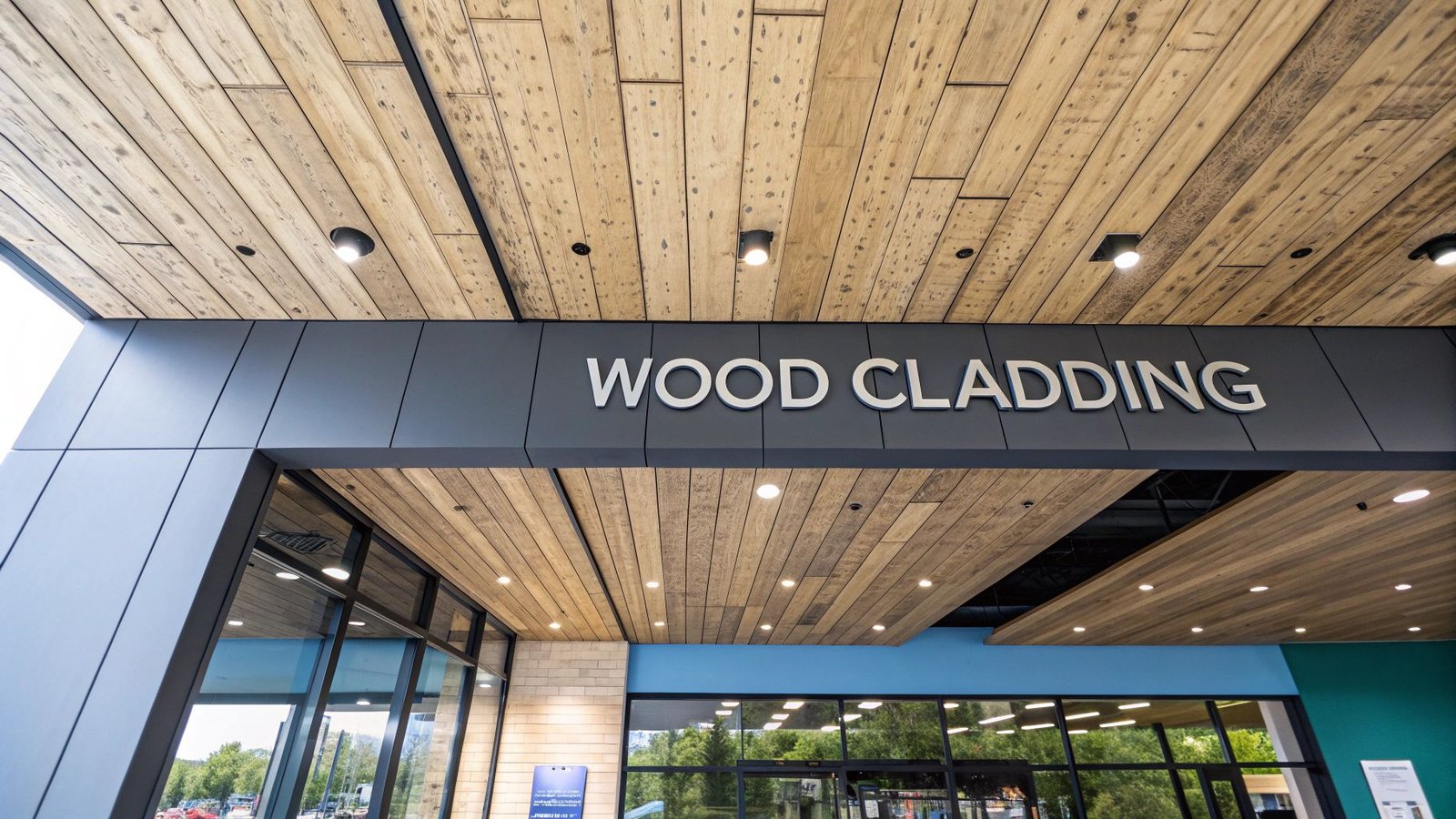
Wood cladding for ceilings is an interior design element that uses solid, engineered, or charred timber boards to enhance aesthetics, acoustic performance, and visual warmth. In the UK, ceiling cladding commonly includes softwood, hardwood, and Yakisugi (Shou Sugi Ban) finishes, allowing designers to meet specific design, durability, and sustainability requirements in both residential and commercial interiors.
Ceilings are often overlooked, yet when treated as a fifth wall, they become a powerful design element. Wood ceiling cladding transforms this surface into a textural, architectural feature, adding warmth, depth, and natural character.
The article explains how wood cladding can be used on ceilings in UK interiors to add warmth, character, acoustic benefits, and architectural interest, covering timber types, design styles, Yakisugi finishes, costs, and suitability for different rooms. It guides through choosing the right wood, understanding installation methods, lighting integration, maintenance, and compliance with UK building considerations.
Why Put Wood on the Ceiling?
Wood ceilings add warmth, acoustic comfort, and long-term design value by introducing natural materials into interior spaces, aligning with a growing sustainability-driven design trend. Once associated mainly with traditional or country-style interiors, wood-clad ceilings are now widely used in modern UK homes as a practical architectural tool.
By bringing timber indoors, wood ceilings apply biophilic design principles, reflecting our natural preference for organic materials and textures. This helps large or echo-prone rooms feel more intimate and acoustically balanced, while giving otherwise neutral spaces a bespoke, high-quality character. Their primary role is to add visual and emotional depth to a surface that is typically left flat and undecorated.
This shift toward natural interior materials is supported by market data. In the UK building sector, the use of timber ceiling systems is steadily increasing, while the global wood-based ceiling materials market was valued at $133.09 million in 2024 and is projected to reach $171.5 million by 2031. Growth is driven by demand for natural aesthetics, improved interior comfort, and a stronger emphasis on certified, sustainable wood products. You can dig into these market trends further over
at Verified Market Research.
How Wood Changes a Room’s Feel
Wood naturally draws the eye upward, increasing the perception of height and scale, while its organic texture introduces a sense of calm and balance. Whether the goal is a rustic farmhouse aesthetic or a clean, contemporary interior, the right wood ceiling finish helps define the character and emotional tone of the space. Douglas fir wood cladding is particularly effective in this role, as its pronounced grain pattern and warm colour variation enhance visual movement and spatial depth when used on ceilings.
Treating the ceiling as a deliberate design element influences everything from light and shadow dynamics to the overall atmosphere of the space, transforming it from a passive backdrop into a defining architectural feature.
How To Choose The Right Timber For Your Ceiling
Choosing the right timber for a ceiling directly determines a room’s atmosphere, light interaction, durability, cost, and long-term performance. Timber selection is the most critical stage in planning a wood-clad ceiling, as it defines the overall character of the space rather than simply its colour.
Different species shape interiors in distinct ways. Light-toned timbers such as pine create an open, airy feel associated with Scandinavian and minimalist design, making them ideal for smaller or low-light spaces. In contrast, darker hardwoods like walnut introduce depth and sophistication, well suited to living rooms, libraries, and dining areas where a more intimate atmosphere is desired. Spruce cladding is also widely used for ceilings in UK interiors, offering a similarly light appearance with a clean, uniform grain that suits minimalist and Scandinavian-inspired spaces.
Beyond aesthetics, practical considerations such as durability, budget, and environmental suitability are equally important. Selecting a timber that matches the room’s conditions ensures the ceiling remains visually striking and structurally sound for years to come.
Understanding Timber Characteristics
Each timber species has a distinct character defined by its grain pattern, colour, and natural properties. Understanding these differences is essential when matching wood to a specific interior design vision. Timbers with a tight, uniform grain tend to create a sleek, contemporary look, while species with a bold, expressive grain deliver a more rustic, organic aesthetic.
It is also important to consider how wood ages over time. Many timbers gradually change colour when exposed to natural light, developing a natural patina that adds depth and visual richness. This ageing process is often highly desirable, but it should be factored into design decisions from the outset.
This infographic outlines the key benefits of wood ceiling cladding, highlighting its impact on aesthetics, acoustic performance and thermal comfort.
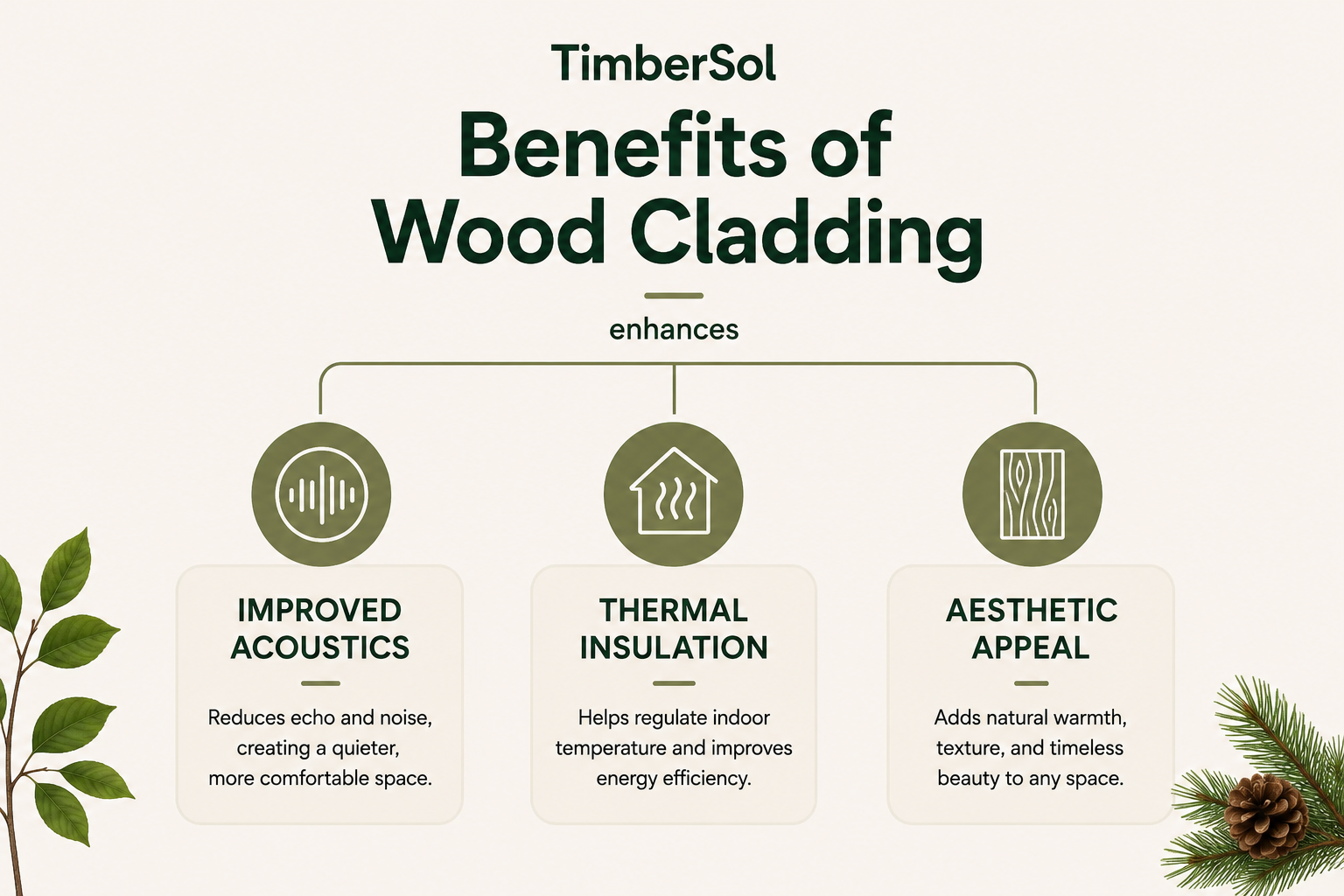
As you can see, timber ceiling cladding delivers more than visual appeal – it actively enhances thermal insulation and sound absorption, contributing to a more comfortable, quieter, and balanced interior environment.
Popular Timber Choices For Ceilings
Below is an overview of popular timber options in the UK, highlighting what makes each material distinctive in terms of aesthetics, performance, and budget suitability.
| Timber Type | Aesthetic & Colour | Typical Cost (per m²) | Best Suited For |
|---|---|---|---|
| Pine | Light, pale yellow with distinctive knots | £20 – £40 | Rustic, Scandinavian, or coastal designs; great for painting or staining. |
| Oak | Warm, honey-toned with a prominent, beautiful grain | £50 – £90 | Traditional and contemporary spaces needing a sense of quality and durability. |
| Cedar | Rich reddish-brown hues with a fine, straight grain | £45 – £80 | Kitchens, bathrooms (with good ventilation), or spaces needing a warm feel. |
| Walnut | Deep, dark chocolate brown with a smooth, luxurious finish | £90 – £150+ | High-end, dramatic interiors where the ceiling is a statement feature. |
As the table shows, there’s a timber to suit almost any project.
- Pine is the most budget-friendly timber option, valued for its light colour, distinctive knots, and natural warmth. As a versatile softwood, pine works particularly well in bright, rustic, or coastal-inspired interiors and provides an excellent surface for stains, paints, and finishes, making it easy to tailor to a wide range of design styles.
- Oak is a timeless choice, valued for its durability, distinctive grain, and warm, honey-toned colour. As a high-performance hardwood, oak adds a sense of substance and craftsmanship to interiors and works equally well in traditional and contemporary design settings.
- Cedar is recognised for its rich reddish-brown tones and distinctive natural aroma. Thanks to its inherent resistance to moisture and insects, cedar is particularly well suited to humid environments such as kitchens and well-ventilated bathrooms, where durability and stability are essential.
- Walnut is a luxury timber option, characterised by its deep, dark chocolate tones and smooth, refined grain. This premium hardwood introduces a strong sense of elegance and drama, making it an ideal choice for interiors where a bold, high-end design statement is desired.
When selecting timber for a ceiling, it’s also important to understand the difference between solid wood and engineered wood, as each offers distinct advantages and limitations. For a more detailed comparison, our guide on solid wood vs engineered wood explains which option is best suited to different project requirements.
Balancing Cost, Durability, And Sustainability
Budget plays a major role when choosing wood ceiling cladding. Softwoods such as pine are generally more affordable, while hardwoods like oak or walnut sit at a higher price point. However, long-term value is equally important – more durable hardwoods can offer better lifespan and stability, reducing maintenance and replacement costs over time.
Sustainability is another key consideration. Always look for timber with FSC or PEFC certification, which confirms the wood is sourced from responsibly managed forests. Exploring sustainable construction materials can also help identify eco-friendly options that balance environmental impact with performance and design quality.
Ultimately, the best timber choice is one that aligns with your design intent, fits your budget, and meets the practical performance requirements of your home – striking a balance between aesthetics, durability, and sustainability.
Taking the time to choose carefully ensures your wood ceiling cladding not only looks exceptional from day one but continues to deliver lasting satisfaction and performance for decades.
The Art of Yakisugi Charred Wood Ceilings
For a true statement interior feature, few finishes rival the dramatic impact of a Yakisugi ceiling. This traditional Japanese wood-charring technique, also known as Shou Sugi Ban, produces a deeply textured, visually striking surface. Used on ceilings, Yakisugi becomes a sculptural architectural element, conveying craftsmanship, heritage, and the natural transformation of wood into a refined design feature. In contemporary interiors, black charred wood cladding is also specified on ceilings and accent walls to introduce a bold, sculptural quality with deep matte contrast and rich texture.
The Yakisugi (Shou Sugi Ban) process involves controlled charring of the timber surface to form a protective carbonised layer. This is not a destructive treatment but a proven wood-preservation method that increases resistance to fire, insects, and moisture – a technique that predates modern chemical treatments.
Applied to ceilings, Yakisugi offers a durable, low-maintenance interior finish that bridges raw natural materiality and refined design. Unlike paint or stain, the charred surface delivers depth, texture, and tonal complexity, introducing an elemental quality that feels both timeless and highly compatible with contemporary interiors.
Exploring the Spectrum of Yakisugi Finishes
One of the defining strengths of Yakisugi (Shou Sugi Ban) is its high level of customisation. The final appearance can range from bold and dramatic to subtle and refined, depending on the timber species, charring intensity, and surface treatment applied.
Common Yakisugi ceiling finishes include:
- Deep char “alligator” finish: The most traditional and visually striking option, created through heavy charring that forms a deep, crackled alligator-skin texture. This finish delivers a powerful architectural statement and works best in high-ceilinged spaces or feature areas where maximum visual impact is desired.
- Brushed finish: Produced by lighter charring followed by brushing to remove loose soot. This exposes the natural wood grain, creating a strong contrast between dark charred recesses and lighter raised grain, offering depth without the intensity of a full alligator texture.
- Soft brushed finish: Achieved through charring, more intensive brushing, and sealing, resulting in a smoother surface with a muted blackened tone. This finish highlights the timber’s natural character in a more refined, contemporary way.
Selecting The Right Timber for Charring
Not all timber species are equally suited to the Yakisugi (Shou Sugi Ban) process. A wood’s density, grain structure, and resin content directly influence how it reacts to flame and determine the final texture, colour depth, and stability of the charred surface. Japanese cedar (sugi) remains the traditional choice, as its natural properties are exceptionally well matched to controlled charring.
That said, several alternative species also deliver excellent results:
- Siberian larch: A dense, resin-rich timber that chars evenly, producing a deep, consistent black finish with excellent durability and surface stability.
- Pine: Selected pine species can be used to achieve a pronounced, rustic texture. Due to its higher resin content, careful control during charring is required to ensure an even finish.
- Accoya: A modified timber with exceptional dimensional stability and durability, making it an outstanding candidate for Yakisugi. When charred, Accoya delivers an extremely long-lasting, high-performance finish.
Pre-charred Yakisugi boards make specification and installation more predictable and consistent, reducing on-site variability while ensuring reliable performance. We supply a range of Yakisugi-ready timber options, allowing designers to match grain character, dimensional stability, and maintenance requirements to specific interior design goals.
Available options include charred spruce cladding, valued for its lightweight boards and clean, uniform texture; charred douglas fir cladding, offering bold grain definition and visual strength; charred larch cladding, known for its resin-rich durability; and charred thermowood cladding, which provides thermally enhanced stability and low-maintenance performance for demanding interior applications.
The timber species you select directly influences the texture, durability, and overall character of a Yakisugi ceiling. To better understand the nuances of this craft, explore the Yakisugi techniqueand see how different woods respond uniquely to controlled charring.
A Yakisugi ceiling does more than define a surface – it transforms the spatial experience. The deep, carbonised finish absorbs and diffuses light in a way few materials can, creating an atmosphere of quiet sophistication that allows a room to feel both grand and intimately grounded at the same time.
Choosing a charred wood ceiling is an investment in a feature that unites ancient craftsmanship with modern luxury. It is a bold design decision that reflects a commitment to natural materials, long-term durability, and timeless architectural style.
Bringing Your Ceiling Design to Life
Bringing your ceiling design to life starts with understanding how board layout and pattern influence the perception of space. The way timber boards are arranged acts as a design tool, shaping whether a room feels taller, more intimate, or distinctly modern.
The installation pattern establishes the visual rhythm of a wood-clad ceiling. A tongue-and-groove profile creates a clean, continuous surface that suits a wide range of interiors. Boards installed in straight, linear runs deliver a sleek, contemporary appearance, while diagonal layouts introduce movement and visual dynamism.
For a more character-led finish, shiplap ceiling cladding adds rustic charm through subtle shadow lines that enhance texture and depth. This profile works particularly well in coastal, farmhouse, and relaxed modern interiors, giving the ceiling a handcrafted, architectural quality.
For Height and Drama, Look to Slatted Ceilings
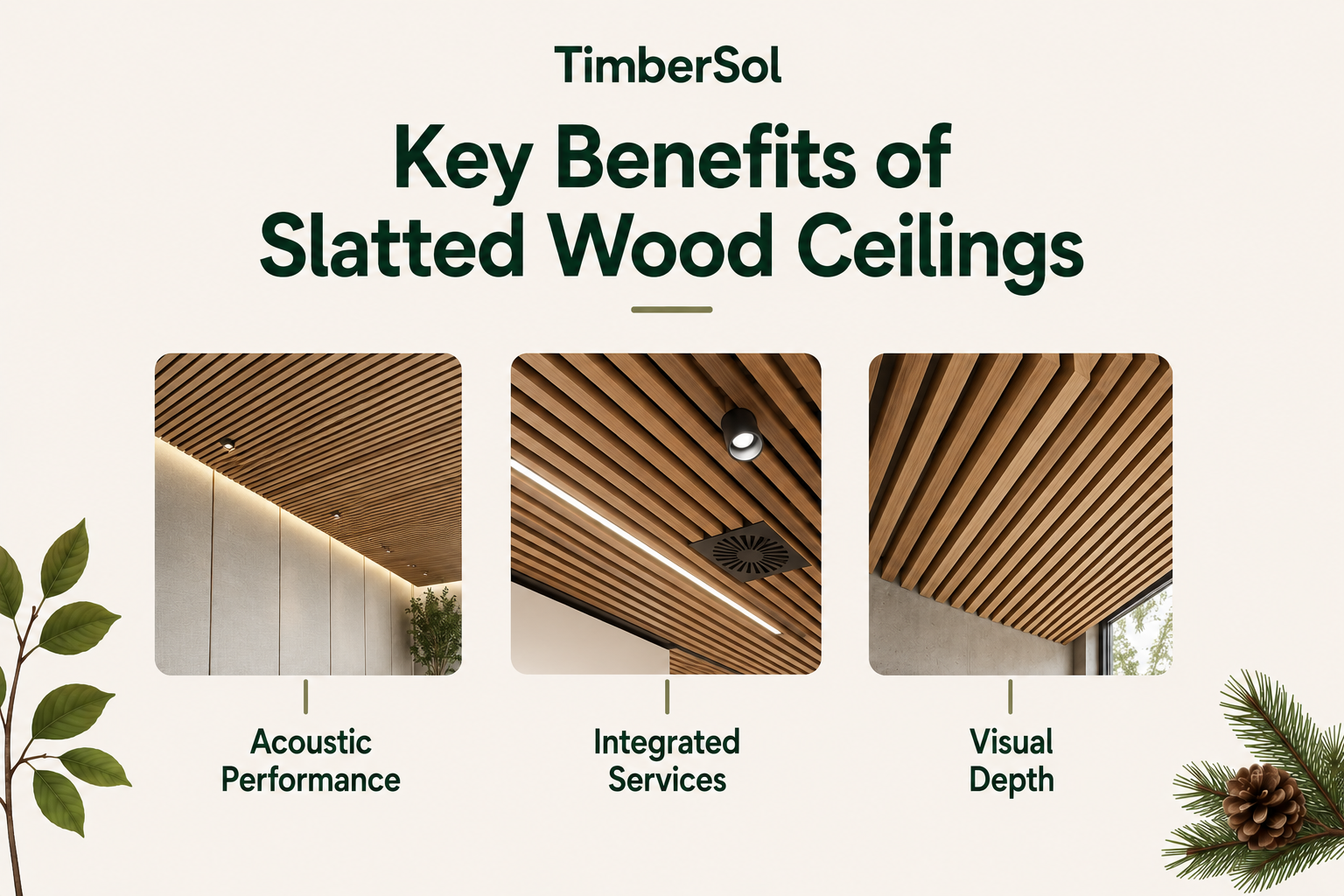
A slatted wood ceiling creates a strong architectural statement by using timber battens with deliberate gaps, forming clean linear patterns that draw the eye upward and make a space feel taller and more open. Beyond aesthetics, these gaps provide significant functional advantages.
Key benefits of slatted wood ceilings:
- Acoustic performance: The spacing between slats allows for discreet integration of sound-absorbing materials, making slatted ceilings ideal for open-plan layouts and rooms with hard surfaces.
- Integrated services: Slatted systems offer concealed zones for lighting tracks, speakers, and air vents, maintaining a clean, uncluttered ceiling plane.
- Visual depth: The interaction of light and shadow between slats adds depth, texture, and spatial complexity that flat ceiling finishes cannot achieve.
A slatted wood ceiling transforms the fifth wall into an active design feature, combining architectural impact with practical performance by improving acoustics, concealing services such as lighting, vents, and speakers, and delivering a visually striking finish.
This growing appreciation for wood’s aesthetic appeal and practical performance is reflected in wider market trends. While ceiling-specific data is limited, the UK veneered panels market is forecast to grow from $310.9 million in 2025 to $556.8 million by 2035. This sustained growth is driven by increasing demand for natural, visually refined materials that also meet sustainability and longevity expectations among homeowners and designers.
Matching the Design to the Room
Ceiling design should reinforce the function and mood of a room. In living rooms, warm timbers such as oak or cedar create a cosy, inviting atmosphere that supports relaxation and social living. In bedrooms, lighter woods like pine or maple help establish a calm, serene environment, reinforcing the sense of retreat.
In open-plan homes, designers often extend the interior timber palette outdoors, pairing ceiling finishes with black charred wood decking to create a seamless visual transition between living spaces and terrace areas.
In kitchens, where hard materials such as stone and steel dominate, a durable hardwood ceiling introduces natural warmth and visual balance, softening the space without compromising performance. The key is ensuring the timber species, tone, and texture align with how the room is used and the desired emotional atmosphere.
For holistic design schemes that bridge indoor and outdoor realms, boundary elements such as charred black wood fencing reinforce material consistency and visual rhythm from ceiling to site perimeter.
Don’t Forget the Lighting
Lighting is a critical component in the success of a wood ceiling design, as it directly influences how the timber’s grain, texture, and colour are perceived. When planned correctly, lighting enhances the natural character of the wood; when overlooked, it can flatten or wash out the finish. For this reason, different types of downlights should be considered from the outset, not as a later addition.
Directional spotlights can be used to graze light across the ceiling surface, accentuating texture and grain definition. In slatted ceiling designs, concealed LED strip lighting can be integrated between battens to create a soft, ambient glow, giving the ceiling a subtle floating effect. Thoughtful integration of timber and lighting turns the ceiling into a cohesive architectural focal point within the space.
Installation And Maintenance: A Practical Guide
Bringing your ceiling design vision to life comes down to the details and execution. This guide covers the practical considerations of installation and long-term ceiling care, ensuring your wood ceiling cladding continues to look and perform at its best for years to come.
Understanding the installation process is essential to achieving a flawless wood ceiling finish, as success depends on proper preparation, correct fixing methods, and strict attention to safety considerations.
Preparing For Installation
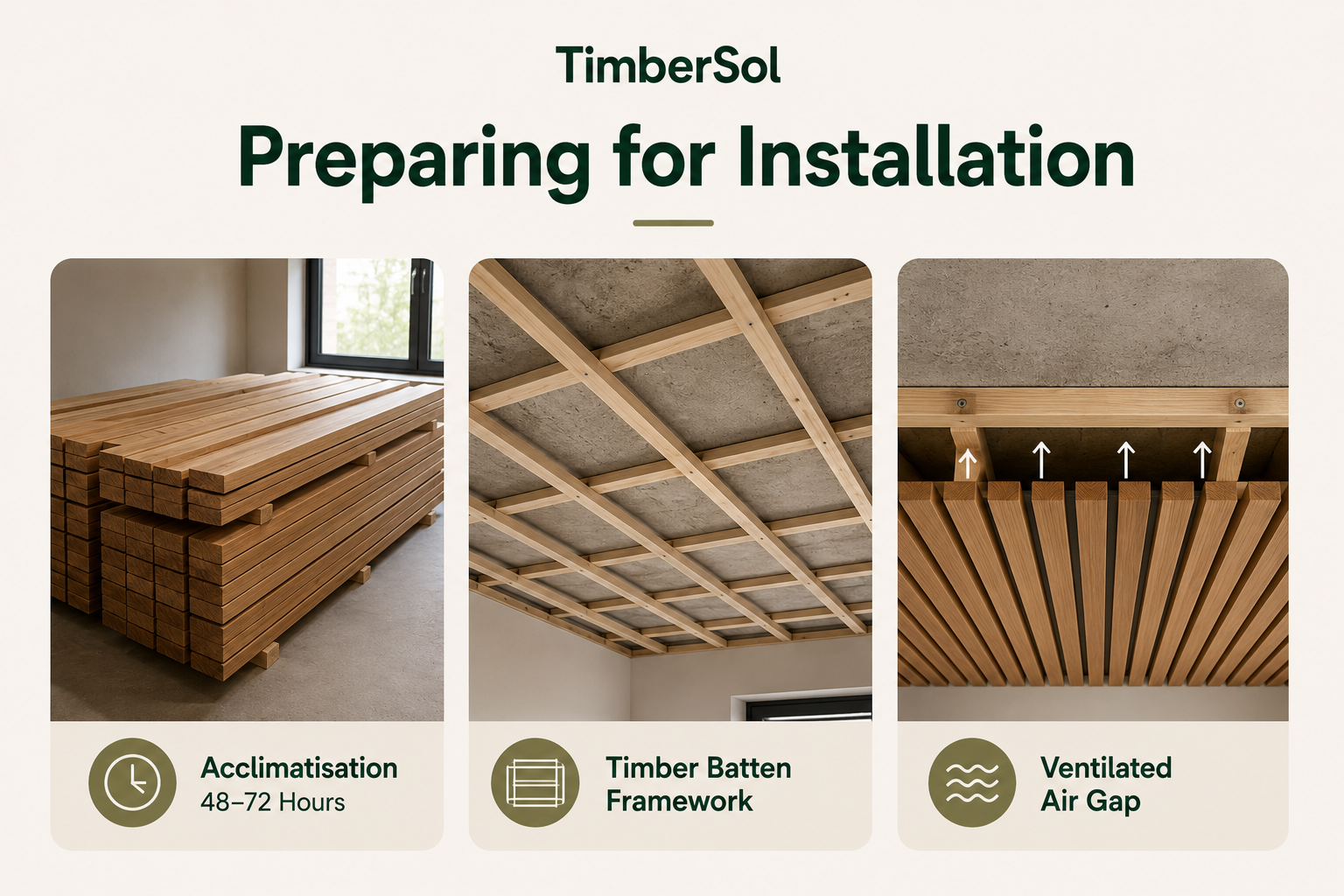
Before installation begins, proper preparation is critical to avoiding long-term issues with wood ceiling cladding. The first essential step is acclimatisation. Timber is a hygroscopic material that responds to changes in temperature and humidity, so boards must be stored in the installation room for 48 – 72 hours to adjust to the internal environment.
Skipping acclimatisation can lead to warping, shrinkage, and visible gaps once the ceiling is installed.
The next step is creating a stable fixing substrate. Wood ceiling cladding should not be fixed directly to plasterboard. Instead, boards are installed onto a timber batten framework securely fixed into the ceiling joists. This system provides a level, load-bearing base and creates a ventilated air gap, which is essential for moisture control and long-term dimensional stability.
The long-term success of a wood ceiling installation is determined before the first board is fixed – proper acclimatisation and a sturdy, level batten framework are essential, non-negotiable requirements for a professional, durable finish.
Fixing Techniques And Safety
Once the batten framework is installed, fitting the wood ceiling cladding can begin. Secret nailing or screwing delivers the cleanest finish, with fixings driven at an angle through the tongue so they are concealed by the next board. For a step-by-step breakdown, our guide to the installation of cladding provides detailed best-practice guidance.
Working overhead with timber also requires careful attention to safety and compliance. It is essential to understand the fire rating of the selected wood ceiling material, as some applications require fire-retardant treatment to meet UK Building Regulations. Always confirm the specific fire performance requirements for your project before installation begins.
Long-Term Care And Maintenance
One of the key advantages of a wood ceiling is its low maintenance requirement. With correct installation, a simple care routine is enough to keep the ceiling looking its best over the long term.
Basic wood ceiling maintenance tips:
- Dusting: Use a microfibre cloth, long-pole duster, or a vacuum with a soft brush attachment – especially effective for slatted ceiling gaps.
- Cleaning: Remove marks with a damp cloth and a mild, pH-neutral wood cleaner. Avoid abrasive tools or harsh chemicals, which can damage the finish.
- Sunlight protection: Direct sunlight will naturally mellow wood over time. Applying a UV-inhibiting finish helps preserve the original tone for longer.
In the UK, wood cladding competes with lower-cost alternatives, particularly as construction activity has slowed. For context, UK consumption in the European wood flooring market fell by 5% in 2023 – early 2024, as budget pressures pushed buyers toward laminates and synthetic materials. This trend also influences how frequently solid wood is specified for ceilings.
However, when installation is done correctly and basic maintenance guidelines are followed, a wood ceiling remains a durable, high-value architectural feature, delivering lasting performance, comfort, and design quality for decades.
Still Have Questions About Wood Ceiling Cladding?
It’s natural to have follow-up questions when planning a timber ceiling. Below, we address the most common queries to help you move forward with confidence and make informed design and installation decisions.
Can I Put Wood Cladding in a Kitchen or Bathroom?
Yes, wood cladding can be used in kitchens and bathrooms, but timber selection and detailing are critical.
In high-humidity environments, the timber must offer strong moisture resistance. Naturally durable species such as cedar are well suited to these spaces, as are thermally modified woods designed for improved dimensional stability. Proper ventilation is essential to manage moisture levels, and the cladding must be sealed with a high-quality, water-resistant finish.
Regular monitoring of the protective coating is recommended to ensure long-term performance. Untreated softwoods should be avoided in kitchens and bathrooms, as they are prone to movement and decay in damp conditions and will not perform reliably over time.
What’s the Average Cost of Wood Ceiling Cladding in the UK?
The average cost of wood ceiling cladding in the UK varies by timber type and finish, with prices typically calculated per square metre for materials only. Installation costs are additional and depend on ceiling complexity and labour rates.
Typical material price ranges:
- Entry-level softwoods: Basic pine cladding starts at approximately £20–£30 per m².
- Popular hardwoods: Oak ceiling cladding generally ranges from £70 to £150+ per m², depending on grade and finish.
- Premium options: Yakisugi (Shou Sugi Ban) and other specialist finishes sit at the top end of the price range due to the craftsmanship and processing involved.
Just a reminder, these figures are indicative and subject to market fluctuations. Always factor in installation costs, which are a separate component of the total project budget.
Can I Install Wood Cladding Straight Over My Existing Ceiling?
Yes, wood ceiling cladding can be installed over an existing ceiling without removing the plasterboard.
The standard method is to fix a timber batten framework over the existing ceiling, with battens securely screwed through the plasterboard into the ceiling joists. The wood cladding boards are then fixed to this new substructure.
This approach provides a strong, level fixing surface and creates a ventilation gap, which is important for moisture control and long-term stability. Before installation, always confirm that the ceiling structure can safely support the additional weight of the timber system.
Ready to introduce the timeless beauty of charred timber to your ceiling? At TimberSol, we specialise in Yakisugi (Shou Sugi Ban), crafting high-quality charred wood products that combine elegance, durability, and architectural impact. Explore our range of high-quality cladding and bring your design vision to life.
