
Yakisugi Cladding The Ultimate Homeowner Guide

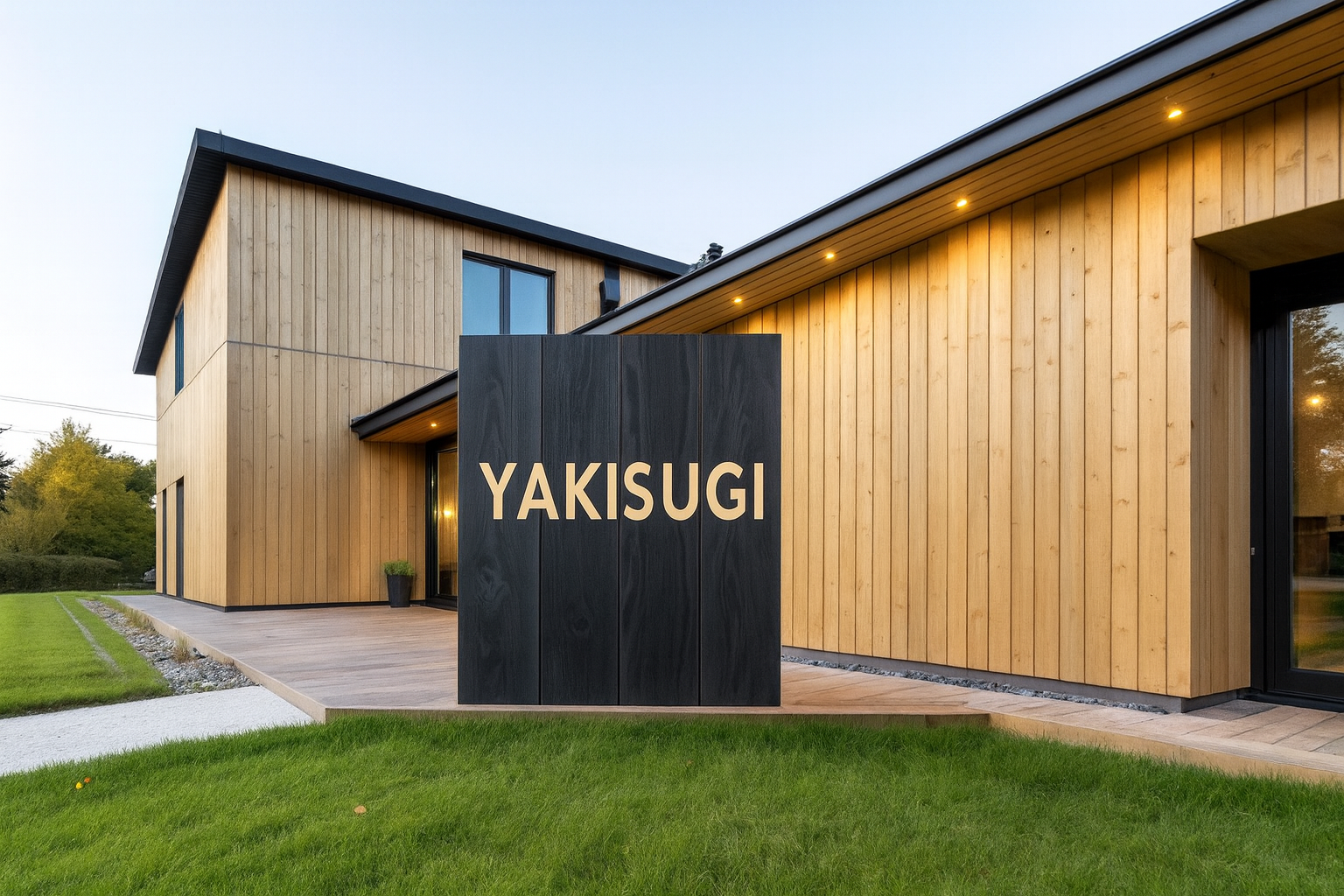
Yakisugi, also known as Shou Sugi Ban, is a traditional Japanese wood-preservation method that involves charring timber with fire. The process creates a distinctive deep black finish while forming a natural protective layer that improves resistance to weather, pests, and fire. As a result, Yakisugi is a highly durable, low-maintenance material widely used for exterior cladding in contemporary architecture.
This article explains what Yakisugi cladding (Shou Sugi Ban) is, how the traditional wood-charring process works, and why it is increasingly used in UK architecture. It covers the main benefits, available finishes, suitable timber species, costs, installation, maintenance, and real-world architectural applications.
The Art and Science Behind Charred Timber Cladding
Yakisugi is not simply burned wood but a refined craft that transforms timber into a high-performance building material. The controlled charring process creates a carbonised surface layer that acts as a natural sealant, protecting the underlying wood from moisture, UV exposure, and other environmental factors.
This centuries-old Japanese technique is experiencing strong renewed interest in modern UK architecture, valued by architects and homeowners for both its distinctive aesthetic and practical performance. Engineered materials such as charred Thermowood cladding further enhance dimensional stability while retaining the visual depth and durability associated with Yakisugi finishes. Yakisugi offers a visually striking finish that balances rustic texture with contemporary elegance, while providing a sustainable, long-lasting alternative to chemically treated exterior cladding materials.
The Transformation Process
Creating authentic Yakisugi cladding (Shou Sugi Ban) is a precise, multi-stage process where each step directly affects the quality, durability, and final appearance of the timber. The method transforms raw wood planks into a high-performance architectural material through controlled charring, cooling, and finishing. You can get a sense of the key stages from this look at the Yakisugi aka Shou Sugi Ban technique.
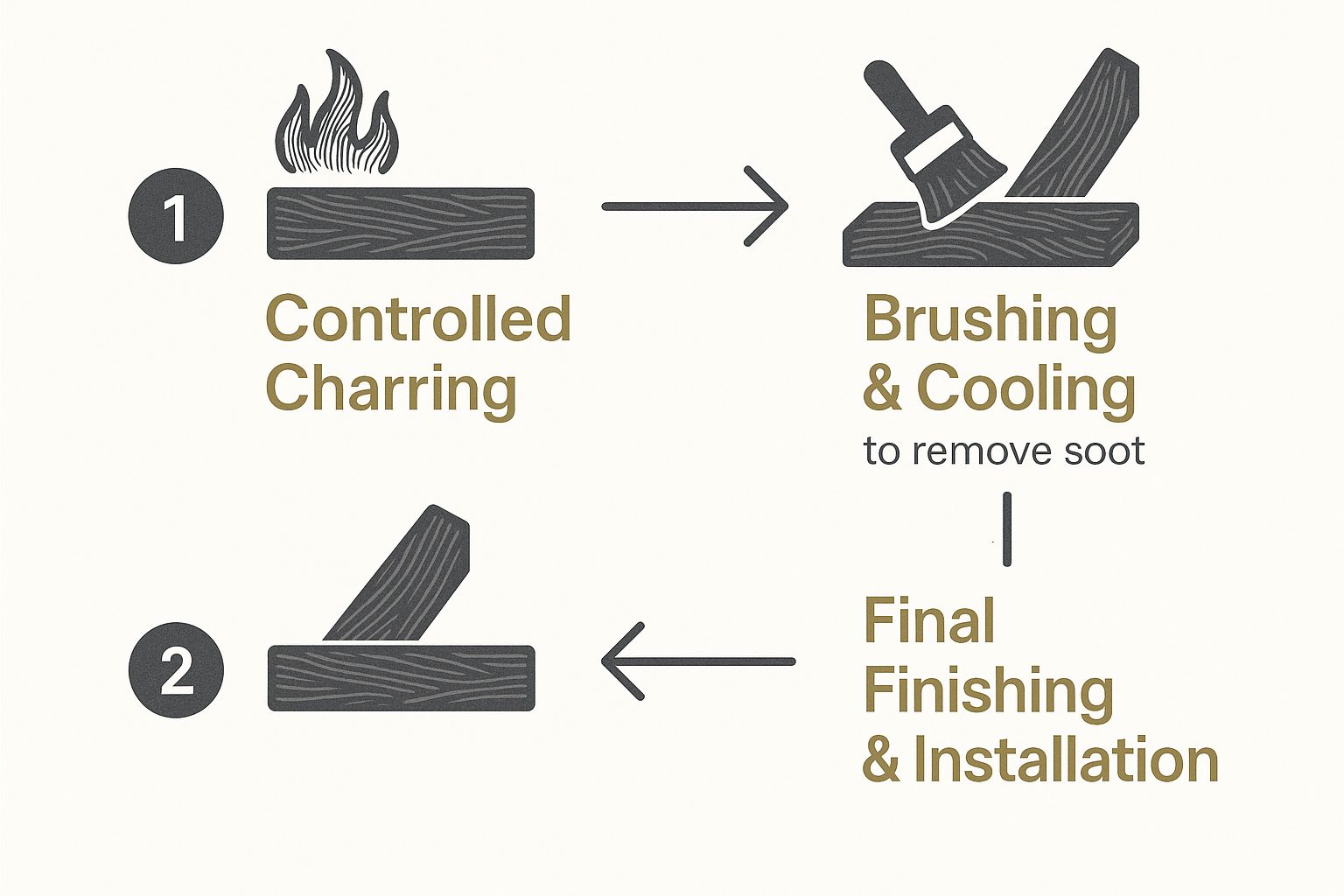
The process moves from controlled charring to cooling and surface cleaning, followed by the application of a protective oil finish. This meticulous Yakisugi (Shou Sugi Ban) method ensures the timber remains dimensionally stable, long-lasting, and visually refined, making it suitable for high-quality exterior cladding applications.
From Tradition to Trademark
Although the technique originates in Japanese history, Yakisugi has been refined globally for modern architectural use. In the UK, Exterior Solutions Ltd became the registered trademark owner of Shou Sugi Ban® in 2018, establishing clear quality standards for the market. Their handcrafted charred timber products, sourced from sustainable UK sawmills, have been used in RIBA award-winning residential projects and showcased at the Chelsea Flower Show, demonstrating both architectural credibility and design excellence.
The Yakisugi (Shou Sugi Ban) process follows a defined sequence of stages, each directly influencing the performance, appearance, and longevity of the charred timber:
- Timber selection: The process begins with carefully chosen wood. While Japanese cedar (sugi) is the traditional species, larch and pine are widely used UK alternatives. Each timber has a distinct grain structure and reacts differently to fire, producing varied surface textures and finishes.
- Controlled charring: The timber surface is exposed to an intense, controlled flame to form a carbonised layer. The depth of charring determines the final colour, texture, and level of protection of the cladding.
- Cooling and cleaning: Immediately after charring, the wood is cooled with water, then brushed to remove excess soot. This reveals the underlying texture, ranging from a subtle, brushed grain to a deep “alligator skin” finish.
- Oiling: A natural oil finish is applied to seal the charred surface, stabilize the carbon layer, prevent soot transfer, and enhance the deep black appearance of the Yakisugi cladding.
Below is a concise overview of the core characteristics of Shou Sugi Ban (Yakisugi) cladding.
Shou Sugi Ban Cladding At a Glance
| Feature | Description |
|---|---|
| Material | Natural timber, typically Cedar, Larch, or Pine. |
| Origin | Ancient Japanese architectural technique. |
| Key Process | Charring the wood surface to create a protective carbon layer. |
| Appearance | Deep black, textured finish, from smooth to a “gator-skin” look. |
| Durability | Highly resistant to weather, rot, insects, and fire. |
| Maintenance | Low-maintenance; may require re-oiling every 10-15 years. |
| Sustainability | An eco-friendly alternative to chemical treatments. |
| Applications | Exterior cladding, fencing, decking, interior feature walls. |
This table highlights why Shou Sugi Ban (Yakisugi) cladding is increasingly specified for modern buildings, combining distinctive aesthetics with proven functional performance.
The True Benefits of Charred Timber
While the distinctive dark appearance of Shou Sugi Ban (Yakisugi) initially attracts attention, its true value lies in its material performance. The charring process is not a cosmetic treatment but a structural transformation that enhances the timber’s durability, weather resistance, and overall service life. For UK properties, this makes Yakisugi cladding a high-performance, long-term investment, delivering natural protection without reliance on chemical preservatives.
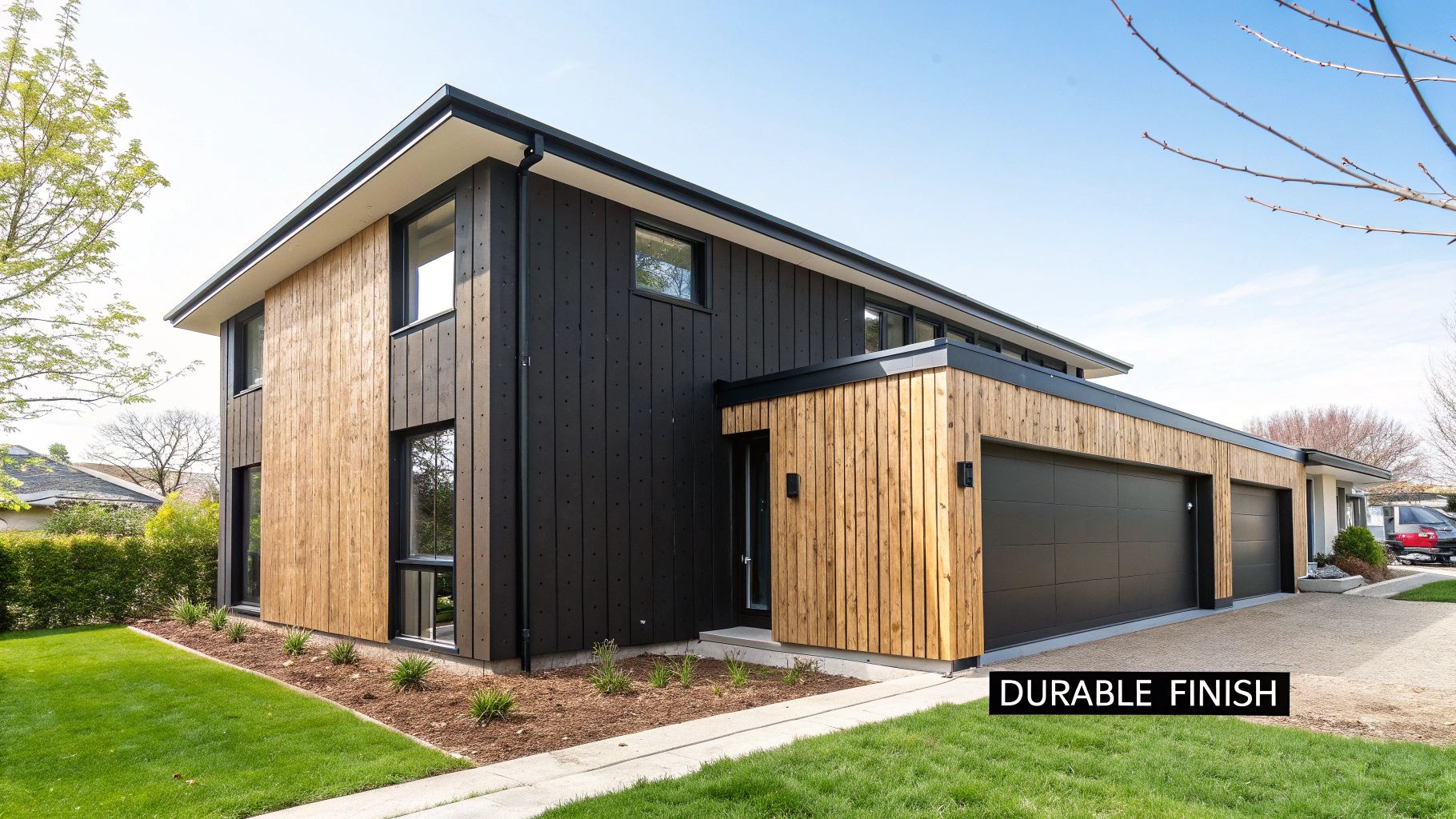
The key to Shou Sugi Ban’s performance is the carbonised surface layer formed during the charring process. This layer acts as a protective barrier, shielding the underlying timber from moisture, UV exposure, biological decay, and surface wear. The combination of robust material performance and distinctive visual character is what makes charred timber cladding a highly effective and durable architectural choice.
Exceptional Weather Resistance
The UK climate places extreme demands on exterior materials, with constant exposure to rain, wind, and UV radiation accelerating timber movement and decay. Shou Sugi Ban (Yakisugi) cladding is engineered to perform in these conditions. The charring process creates a hydrophobic surface, meaning the timber naturally repels water and significantly reduces moisture absorption.
By preventing water ingress, Yakisugi minimises rot, fungal growth, and dimensional movement, helping the cladding remain stable for decades. In addition, the dense carbonised layer provides strong UV resistance, protecting the underlying wood from bleaching, cracking, and structural degradation. This combination makes charred timber cladding exceptionally well suited to long-term use in the UK’s challenging climate.
Natural Defence Against Pests and Rot
One of the key advantages of Shou Sugi Ban (Yakisugi) is its inherent resistance to insects and fungal decay, achieved without chemical treatments. The charring process removes the outer layer of cellulose, which is the primary food source for termites, wood-boring beetles, and other pests. As a result, the timber becomes naturally inhospitable to biological attack.
This chemical-free protection is a major reason for Yakisugi’s growing use as a sustainable cladding solution. A 2017 Coventry University study confirmed that the carbonised surface layer significantly reduces the need for conventional chemical preservatives.
By altering the wood’s surface composition, the Yakisugi (Shou Sugi Ban) charring process forms a non-toxic, carbonised barrier that protects timber cladding from its primary causes of failure – moisture ingress and insect attack.
This results in a durable, long-lasting exterior cladding solution that eliminates the need for the harsh chemical preservatives commonly used in pressure-treated timber.
Surprising Fire Retardancy
Although it may seem counterintuitive, controlled charring increases the fire resistance of timber. During the Yakisugi (Shou Sugi Ban) process, volatile and highly flammable surface compounds are burned off, leaving behind a dense, stable carbon layer
The carbonised layer created by the Yakisugi (Shou Sugi Ban) process is significantly harder to ignite than untreated timber. For combustion to progress, flames must first penetrate this dense, insulating char layer before reaching the underlying wood. This barrier slows heat transfer and flame spread, giving charred timber a level of natural fire retardancy that standard, untreated cladding cannot achieve.
A Low-Maintenance Solution
For many homeowners, the decisive advantage of Shou Sugi Ban (Yakisugi) cladding is its exceptionally low maintenance. Unlike painted or stained timber, it does not require frequent recoating to prevent peeling, fading, or surface failure. Once installed and sealed with a natural oil finish, charred timber can remain untouched for 10 – 15 years or longer, depending on exposure.
When maintenance is eventually required, it is minimal – typically a light clean followed by a fresh oil application to restore the deep, rich colour. Over the lifespan of a property, this significantly reduces time, maintenance costs, and ongoing upkeep compared to conventional timber cladding systems.
For a more detailed breakdown, you can explore the benefits of charred wood siding in our dedicated article. This low-maintenance performance, combined with durability, weather resistance, and sustainability, firmly positions Shou Sugi Ban (Yakisugi) cladding as a high-value, long-term investment for residential and architectural projects.
Finding Your Perfect Shou Sugi Ban Style
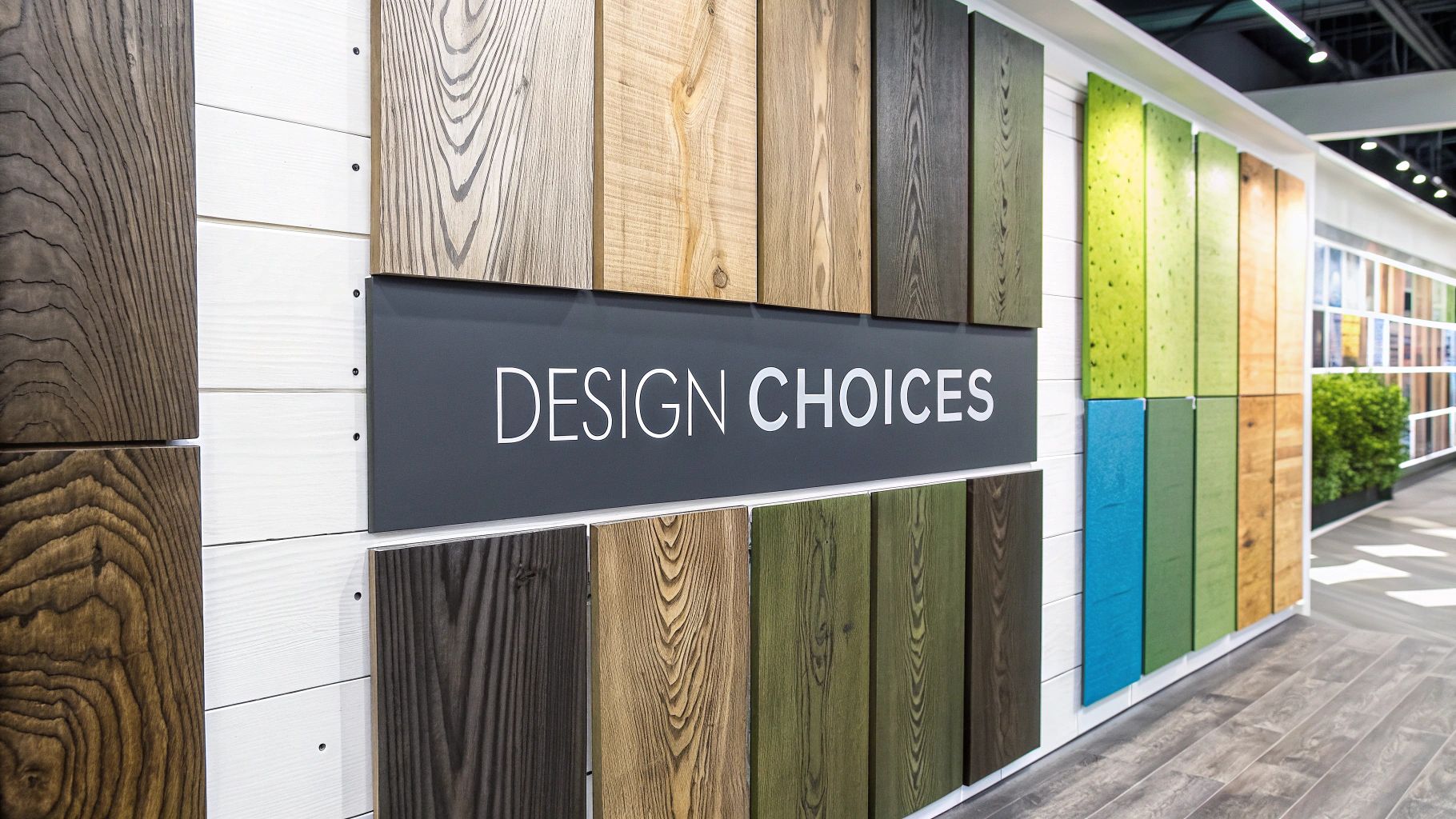
The defining strength of Shou Sugi Ban cladding is its design versatility. Rather than a single uniform product, it offers a wide range of textures, colour tones, and surface finishes. By adjusting the intensity of charring and the post-treatment process, the same timber species can produce dramatically different visual results. This flexibility allows Shou Sugi Ban finishes to be precisely matched to the architectural character of a home or building.
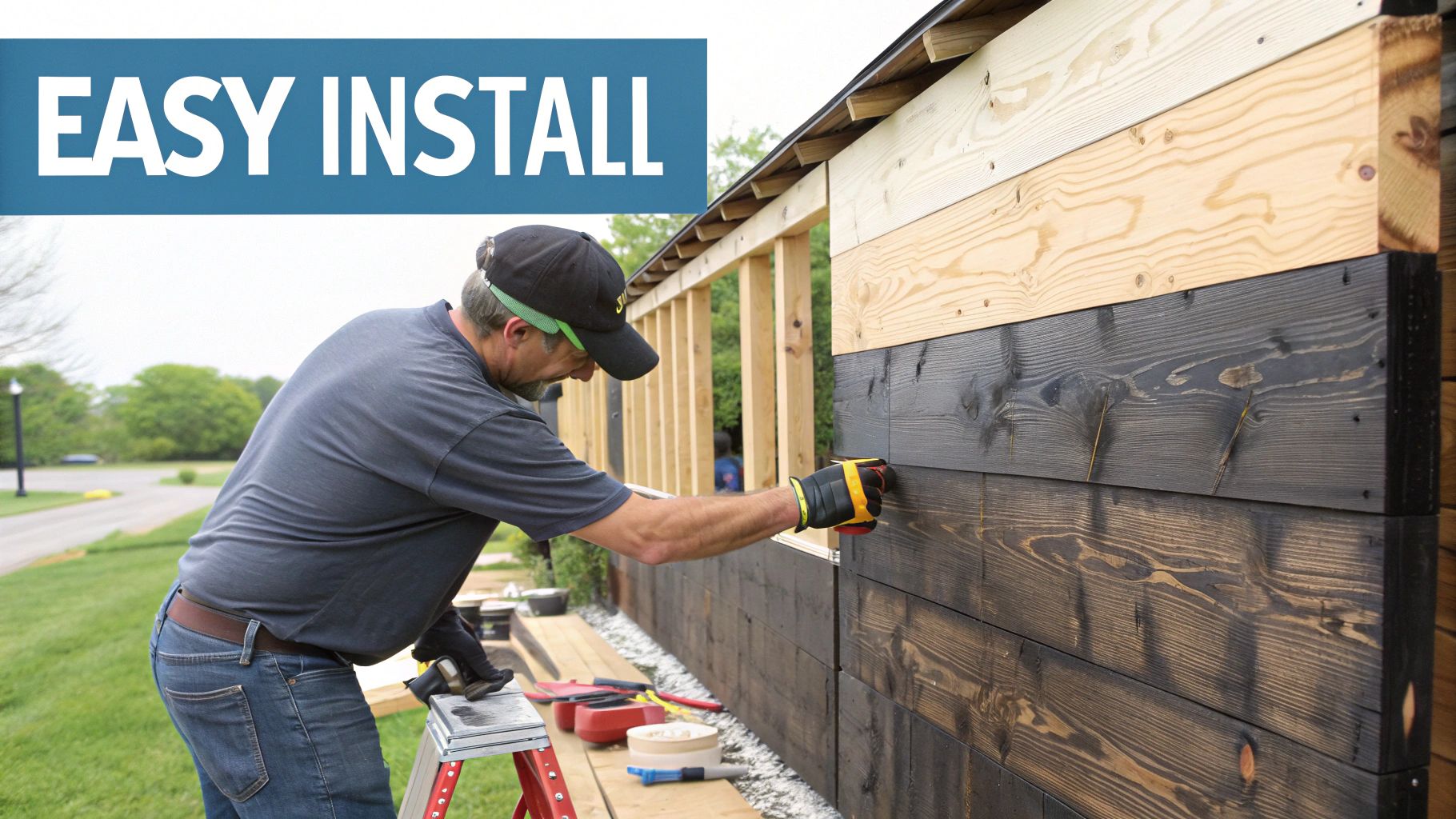
Shou Sugi Ban cladding can range from a light, subtle char that enhances the timber’s natural grain to a deep, heavy burn that produces a bold, textured “alligator skin” surface. Understanding these finish variations is essential when selecting charred timber cladding that not only protects a building but also delivers a distinct architectural design statement.
The Impact of Charring Levels
The primary factor influencing the appearance of Shou Sugi Ban (Yakisugi) cladding is the intensity and duration of charring. Flame temperature and exposure time directly determine the depth of carbonisation, shaping both surface texture and colour tone.
A light char gently carbonises the timber surface, darkening the wood while preserving and enhancing the natural grain pattern. This produces a smooth, refined finish with minimal surface cracking, making it well suited to contemporary architecture where a subtle yet distinctive aesthetic is required.
On the other hand, heavy char involves prolonged, high-intensity exposure to flame, creating the characteristic “alligator skin” or “dragon scale” texture. This finish features deep fissures, strong visual contrast, and a highly tactile surface, often specified for feature façades or architectural projects intended to make a bold design statement.
The Role of Brushing and Finishing
After charring and cooling, brushing becomes the next defining stage in shaping Shou Sugi Ban (Yakisugi) cladding. This step has a major impact on the surface texture, transforming a raw, soot-covered board into a refined architectural material.
If the timber is left unbrushed, it retains its raw, heavily carbonised surface, commonly referred to as the traditional “alligator skin” finish. Brushing with wire brushes gradually removes loose soot and softer char layers. A light brush subtly softens the surface while preserving the deep black colour, whereas heavier brushing exposes more of the underlying wood grain. This creates a striking contrast between dark, charred recesses and lighter raised grain, adding depth and visual interest.
The final stage is the application of a finishing oil, which is essential for both aesthetic control and long-term performance:
- Preserving the deep black finish: Clear or black-pigmented oils stabilise the carbon layer, enhance water repellency, prevent soot transfer, and maintain the classic bold Shou Sugi Ban appearance.
- Embracing the silver-grey patina: Specialised oils can protect the timber while allowing natural weathering. Over time, the charred surface develops a stable silver-grey patina, delivering a more rustic, evolving aesthetic suited to natural or rural settings.
Choosing the Right Timber Species
The timber species used is just as critical as the charring and finishing process, as different woods react uniquely to fire and directly influence the texture, colour, and overall character of Shou Sugi Ban (Yakisugi) cladding.
The selected timber species acts as the foundation of the Yakisugi (Shou Sugi Ban) process, as its grain pattern, density, and cell structure determine how the wood carbonises, cracks, and textures under flame, directly shaping the final aesthetic and performance of the cladding.
In the UK, several timber species are commonly used for Shou Sugi Ban (Yakisugi) cladding, each offering a distinct aesthetic and performance profile:
- Cedar: The traditional Japanese choice, cedar chars evenly and develops a fine, detailed “gator” texture. Its naturally high oil content enhances durability and resistance to decay, making it a premium option for long-lasting exterior cladding. You can see great examples in high-quality cedar cladding products. While Japanese cedar is the traditional choice, modern alternatives such as charred accoya cladding offer exceptional dimensional stability and durability for demanding exterior applications.
- Siberian larch: Valued for its density and strength, larch produces a bold, expressive grain when charred. The result is a visually dynamic surface well suited to harsh UK weather conditions.
- Pine: A more cost-effective alternative, pine features a distinctive knotty grain that becomes a defining design element once charred. The process accentuates knots and grain variation, creating a rustic, character-rich finish with strong visual impact.
How Much Does Shou Sugi Ban Cladding Cost in the UK?
Shou Sugi Ban (Yakisugi) cladding in the UK is positioned as a premium exterior material, with pricing determined by specific material and design choices rather than a single fixed cost. When evaluating Yakisugi, it is best considered a long-term investment in a property’s durability, aesthetic quality, and overall value, rather than a purely upfront expense.
While it sits at the higher end of exterior cladding options, costs vary across a broad spectrum, influenced by factors such as timber species, finish complexity, and manufacturing method. This flexibility allows Shou Sugi Ban cladding to be tailored to different architectural requirements while maintaining its premium performance characteristics.
What Drives the Price Up or Down?
The cost of Shou Sugi Ban (Yakisugi) cladding is driven by several key variables, with the final price per square metre determined by material selection, finish complexity, and production quality:
- Timber species: This is the primary cost driver. Japanese cedar is the traditional, premium option and commands a higher price due to its heritage and performance. In the UK, Siberian larch is a popular alternative, offering excellent durability at a more accessible price point. Pine provides a more budget-conscious option, delivering a rustic aesthetic with strong visual character.
- Char level and finish: Heavily charred finishes, such as the deep “alligator skin” texture, require more time, energy, and specialist skill than lighter, uniform chars, increasing production costs. Additional processes, including brushing or the application of pigmented oils, also influence the final price.
- Supplier and quality control: Pricing varies significantly between suppliers. Established UK manufacturers using sustainably sourced timber and controlled charring processes typically charge more, reflecting higher consistency, long-term performance, and proper sealing and preparation.
Thinking About the Total Cost of Ownership
When budgeting for exterior cladding, the material price alone is only part of the equation. The true measure is the total cost of ownership, which includes installation quality and long-term maintenance – an area where Shou Sugi Ban (Yakisugi) cladding performs exceptionally well.
In the UK, fully installed Shou Sugi Ban cladding typically costs £75 – £150 per square metre, placing it above standard softwood cladding but in line with other premium, high-performance exterior materials. Installation requires specialist expertise to handle the carbonised surface correctly and to ensure precise detailing, including fixings and ventilation. While this skilled labour contributes to the upfront cost, it is essential for achieving the durability, stability, and lifespan that define charred timber cladding over decades of use.
Although the upfront cost of Shou Sugi Ban (Yakisugi) cladding is higher than some conventional materials, its minimal maintenance requirements – typically limited to re-oiling every 10 – 15 years – deliver substantial long-term savings in time and lifetime costs.
To understand its value in context, it is useful to compare Shou Sugi Ban (Yakisugi) cladding directly with other popular UK cladding materials in terms of performance, maintenance, and long-term cost.
Cladding Cost Comparison Per Square Metre Installed
The comparison below shows how Shou Sugi Ban (Yakisugi) cladding performs against other common materials when typical installed costs, lifespan, and maintenance requirements are considered.
| Cladding Material | Average Cost Range (£/m²) | Typical Lifespan (Years) | Maintenance Level |
|---|---|---|---|
| Shou Sugi Ban | £75 – £150 | 80+ | Very Low |
| Standard Softwood Timber | £45 – £90 | 15-25 | High (Regular staining/painting) |
| Composite Cladding | £80 – £140 | 25-30 | Low (Regular cleaning) |
| Fibre Cement Boards | £90 – £160 | 40-50 | Very Low |
| High-End Treated Timber (e.g., Accoya) | £100 – £200 | 50+ | Low |
As you can see, while Shou Sugi Ban sits within the premium price range, its exceptional durability, decades-long lifespan, and minimal ongoing maintenance create a strong long-term value proposition, making it an ideal choice for projects designed to perform over the long haul.
Looking After Your Shou Sugi Ban Cladding
Proper installation and ongoing care are essential to unlocking the full lifespan of Shou Sugi Ban (Yakisugi) cladding. While charred timber is inherently durable, its long-term performance depends on getting the fundamentals right from the outset. This practical guidance explains how correct fitting and minimal maintenance protect your investment and ensure the cladding remains a high-performing, visually striking exterior feature for decades.
As with structural foundations, cutting corners during installation will inevitably compromise long-term performance. Shou Sugi Ban (Yakisugi) cladding requires a professional installation approach, from careful handling of the carbonised surface to precise detailing of ventilation gaps and fixings, to ensure durability, stability, and consistent visual quality over time.
Why Professional Installation is a Must
Professional installation is essential because Shou Sugi Ban (Yakisugi) cladding must be handled with care and installed with precise detailing to prevent surface damage, moisture ingress, and long-term structural issues. While the carbonised layer gives charred timber its durability, it is also brittle and can be easily chipped or scratched by inexperienced handling.
Specialist installers use the correct tools, cutting methods, and fixing techniques to preserve the integrity of the charred surface. Equally critical is the construction of a proper rainscreen system behind the cladding. This includes a continuous ventilated cavity, allowing air circulation and moisture drainage, which prevents damp, condensation, and rot from developing within the building fabric.
A correctly detailed ventilated cavity is the single most critical factor in the long-term performance of timber cladding, as it allows the system to breathe and prevents moisture build-up that would otherwise compromise both the Shou Sugi Ban cladding and the underlying building structure.
Attempting to install Shou Sugi Ban (Yakisugi) cladding without specialist expertise risks not only the appearance of the façade but also the structural integrity of the building. For a material engineered to deliver a service life of 80+ years, precise, professional installation is essential.
A Simple Maintenance Routine
One of the main advantages of Shou Sugi Ban (Yakisugi) cladding is its low maintenance requirement, especially compared to conventional painted timber. However, low maintenance does not mean maintenance-free. A small amount of periodic care is all that’s needed to preserve both appearance and performance over the long term.
Recommended Yakisugi maintenance schedule:
- Annual visual inspection: Once per year, carry out a simple walk-around inspection. Check for loose fixings, areas where leaves or debris may have accumulated, and any signs of accidental damage.
- Gentle cleaning (only if required): If dirt, dust, or cobwebs are present, clean the surface using plain water and a soft-bristled brush. Never use a pressure washer, as high-pressure water can damage or remove the carbonised char layer.
- Re-oiling at intervals: Re-applying a natural finishing oil is the most important maintenance task. The oil stabilises the charred surface, enhances water resistance, and preserves the deep black colour. UV exposure will gradually cause the oil to fade over time.
In most UK conditions, re-oiling is typically required every 5 – 10 years, depending on sun exposure and local climate. Visual appearance is the best indicator – when the colour begins to lighten, it is time to recoat. This minimal upkeep is what allows Shou Sugi Ban cladding to maintain its appearance and durability for decades.
For more detailed guidance on long-term care, our article on how to protect wood outdoors has some great advice. Reapplying the correct oil finish not only refreshes the appearance of Shou Sugi Ban (Yakisugi) cladding but also reinforces its protective barrier, extending both performance and lifespan.
Inspiring Shou Sugi Ban Cladding Ideas
The true impact of Shou Sugi Ban (Yakisugi) cladding is best seen in real-world architectural applications. Its versatility allows it to enhance a wide range of styles, from contemporary new-build homes to sensitive extensions of period properties. Across the UK, architects use charred timber to add depth, contrast, and material integrity to residential and commercial projects.
In modern architecture, Shou Sugi Ban is often specified to create a bold, deep matte-black façade that contrasts strongly with large glazed panels and steel detailing. The textured, carbonised timber acts as a visual counterpoint to smooth, reflective materials, creating a refined balance between natural texture and industrial precision. This interplay is a defining feature of many striking contemporary UK designs.
In cohesive exterior designs, Shou Sugi Ban façades are often paired with black charred wood decking, reinforcing a unified architectural language across façades and outdoor spaces – a defining characteristic of many contemporary UK projects.
Modern Statements and Rustic Charm
For new-build projects, fully wrapping a structure in Shou Sugi Ban (Yakisugi) cladding creates a bold, confident architectural statement. A heavily charred finish with the distinctive “alligator skin” texture gives the building a monolithic, sculptural quality, ideal for landmark homes that feel both ancient and contemporary, projecting presence with understated authority.
On the other hand, Shou Sugi Ban is equally effective at a smaller scale, bringing rustic elegance to garden rooms, home offices, and extensions. Materials such as charred douglas fir cladding are particularly well suited to these applications, offering strong grain definition, structural stability, and a balanced aesthetic that works across both contemporary and rustic settings.
A lightly charred siberian larch cladding enhances the natural grain, delivering a softer, organic aesthetic that integrates seamlessly with garden landscapes. The result is a calm, functional retreat that balances design sophistication with a strong connection to nature.
The defining strength of Shou Sugi Ban (Yakisugi) cladding is its dual aesthetic character – it can read as clean and minimalist or richly rustic and traditional, depending on the chosen finish and the materials it is paired with.
This adaptability is exactly why Shou Sugi Ban (Yakisugi) cladding is frequently specified for projects that bridge traditional and contemporary architectural styles.
Creating Contrast and Harmony
One of the most compelling applications of Shou Sugi Ban (Yakisugi) cladding is its ability to create a clear architectural dialogue between old and new. On period properties – such as Victorian brick homes – a modern extension clad entirely in black timber delivers a bold yet respectful contrast, enhancing the character of both the original structure and the contemporary addition rather than competing with it.
Architects also use Shou Sugi Ban to establish material harmony alongside other natural finishes, including stone, slate, and glass. Extending the material palette to boundary treatments such as charred black wood fencing reinforces visual continuity across the site. The interplay between the cracked, carbonised timber surface, smooth glazing, and rugged masonry adds depth, texture, and visual richness to a façade. Studying real-world projects using these cladding products provides practical inspiration for achieving anything from a sleek modern aesthetic to a highly textured architectural statement.
Frequently Asked Questions
Even after exploring the details, it’s natural to have questions about Shou Sugi Ban (Yakisugi) cladding. Below, we address the most common queries to help you move forward with your project confidently and make informed design and specification decisions.
Can I Use Any Type of Wood for Shou Sugi Ban?
No, not every wood species is suitable for Shou Sugi Ban, but Japanese cedar is not the only option.
While Japanese cedar (sugi) is the traditional and most established choice, it is not essential – especially in the UK market. Timbers such as siberian larch, british larch, and selected pine species are commonly used and deliver excellent results when properly charred. Each species responds differently to fire due to variations in grain structure and density, producing distinct textures, colour depth, and surface character.
The optimal timber choice depends on the desired aesthetic, performance requirements, and budget. Reviewing finished charred timber cladding products – including spruce cladding, oak cladding, douglas fir cladding – and consulting a specialist supplier is the most reliable way to select a species that aligns with both design intent and long-term durability.
Does the Black Char Rub Off on Clothes?
No, professionally finished Shou Sugi Ban cladding does not rub off on clothes.
While raw, freshly charred timber can transfer carbon dust, this is not the condition in which Shou Sugi Ban is supplied or installed. Reputable manufacturers thoroughly brush the boards after charring to remove loose soot, then apply a natural oil sealant. This final step stabilises the carbonised surface and locks the char firmly in place.
Once properly finished, Shou Sugi Ban (Yakisugi) cladding is clean to the touch and suitable for high-traffic residential and commercial areas, with no risk of black marks on clothing or hands.
Is Shou Sugi Ban an Eco-Friendly Choice?
Yes, Shou Sugi Ban (Yakisugi) cladding is considered an environmentally responsible choice.
Its primary sustainability advantage is that the preservation process relies on controlled heat, not the chemical treatments commonly used in pressure-treated timber. This avoids introducing harmful toxins into the surrounding environment while delivering long-term durability.
On top of that, in the UK, reputable suppliers source timber from responsibly managed forests, typically certified by FSC or PEFC standards. When combined with its long lifespan and low maintenance requirements, Shou Sugi Ban cladding offers a sustainable, low-impact exterior solution for modern construction.
Don’t forget, the exceptional lifespan of Shou Sugi Ban (Yakisugi) cladding is a key part of its sustainability credentials, as its decades-long durability reduces replacement frequency and significantly lowers the long-term environmental impact compared to shorter-lived cladding materials.
How Does Shou Sugi Ban Weather Over Time?
Shou Sugi Ban (Yakisugi) cladding weather in a controlled and predictable way, depending on the chosen finish and maintenance approach.
If left unoiled, the initial deep black char gradually fades over several years into a stable silver-grey patina. This change is purely visual – the carbonised layer continues to protect the underlying timber from moisture, UV exposure, and decay.
If the original deep black appearance is preferred, applying a suitable natural oil at intervals will preserve the colour. In most UK conditions, re-oiling every 5 – 10 years is sufficient, depending on sun exposure. The choice is aesthetic rather than structural, allowing the cladding either to age naturally or retain its original finish over time.
Ready to transform your project with the timeless beauty and durability of charred timber? Explore the stunning range of TimberSol cladding options and find the perfect finish for your architectural vision at https://timbersol-backup.elnoirstudio.com.
