
Best Cladding for Coastal Houses: Materials That Withstand Salt, Wind and Humidity

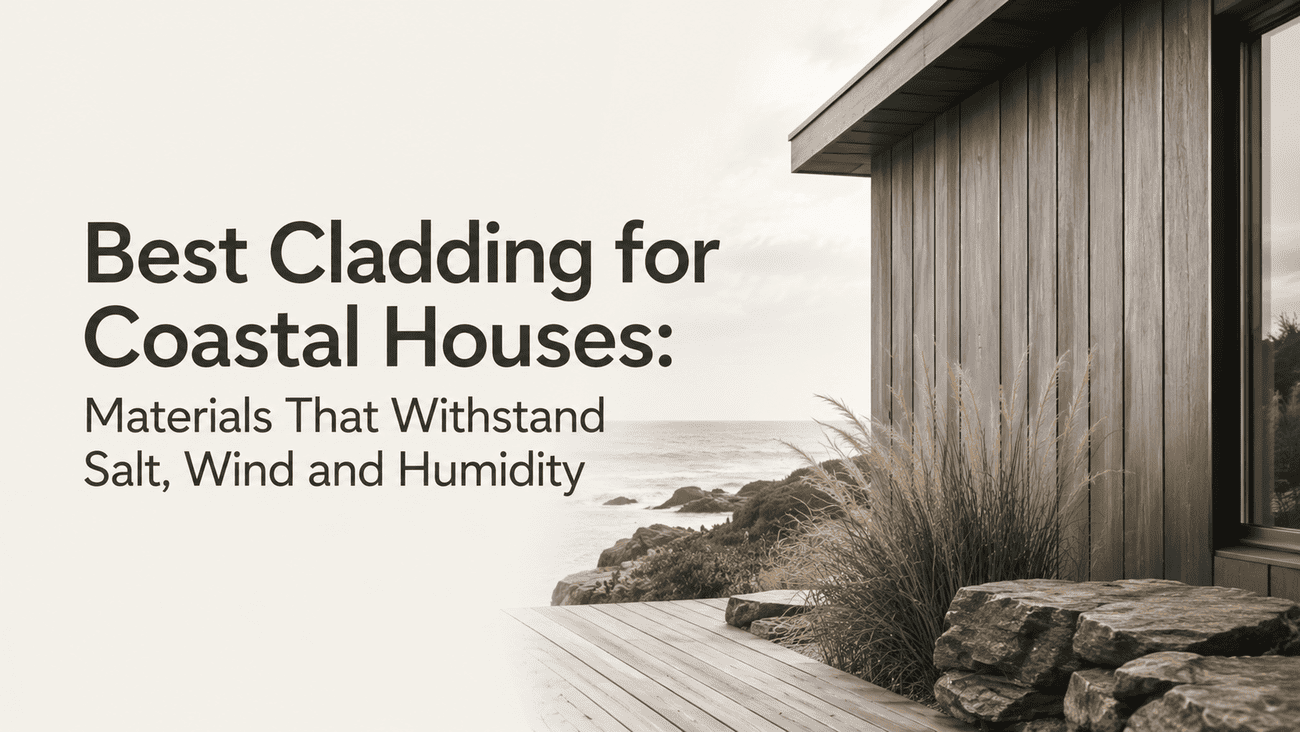
Living by the sea has obvious appeal, but it also creates one of the harshest environments for exterior building materials. Salt spray, wind-driven rain, constant humidity, and strong UV exposure accelerate wear, meaning cladding that performs well inland may deteriorate much sooner on a coastal property. Choosing the right material is therefore less about appearance and more about long-term performance in these demanding conditions.
Not every cladding option responds to coastal exposure in the same way. Some materials resist corrosion, moisture, and movement with minimal maintenance, while others are prone to fading, decay, or premature failure when installed too close to the shoreline. Even the choice of fixings, coatings, and installation details can significantly affect how well a façade withstands the elements.
In this guide, we’ll compare the best cladding materials for coastal homes, explain which options to avoid, and explore how timber, fibre cement, composite, and metal perform in salt-air environments. You’ll also find practical guidance on coastal exposure, maintenance requirements, and the specification details that make the difference between a façade that lasts for decades and one that does not.
Best Cladding Materials for Coastal Houses: Top Options Compared
The best cladding materials for coastal houses are fibre cement, composite, marine-coated steel, and high-durability modified timber such as Accoya and charred boards. Unprotected softwood and standard steel deteriorate much more quickly in coastal environments.
Coastal exposure attacks on four fronts at once: wind-driven rain, salt corrosion, UV exposure, and board movement. Marine atmospheres fall into the highest corrosivity categories (C5/CX) under ISO 9223, which is why materials that last inland may fail on the coast.
For timber cladding, species choice and weather resistance are the deciding factors.
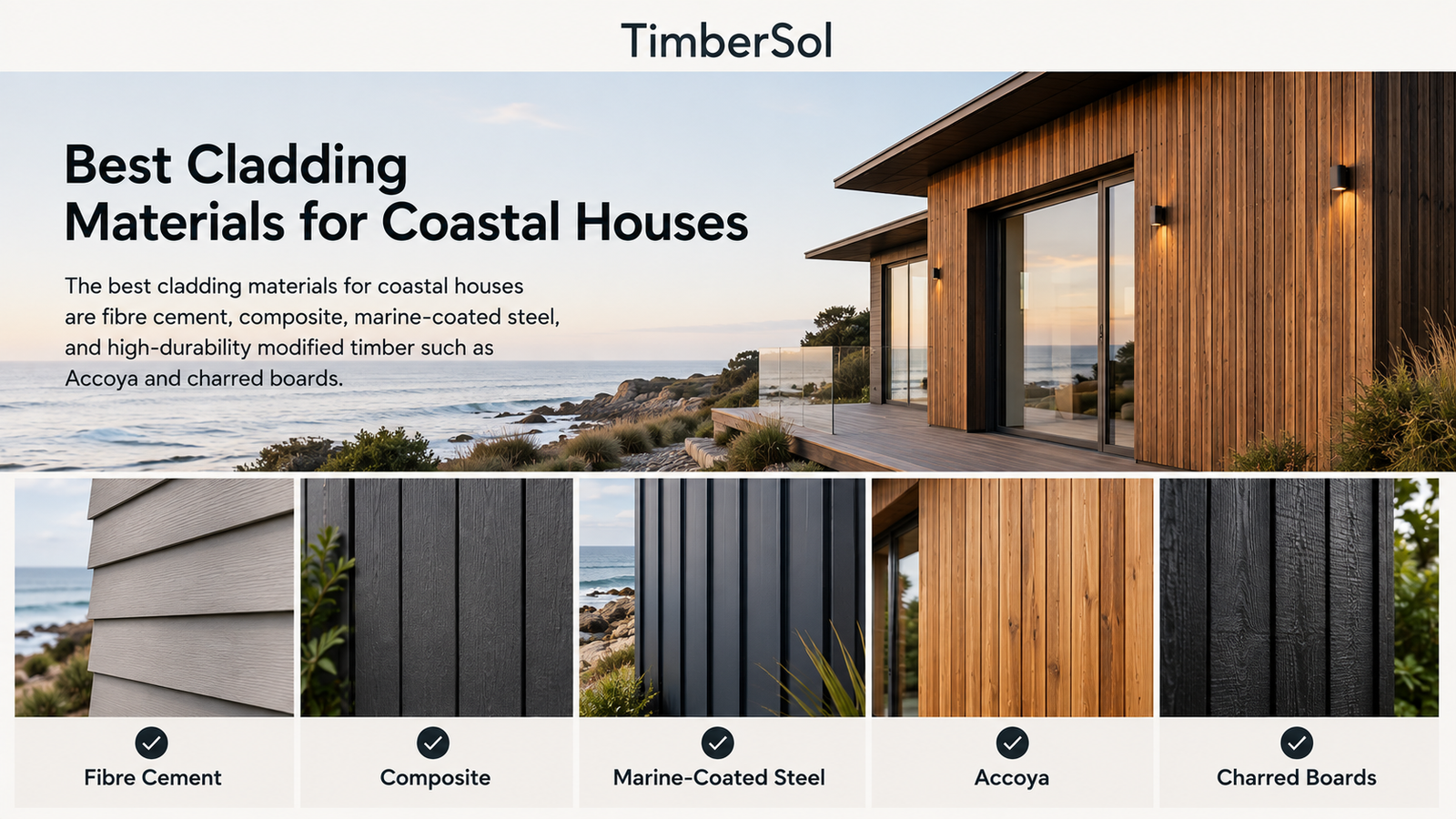
Fibre Cement Cladding
Fibre cement boards perform well in coastal environments because cement-bound boards contain no metal to corrode and no organic material that can rot. Salt spray therefore has little effect on the cladding itself.
Cedral quotes an estimated 50-year service life when installed in accordance with its specifications, backed by a 10-year warranty, with maintenance limited to occasional cleaning.
Trade-offs do exist, however: the boards are heavy, cutting requires effective dust control, and prolonged coastal UV exposure will eventually require recoating of the painted finish.
Composite Cladding
Wood-plastic composite absorbs very little moisture, so salt spray and humidity cause neither rot nor corrosion. This makes it a reliable choice for exposed coastal elevations.
Manufacturer warranties vary by product. Cladco offers a 10-year warranty on its uncapped Signature range and a 15-year warranty on the polymer-capped ProClad range, while maintenance rarely extends beyond occasional cleaning. However, composite does have genuine drawbacks, including fading, movement, and limited repairability, which are covered in more detail later in this guide.
Metal and Coated Steel Cladding
The coating does the work, not the steel. Only marine-grade coated steel or aluminium is suitable for seafront locations because standard galvanised steel and conventional powder-coated finishes are prone to corrosion in salt-spray environments. Valcan’s VitraDual, for instance, is manufactured from marine-grade 5754 aluminium with PVDF Kynar 500 or FEVE paint finishes designed to resist seawater and industrial pollutants, and is classified A1 under BS EN 13501-1.
Every cut edge and fixing hole exposes bare steel, so careful detailing and touch-up treatment are just as important as the sheet itself. Also check the warranty’s coastal clause, as manufacturers commonly reduce or exclude warranty cover within a specified distance of the sea.
Timber Cladding: Durable Species and Charred Boards
Timber performs well by the sea only if the species and detailing are appropriate for the level of exposure. The Scottish Government’s Timber Cladding in Scotland guidance is explicit: on severely exposed coastal sites, do not rely on species alone. Instead, use naturally durable heartwood, preservative-treated timber, or modified timber.
Accoya sits at the top of that hierarchy, with a Durability Class 1 rating under EN 350 and a 50-year above-ground warranty. Its acetylated wood structure minimises warping, cupping, and shrinkage, which is important because board movement can open joints and allow wind-driven rain to penetrate.
Yakisugi charring creates a protective carbon layer that improves resistance to moisture, insects, and decay, making charred Accoya cladding well suited to exposed façades when correctly detailed. Charred thermowood and charred larch are suitable for less demanding exposure conditions, although thermally modified timber is not intended for ground contact (Virginia Tech), so proper base detailing remains essential. The black-grey palette also complements the modern coastal façade aesthetic.
Brick, Vinyl and UPVC
Brick resists salt exceptionally well, but the mortar and wall ties are its weak points. NHBC guidance does not permit recessed mortar joints on homes within 8 km of the coast or a large estuary.
Vinyl and uPVC have the lowest upfront cost and do not rot. However, coastal UV exposure accelerates fading and brittleness, while high winds can lift lightweight panels. They are suitable for sheltered elevations but not for seafront walls.
Which Cladding Materials to Avoid on Coastal Houses?
Avoid untreated softwood, standard coated steel, and zinc-plated fixings on coastal elevations. Each fails for a different reason, but all are prone to premature failure in coastal environments.
Untreated pine or spruce sapwood decays quickly because salt-laden moisture and wind-driven rain keep the timber wet. The underlying mechanism is explained in our guide to preventing wood rot.
Standard galvanised or powder-coated steel is best suited to inland applications. These coatings are designed for much less corrosive environments, so they can deteriorate years ahead of schedule in coastal conditions.
Zinc-plated and carbon steel fixings react with tannins in larch, oak, and thermowood, leaving permanent black or blue stains that cannot be sanded out. Even the best cladding can be spoiled by the wrong fixings.
Before buying, check for three red flags: coastal warranty exclusions, distance-from-sea clauses that void warranty cover, and “maintenance-free” claims with no recommended cleaning schedule. Premier Guarantee also notes that the wind-driven rain map does not account for salt spray, wind-blown sand, or elevated UV exposure, so relying on it alone can lead to an under-specified seafront façade.
Disadvantages of Composite Cladding You Should Know
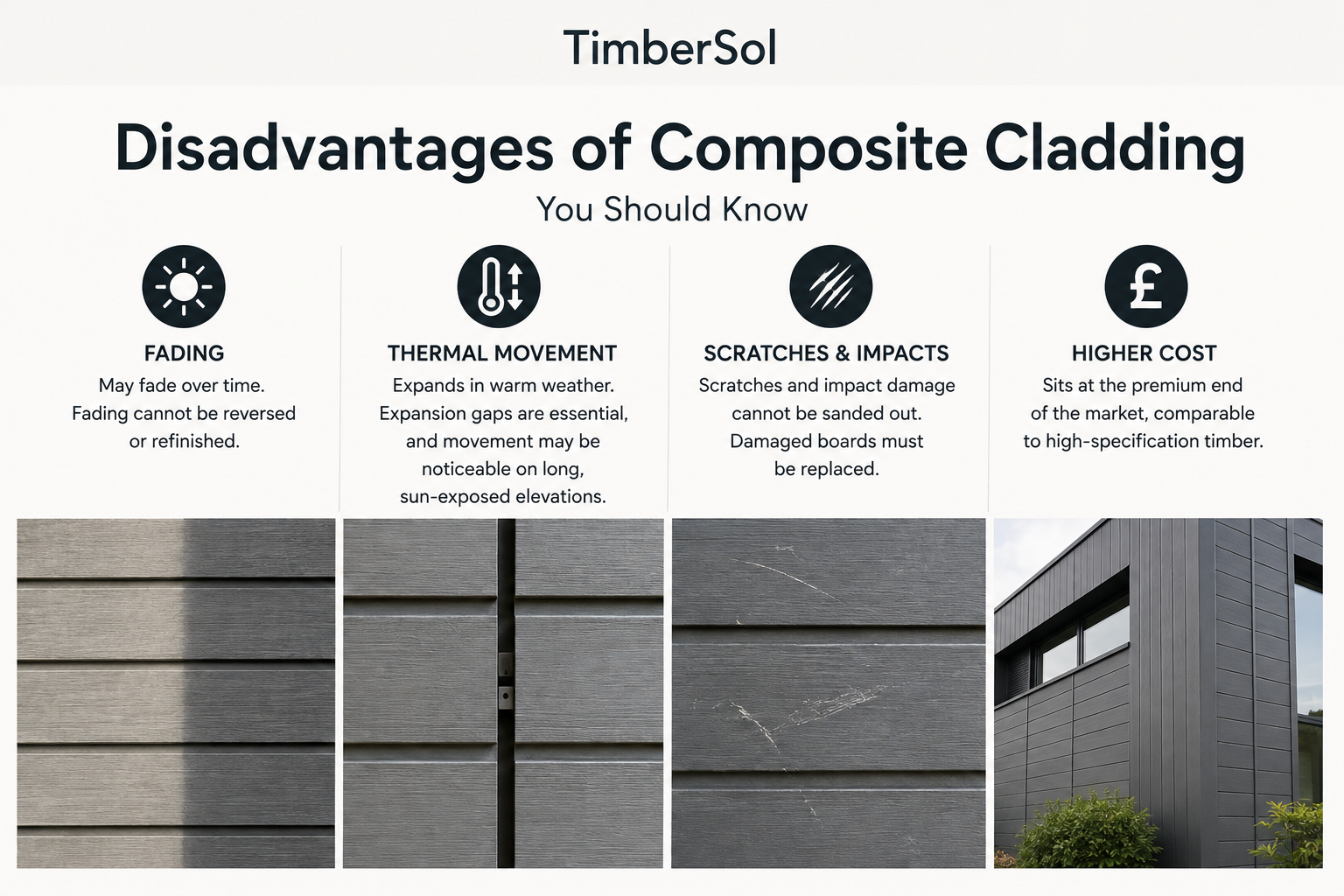
Composite cladding sits at the premium end of the market, with prices comparable to high-specification timber. The wood-plastic composition also has drawbacks that are rarely mentioned on product pages.
Fade behaviour depends on the product’s construction. Cladco states that its uncapped composite boards may show “slight fading over time”, while its polymer-capped range offers “minimal to no fading”—and coastal UV exposure accelerates fading regardless of which option you choose. Unlike timber, composite cannot be re-oiled or refinished, so any colour fading is permanent.
Thermal movement is the second issue. The plastic content causes the boards to expand in warm weather, so expansion gaps are essential, and long, sun-exposed elevations may show noticeable movement.
Scratches and impact damage cannot be sanded out. Damaged boards must be replaced.
Composite still has its place where minimal maintenance is the priority, particularly for rental properties, second homes, and homeowners who prefer a uniform manufactured finish to a natural wood grain.
How to Choose the Best Cladding for Your Coastal House?
Start with the level of exposure, not the material. NHBC Chapter 6.1 defines UK exposure zones based on wind-driven rain, ranging from sheltered (under 33 L/m² per spell) to very severe (100 L/m² per spell or more), using the methodology set out in BS 8104. Warranty providers then apply additional requirements for coastal locations. Within 500 m of the shoreline, Premier Guarantee requires evidence of durability and weather-tightness. Between 500 m and 5 km, it requires evidence that the corrosion protection is appropriate for the location.
In practice, the standard adds one exposure zone where local conditions increase wind exposure, such as on open hillsides or in valleys, and we would apply the same uplift to an exposed seaward elevation. A sheltered landward wall requires less protection, which is why mixed-material designs, such as a charred timber feature wall paired with render, focus the budget where the weather has the greatest impact.
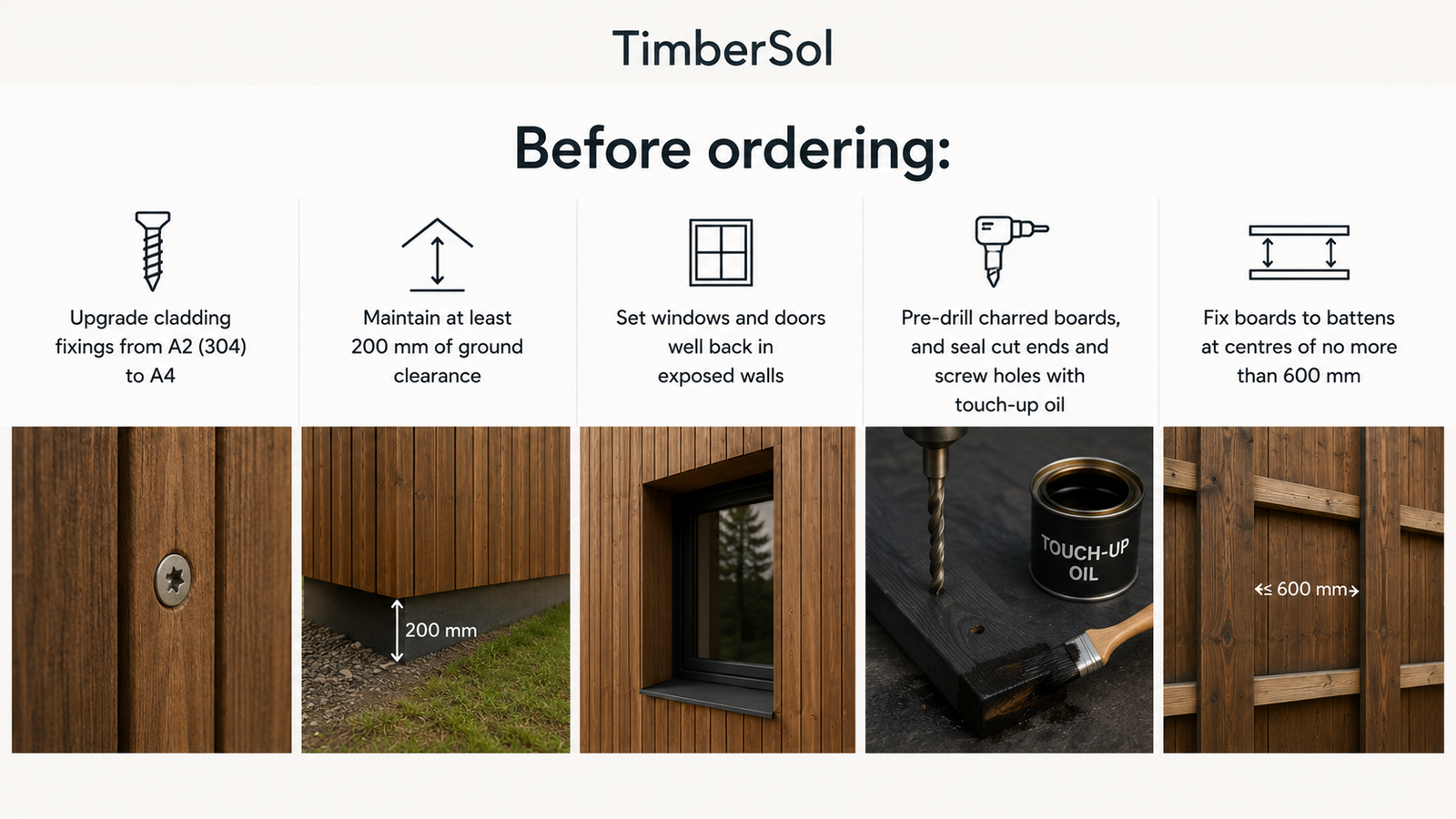
Detailing determines how long any cladding material lasts. Before ordering:
- Upgrade cladding fixings from A2 (304) to A4 (316) marine-grade stainless steel. The ThermoWood Handbook permits either grade, but timber-industry fixing guidance recommends A4 for coastal, high-exposure, and polluted environments.
- Maintain at least 200 mm of ground clearance, increasing this to 250 mm or more where there is a high risk of splashback.
- Set windows and doors well back in exposed walls.
- Pre-drill charred boards, and seal cut ends and screw holes with touch-up oil.
- Fix boards to battens at centres of no more than 600 mm, with screws positioned at least 15 mm from board edges and 25 mm from board ends.
One point worth checking rather than assuming is the fixing specification: standard cladding fixings, including ours, are supplied in A2 stainless steel. For coastal projects, specify A4.
On budget, vinyl/uPVC and coated steel sit at the entry level; fibre cement and charred larch or thermowood occupy the mid-range; composite and charred Accoya (around £147/m²) are premium options. The cheapest option upfront is rarely the most economical over 20 years once repainting and replacement costs are taken into account.
Finally, order samples. TimberSol supplies samples in a range of species and finishes, together with specification guidance for coastal projects.
Best Cladding for Coastal Houses: FAQ
What Is the Best Siding for Coastal Homes?
Siding is the US term for cladding, and the answer is the same: fibre cement and composite offer the best resistance to salt-air exposure. Marine-coated steel and Class 1 durable timber, such as Accoya and charred boards, are also excellent choices where corrosion resistance or a natural wood grain is a priority.
How Long Does Cladding Last on a Coastal House?
Cedral fibre cement has an estimated 50-year service life when installed in accordance with the manufacturer’s specifications. Composite warranties typically range from 10 to 15 years, depending on whether the boards are capped, while marine-coated steel can last for decades provided its protective coating remains intact. Accoya cladding can last up to 50 years above ground with minimal maintenance. Untreated softwood has a much shorter service life.
Proximity to the sea and the level of maintenance can significantly affect service life. Seaward elevations will always weather more quickly than sheltered ones.
Does Salt Air Damage or Stain Cladding?
Yes. Salt spray accelerates corrosion on metal cladding and fixings, and it speeds up the deterioration of unprotected timber finishes. Composite and fibre cement are highly resistant to staining.
An occasional freshwater wash with a soft brush removes salt build-up. Many coastal product warranties include this cleaning as a condition of cover, so failing to do it may void the warranty.
How Often Does Charred Timber Cladding Need Re-Oiling by the Sea?
Sheltered vertical charred timber cladding typically needs re-oiling every 5–10 years, or every 3–5 years if you want to maintain its original colour. Coastal exposure shortens these intervals, as UV exposure and salt spray weather the seaward elevation more quickly.
Uncoated, brushed charred boards gradually weather to a silver-grey patina over 5–10 years, a look that many coastal designs deliberately embrace. If preferred, a colour-matched maintenance oil can restore the original finish.
The right cladding for a coastal house is the one specified for the level of exposure it will actually face, from the species and finish down to the grade of every screw. At TimberSol, we char timber to create a naturally protective carbon layer, and we recommend our charred Accoya boards for seafront and severely exposed façades because of their Class 1 durability and outstanding dimensional stability.
If you are planning a build within sight of the sea, order a sample to see the finish first-hand, or get in touch for advice on detailing, fixings, and finishes for your project. We support self-builders, architects, and trade professionals alike, and we are happy to talk you through the best options before you commit.
