
Best Wood for Cladding: Top Timber Species, Durability & Cost Guide

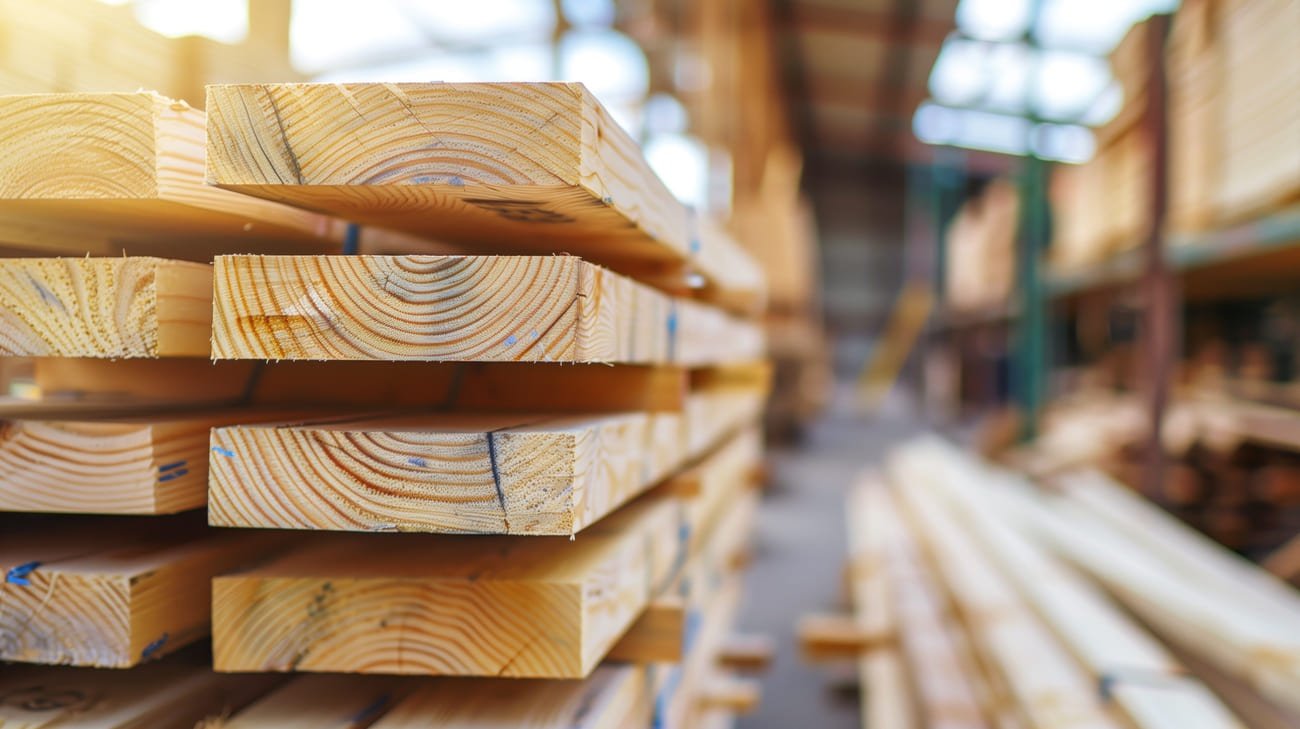
Choosing the best wood for cladding is about more than appearance. The timber you select will influence how your façade weathers, how much maintenance it requires, and how well it withstands decades of exposure to rain, frost, sunlight, and changing temperatures. Get it right, and your cladding can perform beautifully for decades. Get it wrong, and you may face unnecessary repairs, increased maintenance, or even premature replacement.
The challenge is that no single timber suits every project. Cedar is valued for its stability and refined appearance, larch offers excellent durability and value for money, oak delivers exceptional strength and character, while Thermowood is increasingly specified for its outstanding dimensional stability and low-maintenance performance. Each species has its own strengths, limitations, and price point.
In this guide, we’ll compare the best timber species for cladding, examining durability, lifespan, maintenance requirements, appearance, and cost to help you choose the right material for your home, garden room, extension, or commercial project.
Best Wood Species for Exterior Cladding
Western Red Cedar, European oak, Siberian larch, Thermowood, and Accoya rank among the best choices for exterior cladding, as they offer excellent resistance to rot and weathering over decades of exposure.
The deciding factor is natural durability, as classified under BS EN 350. This standard rates the heartwood’s resistance to fungal decay across five durability classes. For untreated exterior cladding, specify a Class 2 (Durable) or Class 3 (Moderately Durable) timber, as lower classes generally require preservative treatment for long-term outdoor use.
European oak and North American Western Red Cedar are classified as Class 2 (Durable), while European larch and Douglas fir fall into Class 3 (Moderately Durable). Both classes provide a reliable service life on UK façades when correctly specified and installed.
The choice between hardwood and softwood affects both cost and workability. Hardwoods such as oak offer high density and a long service life outdoors, but they are heavier and more difficult to machine, which can increase labour costs. Softwoods such as cedar and larch are easier to work with and generally more affordable, making them the practical choice for most cladding projects.
Match the species to your budget, level of exposure, and desired appearance. Knot-free, high-grade cedar suits clean, minimalist façades, whereas knotty larch and oak bring character to more rustic designs.
Charred timber, produced using the traditional Japanese Yakisugi technique, develops a protective carbon layer that improves resistance to moisture, insects, and decay. The result is a distinctive, contemporary finish that requires minimal upkeep, which is why architects increasingly specify charred cladding for both new-build and renovation projects.
Weigh up the following criteria before making a purchase:
- Natural durability class under BS EN 350.
- Density and hardness for impact resistance.
- Knot grade under BS 1186-3.
- Cost per square metre, including installation.
- Intended exposure and proximity to ground level.
Western Red Cedar, Siberian Larch, Oak & Thermowood Compared
These four timbers dominate cladding specifications, yet each offers a different balance of performance characteristics. Cedar provides a lightweight, refined finish; larch delivers durability and value for money; oak offers exceptional strength and longevity; and Thermowood provides outstanding dimensional stability without the use of chemical preservatives. The right choice depends on your priorities in terms of durability, hardness, appearance, and budget.
Western Red Cedar
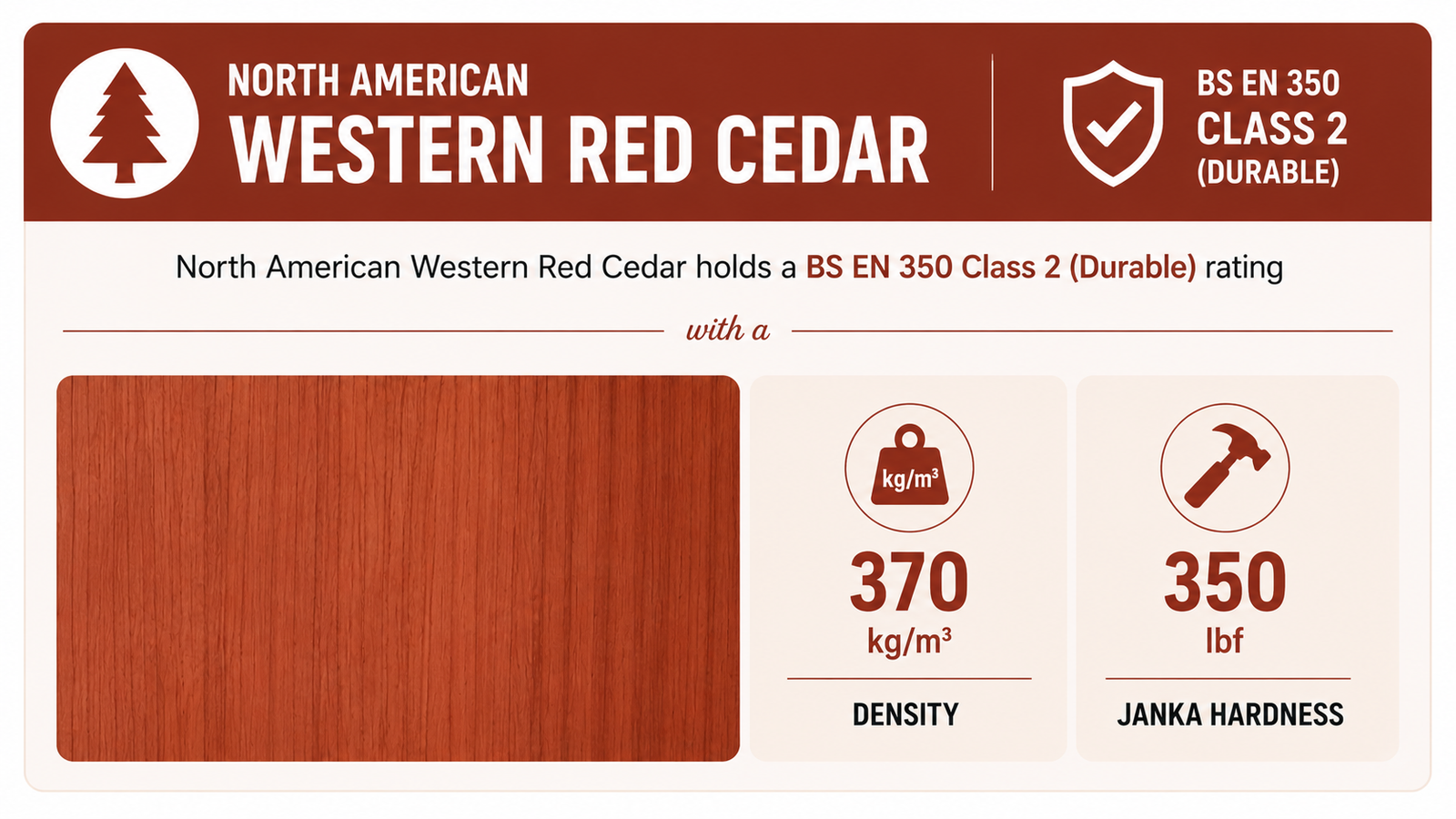
North American Western Red Cedar holds a BS EN 350 Class 2 (Durable) rating, making it a reliable choice for untreated cladding. It is one of the lightest softwoods used in construction, with a density of 370 kg/m³ and a Janka hardness of just 350 lbf, indicating very low hardness.
That softness comes with a clear trade-off. Cedar dents and scratches easily and therefore performs less well at ground level or in high-impact areas where boards are exposed to regular knocks.
Left unfinished, cedar displays warm reddish-brown tones that gradually weather to an even silver-grey patina. Applying a UV-protective oil or stain helps slow this process if you wish to retain the original colour.
One specification detail can prevent problems later: use stainless-steel or coated fixings, as iron fasteners can react with moisture and the timber’s natural extractives, causing dark staining and streaking. For a more detailed overview, see our guide to cedar wood properties.
Siberian & British Larch
European larch holds a BS EN 350 Class 3 (Moderately Durable) rating, with a density of 575 kg/m³ and a Janka hardness of 740 lbf. This makes it roughly twice as hard and significantly denser than Western Red Cedar.
Because of its hardness, larch resists impacts, knocks, and scratches far better than cedar. It performs particularly well at ground level and in high-traffic areas, offering excellent value for money on exterior façades.
Larch displays a knotty, characterful grain that suits rustic façades, fencing, and barn-style buildings. British larch offers a UK-grown, lower-carbon alternative to imported Siberian larch, helping to shorten supply chains and support the domestic timber industry.
For a tougher, lower-maintenance alternative, charred larch cladding develops a protective carbon layer that improves resistance to moisture, insects, and decay while giving the boards a distinctive, contemporary finish.
European Oak
European oak holds a BS EN 350 Class 2 (Durable) rating and is a dense hardwood prized for its strength and long service life outdoors. Its tight grain and natural durability allow it to withstand decades of weather exposure with minimal deterioration when correctly specified and installed.
Oak contains high levels of natural tannins, making stainless-steel fixings essential. Iron fasteners can react with these tannins, causing dark staining and streaking across the boards.
The trade-off is reduced workability. Oak is considerably heavier and more difficult to machine than softwoods, which can increase labour and installation costs.
Left untreated, European oak weathers to an attractive silver-grey patina, making it a natural choice for both heritage restoration projects and premium contemporary architecture.
For a refined, modern look, brushed and charred oak finishes highlight the natural grain while adding a protective surface layer. Charred oak, in particular, delivers a distinctive, low-maintenance finish that is well suited to architectural façades.
Thermowood & Heat-Modified Timber
Thermally modified timber is produced using only heat and steam, without the use of chemical additives. The process reduces the sugars and alters the resins that can support fungal growth and insect activity, increasing the wood’s natural resistance to decay.
Well-modified Thermowood can achieve a BS EN 350 Class 1 rating, the highest durability classification. Thermally modified spruce can provide 25+ years of decay resistance, while thermally modified pine typically offers more than 15 years under suitable conditions.
The heat-treatment process also improves dimensional stability, so the boards are far less prone to warping and movement on UK façades exposed to changing humidity levels. This stability makes Thermowood a reliable, low-maintenance alternative to imported tropical hardwoods.
Because it relies on a thermal modification process rather than chemical preservatives, Thermowood appeals to projects that prioritise sustainable sourcing and reduced chemical use.
For added stability and a distinctive appearance, charred Thermowood cladding combines thermal modification with a protective carbon layer that can further reduce weathering and surface degradation over time.
Durability: Which Cladding Wood Lasts Longest?
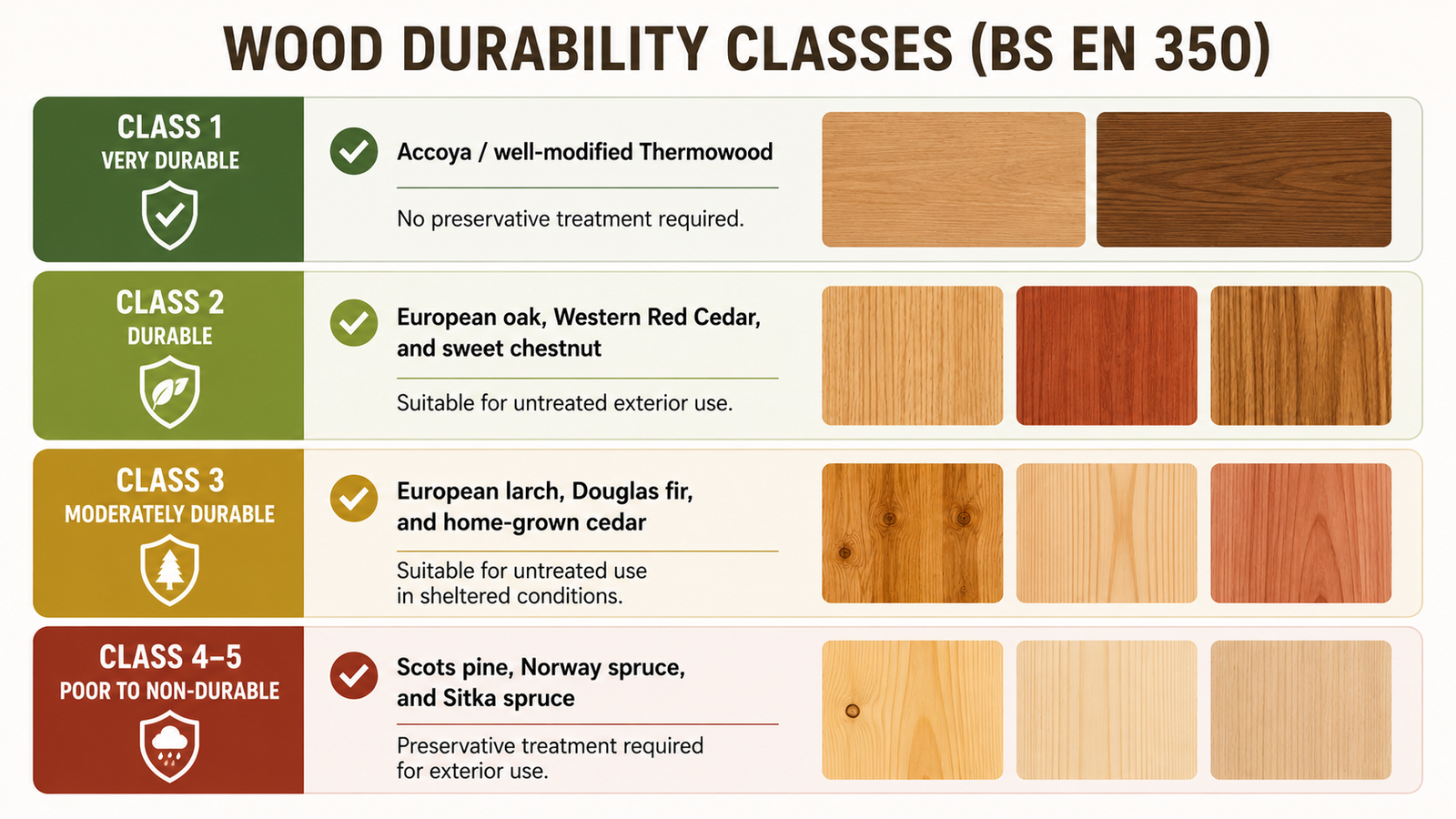
Accoya and well-modified Thermowood offer the highest levels of durability, achieving a BS EN 350Class 1 rating. European oak and Western Red Cedar follow at Class 2 (Durable), while European larch and Douglas fir are classified as Class 3 (Moderately Durable). When correctly specified, installed, and maintained, most high-quality timber cladding can provide a service life of 40 to 60years or more.
Durability depends on species, durability class, and whether preservative treatment is required:
- Accoya / well-modified Thermowood – Class 1; no preservative treatment required.
- European oak, Western Red Cedar, and sweet chestnut – Class 2 (Durable); suitable for untreated exterior use.
- European larch, Douglas fir, and home-grown cedar – Class 3 (Moderately Durable); suitable for untreated use in sheltered conditions.
- Scots pine, Norway spruce, and Sitka spruce – Class 4–5; preservative treatment required for exterior use.
Natural durability applies only to the heartwood, as sapwood offers poor resistance to decay regardless of species. Specify heartwood-grade timber and check boards for pale, clearly distinct sapwood before installation.
Moisture content also plays a critical role in cladding longevity. Under BS 1186-3, timber should be dried to a moisture content of 13–19% before installation, after which it typically stabilises at around 16% in service on a UK façade. As moisture levels can rise to around 20% during prolonged wet weather, ventilation gaps behind the cladding remain essential for promoting drying and reducing the risk of decay.
Weathering affects appearance far more than structural performance. Most timber species develop a silver-grey patina within a few years unless protected with oil or stain, and on durable timber this change is largely cosmetic rather than structural.
Charring combined with an oil finish can help slow weathering and reduce maintenance requirements, as the carbon layer helps protect the surface from UV exposure and moisture. This makes charred cladding a low-maintenance option for achieving a stable, long-lasting façade.
Which Cladding Woods to Avoid
For untreated exterior cladding, avoid BS EN 350 Class 4 and Class 5 species such as Scots pine (redwood), Norway spruce, Japanese larch, and Sitka spruce. These timbers are classified as Slightly Durable or Non-Durable and therefore offer limited natural resistance to weathering and fungal decay.
When used untreated outdoors, these species can be prone to rot, warping, and cupping within a relatively short period, as their heartwood offers limited natural resistance to moisture and decay. As a result, they often require more frequent maintenance, repairs, and eventual replacement, increasing the long-term cost of what may initially appear to be a cheaper cladding option.
Be especially cautious of unspecified budget pine sold without a declared durability class. If a supplier cannot confirm that the timber is suitable for exterior use, treat that as a warning sign rather than a bargain.
Untreated, tannin-rich timbers can also develop dark staining or patchy discolouration in damp, polluted urban environments, particularly where iron-based fixings react with moisture. Stainless-steel or coated fixings help prevent this type of staining on exterior cladding installations.
Before buying, check two key details: the BS EN 350 durability class and whether the boards are specified as heartwood, as sapwood is not considered durable regardless of species.
Treated or thermally modified spruce is a notable exception. When properly processed, modified spruce can achieve decades of decay resistance and deliver strong long-term performance. This demonstrates how thermal modification and charring can significantly enhance the durability of softwoods.
Best Wood for Garden Rooms, Sheds, Summer Houses & Saunas
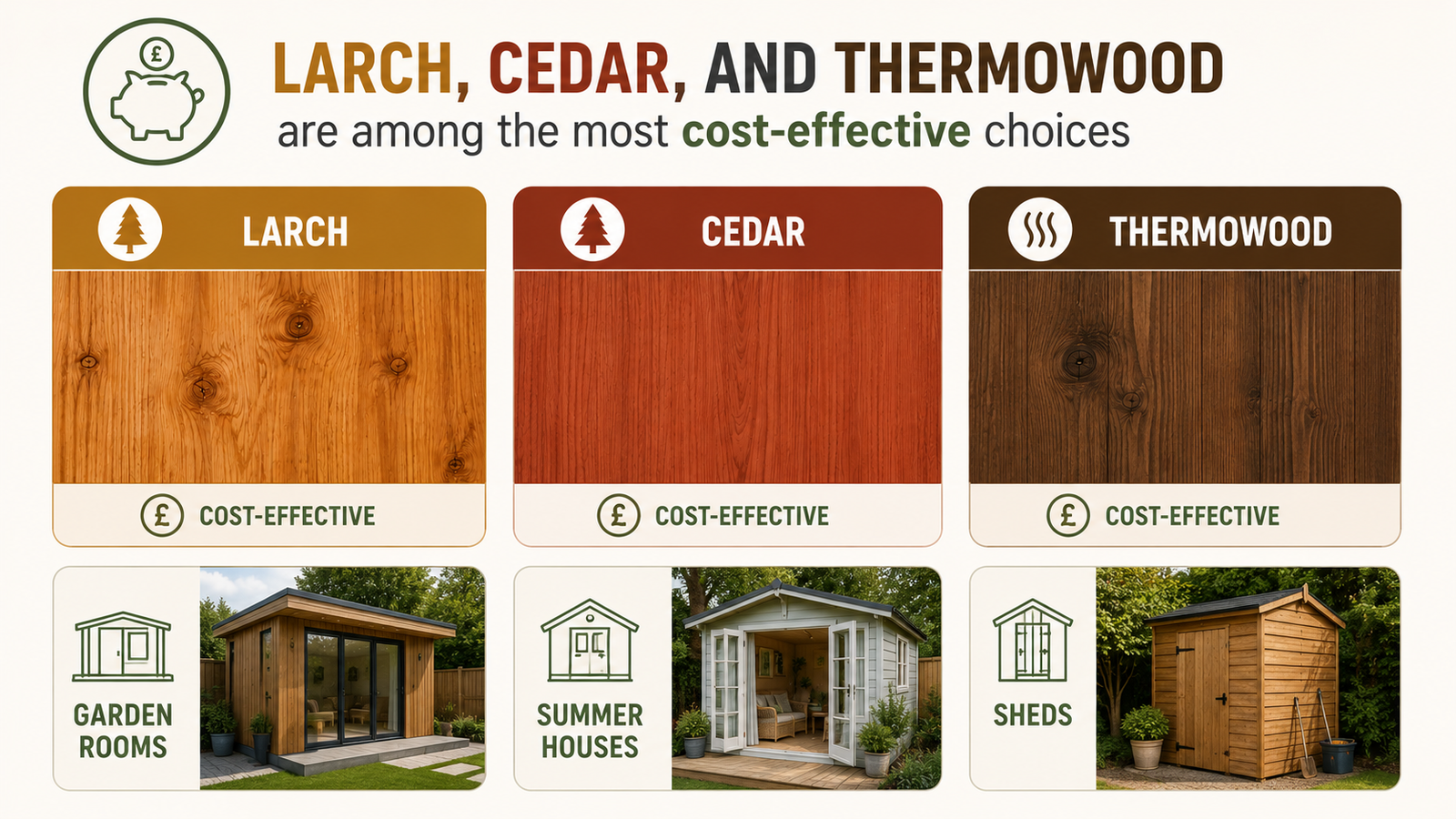
Larch, cedar, and Thermowood are among the most cost-effective choices for garden rooms, summer houses, and sheds, as they offer a strong balance of cost, natural durability, and ease of installation. These softwoods can be cut, drilled, and fixed using standard woodworking tools, helping to keep labour time and installation costs low on smaller garden buildings.
Lighter, pre-profiled boards make DIY installation relatively straightforward. Shiplap and feather-edge profiles interlock neatly and shed water effectively, making them well suited to sheds and outbuildings where practicality, weather resistance, and ease of installation take priority over a premium architectural finish.
Exposed garden environments demand additional protection. Treatment or charring can significantly extend service life, as charring creates a protective carbon layer that helps resist moisture, insects, and decay while requiring minimal maintenance.
Interior and sauna applications have different performance requirements. Thermowood and cedar are particularly well suited to sauna environments due to their low resin content and excellent dimensional stability, allowing them to withstand repeated cycles of heat and humidity without excessive movement, warping, or resin bleed. Cedar also offers a warm, aromatic character that is highly valued in sauna interiors.
Charred cladding is equally effective on feature interior walls, delivering a distinctive, sophisticated finish that requires very little maintenance once installed.
Matching the right shade and profile to your project is far easier in person than on screen. Ordering a charred cladding sample is a simple, low-commitment first step that allows you to assess the colour, texture, and profile against your existing materials before placing a full order.
Best Wood for Cladding: FAQ
What is the longest lasting wood cladding?
Accoya, European oak, Western Red Cedar, and well-modified Thermowood are among the longest-lasting timber cladding options, often providing a service life of 40 to 60 years or more when correctly specified and installed. Longevity depends on a combination of natural durability, timber quality, installation detailing, and any treatment applied, as higher BS EN 350 durability classes offer greater resistance to fungal decay.
Even these highly durable species will weather to a silver-grey patina over time unless protected with oil or other suitable finishes. Regular maintenance with a UV-protective oil can help slow weathering and preserve the timber’s original colour for longer.
What cladding wood should you avoid?
Avoid untreated Class 4 and Class 5 timbers such as Scots pine, Norway spruce, and Sitka spruce, as they offer limited natural durability and generally require preservative treatment for exterior use. Low-cost, unspecified pine sold without a declared durability classification presents a similar risk, particularly where the species and intended application cannot be verified.
Tannin-rich, untreated boards can also develop dark staining and streaking in polluted urban environments, particularly when used with iron fixings. Always check that the timber carries an appropriate BS EN 350 durability classification for exterior use, and confirm that the boards are heartwood before purchasing.
What is the best wood for cladding in the UK?
British larch, cedar, oak and thermowood suit the UK climate well because they balance durability against rain and frost with steady availability and reasonable cost. Since Brexit and recent supply disruption have pushed up prices on imported species such as Siberian larch and Canadian cedar, UK-grown timber offers a lower-carbon, more dependable alternative.
Match your final choice to your project style and budget: oak for heritage builds, and larch or thermowood for value-led contemporary façades.
What is the best wood cladding for a garden room or shed?
Larch, cedar and thermowood deliver the best balance of cost, durability and ease of installation for garden rooms and sheds. Lighter, pre-profiled boards such as shiplap and feather-edge profiles install quickly, making them ideal for DIY projects without specialist tools.
For exposed garden settings, apply a suitable treatment or opt for charred larch, as the protective carbon layer extends service life and reduces ongoing maintenance requirements.
Choosing the right cladding timber means balancing durability, density and finish against your project’s style and budget. Charring takes this a step further: at TimberSol, controlled surface charring creates a protective carbon layer that improves a board’s resistance to moisture, insects and decay, while a brushed oil finish locks in a distinctive, low-maintenance appearance. We apply this Yakisugi technique to larch, spruce, oak, thermowood, Accoya and Douglas fir, allowing you to pair the species best suited to your climate with a finish that enhances the entire façade.
If you are weighing up options for a house exterior, garden room or feature wall, the easiest first step is to see and feel the material in person. Order a charred cladding sample in your preferred shade, and our team can guide you on profiles, sizes and fixings to help you achieve the best result for your project.
