
Alternative to Cedar Cladding: The Best Cheaper Timber and Composite Options Compared

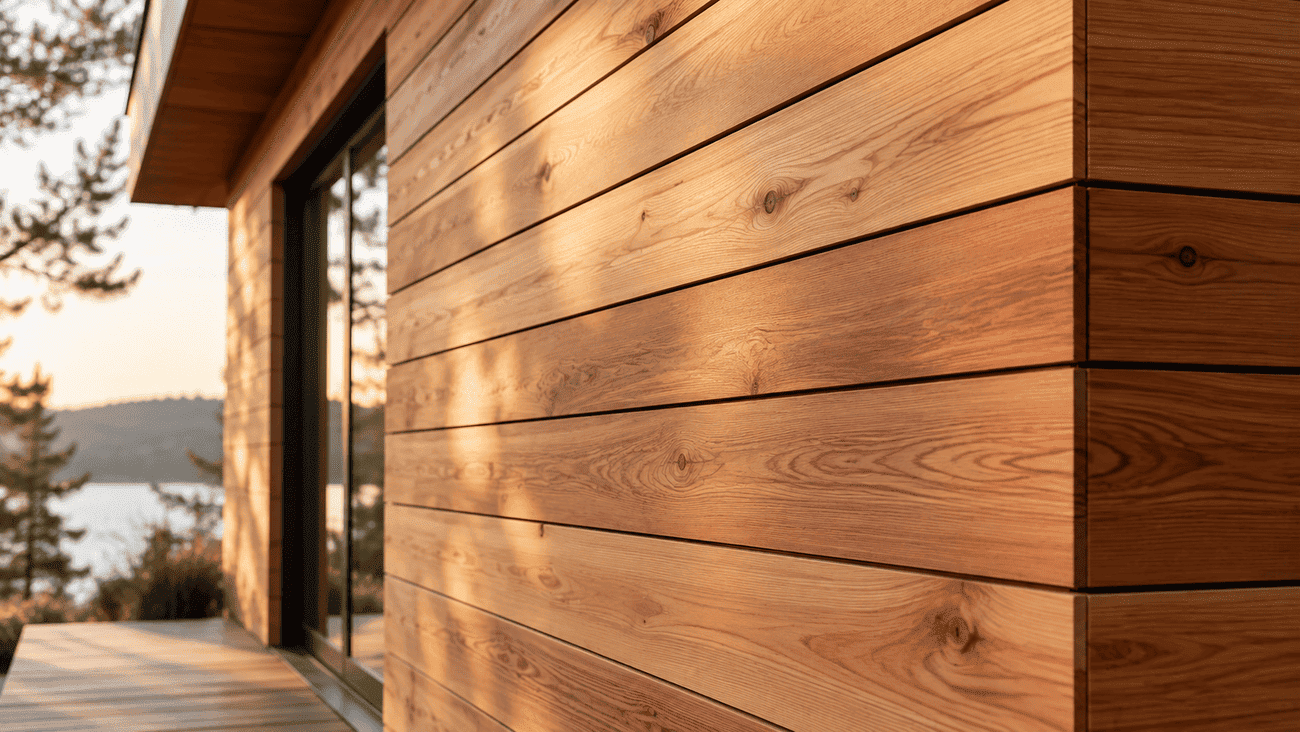
The best alternative to cedar cladding depends on which limitation of Western Red Cedar matters most to your project: its import cost, relative softness or variable durability. Each consideration can point to a different replacement, and the right choice starts with identifying the priority.
Western Red Cedar earns its reputation for colour and natural durability. But the trade-offs are real. According to the USDA Wood Handbook, its side hardness is roughly half that of Douglas fir or western larch, so it can dent more easily. Under EN 350, North American Western Red Cedar heartwood is typically durability class 2, while UK-grown Western Red Cedar is class 3.
Add import costs and a price per m² that is generally higher than many European softwoods, and there are practical reasons to consider alternatives. What follows compares realistic substitutes on cost, hardness, durability class, colour match and maintenance, and flags boards that may be unsuitable as a cedar substitute.
Why Look for an Alternative to Western Red Cedar Cladding?
Common substitutes for Western Red Cedar cladding include European larch, Douglas fir, European oak, modified timber such as thermowood and Accoya, and cedar-effect composite cladding.
Price is a major consideration. Much of the Western Red Cedar sold in the UK is imported from Canada or North America, and its price per m² is generally higher than comparable larch and Douglas fir cladding. This has made larch a common alternative to cedar.
Does the durability premium justify the price? Only partly. Under EN 350:2016, North American Western Red Cedar heartwood is typically durability class 2, while UK-grown heartwood is class 3, or “moderately durable”. COFORD’s worked example indicates that a 60-year design life in use class 3.1 requires durability class 2, so cedar’s durability advantage depends on the origin and heartwood content of the boards.
Softness is the next consideration. USDA Wood Handbook side hardness figures are 1,600 N for Western Red Cedar, 3,200 N for Douglas fir and 3,700 N for western larch. Scottish Executive cladding guidance advises avoiding Western Red Cedar where impact damage or vandalism is likely, noting that more hard-wearing timbers are more appropriate in such situations.
Secondary drawbacks include iron staining from plain steel fixings, lower fixing strength in low-density wood, surface erosion under weathering, and fire restrictions on taller buildings. Our guide to the properties of cedar covers each in detail.
European Larch, Douglas Fir and Oak: Timber Alternatives to Cedar Cladding
Solid, unmodified timber remains a natural route for replacing cedar. European larch, Douglas fir and European oak each offer a different balance of price, hardness and durability, and all three can weather to silver-grey when left uncoated, much like cedar.
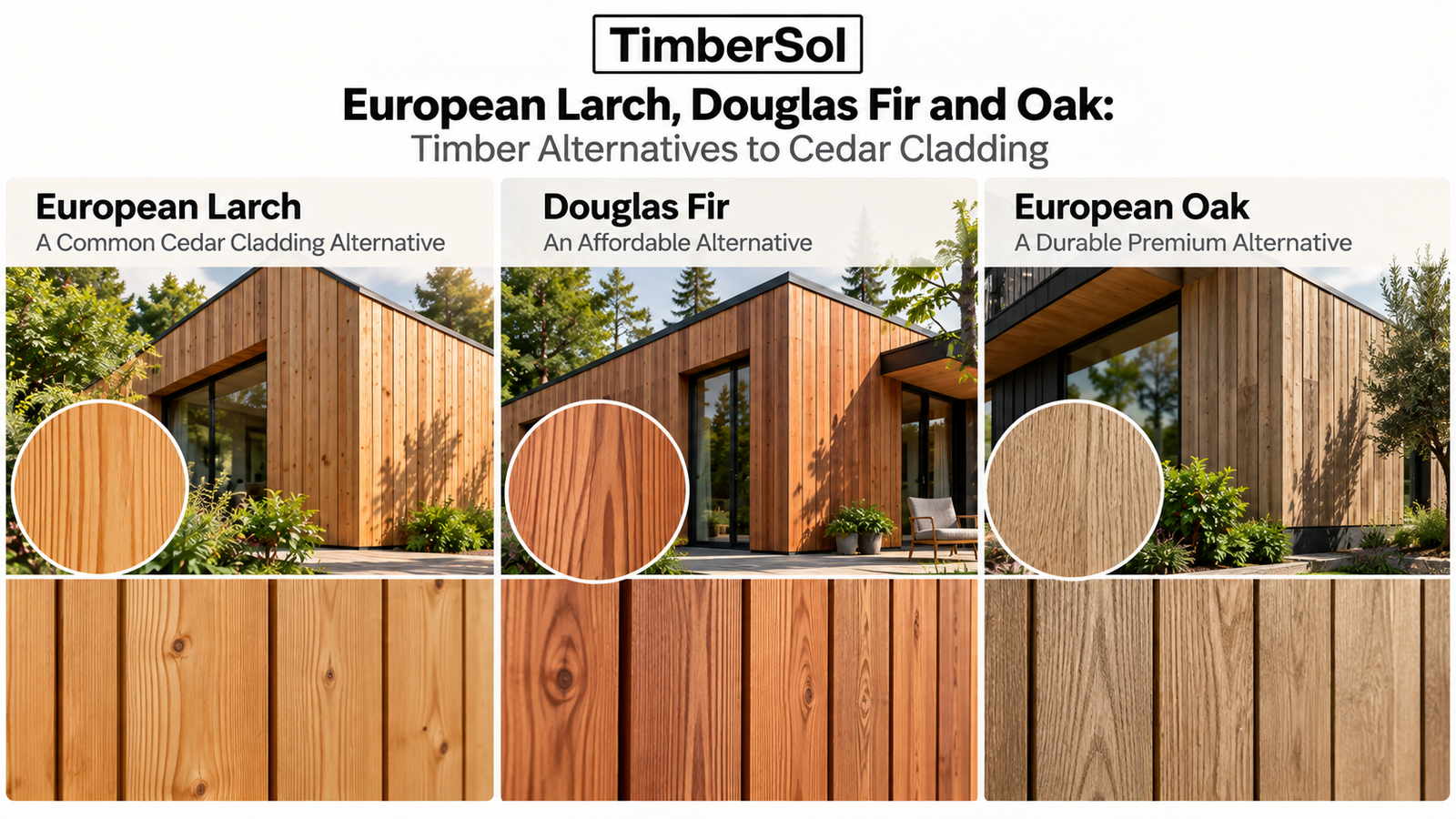
European Larch: A Common Cedar Cladding Alternative
European larch cladding generally costs less per m² than Western Red Cedar and, when fixed on a ventilated batten sub-frame with stainless-steel fixings, can provide a long service life.
Its durability is not necessarily superior to cedar. Larch heartwood is generally rated durability class 3–4 under EN 350, and where a range is given, the less durable class should be used for design. Larch can offer advantages in hardness and price: western larch measures about 3,700 N side hardness against Western Red Cedar’s 1,600 N.
Grade affects cost. Higher grades generally have fewer knots, while knottier grades can cost less and suit rustic or charred finishes. Expect a pale yellow to golden-brown colour rather than the reddish-brown tones associated with Western Red Cedar; oil or stain can add warmth.
Detailing matters. Resin can bleed on warm, sun-exposed elevations, iron staining can occur with unsuitable fixings, and board ends can split if fixings are installed too close to the ends without pre-drilling.
Douglas Fir: An Affordable Alternative
Douglas fir generally costs less than Western Red Cedar on UK merchant pricing, making it a practical option for large elevations where budget is a priority.
Its side hardness of about 3,200 N, roughly double that of Western Red Cedar, gives it greater resistance to knocks, and its warm pinkish-orange tone can be closer to cedar than larch. However, European-grown Douglas fir heartwood is generally rated EN 350 durability class 3–4, so exposed elevations can benefit from a protective coating.
Douglas fir or suitably treated softwood can be used for battens behind the rainscreen. Pre-drill near board ends to reduce the risk of splitting.
Charred Douglas fir cladding in 145 mm widths and 3 or 4 m lengths offers a contemporary alternative to cedar.
European Oak: A Durable Premium Alternative
European oak suits cedar buyers who value durability and robustness. Its heartwood is naturally durable, and its higher density makes it more resistant to knocks than cedar, which is why Scottish Executive guidance recommends European oak or European larch for sites prone to vandalism or accidental damage.
On cost, UK and European oak avoids transatlantic shipping, but its price relative to Western Red Cedar varies by grade, profile and supplier. Green (unseasoned) oak can cost less, but it moves more as it dries.
That movement drives the installation considerations. Fix boards to allow for shrinkage, seal end grain, and expect some surface checking and small cracks as the timber dries. Oak tannins can react with plain steel and cause black staining, so use stainless-steel fixings throughout.
What Wood Looks Most Like Cedar? Alaskan Yellow Cedar and British-Grown Western Red Cedar
British-grown Western Red Cedar offers the closest visual match because it is the same species, while Alaskan Yellow Cedar shares a fine, generally straight grain but has a much paler yellow tone. Among more affordable alternatives, Douglas fir can offer a warmer colour closer to Western Red Cedar.
British-grown Western Red Cedar avoids transatlantic shipping, can cost less than imported Western Red Cedar, and is available from FSC- or PEFC-certified sources. However, TRADA rates it as moderately durable, with North American Western Red Cedar rated as more durable. British-grown timber also tends to contain frequent small knots and has around 20–30% lower bending strength than European redwood.
Paler timbers such as larch, Douglas fir and Alaskan Yellow Cedar can take on a red-cedar-like appearance under a pigmented exterior oil or semi-transparent stain in a warm red-brown tone. Under opaque paint, a stain-blocking primer may be needed where coloured extractives could bleed through.
Colour matching matters mainly while the timber retains its original colour. Uncoated exterior timber, cedar included, generally weathers towards silver-grey under UV and rain, so durability and price can be more important considerations when choosing the best wood for cladding.
Thermowood, Accoya and Charred Timber: Modified Alternatives to Cedar
If durability rather than price is pushing you away from cedar, thermowood cladding and Accoya are two modified-timber options that can offer durability comparable to or greater than imported Western Red Cedar.
Thermo-D thermowood is designed for applications requiring improved biological durability and dimensional stability. Thermal modification lowers the wood’s equilibrium moisture content, so boards generally move less in service. The process can also reduce some mechanical properties, so care is needed when fixing, particularly near board ends. Because ThermoWood® is acidic, the International ThermoWood Association recommends stainless-steel (A2) or acid-resistant (A4) fasteners. Compare thermowood vs cedar in detail, or browse charred thermowood cladding.
Accoya, made from acetylated radiata pine, goes further. A BRE assessment found its durability equivalent to class 1 natural timber, and Accoya carries a 50-year above-ground warranty. It is also a premium-priced option; charred Accoya cladding suits projects where long service life is a priority.
Charred timber (Yakisugi or Shou Sugi Ban) is a design-led alternative, not a look-alike. Controlled charring, brushing and oiling can produce black, grey or warm-toned finishes distinct from natural cedar. However, USDA Forest Products Laboratory research found that commercial charring did not systematically improve durability or flammability, so the base species (such as larch, thermowood or Accoya) remains important for performance, while the char primarily determines the appearance.
TimberSol supplies charred boards pre-coated with its Hi-Tech Hybrid Oil, leaving cut ends and fixing points to touch up on site. TimberSol recommends recoating approximately every 5 years on south-facing elevations and every 10 years on north-facing elevations, depending on exposure and surface wear.
Composite and Fibre Cement: Low-Maintenance Non-Timber Cedar Look-Alikes
Where maintenance rather than durability is the sticking point, wood-plastic composite cladding and fibre cement, including Cedral, are two non-timber options available in wood-effect colours and finishes. They suit projects where avoiding regular re-oiling and maintaining a more consistent appearance are priorities.
The trade-off can be upfront cost. Composite and fibre cement cladding can cost more per m² than larch or Douglas fir, but generally require less ongoing finishing and maintenance, which can reduce whole-life costs over time.
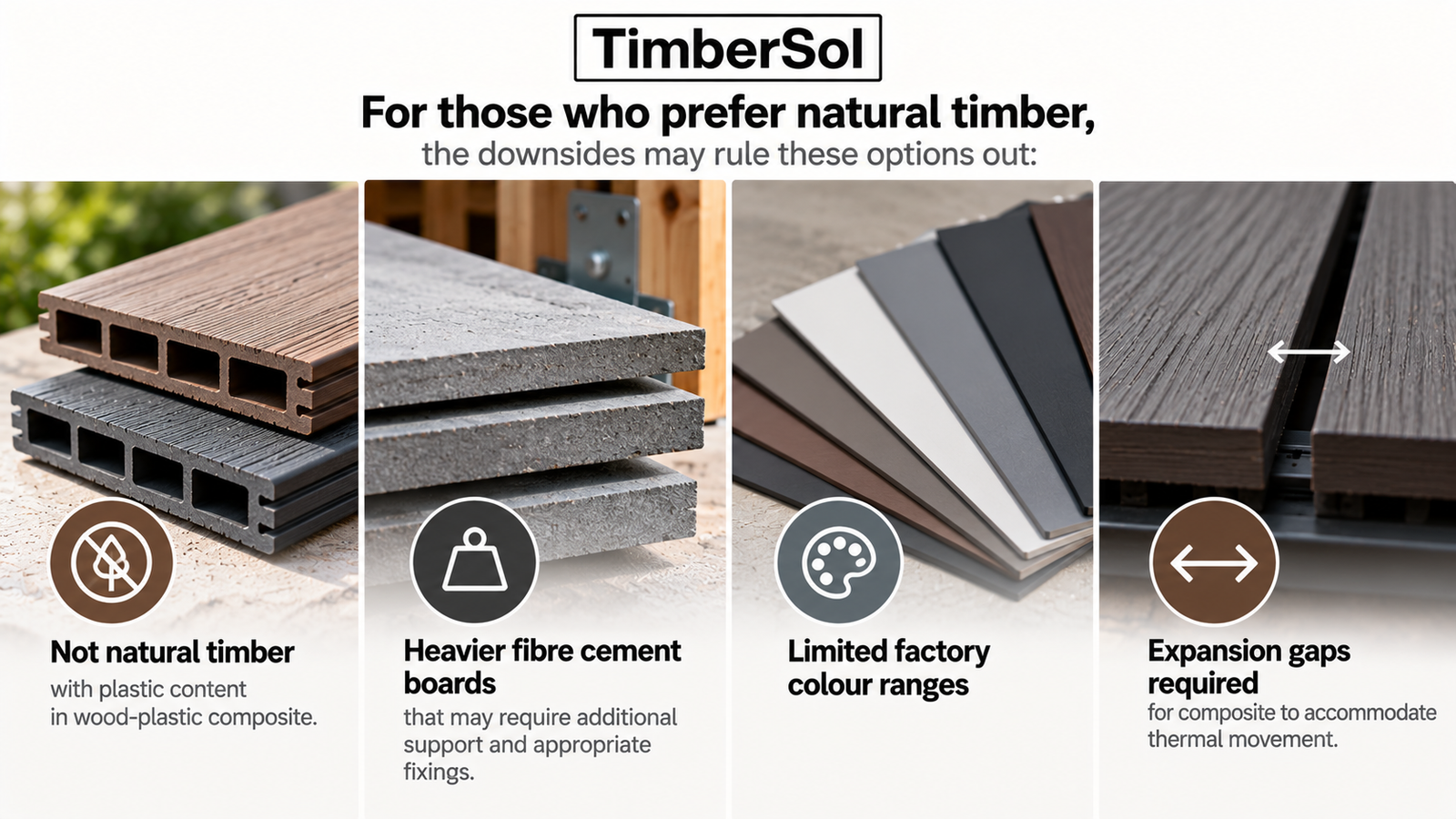
For those who prefer natural timber, the downsides may rule these options out:
- Not natural timber, with plastic content in wood-plastic composite
- Heavier fibre cement boards that may require additional support and appropriate fixings
- Limited factory colour ranges
- Expansion gaps required for composite to accommodate thermal movement
Fire performance also separates them. Fibre cement products such as Cedral achieve Euroclass A2-s1,d0, which can be important where Approved Document B restricts combustible materials; some fire-retardant-treated timber products can achieve Euroclass B.
Alternative to Cedar Cladding Cost: Cedar vs Larch, Oak, Thermowood and Composite Compared
Douglas fir and lower-grade larch are generally among the more affordable cedar alternatives, while larch and thermowood can offer a balance of upfront cost, durability and maintenance.
| Material | Cost vs cedar | Durability | Fresh colour | Maintenance | Notes |
| Imported Western Red Cedar | Benchmark | Class 2 heartwood | Reddish-brown | Oil or leave untreated | Relatively soft |
| British WRC | Can be cheaper | Class 3 | Reddish-brown | Oil or leave untreated | Often knotty |
| European larch | Generally cheaper | Class 3-4 | Golden-yellow | Optional coating | Harder than cedar |
| Douglas fir | Generally cheaper | Class 3-4 | Pinkish-orange | Coating can help on exposed elevations | Harder than cedar |
| European oak | Varies | Naturally durable | Honey-brown | Protect end grain | Dense and hard |
| Thermowood | Varies | Class 2 (thermally modified) | Brown | Follow product guidance | Dimensionally stable |
| Accoya | Premium | Class 1-equivalent | Pale | Low maintenance | 50-year above-ground warranty |
| Composite/fibre cement | Varies | Product-dependent | Factory colour range | Low maintenance | Non-timber |
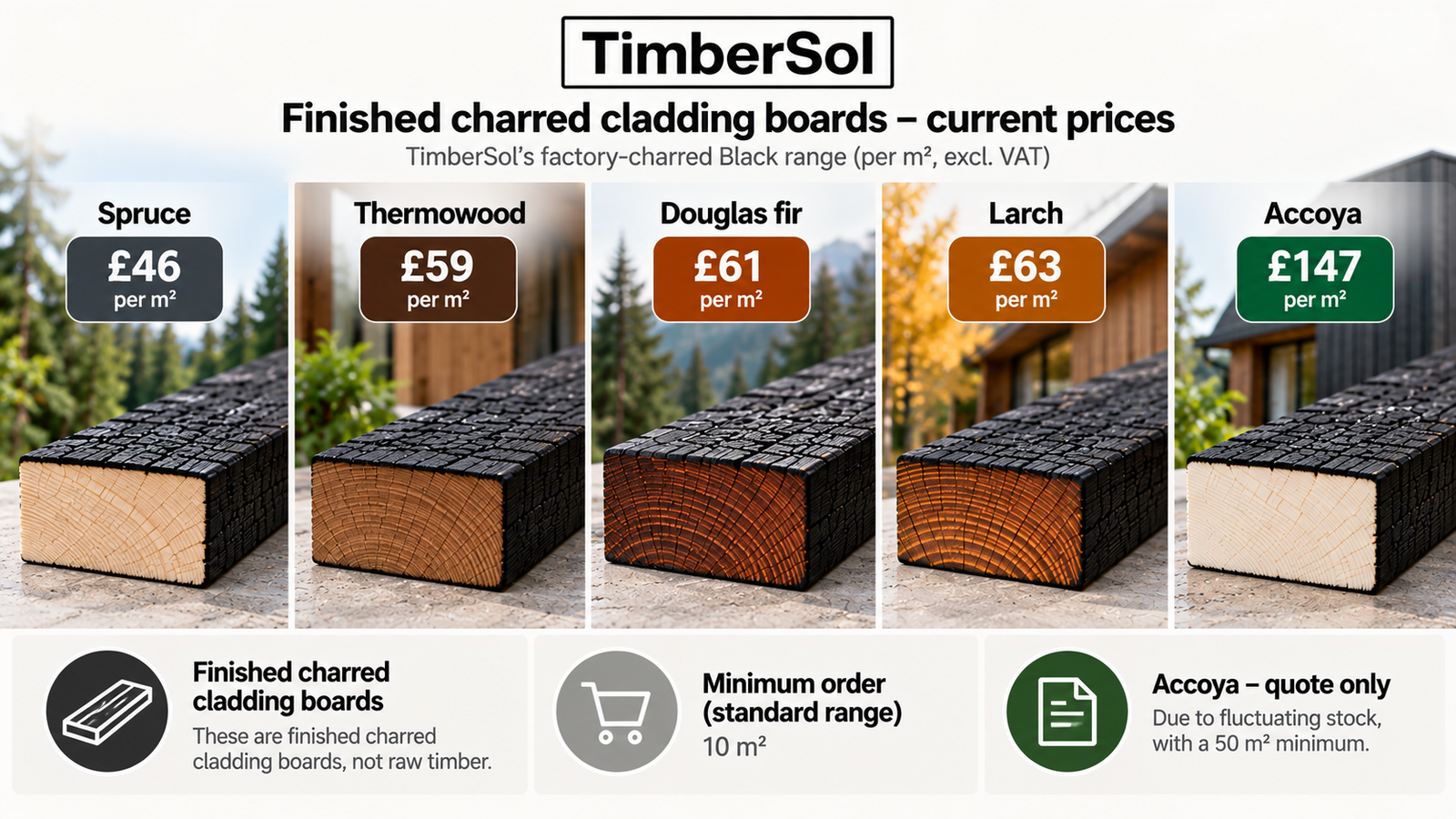
In TimberSol’s charred range, spruce is the entry-level timber, while ThermoWood, Douglas fir and larch sit close to each other in the mid-range, and Accoya is the premium option, supplied on a quote basis. Charring, brushing and factory oiling are included in the board price, so compare a charred quote with raw timber plus the cost of finishing it on site.
More affordable options include raw Douglas fir or lower-grade larch, or charred spruce cladding for a sheltered garden room or fence, with periodic maintenance as needed.
Thermowood or charred larch cladding can offer a balance of durability, hardness and price on exposed house elevations. Accoya can suit projects where a long service life is a priority, while composite can suit projects where low maintenance is important.
Budget around 10% for wastage, and remember that shadow gap and shiplap profiles have a smaller effective cover width than their nominal board width.
Alternative to Cedar Cladding: FAQ
Which Is Cheaper, Cedar or Larch?
European larch is generally cheaper than Western Red Cedar per m², while lower-grade, knottier larch can cost less again.
The trade-off is durability: North American Western Red Cedar heartwood is EN 350 class 2, while larch heartwood is class 3–4, so on fully exposed elevations cedar has the edge. Larch is the harder timber and resists knocks better, which is why Scottish Executive cladding guidance recommends European larch or oak where impact damage is likely. Compare larch vs cedar cladding in detail.
What Cladding Should You Avoid as a Cedar Alternative?
Avoid untreated, non-durable softwoods such as whitewood, pine or spruce on highly exposed elevations, sapwood-rich cedar or larch where natural durability is important, and any cladding without appropriate fire-performance documentation where Approved Document B requirements apply.
A common avoidable mistake is using unsuitable steel fixings with oak, larch, cedar or thermowood. Extractives and acidity in some timbers can react with certain metals in the presence of moisture, causing corrosion and black staining. Specify appropriate corrosion-resistant fixings, with stainless steel required or recommended for species such as Western Red Cedar and ThermoWood®.
What Is the Cheapest Alternative to Cedar Cladding?
Raw Douglas fir and lower-grade larch are among the more affordable natural timbers suitable for cladding.
For a lower-cost alternative to cedar cladding that arrives pre-finished, charred spruce is the entry-level option in the TimberSol range, suited to sheltered garden buildings. Composite and fibre cement can cost more upfront than timber, but their lower maintenance requirements can reduce whole-life costs over time.
Is There a Natural Alternative to Cedar Cladding That Doesn’t Need Treating?
Yes. European larch heartwood, European oak, thermowood and British-grown cedar can all be left uncoated and allowed to weather naturally towards silver-grey.
Skipping treatment means accepting colour change and some surface weathering in exchange for lower recurring maintenance. However, larch and Douglas fir can benefit from a coating on fully exposed elevations, while end grain and cut ends should be protected where recommended for the chosen product.
Whichever route you take away from cedar, the species beneath the finish still plays a major role in durability, which makes handling samples a useful step before committing to a full elevation. At TimberSol, we char, brush and oil larch, Douglas fir, thermowood, spruce and Accoya in-house in Boston, Lincolnshire, with boards supplied pre-coated.
Charred cladding samples are available across a range of timbers and finishes, from Natural through greys to Black and deep-char Carbon. Order a few, compare them against your budget and exposure, and if you want a second opinion on species or profile, our team is happy to talk it through by phone or email.
