
Charred Wood Blog
A Guide to Charred Timber Cladding

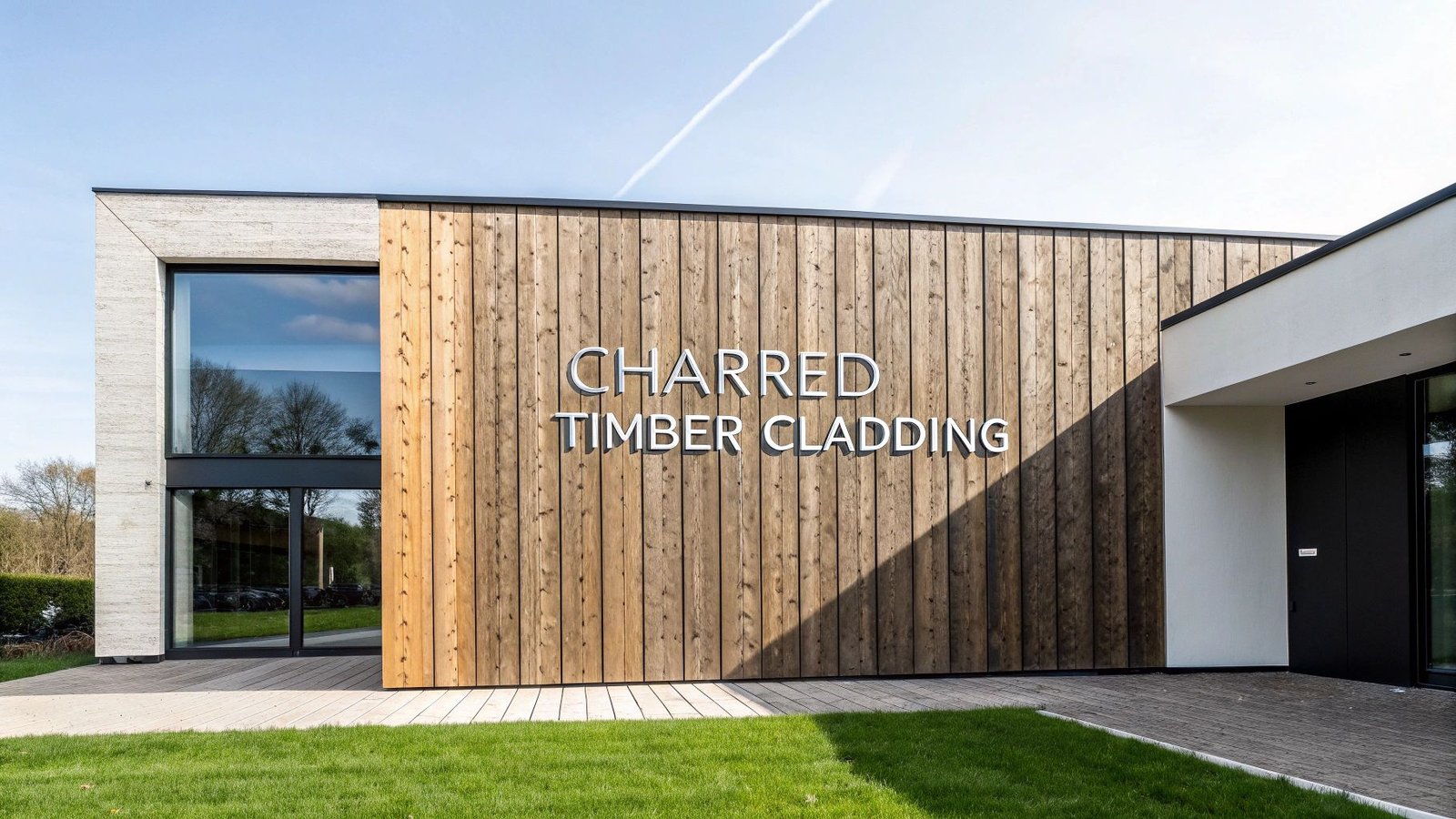
Charred timber cladding is a distinctive architectural material created by carefully burning the surface of the wood to enhance both durability and visual impact. This controlled charring process, rooted in the ancient Japanese Yakisugi technique, strengthens the timber.
By transforming standard timber into a resilient and low-maintenance material, Yakisugi delivers a visually striking cladding solution well suited to modern architecture.
This article explains how controlled charring forms a protective carbon layer that increases durability, reduces maintenance, and creates a striking architectural finish. Also it covers key benefits, the three-step process, suitable timber species (Cedar, Larch, Pine, Accoya), installation best practices, maintenance guidance, and UK market costs.
The Enduring Appeal of Charred Timber Cladding
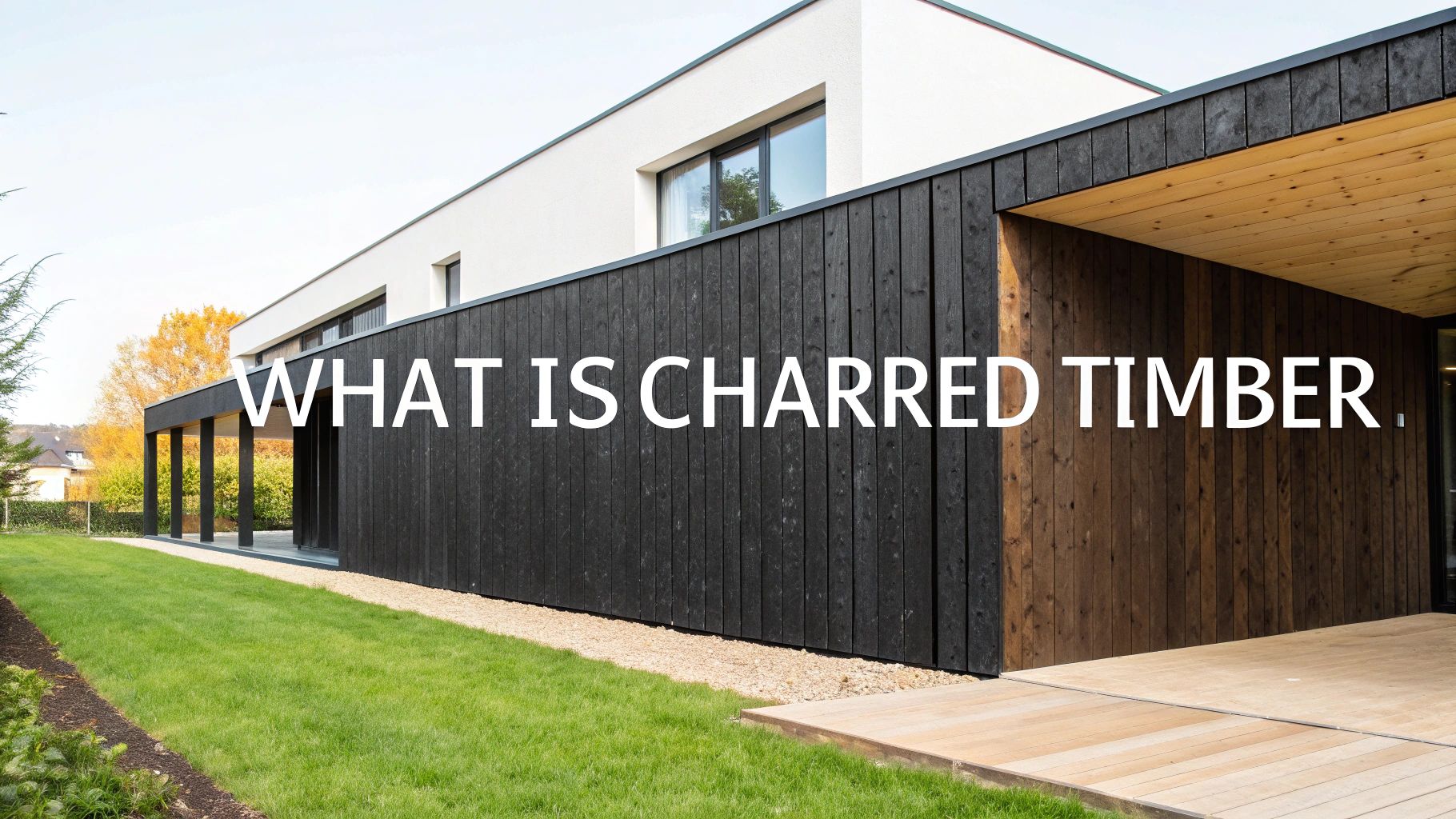
Charred timber cladding is based on the principle of using fire to preserve wood rather than destroy it. This centuries-old Japanese method, known as Yakisugi (also referred to as shou sugi ban), involves charring the surface of timber with a controlled, intense flame.
The process is not purely aesthetic; it fundamentally alters the wood’s structure. Similar to how steel is tempered to increase strength, controlled charring transforms the outer layer of timber. The flame removes the soft cellulose that attracts pests and decay, leaving behind a hardened carbon layer that functions as a natural protective shield.
A Fusion of Ancient Craft and Modern Design
The Yakisugi technique produces charred timber cladding that is naturally durable and low maintenance. The carbon layer formed during charring protects the timber from common causes of deterioration. This balance of strength and visual depth explains why architects and builders across the UK increasingly specify charred timber for contemporary projects.
Its growing popularity is driven by several distinct advantages:
- Exceptional Durability: The charred surface is naturally resistant to pests such as termites, fungal rot, and moisture exposure.
- Unique Beauty: Charring creates a deep, rich texture unavailable through paint or stain, ranging from a dramatic cracked “alligator skin” effect to a refined brushed finish.
- Enhanced Fire Resistance: The carbon layer acts as insulation, slowing flame spread compared to untreated timber.
- Environmental Sustainability: The process preserves responsibly sourced wood without chemical treatments, making it suitable for eco-conscious construction.
Among exterior cladding solutions, charred timber cladding stands out for combining bold architectural character with long-term structural protection – a direct fusion of natural material, traditional craftsmanship, and modern design.
Growing Popularity in the UK Market
The rising demand for charred timber cladding reflects measurable market growth rather than short-term trend momentum. The UK timber cladding market is projected to expand at a compound annual growth rate (CAGR) of approximately 4.00% between 2025 and 2033, with charred timber forming a notable segment of that expansion.
This growth is supported by increased new construction and urban development, where timber cladding is widely specified to enhance building aesthetics and improve thermal efficiency. The market trajectory signals a broader industry shift toward materials that combine durability, architectural impact, and environmental sustainability.
The Craft Behind Yakisugi
Yakisugi, often referred to as shou sugi ban, is a centuries-old Japanese technique used to transform raw timber into durable and visually distinctive charred cladding. The process is not simply about burning wood; it is a controlled, methodical craft designed to enhance the timber’s natural strength and resilience while creating a striking surface finish.
The technique follows a structured three-step process. It begins with controlled surface charring, continues with thorough cleaning of the burnt layer, and concludes with the application of a protective seal. Let’s walk through how it’s done.
Step 1: The Controlled Char
The foundation of the Yakisugi process is controlled exposure to fire. Craftsmen apply an intense, regulated flame to the timber’s surface with the objective of transforming, not destroying, the soft outer fibres.
This heat treatment forms a substantial carbon layer across the surface. The carbon layer functions as natural armour, providing resistance against insects and rot while contributing to the material’s recognised durability. The depth of the char is critical, as it determines both the final visual result and the cladding’s resilience to environmental exposure.
A deep, consistent char produces a sleek, dark, monolithic appearance. A lighter char creates a more textured, rustic surface often described as a “gator skin” effect. In both cases, the degree of charring directly affects aesthetic character and long-term performance.
Step 2: Brushing and Cleaning
After charring and cooling, the timber moves to the cleaning stage, where its distinctive character is revealed. This phase removes excess soot and loose ash to expose the preserved grain beneath the carbonised surface.
Craftsmen use stiff brushes to sweep each board, clearing away the brittle outer char layer. The intensity of brushing directly influences the final texture. Gentle brushing retains more of the dramatic, cracked surface, while more vigorous brushing produces a smoother, refined finish that highlights the natural grain patterns.
This is how professionally manufactured charred timber cladding is installed on a building’s exterior.
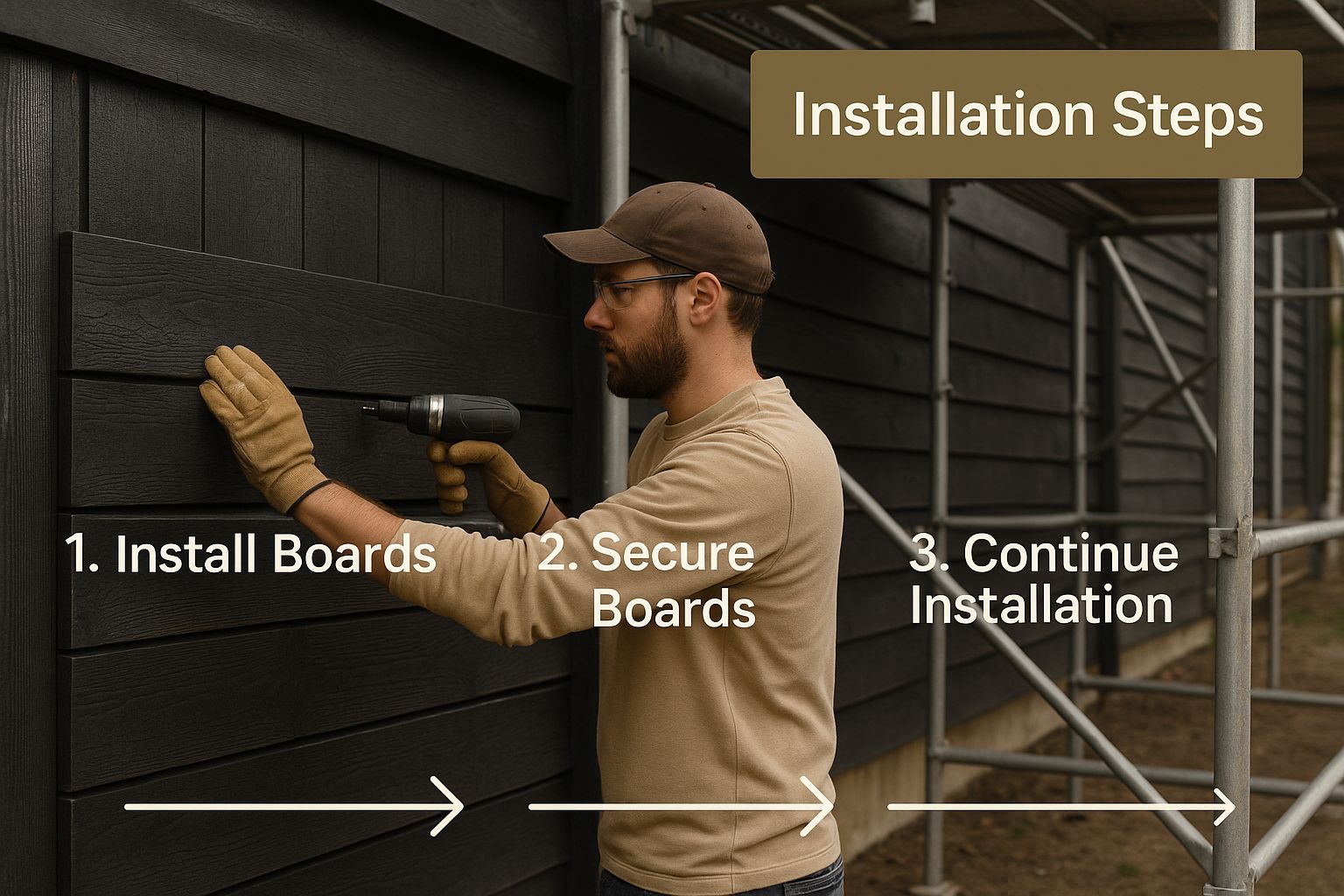
As you can see, the installation process requires the same level of precision, care, and technical expertise as the crafting of the charred timber boards themselves.
Step 3: Sealing for Protection
The final stage of the Yakisugi process is sealing the surface. Although the carbon layer already provides strong natural protection, applying a finishing oil enhances durability and preserves the timber’s appearance.
A natural, penetrating oil is applied to the brushed boards, performing several essential functions:
- Keeps Water Out: Seals the timber against moisture, increasing resistance to rot.
- Stops Sun Fade: Often contains pigments that protect the deep, dark colour from UV fading.
- Brings Out the Beauty: Enhances colour depth and emphasises surface texture, creating a refined, finished lustre.
This three-step method demonstrates how quality comes from enhancing the timber’s natural properties rather than altering them artificially. The process works with the wood, strengthening its inherent characteristics.
By mastering controlled fire, craftsmen produce a material that combines visual impact with long-term performance. The Japanese wood burning technique behind Yakisugi has a rich history and continues to provide effective solutions for contemporary, sustainable architecture.
So, Why Choose Charred Timber Cladding?
While many cladding materials offer functional benefits, charred timber cladding delivers a distinctive combination of durability and architectural style that sets it apart.
The Yakisugi charring process is not a surface stain; it fundamentally transforms the wood’s outer layer. The key advantages fall into three core categories: exceptional durability, striking aesthetics, and environmental sustainability.
These combined strengths explain why this ancient Japanese technique has become a preferred choice for modern, forward-thinking architectural projects.
Built to Last: Unmatched Durability and Resilience
Charred timber cladding is widely chosen for its exceptional durability. The traditional Japanese Yakisugi method forms a carbonised surface layer that functions as a natural protective shield against environmental exposure and biological threats.
This charred layer significantly extends the timber’s lifespan by protecting against:
- Pest Infestations: The process removes the soft cellulose that attracts termites and wood-boring beetles, reducing vulnerability to insect damage.
- Fungal Rot and Mould: Charring decreases surface porosity, limiting water absorption and helping prevent the damp conditions that cause rot and decay.
- Harsh Weather: The hardened carbon layer provides resistance against driving rain, wind, and snow, protecting the structural core of the timber over time.
The same durability benefits also make charred timber popular for adjoining exterior elements such as black charred wood decking, where moisture resistance and dimensional stability are critical.
This natural reinforcement reduces maintenance requirements compared to untreated wood and delivers long-term performance with added peace of mind. Charred timber is effectively strengthened through controlled fire to ensure lasting resilience.
A Look That Turns Heads: Captivating Aesthetics
Beyond its structural strength, charred timber cladding delivers visual depth and texture that cannot be replicated with paint or stain. The charring process enhances rather than conceals the natural grain, intensifying the wood’s character for a finish that feels both refined and organic.
Its versatility is a defining advantage. Depending on the timber species and the intensity of charring, the appearance can range from a deep, silky black with a subtle sheen to a heavily textured, cracked surface often referred to as an “alligator skin” finish. This adaptability allows charred timber to complement a wide range of architectural styles, from minimalist contemporary homes to rustic countryside conversions. This finish is commonly specified as black charred wood cladding when the goal is a bold, contemporary façade with long-term weather resistance.
Charred timber also creates strong visual contrast when paired with materials such as glass, steel, or stone. This contrast explains its popularity among architects seeking dynamic and memorable exterior designs.
A Genuinely Green Choice: Sustainability and Eco-Credentials
Charred timber cladding is widely recognised as a sustainable construction material, particularly due to its natural preservation process and extended lifespan. The Yakisugi technique relies solely on controlled charring rather than chemical treatments. Unlike pressure-treated timber, which often contains added preservatives, charred timber is protected by fire alone, reducing the risk of harmful substances leaching into surrounding soil or air.
Its durability further strengthens its environmental credentials. Cladding capable of lasting 80 years or more with minimal maintenance reduces replacement frequency, lowers material waste, and conserves resources over the building’s lifecycle. You can explore this further by reading about the full benefits of charred wood siding.
Sustainability has become a stronger priority within the UK construction sector, particularly since the COVID-19 pandemic accelerated demand for environmentally responsible materials. Developments in prefabricated charred timber systems also contribute to efficiency, reducing on-site installation time by up to 30% and improving overall project cost-effectiveness. UK timber cladding market trends indicate continued momentum toward materials that balance durability, architectural appeal, and environmental responsibility. Choosing charred timber supports performance, aesthetics, and long-term sustainability objectives.
Charred Timber Cladding vs Traditional Cladding
To provide clear context, it helps to compare charred timber cladding directly with the more common cladding materials typically considered for exterior applications.
| Feature | Charred Timber Cladding (Yakisugi) | Untreated Timber Cladding | Composite/uPVC Cladding |
|---|---|---|---|
| Durability | Exceptionally high; naturally resistant to pests, rot, and UV damage. | Moderate; vulnerable to pests, rot, and weathering without regular treatment. | High; resistant to rot and pests but can become brittle or fade over time. |
| Maintenance | Very low; requires minimal cleaning and occasional re-oiling (every 10-15 years). | High; needs regular cleaning, staining, or painting every few years to maintain appearance and integrity. | Low; requires regular cleaning to prevent mould and algae buildup. |
| Aesthetics | Unique, textured, and sophisticated appearance with deep colour and visible grain. | Natural wood appearance that weathers over time, often turning a silvery-grey. | Uniform, manufactured look; can imitate wood but lacks natural variation. |
| Lifespan | 80+ years is common with proper installation. | 15-30 years, highly dependent on maintenance and timber species. | 25-35 years, depending on quality and environmental exposure. |
| Sustainability | Excellent; uses a chemical-free process and its longevity reduces waste. | Good, if sourced from sustainable forests, but maintenance products can be chemical-based. | Poor; plastic-based, energy-intensive to produce, and difficult to recycle. |
As shown, while untreated timber and uPVC each serve specific applications, Yakisugi provides a strong balance of long-term durability, reduced maintenance requirements, and environmental responsibility.
Selecting the Right Timber for Charring
Choosing the correct timber species is fundamental to achieving high-quality charred timber cladding. The raw material determines the final texture, colour, and long-term durability of boards treated using the Yakisugi (shou sugi ban) technique. The charring process is not universal; different timber species respond differently to controlled burning.
Not all wood is suitable for charring. Some species are too dense to char evenly, while others lack the structural composition or natural resins needed to form a stable, protective carbon layer. Selecting the appropriate timber ensures both strong visual impact and decades of reliable performance.
In the UK, several timber species, including spruce, oak, and douglas fir wood are commonly available for charred cladding, each producing distinct aesthetic and performance characteristics when treated. Let’s take a closer look at the most popular choices.
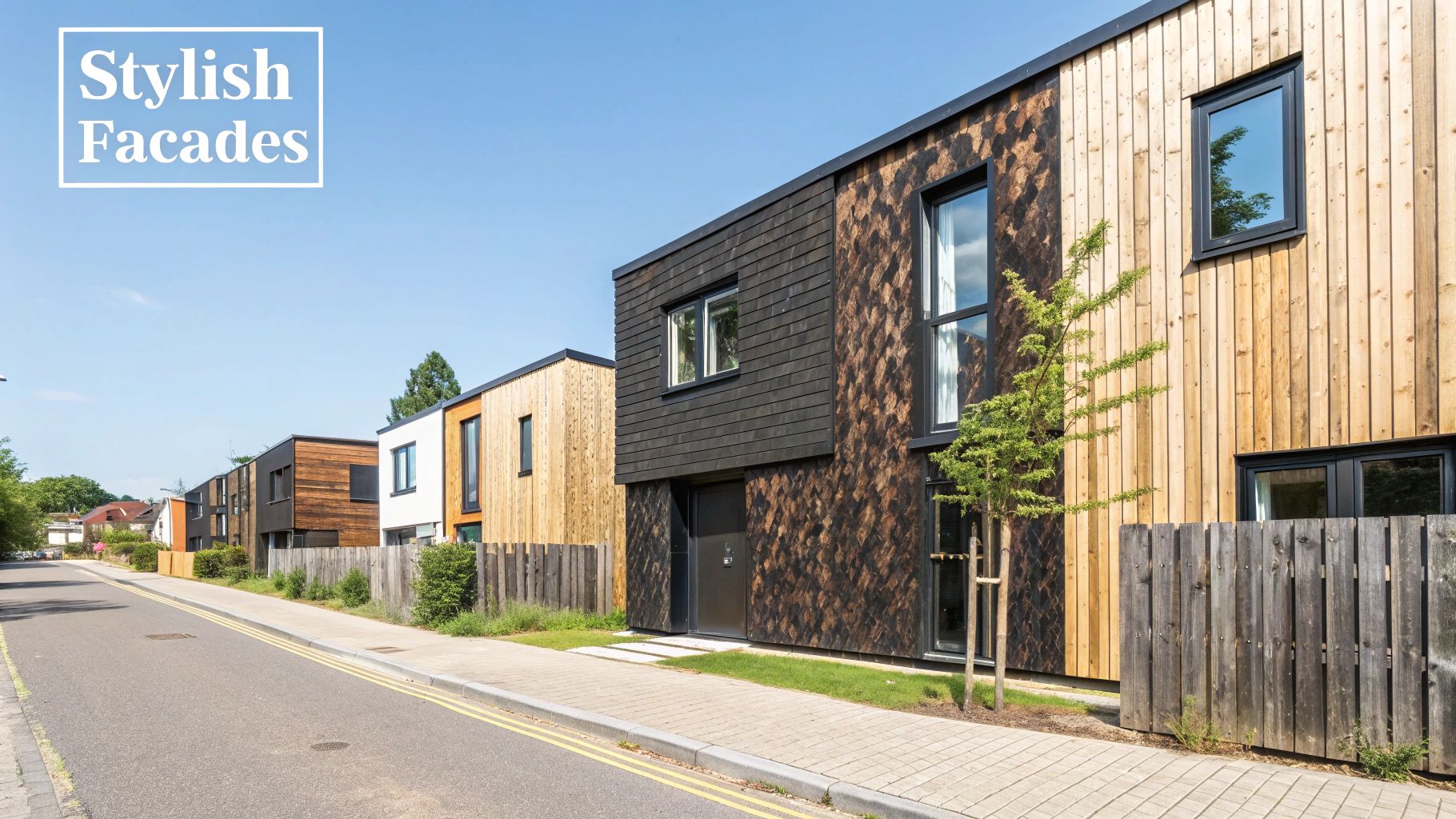
Cedar: The Premium Choice
Cedar is widely regarded as the benchmark species for charred timber cladding and is often considered the gold standard for Yakisugi applications. As a naturally stable softwood, Cedar is less prone to warping, twisting, or cupping when exposed to fluctuations in temperature and moisture. This dimensional stability makes it particularly well suited to controlled charring.
Cedar responds exceptionally well to flame treatment, forming a deep and consistent carbon layer. After brushing, the surface reveals a rich, dark finish with a subtle sheen that combines refinement with durability. The timber’s natural oils further enhance resistance to rot and insect attack.
- Resulting Texture: Can retain a bold, cracked “alligator skin” effect or be brushed to achieve a smooth, silky finish.
- Durability: High, supported by structural stability and natural protective oils.
- Cost: Premium-level, reflecting enhanced performance and distinctive aesthetic quality.
Larch: The Durable Workhorse
Siberian Larch is a strong alternative for charred timber cladding, offering a balance between performance and value. As a denser softwood than Cedar, it provides enhanced natural durability and hardness. This density makes it particularly well suited to the variable and often demanding UK climate.
Larch responds effectively to the Yakisugi charring process, forming a durable and resilient carbonised surface. Its grain pattern is typically more pronounced than Cedar’s, producing a textured finish with distinctive character. The increased density also contributes to strong impact resistance.
For projects requiring structural toughness combined with visual appeal, charred douglas fir cladding, larch provides a cost-effective alternative to premium timber species while maintaining long-term durability and aesthetic quality.
Pine: The Versatile Option
Pine is a practical option for charred timber cladding, particularly when using species that have been thermally modified before charring. It is widely available and generally more budget-friendly, offering a cost-effective way to achieve the Yakisugi aesthetic without the premium price level.
The key with Pine is selecting high-quality, properly prepared boards. When charred correctly, Pine develops a distinctive, rustic appearance with strong visual character. However, it does not provide the same natural durability as Cedar or Larch. To maximise performance, a high-quality sealant must be applied and regular maintenance maintained.
For broader comparison, reviewing the strongest types of wood can help clarify how different timber species perform in terms of strength and durability.
Accoya: The Engineered Performer
Accoya represents a combination of traditional timber and modern modification technology. It is produced through a process known as acetylation, which enhances dimensional stability and significantly improves resistance to rot. This engineered stability makes Accoya highly suitable for the Yakisugi charring process.
When charred, Accoya delivers a consistent, uniform surface with exceptional structural reliability. Its modified properties allow it to achieve a service life of 50 years or more above ground with minimal maintenance. Although it is the most expensive timber option, its long-term durability and performance position it as a strategic investment for high-end and legacy architectural projects.
Looking After Your Charred Timber Cladding
Correct installation combined with consistent, low-effort maintenance ensures charred timber cladding achieves its full lifespan potential. Although the Yakisugi process significantly strengthens the timber, installation quality directly affects long-term performance. Establishing a realistic care routine protects both appearance and structural integrity over time.
Accurate installation from the outset prevents common performance issues later. The process requires precision and an understanding of how charred timber behaves. Careful handling during fitting is essential. While the carbonised surface is durable, it can still be scuffed or chipped if handled improperly during installation.
Getting the Installation Details Right
Achieving optimal performance from charred timber cladding depends on following essential installation practices. These steps manage moisture, prevent visual defects, and ensure long-term structural stability.
Creating a rainscreen gap is mandatory. The cladding must be fixed onto vertical battens to form a minimum 25mm cavity between the rear of the timber and the building’s weather-resistant membrane. This cavity promotes airflow and allows moisture behind the boards to evaporate rather than remain trapped.
Fixings must also be selected carefully:
- Use Stainless Steel Fixings: Standard galvanised screws can react with natural tannins found in timbers such as Cedar or Larch, causing black staining on the cladding surface.
- Select the Appropriate Fixing Method: Face-fixing provides a traditional appearance, while hidden fasteners create a clean, uninterrupted modern finish. The decision depends on the board profile and desired aesthetic outcome.
Effective installation involves constructing a complete cladding system rather than simply attaching boards to a wall. Details such as ventilation gaps and fixing materials directly influence durability and long-term performance.
For large-scale renovations or complex projects, consulting experienced siding contractors ensures correct installation and reduces the risk of future issues. Researching experienced local siding contractors is a great way to find qualified experts for the job.
A Realistic Approach to Maintenance
Charred timber cladding is low-maintenance, but it still benefits from periodic care. Occasional attention helps preserve its deep colour and protective properties. Maintenance should be adapted to local climate conditions and the level of sun and rain exposure affecting the building.
An annual visual inspection is recommended. Walk around the property and check for accumulated dirt or early signs of fading, which typically appear first on the most sun-exposed elevations.
Cleaning should always be gentle:
- Brush Away Debris: Use a soft-bristled brush to remove cobwebs, dust, and loose dirt.
- Wash Gently: If deeper cleaning is required, use mild soapy water with a soft cloth. Avoid harsh chemicals and abrasive tools.
- Rinse Well: Rinse thoroughly with a low-pressure hose to remove soap residue. Do not use a high-pressure washer, as excessive force can strip the charred layer and damage the timber beneath.
Over time, the deep black finish may weather to a silvery grey, particularly on south-facing walls with high UV exposure. This change is a natural ageing process. Restoring the original tone requires applying a specialised finishing oil to replenish protective oils and revive colour depth. Reapplication is typically needed every 5 to 15 years, depending on sun exposure, and helps extend protection for the following decade.
Inspiring Designs with Charred Timber
Charred timber cladding has the ability to transform a building’s personality. It functions as more than a protective outer layer; it provides architects and homeowners with a broad creative canvas. Its deep textures and rich, distinctive colour establish it as a defining architectural feature.
This versatility allows charred timber to create a bold presence on a contemporary urban townhouse while integrating seamlessly into a rustic countryside setting. Its impact extends beyond its standalone appearance, shaped by how it interacts with natural light, surrounding environments, and complementary materials.
Creating Visual Drama with Contrast
One of the most effective ways to use charred timber cladding is through contrast. The dark, textured surface of the wood creates a strong visual counterpoint when paired with smooth, modern materials such as glass, concrete, or steel.
For example, a contemporary home extension with floor-to-ceiling glass panels framed by deeply textured charred larch demonstrates this effect clearly. The contrast enhances both materials: the timber introduces warmth and a natural connection, while the glass and metal reinforce a sharp, modern aesthetic.
This deliberate interaction of texture and tone defines many successful modern architectural designs. It allows architects to create façades with depth, rhythm, and visual presence, elevating a straightforward structure into a distinctive architectural statement.
To reinforce the same aesthetic across the full property boundary, designers often pair cladding with charred black wood fencing for a cohesive, high-contrast exterior scheme.
Exploring a Spectrum of Finishes
Charred timber cladding offers a wide spectrum of finishes rather than a single uniform black surface. Texture and tone vary depending on the timber species and the intensity of the Yakisugi (shou sugi ban) process applied. This variation allows precise alignment between material choice and architectural intent.
This variety allows precise alignment with a project’s design vision.
Here are several common finishes:
- Heavy “Alligator” Texture: Created through intense charring, this finish produces a deeply cracked, dramatic surface. It delivers a rugged texture suited to bold, rustic statements or a raw, elemental contrast within modern architecture.
- Brushed and Smooth: Heavy brushing removes loose carbon and exposes the preserved wood grain beneath. The result is a smooth, refined surface with a subtle sheen, suited to contemporary homes that prioritise understated sophistication.
- Light Char: A gentler charring process retains more of the original timber character while preserving protective benefits. This finish creates tonal variation, allowing hints of natural wood colour to show through the darkened surface.
Understanding these finish options demonstrates that charred timber cladding does more than protect a building – it defines architectural identity and enables distinctive, design-led outcomes.
Got Questions About Charred Timber?
After reviewing the benefits of charred timber cladding, it is natural to have final practical questions before committing to the material. As a solution that combines an ancient craft with modern performance standards, understanding the remaining details ensures informed decision-making.
Below are answers to the most common queries. Clarifying these points helps determine whether charred timber aligns with your project objectives, budget parameters, and long-term performance expectations.
Is Charred Timber Cladding Fireproof?
Charred timber cladding is not fireproof, as no construction material is completely resistant to fire. However, the Yakisugi charring process creates a natural fire-retardant layer. The carbonised surface acts as an insulating barrier, slowing flame spread compared to untreated timber.
For projects in the UK, compliance with fire safety standards is essential. Cladding products must be properly treated where required and certified to meet relevant fire-rating classifications. Verification of official documentation and certification is necessary before specification or installation.
What’s the Price of Charred Timber Cladding in the UK?
The cost of charred timber cladding in the UK varies depending on the timber species, the depth of charring, and the supplier. It is positioned as a premium material. While typically more expensive than standard softwood cladding, it often aligns in price with high-end hardwoods or quality composite boards.
The pricing spectrum generally includes:
- More Accessible Options: Larch or Pine provide a cost-effective way to achieve the Yakisugi aesthetic without reaching the highest price tier.
- Premium Choices: Cedar and modified timbers such as Accoya sit at the top end, reflecting their enhanced durability, stability, and longevity.
When budgeting, it is essential to obtain a comprehensive quotation that includes installation costs to determine the full project investment.
Although the initial outlay is higher than basic cladding materials, the long service life – potentially exceeding 80 years – combined with low maintenance requirements can deliver strong long-term value.
Can I Char the Timber Myself?
Charring timber yourself is technically possible, but it is not recommended for anything beyond small decorative features. Achieving a consistent, even char without compromising the wood’s structural integrity requires specialised equipment and precise control of heat and flame intensity.
For a finish that is safe, visually consistent, and capable of delivering long-term performance, sourcing charred timber from a professional supplier is the reliable option. Professional manufacturers control the process accurately and ensure each board meets established quality and safety standards.
For expertly crafted TimberSol charred timber cladding that combines timeless beauty with exceptional durability, explore our full product range. Discover the perfect finish for your project at https://timbersol-backup.elnoirstudio.com.
