
Charred Wood Blog
A Guide to the Japanese Wood Burning Technique

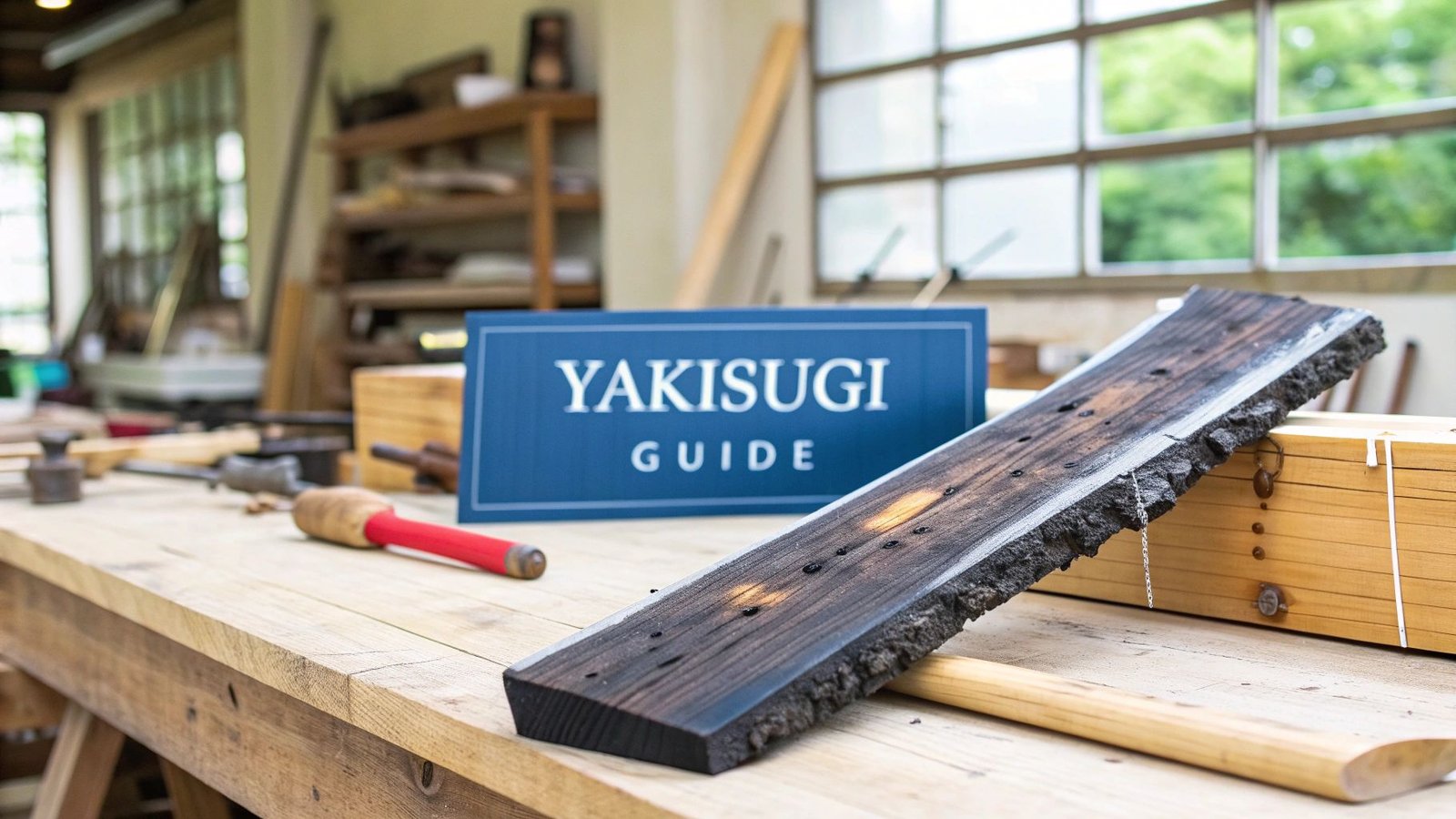
Walk by an older building in Japan, and you might notice the exterior wood has a deep, leathery-black finish. This isn’t paint or stain; it’s the result of Yakisugi. Yakisugi is a traditional Japanese method of preserving timber by charring its surface with fire.
The process creates a naturally tough and long-lasting material that stands up to fire, insects, and water, all without a single drop of chemicals. It’s a low-tech way to turn simple wood into a high-performance architectural feature.
The Art and Science of Yakisugi
Yakisugi, also known as shou sugi ban in the West, is an architectural technique from 18th-century Japan. The name translates to “burned cedar board,” which tells you everything you need to know about its origins. This controlled burn creates a protective carbon layer – think of it as natural armour.
This clever technique was born from necessity in Japanese coastal towns that needed to protect their homes from fire and salty air. By charring the exterior cladding, they found they could extend the timber’s lifespan. The carbonised shield not only repels flames but also makes the wood inedible to termites and highly resistant to rot.
From Practical Tradition to Modern Design Staple
Yakisugi was a regional craft, used mostly for rural homes and storehouses in Japan. But its unique, rugged beauty and practical benefits have caught the eye of architects and designers worldwide. Today, this Japanese wood burning technique is prized for its perfect marriage of form and function.
The ancient process offers advantages that resonate with today’s building philosophies:
- Incredible Durability: The charred layer forms a tough barrier against moisture and UV rays that lasts over 80 years with little upkeep.
- Natural Pest Control: The carbonisation process turns the wood unappealing to termites and wood-boring beetles.
- Improved Fire Resistance: It sounds backward, but it’s true. The charred surface is harder to set alight than untreated wood, which helps to slow the spread of a fire.
- A Sustainable Choice: Yakisugi enhances wood through a physical change, not chemicals. This makes it an eco-friendly option for green building projects.
Yakisugi is a conversation between fire and wood. It’s a partnership that unlocks the timber’s hidden strength and beauty, creating a material that feels both ancient and perfectly at home in modern design.
In recent years, the textures and tones of Yakisugi have made it a go-to material for various design applications from exterior cladding and fencing to stunning interior feature walls and furniture. This guide will take you through its history, the steps of the process, and exactly why this time-honoured technique is gaining so much ground in projects that demand both style and substance.
The Rich History of Charred Wood
To really get to the heart of why this Japanese wood burning technique became so essential, we need to step back in time. The story of Yakisugi isn’t just about a beautiful finish; it’s a tale of practicality born from necessity, rooted in 18th-century Japan’s everyday challenges.
Back then, entire Japanese towns and cities were crafted from wood. Timber was beautiful and abundant, but it came with a terrifying, ever-present fire risk. This wasn’t some distant worry; it was a daily reality for communities living in densely packed wooden buildings.
A Solution Forged in Fire
There was a desperate need for a simple and effective way to fireproof buildings. While the wealthy individuals could turn to stone or plaster, most merchants and families needed an affordable solution to protect their homes and livelihoods. This is where the simple genius of Yakisugi comes in.
Craftspeople discovered that by charring timber, they could change the wood’s properties. This controlled burn creates a carbon layer that acts as a natural fire retardant. It was an ingenious case of fighting fire with fire, giving ordinary people a real way to defend against a fire.
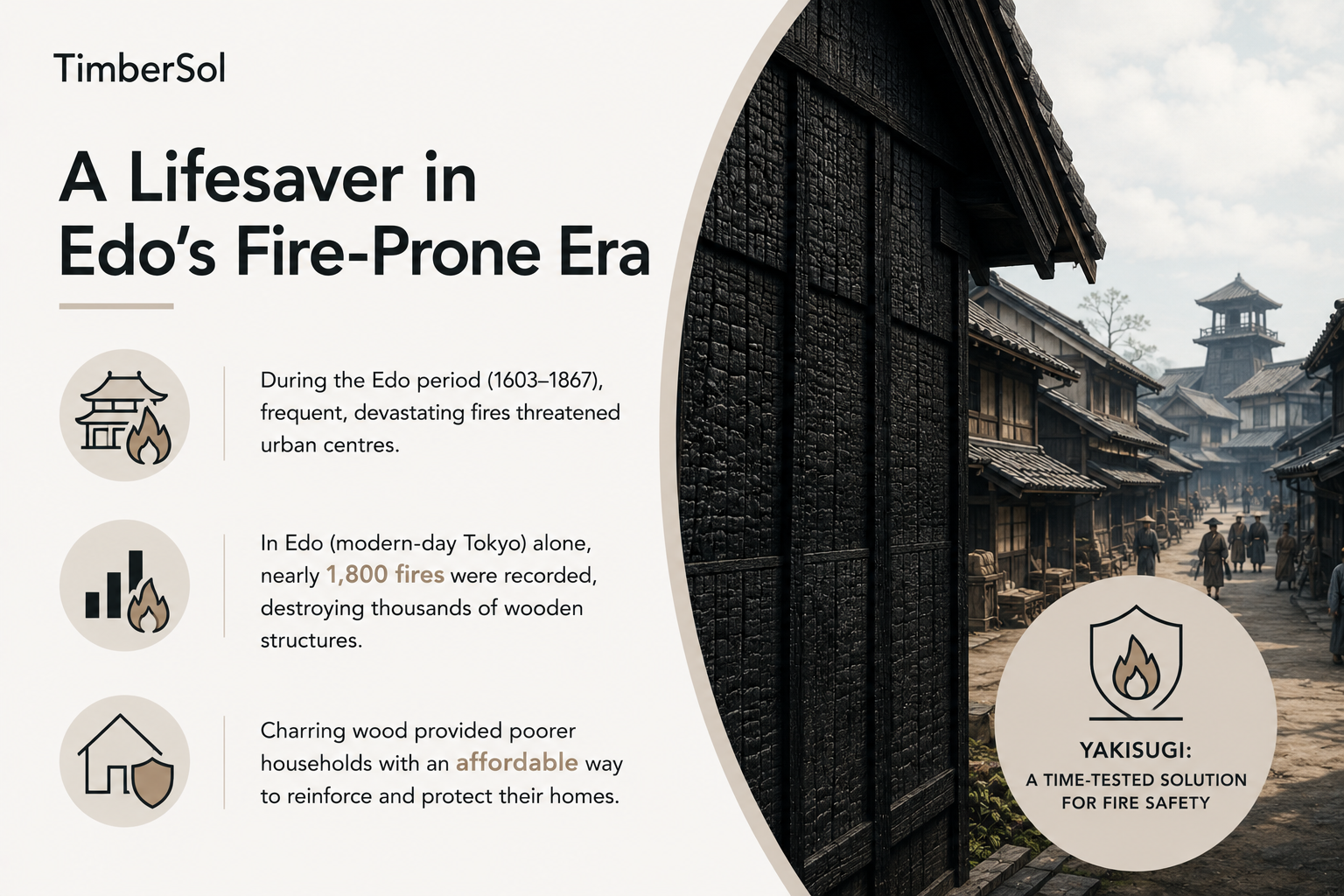
This technique was a lifesaver in urban centres, especially during the Edo period (1603–1867), which was plagued by frequent, devastating fires. In Edo (modern-day Tokyo) alone, nearly 1,800 fires were recorded that wiped out thousands of wooden structures based on metropolisjapan.com data. Charring wood gave poorer households an affordable way to reinforce their homes. You can explore more about how Yakisugi became a cornerstone of preventative building practices in historical Japan.
Yakisugi began as a pragmatic response to a dangerous world. It was a community-level innovation that empowered communities to protect what mattered most.
But fire wasn’t the only enemy. The charred layer also proved remarkably good at warding off insects. Termites and wood-boring pests avoid carbonised surfaces, leaving Yakisugi-treated homes standing strong while untreated homes would slowly succumb to infestation.
From Practical Protection to Architectural Art
Over the centuries, what started as a purely functional technique began to be admired for its aesthetic. The deep, rich black with a striking “alligator skin” texture, created a dramatic and elegant finish that cannot be replicated by paint or stain. Depending on the light, it can shift from a soft matte black to a shimmering, silvery sheen.
This journey became a celebrated architectural feature. The aesthetic appeal of Yakisugi became as important as the practical benefits, and architects started using Yakisugi as a bold design statement. It’s this shift that helped the craft survive after modern building materials became common.
The enduring legacy of this Japanese wood burning technique rests on a perfect balance of three key qualities:
- Resilience: It offers natural, formidable protection against fire, pests, and moisture.
- Beauty: It provides a unique, timeless aesthetic that connects a building to the natural world.
- Sustainability: It enhances wood without chemicals, fitting perfectly with today’s eco-conscious building principles.
Today, the revival of Yakisugi connects modern architecture with deep cultural roots. Architects and builders are rediscovering what Japanese craftspeople knew centuries ago: sometimes the most effective solutions are the simplest and most elegant. It’s a timeless practice, just as relevant now as it was then.
How the Yakisugi Process Actually Works
Yakisugi seems incredibly straightforward on the surface. It’s just wood and fire, right? But while it harnesses these elemental forces, the process is a refined craft, involving charring, cooling, and finishing. Getting this balance right is what transforms a standard timber into beautiful, durable material.
Yakisugi is a controlled form of pyrolysis. We’re not just scorching the surface; we’re heating the wood in a low-oxygen environment to fundamentally change its cellular structure. This creates a tough, protective carbon layer. The goal isn’t ash, but a solid, stable char bonded to the wood underneath.
The Charring Stage: The Heart of the Transformation
This is where the real magic happens. Japanese craftspeople traditionally would bind three cedar planks into a triangular chimney. A fire lit at the bottom would then roar up through the flue, charring the inside faces of the planks with intense, even heat.
Modern methods have adapted this, often using high-powered torches that give the artisan more control. The goal is to create a deep, consistent char with ‘alligator skin’ texture. This cracked pattern is a sign that the carbonisation has gone deep enough to be truly effective.
This stage is all about skill and feel. Too little heat results in a soft, sooty layer that will just wash away. Too much heat risks burning the wood too deeply, weakening its structure.
The Cooling Stage: Locking in the Protection
As soon as the perfect level of char is achieved, the process moves into its most dramatic phase: cooling. The smouldering planks are sprayed with water, which stops the burning process instantly.
This isn’t just about putting out the fire. The rapid thermal shock actually hardens and sets the carbon layer. It also causes the wood pores to contract, which is another reason it becomes so resistant to water penetration based on resawntimberco.com data.
The Finishing Stage: Revealing the Beauty
Once the timber is cool and dry, it’s time for the final touches. This last stage involves cleaning and sealing the surface.
- Brushing: First, the planks are brushed down with a stiff wire brush. This removes loose soot and flaky char. The amount of brushing changes the final look. A light touch leaves a deep, cracked black finish, whereas a more vigorous brushing can reveal the wood grain underneath.
- Sealing: Finally, a natural oil is wiped on. This is a vital step. It seals the wood, deepens the rich, dark colour, and adds another layer of protection. Traditional choices like tung or linseed oil are perfect, as they nourish the wood while enhancing the fire-created tones.
Dating back to 18th-century Japan, this technique was a practical solution for preserving timber. Charring planks at over 400°C, forms a carbonised surface that naturally resists fire, weather, insects, and rot. It’s an ancient method praised for its ability to cut wood maintenance needs by up to 60% compared to untreated wood here in the UK. You can find more insights on the Yakisugi preservation technique at degmeda.eu.
The Yakisugi process is a testament to working with nature, not against it. By using fire to unlock wood’s inherent strengths, the technique Yakisugi creates aesthetically striking and exceptionally resilient material, a perfect blend of ancient wisdom and modern performance.
Through this meticulous three-part journey, a simple plank of wood is completely reborn. It’s given a new life, where it can withstand the elements for decades to come, all thanks to the purposeful, controlled application of fire.
Choosing the Right Timber for Yakisugi
The success of any Yakisugi project depends on the timber you choose. It’s the first, and most critical, decision you’ll make. The right wood embraces the flame and transforms beautifully, while the wrong wood falls apart.
Traditionally, the gold standard has always been Japanese Cedar, or Sugi (Cryptomeria japonica). This isn’t just about sticking to tradition; Sugi has the perfect makeup for the job. Its cellular structure is porous and not too dense, which means the heat can sink in deeply and evenly.
This is what creates that iconic “alligator skin” finish. That beautiful char isn’t just for looks; it’s a tough, protective layer that sticks firmly to the wood underneath, so it won’t flake off in the wind and rain.
Modern Alternatives That Hold Their Own
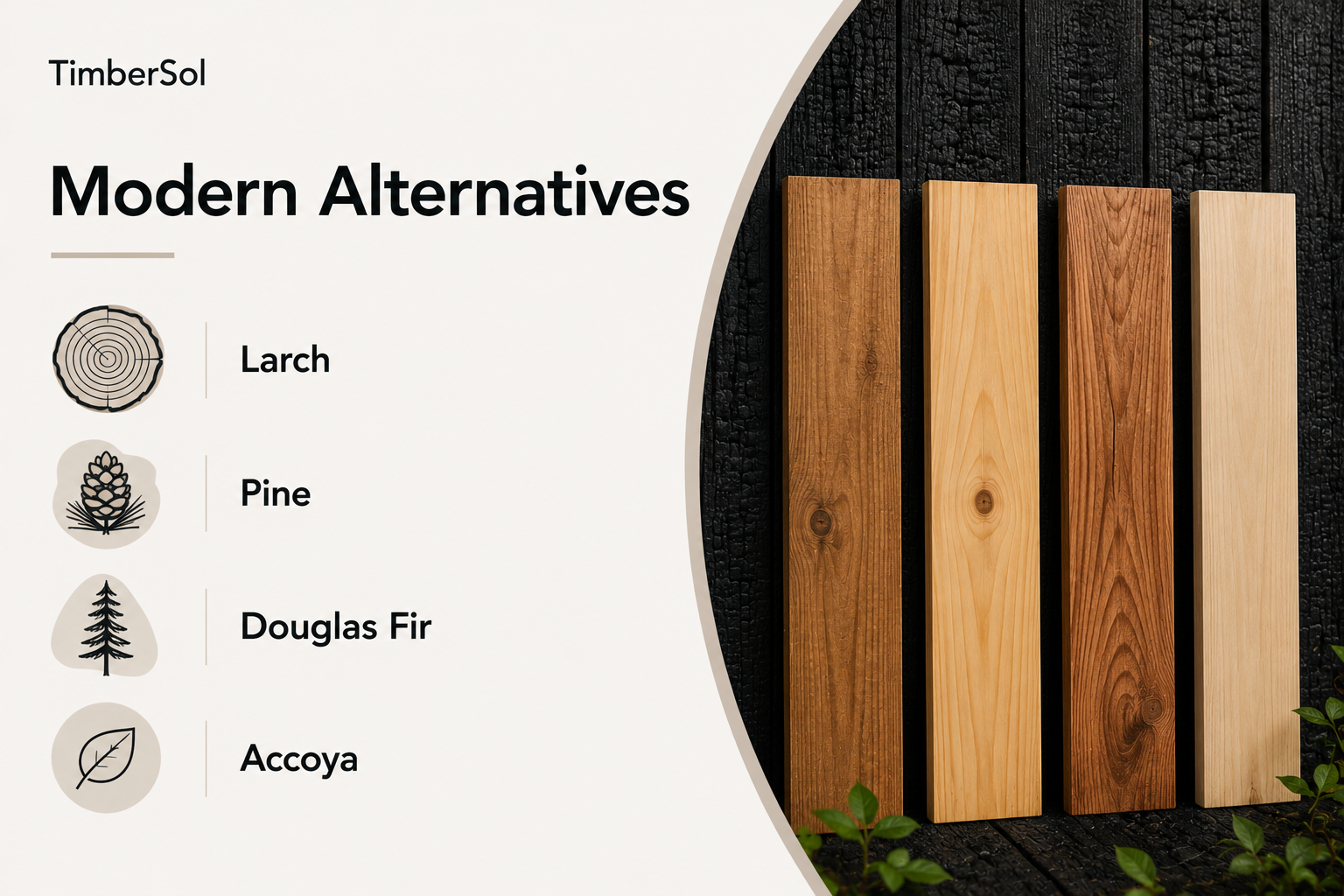
While Sugi is the classic choice, it can be tricky and expensive to source in the UK. Thankfully, craftsmen have found several other timbers that work well, broadening the options for modern Yakisugi projects.
- Larch: Is a durable softwood that’s naturally full of resin. Larch develops a deep, dark colour when charred, and the process boosts its natural rot resistance. This makes it a go-to for cladding and decking in British weather.
- Pine: Certain types of pine, particularly thermally modified Radiata Pine, have become very popular. The thermal treatment already makes the wood more stable, so when you add the charring, you get a uniform and sleek dark surface.
- Douglas Fir: Douglas Fir is known for its strength and bold grain pattern, which the fire really brings to life. It creates a finish packed with texture and character, perfect for a striking feature wall.
- Accoya: This is a high-tech modified wood, engineered for incredible stability based on artisandoorworks.com data. Charring Accoya results in exceptionally durable and even char. It’s one of the toughest and most reliable Yakisugi options.
Specifying pre-charred boards is the most reliable route for UK projects. We supply multiple Yakisugi-ready species so you can match grain character, stability, and maintenance expectations to the build, including Charred Spruce Cladding which is suited for lightweight, clean-lined cladding, and Charred Thermowood Cladding that offers enhanced resistance to movement and low-maintenance performance.
Choosing timber is both an artistic and practical decision. Every wood species has its own interaction with fire, revealing a unique grain, texture, and colour. The best wood is the one that fits your design vision and environmental needs.
Getting to know the natural qualities of different timbers is key to a great result. If you’re interested in learning more about wood strength in general, our guide to the strongest types of wood is a great place to start.
Comparison of Timber for Yakisugi Projects
To help you find the perfect fit, it’s useful to see how these popular timbers stack up against one another. The right choice depends on your budget, desired look and what you’re building – whether it’s exterior cladding, a garden fence, or an indoor statement piece.
Here’s a straightforward comparison of the key players.
| Timber Species | Traditional Use | Durability | Typical UK Cost | Best Application |
|---|---|---|---|---|
| Japanese Cedar (Sugi) | The original timber for Yakisugi. | Very High | High | Authentic exterior cladding on traditional or heritage builds. |
| Siberian Larch | A popular modern alternative in Europe. | High | Moderate | A great all-rounder for cladding, fencing, and decking. |
| Douglas Fir | Valued for its aesthetic appeal. | High | Moderate | Feature walls and architectural accents where the grain can shine. |
| Accoya | A premium, high-performance option. | Exceptional | Premium | High-end projects where maximum durability is essential. |
Ultimately, selecting the right timber is the foundation of your entire Yakisugi project. Whether you choose the timeless authenticity of Sugi or the modern resilience of Accoya, this decision will shape the final appearance, texture, and longevity of your work.
What Are the Real Benefits of Charred Wood?
Why are so many architects and builders in the UK looking back to this ancient Japanese technique? While the stunning, textured look of Yakisugi is a major part of its appeal, the real magic lies in its practical benefits. The charring process creates a tough, natural shield, turning ordinary timber into a high-performance material.
The fire changes the wood’s structure. That resulting layer of carbon acts as a chemical-free barrier against common problems, making it a brilliant, sustainable choice for almost any building project.
A Natural Shield Against the Elements
One of the biggest wins with Yakisugi is its incredible weather resistance. The dense, carbonised surface is hydrophobic, which is a technical way of saying it repels water. In a climate like ours, where timber is constantly battered by rain and damp, this is a game-changer. By stopping moisture from soaking in, it dramatically cuts down the risk of rot, decay, and fungal growth.
The charred layer is also highly resistant to UV damage. While untreated wood fades, warps, and eventually breaks down under the sun, the stable carbon surface retains integrity and colour for decades. That means less maintenance and worry, and a finish.
Yakisugi doesn’t just put a coating on the wood; it transforms the wood itself. Don’t think of the char layer as paint, but as integrated armour, a permanent, breathable shield forged from the timber.
This built-in durability is a major factor in its growing popularity. A 2023 survey of UK architects found that 18% of residential timber cladding projects use charred wood, usage increased less than 5% a decade ago. It makes sense when you realise the technique can extend the life of cladding by 30 – 50% without any chemicals. You can discover more insights about Yakisugi’s history and modern usage at iwood.co.uk.
Natural Resistance to Pests and Fire
Charring wood provides two more surprising but critical advantages: pest deterrence and improved fire resistance. Burned timber surface is unappetising to termites and wood-boring insects. Carbonised wood deters pests without any toxic chemicals.
It sounds counterintuitive, but charring wood increases fire resistance based on mdpi.com data. The carbon layer created a higher ignition temperature than fresh, untreated wood. This means it takes a lot longer to catch alight and, if it does, it helps to slow the spread of flames. It’s a valuable form of passive fire protection.
This unique combination of resilience and safety is what makes it so appealing. You can learn more about how these advantages come together in our detailed article covering the benefits of charred wood siding.
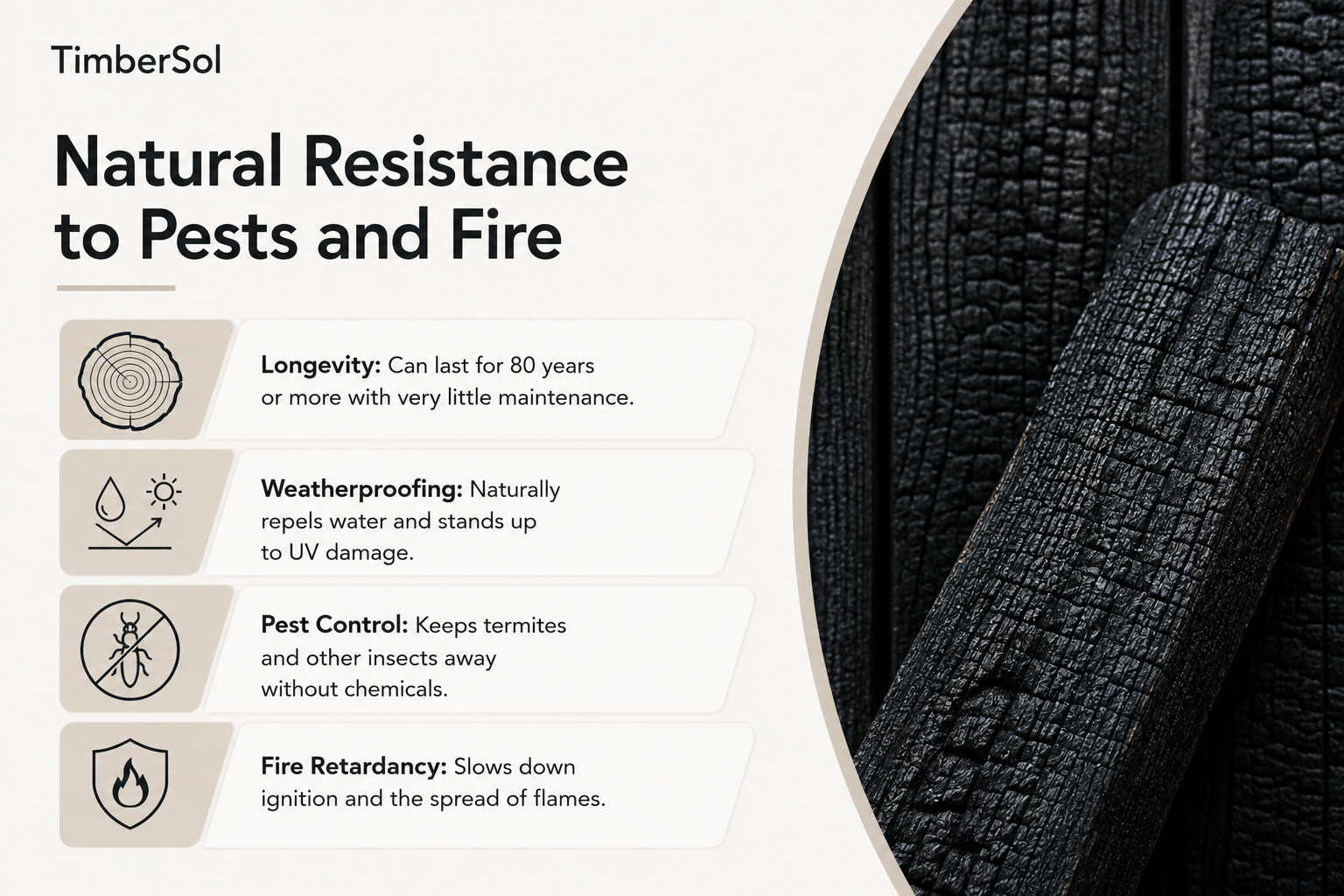
Yakisugi is more than just an aesthetic choice; it’s a smart investment in durability. You get a whole suite of benefits that work together seamlessly:
- Longevity: Can last for 80 years or more with very little maintenance.
- Weatherproofing: Naturally repels water and stands up to UV damage.
- Pest Control: Keeps termites and other insects away without chemicals.
- Fire Retardancy: Slows down ignition and the spread of flames.
By choosing this time-honoured method, you’re not just getting a beautiful finish. You’re getting a material that’s intelligent, sustainable, and built to last for generations.
Common Questions About Yakisugi
As this ancient Japanese art of charring wood finds its way into more UK projects, it’s only natural that questions pop up. Let’s tackle some of the most common queries to give you a clearer picture of what Yakisugi is all about in practice.
We’ll cover the big ones: how long it lasts, whether it’s safe for your home, and if it’s something you can tackle yourself. Think of it as a practical guide to help you decide if this incredible material is the right fit for you.
How Long Does Yakisugi Wood Last?
One of the most remarkable things about Yakisugi is its incredible lifespan. When the timber is properly charred and finished, it can last for 80 to 100 years (or longer) with minimal upkeep. That tough carbonised layer is a fantastic natural shield.
This charred surface acts as a bodyguard for the wood, defending it against all the usual suspects:
- Moisture and Rot: The dense char layer naturally repels water, which prevents the damp conditions that cause timber to rot.
- Sun Damage: While untreated wood fades and weakens under sunlight, the carbon layer is highly resistant to UV rays, protecting the wood underneath.
- Insect Attack: Termites and other wood-boring pests find the charred surface completely unappetising.
To keep it looking its best, a fresh coat of natural oil every 10 – 15 years is typically all it needs.
Is Charred Wood Safe For Residential Homes?
It’s a clean material, perfectly safe for both the outside and inside of a family home. Charring wood increases fire resistance. The carbonised layer has a higher ignition point than untreated timber, so it takes a lot longer to catch alight and slows the spread of flames. This makes it a safe and sensible choice for home exteriors.
Because the preservation comes from the physical act of charring, not from added chemicals, Yakisugi is a non-toxic and environmentally sound choice.
Can I Do The Yakisugi Technique Myself?
For a keen DIYer, the idea of trying this ancient technique on a small project might be tempting. But it’s a process that requires serious respect and skill. Working with open flames is risky without professional training and the safety gear.
Getting an even char is difficult without a controlled setup or purpose-built furnace. For larger projects your best bet is always to source pre-charred timber from a trusted supplier. It’s the only way to guarantee quality, consistency, and safety.
If you have more questions, you can find further details in our Frequently Asked Questions section.
For expertly crafted, durable, and beautiful charred timber products, explore the collection at TimberSol. Discover how our authentic Yakisugi can bring timeless elegance and resilience to your next project at https://timbersol-backup.elnoirstudio.com.
