
Cleaning Algae From Decking A Practical Guide

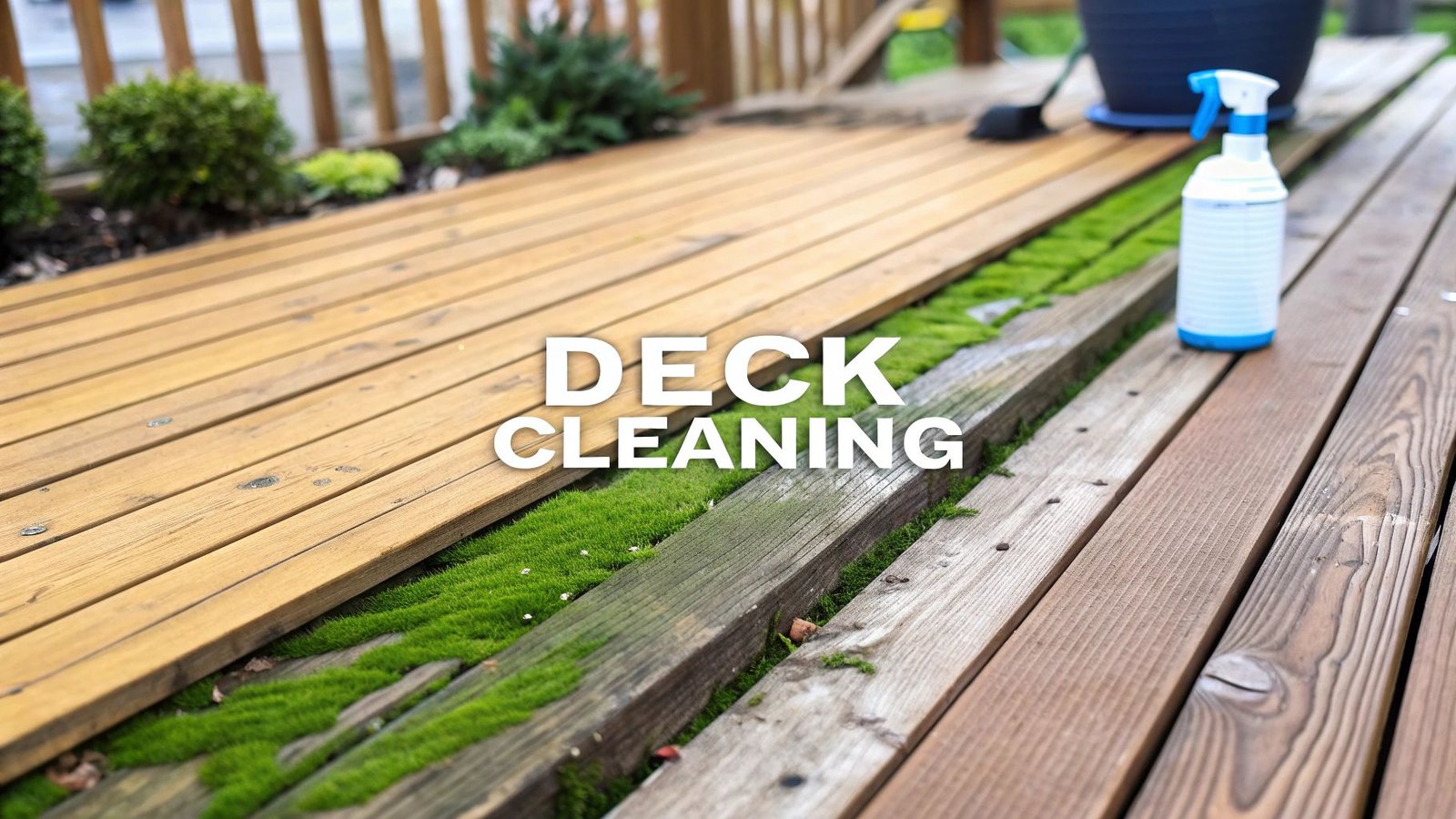
Cleaning algae from decking is the process of removing green, slippery organic growth from wooden or composite deck boards using biocidal cleaning solutions, mechanical brushing, or controlled low-pressure washing to restore safety and surface condition.
Algae on decking is more than a cosmetic issue. That green, slippery layer creates a serious slip hazard and signals prolonged moisture exposure that can affect the long-term condition of the timber. Cleaning algae from decking is essential to protect your investment and keep your garden a safe place for everyone.
This article explains effective cleaning methods, including the use of biocidal treatments, safe washing techniques, and long-term prevention strategies. It also highlights common mistakes to avoid when removing algae from wooden or composite decking.
Why You Can’t Ignore Algae on Your Decking
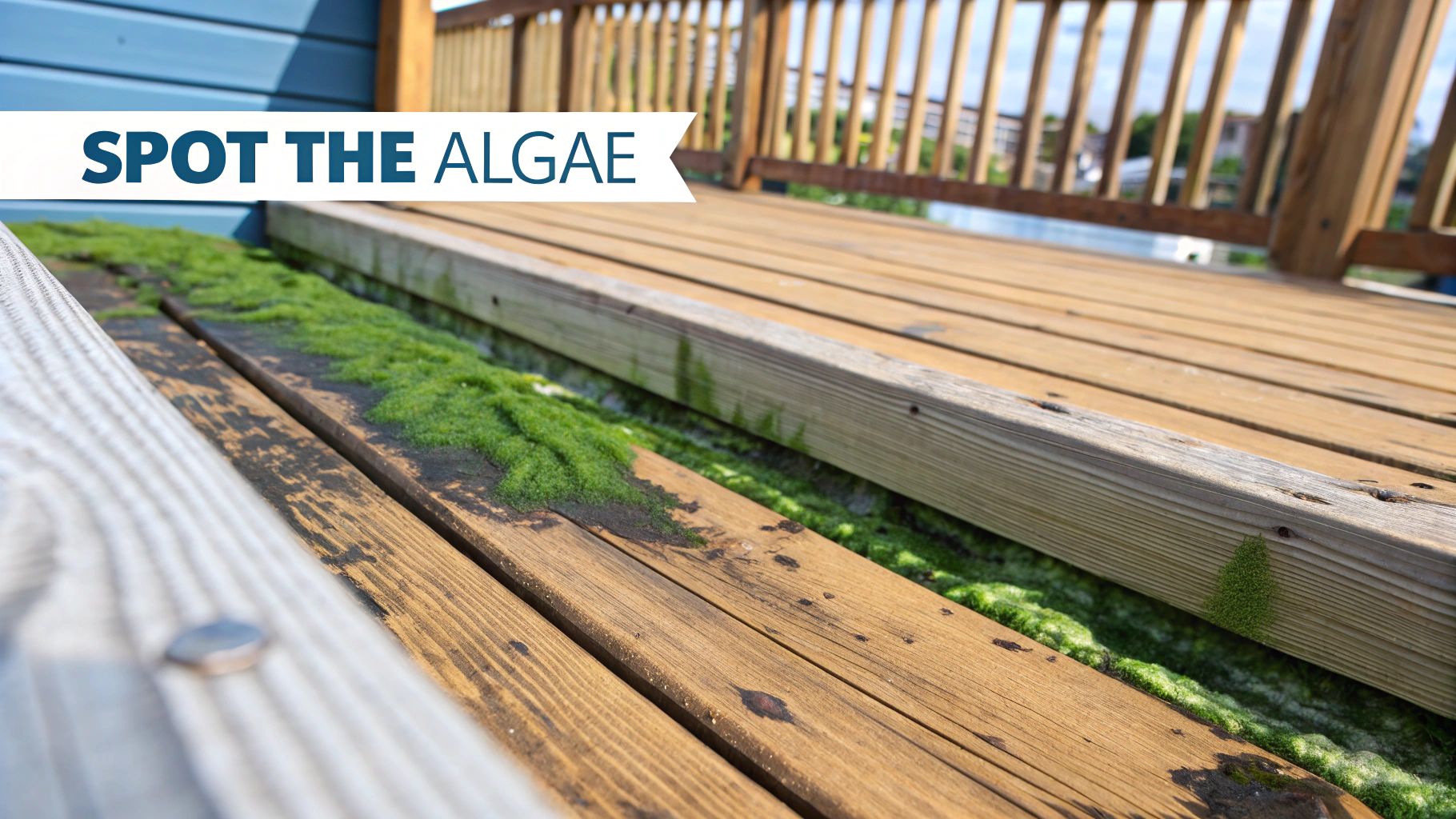
It’s easy to see that green sheen and think, “I’ll deal with it later.” Many people do. But what looks like a minor cosmetic issue can quickly turn into something far more dangerous – and far more expensive – to fix.
The biggest and most immediate concern is safety. When algae gets wet, it transforms your decking into a surface as slippery as an ice rink. This creates a serious risk, particularly for young children and older relatives, but in reality, anyone can suffer a nasty fall after a bit of rain. Given the damp UK climate, this isn’t an occasional issue – it’s a problem for much of the year. In fact, slippery, algae-covered decking surfaces are linked to an estimated 15,000 slip-and-fall accidents annually in the UK.
From a professional perspective, there’s typically a 30 – 40% spike in decking cleaning enquiries in early spring, following the wet winter months when algae growth has been left unchecked. You can read more about how the UK climate contributes to decking algae at homebuilding.co.uk.
More Than Just a Slippery Surface
A fall risk is the most obvious concern, but algae also affects the structural health of your decking. This green growth traps moisture directly against the timber surface.
When moisture remains constant, the wood cannot dry properly. That persistent dampness creates ideal conditions for more serious long-term damage.
- It speeds up rot: Prolonged moisture softens wood fibres, increasing vulnerability to fungal decay and timber rot.
- It weakens the structure: Surface growth can lead to deeper moisture penetration, gradually compromising board strength and reducing the overall lifespan of the deck.
- It increases long-term costs: Delaying routine cleaning can result in expensive repairs, including replacing decking boards or even structural supports. Choosing durable, character-led exterior materials reduces replacement cycles, and douglas fir wood cladding is often selected where stronger grain definition is required.
Algae is often the first stage of deterioration. It allows moisture to remain in contact with the timber, setting the conditions for deeper damage over time.
Cleaning algae from decking is not simply removing a green stain. It is preventative maintenance that protects both the safety of your household and the integrity of the timber.
What Makes Algae Thrive?
Algae thrives in environments that are common in many UK gardens: shade, limited airflow, and persistent moisture.
Shaded areas that receive little direct sunlight – such as spaces beneath overhanging trees, beside garden fences, or along north-facing walls – create cool, damp microclimates where algae spreads quickly. Poor ventilation prevents surfaces from drying, while fallen leaves and dirt trap moisture and provide organic material that supports growth.
In exterior schemes that incorporate lighter-toned softwoods such as spruce cladding, managing these environmental factors is just as important as the cleaning process itself.
Improving airflow along boundaries also reduces persistent damp zones, and design choices such as charred black wood fencing are often paired with clearer perimeter detailing to avoid moisture-trapping dead spots beside decking.
Before moving on to cleaning methods, it’s helpful to summarise the core risks and causes.
Decking Algae At A Glance
This table outlines the main problems caused by algae on decking and the most effective ways to address them.
| The Problem | The Risk | The Solution |
|---|---|---|
| Green, slimy film forms on the decking surface. | Creates an extremely slippery, hazardous surface when wet, leading to falls. | Regular cleaning with appropriate solutions and a stiff-bristled brush. |
| Algae traps moisture against the timber. | Accelerates wood rot, fungal growth, and structural decay, shortening the deck’s lifespan. | Proactive cleaning combined with ensuring good drainage and air circulation. |
| Growth is encouraged by shade and dampness. | Algae will return quickly in problem areas, making maintenance a constant battle. | Address environmental factors: trim overhanging branches and keep the deck clear of debris. |
As shown, even a small amount of algae can lead to significant issues. Now, let’s move on to the practical steps for removing it properly and preventing it from returning.
Choosing The Right Cleaning Method
When faced with a green, slippery deck, it’s tempting to reach for the most powerful tool available and start immediately. However, selecting the correct algae removal method is not just about speed – it’s about suitability for your decking material and avoiding unnecessary damage.
There are three primary approaches to consider: applying a specialist biocidal cleaner, using a household solution such as vinegar, or cleaning with a pressure washer. Each method has advantages and limitations. Understanding how they differ ensures longer-lasting results.
Dedicated Biocidal Cleaners
If the goal is long-term algae control, dedicated biocidal cleaners are the professional standard. These products are not simple detergents. They are formulated to penetrate the pores of timber and the textured surface of composite boards, targeting algae spores at their source.
Removing visible growth alone only addresses the surface. Biocidal treatment works deeper, reducing the likelihood of rapid regrowth and extending the clean period.
Using a biocidal cleaner is a preventative approach. It not only restores appearance but also creates a less favourable surface environment for future algae development, reducing maintenance frequency over time.
UK trials demonstrate their effectiveness. Certain specialised agents can remove up to 95% of surface algae within 48 hours. Regular application has been shown to extend the interval between major deck restorations from approximately 7 years to over 15 years. For product recommendations, Garden Toolbox provides insights of leading options available.
DIY Vinegar Solutions
Using a simple vinegar and water mix is an appealing option. It’s inexpensive, readily available, and often viewed as a natural alternative. For very light, newly formed algae on a small area, it can be effective.
However, vinegar has limitations. Its acidity is typically insufficient to eliminate deeper-rooted algae spores, meaning regrowth is likely in a short period of time. While occasional use is unlikely to cause immediate damage, repeated application of acidic solutions on timber surfaces is not recommended for long-term deck care.
The Power and Peril of Pressure Washing
A pressure washer delivers fast, visible results, removing surface grime within seconds. However, it is also one of the easiest ways to permanently damage decking if used incorrectly.
Used improperly, high pressure can gouge timber, strip surface fibres, and leave irreversible marks. Technique determines whether the result is a clean surface or structural damage.
If using a pressure washer, follow these essential precautions:
- Use a fan-tip nozzle: Never use a pinpoint jet, as it can cut deep, permanent lines into deck boards.
- Maintain distance: Hold the nozzle at least 30 cm from the surface to reduce impact force.
- Start at the lowest pressure setting and increase gradually only if necessary. Softer woods, such as pine, are particularly vulnerable to damage.
Pressure washing is most effective as a rinsing step after applying a dedicated cleaner. As a primary cleaning method, it is often too aggressive. Excessive pressure can remove the top layer of wood fibres, leaving the surface rough and more porous, which may encourage faster algae regrowth.
Decking material also matters. The correct approach differs between composite decking vs. wood, so understanding the specific material is essential before using high-pressure equipment.
A Practical Plan For A Spotless Deck
Once you’ve chosen the right method for removing algae, preparation becomes the priority. Proper setup improves results, reduces risk, and makes the cleaning process more efficient. As with decorating, preparation determines the quality of the finish.
Begin by completely clearing the decking area. Remove all furniture, planters, barbecues, and any loose items so the surface is fully accessible. With the space empty, use a stiff-bristled broom to thoroughly sweep away leaves, dirt, and organic debris.
Protect surrounding plants before applying any cleaning product. Even mild commercial cleaners can affect nearby greenery. Lightly rinsing plants with a garden hose helps dilute accidental overspray. For added protection, cover adjacent flowerbeds with plastic sheeting to shield them during treatment.
Applying The Cleaner For Maximum Effect
Once preparation is complete, mix the cleaning solution according to the manufacturer’s instructions.
Apply the cleaner evenly across the decking. A garden sprayer provides the most consistent coverage over large areas, but a watering can or a bucket with a soft-bristled brush can also be used effectively.
Work methodically from the far end of the deck towards your exit point to avoid walking over treated areas. The surface should be thoroughly dampened with the solution, but not oversaturated.
Allow sufficient dwell time. This stage is critical, as the active ingredients need time to penetrate and break down algae. Most products require between 30 and 60 minutes, though the exact timing should always follow the label guidance. During this period, the surface should remain damp. On warm or windy days, a light misting may be necessary to prevent premature drying.
Following the correct process ensures a safe and effective clean.
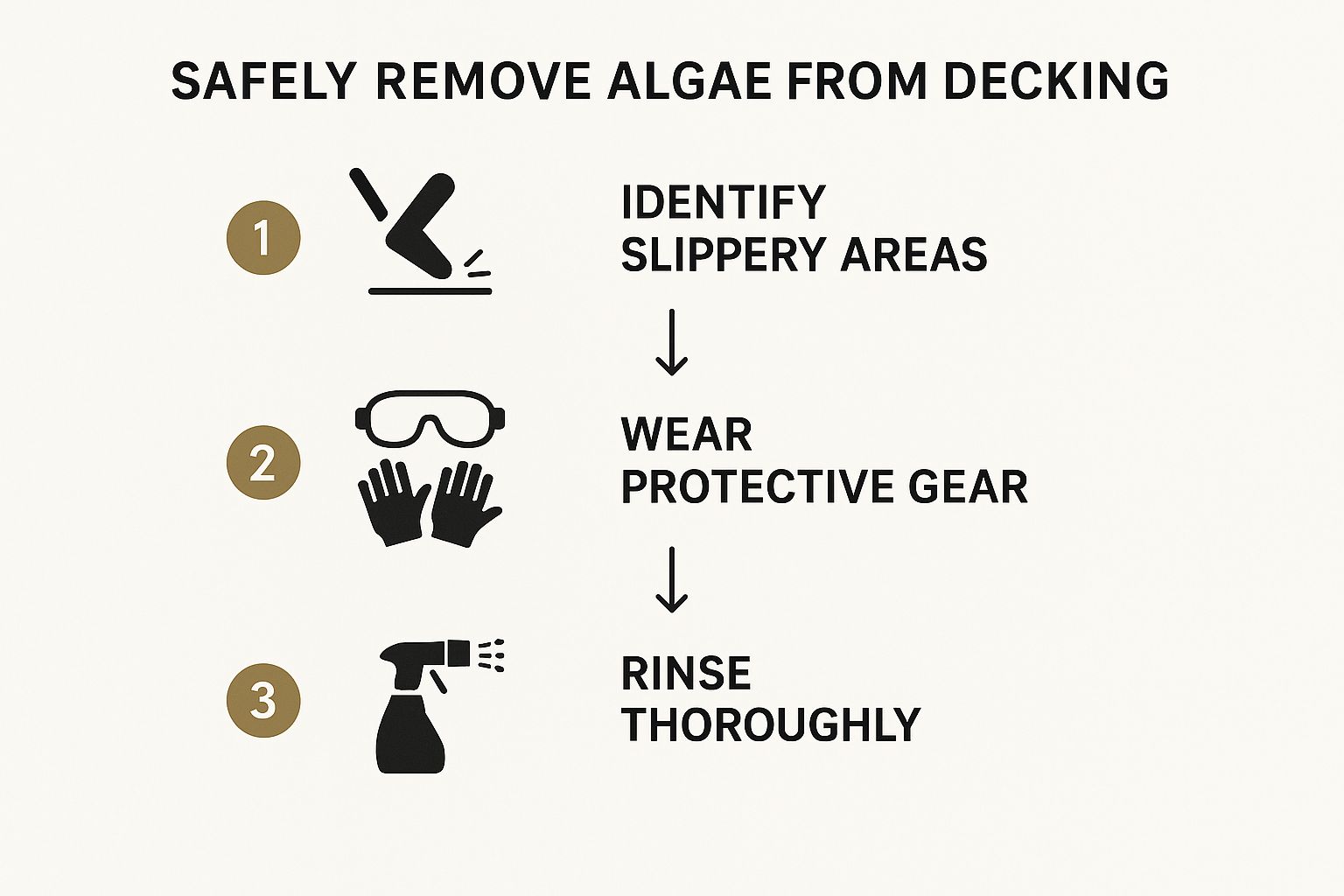
Attention to safety at each stage is not optional – it directly affects both results and long-term deck condition.
The Final Scrub And Rinse
After the cleaner has had sufficient dwell time, the next step is mechanical agitation. Use a deck brush with soft or medium bristles and scrub along the grain of the wood. Brushing with the grain prevents surface damage while effectively lifting loosened algae and debris. Stubborn areas may require additional passes.
Once scrubbing is complete, rinse the deck thoroughly with a standard garden hose. Work systematically from one end to the other. Any remaining cleaner can dry to a tacky surface that attracts dirt and accelerates future soiling.
Allow the decking to air dry fully before replacing furniture or planters. Once dry, the surface should be clean, safe underfoot, and ready for use.
How to Stop Algae Coming Back for Good
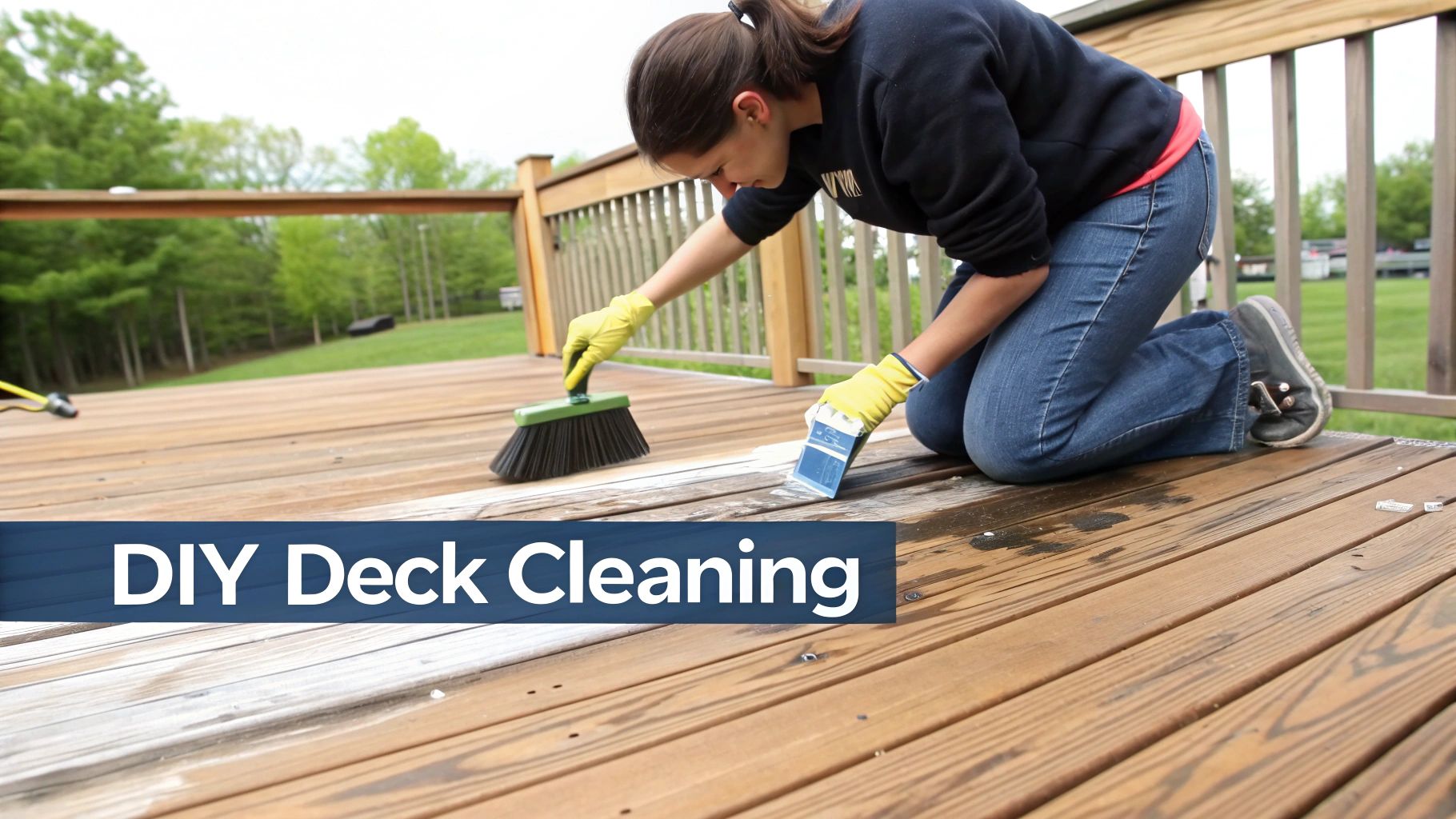
You’ve put in the effort to scrub your deck clean, and the last thing you want is that slippery green film returning. Removing algae is only half the solution. Long-term results depend on preventing the conditions that allow it to thrive.
Effective prevention means addressing the three factors algae depends on: shade, moisture, and a ready food source. A few consistent, proactive habits make a significant difference.
Let in the Sun and Air
Increasing sunlight and airflow is one of the most effective ways to prevent algae growth. Algae thrives in damp, shaded areas where moisture lingers long after rainfall.
Assess the surroundings of your decking. Overhanging tree branches that cast constant shade should be trimmed back where possible. This allows more direct sunlight onto the boards and improves ventilation, helping the timber dry more quickly.
Improved airflow reduces surface moisture retention. Even small adjustments – such as repositioning large planters that trap moisture beneath them – can significantly disrupt the conditions algae needs to establish itself.
Algae spreads quickly in shaded environments. In persistently damp areas, growth can reach 1 – 3 mm per week, forming a visible layer within four to six weeks. Prolonged moisture exposure of this kind can reduce a deck’s lifespan by up to five years.
Put Up a Protective Barrier
Once your decking is fully clean and completely dry, sealing it is the next critical step. Applying a high-quality sealant, stain, or decking oil enhances the timber’s appearance while creating a protective barrier against moisture.
For connected exterior schemes, designers often align maintenance strategies across all surfaces. Using charred cladding on adjacent façades helps minimise weathering contrast over time, ensuring the entire building envelope ages consistently and maintains a unified appearance.
These treatments penetrate the wood fibres and increase water repellency, reducing moisture absorption into the grain. Limiting water ingress makes it significantly harder for algae spores to establish the damp conditions required for growth.
Where decking connects to raised structures or fixed architectural elements that require high dimensional stability, charred accoya cladding is often specified to minimise movement and maintain precise, clean junction lines over time.
Protective finishes act as a moisture shield against the wet British climate. For new installations, selecting naturally durable timber is equally important. You can find out more by checking out our guide to the best weather-resistant hardwood.
Where decking interfaces with vertical garden structures or façade elements, materials such as charred douglas fir cladding and black charred wood cladding are often specified to maintain consistent grain character while improving resistance to prolonged moisture exposure.
Keep it Clean and Tidy
Regular debris removal is essential for preventing algae growth. Fallen leaves, twigs, soil, and pine needles create an ideal environment for algae by trapping moisture and providing organic nutrients as they decompose.
A weekly sweep with a stiff-bristled broom is typically sufficient to keep the surface clear. Consistent cleaning removes the organic material algae depends on, reinforcing the effectiveness of sunlight exposure, airflow, and protective treatments.
Common Deck Cleaning Mistakes To Avoid
Even with the best intentions, it’s surprisingly easy to make mistakes when cleaning algae from your decking. In some cases, those mistakes can cause more harm than the algae itself. Knowing what not to do is just as important as understanding the correct cleaning method.
By avoiding common slip-ups, you protect the timber, preserve the finish, and ensure your deck remains both safe and visually appealing.
Misusing the Pressure Washer
One of the most common and damaging mistakes is using a pressure washer too aggressively. The instant visual impact can be tempting, but excessive pressure can permanently damage timber decking.
High pressure settings or narrow jet nozzles can splinter and gouge the wood, leaving irreversible “zebra stripe” marks across the boards. Once the surface fibres are torn, the decking becomes rougher and more porous, creating ideal conditions for algae to return more quickly.
Why You Should Never Use Household Bleach
Bleach is highly aggressive on timber and gradually breaks down the wood fibres, leaving them brittle and structurally weakened.
Bleach also poses a risk to the surrounding garden. Runoff and overspray can damage or kill grass, plants, and beneficial soil organisms.
A proper clean should protect both the timber and the ecosystem around it. Oxygen-based cleaners or products specifically formulated for decking provide effective algae removal while remaining significantly safer for wood and nearby planting areas.
Timing and Rinsing Errors
When you clean your deck significantly affects the result. Choosing a hot, sunny day is a common mistake. High surface temperatures cause the cleaning solution to evaporate too quickly, reducing essential dwell time and limiting its ability to penetrate and kill algae spores. The outcome is increased scrubbing effort with reduced effectiveness. For optimal results, select a mild, overcast day.
Insufficient rinsing is another frequent error. After scrubbing, any remaining cleaning residue can dry into a sticky film that attracts dirt, pollen, and new algae spores. This accelerates recontamination and shortens the clean appearance of the deck.
A thorough final rinse with clean water is essential to ensure longer-lasting results.
Your Deck Algae Questions Answered
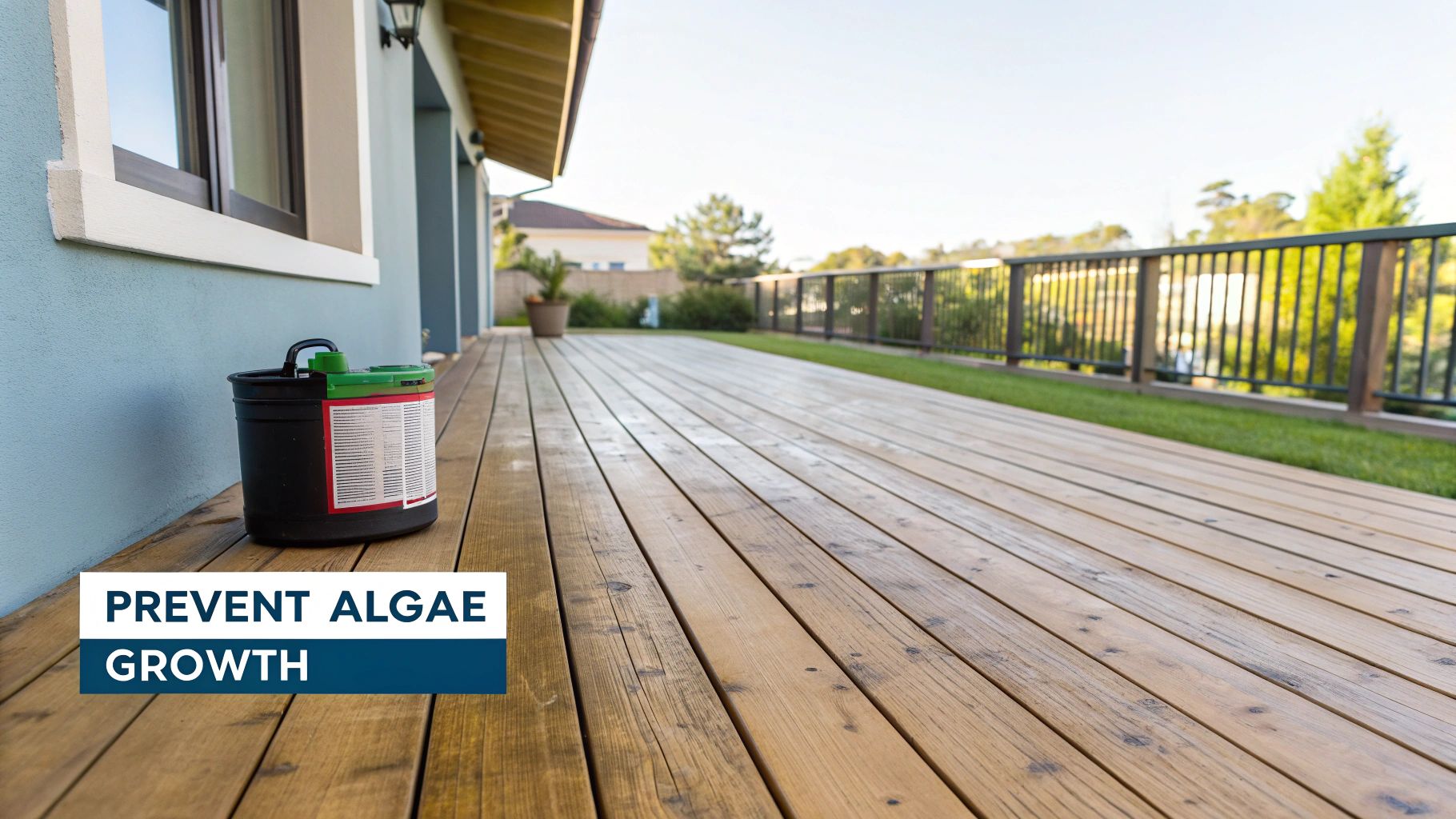
Before cleaning algae from your decking, it is normal to have practical questions. Clear answers help ensure the job is done correctly and prevent avoidable damage.
Below are responses to the most common homeowner questions about decking algae. Hopefully, these practical answers will clear up any confusion and help you bring your deck back to its best.
How Often Should I Clean Algae From My Decking?
For most UK homes, cleaning algae from decking twice per year is sufficient. A thorough clean in spring removes winter build-up, while a second clean in autumn prepares the timber for wetter conditions.
This biannual maintenance routine typically prevents significant algae accumulation. However, decking located in consistently damp or shaded areas may require additional spot-cleaning to control localised growth and prevent heavier build-up.
Can I Use Household Bleach To Clean My Wooden Deck?
No, household bleach should not be used on wooden decking. Although it may appear effective against algae, bleach is a highly corrosive chemical that damages timber over time.
Bleach breaks down wood fibres, increasing brittleness and reducing structural lifespan. It can also strip the timber’s natural colour and cause harm to surrounding plants, lawns, and local wildlife due to toxic runoff.
A decking-specific cleaner is the correct solution. Purpose-formulated products remove algae effectively without degrading the timber or damaging the surrounding garden environment.
For a deeper dive into materials and maintenance, our frequently asked questions page has plenty more information.
Is A Pressure Washer Safe For All Decking Types?
A pressure washer can be used on some hardwood decking, but only with strict precautions. Dense hardwood applications such as oak cladding typically tolerate controlled cleaning better than softwoods, but technique still determines whether the surface stays crisp or becomes fibrous and dirt-prone. Always use a low-pressure setting, fit a wide fan-tip nozzle, and maintain a minimum distance of 30 cm from the timber surface.
Pressure washing is not safe for softer woods such as pine. High pressure can easily splinter and gouge the boards, causing permanent surface damage. For composite decking, manufacturer guidelines must be checked before use, as pressure limits vary by product.
When uncertain, a decking-specific cleaner combined with a stiff-bristled brush provides a safer and more controlled method. This approach effectively removes algae while eliminating the risk of structural or surface damage.
