
Charred Wood Blog
7 Strongest Types of Wood for Durable Projects in 2026

When project demands require uncompromising durability, selecting the right material becomes critical. Oak offers respectable resilience; however, only a select group of woods delivers exceptional strength. Identifying the strongest types of wood in the world demands empirical data rather than general claims. Therefore, this guide provides a practical, data-driven ranking of the world’s most robust timbers.
We move beyond generalizations by focusing on measurable performance. The Janka hardness test serves as the cornerstone metric, evaluating a wood’s resistance to denting and wear. However, hardness alone does not define strength. Density, bending strength, and shock resistance complete the structural picture. These metrics together explain why certain woods outperform others under stress.
Ultimately, this roundup demystifies wood selection by offering actionable insights for high-traffic commercial flooring, exterior decking, fine furniture, and architectural applications. You’ll discover not only which woods are the toughest but also why they excel and how to leverage their properties for long-lasting results. These woods are built for projects that endure for generations.
1. Lignum Vitae
Lignum vitae stands as the heavyweight champion among the world’s strongest woods. Originating from Guaiacum species in the Caribbean and northern South America, it earns its reputation from exceptional hardness, density, and natural resilience. Because it is so dense, this tropical hardwood even sinks in water.
Natural resins account for up to 30% of its total weight, making the wood self-lubricating. As a result, Lignum Vitae resists wear, water damage, and insect attacks better than almost any other species.
Key Metrics and Properties
The following bar chart visualises the exceptional physical properties that define Lignum Vitae’s strength.
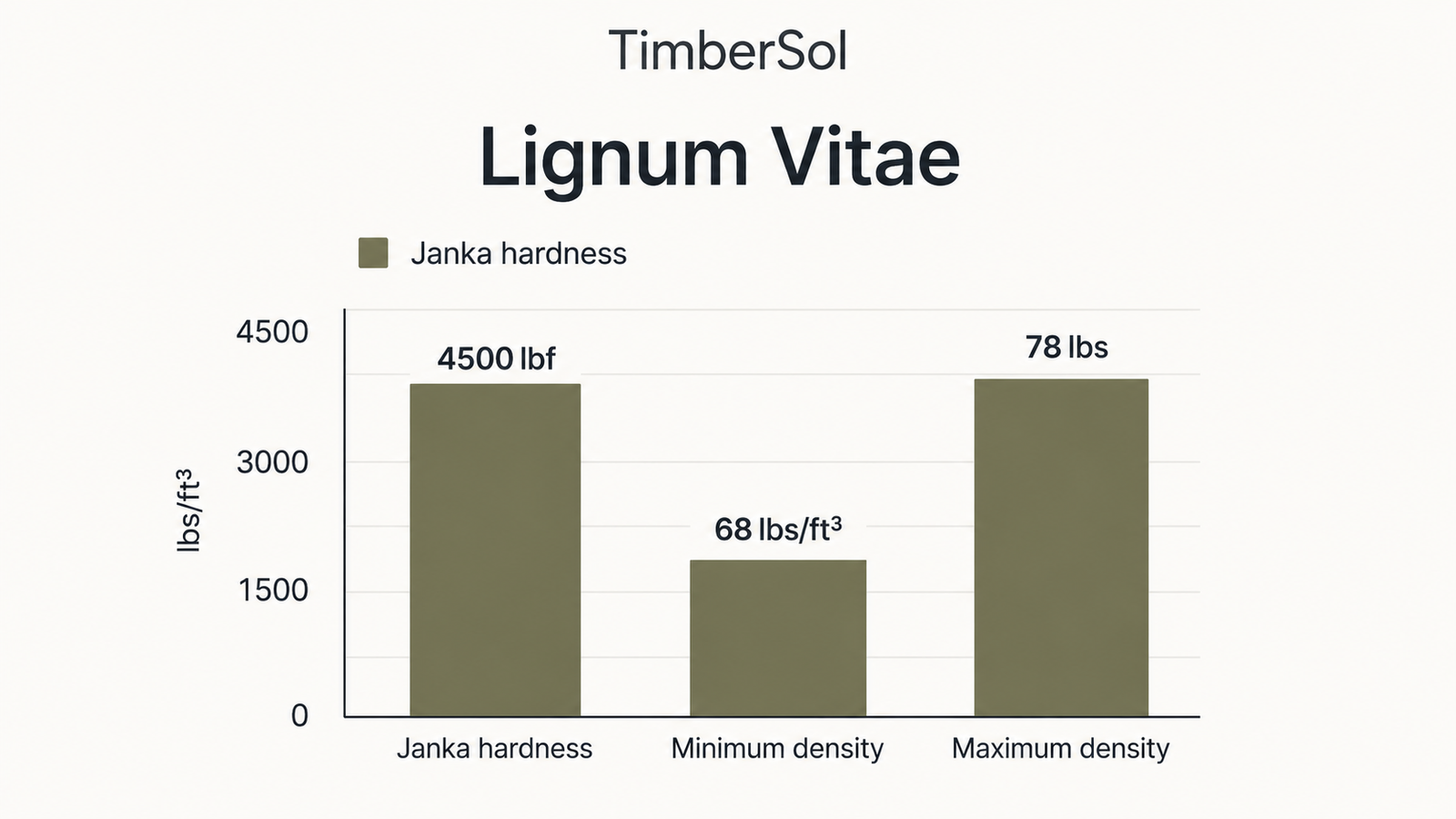
This chart clearly illustrates its Janka hardness rating of approximately 4,500 lbf. Wood with 4,500 lbf rating is among the hardest woods commercially available worldwide.
Ideal Applications and Working Tips
Lignum Vitae has unique self-lubricating and water-resistant properties, Lignum Vitae has been indispensable in demanding engineering applications where durability is paramount.
Common Uses Include:
- Marine Applications. Marine applications include ship propeller shaft bearings and stern tubes.
- Precision Instruments. Precision instruments include clock mechanisms and fine instruments requiring stable, low-friction parts.
- Specialised Tools. Specialised tools include police batons, tool handles, and traditional mortar and pestle sets.
Because of its extreme hardness, standard tools dull quickly. Therefore, woodworkers should use carbide-tipped blades, pre-drill holes to prevent splitting, and ensure all materials are legally and sustainably sourced, as many Lignum Vitae species are endangered
2. Australian Buloke
Australian Buloke is an ironwood recognized as the hardest wood ever measured. Native to the arid regions of eastern and southern Australia, its strength arises from a tight, fine-grained structure evolved to withstand harsh climates.
The wood’s legendary hardness makes it a true outlier in the timber world. Australian Buloke is not commercially harvested for large-scale projects, it remains the benchmark against which all other hardwoods are judged. Limited availability of the wood makes any piece highly prized for its unparalleled durability and unique, rugged aesthetic.
Key Metrics and Properties
Defining characteristic of Australian Buloke is its Janka hardness rating. The Janka hardness rating of Australian Buloke is the highest ever recorded for any wood species.
Based on Janka Hardness Scale data, Australian buloke registers 5,060 lbf (22,500 N), Australian Buloke surpasses nearly every other timber on Earth. Consequently, it resists denting, abrasion, and wear with unmatched effectiveness.Although its limited availability prevents large-scale commercial use, Australian Buloke remains the benchmark by which all other hardwoods are judged.
Ideal Applications and Working Tips
Australian Buloke is exclusively used for small, high-end applications. Australian Buloke is chosen when extreme hardness is a functional or aesthetic necessity.
Common Uses Include:
- Artisan Woodworking Projects. Artisan woodworking projects include fine box-making and decorative turnery.
- High-End Knife Handles. Durability of Buloke provides a resilient and beautiful grip.
- Decorative Inlays and Accents. Decorative inlays and accents are used in bespoke furniture.
- Specialised Tools. Specialised tools include small mallets, tool handles, and impact-resistant items.
Working with Australian Buloke demands specialised equipment and a cautious approach. Hardness of Australian Buloke will destroy standard steel tools. Users should use high-quality carbide or diamond-tipped tools, work slowly to avoid splintering, and pre-drill for any fixings. Australian Buloke has limited supply, it is best reserved as an accent material
3. Hickory
Hickory stands as a titan among North American hardwoods, celebrated for its unique combination of hardness, toughness, and elasticity. While certain woods may exceed its Janka hardness rating, few can rival its extraordinary shock resistance. Because of this rare balance of strength and flexibility, Hickory remains one of the strongest and most reliable woods for high-impact, practical applications. Native to Eastern North America, Hickory’s long-standing reputation is rooted in its consistent performance wherever resilience and adaptability are essential.
Hickory’s exceptional resilience arises from its long, dense fibers, which allow it to absorb sudden loads and impacts without fracturing. With a Janka hardness of approximately 1,820 lbf, it achieves a superior balance – hard enough to resist wear, yet flexible enough to withstand repeated shocks. This combination of rigidity and elasticity gives Hickory a distinct advantage over harder but more brittle woods. Because it can bend and return to its original shape, Hickory has been trusted for centuries in applications that demand durability, reliability, and long-term structural integrity.
Key Metrics and Properties
Hickory’s strength extends far beyond its hardness; its true value lies in its exceptional toughness and high modulus of rupture (bending strength). Because of these characteristics, Hickory is significantly stronger and more shock-resistant than both oak and hard maple. Consequently, it excels in applications that must endure repeated stress without deformation or failure. These properties are critical for structural and functional uses, from building components to high-performance sporting goods. Understanding differences between solid wood vs engineered wood provides valuable context for material selection.
Ideal Applications and Working Tips
Hickory’s can endure high-impact forces makes it indispensable in tools and sporting equipment. Hickory has earned a long-standing reputation as the material of choice in the most demanding environments.
Common Uses Include:
- Tool Handles. Tool handles include axe, sledgehammer, and hammer handles.
- Sporting Goods. Sporting goods include baseball bats, lacrosse sticks, and skis.
- Furniture and Cabinetry. Furniture and cabinetry benefit from durability and long-lasting rustic appeal.
- Food Flavouring. Hickory wood smoke imparts a distinctive, strong flavour.
Working with Hickory requires sharp, durable tools and precise technique. Because of its high density, the wood is prone to tear-out during machining, especially along the grain. To minimize damage, woodworkers should use sharp blades, maintain a slow feed rate, and employ a backing board when cutting or planing. Additionally, pre-drilling is essential before inserting fasteners to prevent splitting. Since Hickory exhibits a high shrinkage rate, it must be carefully dried and acclimated before assembly to ensure dimensional stability and prevent warping.
4. Ebony
Ebony (Diospyros spp.) is legendary for its jet-black heartwood, luxurious polish, and extreme density. Ebony is one of the most coveted and strongest types of wood in the world. On standardized tests, ebony ranks among the hardest commercial timbers: Gabon ebony measures 3,080 lbf on the Janka scale, with a bending strength of 22,930 psi based on Wood-database.com data. Ebony is sourced from various species across Africa and Asia. Ebony has hardness, weight, and a fine, uniform texture. Ebony’s texture allows for a brilliant natural polish. Many varieties of ebony will sink in water. Ebony’s density is an indicator of its formidable strength.
With Janka hardness ratings 3,080 lbf, ebony demonstrates superior resistance to wear, compression, and insect damage. However, over-harvesting has endangered many species, making responsible sourcing vital.
Key Metrics and Properties
Ebony is defined by extreme hardness and density. Gaboon Ebony (Diospyros crassiflora) is considered the benchmark. Gaboon Ebony has a Janka hardness of around 3,080 lbf. 3,080 lbf places Gaboon Ebony in the upper echelons of hardwood strength. Gaboon Ebony has stability and resistance to bending. Ebony is a reliable choice for applications requiring precision and longevity.
Ideal Applications and Working Tips
Ebony has unparalleled beauty and durability. Ebony is a first choice for high-end decorative and functional items where strength and appearance are equally important.
Common Uses Include:
- Musical Instruments. Musical instruments include piano keys, guitar fretboards, violin fittings.
- Luxury Goods. Luxury goods include knife handles, gun grips, and pen bodies.
- Decorative Items. Decorative items include chess pieces, carvings, marquetry inlays.
Working with ebony demands sharp, resilient tools and a careful approach. Ebony’s density can quickly dull standard blades. Cutting tools should be carbide-tipped or high-speed steel. Work process should be slow to avoid burn marks. End grain should be sealed immediately after cutting. Buyers should verify wood is from a legal and sustainable source.
5. Maple (Hard Maple/Sugar Maple)
Hard Maple is also called Sugar Maple or Rock Maple (Acer saccharum). Hard maple is renowned for balance of strength, workability, and aesthetic appeal. Hard maple does not reach the extreme hardness of tropical species. Hard maple has durability and fine, uniform grain. Hard maple is one of the most versatile and strongest types of wood. Hard Maple’s structure provides excellent resistance to abrasion and wear.
Maple’s strength is derived from its tightly packed fibres and diffuse-porous structure. Diffuse-porous structure results in a smooth, even surface with impressive stability. Hard maple has bright, creamy colour, it can take a beautiful finish. Hard maple is considered a premium material in functional and decorative contexts. From The Wood Database Hard maple has a Janka hardness of 1,450 lbf which offers resilience for high-traffic and high-impact environments.
Key Metrics and Properties
The following bar chart visualises the physical properties that define Hard Maple’s strength.
Chart illustrates Hard Maple’s reliable hardness and density. Hard maple is positioned as a top choice for projects requiring robust and dependable performance.
Ideal Applications and Working Tips
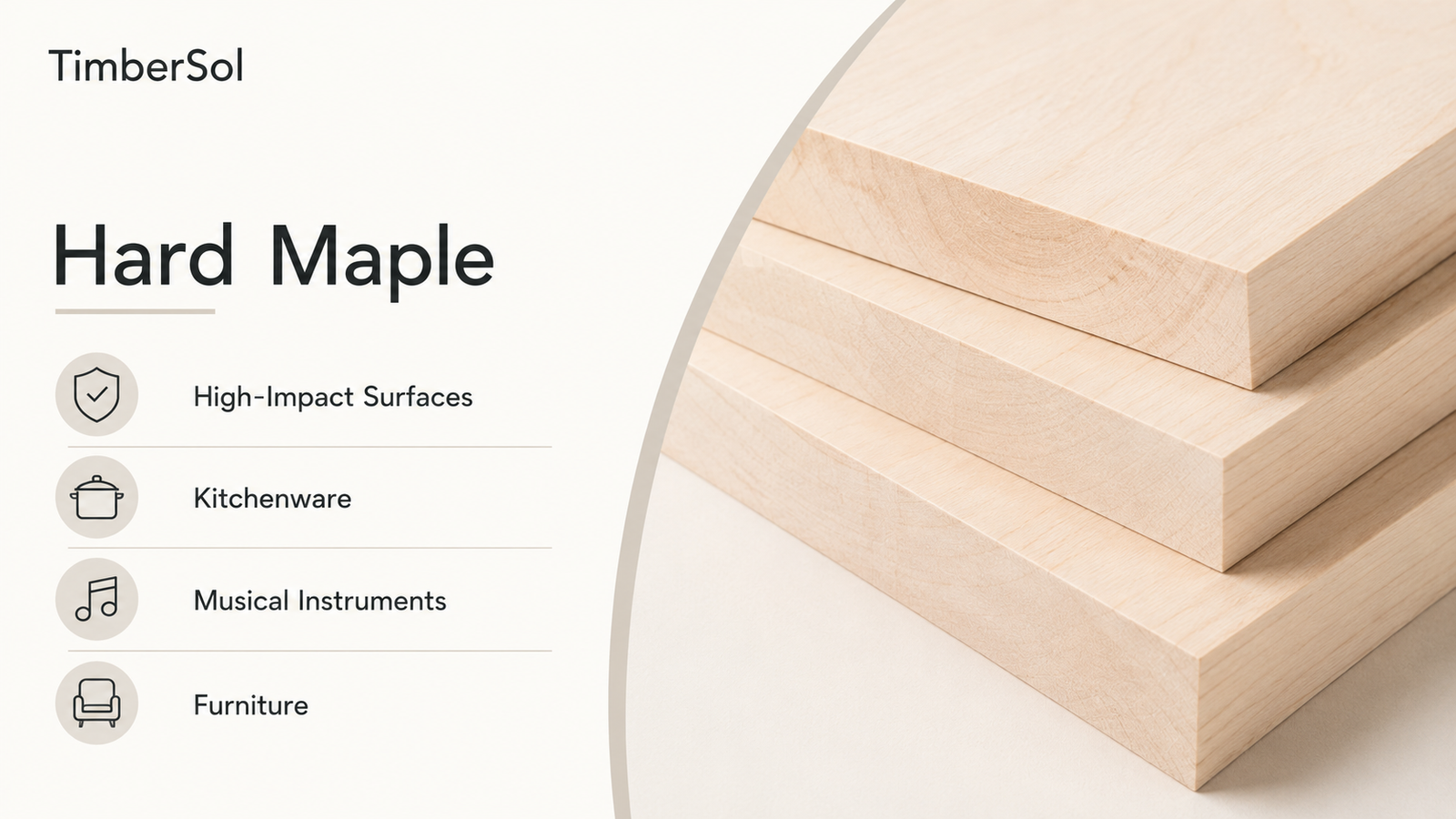
Hard Maple has resistance to dents and shocks. Resistance makes Hard Maple an ideal candidate for surfaces that must withstand constant use and abuse, from sports flooring to kitchen worktops.
Common Uses Include:
- High-Impact Surfaces. High-impact surfaces include bowling lanes, gymnasium floors, dance floors.
- Kitchenware. Kitchenware includes butcher blocks, cutting boards, kitchen cabinets.
- Musical Instruments. Musical instruments include guitar necks, drum shells, violins.
- Furniture. Furniture includes cabinetry, tables, fine woodworking projects.
Working with Hard Maple requires sharp tools to avoid burning. Hard maple’s dense grain can cause burn marks from router bits or saw blades. Burn marks occur if feed rates are too slow. Woodworkers should use sharp, high-quality tooling. Pre-stain conditioner should be applied to prevent a blotchy finish. Quartersawn boards should be selected for maximum stability in furniture projects.
6. Ipe (Brazilian Walnut)
Ipe is also known as Brazilian Walnut. Ipe is sourced from the Handroanthus genus. Ipe is celebrated for exceptional strength, density, and resilience. Ipe is one of the strongest types of wood. Ipe has fire resistance comparable to concrete and steel. Ipe is used for demanding exterior applications.
Ipe’s strength is derived from its tight, interlocked grain and high concentration of natural oils. These properties make it resistant to rot, insect attacks, and extreme weather. Ipe has a potential lifespan of over 75 years outdoors with minimal maintenance. Ipe is preferred by high-end architects and builders seeking unparalleled durability. You can explore more about its resilience in this guide to weather-resistant hardwood.
Key Metrics and Properties
Ipe is among the elite of durable woods. With a Janka hardness rating of approximately 3,510 lbf, it is over three times harder than oak. Extreme hardness results directly in outstanding wear and dent resistance. Ipe can withstand heavy foot traffic and harsh environmental abuse. Its high density contributes to structural stability and low maintenance requirements.
Ideal Applications and Working Tips
Ipe is a top choice for projects where longevity and performance are critical. Ipe is specified for luxury residential and commercial constructions.
Common Uses Include:
- High-End Decking. High-end decking includes outdoor decks, patios, rooftop terraces.
- Marine Construction. Marine construction includes boardwalks, docks, piers.
- Exterior Features. Exterior features include siding, cladding, and architectural details.
- Outdoor Furniture. Outdoor furniture includes benches, tables, and long-lasting items.
Working with Ipe demands specialised tools and techniques. Ipe’s density can dull standard saw blades. Carbide-tipped tools are essential for cutting Ipe. Woodworkers should pre-drill holes for fasteners. Pre-drilling helps prevent splitting. Builders should use high-quality stainless steel screws. Stainless steel screws help prevent discoloration and corrosion.
7. Jatoba (Brazilian Cherry)
Jatoba is also known as Brazilian Cherry. Jatoba is a powerhouse hardwood sourced from Central and South America. Jatoba is among the strongest types of wood. Jatoba’s strength stems from hardness, density, and natural durability. Jatoba is not a member of the cherry family. Jatoba earned the name due to its reddish-brown heartwood. Jatoba’s heartwood deepens to rich, luxurious red over time with exposure to light.
Jatoba has exceptional strength. Strength comes from dense, interlocking grain structure. Interlocking grain structure provides resistance to wear, dents, and scratches. Jatoba has high density that contributes to its robustness and natural lustre. High density gives a substantial feel. Jatoba is a premium choice for applications demanding both beauty and brawn. Jatoba is highly regarded for its ability to withstand heavy foot traffic and daily abuse.
Key Metrics and Properties
Jatoba has impressive physical metrics that solidify its status as a top-tier hardwood. On the Janka scale it is rated at approximately 2,350 lbf (10,460 N), placing it well above common domestic hardwoodsJanka hardness highlights Jatoba’s capacity to resist indentation and wear. Jatoba is one of the most reliable choices for high-traffic environments. Jatoba combines hardness and stunning colour. Jatoba is a favourite among designers and builders.
Ideal Applications and Working Tips
Jatoba has aesthetic appeal and mechanical strength. Blend of appeal and strength makes Jatoba a versatile material. Jatoba is suitable for demanding and decorative uses.
Common Uses Include:
- High-End Flooring. High-end flooring benefits from exceptional hardness.
- Furniture and Cabinet Making. Furniture and cabinetry are valued for durability and beauty.
- Interior Millwork. Interior millwork includes trim, stair treads, and handrails.
- Specialised Items. Specialised items include tool handles and high-impact sporting goods.
Working with Jatoba requires sharp tools and careful preparation. Jatoba’s density can be challenging on standard blades. Woodworkers should use carbide-tipped. Woodworkers should allow Jatoba to acclimate before installation. Installers should pre-drill holes for fasteners. Pre – drilling prevents splitting. Machining Jatoba requires a dust mask. Jatoba dust can be an irritant.
Strength & Durability Comparison of Top 7 Woods
| Wood Type | Implementation Complexity | Resource Requirements | Expected Outcomes | Ideal Use Cases | Key Advantages |
|---|---|---|---|---|---|
| Lignum Vitae | Very high; difficult to machine by hand; requires carbide tools | Scarce, expensive, CITES protected; limited large sizes | Unmatched durability, self-lubricating, water-resistant, very dense | Bearings, precision instruments, specialized handles | Longevity, natural lubrication, antimicrobial |
| Australian Buloke | Extremely high; requires diamond/carbide tools; very slow growth | Not commercially available; very limited size; slow growing | Hardest natural wood, exceptional durability, tool wear expected | Small specialty projects, knife handles, inlays | Highest hardness, insect & decay resistant |
| Hickory | Moderate; requires proper drying and tools; some grain challenges | Widely available, sustainably harvested, relatively affordable | Exceptional shock resistance, tough and flexible wood | Tool handles, sports equipment, ladders | Shock absorption, resilience, ease of working |
| Ebony | High; difficult to work, tool wearing, slow machining | Very rare, endangered species, expensive | Very high density and hardness, fine polish, excellent acoustics | Musical instruments, luxury goods, inlays | Aesthetic appeal, durability, acoustic properties |
| Maple (Hard Maple) | Moderate; easy to machine, risk of burning if improper technique | Widely available, sustainable, affordable | Good strength, workability, fine grain, stable with quartersawn | Flooring, furniture, cabinetry, kitchen goods | Workability, availability, strength-to-cost ratio |
| Ipe (Brazilian Walnut) | High; dulls tools quickly, pre-drilling needed, heavy work | Expensive, FSC certified options, limited sustainability | Exceptional outdoor durability, fire resistance, dense wood | Outdoor decking, marine, bridges, furniture | Outdoor longevity, decay & insect resistance |
| Jatoba (Brazilian Cherry) | Moderate to high; interlocked grain can cause tear-out | Good availability, tropical hardwood, moderately priced | Strong, shock resistant, beautiful aging color | Flooring, furniture, stair treads, tool handles | Color improves over time, strength, workability |
Choosing the Right Champion: Final Thoughts on the Strongest Types of Wood
Selecting the right timber dictates the longevity, aesthetic, and structural integrity of a project. Throughout this guide, we have journeyed through the world of elite hardwoods, exploring the incredible density of Lignum Vitae, the unparalleled hardness of Australian Buloke, and the resilient flexibility of Hickory. From the deep, luxurious tones of Ebony to the bright, reliable performance of Hard Maple, each of these strong wood types offers a unique combination of strength, durability, and visual appeal.
Understanding strength metrics is crucial for making an informed choice. Janka hardness scale provides a measure of a wood’s resistance to denting and wear. Janka hardness scale is an indispensable tool for flooring, decking, and high-traffic surfaces. True strength encompasses resistance to moisture, rot, and insects. Woods like Ipe and Jatoba exemplify strength beyond hardness. Project demands should guide wood selection. Wood selection should balance hardness, workability and stability.
Why Wood Treatment Can Matter More Than Raw Hardness
While extreme hardwoods dominate laboratory strength tests, real-world durability depends on how wood is modified and protected, not raw hardness alone. Techniques such as Yakisugi (wood charring) enhance surface resistance to fire, moisture, UV, and biological attack. At TimberSol, this approach is applied across multiple species, including charred spruce cladding for lightweight performance, charred accoya® cladding for maximum dimensional stability, charred douglas fir cladding for strength and pronounced grain, charred larch cladding for resin-rich durability, and charred thermowood cladding for thermally enhanced stability and low maintenance. In exterior and façade applications, this combination of engineered treatment and natural strength delivers better long-term performance than hardness alone.
Key Takeaways for Your Next Project
- Define Your Priorities: Is your primary need dent resistance (Janka hardness), load-bearing capacity (MOR), or weather resilience? Defining priorities will narrow down selection options. For example, a workshop bench needs high Janka hardness (like Hard Maple), while an exterior beam needs excellent rot resistance (like Ipe).
- Balance Strength with Workability: Strong wood can be challenging for cutting, drilling, and finishing when planning your project. Strong wood types require specialised tools and higher labour costs.
- Embrace Enhancement Techniques: Natural strength can be augmented by enhancement techniques. Yakisugi, or wood charring, adds protection against fire, moisture, and pests. Yakisugi enhances durability and visual appeal. Yakisugi transforms strong wood into high-performance material.
Choosing one of the world’s strongest wood types is an investment in permanence. Unique properties of timbers should align with specific goals of your design. Proper wood alignment creates structures and pieces built to last. Right wood does more than fulfill function. Right wood elevates the function. Strong wood provides a legacy of strength and timeless beauty.
Ready to specify a material that combines natural strength with enhanced performance? TimberSol specialises in modernised Yakisugi charred timber. Modernised Yakisugi offers enhanced performance and natural strength. Explore how our treated wood products can deliver the strongest wood performance with a distinctive architectural aesthetic at TimberSol.
