
Charred Wood Blog
Solid Wood vs Engineered Wood Flooring A UK Home Guide

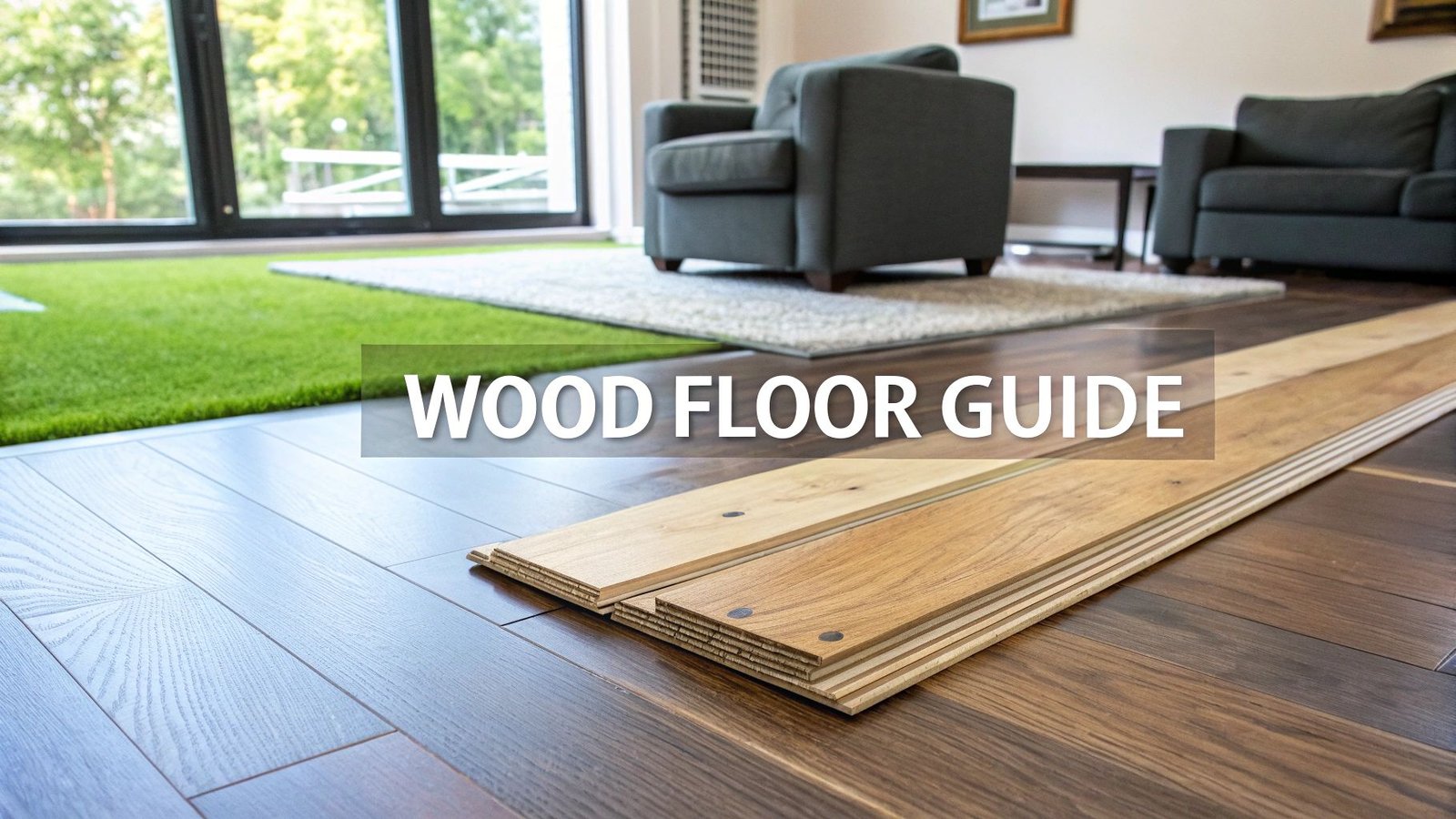
When choosing between solid and engineered wood flooring, the key difference lies in how each type is constructed. Solid wood flooring is made from a single, continuous piece of timber, while engineered wood flooring consists of a top layer of real hardwood bonded to a core of layered plywood. This structural difference affects everything, from how it performs to how much it costs.
This guide explains the main differences between solid and engineered wood flooring, including construction, durability, stability, installation methods, cost, and environmental impact. It also outlines where each option performs best and how to choose the right solution based on your home and specific needs.
Understanding The Fundamental Differences
Let’s break down what this means in practice. Solid wood flooring is the traditional option, made from a single piece of hardwood such as oak or walnut. It has been used for centuries and is known for its durability and longevity.
Engineered wood flooring is a more modern solution. It is constructed from multiple layers—typically plywood or high-density fibreboard—bonded together under heat and pressure. A top layer of real hardwood veneer is then applied. Once installed, it is visually indistinguishable from solid wood flooring.
The layered core is not just a design feature; it is engineered for improved stability. This is why engineered wood performs better in environments with changing humidity and temperature levels, which are common in many UK homes, where solid wood can be more affected.
To provide a clearer comparison, the table below outlines the main differences between the two options.
Quick Comparison Solid vs Engineered Wood
| Feature | Solid Wood Flooring | Engineered Wood Flooring |
|---|---|---|
| Construction | Milled from a single piece of hardwood. | A real wood top layer bonded to a plywood core. |
| Lifespan | Can last over 100 years with proper care. | Typically lasts 20-40 years. |
| Stability | Prone to expanding and contracting with humidity. | Very stable; resists warping in damp conditions. |
| Installation | Best suited for above-grade rooms. | Can be installed almost anywhere, including basements. |
| Sanding | Can be sanded and refinished multiple times. | Can be sanded once or twice, depending on veneer thickness. |
As you can see, the decision isn’t just about appearance—it’s about choosing the right technical solution for your home.
Core Construction and Stability
The main advantage of the layered core in engineered wood flooring is its stability. Solid wood is a natural material that reacts to its environment, expanding in humid conditions and shrinking in dry ones. Over time, this movement can lead to issues such as warping or gaps—something that is particularly relevant in the UK’s variable climate.
The cross-layered construction of engineered wood helps counteract this natural movement. Each layer is bonded in opposing directions, which stabilises the plank and reduces the risk of bowing. This design makes engineered wood a highly reliable option, with up to 30% of new-build homes in the UK now using it.
Understanding this fundamental difference in construction is key to choosing the right flooring for your home. If you’d like to explore the topic further, you can find more insights on the https://timbersol-backup.elnoirstudio.com/blog/.
Comparing Durability and Real-World Lifespan
When considering durability, it’s easy to focus on which flooring option lasts longer in theory. In reality, what matters is how each type performs over time in a typical UK home, dealing with damp winters and everyday wear. While lifespan is important, stability plays an equally significant role.
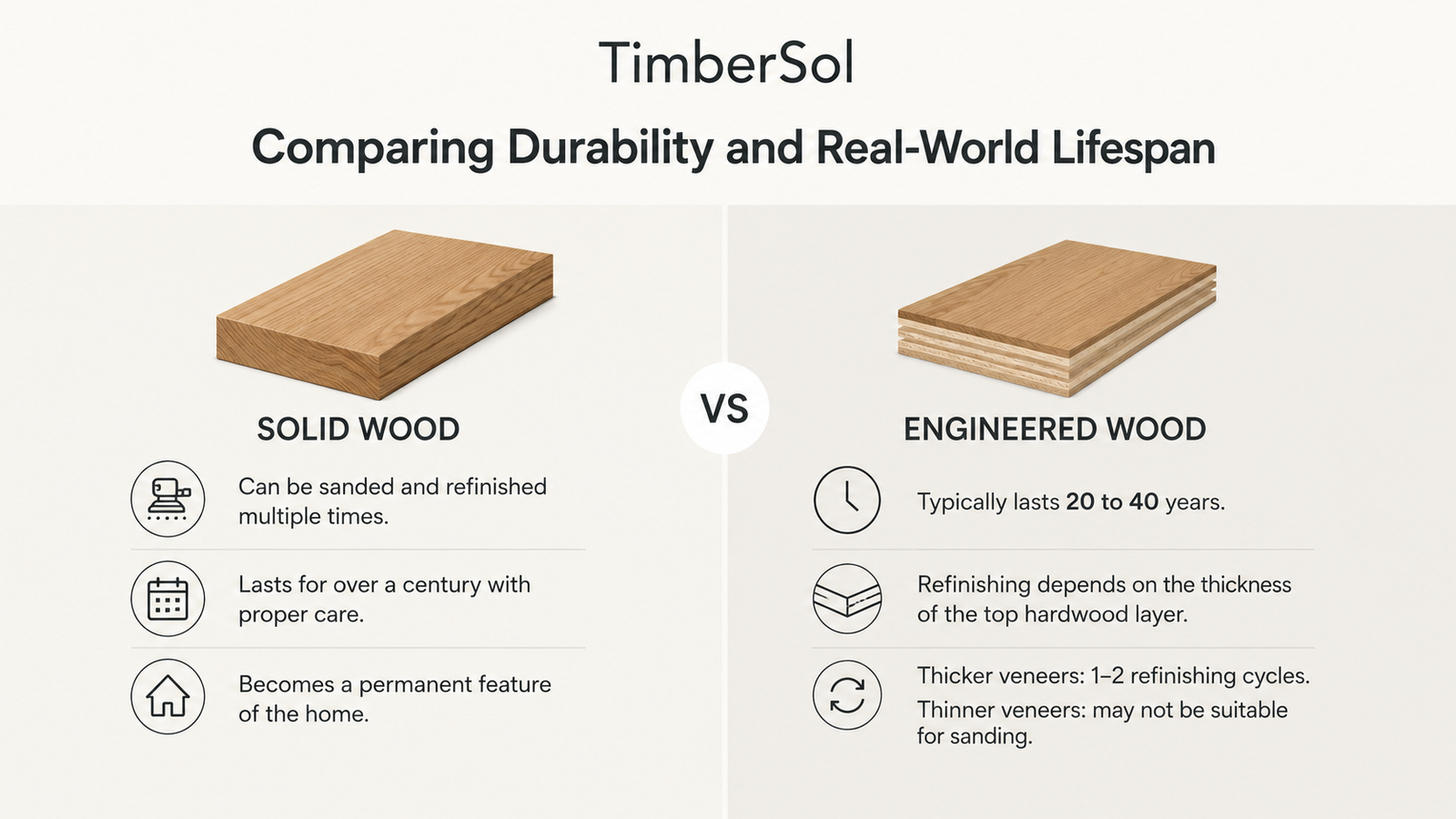
Solid wood has long been regarded as the benchmark for longevity. Because it is made from a single piece of timber, it can be sanded and refinished multiple times. Each refinishing removes surface wear such as scratches and dents, effectively restoring the floor. With proper care, a solid wood floor can last for over a century, becoming a permanent feature of the home.
Engineered wood has a more limited lifespan, typically ranging from 20 to 40 years. Its ability to be refinished depends on the thickness of the top hardwood layer. Thicker veneers may allow for one or two refinishing cycles, while thinner versions may not be suitable for sanding at all.
Stability in a UK Climate
However, longevity isn’t the only factor to consider. The most noticeable day-to-day difference comes down to structural stability, particularly in spaces with fluctuating humidity and temperature—such as kitchens, bathrooms, and conservatories. This is where engineered wood has a clear advantage.
The key to its performance lies in its layered construction. Solid wood naturally reacts to moisture, which can cause it to warp or cup over time. In contrast, the cross-ply core of engineered boards helps maintain dimensional stability. This makes engineered wood a more reliable choice for areas exposed to changing conditions.
Because of this stability, engineered wood expands and contracts far less than solid timber. While solid wood flooring may develop gaps or even buckle during particularly damp periods, engineered flooring remains more consistent. This is also why it is commonly recommended for installation over underfloor heating systems.
Scratch and Dent Resistance
When it comes to surface wear—such as dropped keys or dragged furniture—both flooring types perform similarly. Since the visible surface in both cases is real wood, resistance to scratches and dents depends on other factors rather than the core construction.
- The wood species: Harder woods like oak will always be more resistant to dents than softer species such as walnut, regardless of whether the flooring is solid or engineered.
- The finish: The protective coating plays a key role. A high-quality lacquer or a durable hardwax oil can effectively protect against scuffs and minor scratches on both types of flooring.
Ultimately, the decision depends on where the flooring will be installed. In high-moisture areas like kitchens, engineered wood offers more reliable day-to-day performance. In more stable environments such as living rooms or bedrooms, solid wood remains a strong long-term investment, with the advantage of being refinished multiple times over its lifespan.
Installation Versatility and Location Suitability
The key decision in the solid wood vs engineered wood debate often comes down to two practical questions: where will the floor be installed, and how will it be fitted? The way each type of board is constructed directly affects its suitability for different rooms and installation methods, as well as the overall cost and complexity of the project.
Solid wood flooring follows a traditional approach. It must be fixed securely to a suitable subfloor, typically by nailing or gluing. While this results in a highly stable floor, it requires a perfectly level and dry wooden subfloor—something that usually calls for professional installation.
Engineered wood, by contrast, offers greater flexibility. Its layered, stable construction allows for a wider range of installation methods, many of which are more adaptable and suitable for DIY projects.
Comparing Installation Methods
The installation method is largely determined by the flooring’s construction and the type of subfloor in place. This is where engineered wood offers a clear advantage.
- Nail-down or glue-down: This is the standard approach for solid wood flooring. It creates a permanent result but requires the correct subfloor and a higher level of skill. Engineered wood can also be installed using this method if desired.
- Floating installation: This method is exclusive to engineered wood. The boards click together and “float” over an underlay. It is a faster and cleaner process, suitable for a wide range of subfloors, including concrete, which makes it especially popular in modern homes and renovation projects.
For projects where speed and ease of installation are priorities, the floating method is a significant advantage. It reduces labour requirements and makes engineered wood a practical option for competent DIY installation.
This adaptability extends beyond installation—it also determines where the flooring can be used. Certain areas of a home are simply unsuitable for solid wood due to how it reacts to environmental changes.
Where Each Flooring Type Belongs
The best flooring choice depends on the room. Engineered wood is well suited to areas with moisture or temperature fluctuations—such as basements, kitchens, and spaces with underfloor heating—while solid wood performs best in stable environments like living rooms and bedrooms.
Selecting the right material for each space is essential to ensure long-term appearance. Solid wood offers excellent aesthetics in stable conditions, but you have to respect its limitations.
For example, in a period property with uneven joists, installing solid wood may require extensive subfloor preparation. In contrast, a floating engineered floor can often be installed over minor imperfections with far less effort. Similarly, in a new-build with a level concrete subfloor, a floating engineered floor provides a fast and straightforward installation solution.
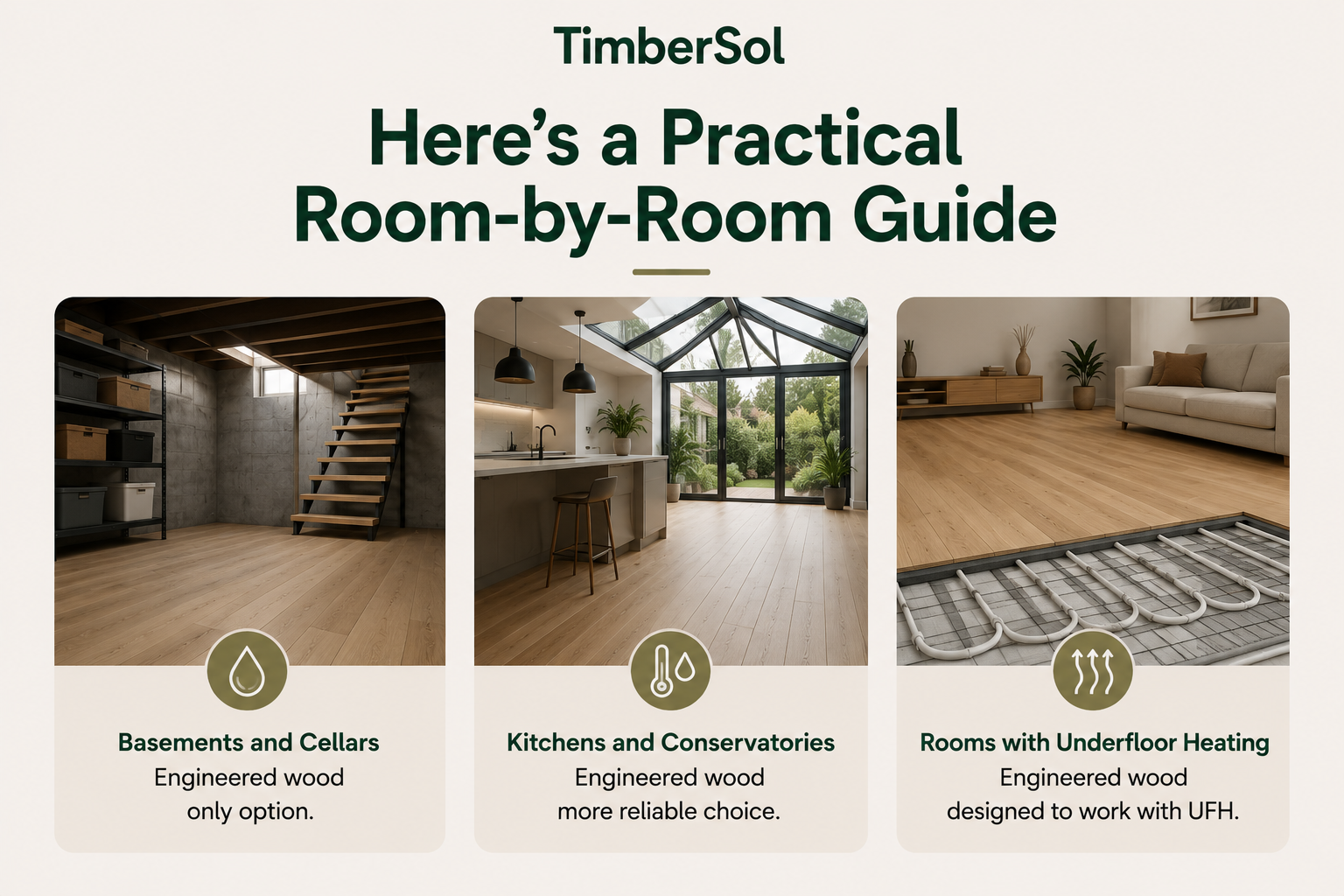
Here’s a practical room-by-room guide:
- Basements and cellars: Due to the risk of damp and below-ground conditions, engineered wood is the only suitable option. Solid wood would be highly prone to cupping and warping.
- Kitchens and conservatories: These spaces experience significant fluctuations in temperature and humidity. The stability of engineered wood makes it the more reliable choice for consistent performance.
- Rooms with underfloor heating: Solid wood is generally not recommended, as direct heat can cause it to dry out, shrink, or crack over time. Engineered wood is specifically designed to work with underfloor heating systems, providing a stable and comfortable flooring solution.
Ultimately, your home’s layout and environmental conditions will determine the best option. While solid wood remains a classic choice for stable areas like living rooms and bedrooms, engineered wood offers the versatility required for more demanding spaces in modern homes.
Breaking Down the Cost: Upfront Price vs. Long-Term Value
When comparing solid wood and engineered wood flooring, it’s easy to focus solely on the price per square metre. However, that’s only part of the overall cost. While solid wood often comes with a higher upfront price, the full financial picture also includes installation, maintenance, and the long-term value each option adds to your property.
Engineered wood typically appears more cost-effective at the outset. Its layered construction makes it less expensive to manufacture, allowing you to achieve the look of real wood without the same initial investment. However, to determine which option offers better value, it’s important to consider the total cost of ownership.
Unpacking the Full Project Cost
The price per square metre is only the starting point. Installation costs can significantly impact the overall budget. Solid wood flooring requires a more traditional and labour-intensive fitting process, typically involving nailing or gluing the boards to the subfloor. This usually means hiring a professional installer, which increases the total cost.
Engineered wood, by contrast, often features a click-lock system. This allows the flooring to be installed as a floating floor over an underlay, making the process quicker and more straightforward. As a result, installation costs are generally lower, and it also provides an option for competent DIY installation, potentially reducing expenses further.
The real advantage of engineered wood lies in its floating installation method. This can significantly reduce overall project costs by lowering labour time—or even eliminating it entirely if you choose to install it yourself. It’s a key financial benefit that’s often overlooked when comparing material prices alone.
To understand how this translates in practice, it’s useful to consider a typical room scenario. When factoring in both the lower material cost of engineered wood and its more affordable installation, the total upfront savings can be substantial.
Estimated Cost Breakdown for a 20m² Room
Here’s a sample breakdown illustrating the typical costs you might expect for a standard 20m² room in the UK.
| Cost Component | Solid Wood Flooring (Estimate) | Engineered Wood Flooring (Estimate) |
|---|---|---|
| Material Cost | £1,200 – £2,000 | £700 – £1,400 |
| Professional Installation | £600 – £1,000 | £400 – £700 |
| Underlay & Accessories | £100 – £200 | £150 – £250 |
| Total Initial Cost | £1,900 – £3,200 | £1,250 – £2,350 |
| Future Refinishing | Can be done 4-6 times | Can be done 1-2 times |
As shown, engineered wood provides a more accessible entry point. However, solid wood offers a key long-term advantage—its longevity. Because it can be sanded and refinished multiple times, it can last for over 100 years, making it a generational investment.
Engineered wood has a shorter lifespan, but its lower upfront cost and flexible installation make it a strong value option for most modern homes. It delivers the look of real wood without the higher initial expense. Ultimately, the right choice depends on your budget, how long you plan to stay in the property, and your long-term priorities.
Evaluating Environmental Impact and Sustainability
When comparing solid and engineered wood flooring, environmental impact has become an important consideration for many UK homeowners. At first glance, solid wood appears to be the more sustainable option. It is a renewable resource—provided it is sourced from responsibly managed forests certified by organisations such as the FSC (Forest Stewardship Council).
However, there are important factors to consider. Producing solid wood planks requires large, slow-growing trees, and each board is cut from a single piece of timber. This process can result in a relatively high level of material waste from each log.
Resource Efficiency and Waste Reduction
This is where engineered wood stands out as a more sustainable alternative. Its construction is inherently more resource-efficient. Only the top layer—the visible surface that you see and walk on—is made from hardwood. This approach maximises the yield from each harvested tree and reduces pressure on slow-growing forests.
The core of engineered boards is typically made from faster-growing, more readily available wood species such as spruce cladding, or in some cases recycled wood fibres. This efficient use of materials helps reduce the impact of deforestation. As a result, engineered wood production often aligns more closely with UK sustainability goals, generating less waste and fewer emissions compared to traditional solid wood processing.
The key advantage of engineered wood lies in this efficiency. By using a thin hardwood veneer over a stable core of fast-growing or recycled materials, it delivers the appearance of solid wood while maintaining a lower environmental footprint.
Sourcing and Manufacturing Impact
Both flooring types can be environmentally responsible, but it ultimately depends on how the timber is sourced. The key is to look for recognised certifications to ensure that the wood—whether used in solid or engineered boards—comes from sustainably managed forests.
Your choice will largely depend on your priorities:
- Solid wood: A renewable option when properly certified, but its production requires more material from slow-growing trees for each plank. It remains a valuable choice where maximum durability is essential; you can explore this further in the context of weather-resistant hardwood for exterior projects.
- Engineered wood: Reduces the demand for slow-growing hardwoods and makes more efficient use of each tree, resulting in less waste during production.
Making an informed decision comes down to understanding the supply chain. For environmentally conscious homeowners, certified engineered wood made with recycled fibres and low-VOC (volatile organic compound) adhesives is often considered the more resource-efficient option.
Which One Is Right For Your Home?
The right choice depends on your home: solid wood is best suited to traditional, stable environments where long-term durability and the ability to refinish are important, while engineered wood is ideal for modern spaces or areas with moisture, temperature changes, or underfloor heating.
The decision isn’t about which option is “better” overall, but which one fits your home, your lifestyle, and your long-term expectations. Each has clear advantages, and the right choice becomes more apparent when you consider your specific circumstances.
For example, if you are restoring a period property and aiming to maintain historical authenticity, solid wood is the natural choice. Its timeless character and ability to be sanded and refinished over generations make it a true long-term investment. In stable conditions, it can last for over a century.
Thinking Through Real-World Scenarios
Now consider a different scenario—a busy family home with underfloor heating and the everyday demands of children and pets. In this setting, engineered wood becomes the more practical choice. Its layered construction provides the stability needed to handle ongoing temperature changes from heating systems without warping or cupping, making it well suited to modern living.
This practicality is a key reason for its growing popularity. The UK’s engineered wood market reached an estimated value of around £7.7 billion in 2023 and is projected to more than double by 2035. It’s a trend driven by its reliability in today’s homes. You can dig deeper into these figures by checking out the industry analysis on UK engineered wood growth.
Ultimately, the best approach is to match the flooring to the function of the room. In spaces such as basement conversions or kitchen extensions, where moisture and temperature fluctuations are common, engineered wood offers the necessary stability. In contrast, for quieter upstairs bedrooms, the traditional appeal and warmth of solid wood remain a compelling choice.
Let’s simplify the decision with a final checklist based on what matters most to you:
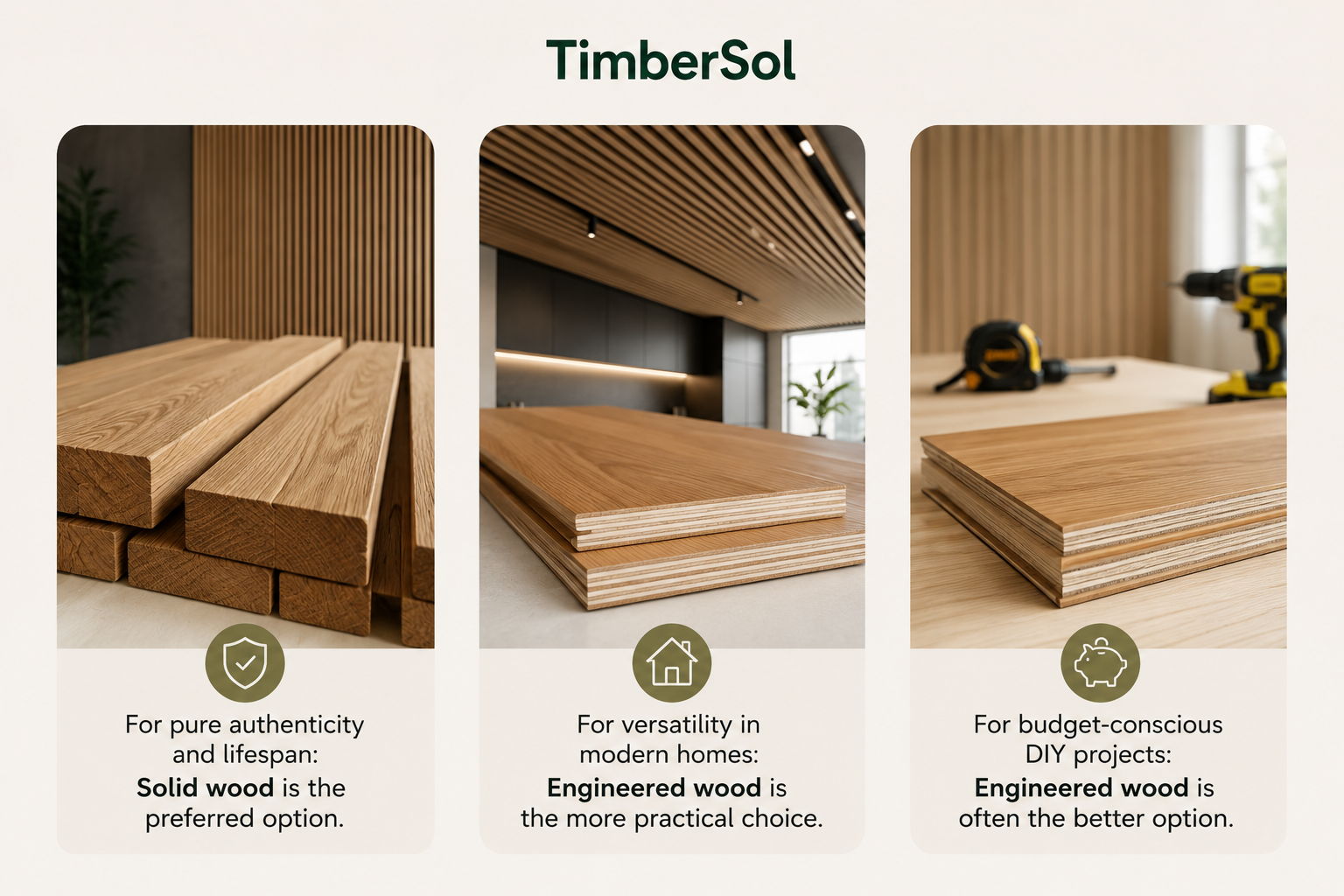
- For pure authenticity and lifespan: Solid wood is the preferred option. Its ability to be refinished and its traditional character make it well suited to stable, dry spaces such as living rooms, dining rooms, and bedrooms.
- For versatility in modern homes: Engineered wood is the more practical choice. It performs well with underfloor heating and can be installed in more challenging areas such as kitchens, conservatories, or over concrete subfloors.
- For budget-conscious DIY projects: Engineered wood is often the better option. Many products use click-lock systems designed for floating installation, making the process more accessible and cost-effective for homeowners.
By assessing the solid wood vs engineered wood choice against the specific conditions of your home, you can select a floor that not only looks good but also delivers reliable performance over time.
Frequently Asked Questions
When comparing solid and engineered wood flooring, several key questions tend to arise. Clear answers to these can help you make a confident decision when choosing the right flooring for your home.
Is Engineered Wood Real Wood?
Yes, it is. This is one of the most common misconceptions. The top layer of engineered wood—the surface you see and walk on—is made from 100% real hardwood, such as oak or walnut. Beneath that sits a core of layered plywood or high-density fibreboard, which provides structural stability. Once installed, it is visually indistinguishable from solid wood flooring.
Can I Refinish Engineered Wood Flooring?
Yes, but the number of times depends on the specific product. Solid wood flooring can be sanded and refinished multiple times over its lifespan, which can exceed a century. For engineered wood, the key factor is the thickness of the real wood top layer.
- Thick veneers (3mm or more): These can typically be sanded and refinished 1–2 times, allowing the floor to be refreshed after years of use.
- Thin veneers (less than 2mm): These are generally not suitable for sanding, as doing so may wear through the top layer and expose the core material underneath.
Which Option Adds More Value to My Home?
Both options are considered valuable upgrades and can increase your property’s appeal. Traditionally, solid wood flooring has held a slight advantage in the resale market due to its exceptional lifespan and classic, timeless character.
However, engineered wood has become increasingly desirable in modern homes thanks to its practicality and stability. Its compatibility with underfloor heating is a particularly strong selling point for many buyers today. Ultimately, a high-quality, well-maintained wood floor—whether solid or engineered—adds clear value to any property.
Why Is Engineered Wood Becoming So Popular?
The growing popularity of engineered wood in the UK reflects wider global trends. The global engineered wood market exceeded 304 million cubic metres in 2024, while the UK market is projected to grow from £7.7 billion in 2023 to over £16.5 billion by 2035. This growth is largely driven by its stability and cost-effectiveness, making it a preferred choice for modern construction and renovation projects. Discover more insights about the engineered wood market on imarcgroup.com.
For more detailed answers, you might be interested in our full frequently asked questions guide.
Ready to transform your space with the distinctive beauty and durability of charred timber cladding? At TimberSol, we specialise in Yakisugi-treated cladding, decking, and fencing, including premium solutions such as charred accoya cladding, and charred douglas fir cladding, delivering a combination of striking aesthetics and long-lasting performance. Learn more at https://timbersol-backup.elnoirstudio.com.
