
A Guide to Reclaimed Lumber Siding in the UK

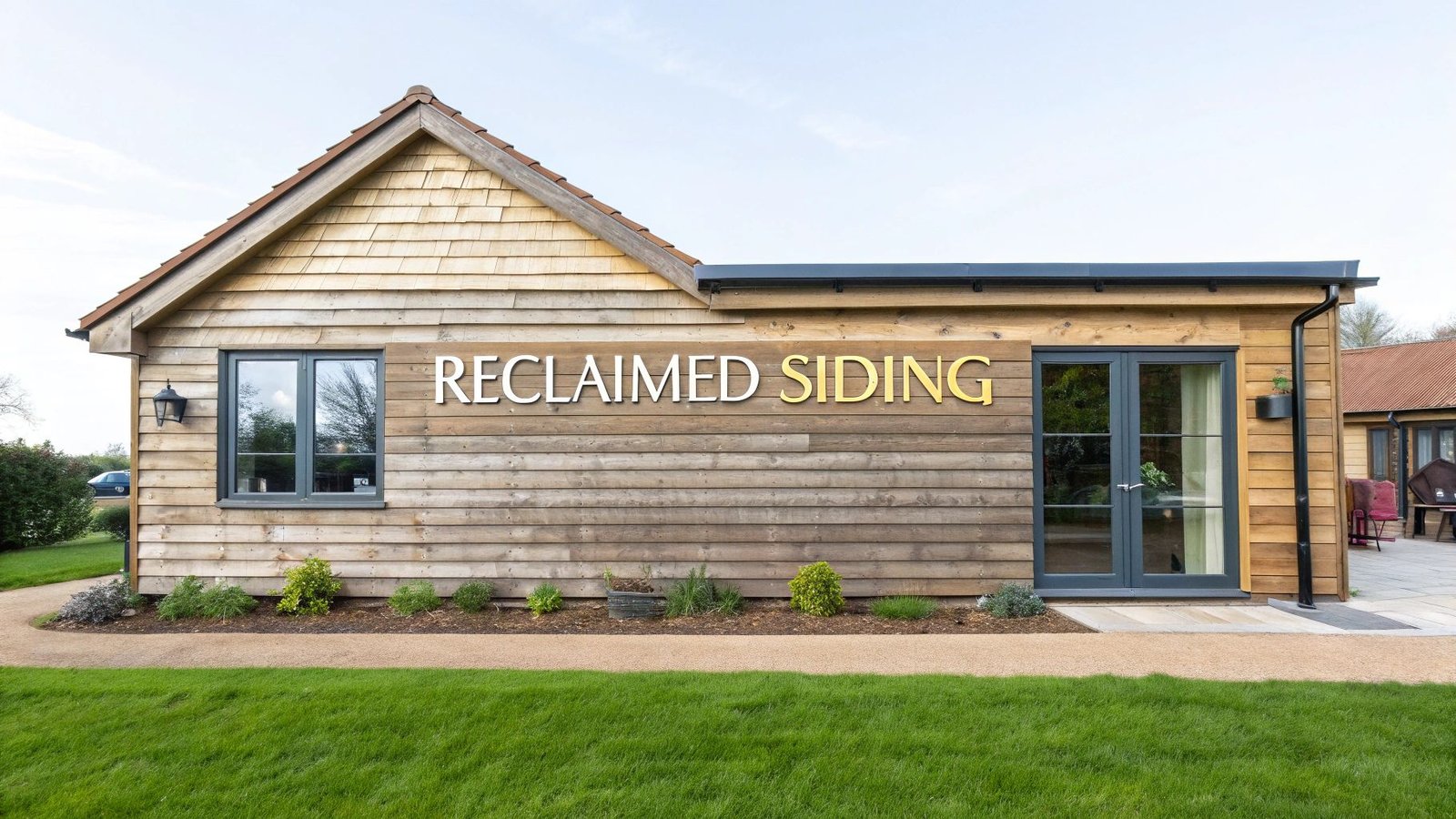
When you hear “reclaimed lumber siding,” think of wood with a past. This isn’t just any timber; it’s premium building material carefully rescued from old barns, warehouses, and factories. What sets it apart from new wood is its unique character, earned through decades of natural ageing. This process gives it a rich patina, tight grain patterns, and a level of durability that you simply can’t get from a factory.
What Makes Reclaimed Lumber Siding a Story Worth Telling
Choosing siding for your home is a big decision. It’s not just about protecting the structure; it’s about giving it a personality. While standard materials often provide a cookie-cutter look, reclaimed lumber siding brings a genuine history and soul to your property. Every single plank has lived a previous life, weathered by countless seasons and marked by the passage of time, resulting in a finish that’s truly one-of-a-kind.
It’s a bit like comparing a vintage leather jacket to one straight off the rack. The new one does its job, of course, but the vintage one has a certain softness, a comfortable, worn-in feel, and a story etched right into its surface. Reclaimed wood siding offers that same depth for your home’s exterior, transforming a simple wall into a talking point.
From Historic Structures to Modern Homes
The journey of reclaimed lumber is really quite something. This timber often comes from old-growth trees felled more than a century ago. Back then, trees grew slowly in crowded, competitive forests, which made the wood incredibly dense and stable—far more so than most of the fast-growing timber harvested today.
The most common sources include:
- Old Agricultural Barns: A classic source for woods like oak, pine, and hemlock that have been air-drying for generations inside these structures.
- Industrial Warehouses: Timber from old factories and mills, often Douglas fir or heart pine, is prized for its immense strength and availability in long lengths.
- Decommissioned Structures: You’ll also find unique species and patinas from less common sources like old bridges, water towers, and even wine vats.
Once this wood is salvaged, it’s meticulously de-nailed, cleaned, and then re-milled into beautiful, ready-to-use siding planks. The process is designed to preserve all the original saw marks, nail holes, and rich colour variations that give the material its distinctive, sought-after appearance.
By choosing reclaimed lumber, you’re not just buying a building material. You’re becoming the next chapter in that wood’s long and storied history. It’s a nod to authenticity and a celebration of craftsmanship that lasts.
This powerful connection to the past is a huge part of why so many UK homeowners and architects are drawn to reclaimed lumber siding. It’s a way to build sustainably without ever compromising on beauty or performance. Whether it’s for a sleek new-build or a traditional renovation, this wood provides a warm, organic element that feels both timeless and deeply personal. It creates a truly distinctive exterior that stands out from the crowd—this material doesn’t just cover a building; it gives it a narrative.
The Real Pay-Off: Why Choose Reclaimed Wood?
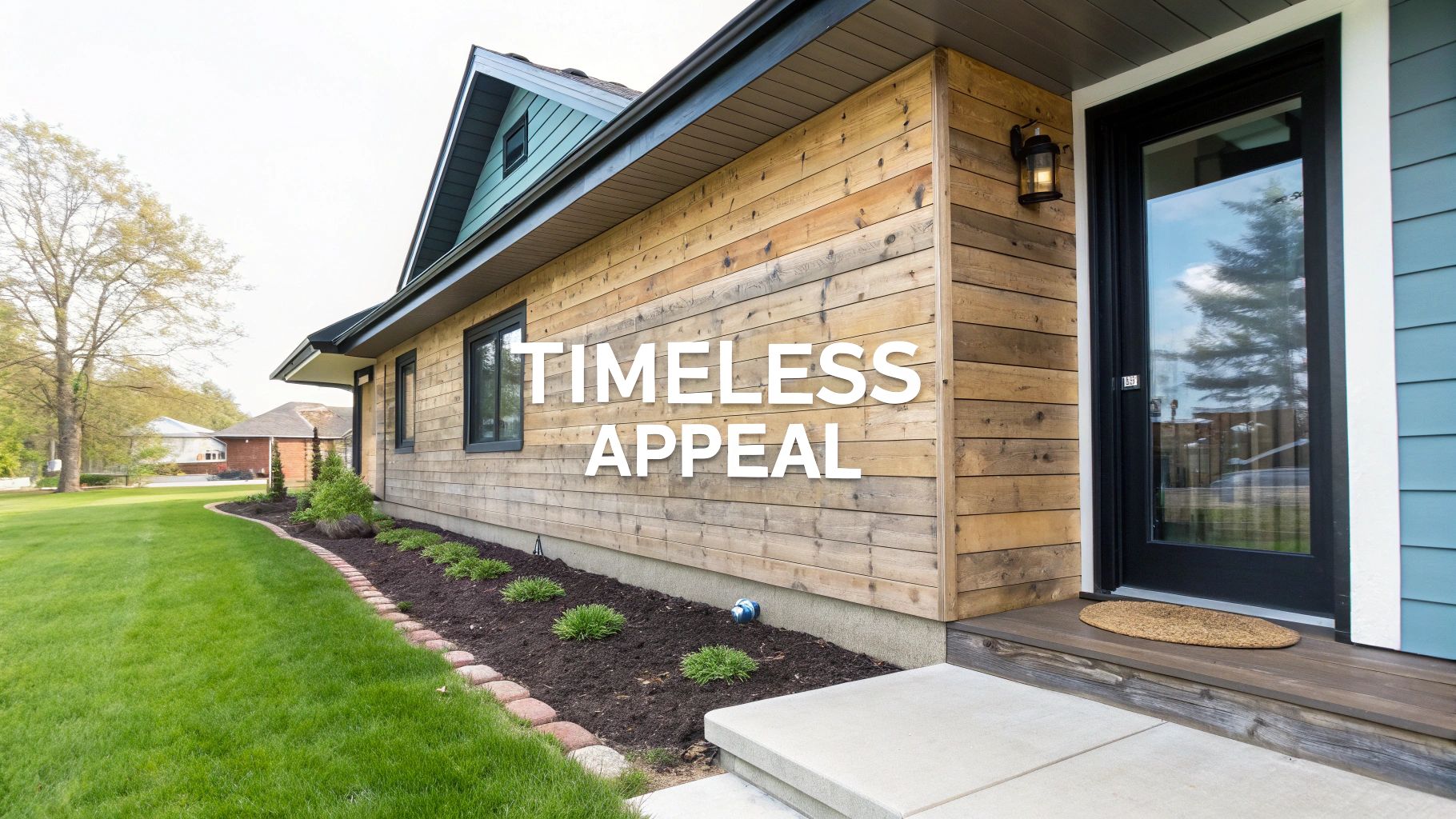
Deciding on reclaimed lumber for your siding isn’t just a design choice. It’s a statement. You’re opting for a material that delivers on environmental responsibility while offering an aesthetic quality that new timber simply can’t match. The benefits are real, affecting everything from your carbon footprint to the visual story your home tells for years to come.
Instead of ending up in a landfill, this timber is given a new chapter. By reusing it, you’re directly reducing the pressure on our virgin forests, which helps to preserve crucial ecosystems.
Plus, the carbon footprint of reclaimed lumber is just a fraction of its modern counterpart. You get to skip the entire energy-heavy process of felling, hauling, and milling new trees. When you choose siding with a past, you’re plugging into a circular economy that keeps valuable resources in play for as long as possible.
A Serious Commitment to Sustainability
The green credentials for reclaimed lumber siding are rock-solid. Every square metre you install is a direct win for the environment, cutting down on waste and pushing construction in a more sustainable direction.
This eco-conscious mindset is really taking hold across the UK. The demand here mirrors a broader European movement towards a circular economy, with Europe accounting for over 41% of the global market share. The UK is a significant player in this, driven by strong environmental policies and a growing appetite for green building materials. Government incentives have sparked a real interest in reclaimed siding, especially for restoring heritage properties and for new, eco-friendly homes. You can get a closer look at the numbers by exploring the full reclaimed lumber market report.
Here’s what that looks like in practice:
- Less Deforestation: It’s simple – using old wood means we don’t need to cut down as many living trees.
- Lower Embodied Carbon: The energy used to mill the timber decades ago is locked in, avoiding fresh emissions today.
- Diverting Waste: It keeps perfectly good timber out of landfill, where it would rot and release methane.
By choosing reclaimed wood, you’re not just getting a building material; you’re investing in something that has already stood the test of time.
An Aesthetic You Can’t Fake
Beyond being the sustainable choice, reclaimed lumber’s biggest draw is its incredible character. This isn’t a look that comes out of a factory. It’s an authentic story told through decades of exposure to the elements and everyday life. No matter how you stain or distress new wood, you can never quite capture that genuine depth.
Just think about it: the siding on your home has a history. The tight grain patterns tell you it came from old-growth forests, where trees matured slowly, developing incredible strength. This makes the wood naturally tougher and more stable than much of what’s harvested today. If you’re curious about what makes timber tough enough for the outdoors, our guide on weather-resistant hardwood for outdoor use is a great place to start.
The real beauty of reclaimed lumber is found in its imperfections. Those old nail holes, faint saw marks, and rich patina aren’t defects—they are the signature of a life well-lived, adding a genuine soul to your building’s exterior.
Every single plank has its own unique colour and texture. You might find the silvery-grey tones of a sun-bleached barn, or the deep, warm hues of a factory beam seeing daylight for the first time in a century. This natural variety means your project will be one-of-a-kind, giving it a bespoke finish that is both timeless and completely impossible to replicate.
Choosing the Right Reclaimed Wood for Your Project
Picking the right reclaimed lumber for your siding isn’t just a practical decision; it’s like casting the lead actor for your home’s exterior. Every species has its own personality, a unique look, and a different level of resilience. The trick is to find the perfect match for your design vision and the notoriously damp UK climate.
Instead of just listing options, let’s get to know the most popular choices. We’ll explore what makes each one special, from its visual appeal to how it performs over the long haul, so you can find the ideal material for your project.
Understanding Reclaimed Pine
Reclaimed pine is a perennial favourite, loved for its warm, inviting character. Sourced from old buildings, it often shows off rich honey or amber tones, brought to life by distinctive knots and nail holes that hint at its past. As a softwood, it’s also relatively easy to work with when it comes to installation.
But how does it hold up in the UK? That really depends on its original life. Old-growth heart pine, for example, is a world away from modern pine. It’s incredibly dense and packed with resin, giving it a natural, built-in resistance to moisture and decay. This makes it a fantastic choice that balances rustic charm with solid performance, gracefully weathering to a beautiful patina over time.
Exploring Reclaimed Oak
If you’re after something truly bombproof, reclaimed oak is almost always the answer. This is a proper hardwood, renowned for its exceptional strength and density—qualities that have only been enhanced by decades of slow ageing. Its tight grain and high tannin content create a formidable natural defence against rot, insects, and the relentless British rain.
From a design perspective, reclaimed oak offers a whole spectrum of colours, from light, honeyed browns to deep, weathered greys. The surface is often a tapestry of old saw marks and textured grain, adding a sense of robust elegance. While it’s certainly a premium option, its incredible longevity makes it a smart investment for a siding that is genuinely built to last for generations.
The choice between pine and oak often boils down to a balance of aesthetics and resilience. Pine gives you a softer, more rustic feel, whereas oak delivers a stronger, more enduring presence that stands up forcefully to the elements.
This image gives a great snapshot of the key steps for installing reclaimed lumber siding, a process we’ll dive into more deeply later in the guide.
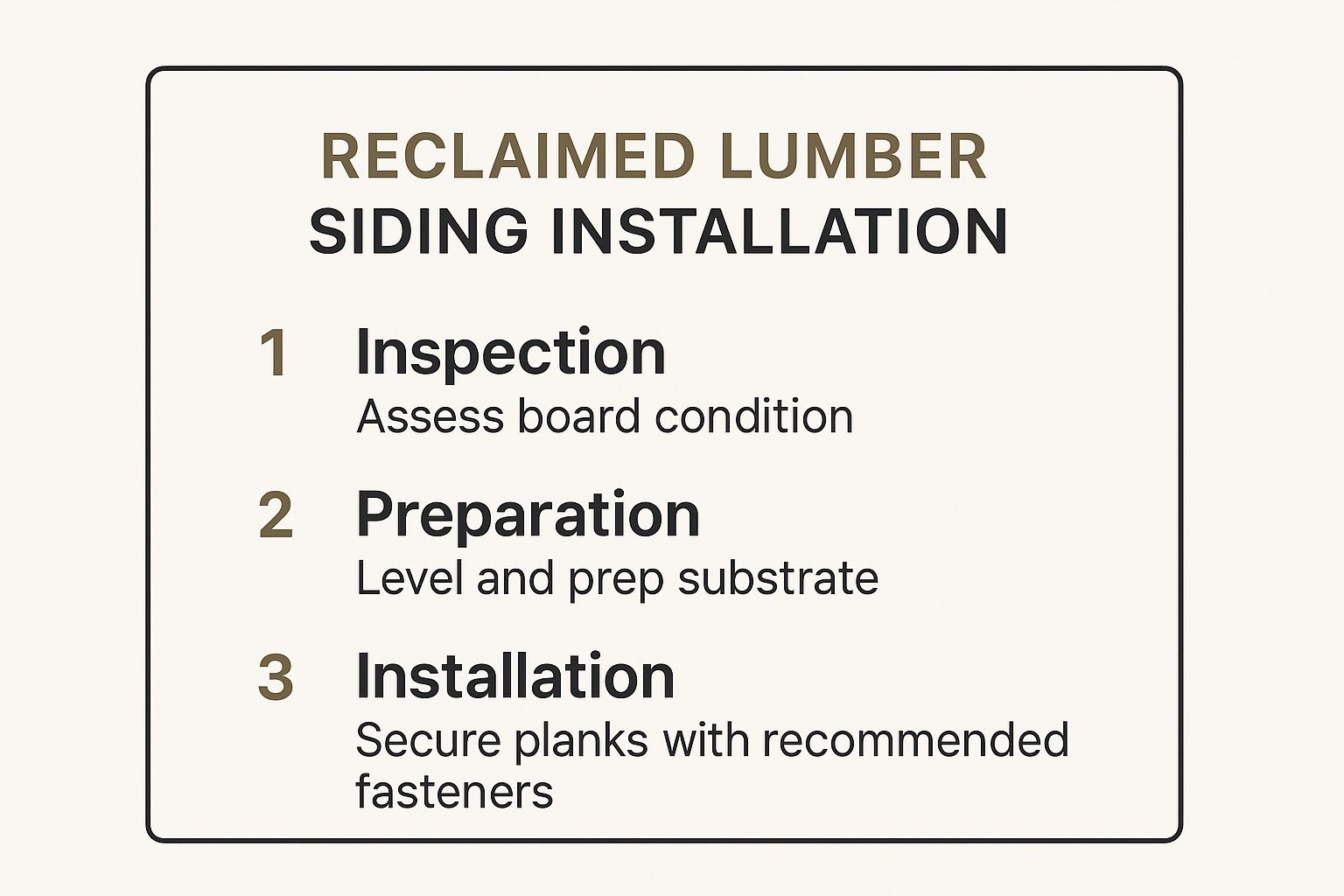
As you can see, the process is neatly broken down into three core stages: inspection, preparation, and installation. It’s a good reminder that a successful project is all about careful planning before a single board even goes up.
The Character of Classic Barnwood
Barnwood isn’t so much a specific tree as it is a story. It’s a catch-all term for timber—often a mix of pine, hemlock, or fir—that has spent a century or more weathering on the outside of agricultural buildings. This long, slow exposure to sun, wind, and rain creates an unmistakable silvery-grey to deep brown patina that you simply can’t fake.
Because it has faced the elements completely unprotected, its condition can be a bit of a mixed bag. That’s why it’s crucial to buy from a reputable supplier who ensures the barnwood is properly processed. This usually means it’s been kiln-dried to get rid of any pests and to stabilise the timber, making it ready for a new life as siding. Its defining feature is that rustic, textured surface, making it the perfect choice for a striking, authentic facade with a powerful sense of history.
Comparison of Common Reclaimed Lumber Siding Types
To make your decision a little easier, this table compares the key characteristics of these popular reclaimed wood species. It’s a quick way to see how they stack up against each other.
| Wood Type | Appearance & Colour | Durability | Best Suited For | Typical Cost |
|---|---|---|---|---|
| Reclaimed Pine | Warm, honey to amber tones with prominent knots and character marks. | Good, especially old-growth heart pine which is naturally resinous and dense. | Projects seeking a warm, rustic, and inviting aesthetic with a strong story. | Moderate |
| Reclaimed Oak | Light brown to deep, weathered grey with a tight, pronounced grain. | Excellent, highly resistant to rot, moisture, and insects due to its density. | Homes needing maximum weather resistance and a timeless, robust appearance. | High |
| Barnwood | Weathered grey, brown, or faded red tones with a highly textured surface. | Varies by species, but its weathered face is proven to endure exposure. | Creating a deeply authentic, rustic look that showcases the wood’s age. | Moderate to High |
Ultimately, whether you lean towards the warm history of pine, the steadfast strength of oak, or the raw character of barnwood, you’re choosing a material that will give your home a unique and beautiful exterior.
How to Source High-Quality Reclaimed Siding
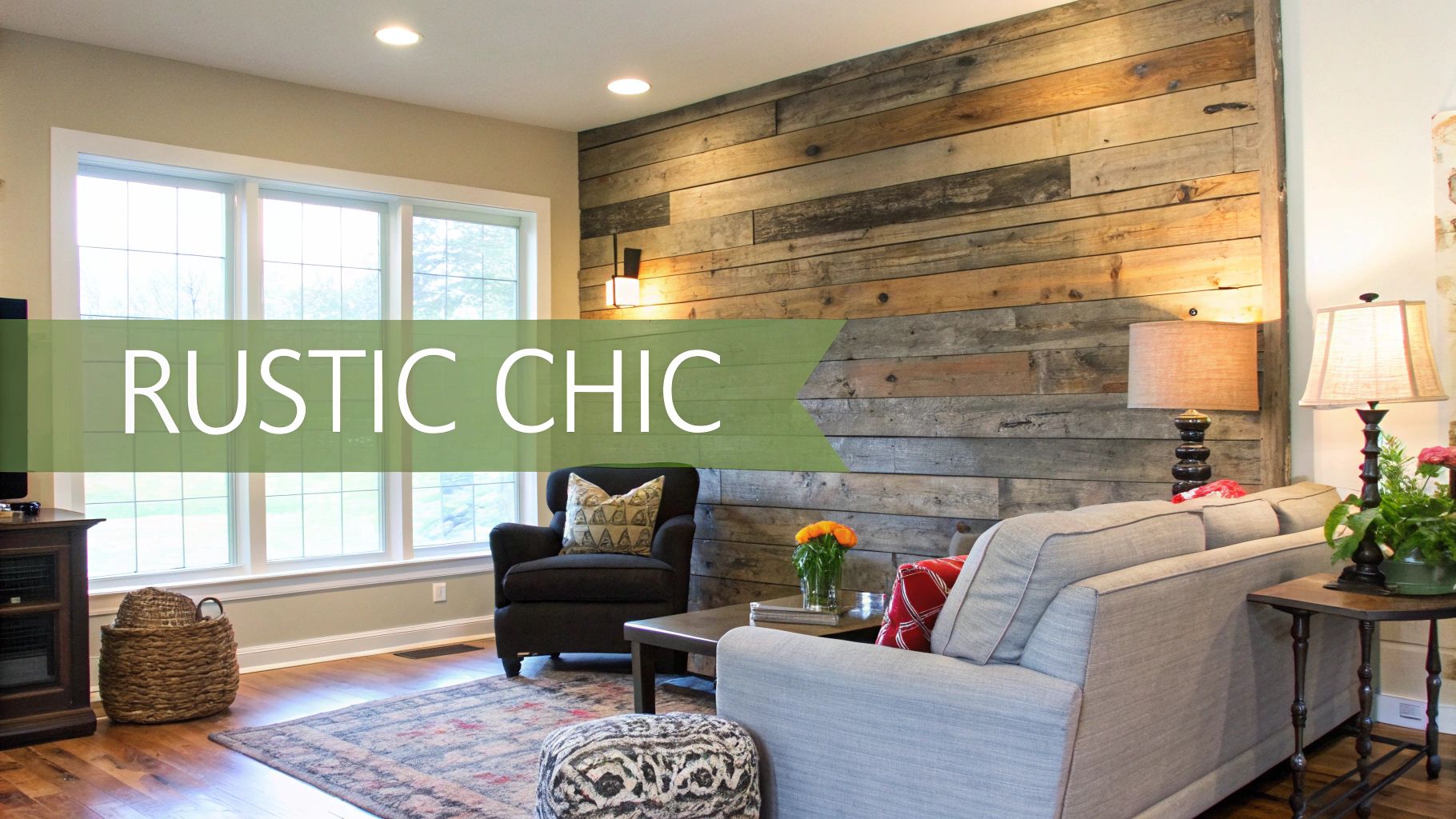
Finding the right reclaimed lumber siding is probably the most critical part of your entire project. Get this right, and you’re well on your way. The quality of the timber directly affects everything—its final look, how long it lasts, and even how easily it goes up.
Sourcing isn’t just about grabbing any old wood. It’s about finding the right old wood, timber that’s been professionally salvaged and carefully prepared for a second life. This means knowing where to look and, just as importantly, what questions to ask. A good supplier is your partner in this, guiding you towards a beautiful and enduring result.
Identifying Reputable Suppliers
Your first mission is to find a supplier who truly understands the character and quirks of reclaimed timber. Thankfully, the UK has a thriving market for reclaimed materials, driven by a deep appreciation for heritage and sustainability. In fact, Europe accounted for around 39.5% of the global reclaimed lumber market revenue, with the UK being a key player. This demand means there are fantastic specialists out there.
Start by looking for businesses that focus on architectural salvage or reclaimed wood. These are the experts who live and breathe this stuff. They’ll have the knowledge to advise you and, most importantly, provide timber that has been processed correctly.
A great supplier will be completely open about their process, which should always include:
- De-nailing: Meticulously removing every last bit of metal to protect tools and ensure safety.
- Kiln-Drying: A vital step to stabilise the wood’s moisture content. This prevents future warping and kills off any lurking insects.
- Milling: Ensuring the timber is cut to consistent thicknesses and widths for a smooth, straightforward installation.
Never, ever underestimate the importance of kiln-drying. Wood that hasn’t been properly dried is a disaster waiting to happen. It can shrink, twist, or cup right there on the side of your home, completely ruining the finish.
Key Quality Indicators to Look For
When you inspect potential siding, you need to put on your detective hat. Look beyond the beautiful, weathered surface and check for the fundamental signs of a quality, usable material. Not all old wood is good wood, so keep a sharp eye out for these tell-tale signs.
Nothing beats a hands-on inspection. If you’re buying online, ask for plenty of detailed photos and even a video showing the boards from all angles. Don’t be shy about requesting a sample—it’s the only way to truly feel the quality for yourself.
Here’s a quick checklist to run through:
- Check for Active Rot or Decay: Poke around for any soft, spongy spots or a crumbly texture. Surface weathering is what you want; active rot is a structural no-go.
- Inspect for Insect Damage: A few old nail holes are part of the story. But clusters of tiny holes? That could signal an old (or even current) insect problem. Double-check that the wood has been kiln-dried to eradicate any pests.
- Assess the Milling Quality: Are the boards a consistent thickness? Small variations add character, but wildly inconsistent milling will give your builder a real headache.
- Confirm the Wood’s Origin Story: A good supplier should be able to tell you where the timber came from—a centuries-old barn in Yorkshire, perhaps, or a Victorian warehouse in London. This story not only adds to the charm but also helps confirm the wood’s species and age. For those interested in unique finishes that add another layer of protection, you can explore the benefits of charred wood siding.
Nailing the Installation and Finishing
Getting your reclaimed siding up on the wall and properly finished is where the magic really happens. This is the stage where all that history and character meets modern building know-how to create a stunning, long-lasting exterior that can stand up to the British weather.
If you get this part right, your siding won’t just look incredible on day one; it’ll perform beautifully for decades to come. It’s all about a series of smart steps, from letting the wood get used to its new surroundings to applying a finish that protects it without hiding its soul.
Give Your Lumber Time to Settle In
Before you even think about picking up a nail gun, your timber needs to get comfortable. This vital step is known as acclimatisation. That reclaimed wood has probably been sitting in a dry, consistent environment for a while. If you just slap it onto the side of your house, the shock of our variable UK weather will make it swell, shrink, and warp.
To avoid a mess down the line, stack the siding at your building site for at least one to two weeks before you start. You’ll want to use small pieces of wood, often called stickers, to separate each layer. This allows air to flow all around every single board, giving the wood a chance to match its internal moisture content to the local humidity. It’s a simple step that makes for a far more stable and predictable result.
How to Fix It to the Wall
The way you arrange your siding doesn’t just change how it looks; it affects how it performs. You can go for a classic horizontal layout for that timeless, traditional feel, or you can run the boards vertically to give your home a taller, more modern profile.
But even more important than the orientation is the system you use to attach it. Given how damp it can get in the UK, a rainscreen system isn’t just a good idea—it’s essential.
A rainscreen is your best insurance policy for wood siding in a wet climate. It works by creating a small air gap between your siding and the building’s waterproof layer. This gap allows any water that finds its way behind the boards to drain out harmlessly and lets the back of the wood dry completely. It’s the single most effective way to prevent rot.
Basically, you fix vertical battens to the wall first, then fix your siding to those battens. That ventilated space is the key to making sure your reclaimed timber lasts a lifetime.
Choosing the Right Finish
The final touch is the finish. This choice dictates the final colour and sheen, but it also sets your maintenance schedule for the years ahead. You’ve really got two main options.
- Penetrating Oils: Think natural oils like tung or linseed. These soak right into the wood fibres, doing a fantastic job of bringing out the deep grain and rich patina of old timber. They give a gorgeous, natural matte look and repel water well, but they don’t last forever. You’ll likely need to reapply them every few years to keep the protection topped up.
- Film-Forming Sealants: These are your modern acrylic or polyurethane-based finishes that create a protective skin on top of the wood. They offer a much tougher defence against UV damage and moisture, meaning you can go a lot longer between maintenance jobs. They come in everything from matte to high gloss, but be aware that a thick film can sometimes hide some of the subtle texture that makes reclaimed wood so appealing.
Honestly, the best choice comes down to what you value more: the most authentic, natural look with a bit more upkeep, or maximum protection with less work. Whichever route you take, a good finish is the final, crucial step in protecting your investment and ensuring your beautiful reclaimed siding looks amazing for years.
Keeping Your Siding Beautiful for Decades to Come
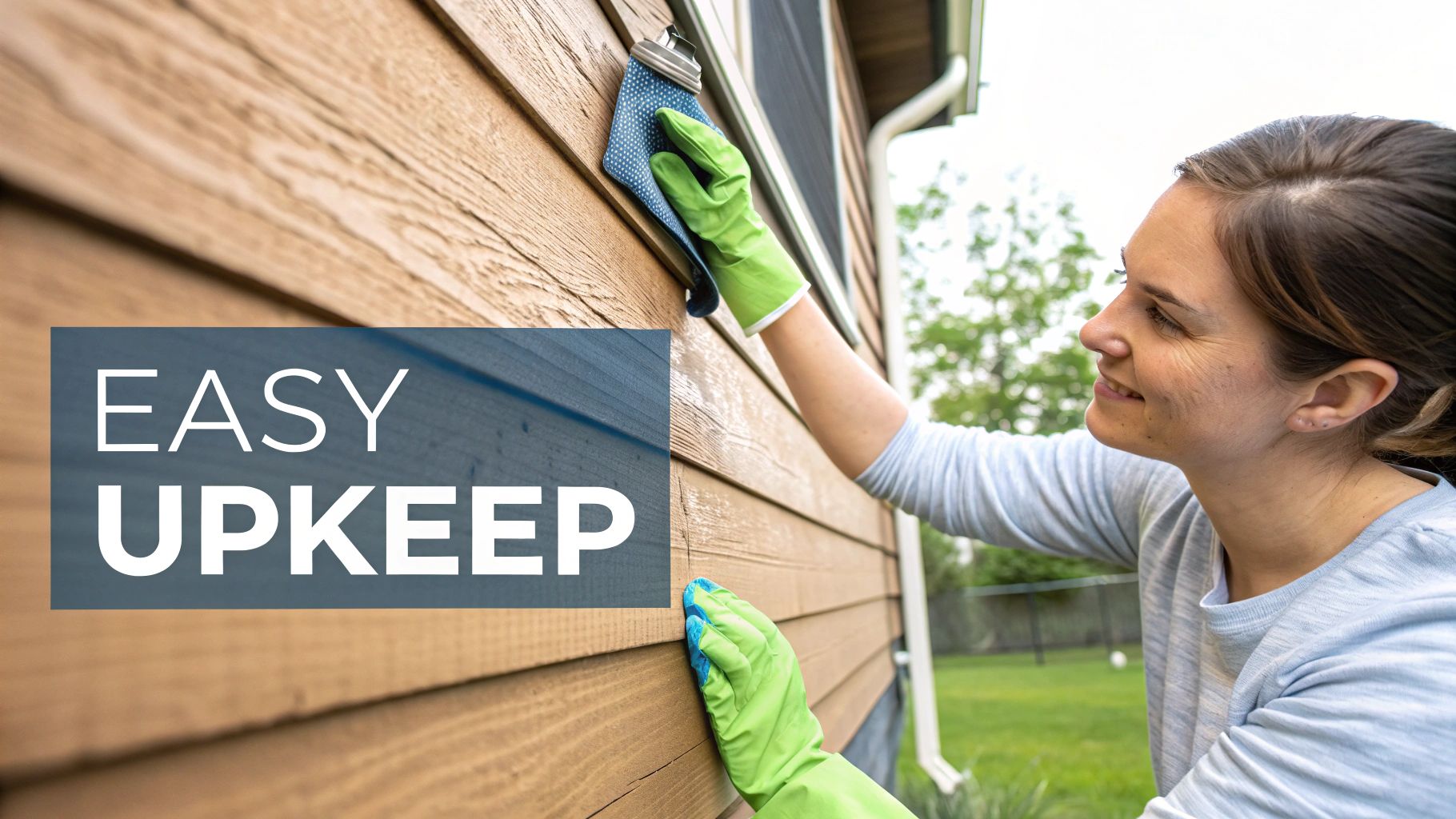
One of the best things about reclaimed lumber is its proven track record. This is timber that has already stood up to decades, sometimes centuries, of weather. That history gives it a natural resilience that freshly milled wood just can’t replicate. With a simple and sensible care routine, you can make sure your siding continues to age beautifully and protect your home for years.
Good maintenance isn’t about creating endless work for yourself; it’s about paying smart, occasional attention. The whole point is to keep the wood’s integrity and character intact while heading off common problems before they can even start. A straightforward schedule of checks and cleaning is all it takes to keep your investment looking incredible.
Your Annual Siding MOT
At least once a year, take a slow walk around your home and give your siding a proper look. This simple habit is your best defence against any potential issues. Make a point to check the areas that get battered by rain or blasted by the sun, as these spots will naturally show wear first.
While you’re looking, here’s what to keep an eye out for:
- Loose Fixings: Have any nails or screws started to pop out or work themselves loose?
- Cracked Sealant: Check the sealant around windows, doors, and corner boards to make sure it’s still solid.
- Moisture Signs: Look for any dark patches or discolouration that could hint at trapped water behind the boards.
- Finish Condition: Take note of any areas where the finish is looking a bit thin, faded, or patchy.
Catching these little things early during your annual walk-around can turn a future headache into a quick, ten-minute fix.
Think of it like a yearly MOT for your home’s exterior. A quick check-up ensures everything is performing as it should, extending the life of your reclaimed lumber siding and preserving its unique beauty.
A Gentle Clean to Keep it Healthy
Over the course of a year, your siding is bound to pick up dust, pollen, and general grime from the air. Giving it a gentle wash once a year stops this build-up from inviting mould or mildew to set up shop, which is especially important in the damp UK climate.
For a routine clean, a bucket of mild, soapy water and a soft-bristled brush are your best friends. Gently scrub the surface to lift the dirt, then rinse it all away with a low-pressure hose. You should never use a high-pressure washer, as the intense blast can easily gouge the wood fibres and strip away the protective finish. It’s a simple job that keeps the timber looking and feeling fresh.
Knowing When to Reapply a Finish
There’s no single answer for when a finish needs redoing. It really depends on your local weather, the specific product you used, and how much direct sunlight hits your walls. A south-facing wall that gets the sun all day will need attention far sooner than a sheltered, north-facing one.
As a rough guide, you might find that penetrating oils need a fresh coat every 3-5 years. Hardier, film-forming sealants, on the other hand, can last anywhere from 7-10 years. The real test is to see how it handles water. If rain no longer beads up on the surface and starts to soak in instead, that’s your cue to apply a new coat. Taking this proactive step keeps the wood properly protected from the elements, locking in its history and charm for the next generation to enjoy.
Common Questions About Reclaimed Siding
Even with all its obvious upsides, it’s natural to have a few questions when you’re thinking about reclaimed lumber siding. Getting to grips with the practical side of things—cost, performance, and how it fits with your design ideas—will give you the confidence that you’re making a brilliant choice for your home. Let’s walk through some of the most common queries.
One of the first things people want to know is the price. Is reclaimed timber siding more expensive than new wood? Well, the initial outlay can sometimes be higher than standard new timber. That’s down to the skilled, hands-on work involved in carefully salvaging, de-nailing, kiln-drying, and re-milling every single plank.
But it’s often priced competitively against premium new hardwoods. When you consider its incredible durability and the unmatched character it brings, many find it’s a high-value investment that adds real story and kerb appeal to a property.
Performance in the British Climate
A big question for any UK project is always about the weather. How does reclaimed lumber siding hold up in our famously damp climate? The answer is, remarkably well. Timber that comes from old-growth trees is naturally much denser and more resilient than most of the fast-grown wood available today.
Species like old oak and certain historic pines are packed with natural resins, which act as a built-in defence against moisture and rot.
When it’s installed properly with a modern rainscreen system and protected with a quality finish, reclaimed siding performs exceptionally well. It often outlasts many new materials—after all, its long history is the best proof of its endurance.
Design Flexibility for Modern Homes
So, is reclaimed lumber just for rustic farmhouses or traditional cottages? Absolutely not. While it’s a perfect match for period properties, architects are using reclaimed timber more and more in contemporary designs to bring in warmth, texture, and a strong sustainable statement.
The contrast it creates against modern materials is what makes it so striking.
- Against Glass and Steel: The organic, weathered feel of the wood creates a beautiful, soft counterpoint to the clean, sharp lines of metal and glass.
- With Render or Concrete: It can break up large, plain surfaces, creating a focal point that’s rich with history and visual interest.
This blend of old and new gives any design a sophisticated, grounded feel. If you have more specific questions, you can always have a look at our frequently asked questions page. At the end of the day, reclaimed lumber siding is a unique chance to create an exterior that feels both timeless and completely personal.
