
Timber vs Composite Cladding: Which Is Better for Your Home?

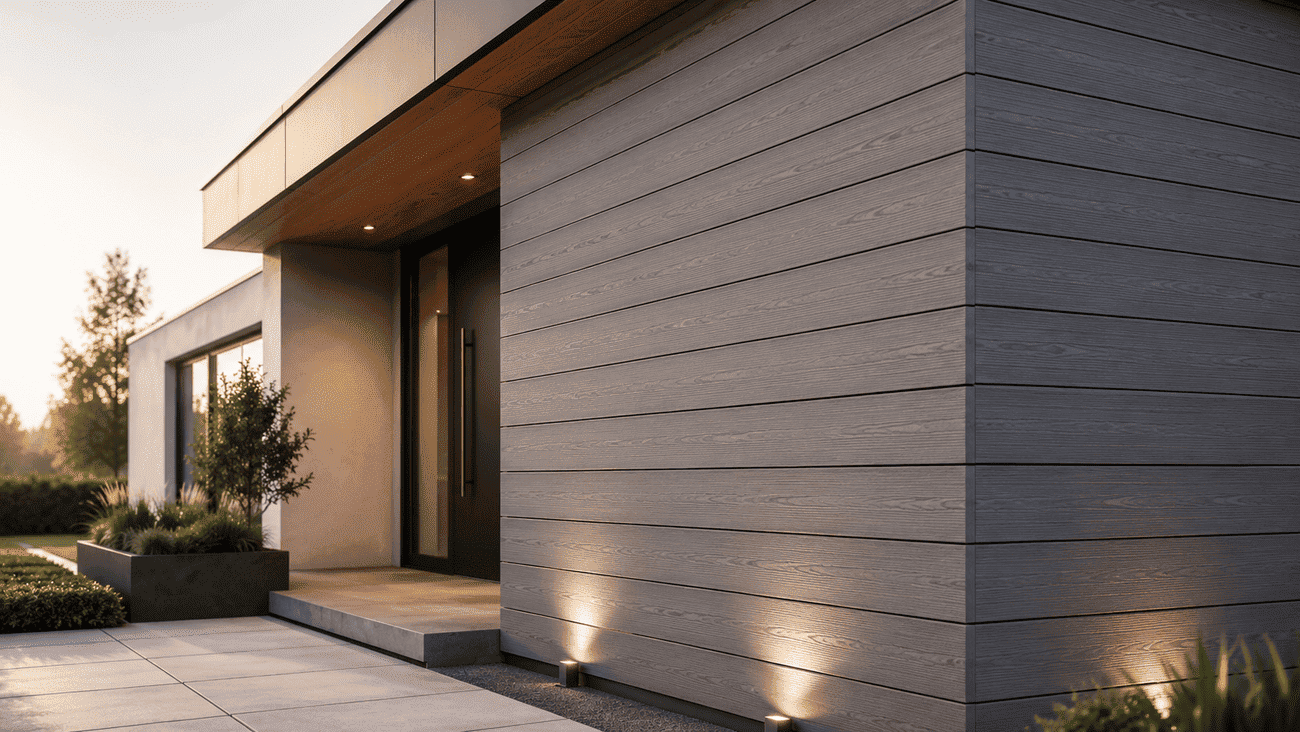
Choosing between timber and composite cladding comes down to a trade-off: a natural material with a maintenance schedule or manufactured boards with a fixed service window. Neither option is universally better, and the marketing on both sides tends to gloss over the details that actually determine the outcome.
Those details matter more than the headline claims. Composite is often sold as “rot-proof” and “maintenance-free”, yet laboratory studies show that the wood filler inside it remains biodegradable. Timber, meanwhile, has quietly closed the durability gap through thermal modification and charring techniques such as Yakisugi.
Honest 2026 cost figures per square metre, the drawbacks composite sellers rarely mention, membrane and detailing requirements, and clear guidance on which boards to avoid altogether all influence the outcome. Once those are on the table, matching the right material to your elevation, budget and appetite for upkeep becomes straightforward.
Timber vs Composite Cladding: Which Is Better?
Timber is the better choice if you value natural character, repairability and end-of-life recyclability; composite suits buyers who want minimal upkeep over a 20–30-year period. Modified and charred timbers now narrow that maintenance gap considerably.
Timber cladding consists of solid boards, typically made from larch, cedar, spruce, oak or thermally modified species. Composite (WPC) is roughly 45–60% wood flour bonded in a PVC, HDPE or PP plastic matrix.
| Criteria | Timber | Composite (WPC) |
| Makeup | Solid wood boards | Wood flour + plastic matrix |
| Lifespan | Species-dependent; modified/charred timber can exceed 30 years | Typically 20–30 years |
| Maintenance | Recoating, or re-oiling every 5–10 years (charred timber) | Occasional cleaning only |
| Ageing | Greys naturally, predictably | Can fade; cheaper boards fade faster |
| Repairability | Can be sanded, re-oiled or replaced board by board | Cannot be sanded; replacement only |
| Sustainability | Renewable, recyclable | Plastic content complicates recycling |
| Upfront cost | Softwood is cheapest; hardwood is premium | Mid-to-upper range |
Competitors’ lifespan claims conflict because quality matters more than category. Well-detailed timber made from a durable, treated or charred species can outlast composite, but only with the correct species choice and detailing.
Maintenance is timber’s honest trade-off: untreated boards grey and need recoating if you want a stable colour. However, charred timber cladding needs re-oiling only every 5–10 years, plus cleaning with water and a soft broom.
And greying is not a failure. Timber Development UK’s 2023 surveys of untreated cedar (Herefordshire Archives) and thermally modified poplar (Shropshire) found very even weathering, with only faint algae at the bottom courses.
Cost Comparison: Is Composite Cladding Cheaper Than Timber?
No, composite is not usually cheaper than timber upfront. Standard softwoods comfortably undercut composite, while hardwoods and premium modified boards overlap with or exceed composite prices. The real answer depends on the species, not the material category.
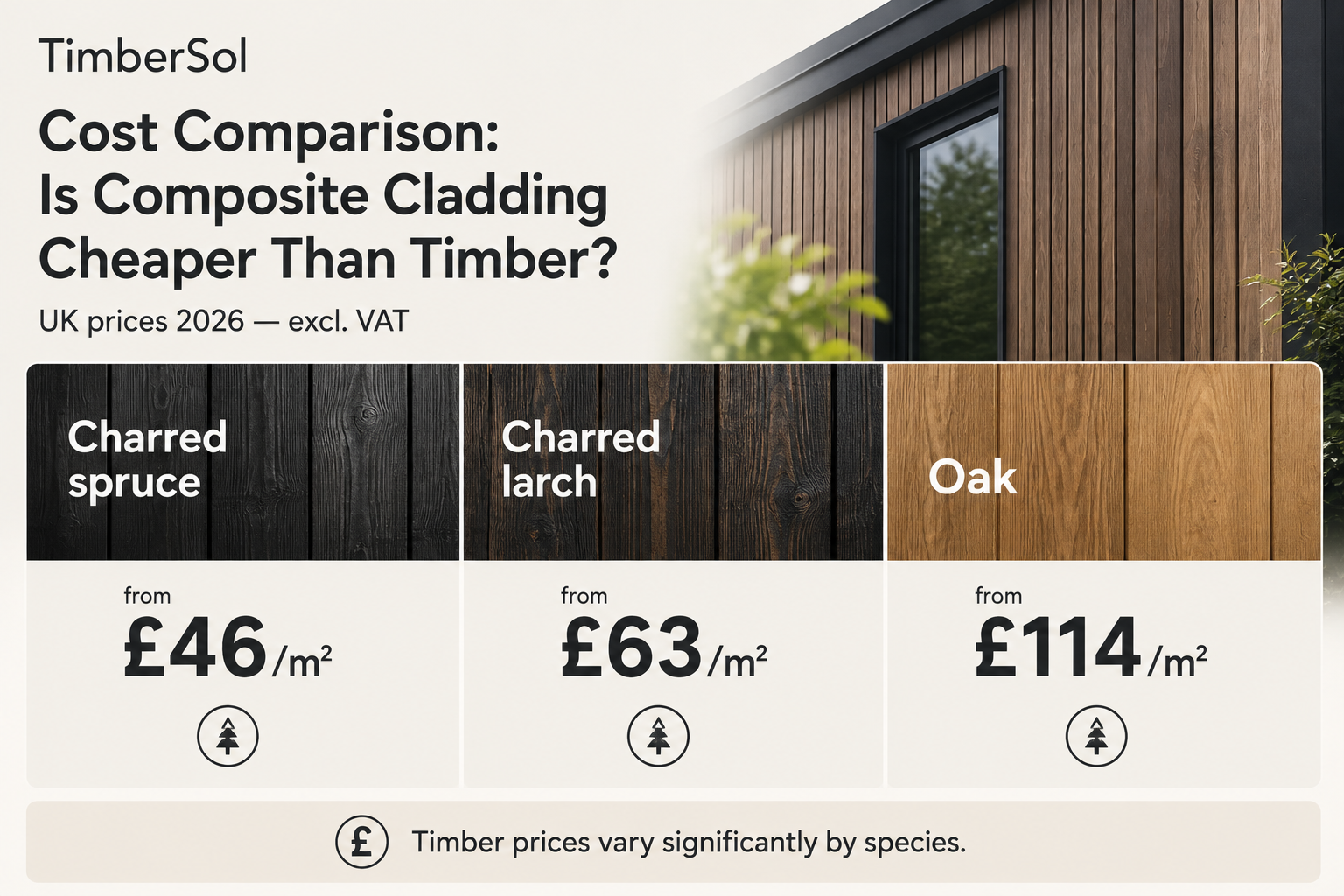
Real UK figures for 2026 make this concrete: charred spruce cladding starts at around £46/m² excl. VAT, charred larch sits at £63/m², and oak reaches roughly £114/m². Untreated softwood costs even less, whereas composite typically falls within the mid-to-upper range.
Lifetime cost tells a different story. Timber carries ongoing treatment or recoating costs, though charred and modified boards need only occasional re-oiling. Composite demands near-zero maintenance, but faded or damaged boards cannot be sanded or refinished, so end of life means full replacement.
Whichever material you choose, budget beyond the headline rate. Shiplap and shadow gap profiles lose about 15 mm of effective coverage per board, and industry practice recommends a 10% wastage allowance for both materials.
Installation costs are broadly similar, since timber and composite both attach to a battened, ventilated substructure. The labour required to batten a wall and install the boards differs little between the two materials.
Disadvantages of Composite Cladding You Should Know
Composite cladding has five drawbacks that sellers rarely lead with:
- Higher upfront cost than softwood timber
- Scratches and gouges cannot be sanded out or refinished
- Plastic content complicates end-of-life recycling
- Quality varies widely between capped and uncapped boards
- Cheaper uncapped products fade noticeably under UV exposure
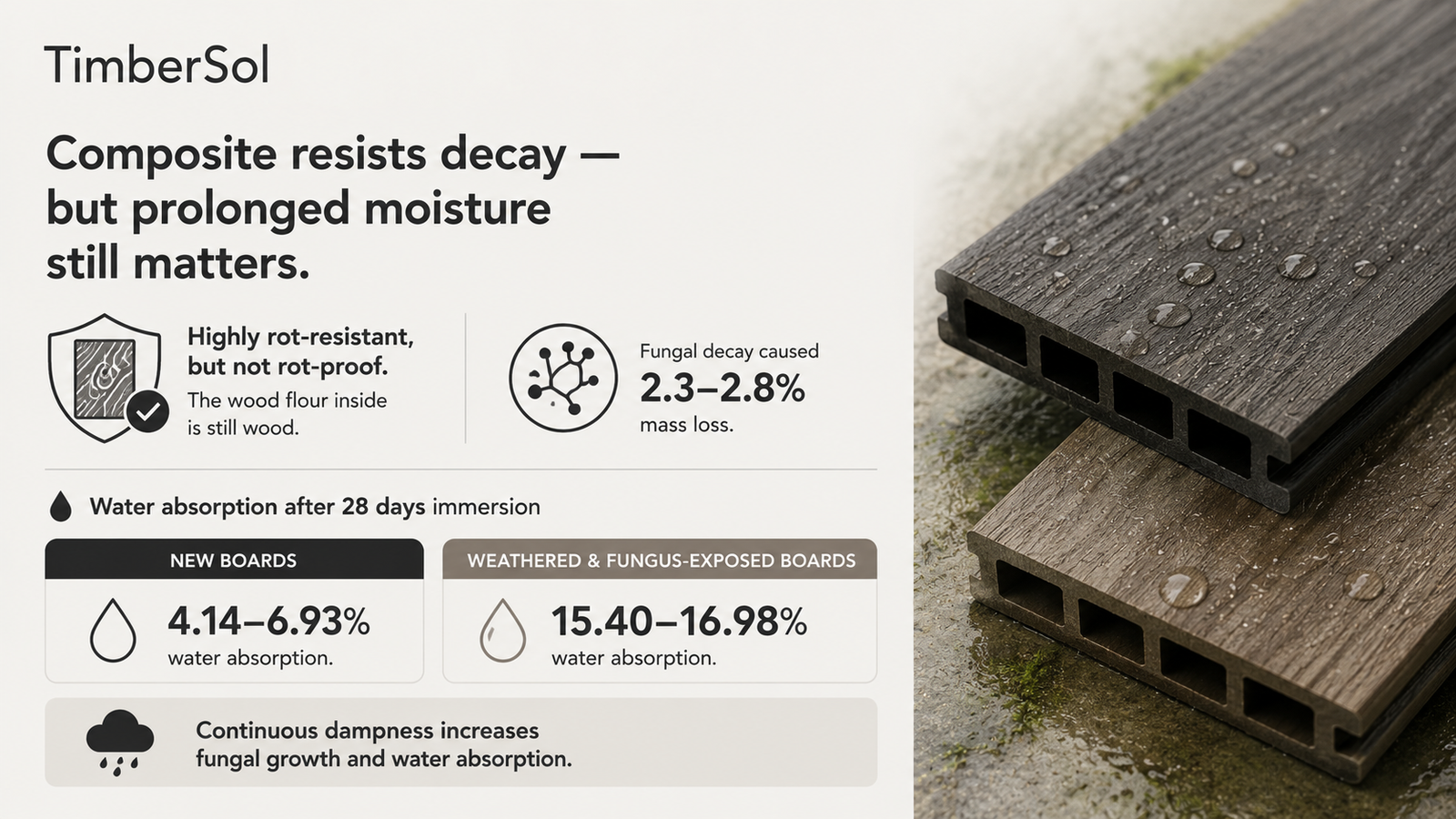
The “composite doesn’t rot” claim also deserves scrutiny. Wiejak & Francke (Materials, 2021) tested WPC boards against decay fungi and recorded mass losses of 2.3–2.8%, within the 3% limit applied to impregnated wood. That confirms strong resistance, but the wood flour inside is still wood. Decay occurs, just more slowly than in untreated timber, and continuous dampness in their tests contributed to fungal growth on the surfaces.
Their water absorption data is equally revealing. New boards absorbed 4.14–6.93% water after 28 days of immersion, yet weathered and fungus-exposed boards absorbed 15.40–16.98%. The datasheet figure buyers see is usually the new-board number.
There is also a standards blind spot. Piekarczuk et al. (Materials, 2024) note that EN 15534-4 assesses colour change, flexural strength and swelling, but not out-of-plane deformation. Consequently, a fully compliant board can still cup or bow in service. Their cyclic-ageing tests on hollow WPC decking profiles showed consistent convexity developing, along with surface polymer degradation that exposed the wood filler beneath.
None of this makes composite a bad product. It remains a sound choice where minimal upkeep matters most, such as on hard-to-access elevations or for landlords seeking to minimise call-outs. But “won’t rot quickly” and “won’t need cleaning” are different promises.
Do You Need a Membrane Under Composite Cladding?
Yes. Both composite and timber cladding are rainscreen systems, so a breather membrane over the wall structure is standard practice unless the manufacturer specifies otherwise.
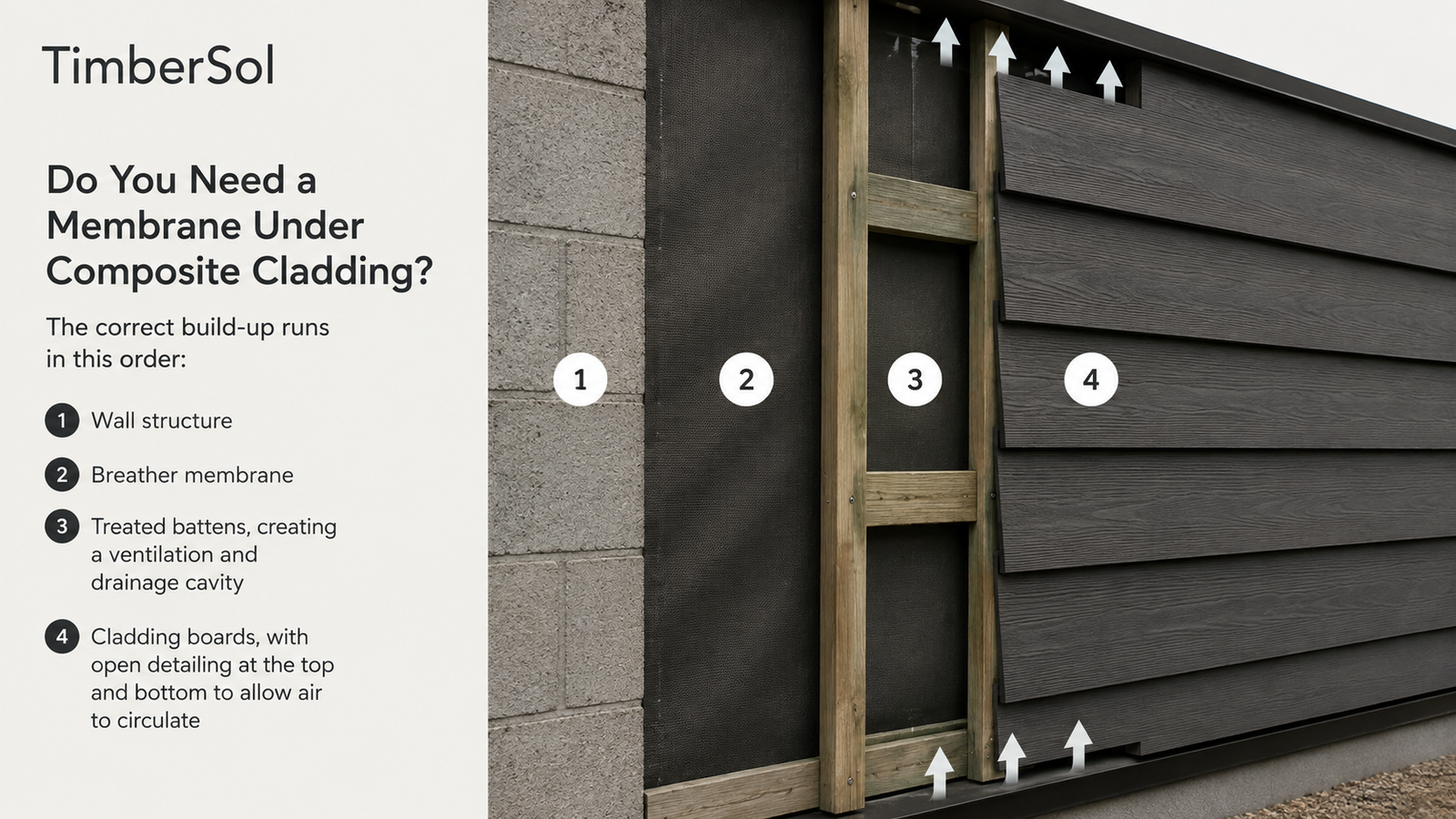
The correct build-up runs in this order:
- Wall structure
- Breather membrane
- Treated battens, creating a ventilation and drainage cavity
- Cladding boards, with open detailing at the top and bottom to allow air to circulate
That cavity matters for both materials. It lets timber dry after rain, preventing rot behind the boards, and keeps the wood filler in composite below the moisture levels at which decay becomes possible. The Wiejak and Francke findings above show why: encapsulated wood flour stays sound only while moisture levels remain low.
Fixing practices differ, however. TimberSol charred larch is installed with a 2–4 mm gap between boards and stainless steel fixings, while composite systems typically use hidden clips with expansion gaps because plastic moves with temperature rather than humidity.
Timber vs Composite Cladding: FAQ
What Are the Disadvantages of Timber Cladding?
Untreated timber can rot, warp and suffer insect damage on exposed elevations, and greying is inevitable without coatings. Maintenance is also an ongoing commitment: stains or paints need periodic recoating to maintain a stable colour.
However, these risks diminish with the right specification. Larch is rated Durability Class 3 under BS EN 350, while thermal modification and surface charring add further protection. According to Timber Development UK, weathering itself doesn’t compromise rain protection; it changes appearance, not performance.
What Cladding Should You Avoid?
Avoid three categories: untreated, non-durable softwoods on exposed or damp elevations; cheap, uncapped composite prone to fading and staining; and boards without a verified Euroclass fire rating where building regulations require one. Fire classification matters especially on taller buildings, since post-Grenfell rules tightened cladding requirements for buildings over 11 metres.
Before buying, check certifications (FSC or PEFC for timber), declared performance standards and the supplier’s warranty terms. A reputable supplier will publish this data openly rather than leave you guessing.
How Long Does Composite Cladding Last Compared to Timber?
Quality composite typically lasts 20–30 years with minimal upkeep. Well-maintained timber made from durable or modified species can last considerably longer, although its lifespan depends heavily on species choice, detailing and maintenance commitment.
Repairability separates the two at the end of their service life. Timber can be sanded or re-oiled, and individual boards can be replaced and blended in; degraded composite generally needs full replacement because its faded or damaged surface cannot be refinished.
Is Composite Cladding Any Good for UK Weather?
Yes, composite handles the damp, variable UK climate well because its plastic matrix resists moisture, UV exposure and insects without treatment. However, board quality determines long-term performance: capped boards with a protective polymer shell fade and stain far less than cheaper uncapped products.
Set realistic expectations, though. On a damp, north-facing wall, composite can still develop green algae and mould that feed on surface contaminants, so periodic cleaning remains necessary.
Choosing between timber and composite ultimately comes down to what you want your home to say, and charred timber offers a third path worth considering: the natural character of wood with durability enhanced through a traditional Japanese technique. At TimberSol, we char larch, spruce, oak and Accoya to create a protective carbon layer, then brush and oil each board to produce a finish that resists weather, rot and insects without losing the warmth that composite tries to imitate.
If you’d like to see how charred timber compares in person, order a charred cladding sample in your preferred species and shade. If you’re weighing up options for a specific project, our team is happy to talk through profiles, sizes and finishes so you can specify with confidence.
