
Stunning Decking Designs for Gardens

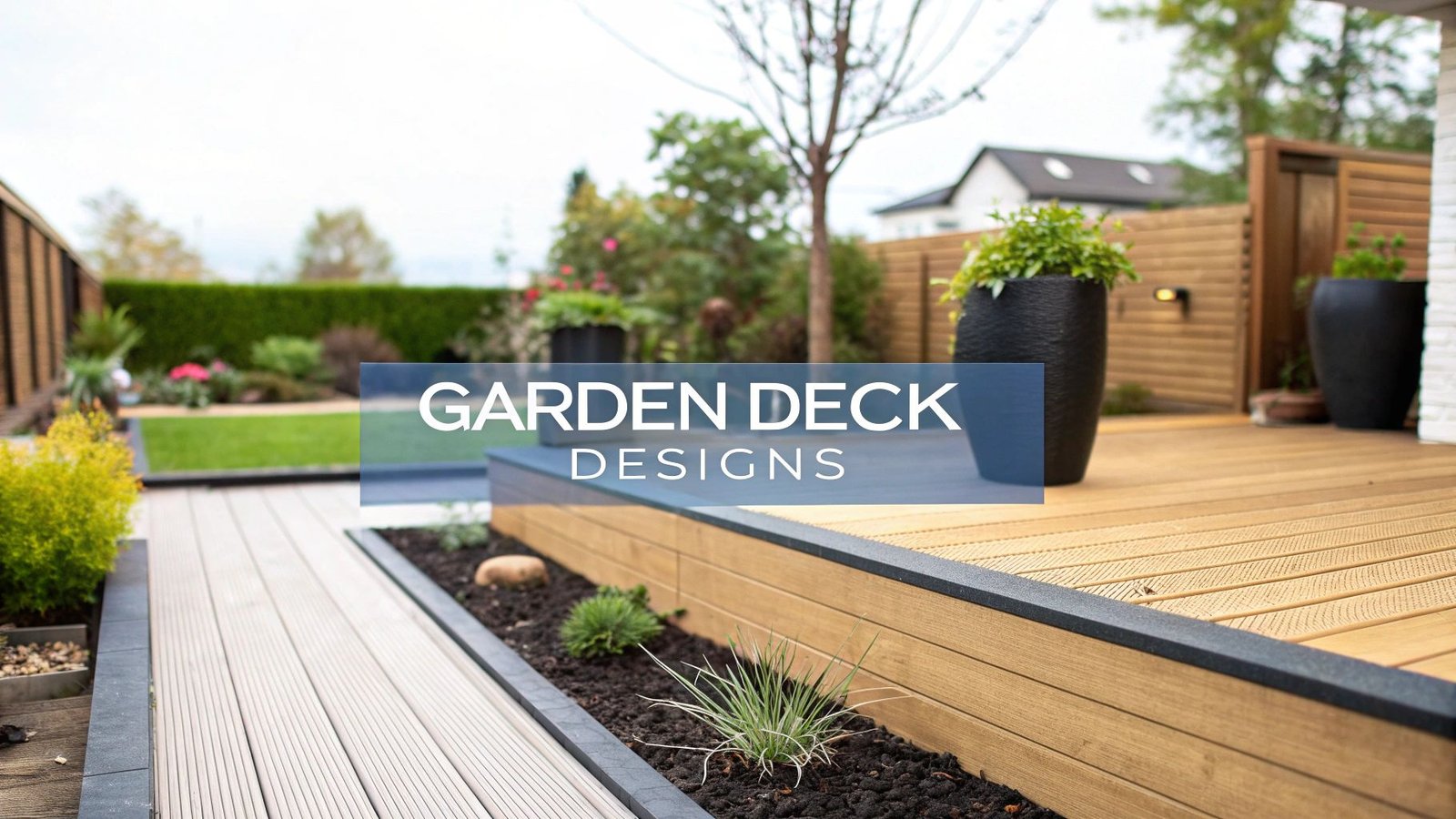
Imagine stepping out of your back door, not just into the garden, but onto a beautiful deck that feels like a genuine extension of your home. It’s that perfect spot you’ve always pictured. This guide is all about exploring the incredible world of decking designs for gardens, from sleek, modern layouts perfect for entertaining to rustic charred timber decks that seem to melt right into the landscape. We’ll walk through the key decisions that help you create a deck you’ll absolutely love for years to come.
Bringing Your Dream Garden Deck to Life
A garden deck is so much more than just a platform. It fundamentally changes how you use and enjoy your outdoor space. Think of it as a bridge between the comfort of your house and the untamed beauty of your garden, creating a dedicated zone for relaxing, dining, and socialising. The right design can even solve tricky problems, like levelling out a sloped garden, all while adding real value and kerb appeal to your home.
It’s like designing another room for your house, just without the roof. Just as you’d carefully plan a new kitchen, thinking about your deck’s purpose, flow, and style is crucial. The possibilities are huge, from a simple, functional square to an intricate, multi-level structure with built-in planters and seating.
Why Planning Your Deck Design Matters
Diving into a decking project without a clear vision often leads to a space that feels a bit awkward or just doesn’t fit your needs. A well-thought-out plan, on the other hand, ensures your deck not only looks fantastic but works perfectly for your lifestyle. A bit of careful thought upfront makes your investment worthwhile, giving you a durable and genuinely enjoyable space.
At this early stage, a few key things to mull over are:
- How will you use it? Is this going to be your quiet reading nook, a bustling hub for family barbecues, or a serene spot for a morning coffee? What you plan to do on it will dictate its size, shape, and where it should go.
- How does it fit in? Think about how the deck will connect with your home and the rest of the garden. A great design feels intentional and cohesive, not like something that was just tacked on.
- What’s your style? What look complements your home’s architecture and your own personal taste? Whether you’re after rustic and traditional or something more contemporary and minimalist, your choice of materials and layout will define its character.
What You Will Learn in This Guide
Consider this guide your starting point for turning that initial daydream into a solid plan. We’ll explore everything you need to know to create stunning and practical decking designs for gardens. You’ll get a clear picture of how different materials, patterns, and features come together to make an inspiring space.
A great garden deck doesn’t just add space; it enhances your quality of life. It’s the stage for summer memories, from quiet afternoons with a book to lively evenings with friends and family.
We’ll break down the essential elements of deck design into simple, actionable steps. You’ll learn about choosing the right materials, including stunning and durable charred timber from TimberSol, and how to pick a layout pattern that can make your garden feel larger and more inviting. By the time you’re done, you’ll have the knowledge and confidence to plan a garden deck that is both beautiful and built to last. Let’s get started.
Understanding the Foundations of a Great Deck
Building a beautiful deck is a bit like baking a fantastic cake—the intricate icing gets all the attention, but it’s the perfectly structured sponge underneath that provides all the support. It’s the same with garden decking. The visible boards are just the final touch; the real magic lies in the unseen foundation that keeps your deck safe, stable, and lasting for years.

Without a solid base, even the most stunning design will eventually fail. Getting to grips with these foundational principles gives you the confidence to plan your project with a professional’s eye, making sure your investment is sound. This is more important than ever as the UK wooden decking market continues to grow, projected to climb from USD 512.4 million to over USD 842.1 million by 2031. With more homeowners investing, getting the basics right is non-negotiable.
Market Growth Projections for UK Wooden Decking
The demand for high-quality outdoor living spaces is clearly on the rise. The following table illustrates the anticipated growth in the UK’s wooden decking market, highlighting a steady and promising trend.
| Year | Market Value (USD million) | CAGR |
|---|---|---|
| 2023 | 512.4 | – |
| 2024 | 545.2 | 6.4% |
| 2025 | 580.1 | 6.4% |
| 2026 | 617.2 | 6.4% |
| 2027 | 656.7 | 6.4% |
| 2028 | 698.8 | 6.4% |
| 2029 | 743.5 | 6.4% |
| 2030 | 791.3 | 6.4% |
| 2031 | 842.1 | 6.4% |
This consistent growth underscores the value homeowners place on well-built decks, making it crucial to understand the structural elements that guarantee longevity and safety.
The Skeleton of Your Deck: Structural Framing
Think of the structural frame as your deck’s skeleton. It’s the hidden network of posts, beams, and joists that bears the entire weight of the deck, your garden furniture, and all the people enjoying it. This framework is responsible for distributing that load evenly and safely into the ground.
A poorly designed frame can lead to sagging boards, a wobbly, unnerving feel underfoot, and in the worst cases, complete structural collapse. That’s why using correctly spaced joists and secure footings is absolutely essential for a safe and durable outdoor space.
Your deck’s substructure is its unsung hero. It does all the heavy lifting so you can relax and enjoy the view. Overlooking its importance is like building a house on sand—it simply won’t last.
Proper ground preparation is always the first step. This means clearing the area of all vegetation and ensuring the soil is compacted and level. Good prep prevents the ground from shifting over time, which could compromise the entire structure.
Why Groundwork and Drainage Matter
Water is the biggest enemy of any timber structure. Without proper planning, rainwater can pool underneath your deck, creating a damp environment perfect for rot, mould, and pests to thrive. This is why effective drainage is a cornerstone of a long-lasting deck.
Creating a slight slope away from your house is a simple but effective trick to ensure water runs off naturally. It’s also wise to lay a high-quality weed mat beneath the frame; this stops unwanted plants from growing through the gaps while still allowing moisture to drain away into the soil. These small details make a massive difference.
Making smart choices at this stage also means thinking about your environmental impact. For anyone keen on sustainable building, you can learn more about the benefits of eco-friendly construction materials in our detailed guide.
The Small Details with Big Impact
Beyond the heavy-duty framework, a few smaller details are crucial for a professional finish and long-term durability. These elements all work together to protect your investment from the often-unforgiving British weather.
- Board Gapping: Those small, uniform gaps between deck boards aren’t just for looks. They allow the wood to naturally expand and contract with changes in temperature and humidity, preventing it from buckling and warping.
- Ventilation: Good airflow underneath the deck is vital. It helps keep the substructure dry and stops moisture from building up—a leading cause of timber decay.
- Secure Fixings: Always use high-quality, corrosion-resistant screws and fixings. This ensures every connection point remains strong and secure, year after year.
By mastering these foundational concepts, you’re not just building a deck; you’re creating a robust, safe, and beautiful outdoor living area that will stand strong for years to come.
Choosing The Right Materials For Your Garden
Picking the perfect decking is like choosing the right coat for changeable British weather. It sets the tone for your entire outdoor space—from the first glance to how much effort you’ll spend maintaining it. Let’s break down the top options so you can weigh cost, appearance and upkeep at every stage.
Traditional Timber And Hardwoods
There’s something timeless about a wooden deck nestled among greenery. Natural wood brings a warmth and authenticity that few synthetic materials can match.
- Pressure-Treated Softwood
• Often the most budget-friendly route, this pine is chemically treated against rot and insects.
• Needs an annual seal or stain to keep its best face forward.
• Can be customised with paint or translucent finishes. - Hardwoods (Oak, Iroko)
• Denser and naturally decay-resistant, so you skip chemical treatments.
• Higher upfront cost, but ages gracefully—developing a silvery patina if left untreated.
• Feels sturdy underfoot and exudes a premium vibe.
The Rise Of Composite Decking
Composite boards marry recycled wood fibres with plastic to create a low-fuss surface that stands up to rain, frost and sun.
Demand for these hassle-free planks is surging. In fact, the UK composite decking market is expected to grow by a 13.7% CAGR between 2025 and 2033. For a head-to-head look at timber versus composites, check out our guide on composite decking vs wood.
Charred Timber A Unique And Durable Choice
Inspired by the Japanese Yakisugi technique, charred timber offers a dramatic, jet-black finish that’s more than just eye-catching.
The charring process seals the wood naturally, giving it strong resistance to moisture, pests and even fire. You end up with a deck that:
- Boasts a rich, evolving texture
- Requires almost no chemical treatments
- Marries tradition with a sleek, modern aesthetic

The deep, rich tones and visible grain create a sophisticated and modern look while retaining the natural character of the wood.
Comparison Of Common Decking Materials
Below is a straightforward overview of how timber, charred timber, composite and hardwood stack up in key areas. Use this as a quick reference when weighing your options.
| Material | Durability | Maintenance | Cost | Eco Friendliness |
|---|---|---|---|---|
| Pressure-Treated Softwood | Moderate | High (Annual sealing) | Low | Variable (Treatment concerns) |
| Hardwood | High | Low to Moderate | High | Good (When sustainably sourced) |
| Composite Decking | Very High | Very Low (Occasional wash) | Medium–High | Good (Recycled content) |
| Charred Timber (TimberSol) | Extremely High | Very Low (Minimal upkeep) | High | Excellent (Natural preservation) |
Use this table to match your budget, maintenance appetite and style goals. Whether you lean towards classic softwood, modern composites or the striking resilience of charred timber, an informed choice means years of outdoor enjoyment.
Creating Visual Flow with Deck Layout Patterns
The pattern you choose for your deck boards is where the real artistry begins. Think of it as deciding on the brushstrokes for your garden canvas; each one can completely change the feel of your outdoor space. It can make it feel wider, longer, or pull your gaze towards a beautiful view. Moving beyond simple, straight planks opens up a whole world of creative possibilities.
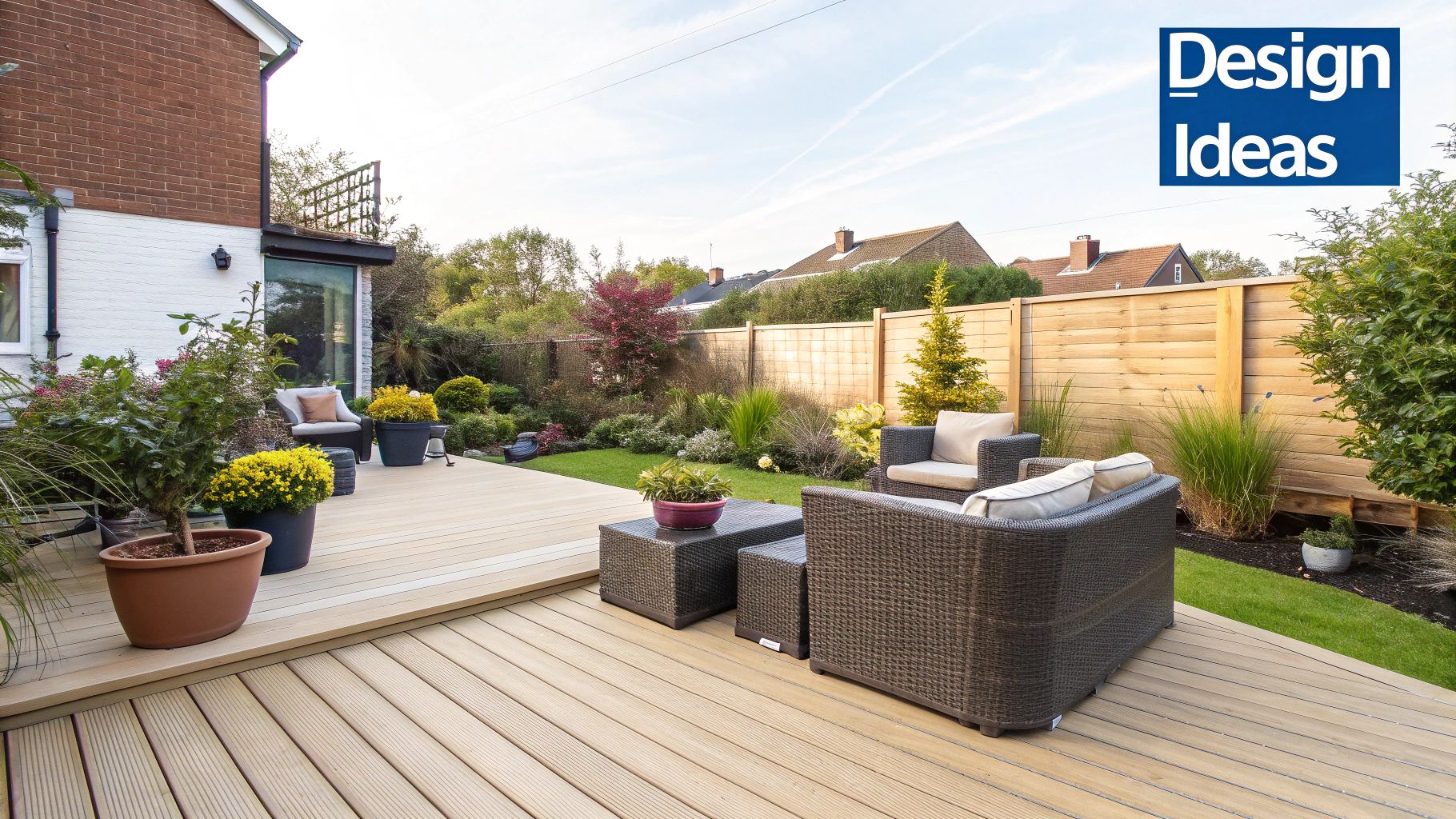
This is about much more than just looks. The right layout guides how you move through the space and can even create different ‘zones’ within your garden. A thoughtful design can transform a basic platform into a genuine architectural feature that elevates your entire landscape.
Classic and Contemporary Layouts
The most common approach is to lay boards parallel or perpendicular to the house. It’s a classic for a reason – it’s straightforward and it works. But if you’re after something a bit more dynamic and personal, there are some fantastic alternatives to explore.
Let’s look at a few popular options:
- Diagonal Layout: Just by laying the boards at a 45-degree angle, you can instantly inject a sense of movement. It’s a clever trick that makes a standard square or rectangular deck feel bigger and far more interesting. This pattern is brilliant for drawing the eye towards a focal point, like a water feature or a favourite part of the garden.
- Herringbone Pattern: This is that beautiful, V-shaped pattern you might see on old parquet floors. It brings a real touch of sophistication and texture to a deck. It works especially well on larger decks where the intricate design has room to breathe, adding a sense of luxury and elegance.
- Picture Frame Border: This technique is exactly what it sounds like – you frame the main deck area with one or more rows of boards around the edge. It gives the deck a really clean, finished look and is a great way to introduce a contrasting colour or material for a bit of extra visual punch.
These patterns aren’t just for huge, sprawling gardens. Even the smallest deck can be completely transformed by a well-chosen layout.
Using Patterns to Solve Design Challenges
Decking patterns are also powerful problem-solvers. They can play with perception and add function to your garden in some really clever ways. For instance, a diagonal or chevron pattern can make a narrow garden feel wider simply by drawing your gaze outwards.
If you’re dealing with an awkwardly shaped or small space, a modular layout can be a game-changer. This just means creating distinct sections or “modules” where you change the direction of the boards. It’s a fantastic way to visually break up the space, creating different zones for things like dining and lounging, all on one continuous deck.
A deck’s layout pattern is the visual language that tells you how to experience the space. It can create a feeling of calm with straight lines or a sense of energy with dynamic angles, directly influencing the garden’s atmosphere.
This technique is especially useful for multi-level decks. By changing the board direction on each level, you can clearly define the transition between them and add architectural interest, often without needing railings.
Practical Tips for Planning Your Pattern
Before you fall in love with a really complex pattern, there are a few practical things to keep in mind. More intricate designs like herringbone or chevron demand more precise cuts and often need a more robust substructure, with extra joists to support the board ends. This means they are more labour-intensive and can increase material waste by 10-15%.
A great place to start is by sketching your garden and just playing around with different patterns on paper. Think about the main lines of sight from your house and other key spots in the garden. Your chosen pattern should work with these views, not fight against them. For example, a simple picture frame border can beautifully frame a scenic view, enhancing the natural beauty of your garden and creating one of the most effective decking designs for gardens.
Integrating Your Deck with the Landscape
The most breathtaking decking designs don’t just sit in a garden; they feel like they belong there. It’s the difference between an afterthought and a feature that seems to have grown right alongside the trees and flowerbeds. The real art is in blurring the lines between your man-made deck and the living, breathing garden around it, creating one seamless, harmonious space.
To get this right, you need to think a bit like a landscape designer. Your deck isn’t just a platform for a table and chairs; it’s a key piece of the entire garden puzzle. Every choice, from its shape to its height, needs to work with the surrounding nature to create an inviting atmosphere where the transition from home to garden feels completely effortless.
This thoughtful approach has really taken off, especially as we’ve all started investing more in our outdoor spaces. In fact, between 2020 and 2024, the UK’s wood decking industry saw significant growth, largely driven by a post-pandemic focus on home and garden improvements. You can dig into the specifics in the full wooden decking market report.
Softening the Edges with Plants and Planters
One of the simplest and most effective ways to merge your deck with the garden is to literally weave plant life into its structure. Hard, straight edges can feel a bit stark against the soft, organic shapes of a garden. The trick is to use built-in features to soften those transitions.
Here are a few ideas to get you started:
- Built-in Planters: Imagine planters running along the edge of your deck, built from the very same timber. It creates a beautifully unified look and lets you bring colourful annuals or fragrant herbs right up to your seating area.
- Tiered Garden Beds: If your garden has a bit of a slope, don’t fight it. Use it. Create tiered retaining walls or raised beds that step down from the deck into the garden, turning a challenge into a stunning cascade of greenery.
- Cut-outs for Existing Trees: Have a beautiful old tree right where you want to build? Don’t cut it down—design around it! A carefully planned cut-out lets the tree grow right through the deck, giving you an incredible natural centrepiece and instant shade.
Creating a Natural Flow with Levels and Curves
A big, flat, square deck can sometimes feel like it’s dominating the garden. By introducing different levels or curved edges, you can break up that solid mass and help the structure sit more gently within the landscape. It’s a move that adds huge visual interest and makes the whole area flow better.
Multi-level decks are a fantastic solution for sloped gardens, as they follow the natural contours of the land instead of imposing a rigid, flat surface. You can dedicate each level to a different activity—a top tier for dining, a lower one for lounging—creating distinct zones without needing any walls.
Think of a multi-level deck like a series of gentle terraces on a hillside. It respects the natural lay of the land and creates a far more interesting journey through your garden.
Curves are another powerful tool in your design kit. A deck with a sweeping, curved edge can wrap elegantly around a lawn or flowerbed, echoing the organic lines you see in nature. It just feels softer and more welcoming than sharp, 90-degree corners.
Framing Views and Enhancing the Atmosphere
Where you place your deck is everything. Before you hammer in a single nail, stand in different spots and think about the views. A well-positioned deck can act like a picture frame, drawing your eye towards a favourite tree, a distant hill, or a beautifully planted border.
Lighting is just as important, especially for turning the space into a magical retreat after the sun goes down. A little thoughtful illumination goes a long way.
Effective Lighting Techniques:
- Step Lighting: Inset lights into the risers of your steps. It’s not just for safety; it casts a warm, ambient glow that looks fantastic.
- Perimeter Lighting: Place subtle lights around the edge of the deck. This helps define the space at night without creating any harsh glare.
- Uplighting: Position a few spotlights at the base of nearby trees or striking plants. This highlights their shape and creates beautiful, dramatic shadows.
By pulling all these elements together—planters, levels, curves, and lighting—you stop just building a deck and start designing a true outdoor living space. It becomes an integral part of your garden, a beautiful and functional area that feels completely at one with its surroundings.
Keeping Your Garden Deck Beautiful for Years
You’ve invested time and money into creating a beautiful garden deck, and with a little care, it can be a stunning feature of your home for years to come. Think of it like any other part of your home; it needs a bit of attention to stay at its best. Regular upkeep isn’t a chore—it’s the secret to avoiding big repair jobs down the line, so you can spend more time enjoying your outdoor space and less time fixing it.

Keeping your deck in top condition is mostly about following the seasons. A simple, regular routine helps protect the timber from common culprits like rot, slippery algae, and sun damage, ensuring it remains a safe and inviting spot for relaxing and entertaining.
Your Seasonal Maintenance Checklist
Staying on top of maintenance means you’ll never face a massive restoration project. By breaking down the tasks by season, it becomes easy to manage.
- Spring Clean: As winter thaws, it’s time to wake up your deck. Start with a good sweep to get rid of all the leaves and debris that have gathered over the colder months. Then, give it a gentle wash with a soft-bristled brush and some mild detergent to clear away any built-up grime or mildew. This is also the perfect moment to give it a proper once-over.
- Summer Protection: The long, sunny days of summer can be tough on wood, causing it to fade, dry out, and even splinter. If your deck is made from traditional timber, make sure it has a good coat of sealant or stain to act as a sunscreen. Keep an eye on high-traffic areas for any signs of wear and tear.
- Autumn Preparation: Once the leaves start to fall, they can quickly pile up. Don’t let them sit! Trapped leaves hold moisture against the timber, creating the perfect conditions for mould and slippery patches. A few minutes with a broom every few days is all it takes to keep the surface clear before the wet weather truly sets in.
The Importance of Regular Inspections
The best way to protect your deck is to spot small issues before they become big, expensive problems. A quick inspection a few times a year is your best defence.
Think of a deck inspection like a routine health check-up. You’re looking for small symptoms before they become serious conditions, ensuring the long-term strength and safety of the entire structure.
When you’re looking it over, check for any loose boards or screws and nails that have popped up. Have a close look for any signs of rot, especially in the spots where the deck meets the ground or is attached to your house. Don’t forget to peek underneath at the structural posts and joists. If you find a wobbly railing or a soft spot in the wood, it’s crucial to get it sorted straight away to keep everyone safe.
Material-Specific Care Tips
Not all decks are created equal, and what works for one material won’t necessarily work for another. Knowing what your deck is made of is the first step to caring for it properly.
Traditional Timber Decks These classic decks need the most hands-on care. To keep them protected from moisture and sun damage, they should be cleaned and resealed every one to two years. A good quality sealant is vital—it stops water from soaking into the wood, which is what leads to rot and warping.
Composite Decks While composite decking is often sold as low-maintenance, it isn’t no-maintenance. A simple wash with soap and water a couple of times a year is generally all it needs. Just be sure to check for any mildew, particularly in shady corners, and clean it off as soon as you see it.
Charred Timber Decks This is where charred timber from TimberSol really shines. One of its biggest advantages is how incredibly durable and low-maintenance it is. The charring process itself creates a natural shield against pests and moisture. For the most part, a routine clean is all you’ll ever need to do. Just be sure to avoid pressure washers or harsh chemicals that could damage the protective carbon layer.
In the damp UK climate, algae is a common problem for any type of deck, creating a slick and dangerous surface. If you spot any green starting to appear, it’s important to deal with it quickly. For a step-by-step guide, check out our article on cleaning algae from decking to get it looking great and safe underfoot again.
Got a Few Questions About Garden Decking?
As you get closer to breaking ground on your decking project, a few final questions often pop up. Getting these details sorted out is the key to a smooth process, turning your vision into a reality without any last-minute headaches. Let’s tackle some of the most common queries we hear from homeowners.
A big one, especially here in the UK, is how to stop a deck from becoming an ice rink in the wet. While any surface can get slick with rain, you can fight back. Opting for boards with a textured or grooved surface is a brilliant start, as it gives you much better grip underfoot. Don’t underestimate the power of a good clean either; keeping algae and moss at bay is your best defence against a slippery surface.
Then there’s the ever-present question of planning permission.
Good news for most: decking is often considered a ‘permitted development’, so you won’t need to get planning permission. However, there are a couple of crucial rules: the deck must be no more than 30cm off the ground, and when combined with any other extensions or outbuildings, it can’t cover more than 50% of your garden.
If your plans are a bit grander – perhaps a raised platform or a particularly large structure – it’s always wise to have a quick chat with your local council first.
What Are the Best Materials for the UK Climate?
With our famously damp and frosty weather, what’s the best material to choose? You need something that can stand up to moisture, day in and day out. Durability is everything.
Traditional timber is beautiful, but it demands regular, diligent sealing to keep rot from setting in. This has led many to look at modern alternatives for a bit more peace of mind.
Composite decking has become a go-to for its superb resistance to moisture and decay. But if you’re after something truly special that’s also incredibly tough, charred timber is in a league of its own. The ancient Japanese technique of charring the wood creates a natural, carbonised layer that’s a formidable barrier against water, rot, and insects. It’s practically tailor-made for the unpredictable British climate, ensuring your deck stays solid and stunning for years with very little fuss.
At TimberSol, we specialise in creating beautiful, durable charred timber that elevates decking designs for gardens. Explore our stunning range of charred timber decking to find the perfect foundation for your outdoor sanctuary.
