
Larch vs Douglas Fir: Which Timber Is Right for Your Cladding?

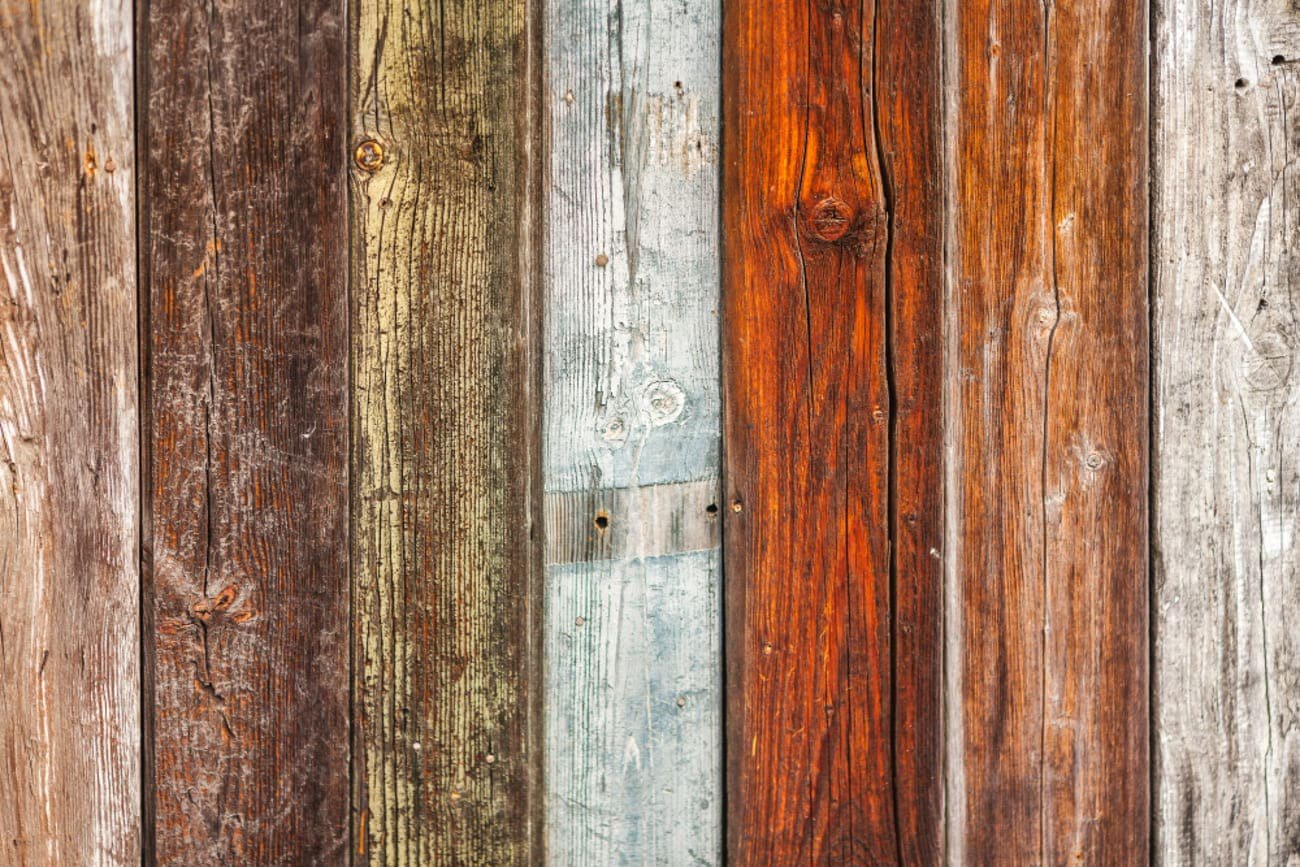
Larch vs Douglas fir is one of the closest calls in UK cladding: Douglas fir gives a warmer, pinkish-red board with cleaner faces, while larch gives a paler, golden board with more knots and a slightly harder surface. The right pick depends on the colour you want, how exposed the elevation is, and whether the boards will take knocks.
That near-tie is why the decision can stall. Both timbers often appear side by side on supplier lists, both are resinous softwoods, and their heartwood durability ratings can look similar on a specification sheet. So architects and self-builders may shortlist both and then struggle to separate them.
The differences sit in the details: how each species takes a charred and oiled finish, where surface hardness matters, how the grain behaves at cut ends and around fixings, and what actually drives the price when the two are so closely matched.
Larch vs Douglas Fir: Key Differences in Colour, Grain, Hardness and Durability
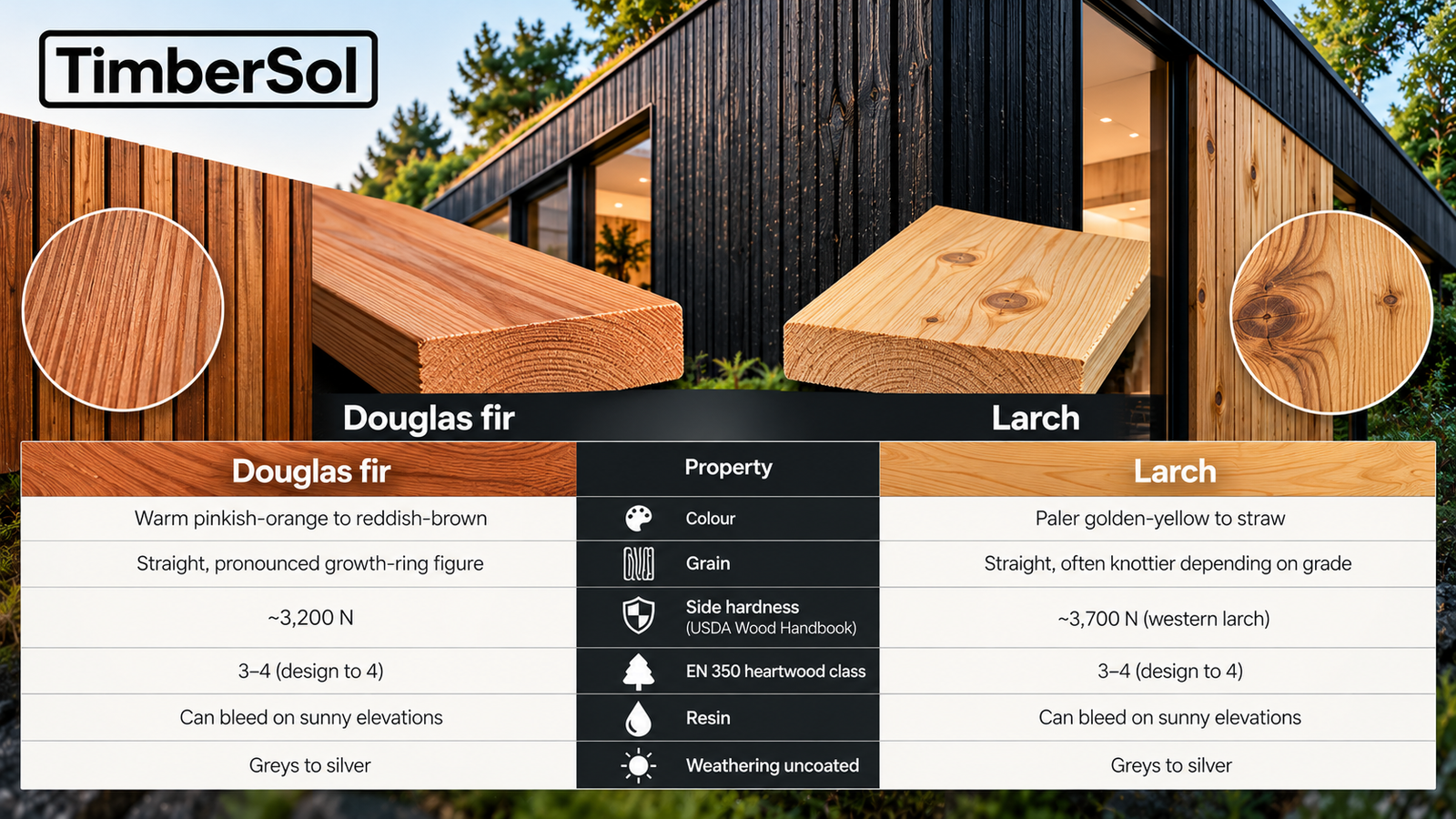
Larch and Douglas fir are closely matched as UK cladding timbers: both are mid-weight resinous softwoods with BS EN 350 heartwood durability class 3–4, so the choice often comes down to colour, knot tolerance and hardness in knock-prone areas rather than durability alone.
Are they the same tree? No. Larch belongs to the genus Larix, a deciduous conifer that drops its needles in autumn, while Douglas fir is Pseudotsuga menziesii and is not a true fir. Their similar density, resin content and durability, however, can give them comparable performance in exterior cladding.
| Property | Douglas fir | Larch |
| Colour | Warm pinkish-orange to reddish-brown | Paler golden-yellow to straw |
| Grain | Straight, pronounced growth-ring figure | Straight, often knottier depending on grade |
| Side hardness (USDA Wood Handbook) | ~3,200 N | ~3,700 N (western larch) |
| EN 350 heartwood class | 3–4 (design to 4) | 3–4 (design to 4) |
| Resin | Can bleed on sunny elevations | Can bleed on sunny elevations |
| Weathering uncoated | Greys to silver | Greys to silver |
Origin shifts the larch figures: Siberian larch is typically denser than British or European larch, while western larch is the North American species behind the USDA hardness value.
Where EN 350 gives a durability range, specifiers design to the less durable class, so a 3–4 rating is treated as class 4 unless durability is otherwise verified. Sapwood of either species is not durable, so exterior boards should be specified with sapwood excluded.
Larch or Douglas Fir Cladding: Choosing by Look, Exposure and Charred Finish
Choose Douglas fir for a warmer, redder tone; choose larch for a paler golden base, a potentially knottier, more rustic character, or extra surface hardness where boards may take knocks at ground level, entrances and bin stores.
On south- and west-facing walls, both timbers can bleed resin in warm conditions as heat mobilises resin near knots. The bleed is mainly cosmetic and can be removed once hardened, while darker charred finishes can make resin marks less noticeable.
Once charred, brushed and oiled, the two diverge in texture. Douglas fir’s strong earlywood/latewood contrast gives a pronounced ridged surface after brushing and deep colour under warm oil tones (teak, mahogany, walnut). Larch can char evenly, with its knots reading as darker accents under Grey or Black finishes. Both can achieve a similar deep-char Carbon look, as deep charring can reduce the visible differences between the base timbers.
Weathering research points the same way: 24-month natural weathering studies of untreated larch and Douglas fir façade boards show greying, lignin loss and surface roughening for both. The oil coating helps retain the colour, so plan to recoat with Hi-Tech Hybrid Oil roughly every 5 years on south-facing elevations and every 10 years on north-facing elevations, depending on exposure.
TimberSol’s charred fencing and decking come in larch and spruce only, with larch preferred for decking due to its higher density and hardness.
For other cladding timbers, see our cedar cladding alternatives.
Working with Larch and Douglas Fir: Pre-Drilling, Stainless Fixings and Cut Ends
Carpenters and cladding installers use both species routinely, and both can be worked with standard tooling. However, both can be prone to splitting near board ends, so pre-drilling near cut ends is recommended for either timber.
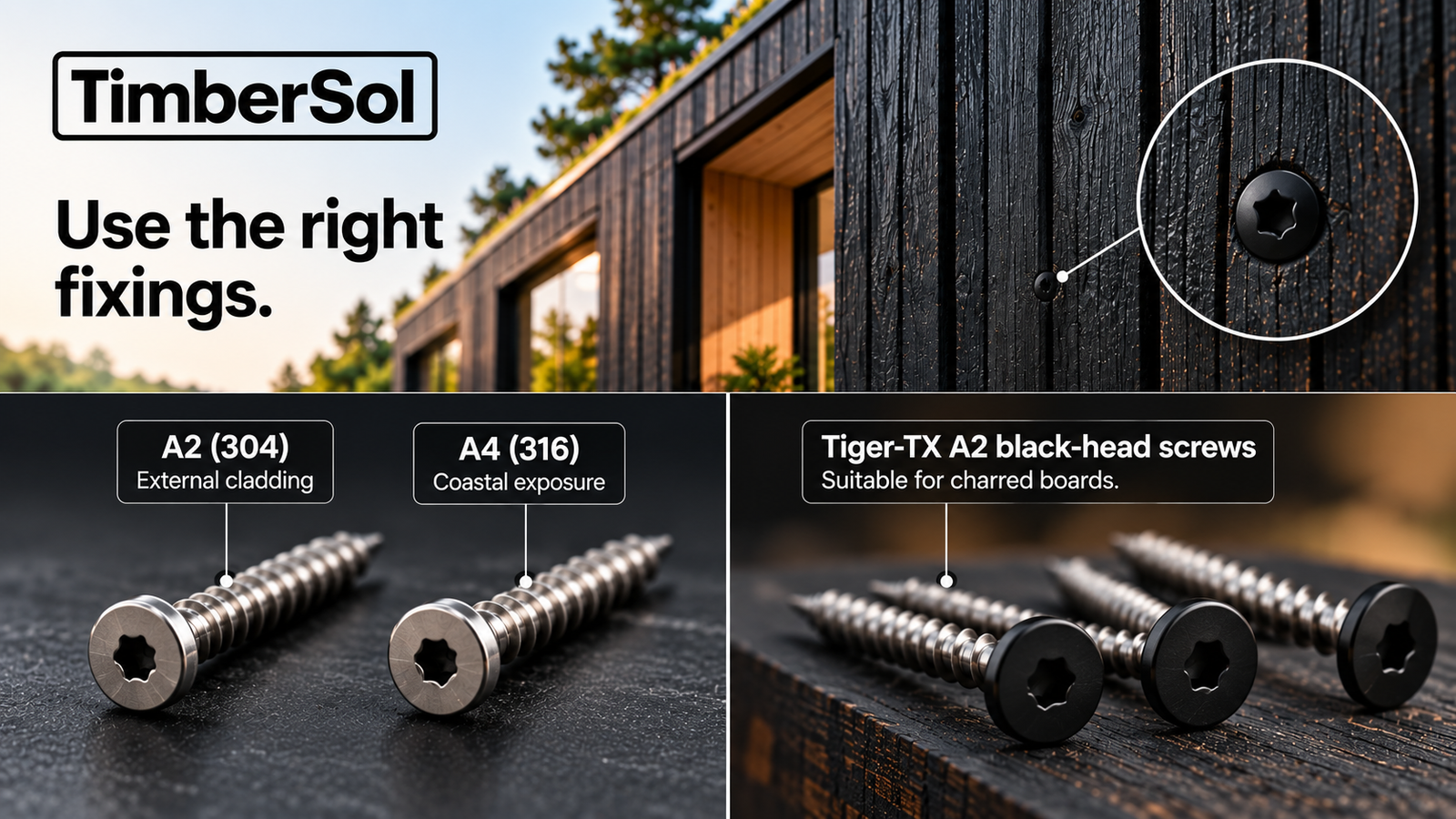
Fixings matter as much as drilling. Extractives and acids in larch and Douglas fir can react with unsuitable steel fixings and cause dark staining down the face. Installers therefore specify A2 (304) stainless steel screws for external cladding, and marine-grade A4 (316) in coastal exposure. Tiger-TX A2 black-head screws are suitable fixings for charred boards.
For TimberSol charred timber, nail guns are recommended for internal, weather-protected installations rather than external applications. Seasonal movement of softwood frameworks can loosen nails over time.
Boards arrive fully pre-coated, so the only site treatment is sealing every cut end and drilled hole with the matching Hi-Tech Hybrid Oil. End grain absorbs water readily and is particularly vulnerable to moisture-related decay.
Site checklist:
- Ventilated cavity behind the boards
- Pre-drill near cut ends
- Stainless steel screws, A2 or A4 depending on exposure
- Seal cut ends and drilled holes
- Keep bottom edges clear of the ground and splash zones
Larch vs Douglas Fir Cost: Is Larch More Expensive?
Larch is not necessarily more expensive than Douglas fir. The two are broadly comparable in price, and the gap between them can be smaller than the effect of grade and profile choice.
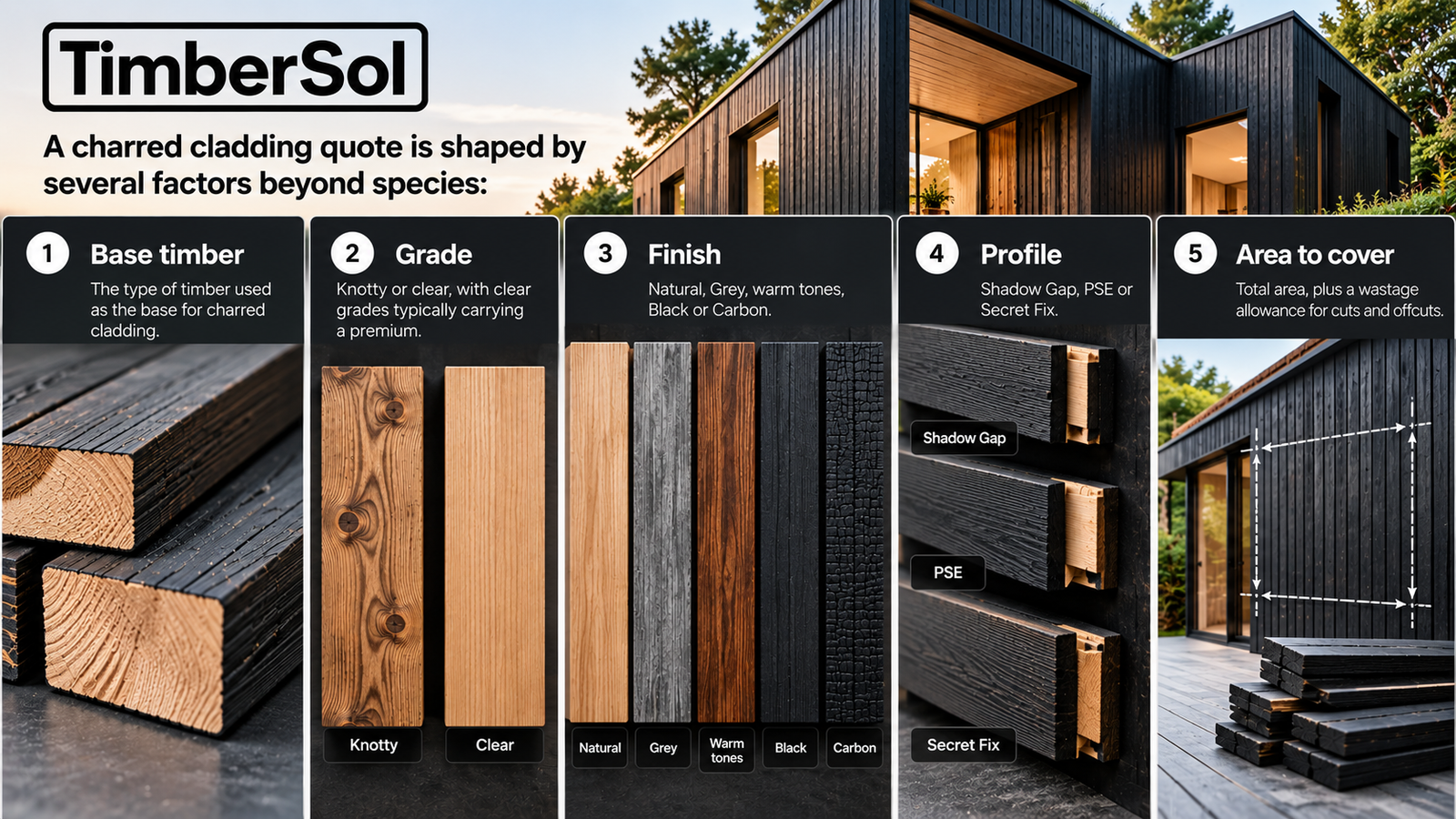
A charred cladding quote is shaped by several factors beyond species:
- Base timber
- Grade: knotty or clear, with clear grades typically carrying a premium
- Finish: Natural, Grey, warm tones, Black or Carbon
- Profile: Shadow Gap, PSE or Secret Fix
- Area to cover, plus a wastage allowance for cuts and offcuts
Larch origin can also affect the price: imported Siberian larch can command a premium over British-grown larch due to import costs, availability and its typically denser, tighter grain.
Colour differences are easier to judge on a physical charred board than in photographs, so compare the charred larch and charred Douglas fir ranges in hand. Order a sample first, then request a quote for the full area from TimberSol.
Larch vs Douglas Fir: FAQ
These are common questions UK buyers ask when deciding between larch and Douglas fir for charred cladding.
What Are the Downsides of Larch Wood for Cladding?
Larch wood has several potential downsides for cladding: resin bleed on warm, sun-exposed elevations, non-durable sapwood, knots that vary with grade, and a tendency for boards to distort during kiln-drying.
Edinburgh Napier University research identifies kiln-drying distortion as an important quality barrier for UK-grown larch and Douglas fir, so source from a supplier who grades out distorted boards.
Specify heartwood with an appropriate durability class under BS EN 350. Knottier grades can still suit charred finishes well, since the darker surface can make knots less visually prominent.
Does Charring Larch or Douglas Fir Cladding Make It Last Longer?
Charring larch or Douglas fir cladding mainly changes the surface, creating the black or textured finish and a carbonised layer, while service life also depends on the base timber, coating, exposure and installation.
Good installation includes a ventilated cavity, sealed cut ends and stainless steel fixings. Hi-Tech Hybrid Oil typically requires recoating roughly every 5 years on south-facing elevations and every 10 years on north-facing elevations, depending on exposure.
Charring alone is not a fire treatment and does not make timber non-combustible. Untreated charred timber does not meet the A2-s1,d0 or A1 requirement for external walls of relevant buildings with a storey at least 18 m above ground level in England.
Which Cladding Timbers Are More Durable Than Douglas Fir?
Two cladding options that can be more durable than Douglas fir heartwood are Accoya, rated durability class 1, and ThermoWood, typically rated class 2. Accoya’s acetylation and ThermoWood’s heat modification reduce the wood’s ability to absorb moisture, contributing to improved biological durability.
Larch heartwood has a broadly similar durability classification to Douglas fir heartwood, so it is not necessarily a durability upgrade. Accoya is a premium option, supplied on quote.
Is Douglas Fir-Larch the Same as Douglas Fir?
No, Douglas fir-larch (DF-L) is not a single species but a North American structural lumber grouping that includes Douglas fir and western larch under the same grading rules.
Grades such as No. 1, No. 2 and Select Structural grade structural lumber primarily for strength-related properties, not appearance. UK cladding boards, by contrast, are selected by species and appearance grade, with durability also considered for external applications.
Whichever way you lean, larch for its hardness and golden base or Douglas fir for its warmer tone and cleaner faces, both have broadly similar natural durability and sit in the same mid-range price bracket at TimberSol. The deciding factor is usually how each one takes the char, the brushing and the oil, and that is easiest to judge with a board in your hand rather than on a screen.
Order a sample of charred larch and charred Douglas fir in the finishes you are considering, hold them against the brick, render or glazing they will meet, and see how the grain reads in your light. Once you have settled on a species and profile, request a quote for your elevation. We can supply the boards pre-coated, with matching Hi-Tech Hybrid Oil and A2 stainless steel fixings ready for installation.
